Termite Control in Moncks Corner, SC
Formosan & Subterranean Termite Treatment: Sentricon TotalDefense for Berkeley County Homes
Most Moncks Corner homeowners assume termites are primarily a coastal problem. They’re not. Moncks Corner sits within the established Formosan subterranean termite range in South Carolina, and the area’s proximity to Lake Moultrie and Berkeley County’s extensive wetland systems creates soil moisture conditions that keep termite colonies active and foraging year-round. Add crawlspace foundations common in older town center homes, wooded lot adjacency throughout the area, and ongoing development that displaces established colonies, and the termite risk picture in Moncks Corner is more serious than most residents realize. Termite damage is not covered by homeowners insurance. Proactive protection is the only real defense.
Get Started in 60 Seconds
Choose what’s easiest for you
Schedule Free Inspection
We usually respond in 2 minutes
Call (854) 202-9023
Get a Live Person (no AI agents here!)
Sign Up Online
Get pricing and schedule now





Welcome to Vinx Pest Control
A Company That Actually Backs What It Says
At Vinx, we combine professional-grade treatments with a level of service most pest control companies don’t offer. Local technicians, fast response times, and a guarantee that actually means something.
Get a Free Quote“I’m not passionate about killing bugs. I’m passionate about customer service. At Vinx, you get experts who show up, do the job right, and stand behind every visit. No runaround, no fine print.”
TERMITE PROTECTION
Sentricon TotalDefense: Plans for Every Moncks Corner Home

Quarterly Pest + Termite Add-On
- 4 pest control visits/year
- Sentricon add-on from $35/mo
- In-ground bait stations around full perimeter
- Annual station inspection & bait check
- Re-treat warranty included
- $100 off Sentricon installation

Best Value: Pest + Termite Bundle
- 6 pest control visits/year
- Sentricon TotalDefense included
- Recruit HD bait, preferred by Formosan workers
- Annual crawlspace & perimeter inspection
- Written conducive condition report
- $200 off Sentricon installation

Maximum Protection
- 9 pest control visits/year
- Sentricon TotalDefense included
- Outbuildings & detached structures covered
- Damage warranty available for qualifying homes
- Free annual termite inspection
- $400 off Sentricon installation
Starting rates for homes up to 3,000 sq ft. All plans: 12-month agreement. Sentricon pricing based on home size & inspection findings. Free inspection required.
Schedule Your Free Termite Inspection in Moncks Corner
Mud tubes, wood damage, or just want peace of mind? A Vinx termite inspection covers your foundation, crawlspace, and all exterior high-risk zones. Call (854) 202-9023 or fill out the form below.
Our Approach
How Vinx Protects Your Moncks Corner Home from Termites

Thorough Termite Inspection
Your technician inspects the full structure, foundation, crawlspace, attic, interior walls, window and door frames, and all wood-to-soil contact points. We identify mud tubes, frass, hollow-sounding wood, swarm evidence, and conducive conditions like moisture intrusion or improper drainage. The inspection report documents all findings and informs your treatment plan.
Foundation & Perimeter Treatment
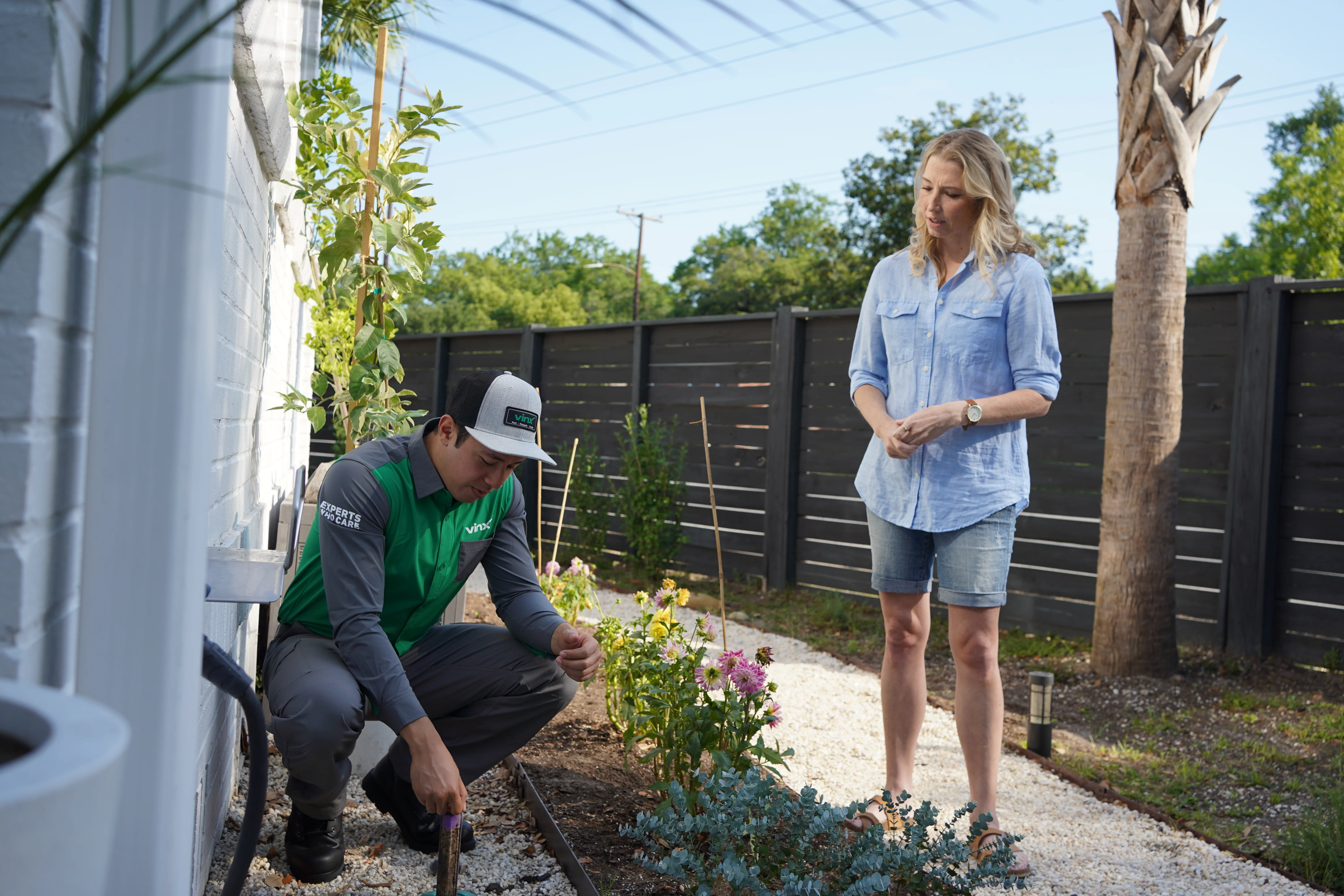
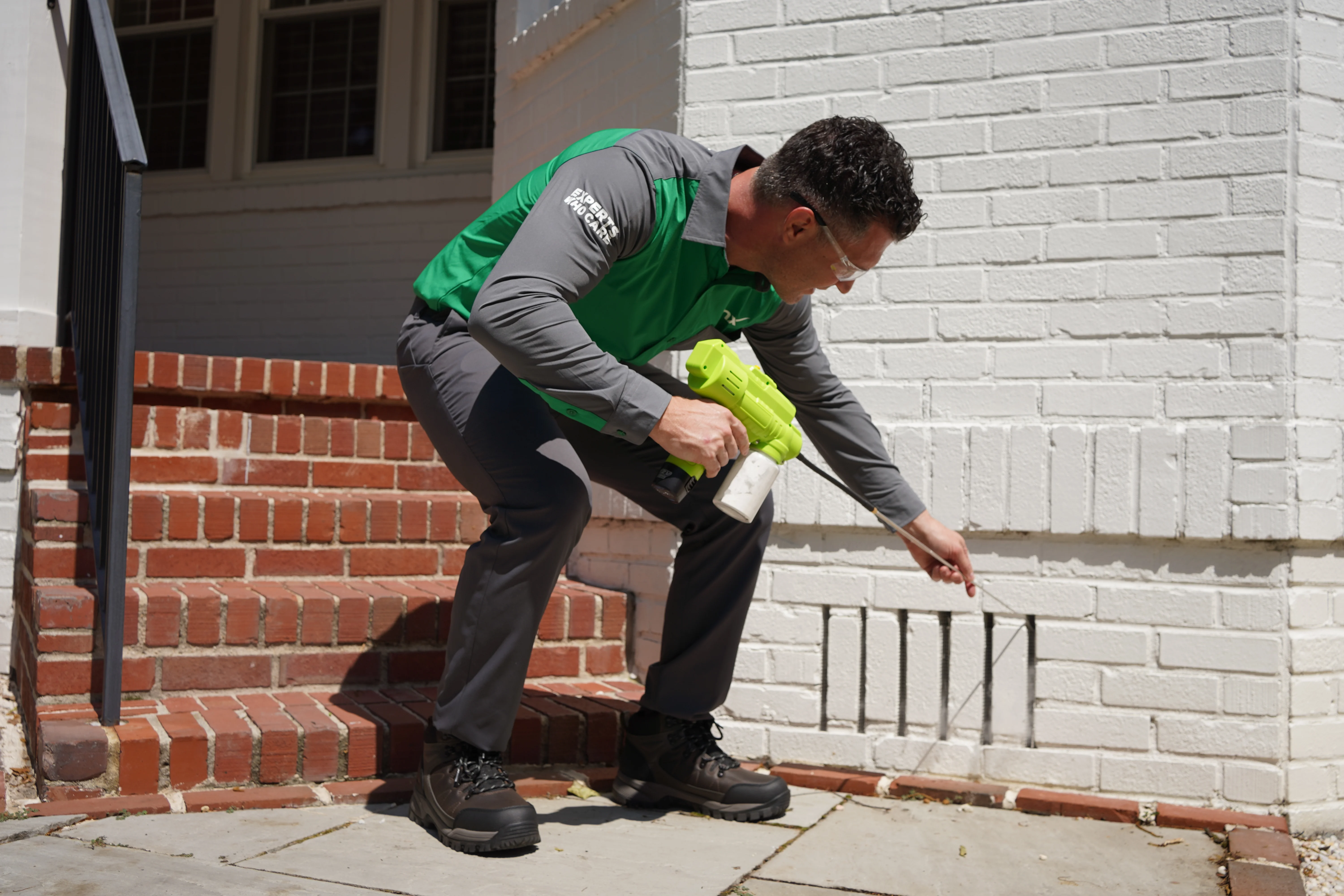
A liquid termiticide barrier is applied around the full foundation perimeter, including beneath slabs and around utility penetrations. This creates a continuous treated zone that eliminates termites on contact and prevents new colonies from entering. Treatment is applied to both interior and exterior foundation walls for complete protection.
Direct Colony Treatment
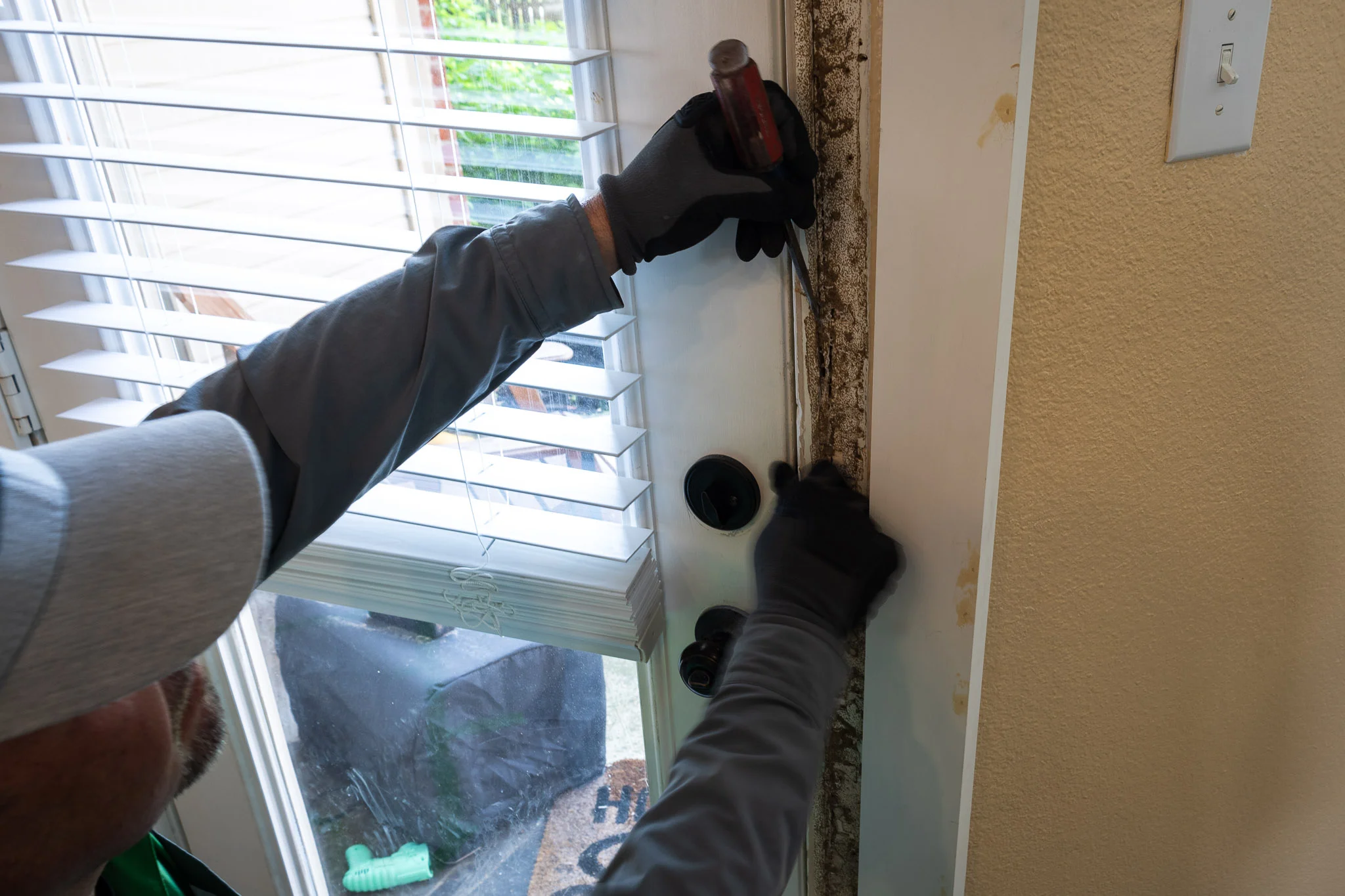
Active termite galleries and mud tubes are treated directly with termiticide foam or dust, reaching deep into the colony tunneling network. This targeted approach eliminates the existing colony quickly while the perimeter barrier prevents re-infestation. Affected wood members are documented and repair recommendations are provided.
Annual Inspection & Re-Treatment Guarantee
Annual termite inspections keep your protection current and catch any new activity early. If termites return between scheduled visits, we re-treat at no additional charge, that is our guarantee. Your technician also advises on moisture control, wood contact elimination, and landscaping adjustments that reduce long-term termite pressure.
Customer Reviews
Real Reviews from Moncks Corner Homeowners
Anthony always does a great job servicing our home. He is prompt and professional, works efficiently.
I had the pleasure of having Therron as my technician for my annualtermite inspection and control and I will look forward to working with him in the future. He was pleasant and knowledgeable and very accommodating. My experiences with the Vinx techs assigned to my home is always positive and pleasant! Thank you 😊
Anthony was great. He came on time he respected my request about letting me put my dog up and then he did his job quickly and efficiently and I'm very pleased with the outcome
Vinx and our service technician Jack are great. Awesome communication via email, text and calls for our monthly bug treatments. Will have them takeover the termites later this month too! Thanks as always Jack!!
Austin came for termite inspection and he continued with spraying my yard. Makes me happy 😊
Therron is a young professional and is thorough with his explanation of the termite bond and things to look for. It was a pleasure working with him and I would suggest to use their service. Ask for Therron.
Termite Risk in Moncks Corner
Why Moncks Corner Has Elevated Termite Risk
Three specific factors drive Moncks Corner’s termite risk above the average for inland South Carolina communities, and all three are rooted in the area’s unique geography.
Lake Moultrie and Berkeley County’s wetland systems keep soil moisture elevated year-round. Subterranean termites need consistent soil moisture to survive, expand colonies, and build the mud tube networks they use to travel from soil to structural wood. In drier inland areas of SC, seasonal dry periods slow termite foraging. In Moncks Corner, proximity to Lake Moultrie and the area’s extensive wetland systems keeps soil moisture at levels that support active year-round termite foraging, even during summer months when drier inland areas experience a natural slowdown. A crawlspace in Moncks Corner will almost always have higher ambient humidity than the same design in Columbia or Greenville.
Two Species Active in Moncks Corner
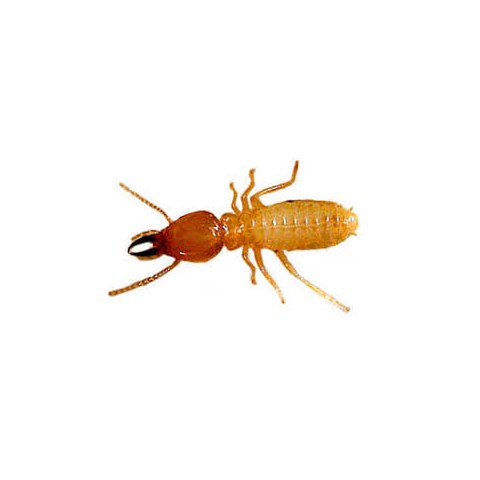
Formosan Subterranean Termite
Coptotermes formosanus
The most destructive termite species in the US. Formosan colonies contain 1–10 million workers and can cause significant damage within a single season. Clemson puts their swarms from mid-May to July, in the evening, with the swarmers drawn to lights. Unlike Eastern subterranean termites, Formosans can build above-ground carton nests in wall voids. The Formosan range extends into Berkeley County, older Moncks Corner homes with crawlspace foundations carry real Formosan exposure.
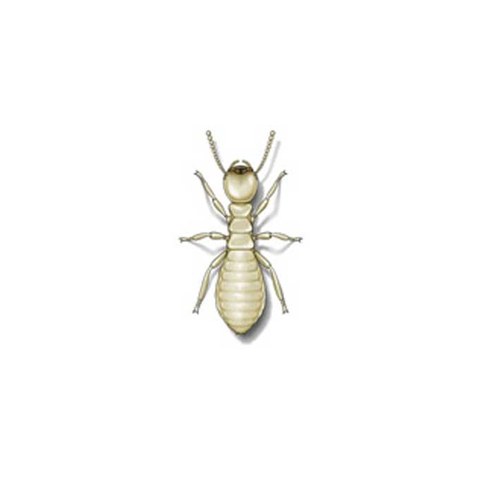
Eastern Subterranean Termite
Reticulitermes flavipes
The most widely distributed termite in North America, active in every Moncks Corner neighborhood. Smaller colonies than Formosan (100,000–500,000 workers) but cause significant structural damage over time. Clemson notes native subterranean termites usually swarm in early spring, often in the afternoon, frequently after warm rain. Eastern subterranean termites build the pencil-width mud tubes visible on foundation walls, one of the most reliable signs of active infestation.
Formosan subterranean termites are established in Berkeley County, and Clemson says so. Clemson HGIC lists Berkeley among the South Carolina counties with documented established Formosan populations. The history is local: Formosan termites entered the United States at Charleston in 1957 and spread outward through the Lowcountry, which is why Berkeley County sits inside the range rather than at the edge of it. The species is commonly associated with the coast, but that range extends inland. Older homes in Moncks Corner’s town center with crawlspace foundations, direct wood-to-soil contact, and decades of moisture accumulation are within the Formosan risk zone. Homeowners in Berkeley County who have been told Formosans are “just a coastal problem” have been given incomplete information.
If you are buying or selling here, the report is called a CL-100. It is South Carolina’s official wood infestation report, and your lender or your contract will almost certainly require one. The distinctive thing about it is scope: unlike the wood-destroying insect reports used in most other states, the CL-100 covers fungi and excessive moisture conditions as well as insects. That is why a South Carolina report can come back flagging a damp crawlspace when no termite has ever been in the building, and in a county where soil moisture stays high year-round that happens often. Clemson University’s Department of Pesticide Regulation licenses the companies that can issue one. Vinx holds South Carolina license B3623.
This is a new town, which changes the termite question. 59.4% of Moncks Corner homes were built in 2000 or later and 45.4% since 2010 (U.S. Census, ACS 2020–2024), and Berkeley County grew 15.0% between the 2020 Census and July 2024. So the typical local property is not a century-old house with decades of accumulated wood-to-soil contact. It is a relatively new slab or crawlspace on ground that was cleared and graded within living memory, which raises a different question: what was done at construction, whether any pretreatment has been maintained since, and whether the builder’s termite protection was ever renewed once the warranty lapsed.
Wooded lot adjacency and active development create ongoing colony introduction. Moncks Corner’s position at the rural-suburban interface of Berkeley County means established termite colonies exist throughout wooded and undeveloped land adjacent to residential properties. As development breaks ground, wooded buffers are cleared, and established trees and stumps are removed, termite colonies are disrupted and displaced toward adjacent structures.
Signs of Termite Activity in Your Moncks Corner Home
Know what to look for. Most termite damage happens hidden inside walls and floor joists, by the time it’s visible, the colony has been active for years.
Mud Tubes on Foundation
Pencil-width brown tubes running up foundation walls or crawlspace piers, protected pathways from soil to wood.
Swarmer Wings
Small discarded wings on windowsills or near light fixtures. Swarmers shed wings immediately after landing.
Hollow-Sounding Wood
Tap baseboards and door frames. A hollow sound means termites have consumed the interior while leaving the surface intact.
Tight Doors & Windows
Termite damage warps framing, making doors and windows stick, often the first functional sign noticed.
Bubbling or Uneven Paint
Paint pulling away from baseboards near the floor can indicate moisture damage from termite activity behind the surface.
Carton Nests (Formosan)
Brownish papery material in wall voids or attic areas, a Formosan-specific sign not seen with Eastern subterranean termites.
Sagging Floors or Ceilings
Soft or spongy floors and unexplained ceiling sag indicate structural framing may be compromised by long-term feeding.
Frass Near Wood
Small pellet-like droppings near wood surfaces indicating active termite feeding close to the surface.
Why Sentricon for Moncks Corner
Why Sentricon Is the Right Choice for Berkeley County Homes
Liquid barrier treatments create a chemical wall in the soil, but the colony survives, the chemical degrades over time (faster in Berkeley County’s moist soil), and re-application eventually becomes necessary. Sentricon eliminates the colony.
Colony Elimination
Workers carry bait back to the colony and feed the queen. The colony collapses from within. No surviving colony means no ongoing pressure, not just a barrier the colony may eventually breach.
Moist Soil Performance
Liquid barrier chemicals degrade faster in moist Berkeley County soil. Sentricon stations don’t degrade, they remain active with annual maintenance regardless of soil moisture levels near Lake Moultrie.
No Drilling or Trenching
Sentricon stations are inserted into the ground at intervals, no foundation drilling, no trenching, no disruption to your landscaping or structure. Important for older Moncks Corner homes with mature landscaping.
Effective Against Formosans
Sentricon’s Recruit HD bait is specifically proven effective against Formosan subterranean termites, the species of greatest concern in Berkeley County’s older residential properties.
Environmentally Responsible
Bait is contained within in-ground stations and doesn’t leach into surrounding soil or the wetland and lake systems that define Moncks Corner’s environment. No groundwater contamination risk.
Vinx Plan Discounts
All Vinx pest control plans include discounts on Sentricon installation: $100 off HomeGuard, $200 off Plus, $400 off Platinum. Combining pest and termite protection is the most cost-effective approach.
Termite Risk by Area
Termite Risk Across Moncks Corner & Berkeley County
Moncks Corner Town Center: HIGHEST RISK
The highest termite risk properties in Moncks Corner. Historic and older homes in the town center with crawlspace or pier-and-beam foundations, aged timber framing, and decades of crawlspace moisture accumulation carry real Formosan and Eastern subterranean risk. Direct wood-to-soil contact at foundation piers, inadequate crawlspace ventilation, and aging utility penetrations through the foundation provide multiple entry and moisture opportunities. Annual inspection and active Sentricon monitoring is essential for any town center home built before 1980.
Properties Near Lake Moultrie & Wetland Areas: ELEVATED RISK
Lake Moultrie proximity keeps soil moisture elevated year-round throughout the area, the single most important conducive condition for subterranean termite activity. Homes within the broader Lake Moultrie influence area experience more consistent year-round termite foraging pressure than properties in drier inland SC markets. Crawlspace moisture management (vapor barriers, proper ventilation, dehumidification) directly reduces termite risk for these properties alongside active Sentricon monitoring.
Properties Adjacent to Wooded Lots: ELEVATED RISK
Moncks Corner properties backing onto undeveloped wooded land, managed timberland, or wooded lot perimeters carry elevated termite risk from established colonies in adjacent undisturbed soil and wood. Wooded lots with tree stumps, fallen timber, and undisturbed organic matter are ideal termite habitat, colonies established there expand toward any nearby structure with accessible wood. Fence posts, deck framing, and any wood-to-soil contact on the structure are the primary initial entry points.
Bonneau: ELEVATED RISK
Bonneau’s lakeside location between Lake Moultrie and Lake Marion places it in one of the highest soil-moisture environments in Berkeley County. The combination of water proximity, older residential construction, and wooded perimeters throughout the community creates meaningful termite risk for most Bonneau homeowners. Any Bonneau property with a crawlspace and no active termite monitoring should be inspected.
New Construction Zones: ELEVATED RISK
Newly constructed homes in Moncks Corner’s active development corridors typically use pressure-treated lumber for ground-contact framing, providing meaningful initial protection. However, construction activity that disturbs adjacent soil displaces established termite colonies toward new structures. As development continues and treated lumber ages over 5–10 years, protection decreases. Proactive Sentricon monitoring from the early years of occupancy is a cost-effective approach for new construction in active development zones.
Jamestown, Cross & Huger: MODERATE TO ELEVATED RISK
These rural Berkeley County communities feature larger lots, older residential stock in many cases, and significant wooded adjacency, all of which contribute to moderate-to-elevated termite risk. Homes with outbuildings, wooden fencing, and landscaping timbers carry additional exposure points. Annual inspection and Sentricon monitoring is appropriate for older homes in all three communities, particularly those with crawlspace construction and limited historical termite management.
Kid & Pet Safe
Sentricon Is Safe for Your Family & the Environment
Sentricon bait is contained within sealed in-ground stations, not broadcast into the soil and not applied in or around living areas. Every product Vinx uses is EPA-registered and applied at labeled rates by licensed South Carolina pest control technicians.

No Soil Injection
Sentricon stations are inserted into the ground at intervals, no chemical injection into the soil around your living areas, no trench disrupting your landscaping.
Kid & Pet Safe
Bait is locked inside tamper-resistant in-ground stations not accessible to children, pets, or non-target wildlife under normal conditions.
No Groundwater Risk
Bait doesn’t leach into surrounding soil or the wetland and lake systems that define Moncks Corner’s environment. No risk to Lake Moultrie or Berkeley County’s water table.
Licensed SC Technicians
Every Sentricon installation and annual inspection is performed by licensed South Carolina pest control technicians trained on the Sentricon system.
Have a question about Sentricon safety? Call (854) 202-9023 and we’ll explain exactly what we use and why it’s safe for your family.
Explore More
More Pest Control Services in Moncks Corner

Pest Control Moncks Corner
Year-round protection plan

Ant Control Moncks Corner
Household ants & others

Mosquito Control Moncks Corner
Monthly barrier treatments

Rodent Control Moncks Corner
All rodents covered

Cockroach Control Moncks Corner
American & German roaches

Spider Control Moncks Corner
All spider species covered

Wasp Control Moncks Corner
Nest removal & prevention

Tick & Flea Control Moncks Corner
Yard & pet protection
Exterminator Moncks Corner
Same-day local exterminators

Bed Bug Control Moncks Corner
Heat & liquid treatments
Frequently Asked Questions
Termite Control in Moncks Corner: Your Questions Answered
Vinx’s Sentricon TotalDefense program starts at $35/month. Final pricing is based on your home size, number of stations required, and inspection findings. A free termite inspection is required for an accurate quote. Vinx pest control plan customers receive $100–$400 off Sentricon installation depending on plan level.
Yes: Formosan subterranean termites are established within Berkeley County’s portion of the South Carolina Lowcountry. Many homeowners associate Formosans only with the coast, but their established range extends inland through the Lowcountry. Older homes in Moncks Corner’s town center with crawlspace foundations and moisture history carry real Formosan risk. Homes with active crawlspace moisture issues or direct wood-to-soil contact should be inspected for Formosan activity regardless of their distance from the coast.
No. Standard homeowners insurance policies explicitly exclude termite damage. Every dollar of termite repair, from cosmetic damage to structural repair, comes directly out of pocket. We are not going to quote you an average repair figure, because the ones circulating in this industry trace back to nothing you can check. What is true and worth knowing is the shape of the risk: subterranean termite damage accumulates quietly inside wood you cannot see, it is excluded from standard policies, and the bill lands entirely on the homeowner whatever it turns out to be. Proactive termite protection through Sentricon TotalDefense is the only financial defense available to Moncks Corner homeowners.
Clemson gives a rule you can apply at your own porch light. Native subterranean termites usually swarm in early spring, often in the afternoon. Formosan termites swarm from mid-May to July, in the evening, with the swarmers attracted to lights. So a daytime swarm in March is most likely native; an evening swarm around your outside light in June is the one to photograph and send us. If you observe swarmers (winged insects emerging in numbers from the ground, walls, or crawlspace) an established colony is already present, often for several years. Call (854) 202-9023 immediately. Collect a few specimens in a sealed bag if possible to help with species identification.
The CL-100 is South Carolina's official wood infestation report, and if you are buying or selling in Moncks Corner your lender or contract will almost certainly require one. Its scope is what makes it unusual: unlike the wood-destroying insect reports used in most other states, the CL-100 covers fungi and excessive moisture conditions as well as insects. That matters in Berkeley County, where soil moisture stays high year-round, because a report can come back flagging a damp crawlspace even when no termite has ever been in the structure. Clemson University's Department of Pesticide Regulation licenses the companies that can issue one; Vinx holds South Carolina license B3623.
By the time of day and the month, and Clemson gives the rule. Native subterranean termites usually swarm in early spring, often in the afternoon, frequently after warm rain. Formosan termites swarm from mid-May to July, in the evening, with the swarmers strongly attracted to lights. So a cloud of winged insects around your porch light on a June evening is the one that matters most, and it is worth photographing before you sweep it up. Berkeley County is on Clemson's list of South Carolina counties with established Formosan populations, so both are genuinely possible here.
Because they arrived nearby and spread. Formosan subterranean termites entered the United States at Charleston in 1957, and moved outward from there through the Lowcountry over the following decades. That is why Berkeley County sits inside the established range rather than at its edge, and why the assumption that Formosans are purely a coastal problem is out of date. Clemson lists Berkeley among the counties with documented established populations. Practically, it means an inspection here should be looking for above-ground carton nests in wall voids, which native subterranean termites do not build.
Yes: Lake Moultrie and Berkeley County’s extensive wetland systems keep soil moisture elevated year-round throughout the Moncks Corner area. Soil moisture is the primary environmental requirement for subterranean termite survival and activity. Elevated soil moisture means more consistent year-round termite foraging, including during summer months when drier inland SC areas experience a natural reduction in termite activity. Properties near the lake or wetland systems should treat termite monitoring as a year-round priority rather than a seasonal concern.
Liquid barrier treatment injects termiticide into the soil around your foundation to create a chemical barrier termites can’t cross, the colony survives but can’t enter the structure. Sentricon works differently: bait stations are placed in the soil where termites forage, workers carry the bait back to the colony and feed it to nestmates including the queen, and the entire colony is eliminated. Sentricon also doesn’t degrade the way liquid chemicals do in Berkeley County’s moist soil, stations remain active with annual maintenance. No trenching, no drilling, no soil injection.
Vinx services all of Moncks Corner and the surrounding Berkeley County area including Bonneau, Jamestown, Cross, and Huger. Call (854) 202-9023 to confirm scheduling for your specific address.
Yes, and the reasoning is different from an older house. Nearly 60% of Moncks Corner homes were built in 2000 or later, so most local properties are relatively new construction on ground cleared and graded within living memory. The questions that matter are what was done at construction, whether any soil pretreatment has been maintained since, and whether the builder's protection was renewed once the warranty lapsed. A pretreatment is not permanent, and a lapsed one leaves you with a slab on damp Berkeley County soil and no barrier at all.
It matters for two separate reasons. First, subterranean termites need consistent soil moisture, so a damp crawlspace makes your home a better prospect than a dry one. Second, and more immediately, South Carolina's CL-100 report covers fungi and excessive moisture as well as insects, so crawlspace moisture can hold up a sale on its own with no termite involved at all. If you are planning to sell in the next couple of years, dealing with moisture early is considerably cheaper than negotiating over it at closing.
It depends on the ground rather than on which is better in the abstract. A liquid barrier puts termiticide into the soil around the foundation, so it needs a continuous treatable trench, which some crawlspace layouts, slab additions, and heavily planted foundations make difficult. Sentricon works by having foraging workers carry bait back to the colony, so it does not need that continuity and it works with the colony's own behavior. In an area with high year-round soil moisture and active colonies in adjacent wooded and undeveloped land, the ongoing monitoring a bait system provides is usually the stronger fit, but your technician should show you the actual foundation conditions before recommending either.
Service Coverage
Termite Control Across Moncks Corner & Berkeley County
Sentricon TotalDefense installation and annual monitoring across all of Moncks Corner and Berkeley County, starting at $35/mo.