Exterminator in Moncks Corner, SC
Licensed exterminators for Moncks Corner homes and businesses — next-day appointments, soil-first termite inspections, and a guarantee behind the work.
Get Started in 60 Seconds
Choose what’s easiest for you
Request a Quote
We usually respond in 2 minutes
Call (854) 202-9023
Get a Live Person (no AI agents here!)
Sign Up Online
Get pricing and schedule now





Welcome to Vinx Pest Control
A Company That Actually Backs What It Says
At Vinx, we combine professional-grade treatments with a level of service most pest control companies don’t offer. Local technicians, fast response times, and a guarantee that actually means something.
Get a Free Quote“I’m not passionate about killing bugs. I’m passionate about customer service. At Vinx, you get experts who show up, do the job right, and stand behind every visit. No runaround, no fine print.”
PROTECTION PLANS
Moncks Corner Exterminator Pricing
100% money-back guarantee on every plan.

Standard Residential Protection
- 4 Seasonal Treatments Per Year
- 50+ Covered Pests
- Interior, Exterior & Yard Treatment
- Unlimited Free Re-Services
- 100% Money-Back Guarantee
- Fire Ant Yard Guarantee
- Flea & Tick Coverage
- Mosquito Treatments

Upgraded Yard Protection
- 6 Home & Yard Treatments Per Year
- 50+ Covered Pests
- Interior, Exterior & Yard Treatment
- Unlimited Free Re-Services
- 100% Money-Back Guarantee
- Fire Ant Yard Elimination Guarantee
- Flea & Tick Elimination Guarantee
- Mosquito Treatments

Most Comprehensive Protection
- 9 Treatments Per Year
- 50+ Covered Pests
- Interior, Exterior & Yard Treatment
- Unlimited Free Re-Services
- 100% Money-Back Guarantee
- Fire Ant Yard Elimination Guarantee
- Interior Flea & Tick Coverage
- 8 Mosquito Treatments (Mar–Nov)
- Free Bed Bug Treatments if Needed*
*Starting rates vary by home size and area. All plans billed monthly.
Request Your Free Pest Control Quote
From the mosquito pressure coming off Lake Moultrie to ants establishing overnight in Berkeley County soil: Moncks Corner’s pest environment is active year-round. Call (854) 202-9023 or fill out the form below.
Our Process
How Vinx Exterminators Work a Moncks Corner Property: Step by Step

Inspection & Reporting
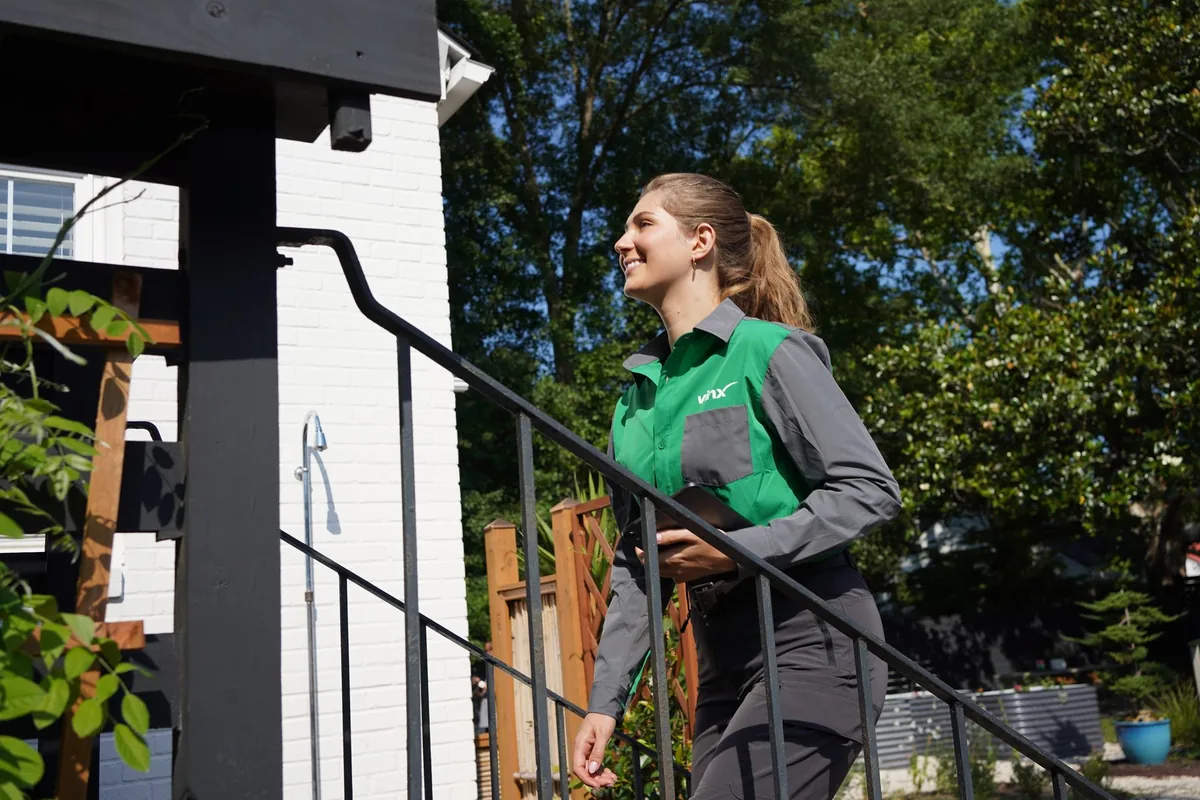
An extermination job in Moncks Corner starts with identification, because Berkeley County is on Clemson's list of counties with documented Formosan subterranean termite colonies — a different, more urgent job than the native eastern subterranean termite most South Carolina towns actually have. Nothing is applied until a technician has identified the pest and traced it to its harborage. You hear what we found, with a firm price, before any work begins.
Exterior Foundation Treatment
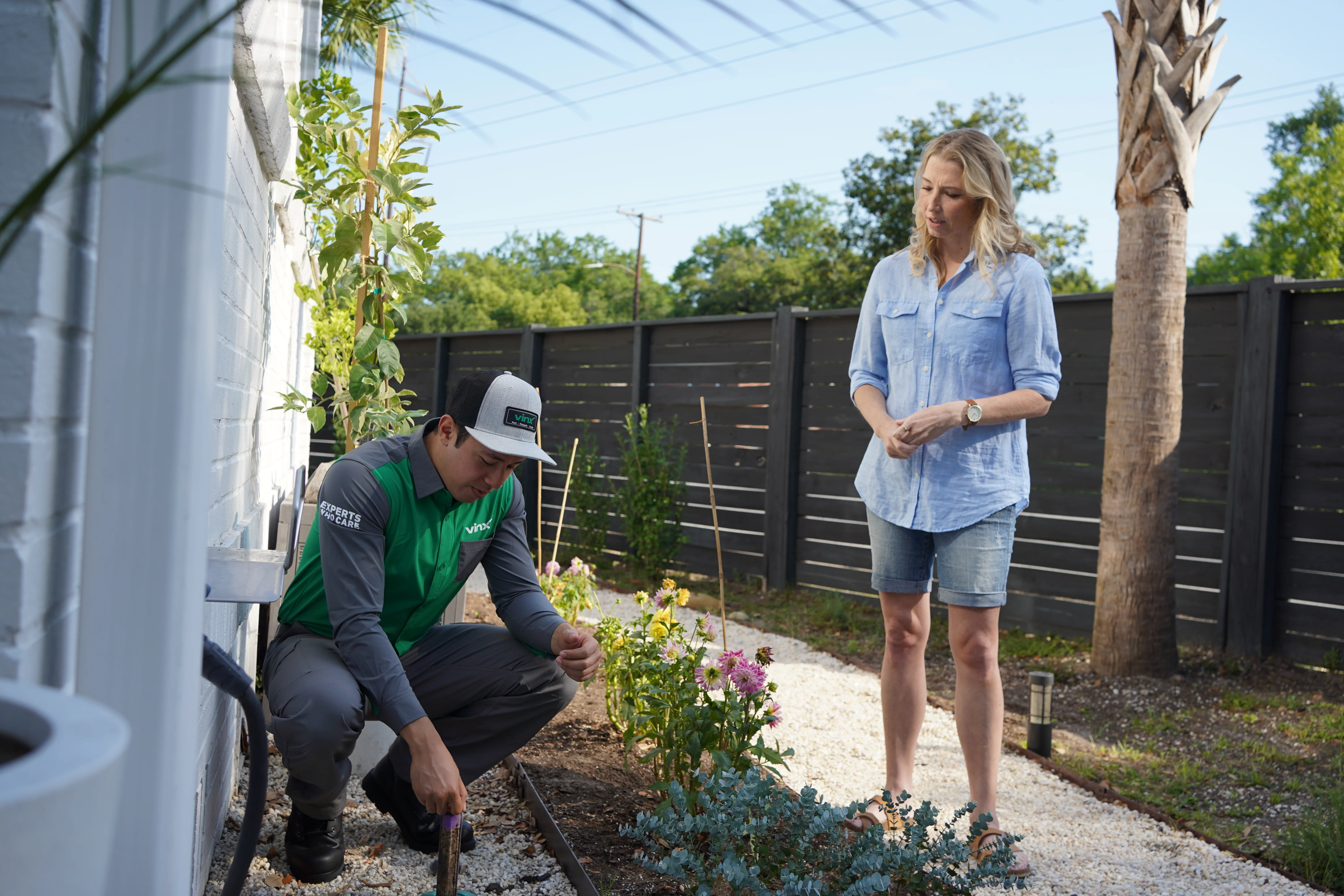
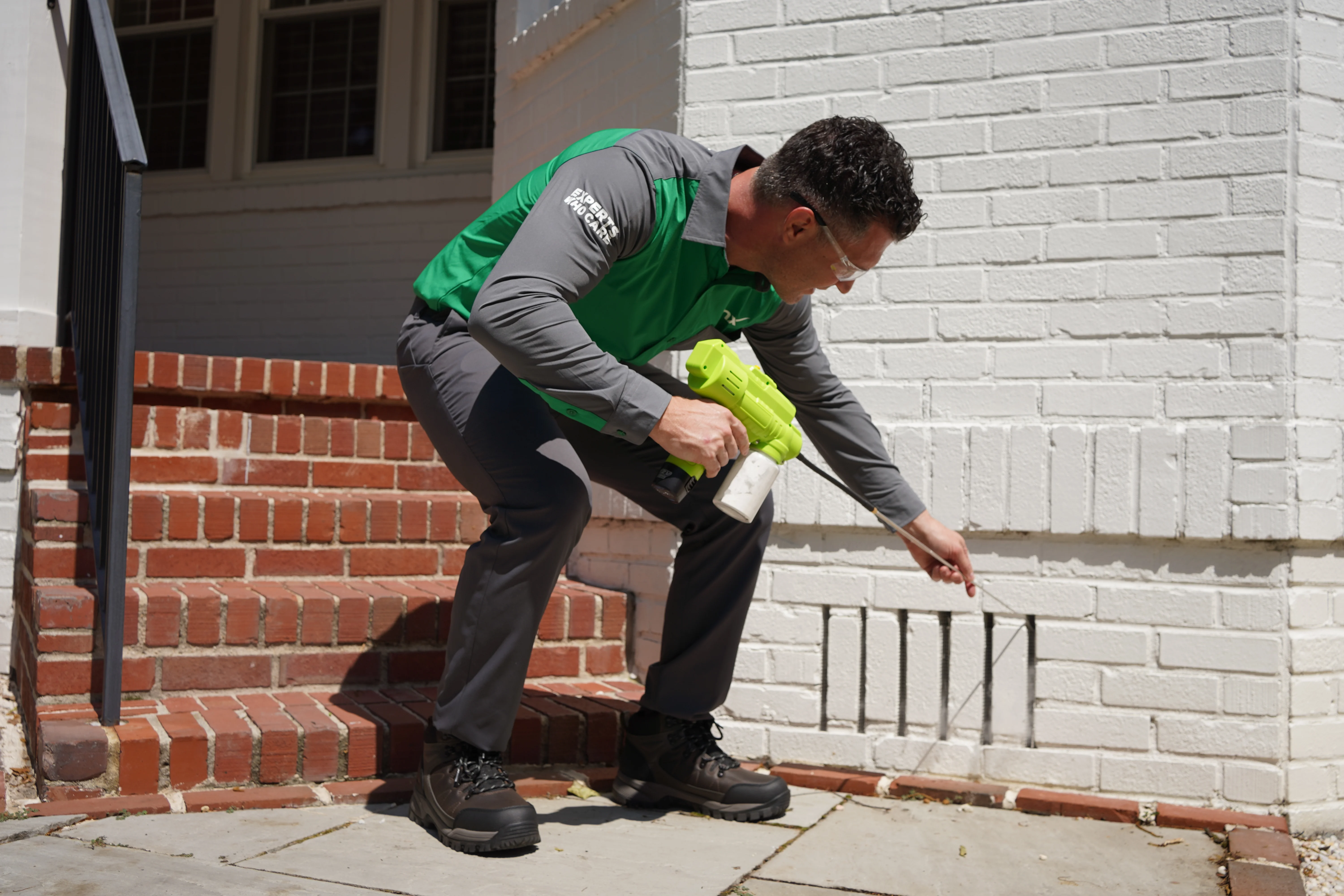
With the problem identified, the exterior gets a defensive barrier so the next wave never makes it inside. We apply a micro-encapsulated product around the foundation, three feet up and three feet out, intercepting insects at the slab gaps and thresholds they actually use. Ninety-four percent of infested buildings in a Charleston-area study were entered from ground-based colonies rather than aerial ones, so the foundation is where Berkeley County jobs are won or lost.
Yard Treatment
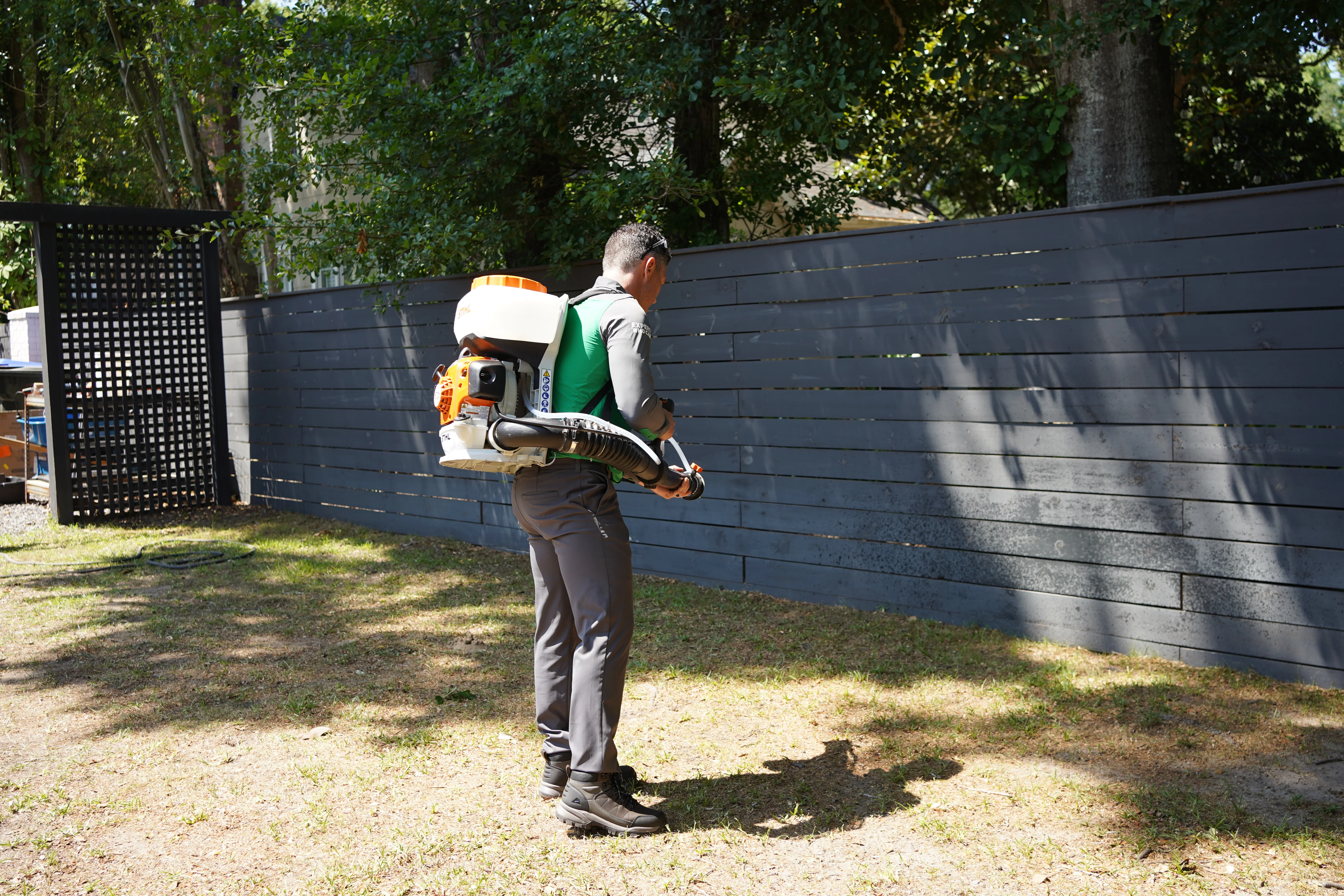
The yard gets treated up to 30 feet out, because most of what ends up indoors staged in the lawn first. Three centuries of plantation, canal and railroad land here means old field drainage and filled low ground still govern where water sits on individual lots, and that standing water is exactly what keeps termites and mosquitoes working through the season.
Sweep & Treat Eaves
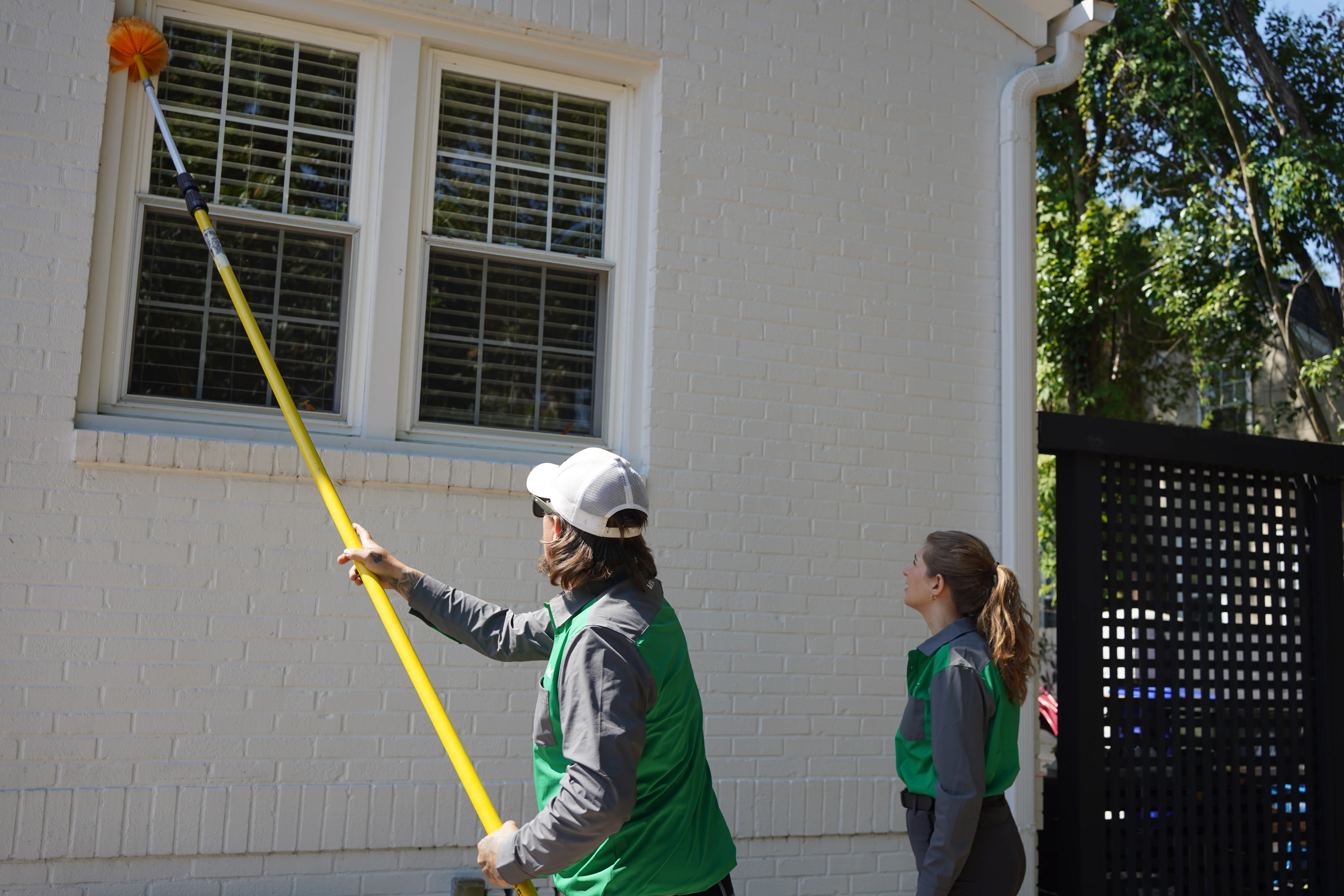
Rooflines are swept clear of webs and early wasp nests on every visit, then spot-treated with a residual product so returning insects contact the treatment instead of rebuilding. On the older frame housing near the town center, the eaves pass doubles as an early check for the shed wings that mark a Formosan swarm — evening flights toward lights from mid-May into July, a different signature from the native termite's daytime spring swarm.
Power Dust Injection
Cracks, weep holes, pipe penetrations and expansion joints get a dust product driven deep with a compressor tip. This is the treatment that reaches wall voids, and it matters on the county seat's mix of pre-war frame houses and commercial buildings with bulk paper storage, where rodents and roaches find more routes in than any surface spray can cover.
Interior Treatment (If Needed)
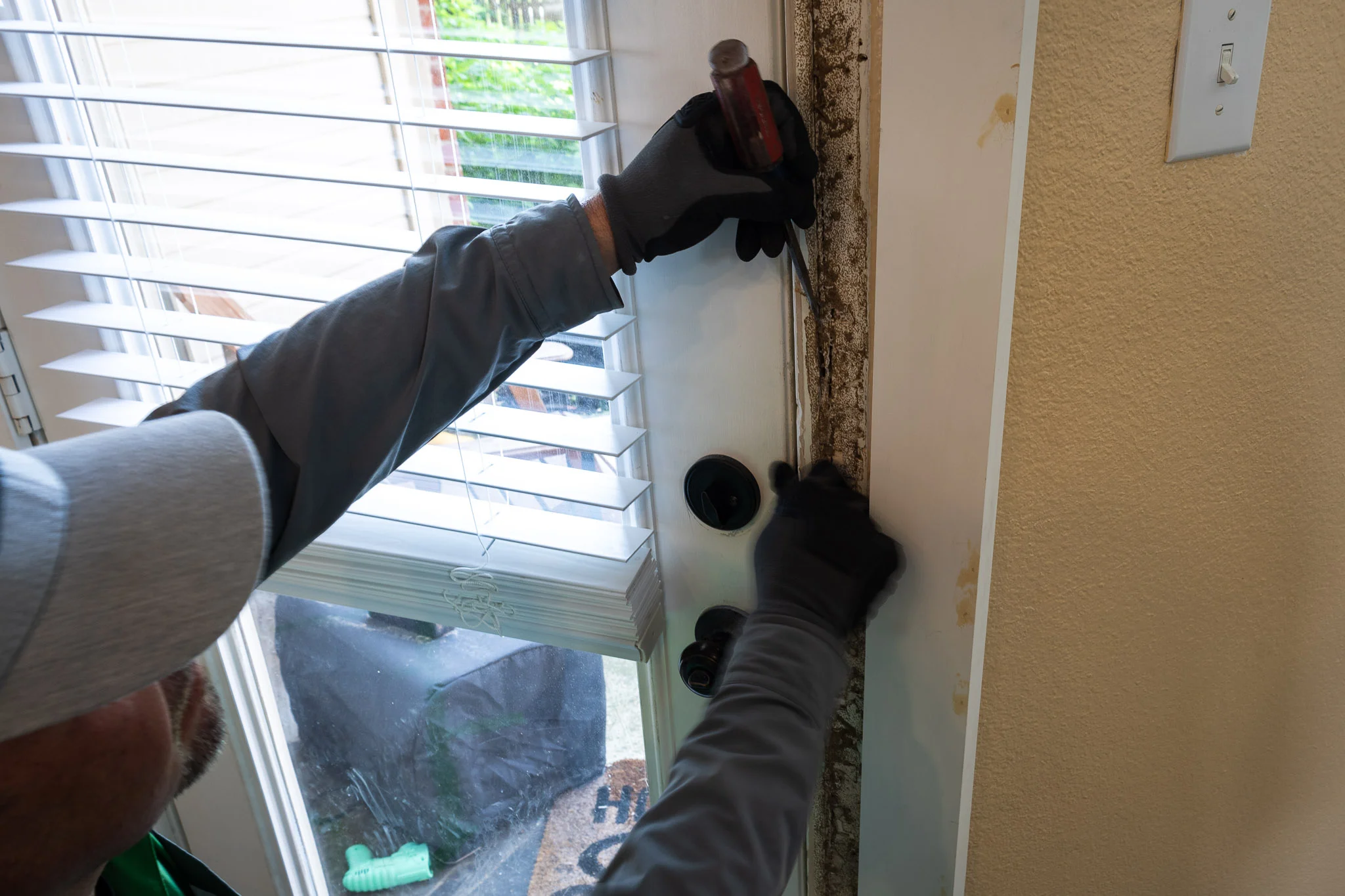
Where an infestation is already established indoors, we treat the harborage directly — gel bait and a growth regulator for roaches, exclusion first and then trapping for rodents that have spilled along fence lines and drainage from a neighboring property. Interior work and re-services between visits are covered at no extra charge on every plan.
Customer Reviews
Real Reviews from Moncks Corner Homeowners
Jack not only provided the regular service but took his time to help me have contact to a division of Vinx that I need assistance with. He went far and above to help me in a very professional way.
Tech was very nice and willing to do extra inside spraying on the spot. Very professional.
Austin did an amazing job at our home today. Very polite and respectful while inside our home.
Austin came for termite inspection and he continued with spraying my yard. Makes me happy 😊
Excellent service by Austin. Friendly and knowledgeable.
Count was a Very nice guy and very conscientious. Good job
Moncks Corner Pest Facts
Why Pest Control in Moncks Corner Is a Year-Round Commitment
Last updated: September 5, 2026
Moncks Corner sits in Berkeley County, and Berkeley County is on Clemson’s list of counties with documented Formosan subterranean termite colonies. That makes this one of the places where the alarming version of the termite conversation is actually accurate — unlike the Upstate, where it usually is not. Clemson’s county tracking lists Berkeley County among the sixteen South Carolina counties with documented colonies, and Clemson HGIC dates the species’ introduction in Charleston to the mid-1950s, making the Lowcountry one of the oldest footholds in the country. Clemson notes the heaviest concentration runs coastal, and also cautions that a listed county does not mean they are found uniformly throughout a county, so an inspection settles your property rather than the county doing it for you.
6 Reasons Moncks Corner Calls an Exterminator
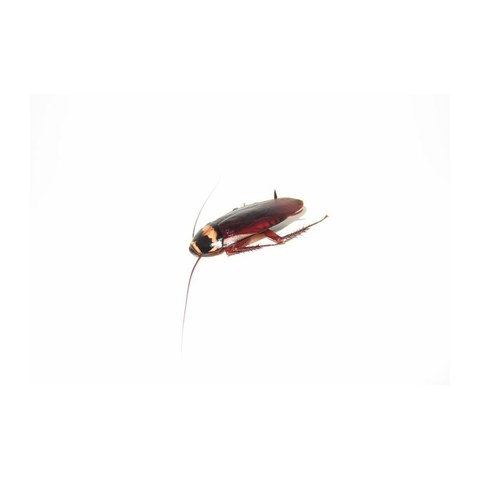
Cockroaches (American Cockroach)
American cockroaches work the moisture-heavy crawl spaces and outbuildings common on Berkeley County’s older and rural properties, while smaller species turn up in kitchens on their own schedule. Treatment goes to the harborage with gel bait and growth regulator rather than chasing the insect on the wall.
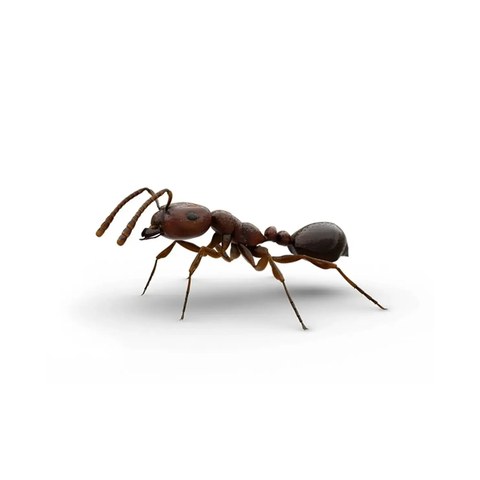
Fire & Household Ants
Fire ants and household ants both move fast on disturbed ground around Moncks Corner’s newer subdivisions and along fence lines near cleared land. Direct mound treatment paired with a yard-wide bait program handles fire ants; household ant trails get traced back to the colony rather than sprayed at the surface.
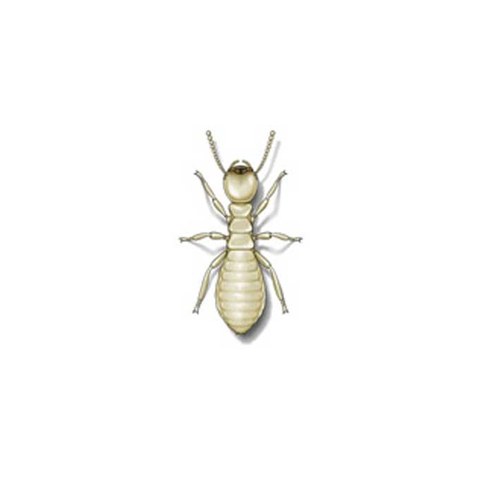
Termites
Termite work here gets taken seriously rather than softened, because Berkeley County is on Clemson’s documented Formosan list alongside the native eastern subterranean termite. Ninety-four percent of infestations in a Charleston-area study started at ground level, so the inspection is soil-first, and swarm timing — evening in Formosan colonies, daylight for the native species — helps confirm which one you have.
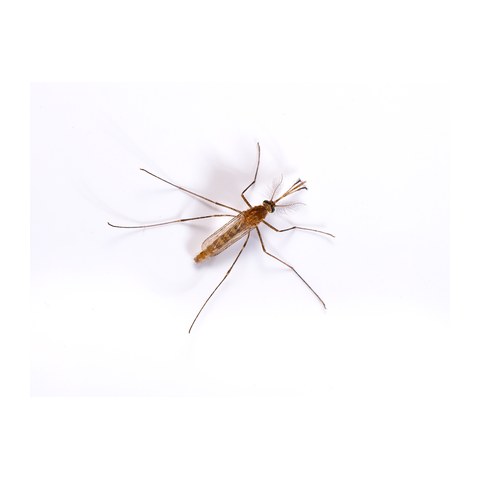
Mosquitoes
Moncks Corner’s low-country ground holds water long after a storm, thanks to old field drainage and filled low spots left over from three centuries of clearing and grading. Larvicide on standing water paired with a barrier treatment on shaded resting cover keeps mosquito pressure down between visits.

Rodents
Rodent pressure here often has a direction, arriving from civic buildings, commercial sites or a recently treated neighboring property rather than starting at your own house. Exclusion on the structure plus a treated boundary on the side the pressure arrives from is what actually works, rather than more bait indoors.
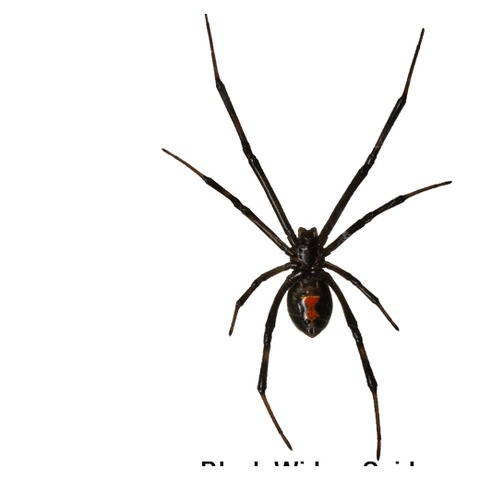
Spiders & Other Pests
Spiders and other common pests turn up in outbuildings and along tree lines across Berkeley County’s rural and wooded properties. Identification comes before pricing on anything unusual, and most calls resolve to ordinary house species rather than anything that needs special handling.
Two Clemson findings shape how we work here. Ninety-four percent of infested buildings in a Charleston study were entered from ground-based colonies rather than aerial ones, so inspections are soil-first. And Formosan swarms run mid-May into July, in the evening, toward lights — a different signature from the native eastern subterranean termite’s daytime spring swarm. If you find a pile of shed wings on a windowsill after a warm May evening, that timing tells you which species you are looking at, and it is worth a call that week. Both species work from soil and need moisture, which on this ground is rarely in short supply.
The South Carolina Encyclopedia gives an unusually specific origin for the town. The name comes from Thomas Monck, who in 1735 bought a thousand acres in St John’s Berkeley Parish and established Mitton Plantation, and the Swiss immigrant Simeon Theus opened the first store at the crossroads around 1738. Then the town moved: in 1856 the Northeastern Railroad built a station about a mile from the old settlement, took the Moncks Corner name, and expanded onto Monck’s former property. The town incorporated in 1885, and in 1895 it became the seat of Berkeley County, succeeding Mount Pleasant. For pest work the relevant residue is the ground rather than the buildings — plantation land, then canal and railroad land, then a county seat, cleared, worked, drained and re-graded across three centuries, which is why old field drainage and filled low ground still govern where water sits on individual lots.
Being the county seat changes the building mix in a way that matters for rodent work specifically. A county seat concentrates civic and commercial buildings, professional offices and records storage alongside a residential range from pre-war frame houses near the center out to recent subdivisions at the edges. Commercial and institutional buildings with bulk paper storage, intermittent occupancy and loading areas support rodent populations continuously, and those populations spill along fence lines and drainage into adjoining residential streets — particularly when a neighboring site is treated and the population relocates rather than dies. If your rodent pressure is seasonal and always arrives from the same direction, that is usually the explanation, and the fix is exclusion on your structure plus a treated boundary on that side.
Pest Pressure Across Moncks Corner & Surrounding Communities
Pest Pressure Across Moncks Corner & Berkeley County
The County Seat: A Different Building Mix
Downtown Moncks Corner concentrates civic and commercial buildings, professional offices and records storage next to pre-war frame housing. Bulk paper storage, intermittent occupancy and loading areas support continuous rodent populations that spill into adjoining residential streets, so exclusion plus a treated boundary on that side is the fix rather than more bait indoors.
Fresh Soil Treatment, Years to Breach It
Recent subdivisions at the edges of town carry a fresh soil treatment, but trenching, patios and new plantings breach it within a few years. The inspection checks the slab edge and penetrations along with the treatment date.
Rural Ground: Moisture, Termite Activity & Rodent Entry
In Moncks Corner’s low-country rural and wooded properties, moisture conditions, termite activity near wood structures and rodent entry points are especially common. A trained set of eyes on the home every 90 days catches early signs before they become a larger job.
Ground Cleared and Graded Across Three Centuries
This was plantation land, then canal and railroad land, then a county seat — cleared, worked, drained and re-graded across three centuries. Old field drainage and filled low ground still govern where water sits, which is why two houses on the same street can behave completely differently after heavy rain.
The Wider Berkeley County Coverage Area
We cover the whole town of Moncks Corner plus Goose Creek, Hanahan, Summerville and Ladson, all of which sit within the same documented Formosan-colony county and share the same soil-first inspection approach.
Explore More
More Pest Control Services in Moncks Corner

Ant Control Moncks Corner
Household ants & others

Mosquito Control Moncks Corner
Monthly barrier treatments

Rodent Control Moncks Corner
All rodents covered

Cockroach Control Moncks Corner
American & German roaches

Spider Control Moncks Corner
All spider species covered

Termite Control Moncks Corner
Bait systems & liquid treatment

Bed Bug Control Moncks Corner
Heat & liquid treatments

Wasp Control Moncks Corner
Nest removal & prevention

Tick & Flea Control Moncks Corner
Yard & pet protection

Pest Control Moncks Corner
Year-round protection plans
Kid & Pet Safe
Our Treatments Are Safe for Your Whole Family: Including the Furry Members
Every product we use is EPA-registered and applied strictly at labeled rates by licensed South Carolina technicians. We take the guesswork out of safety so you can feel confident letting kids and pets back into treated areas quickly.

EPA-Registered Products Only
All products we apply are EPA-registered and used strictly per label requirements. Our licensed technicians are trained to apply the right product in the right place at the right rate, every time.
Dry Time Before Re-Entry
Exterior spray treatments dry in 30–60 minutes. Once dry, treated surfaces are safe for children and pets to contact. Your technician will confirm the all-clear before leaving your property.
Interior Treatment On Request
We treat only what’s needed, where it’s needed. Gel baits and crack-and-crevice applications keep products away from areas pets and children frequent most.
Botanical Options Available
Have specific sensitivities? Ask your technician about our plant-derived treatment options. We offer botanical alternatives for households that prefer a more natural approach.
Have a concern about products used near your pets or children? Call (854) 202-9023 and we’ll walk you through exactly what we use and why it’s safe.
Frequently Asked Questions
Exterminator Moncks Corner SC: Frequently Asked Questions
Recurring plans start at $49 a month and cover more than fifty pests. Termite work is quoted separately because it needs a soil-line focus and an annual rhythm rather than a quarterly one. Inspection is free and the price is firm before anything starts. Call 855-800-8469.
Yes, and this is one of the places we do not soften it. Clemson’s county tracking lists Berkeley County among the sixteen with documented colonies, and Clemson HGIC dates the introduction in Charleston to the mid-1950s. Clemson still notes a listed county does not mean uniform presence, so an inspection settles your own property.
Timing, mostly. Formosan swarms run mid-May into July in the evening and head for lights, while the native eastern subterranean termite swarms in daylight earlier in spring. Termite swarmers have four equal-length wings and a straight waist; ants have a pinched waist and a longer front pair.
Because that is where they arrive. Clemson records that ninety-four percent of infested buildings in a Charleston study were entered from ground-based colonies rather than aerial ones. An inspection that skips the crawl space or slab edge is not really an inspection.
Usually history. This was plantation land, then canal and railroad land, cleared and re-graded across three centuries, and old field drainage and filled low ground still route water in ways the street layout does not reflect. It is worth walking the lot after heavy rain.
Not quite. the South Carolina Encyclopedia records the name coming from Thomas Monck, who bought a thousand acres in 1735, and a store at the crossroads around 1738 — but in 1856 the Northeastern Railroad built a station about a mile away and took the name. The town incorporated in 1885 and became the county seat in 1895, succeeding Mount Pleasant.
That points at a neighbor rather than your house. Civic, institutional and commercial buildings support continuous rodent populations, and treatment on those sites tends to relocate them. Exclusion plus a treated boundary on that side is what works.
We cover the whole town plus Goose Creek, Hanahan, Summerville and Ladson. Most calls get a next-day appointment and active termite activity gets moved up. Call 855-800-8469.
Service Coverage
Pest Control Across Moncks Corner & Berkeley County
Full-service pest control across all of Moncks Corner and surrounding Berkeley County communities, plans from $49/mo.