Spider Control in Moncks Corner, SC
Black Widow, Wolf Spider & Cobweb Control: All Spider Species Covered for Berkeley County Homes
Spider pressure in Moncks Corner is driven by two things that rural and semi-rural Berkeley County has in abundance: high insect populations and undisturbed habitat. Lake Moultrie sustains the insect prey base that spider populations depend on year-round. The wooded lot adjacency throughout the county provides the undisturbed ground cover, log piles, and vegetation edges where wolf spiders establish and where black widows build their low-lying webs in protected corners. Larger rural lots mean more outbuildings, more woodpiles, more storage areas that never get disturbed, and all of those spaces are prime black widow territory. Vinx spider control is included on every plan, cobweb and egg sac removal from first and second-story eaves every visit, perimeter treatment, and targeted black widow treatment in outbuildings.
Get Started in 60 Seconds
Choose what’s easiest for you
Request a Quote
We usually respond in 2 minutes
Call (854) 202-9023
Get a Live Person (no AI agents here!)
Sign Up Online
Get pricing and schedule now




Welcome to Vinx Pest Control
A Company That Actually Backs What It Says
At Vinx, we combine professional-grade treatments with a level of service most pest control companies don’t offer. Local technicians, fast response times, and a guarantee that actually means something.
Get a Free Quote“I’m not passionate about killing bugs. I’m passionate about customer service. At Vinx, you get experts who show up, do the job right, and stand behind every visit. No runaround, no fine print.”
SPIDER COVERAGE
Spider Control Is Included on Every Vinx Plan

Quarterly Protection
- 4 visits/year
- All spider species covered
- Cobweb & egg sac removal: 1st & 2nd story
- Perimeter barrier treatment every visit
- Black widow targeted treatment
- Interior treatment upon request
- Free re-services between visits

Bi-Monthly + Outbuildings Covered
- 6 visits/year
- All spider species + cobweb removal
- Outbuildings & detached structures covered
- More frequent black widow inspection
- Ant & flea/tick coverage
- Priority re-service scheduling

Monthly + Prey Population Reduction
- 9 visits/year
- All spider species + cobweb removal
- Outbuildings & detached structures covered
- Monthly mosquito service reduces prey base
- Free bed bug treatment after 12 mo
- Free annual termite inspection
Starting rates for homes up to 3,000 sq ft. All plans: 12-month agreement. Initial service $329.
Keep Spiders Out of Your Moncks Corner Home & Outbuildings Year-Round
From black widows in the woodpile to wolf spiders crossing the garage floor to orb weavers across the doorway every fall morning, spider pressure in Berkeley County is consistent. Call (854) 202-9023 or fill out the form below.
Our Approach
How Vinx Eliminates Spiders in Your Moncks Corner Home
De-Webbing
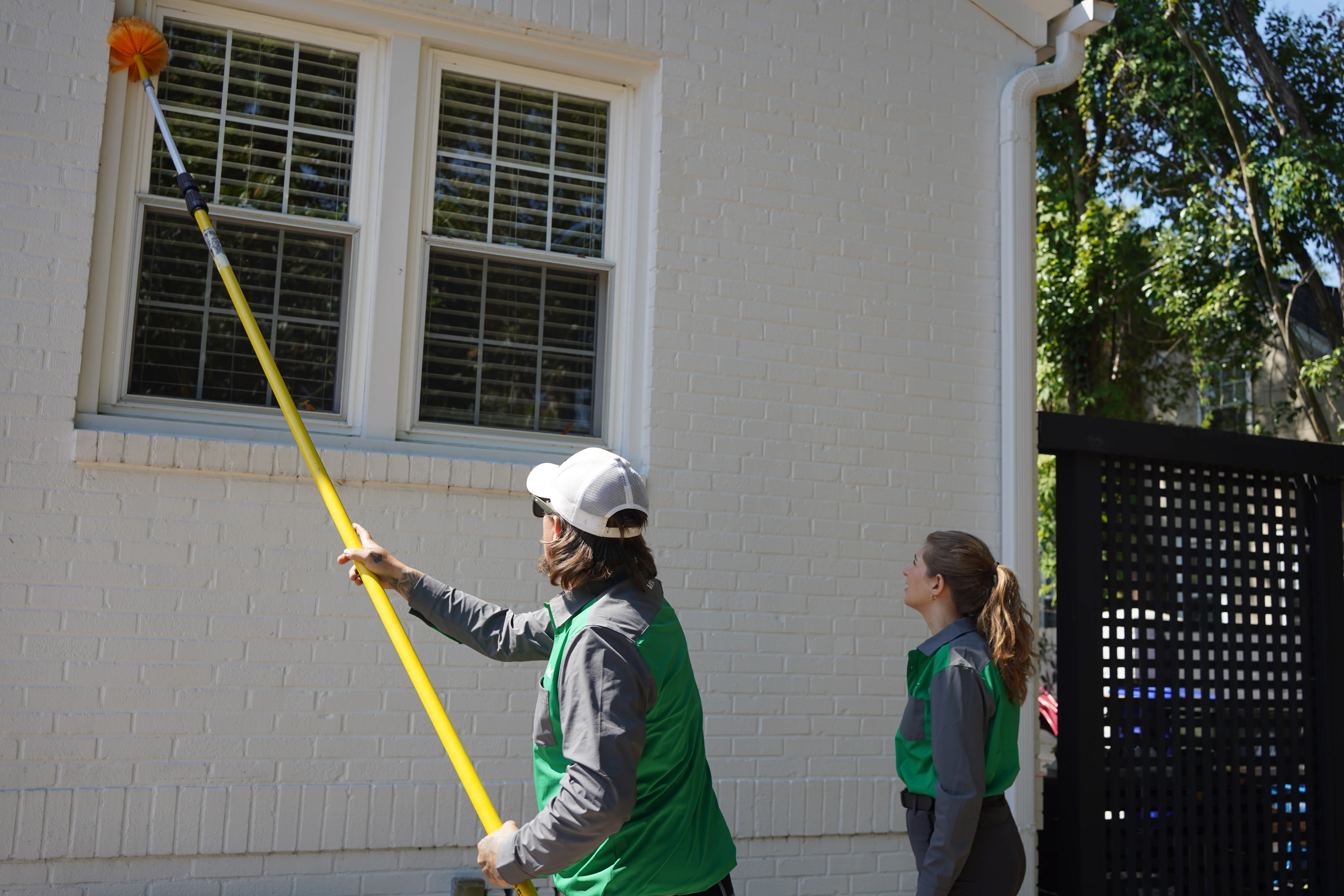
Complete exterior de-webbing of eaves, window frames, corners, light fixtures, and foundation areas on every service visit. Removing active webs and egg sacs eliminates harborage sites and takes out the next generation before it hatches, a single egg sac can contain hundreds of spiderlings. Consistent quarterly de-webbing prevents the buildup between visits.
Residual Perimeter Spray
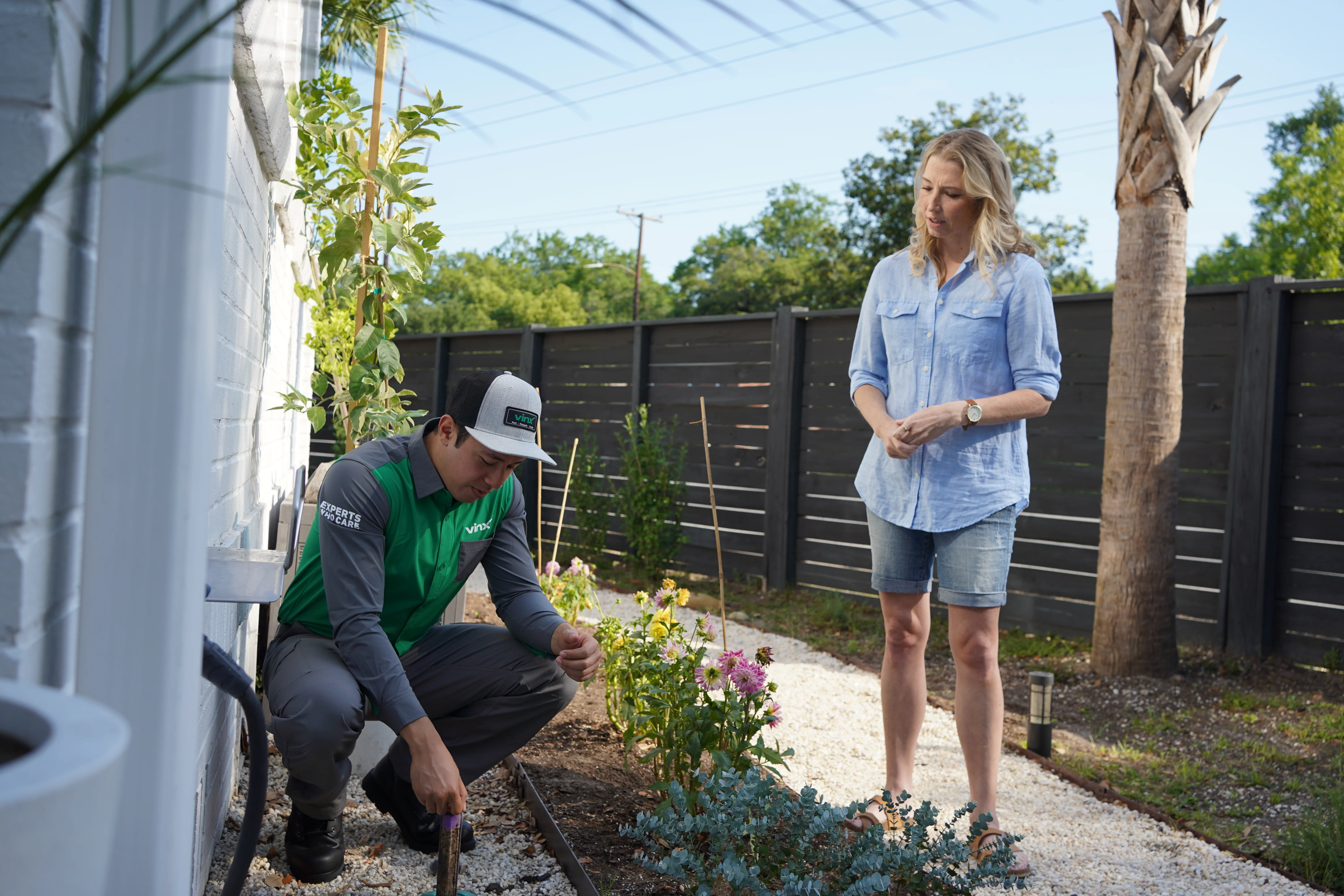
Micro-encapsulated residual insecticide is applied around the full foundation band, window and door frames, garage perimeter, and crawlspace openings. Spiders crossing the treated zone are eliminated on contact. The time-release formulation continues working between quarterly visits, maintaining a barrier against spider populations moving in from wooded lot edges.
Interior Treatment
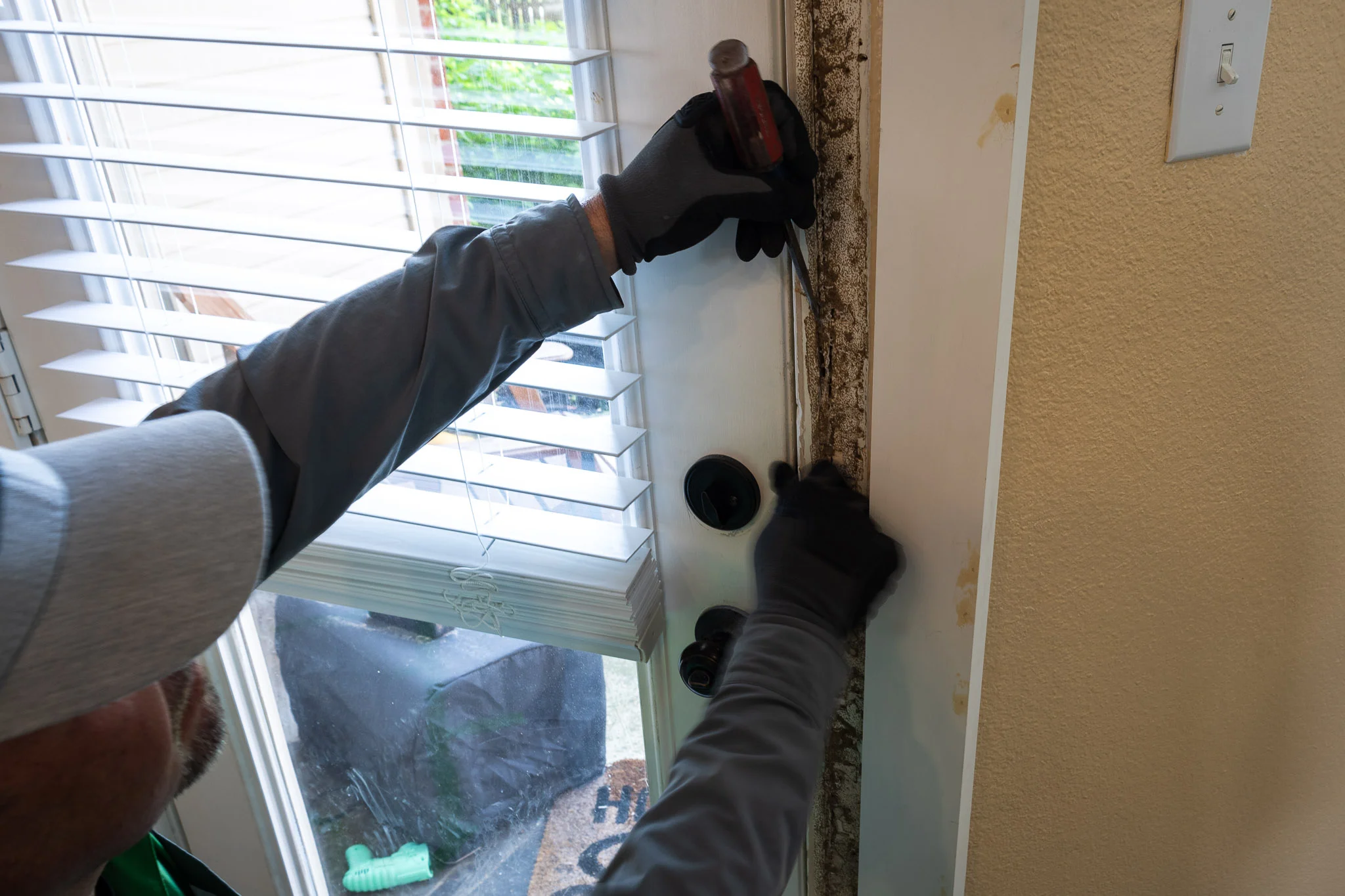
For confirmed interior infestations (black widows in the garage, widow spiders in closets or storage areas, or established house spider populations in basements and crawlspaces) targeted residual dust or liquid is applied to void spaces, wall junctions, and harborage areas. Interior treatment is available on every service visit at no additional charge.

Harborage Reduction Assessment
At the end of every visit your technician identifies and documents conditions increasing spider pressure, woodpile locations near the structure, excessive mulch depth against the foundation, debris piles, dense ground cover adjacent to entry points, and exterior lighting that attracts the insects spiders feed on. Recommendations are provided in writing after every inspection.
Customer Reviews
Real Reviews from Moncks Corner Homeowners
Anthony was kind enough to give us an overall video of our home when he visited. It’s comforting to know the service was performed well even though we weren’t home at the time. Thanks Anthony!
Our technician Anthony was very polite, efficient, informative and on time to provide pest control service. I hope he is always our technician! This was our first service with this company Vinx, we will continue using them because of this experience! Keep up the great work!
Excellent service by Austin. Friendly and knowledgeable.
Very professional and paid attention to details.
Anthony done excellent job. He hit all the trouble area.
Jack was great today! Truly the best experience I've had with Vinx. I was actually thinking about cancelling and he saved a customer.
Spider Pressure in Moncks Corner
Why Berkeley County Has Elevated Spider Pressure Year-Round
Spider populations follow their prey. Wherever insects are abundant, spiders establish in proportion. Moncks Corner’s position adjacent to Lake Moultrie, one of the highest mosquito and flying insect producing environments in South Carolina, means the prey base that sustains spider populations is consistently larger here than in most inland SC markets. Every mosquito, gnat, fly, and moth that the lake system produces becomes food for the spider populations establishing in your yard, your eaves, and your outbuildings.
Rural lot sizes create more undisturbed harborage. The larger average lot sizes in Moncks Corner and surrounding Berkeley County communities mean more undisturbed ground cover, more wood storage areas, more outbuildings with rarely-opened storage corners, and more fence lines adjacent to undisturbed vegetation. All of these are prime spider harborage environments. A rural Berkeley County property with a woodpile, a detached garage, and an outbuilding is managing three separate high-risk black widow environments simultaneously.
Most of what you are seeing is harmless, and we would rather say so. Of the species on this page, only the widows are medically significant. Wolf spiders are large, fast and genuinely alarming, and they are the single most common thing we get called out for, but they are not dangerous and they are hunting the insects you would rather not have. Orb weavers and cellar spiders are the same story. The reason we still treat is nuisance and volume, not danger, and any company leading with fear on a Berkeley County spider job is selling you something.
Spider Species in Moncks Corner
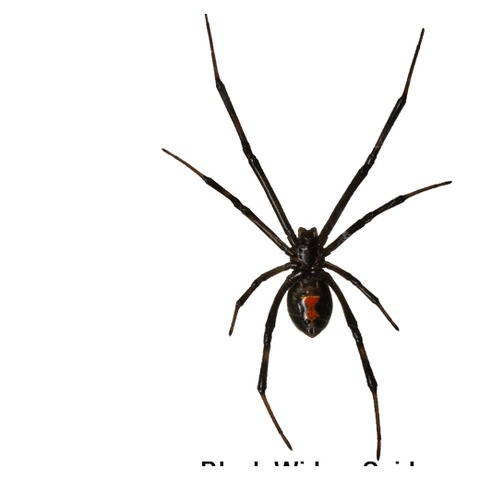
Black Widow (Latrodectus mactans)
Shiny black, half an inch, with distinctive red hourglass on underside. Builds irregular messy webs in low, sheltered locations, garage corners, under decks, woodpiles, and outbuildings. Rural Berkeley County properties with multiple outbuildings have significantly more black widow harborage than suburban properties. Bites are neurotoxic, and almost all happen when the spider is pressed against skin, reaching into a woodpile or a meter box or pulling on a stored glove. Only the adult female is medically significant; males are much smaller and are not considered a danger. The brown widow is also established across the coastal South and turns up here in outdoor furniture, garden hoses and grill covers: tan to brown with an orange rather than red hourglass, and its egg sac is spiky rather than smooth, which is often the easiest way to tell. Treat both as medically significant. All plans covered.
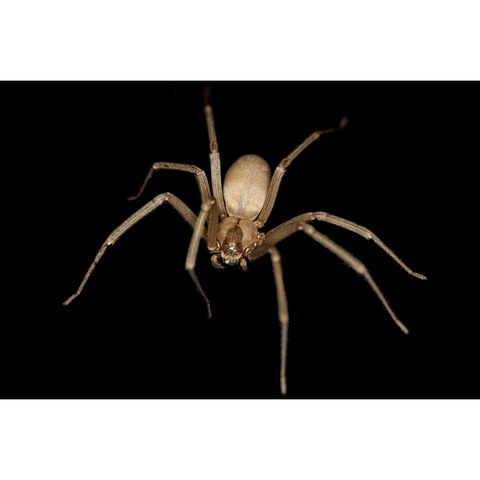
Brown Recluse (Loxosceles reclusa)
Almost certainly not what you have. The brown recluse is not established in South Carolina. Its range centers on Missouri, Arkansas and Oklahoma, running east through Tennessee and Kentucky, and verified South Carolina specimens are vanishingly rare against the number of suspected bites reported. Occasional individuals do arrive in boxes and furniture moved from the range, which is why we list it, but a brown spider in a Berkeley County garage is far more likely to be a wolf spider, a grass spider or a funnel weaver, all of which people read a violin into.
The reliable check is the eyes, not the violin. A recluse has six eyes in three pairs; almost everything else has eight, and it takes magnification to see. If you genuinely think you have one, catch it and let our technician identify it rather than treating on a guess. A confirmed recluse bite can produce a necrotic wound and warrants medical attention, which is exactly why the identification matters rather than the assumption. All plans covered.
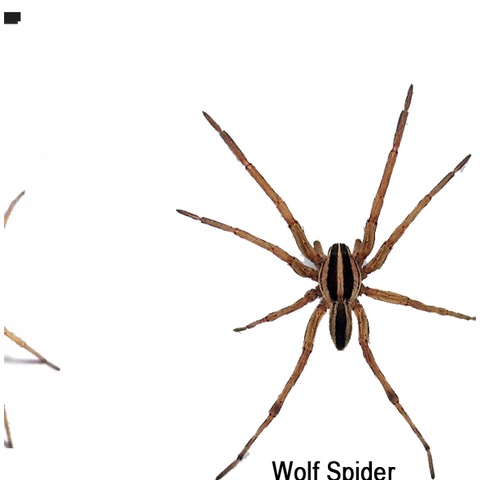
Wolf Spider (Hogna spp.)
Large (up to 1.5 inches), hairy, brown/gray ground hunter that does not build webs. Establishes in leaf litter and ground cover at wooded property edges, most common on properties adjacent to wooded lots, managed timberland, and undeveloped land throughout Berkeley County. Not medically significant. Female wolf spiders carrying spiderlings on their back are harmless. All plans covered.
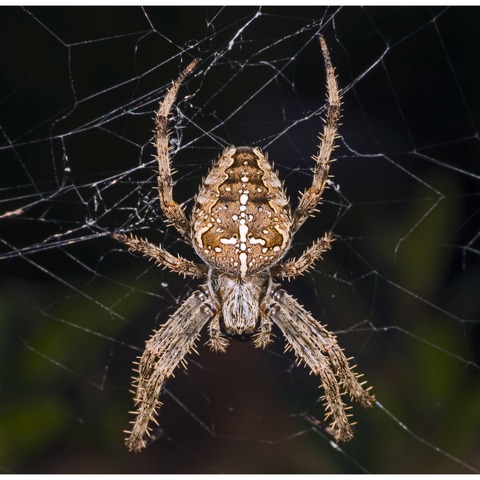
Orb Weaver Spiders (Argiope, Neoscona spp.)
Variable size (half inch to over an inch), build large circular webs with a zigzag stabilimentum. Most active late summer and fall, large webs appear overnight near exterior lighting as orb weavers follow the flying insect prey that lights attract. The high insect prey base from Lake Moultrie supports larger and more numerous fall orb weaver populations in Moncks Corner. All plans covered.

Common House Spider (Parasteatoda tepidariorum)
Small (0.25 inch), yellowish-brown, builds messy irregular cobwebs in room corners, window frames, and storage areas. Present year-round indoors in all Moncks Corner neighborhoods. Not dangerous, the persistent cobweb presence is the primary nuisance. All plans covered.
The season barely closes. The nearest station with full NOAA normals, Charleston International, records a median freeze-free stretch of 266 days, roughly eight and three-quarter months, with 52.51 inches of rain a year and 49% of it falling June to September. Warmth plus water means a continuous insect prey base, and spider numbers follow prey with a lag rather than tracking the calendar. Orb weaver webs peaking in late summer are the visible end of a build-up that started in spring.
Wooded lot adjacency brings wolf spiders to the structure. Wolf spiders are ground hunters that establish in the leaf litter and ground cover at the edges of wooded areas, exactly the vegetation type that borders most Moncks Corner residential properties with wooded lot adjacency. They follow insect prey from wooded edges toward structures, entering garages and ground-floor areas at the perimeter.
Black Widows Are More Common in Rural Berkeley County Than Most Homeowners Realize
Rural homeowners encounter black widows at higher rates than urban homeowners, not because rural areas have more dangerous spiders, but because rural properties have more undisturbed spaces where black widows establish undisturbed for long periods. Woodpiles, detached garages, outbuildings, under decking, and behind stored equipment are all prime black widow locations throughout Moncks Corner.
The most common bite scenarios are entirely preventable: reaching into a woodpile without gloves, putting on footwear stored in a garage or shed without shaking it out, picking up stored equipment that hasn’t been moved in months. Always wear gloves when handling firewood. Shake out stored footwear before wearing. If you see an irregular, messy web near ground level in a sheltered location, not a circular orb weaver web, treat the area with caution until inspected.
Cobweb Control
Why Cobweb Removal on Every Visit Is Spider Control: Not Just Housekeeping
Egg Sac Removal
A single spider egg sac contains 100–400 eggs. In Berkeley County’s long warm season, multiple generations can develop per year if sacs are left in place. Removing it before it hatches eliminates a full generation before they establish.
Territorial Signal Disruption
Spiders use pheromone signals in their silk to mark territory. Removing webs disrupts these signals, making the location less attractive for re-establishment. Repeated removal progressively discourages re-colonization.
Harborage Elimination
Established webs provide sheltered harborage and accumulate prey debris that attracts more spiders. Regular removal breaks the cycle of population build-up at the same high-activity eave locations.
1st & 2nd Story Coverage
Vinx cobweb removal covers both first and second-story eaves on every visit. Upper eaves are where the largest populations establish because they are least disturbed between service visits.
Seasonal Patterns
Spider Activity by Season
Spring (Mar–May)
Black widow egg sacs in outbuildings, woodpiles, and garages begin hatching, the most important season for targeting black widow harborage in rural Berkeley County properties. Wolf spider ground activity increases. House spider egg sacs in eaves hatch, peak importance for cobweb removal.
Summer (Jun–Aug)
Wolf spiders at peak activity near wooded lot edges, most common season for indoor wolf spider encounters in garages. Orb weavers begin establishing webs. Black widow populations at maximum reproductive activity in Berkeley County outbuildings.
Fall (Sep–Oct)
Peak orb weaver season, large webs appearing overnight near exterior lighting. The high insect prey base from Lake Moultrie supports larger and more numerous fall orb weaver populations than in many inland SC markets. Spiders move toward structures for overwinter harborage.
Winter (Nov–Feb)
Berkeley County’s mild winters mean black widows overwinter actively in garages, outbuildings, and protected exterior structures, they don’t die off here. House spiders remain active indoors. Orb weaver egg sacs survive winter and hatch in spring.
Spider Risk by Area
Spider Risk Across Moncks Corner & Berkeley County
Huger & Rural Berkeley County: HIGHEST BLACK WIDOW & WOLF SPIDER PRESSURE
The highest spider pressure in the service area. Huger’s deeply rural character (large lots, Francis Marion National Forest adjacency, undeveloped wooded perimeters, and multiple outbuildings on many properties) creates conditions where black widows establish in every undisturbed structure and wolf spiders move through ground cover from wooded edges year-round. Outbuilding inspection and targeted black widow treatment is essential for any Huger property with multiple storage structures. Quarterly exterior treatment is the minimum appropriate service level.
Bonneau & Lake-Adjacent Properties: HIGHEST ORB WEAVER & ELEVATED BLACK WIDOW
Lake Moultrie’s insect production sustains some of the largest fall orb weaver populations in the service area. The high flying insect prey base from the lake creates exceptional orb weaver web-building conditions near any exterior lighting adjacent to the lake system. Black widow pressure on Bonneau properties with undisturbed storage areas and wooded perimeters is also elevated. Monthly cobweb removal and perimeter treatment during peak season is particularly valuable for Bonneau lake-adjacent properties.
Properties Adjacent to Wooded Lots: ELEVATED WOLF SPIDER & BLACK WIDOW PRESSURE
Any Moncks Corner property with undeveloped wooded land adjacent to the structure experiences consistent wolf spider migration from wooded edges into garages and ground-floor areas throughout the active season. Black widow pressure is elevated on these properties in any undisturbed storage areas near wooded perimeters. Perimeter treatment at the transition zone between wooded edges and the maintained yard significantly reduces wolf spider migration pressure.
Moncks Corner Town Center: ELEVATED BLACK WIDOW PRESSURE
Older residential properties in Moncks Corner’s town center with attached or detached garages and accumulated storage carry consistent black widow pressure in undisturbed garage corners and behind stored items. Less frequent garage cleaning in older residential properties leaves black widow harborage undisturbed for extended periods. Quarterly Vinx treatment with targeted black widow inspection and treatment in garage areas is essential for town center properties with significant garage storage.
Cross & Jamestown: ELEVATED PRESSURE
Both communities feature rural residential character with wooded and agricultural adjacency, providing wolf spider habitat at property edges and undisturbed structures where black widows establish. Properties in Cross and Jamestown with outbuildings, wood storage, or significant wooded perimeters carry meaningful spider pressure year-round. Quarterly service with targeted black widow harborage inspection is appropriate for rural properties in these communities.
Established Moncks Corner Residential: MODERATE PRESSURE
Well-maintained established residential neighborhoods in Moncks Corner with managed landscaping and limited wooded adjacency experience moderate spider pressure, primarily house spiders indoors, orb weavers seasonally, and incidental black widow encounters in garages. Quarterly cobweb removal from eaves and perimeter treatment delivers effective control at this pressure level. Fall service visits are particularly important for removing orb weaver egg sacs before they overwinter and hatch in spring.
Kid & Pet Safe
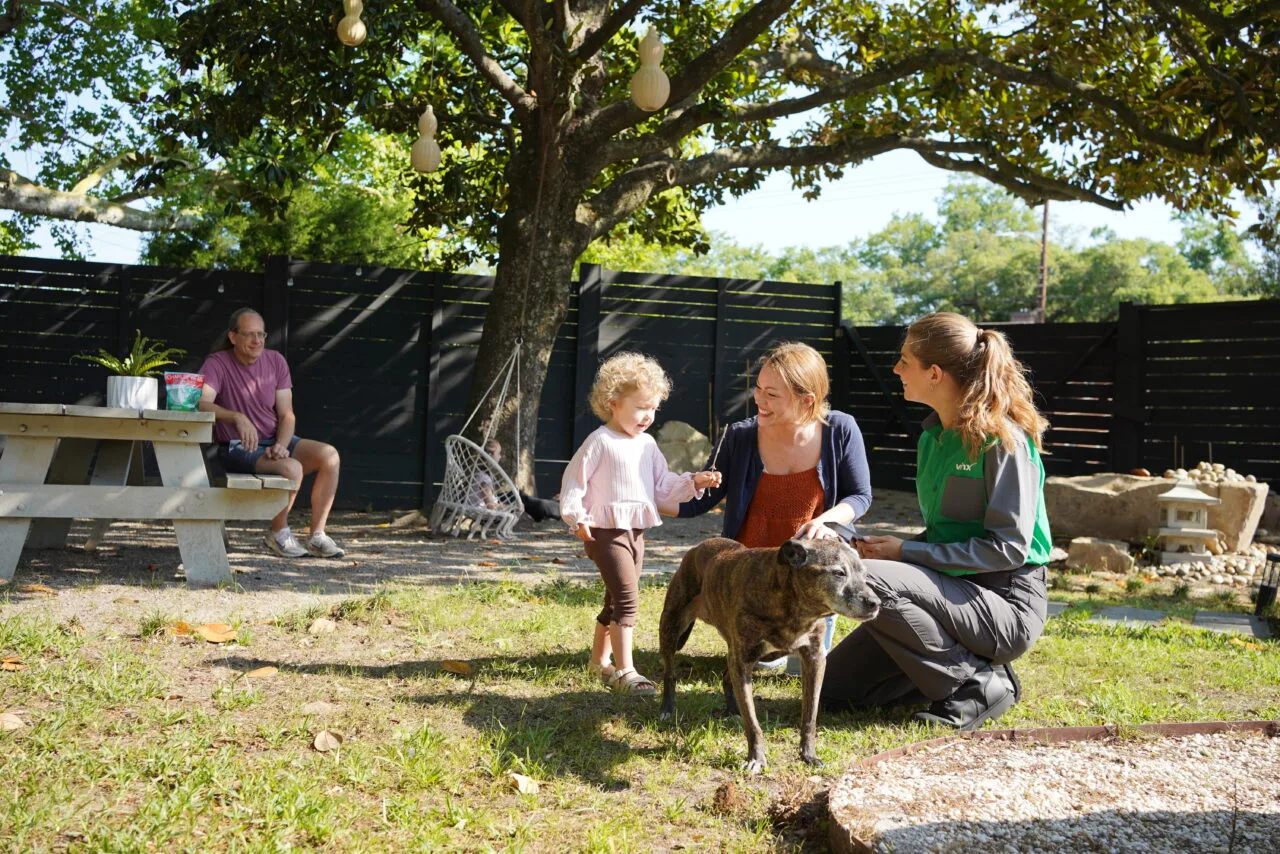
Our Treatments Are Safe for Your Whole Family: Including the Furry Members
Every product we use is EPA-registered and applied strictly at labeled rates by licensed South Carolina technicians. We take the guesswork out of safety so you can feel confident letting kids and pets back into treated areas quickly.
EPA-Registered Products Only
All products we apply are EPA-registered and used strictly per label requirements by our licensed technicians on every visit.
Dry Time Before Re-Entry
Exterior spray treatments dry in 30–60 minutes. Your technician confirms the all-clear before leaving your property.
Interior Treatment On Request
Cobweb removal is mechanical, no product involved. Interior treatment uses targeted applications in corners and baseboards away from food areas.
Botanical Options Available
Ask your technician about plant-derived treatment options for households that prefer a more natural approach.
Have a concern about products used near your pets or children? Call (854) 202-9023 and we’ll walk you through exactly what we use and why it’s safe.
Explore More
More Pest Control Services in Moncks Corner

Pest Control Moncks Corner
Year-round protection plan

Ant Control Moncks Corner
Household ants & others

Mosquito Control Moncks Corner
Monthly barrier treatments

Rodent Control Moncks Corner
All rodents covered

Cockroach Control Moncks Corner
American & German roaches

Termite Control Moncks Corner
Bait systems & liquid treatment

Wasp Control Moncks Corner
Nest removal & prevention

Tick & Flea Control Moncks Corner
Yard & pet protection
Exterminator Moncks Corner
Same-day local exterminators

Bed Bug Control Moncks Corner
Heat & liquid treatments
Frequently Asked Questions
Spider Control in Moncks Corner: Your Questions Answered
Moncks Corner homes encounter black widows, brown widows, wolf spiders, cellar spiders (daddy long legs), and orb weavers. Black and brown widows are medically significant, their venom requires medical attention. Wolf spiders are large and alarming but not dangerous. Vinx treats the full spider population and addresses the insect prey that draws spiders to your home.
Black widows prefer dark, undisturbed areas: garages, storage sheds, wood piles, underneath outdoor furniture, electrical boxes, and landscaping timbers. In homes, they hide behind boxes in garages and storage areas. Berkeley County’s warm climate means black widows can be active year-round, wear gloves when reaching into storage areas or moving wood.
Yes. Vinx applies residual products to the exterior foundation, eaves, and entry points, where spiders are active, not to living areas. Products are applied as a targeted spray and allowed to dry before your family uses outdoor areas (typically 30–60 minutes). Interior treatments use products safe for occupied homes when applied as directed.
Almost certainly not. The brown recluse is not established in South Carolina; its range centers on Missouri, Arkansas and Oklahoma and runs east through Tennessee and Kentucky. Verified South Carolina specimens are rare against the volume of suspected bites reported. Individuals do occasionally arrive in boxes and furniture moved from the range, so it is not impossible, but the brown spider in your garage is far more likely to be a wolf spider, grass spider or funnel weaver. The reliable check is eye arrangement rather than the violin marking: a recluse has six eyes in three pairs where most spiders have eight, and it needs magnification. Catch it and let us identify it.
Realiztically, the widows. The black widow is the one most people know, shiny black with a red hourglass underneath, and the brown widow is also established across the coastal South, tan with an orange hourglass and a distinctly spiky egg sac. In both cases only the adult female matters and almost every bite happens when the spider is compressed, reaching into a woodpile, a meter box, a stored glove or under outdoor furniture. Everything else you are likely to meet here, wolf spiders, orb weavers, cellar spiders, house spiders, is harmless and mostly useful.
Because the lights are doing the recruiting. White and blue-spectrum bulbs pull in far more moths, midges and flying insects than amber or warm yellow ones, and orb weavers simply build where the food is. That is why webs appear across a porch ceiling or a doorway overnight in late summer and not in the middle of the lawn. Switching exterior bulbs is one of the few genuinely free interventions that works, and near Lake Moultrie, where the flying insect base is already high, it makes more difference than an extra treatment would.
Spiders follow their food source, insects. High spider populations in your home indicate high insect pressure. Addressing the insect infestation (ants, mosquitoes, gnats, roaches) that feeds the spiders is as important as treating spiders directly. Vinx Platinum’s full-service treatment addresses both spiders and the pest prey that sustains them.
A single exterior perimeter treatment typically controls spider populations for 4–8 weeks depending on rain and pest pressure. Vinx Platinum quarterly treatments maintain a protective barrier year-round. If spiders return between visits, Platinum customers receive free re-treatments. One-time treatments are most effective when combined with reducing outdoor lighting that attracts insect prey.
Vinx services all of Moncks Corner and surrounding Berkeley County for spider control including Bonneau, Jamestown, Cross, and Huger. Call (854) 202-9023 to schedule a free inspection.
Not on its own. Spiders follow prey, so a property with a heavy spider load has an insect problem underneath it, usually exterior lighting, a damp crawlspace, or clutter and wood storage giving insects harborage. Web and egg sac removal matters too, because leaving sacs in place while treating around them just delays the next generation. What works is perimeter treatment plus physical web and sac removal plus fixing the conditions, which is why your technician will talk about lighting, moisture and the woodpile rather than only what is in the sprayer.
On rural Berkeley County lots, yes, and it is the difference between a job that holds and one that does not. Barns, sheds, well houses, detached garages and covered equipment are exactly what widows want: dark, sheltered, undisturbed, with insect traffic. A house treated perfectly while an untreated shed sits twenty feet away gets recolonized from the shed. Larger lots out toward Bonneau, Cross and Huger typically have several such structures, and we would rather quote them in than have you wonder why the problem came back.
Indirectly, yes, though not for the reason people assume. Rain does not favor spiders directly; it favors the insects they eat, and spider numbers follow prey with a lag of weeks. With 52.51 inches of rain a year here and roughly half of it falling June through September, the wet season and the hot season coincide, which is why the visible peak lands in late summer and autumn. Heavy rain also drives ground-hunting species like wolf spiders toward structures as their leaf-litter habitat floods.
Service Coverage
Spider Control Across Moncks Corner & Berkeley County
Cobweb removal, black widow treatment, and perimeter barrier across all of Moncks Corner and Berkeley County, included on every plan from $49/mo.