




Termites rarely show themselves. The workers that do the damage are pale, blind and live inside soil, wood and mud tubes, so most homeowners find a termite problem through what termites leave behind: wings, mud tubes, damaged wood or droppings. Some of those signs are certain, and some are easy to mistake for something harmless. This guide ranks the signs by how much they tell you, shows what termite damage in wood and walls looks like, explains what it means when you find droppings but no termites, and covers the termites that live in South Carolina, North Carolina and Virginia. It's based on guidance from the University of Kentucky, NC State, UC IPM and Clemson.
The strongest signs of termites: winged termites (swarmers) or piles of their shed wings indoors, mud tubes about the width of a pencil on the foundation, piers or walls, and wood that sounds hollow or crumbles when probed, with soil packed into the tunnels. The University of Kentucky says finding winged termites indoors "almost always indicates an infestation warranting treatment."
Check before you panic: flying ants look similar but have elbowed antennae and pinched waists, and damage takes years, not weeks. If you see a strong sign, get a professional inspection rather than spraying what you can see.

Signs of Termites, Ranked by What They Tell You
| Sign | What it means | What to do |
|---|---|---|
| Live termites in wood | A sure sign of an active infestation (UC IPM) | Call for an inspection |
| Swarmers emerging indoors | Almost always an infestation in the structure (University of Kentucky) | Collect a few in a bag, then call for an inspection |
| Shed wings on windowsills, near doors or lights | Swarmers were inside recently | Save some for identification |
| Mud tubes on foundation walls, piers, joists or walls | Subterranean termites traveling between soil and wood. UC IPM calls tubes the most commonly seen evidence | Don't treat it yourself. Get it inspected |
| Hollow wood, or tunnels packed with soil | Feeding damage, possibly old, possibly active | Inspection to find out whether it's active |
| Six-sided pellets in small piles below wood | Drywood termites, mostly a coastal issue here | Sweep up and recheck in a few days, then have them identified |
| Pinholes in drywall with soil around them, or rippled wall coverings | Termites tunneling behind the wall | Inspection |
| Swarmers from a stump or woodpile in the yard | Termites nearby, but not necessarily in the house | Keep wood away from the house and stay alert |
1. Swarmers and Shed Wings
Swarmers are the winged reproductives a mature colony sends out to start new colonies. NC State says a colony usually takes 3 to 5 years to start producing them, so seeing swarmers indoors means a colony has been established nearby for a while. They're attracted to light, so they gather at windows and doors, then drop their wings. UC IPM notes that many homeowners first learn they have termites from "the sudden appearance of thousands of flying insects in a bathroom or kitchen."
When they swarm: NC State says native subterranean termites swarm from late winter into September or October, usually during the day on warm days after rain. In coastal South Carolina, Formosan termites swarm on evenings from about mid-May into July and fly toward lights, so a swarm around a lamp or bathroom light at night in early summer is a different warning.
Indoor swarmers can't hurt anything themselves. The University of Kentucky says they can't damage wood and live only about a day, so a broom or vacuum takes care of them. The colony that produced them is the problem. The University of Kentucky also notes that swarmers coming up next to the foundation or from a porch or patio mean there's "a good chance" the house is infested.
Termite or flying ant?
Ants often swarm at the same time of year, and this is the most common false alarm. The University of Kentucky's way to tell them apart:
| Termite swarmer | Flying ant | |
|---|---|---|
| Antennae | Straight | Elbowed (bent) |
| Waist | Thick, uniform | Narrow, pinched |
| Wings | Four wings of equal size | Front wings longer than the back wings |
For more look-alikes, see flying insects mistaken for termites.
2. Mud Tubes
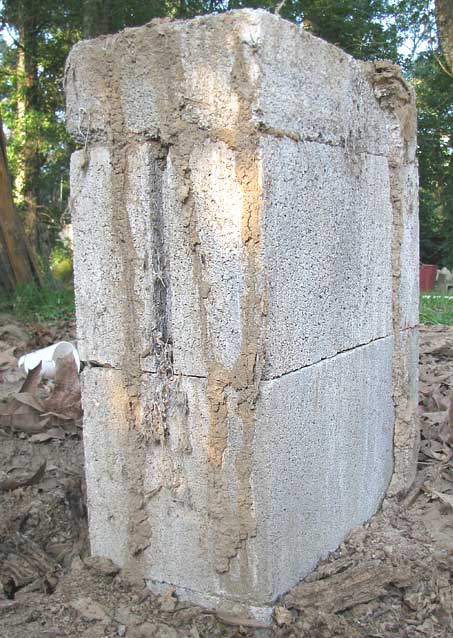
Subterranean termites, the most common termites in the Carolinas and Virginia, don't travel in the open. They build shelter tubes from soil, saliva and chewed wood, usually about the diameter of a pencil according to the University of Kentucky, running up foundation walls, piers, sill plates and joists. Look in crawl spaces, garages, along the slab edge, around plumbing, and behind stored items.
NC State notes old tubes are dry and crumbly and can leave "etching" on surfaces for years. Tubes found high on walls or ceilings can mean an above-ground colony. Tubes can also hide behind drywall. In a YouTube walkthrough, attorney Tom Campbell of Campbell Law shows a trick called "shadowing": turn off the lights and shine a flashlight along the wall to catch the slight bumps of tubes underneath.
3. Termites in Wood: What the Damage Looks Like

Termites eat wood from the inside, and the University of Kentucky notes the outer surface usually stays intact, so damaged wood can look fine until it's probed. NC State lists the signs: wood that sounds hollow when tapped with the handle of a screwdriver, wood soft enough to probe with a knife or screwdriver, and a thin, gritty gray-brown film on the surface. The EPA suggests probing exposed wood with a flathead screwdriver.
How to tell termite damage from other damage:
- Subterranean termites usually feed along the grain, UC IPM says, and the University of Kentucky notes the galleries are lined with mud or soil. Wood damaged by moisture or carpenter ants "will not have this appearance."
- Carpenter ants leave smooth, clean tunnels and push out sawdust-like shavings. See carpenter ants vs. termites.
- Drywood termites cut across the grain in chambers, some filled with pellets.
- Wood rot on its own isn't termites, but damp wood attracts them.
Places to check: baseboards, door and window frames, the sill plate and joists in a crawl space, porch steps and posts, and any wood near leaks or where soil, mulch or firewood touches the house. The University of Kentucky describes one infestation found only when a vacuum head broke through a baseboard.
4. Signs of Termites in Walls
Walls hide termites well, which is why many infestations are found during a remodel. The University of Kentucky lists two wall signs:
- Tiny holes in drywall or plaster with bits of soil around the edges
- Rippled or sunken areas behind paint or wallpaper where termites are tunneling underneath
These are easy to blame on water. One YouTube commenter wrote that termite damage is "so easy to write it off as water damage without opening the wall," and another found mud tubes "behind the shower tiles" while remodeling a bathroom. Bubbling paint and doors or windows that suddenly stick are often listed as termite signs too, but moisture and humidity cause both far more often. Treat them as a reason to look closer, not as proof.
5. Termite Droppings: The Drywood Sign
Drywood termites live entirely inside wood, don't need soil and don't build mud tubes. They push their droppings out through small "kickout" holes. UC IPM says these holes are less than 2 millimeters across and that the pellets "have six hexagonal sides and are diagnostic for drywood termites." Clemson describes them as about 1/16 inch long, often a salt-and-pepper mix of colors, piling up below the wood like tiny stones. They don't look like sawdust.
Termite droppings but no termites?
That's normal. Drywood colonies are small, often under 1,000 termites according to UC IPM, and they stay sealed inside the wood, so you almost never see them. UC IPM adds that you can't tell from pellets alone whether the infestation is still active. Their test:
- Sweep or vacuum up the pellets around the kickout hole.
- Check again a few days later.
- New pellets suggest an active infestation. A few may also fall from old galleries when the building vibrates, so a small amount isn't proof.
Be careful with identification. People often post photos of suspected "frass" in Reddit's termite forums that turn out to be mouse droppings. If you're not sure, have the pellets identified. See drywood vs. subterranean termites in the Carolinas.
How to Tell If Termites Are Active
- Live termites in damaged wood are a sure sign, UC IPM says.
- Break open a small section of mud tube and look for small, creamy-white workers, as the University of Kentucky suggests. An empty tube doesn't prove the infestation is over, because termites often abandon sections while feeding elsewhere.
- Recheck drywood pellets a few days after cleaning them up.
- Swarmers this year mean a colony that is alive and mature.
A professional can't always prove a house is termite-free either. A Reddit r/pestcontrol reply (via Google search excerpts) put it honestly: "Termites are cryptic beasts and no one can confidently say you don't have termites. We can't see inside of walls and under floors."

Termites in South Carolina, North Carolina and Virginia
- Native subterranean termites are the most common everywhere. Clemson's statewide survey found the eastern and southeastern subterranean termites "throughout the state," and they can only be told apart under a microscope.
- Formosan subterranean termites have been in Charleston since the mid-1950s, according to Clemson, and are now established in parts of 16 South Carolina counties. Their colonies are far larger, they swarm on early-summer evenings, and around Charleston they also hollow out live trees, especially oaks and maples.
- Drywood termites are real but uncommon here. Clemson's survey found the eastern drywood termite in six coastal South Carolina counties, all from structures or light traps, and the powderpost drywood termite in seven counties including Charleston and Beaufort.
In South Carolina, most home sales and lenders require a CL-100, the state's official wood infestation report, issued only by a certified inspector. It's a snapshot of what the inspector could see that day, not a warranty.
What to Do If You Find Signs
- Don't panic, and don't rush. North Carolina's agriculture department says termites "will not cause significant structural damage in a matter of weeks." NC State says serious damage usually takes about 3 to 8 years.
- Don't spray what you see. NC State notes surface sprays kill the termites in view but don't protect the rest of the wood or the house.
- Save evidence. Put a few swarmers or wings in a sealed bag, and take photos of tubes, pellets and damage.
- Get a professional inspection to confirm the species, find how far it has spread and recommend treatment. See how often to have a termite inspection.
To check your own home step by step, see how to check for termites yourself. Our termite control service handles inspection and treatment across South Carolina, North Carolina and Virginia.
Key Takeaways
- Swarmers or shed wings indoors almost always mean an infestation.
- Mud tubes about the width of a pencil are the most common subterranean termite sign.
- Termite damage in wood follows the grain and is packed with soil. Clean, smooth tunnels point to carpenter ants.
- Six-sided pellets mean drywood termites. Sweep them up and recheck in a few days to see if they're active.
- In walls, look for pinholes with soil and rippled paint before blaming water.
- Act steadily, not in a panic. Damage takes years, so take time to get a proper inspection.
Frequently Asked Questions
Most homeowners first notice winged termites (swarmers) or piles of their shed wings near windows, doors or lights, or mud tubes on the foundation, piers or walls. The University of Kentucky says winged termites indoors almost always indicate an infestation that needs treatment.
Narrow brown tunnels of soil about the width of a pencil, running up foundation walls, piers, sill plates, joists or walls. Subterranean termites build them from soil, saliva and wood to travel between the ground and wood. UC IPM calls them the most commonly seen evidence of subterranean termites.
Subterranean termites usually eat along the grain and leave tunnels lined or packed with soil, while the outer surface often stays intact. Damaged wood sounds hollow when tapped and is soft enough to probe with a screwdriver. Carpenter ant tunnels are clean and smooth, with sawdust-like shavings pushed outside.
Drywood termites live sealed inside wood in small colonies and push their droppings out through tiny kickout holes, so you rarely see them. UC IPM says you can't tell from pellets alone whether they're still active: clean up the pellets and check a few days later. New pellets suggest an active infestation.
Drywood termite droppings are hard pellets about 1/16 inch long with six flattened sides, often a mix of light and dark colors, piling up below the wood like tiny stones. They don't look like sawdust. Subterranean termites, the most common kind here, don't leave piles of droppings.
Tiny holes in drywall or plaster with bits of soil around them, rippled or sunken areas under paint or wallpaper, mud tubes showing as bumps behind drywall, and swarmers coming out of wall outlets or baseboards. Bubbling paint and sticking doors are more often caused by moisture, so treat them as a reason to look closer.
Live termites in the wood are a sure sign. Break open a small section of mud tube and look for creamy-white workers, though an empty tube doesn't prove they're gone. For drywood termites, clean up the pellets and check for new ones a few days later. Swarmers this year mean a living colony.
Termite swarmers have straight antennae, a thick waist and four wings of equal length. Flying ants have elbowed antennae, a pinched waist, and front wings longer than the back wings.
Clemson's statewide survey found native eastern and southeastern subterranean termites throughout the state, and they are the most common. Formosan subterranean termites have been in Charleston since the mid-1950s and are now in parts of 16 counties. Drywood termites are uncommon and found mostly in coastal counties.
Don't panic or spray what you see. Termites cause serious damage over years, not weeks. Save a few swarmers or wings in a bag, photograph tubes and damage, and schedule a professional inspection to confirm the species and recommend treatment.
Sources: M. F. Potter, "Termite Control: Answers for Homeowners", University of Kentucky Entomology ENTFACT-604; P. Alder and C. Hayes, "Termites: Biology and Control", NC State Extension; UC Statewide IPM Program, "Pest Notes: Drywood Termites" (Pub. 7440) and "Pest Notes: Termites" (Pub. 7415); K. Hathorne, P. A. Zungoli and E. P. Benson, "Termites of South Carolina," Clemson HGIC 2448; P. A. Zungoli and E. P. Benson, "Drywood Termites," Clemson HGIC; Clemson Cooperative Extension, Formosan subterranean termite guidance; B. A. Evans et al., Formosan termite infestation of trees around Charleston, Biological Invasions (2019); U.S. EPA, "Termites: How to Identify and Control Them"; NCDA&CS Structural Pest Control, A Homeowner's Guide to Termite Control Service Agreements and Warranties; Clemson Department of Pesticide Regulation, CL-100 wood infestation report; TermiteTom (Campbell Law), "Proper Termite Inspections", YouTube; Reddit r/pestcontrol (via Google search excerpts); YouTube comments under termite videos.
Photo credits: NY State IPM Program at Cornell University, CC BY 2.0; Jim Conrad, public domain; Rafti Institute, attribution; USGS Native Bee Inventory and Monitoring Lab, public domain; via Wikimedia Commons.