Commercial Pest Control & Exterminators
Protect Your Business, Employees & Customers



Commercial Exterminators for Your Business
A pest infestation can devastate your business reputation overnight. Whether you run a restaurant, office building, retail store, or warehouse, pests can cause health code violations, property damage, and loss of customers. Vinx Pest Control provides comprehensive commercial pest management solutions designed to protect your business.
Our commercial services are tailored to meet the unique needs of each industry. We understand the regulations and standards that apply to your business and work to ensure full compliance while eliminating pest problems quickly and discreetly.
Industries We Serve
Our Commercial Services Include
- Comprehensive facility inspection
- Integrated Pest Management (IPM) programs
- Regular scheduled maintenance visits
- Emergency response services
- Documentation for health inspections
- Staff education and prevention training
- Discreet service vehicles and uniforms
- After-hours service available
Why Businesses Choose Vinx
Minimal Disruption
We work around your schedule to minimize impact on your operations.
Full Documentation
Detailed reports for compliance and health department audits.
Dedicated Account Manager
A single point of contact who knows your business needs.
Free Re-Services
We stand behind our work. If pests return between scheduled visits, we come back and re-treat at no extra charge.
How Commercial Pest Pressure Differs Across Our Service Area
The restaurant corridor along King Street and Market Street in Charleston presents a specific pest management challenge that does not exist in the same form anywhere else in our service area. These historic buildings share party walls, have original 19th-century drainage infrastructure underneath them, and receive deliveries through alley-facing service entrances that open directly onto standing water and organic debris after rain. German cockroaches move between units through shared plumbing chases. A restaurant that maintains flawless sanitation can still face cockroach pressure from an adjacent unit that does not. Our commercial IPM approach in historic Charleston accounts for this by emphasizing crack-and-crevice gel bait programs and monitoring in shared wall zones rather than relying solely on perimeter sprays that stop at the property line.
The Raleigh-Triangle market, and to a lesser extent Greenville and Columbia, presents a different commercial challenge driven by rapid new construction. Strip centers, food halls, and mixed-use developments built in the last decade have modern building envelopes but frequently have compressed or incomplete vapor barriers in crawl spaces and improperly caulked utility penetrations behind commercial kitchen equipment. The new construction creates a false sense of security. We also see distinct bed bug pressure in the hotel and extended-stay market around Research Triangle Park and near the major university campuses, where high room turnover creates persistent re-infestation cycles.
The Hampton Roads commercial market is shaped by the military and port presence. Warehouses and logistics facilities near the Port of Virginia in Norfolk and the Newport News shipyards see Norway rat pressure at a level that inland Piedmont NC facilities do not. Ships introduce rats, and the waterfront infrastructure (riprap, bulkheads, stormwater outfalls) gives them permanent harborage adjacent to commercial buildings. Multi-facility DoD contractors and government facilities in the region also operate under specific documentation requirements for pest management records, which our commercial service is built to satisfy.
Treatment Prep Guide: What to Do Before We Arrive
- Notify relevant staff (kitchen managers, facilities coordinators, front desk) that a technician will be on-site and in what areas, so there are no operational disruptions.
- Clear under-sink areas in restrooms and break rooms; technicians need access to these zones for inspection and treatment.
- Move floor-level product and equipment storage away from walls in kitchen and warehouse areas to allow treatment of the full perimeter and allow the technician to inspect for entry points.
- Have maintenance or facilities pull back floor mats at entry doors and in kitchen prep areas, these are primary harborage zones for cockroaches and ants that are easy to miss when covered.
- Ensure access is granted to all areas covered in the service agreement, mechanical rooms, roof access for inspection, crawl space hatches, and exterior dumpster pads.
- For restaurants and food service: empty and clean grease traps before the visit if grease buildup is a current issue, as grease accumulation around drains is a top cockroach attractant.
- Have your most recent health inspection report available if you received any pest-related citations, this helps our technician prioritize deficiency areas first.
- Confirm after-hours access logistics in advance if the treatment is scheduled outside business hours, including alarm codes and a contact number for the key holder.
What Doesn't Work: Why DIY Falls Short
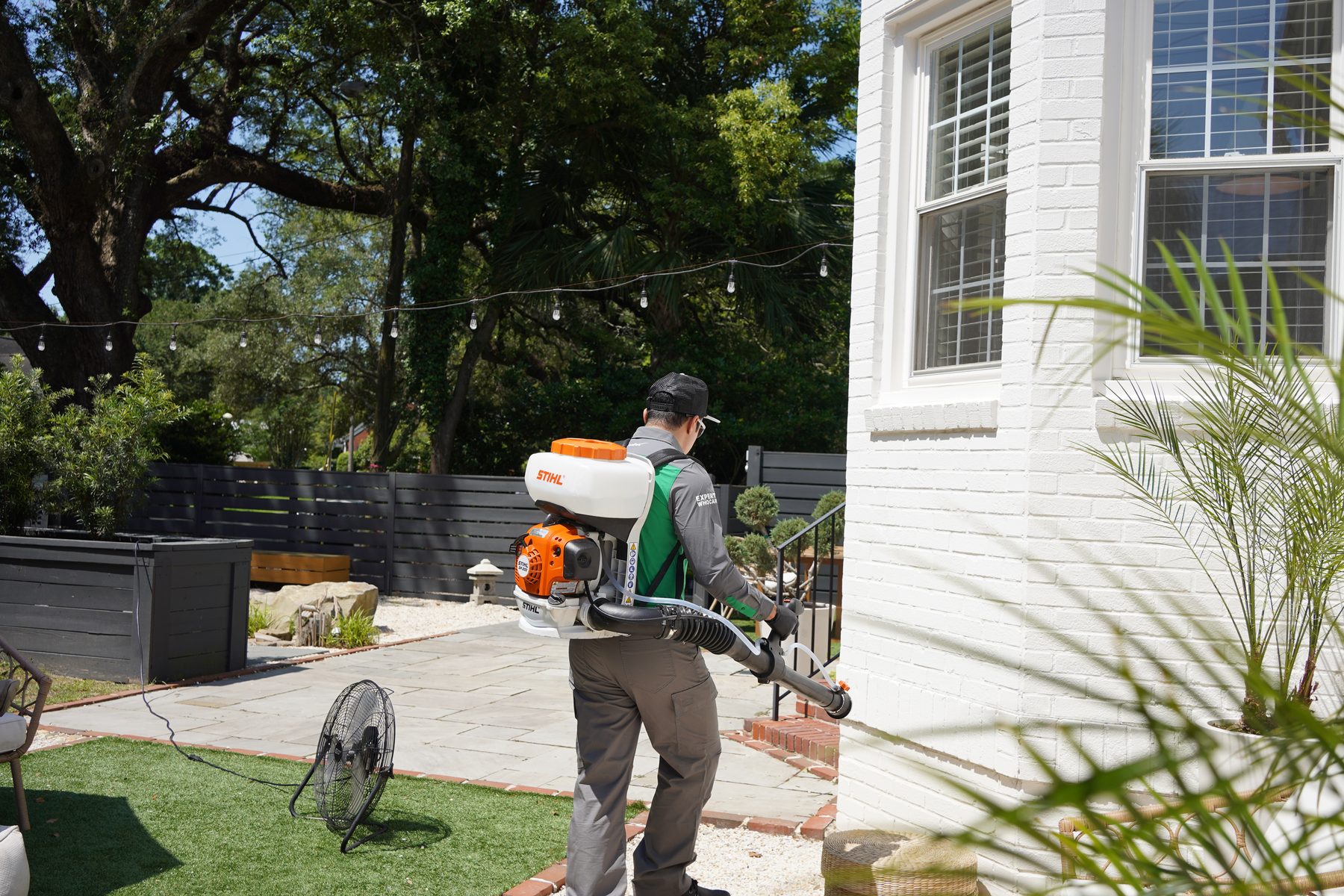
Commercial pest control done improperly creates liability, not protection. A restaurant that spot-sprays a visible cockroach with a consumer aerosol before a health inspection has not addressed the colony, it has temporarily cleared one surface while the population retreats into wall voids, motor housings, and drain channels. Health inspectors are trained to find exactly what DIY treatments miss: fecal spotting in concealed areas, egg cases in compressor housings, and live activity in floor drains. Beyond cockroaches, commercial buildings face specific failures when pest management is handled without professional oversight:
- Consumer-grade traps and bait stations placed without a site inspection often go in the wrong locations, high-visibility areas rather than actual rodent travel routes along walls and behind equipment.
- Multi-tenant buildings where individual tenants each manage their own pest issues create treatment conflicts: repellent sprays used by one tenant can push cockroaches into a neighboring unit that is using a gel bait program, reducing bait uptake.
- Pest activity logs, treatment records, and material safety data sheets are required documentation during health and food safety inspections. DIY treatments produce no audit trail.
- Over-the-counter flying insect sprays in food preparation areas can contaminate food contact surfaces if applied incorrectly, creating a food safety violation on top of the pest issue.
- Without an exclusion assessment, entry points stay open and new populations replace eliminated ones on a cycle that store-bought treatments cannot break.
Frequently Asked Questions
Yes. After-hours service is standard practice for our restaurant, retail, and healthcare accounts, where treating during operating hours is not practical. We schedule these visits in advance, coordinate access and alarm protocols with your facilities contact, and provide a service record the following morning documenting what was treated. There is no additional surcharge for after-hours commercial service within our standard territory.
Every service visit generates a detailed written report that includes the date and time of service, areas inspected and treated, products applied with EPA registration numbers, pest activity observed, and recommendations for sanitation or structural corrections. We maintain a digital service log for each account so you have historical records accessible at any time. For food service clients subject to FDA or DHEC oversight, our documentation is formatted to satisfy standard audit requirements.
Yes. We serve franchise groups, restaurant chains, and property management companies with multiple locations across our SC, NC, and VA service area. Multi-location accounts receive a single account manager who coordinates scheduling, standardizes reporting across all sites, and can respond to urgent calls at any location without transferring you between service centers. Pricing for multi-location contracts is structured differently from single-site agreements, contact us for a group consultation.
Citations tied to pest activity require a documented corrective action response, and we treat these as urgent. We can typically schedule an initial commercial inspection within 24 hours for businesses in our active service territory. Following treatment, we provide written documentation confirming corrective actions taken, which you can submit to the health department or inspection authority as evidence of remediation.
An IPM program is a systematic approach that prioritizes prevention, monitoring, and targeted treatment over routine blanket pesticide application. Rather than spraying on a fixed calendar regardless of pest pressure, IPM uses monitoring data (trap counts, inspection findings, seasonal patterns) to direct treatment where it is actually needed. Restaurants, healthcare facilities, schools, and daycares are the most common candidates because they operate under regulations that require documentation and prefer minimal chemical exposure. Most of our commercial accounts are on some version of an IPM framework.
Our commercial kitchen treatments rely primarily on gel baits applied in crack-and-crevice locations (inside motor housings, under equipment, inside electrical conduit openings) that are inaccessible to food preparation activity. Perimeter and void treatments are done with products labeled for food-handling environments. We do not broadcast-spray food contact surfaces. When we use any product near a food prep zone, we document it by product name and EPA registration number in the service report so you have a full record.
Commercial accounts are quoted individually rather than from a price list. The quote is based on the type of facility, its square footage, how often service is needed and what compliance documentation your industry requires, such as health inspection records for a restaurant or audit-ready reports for a food manufacturer. A walk-through with one of our commercial technicians is free, and the written program that follows spells out exactly what is treated, how often and what is documented after every visit.

Commercial Pest Control Near You
We provide professional commercial pest control across South Carolina, North Carolina, and Virginia. Select your city for local service details:
Related Pest Control Services
Pest problems rarely travel alone. If you're dealing with more than one pest, we have you covered:
Trusted Resources
Learn more about commercial pest control from authoritative sources:
Protect Your Business Today
Schedule a free inspection and get a pest management plan built around your property.
Customer Reviews
What Our Customers Are Saying
"Tony's inspection highlighted several issues. With a good explanation of solutions, he's getting my house back on track."
Verified Google Review"I called at 1pm on a Friday and they squeezed me in the same day, amazing. Mike and Jonathan did a fantastic job explaining the treatment plan."
Verified Google Review"Jonathan is very thorough, friendly and professional. He kept me informed about finding the termites, showing pictures and video."
Verified Google Review