Mosquito Control for Yards & Patios
Reclaim Your Outdoor Living Spaces





Residential Mosquito Control Services for Yards & Patios
Don't let mosquitoes ruin your outdoor enjoyment. These pesky insects aren't just annoying – they can also transmit dangerous diseases like West Nile virus, Zika, and other illnesses. Vinx Pest Control offers comprehensive mosquito control solutions that let you reclaim your yard.
Our mosquito treatment programs are designed to significantly reduce mosquito populations on your property throughout the season. We target both adult mosquitoes and their breeding sites to provide maximum protection for your family and guests.
Why Mosquito Control Matters
Mosquitoes are more than just a nuisance. They can carry and transmit diseases including West Nile virus, Zika virus, and various types of encephalitis. Protecting your family means controlling mosquito populations.
Our Mosquito Control Services
Seasonal Protection Plans
Regular treatments throughout mosquito season to keep populations under control. Treatments every 3-4 weeks during peak months.
Special Event Treatments
Planning an outdoor party or wedding? We provide targeted treatments to ensure your special event is mosquito-free.
Breeding Site Elimination
We identify and treat standing water sources where mosquitoes breed to provide long-lasting control.
Barrier Treatments
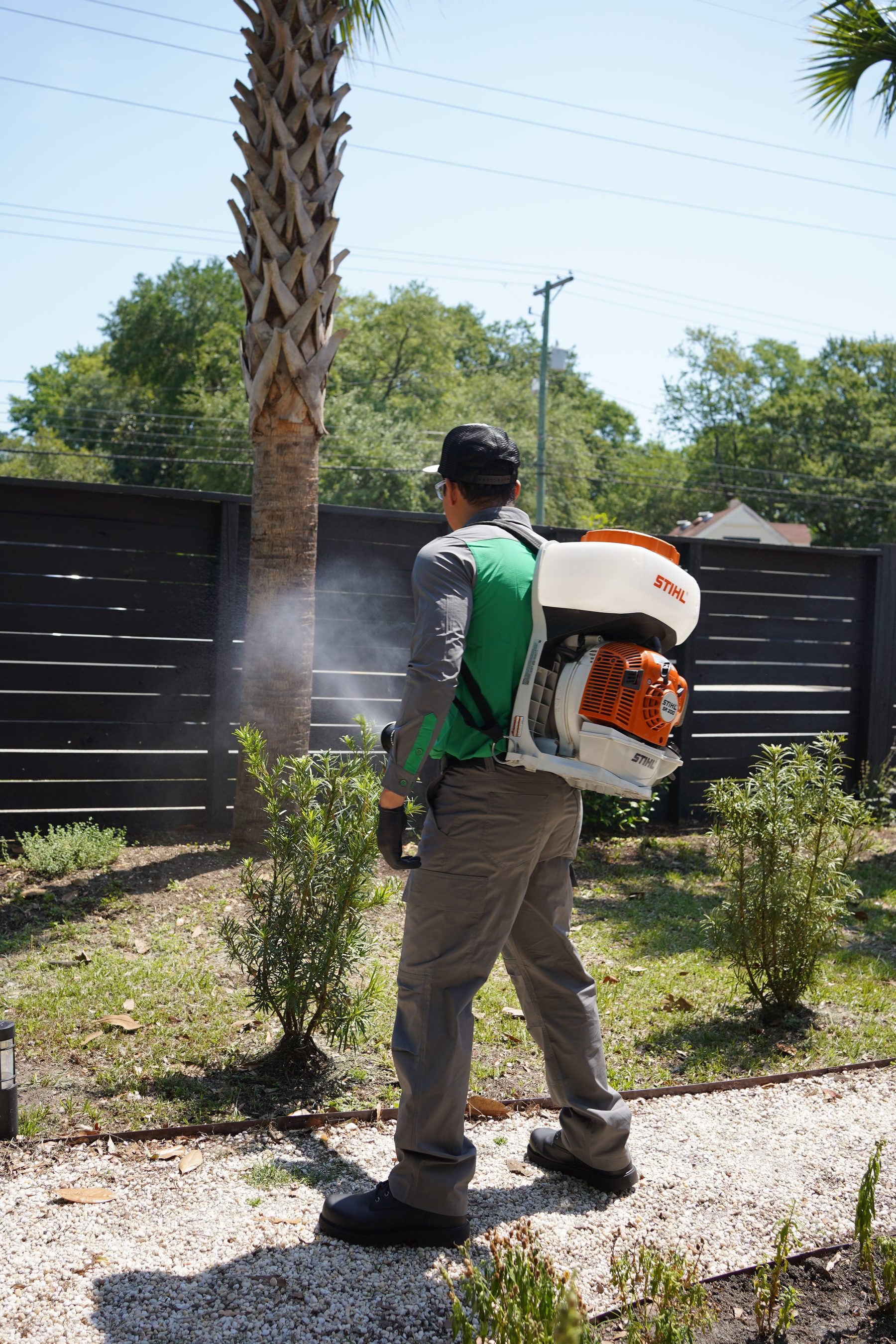
Application of residual treatments to vegetation and structures where adult mosquitoes rest.
How Our Mosquito Treatment Works
Property Assessment
We evaluate your property to identify mosquito breeding areas and resting sites.
Source Reduction
We identify and recommend elimination of standing water sources that attract mosquitoes.
Barrier Treatment
We apply effective treatments to vegetation, fences, and shaded areas where mosquitoes rest.
Ongoing Protection
Regular treatments throughout the season maintain protection against new mosquito populations.
Benefits of Professional Mosquito Control
- Enjoy your outdoor spaces again
- Reduce risk of mosquito-borne diseases
- Host outdoor events without worry
- Safe treatments for families and pets
- Significant reduction in mosquito populations
- Protection that lasts for weeks
How Mosquito Species Differ Across Our Service Area
The mosquito problem in coastal South Carolina is not one species, it is two distinct pest types with completely different biology and treatment requirements. The Asian tiger mosquito (Aedes albopictus) is the primary backyard biter across most of our service area. It breeds in small containers, a bottle cap holds enough water for a clutch of eggs, and it bites aggressively during daylight hours, which makes it far more disruptive to outdoor activity than the night-feeding Culex species most people picture when they think "mosquito." Barrier treatments targeting the resting vegetation where Asian tiger mosquitoes shelter during the heat of the day are the backbone of residential mosquito programs in suburban neighborhoods across the Carolinas and Virginia.
The Lowcountry coast and the Hampton Roads tidal marshes introduce a second category: saltmarsh mosquitoes (Aedes sollicitans and Aedes taeniorhynchus). These are large, aggressive, and capable of flying several miles from their breeding grounds in tidal marsh grass. They emerge in mass numbers following high tides and are the reason a yard in Mount Pleasant or Beaufort that is a mile from the nearest standing water can still be overwhelmed with mosquitoes on certain evenings. No amount of on-property barrier treatment eliminates saltmarsh mosquitoes, the breeding source is a regional ecosystem. Our programs in these areas focus on timing treatments to coincide with peak emergence windows rather than expecting to create an exclusion zone.
Inland in the Piedmont (Columbia, Raleigh-Triangle, Greenville) the Culex mosquito species dominate, particularly Culex quinquefasciatus, which breeds in stormwater infrastructure, retention ponds, and slow-moving drainage ditches. Culex mosquitoes are the primary vectors for West Nile virus in the region, and they peak in August and September when overnight temperatures stay high and standing water accumulates. The newer planned communities around Raleigh and Cary have extensive retention pond systems built into neighborhoods as stormwater management features, these are permanent mosquito breeding habitat adjacent to residential backyards, and treatment programs in these neighborhoods need to account for the ongoing larval source that cannot be drained.
Treatment Prep Guide: What to Do Before We Arrive
- Walk your yard and tip out any standing water in containers (flower pot saucers, toys, tarps, pet water bowls, birdbaths) before the technician arrives. Even a tablespoon of water can hold an Asian tiger mosquito egg batch.
- Clear dense ground-level vegetation and leaf litter from areas under decks, along fence lines, and around AC units, this is where adult mosquitoes rest during daylight hours and where barrier treatment is most concentrated.
- Let the technician know about any areas of your yard that hold water persistently after rain, these are primary breeding sites that need a larvicide application, not just barrier spray.
- Arrange for pets and children to stay indoors or away from the yard during treatment and for 30 minutes afterward while the product dries on vegetation.
- Do not mow the lawn immediately before treatment, taller grass and shrubs hold more residual product and provide better knockdown of resting adults. Mow two to three days before, then let it grow slightly before the technician arrives.
- Communicate any areas where you have pollinators or flower gardens you want the technician to avoid or treat with a reduced application rate, we can adjust treatment to minimize impact on flowering plants.
- If you are scheduling a treatment for a specific outdoor event, book the service two to three days before the event, not the day of, this gives the residual time to settle into the vegetation and the knockdown to take full effect.
What Doesn't Work: Why DIY Falls Short
The mosquito control product category is flooded with items that provide partial relief at best and false security at worst. The two most common DIY investments, citronella candles and bug zappers, have been studied by entomologists and both fall short in specific ways. Citronella candles mask the carbon dioxide plume that attracts mosquitoes, but only within about a three-foot radius of the flame and only when the air is calm. Any breeze renders them ineffective. Bug zappers are a more significant problem: they attract insects to UV light and kill them with an electric grid, but research from University of Delaware and other institutions has found that mosquitoes make up less than 6% of insects killed in standard backyard zappers, the devices primarily kill moths, beetles, and other harmless insects. The specific failure modes for DIY mosquito control:
- Citronella candles and torches have a maximum effective range of two to three feet with no wind, adequate for a single person sitting still but not for a yard with any air movement.
- Bug zappers do not preferentially attract mosquitoes; most mosquito species use carbon dioxide and heat to locate hosts, not UV light, so zappers kill beneficial insects while leaving mosquito populations largely unaffected.
- Consumer foggers and propane mosquito traps treat adult populations but have no larvicidal effect, the breeding sites continue to produce new adults and the population recovers within days.
- Backpack pump sprayers with consumer-grade pyrethrin products dry out quickly in heat and direct sunlight, losing residual protection within one to three days rather than the two to four weeks a professional application achieves on shaded vegetation.
- Treating only the backyard ignores the front yard, side yards, and neighbor-adjacent areas where adult mosquitoes rest during the day and migrate into your treated zone at dawn and dusk.
Frequently Asked Questions
You can return to the treated outdoor areas once the product has dried on the vegetation, which typically takes 30 minutes under normal conditions. Dry time is longer on overcast or high-humidity days. For the treatment to achieve maximum knockdown of resting adults, we recommend allowing two to four hours before hosting outdoor activity if possible. The residual protection builds over the first 24 hours as the product fully bonds to plant surfaces, so treatments the day before an outdoor event are more effective than same-day applications.
This is a legitimate concern, and how we apply the product matters. We treat the underside of leaves and shaded vegetation areas where mosquitoes rest, not the tops of flowering plants where pollinators feed. We avoid treating active bloom areas whenever possible and can adjust application patterns around established pollinator gardens. Pyrethrin-based barrier products break down rapidly in sunlight, which means by the time foraging bees contact treated foliage the following day, concentrations are significantly reduced. If you have a managed beehive on the property, tell us before treatment so we can plan around it.
For most residential properties, a monthly barrier spray program is sufficient to achieve significant mosquito reduction throughout the season. Automated misting systems, permanent installations that spray on a timer, are most cost-effective for properties with extensive outdoor entertainment areas, large acreage, or high-pressure saltmarsh mosquito exposure that warrants more frequent treatment cycles. Misting systems deliver more consistent application timing but require regular maintenance, refills, and occasional calibration. Most of our customers in suburban neighborhoods see strong results with a recurring spray program and do not require the capital investment of a permanent system.
Chlorinated swimming pools do not breed mosquitoes when properly maintained, and barrier treatments do not need to be avoided around pool areas, we simply do not apply product directly to the water surface. Ornamental ponds and water features that are not chlorinated can be treated with Bacillus thuringiensis israelensis (Bti) mosquito dunks, a biological larvicide that is specific to mosquito and midge larvae and harmless to fish, frogs, and other pond inhabitants. If your property has a natural retention area or a drainage swale that holds water, these are the breeding sites most likely driving your mosquito pressure and they require larvicide, not barrier spray, to address effectively.
Across our SC, NC, and VA service area, mosquito season effectively runs from April through October, with peak pressure from June through September. We typically schedule barrier treatments every three to four weeks during this window. In coastal SC and Tidewater VA where mosquito pressure is more intense and the season extends longer, some clients opt for monthly service starting in March. After a heavy rain event, residual on vegetation is diluted and activity spikes, this is when a re-service call is warranted between scheduled visits, which is included in our seasonal plans.
Seasonal mosquito control is included in the Platinum residential plan, which starts at $109 per month and covers eight mosquito treatments from March through November alongside general pest control. Stand-alone mosquito programs, one-time treatments before an outdoor event and automatic misting systems are quoted by the size of the yard and the amount of vegetation and standing water we have to treat. Every plan includes unlimited free re-services if mosquitoes return between visits.

Mosquito Control Near You
We provide professional mosquito control across South Carolina, North Carolina, and Virginia. Select your city for local service details:
Related Pest Control Services
Pest problems rarely travel alone. If you're dealing with more than one pest, we have you covered:
Trusted Resources
Learn more about mosquito control from authoritative sources:
Take Back Your Backyard
Start enjoying outdoor living again with professional mosquito control.
Get Your Free QuoteCustomer Reviews
What Our Customers Are Saying
"Tony's inspection highlighted several issues. With a good explanation of solutions, he's getting my house back on track."
Verified Google Review"I called at 1pm on a Friday and they squeezed me in the same day, amazing. Mike and Jonathan did a fantastic job explaining the treatment plan."
Verified Google Review"Jonathan is very thorough, friendly and professional. He kept me informed about finding the termites, showing pictures and video."
Verified Google Review