Cockroach Exterminator & Roach Control
Eliminate roaches from your Charleston or Virginia home with professional treatment





What Are Cockroaches?
"Palmetto bug" is Charleston's regional term for large cockroach species, particularly American and smoky brown varieties. They're identical insects with a locally preferred name. These pests thrive in our humid, subtropical climate and can be found both indoors and outdoors.
Cockroaches are more than just a nuisance, they can contaminate food, spread bacteria, and trigger allergies and asthma symptoms. Their rapid reproduction rate means a small problem can quickly become a major infestation if left untreated.
Why Cockroaches Thrive in Our Area
The Charleston, Greenville, Columbia, and Virginia Beach areas provide ideal conditions for cockroach populations:
- Humid Climate: Cockroaches thrive in moisture-rich environments
- Mild Winters: Year-round activity without winter die-off
- Coastal Proximity: Higher humidity levels near the coast
- Historic Structures: Older homes provide ideal hiding spots
- Lush Vegetation: Outdoor populations migrate indoors
Our Cockroach Extermination Process
Vinx Pest Control uses a multi-pronged approach to eliminate cockroaches and prevent their return:
Inspection
We thoroughly inspect your property to identify entry points, harborage areas, and the extent of the infestation.
Yard Fogging
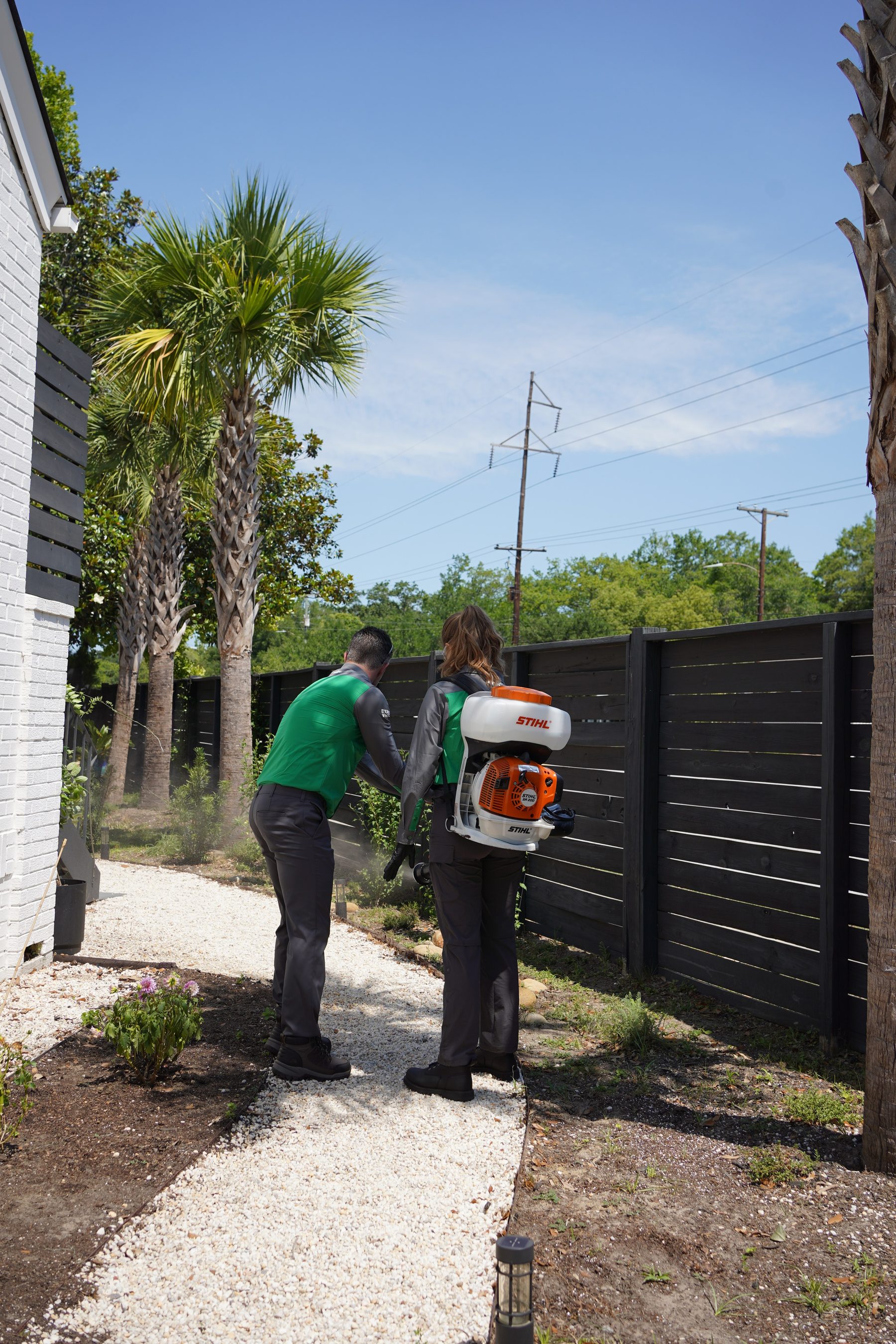
We treat outdoor areas where cockroaches breed and hide before they make their way inside.
Dust Injection
Professional-grade dust is injected into wall voids, cracks, and crevices where roaches hide.
Bait Application
Strategic bait placements eliminate colonies as roaches share the bait with others.
Ongoing Protection
Regular treatments keep your home protected year-round.
Signs of a Cockroach Infestation
Watch for these warning signs that indicate you may have a cockroach problem:
- Seeing live roaches, especially at night
- Droppings that look like coffee grounds or pepper
- Musty or oily odor in cabinets or closets
- Egg cases (oothecae) in hidden areas
- Smear marks along walls and floors
- Shed skins from molting roaches
Results You Can Expect
After treatment, you can expect to see results within 24-48 hours for contact kills. However, complete colony elimination typically takes 2-4 weeks as roaches continue to interact with treated surfaces and baits.
If you see increased activity in the first few days after treatment, don't worry, this is normal as roaches are flushed from their hiding spots. Our treatments continue working, and you'll see a dramatic reduction within the first week.
Our Guarantee
If cockroaches return between scheduled treatments, we'll come back and re-treat at no additional charge. That's our satisfaction guarantee.
How Cockroach Species Differ Across Our Service Area
The species calling your home a habitat varies significantly depending on where you live. In coastal South Carolina (Charleston, Beaufort, Hilton Head) the dominant outdoor species causing complaints is the smoky brown cockroach, a close relative of the American cockroach that locals know as the cockroach. Smoky browns are strong fliers, attracted to exterior lights, and move into homes from the leaf litter, mulch beds, and live oak canopy that characterize Lowcountry landscaping. They are not primarily a sanitation pest, you can have an immaculate home and still see smoky browns pushing inside through weep holes and around plumbing penetrations when temperatures drop in October or during heavy rains. The American cockroach is also abundant here and prefers the same damp crawl spaces and steam tunnels that run under historic commercial buildings downtown.
Move inland to the Columbia Midlands or the Piedmont of both Carolinas (Greenville, Spartanburg, Charlotte's suburbs, Raleigh) and the species mix shifts. The oriental cockroach becomes more prevalent in basement utility areas. Basements are rare on the coast but common in Piedmont NC residential neighborhoods and in the older mill-town housing stock of Upstate SC. Oriental cockroaches, sometimes called waterbugs, prefer cooler, wetter environments and travel through floor drains, sump pump areas, and utility room crawl spaces. They are slower-moving and less likely to be seen running across walls, but their presence in a basement drain or utility sink is a reliable indicator. German cockroaches are the primary indoor commercial species throughout the entire service area, restaurant kitchens in Charleston, Columbia, Raleigh, and Virginia Beach all deal with German cockroach pressure at similar levels regardless of region, because German roaches are tied to food-handling environments rather than geographic climate.
In Tidewater Virginia (Virginia Beach, Norfolk, Chesapeake) the American and smoky brown populations overlap in a similar pattern to coastal SC, though the winters are cold enough to suppress outdoor populations more meaningfully between December and February. The German cockroach is the dominant problem in Virginia Beach's dense restaurant corridor along the oceanfront and in the apartment complexes near the military bases. Oriental cockroach pressure in older brick homes with damp basement utility rooms is also a consistent call type in the inner Hampton Roads cities of Portsmouth and Norfolk.
Treatment Prep Guide: What to Do Before We Arrive
- Empty the contents of lower kitchen cabinets, especially under the sink and near the dishwasher, these are primary harborage and treatment zones and the technician needs full access.
- Pull the refrigerator and stove away from the wall if possible, cockroaches harbor in the motor compartment of refrigerators and behind stoves in large numbers, and treatment without access to these areas leaves the colony intact.
- Clean grease and food debris from behind and underneath appliances before we arrive, bait applications are more effective when competing food sources are removed.
- Do not apply any store-bought cockroach sprays or foggers in the 48 hours before our visit, repellent sprays interfere with gel bait uptake, which is often the primary tool for German cockroach colony elimination.
- Remove pet food and water bowls from floors in the treatment area for at least four hours after service.
- If you have seen cockroaches in bathrooms, note which fixtures (around the toilet base, under the vanity, near the washing machine connection) and tell the technician so inspection starts in those areas.
- Secure or remove fish tanks in rooms being treated, and cover any food items left on counters or open shelving.
What Doesn't Work: Why DIY Falls Short
The core problem with DIY cockroach control is that the products available to consumers are almost entirely contact-kill or repellent sprays. These kill what you see and push what you do not see into deeper harborage. For German cockroaches specifically, the species most likely to cause a heavy indoor infestation, this is a serious problem because their colony lives inside wall voids, appliance motors, and the interiors of cabinet hinges. A spray that contacts 10% of the population and drives the remaining 90% into inaccessible areas makes subsequent professional treatment harder and more expensive. Specific failure modes in DIY cockroach control:
- Consumer sprays applied along baseboards kill foraging roaches but miss the colony, which reseeds the foraging population within days.
- Bug bombs and total-release foggers are documented to fail against German cockroaches, research from entomology departments at multiple universities has shown that foggers do not penetrate the harborage sites where the population actually lives.
- Store-bought gel baits are available but typically contain lower concentrations of active ingredient than professional products, and a homeowner applying bait without knowing the colony location places it where it will not be found.
- Using a repellent spray and a bait product at the same time, a common DIY mistake, causes cockroaches to avoid the bait because the repellent signals danger, eliminating the effectiveness of both products.
- Cockroaches and smoky browns entering from outside are not eliminated by interior treatment alone; without treating the exterior perimeter and addressing the specific entry points (weep holes, gaps around pipes, crawl space vents), new individuals continue to enter on the same schedule.
Frequently Asked Questions
This is a normal and expected outcome of professional treatment, not a sign that the treatment failed. When we treat harborage areas (behind appliances, inside wall voids, along baseboards) we disturb the colony and cause roaches to vacate those areas. You are seeing the population that was already there; they are just more visible in the open as they try to escape treated zones. For gel bait programs, you may also see increased activity as cockroaches leave harborage to feed on the bait. Activity drops sharply within five to ten days in most cases as the colony dies out.
Yes, "cockroach" is the regional name used in the Carolinas and the broader Southeast for the American cockroach (Periplaneta americana) and, in coastal SC, often also the smoky brown cockroach (Periplaneta fuliginosa). Both are large, reddish-brown roaches in the one-to-two-inch range that are capable of flight. They are primarily outdoor insects that move inside opportunistically, unlike German cockroaches, which are a true indoor species that rarely leave a structure once established. Treatment strategies differ: American and smoky brown roaches require exterior yard fogging and perimeter treatment, while German cockroaches require targeted indoor gel bait and crack-and-crevice dust applications.
Cockroaches, particularly American roaches and oriental cockroaches, use sewer lines and drainage infrastructure as travel corridors. The municipal sewer system provides warmth, moisture, and organic matter, making it ideal harborage. Roaches enter floor drains, slow-draining sink traps that dry out, and toilet flanges when there is a gap between the wax ring and the flange. A cockroach coming up through a drain is not necessarily an interior infestation, it may be a single individual that found a gap in the plumbing seal. If you are seeing this consistently, the fix is often a plumbing repair (replacing a dry P-trap, re-seating a wax ring) in addition to perimeter treatment.
For American and smoky brown cockroaches (cockroaches), sanitation has very little to do with their presence. These are outdoor insects that push inside for shelter, not food. They enter through weep holes in brick veneer, gaps around exterior plumbing, under door thresholds, and through open crawl space vents, often in large numbers in the fall as temperatures drop. A perfectly clean home still offers the warmth and shelter they are seeking. German cockroaches are more closely tied to food and grease availability, but even German roaches typically enter through an introduction event (incoming cardboard boxes, grocery bags, or secondhand appliances) rather than because of visible sanitation problems.
For outdoor cockroaches entering a home, an initial exterior fogging and perimeter treatment combined with interior crack-and-crevice work typically produces a dramatic reduction within a week, with complete control by the next quarterly visit. German cockroach infestations in a kitchen take longer, two to four visits spaced two to three weeks apart is the standard for an established colony, because eggs that hatch after the initial treatment require subsequent visits to eliminate the newly emerged population. Heavy German cockroach infestations in commercial kitchens can take six to eight weeks of intensive treatment to fully resolve.
Cockroaches are covered under every Vinx residential plan, which starts at $49 per month for four seasonal treatments, unlimited free re-services between visits and a 100% money-back guarantee. A one-time clean-out for a heavy German cockroach infestation is quoted after a free inspection, because the price depends on the species, the size of the home, how established the population is and how many follow-up visits it will take to break the egg cycle.

Cockroach Control Near You
We provide professional cockroach control across South Carolina, North Carolina, and Virginia. Select your city for local service details:
Related Pest Control Services
Pest problems rarely travel alone. If you're dealing with more than one pest, we have you covered:
Trusted Resources
Learn more about cockroach control from authoritative sources:
Ready to Get Rid of Cockroaches?
Get a free quote today and take the first step toward a roach-free home.
Get Your Free QuoteCustomer Reviews
What Our Customers Are Saying
"Tony's inspection highlighted several issues. With a good explanation of solutions, he's getting my house back on track."
Verified Google Review"I called at 1pm on a Friday and they squeezed me in the same day, amazing. Mike and Jonathan did a fantastic job explaining the treatment plan."
Verified Google Review"Jonathan is very thorough, friendly and professional. He kept me informed about finding the termites, showing pictures and video."
Verified Google Review