




Mint, lavender, citronella, eucalyptus, basil, rosemary, lemon balm, chrysanthemums, marigolds and catnip show up on nearly every list of plants that repel spiders. We looked up the research behind each one. Below is what's actually been tested, what hasn't, which plants are safe around pets, and the cheap change that does reduce webs around a house.
No study has shown that a living plant keeps spiders away from a home. Some essential oils have repelled some spider species in sealed lab tests: clove, citronella, catnip, cedarwood and, in one of three studies, peppermint. Lemon, lavender and eucalyptus oils did nothing, and caraway oil actually attracted one species. A potted plant releases a tiny fraction of what those tests used.
What works: switch exterior bulbs to amber so fewer insects gather (fewer insects means fewer webs), knock webs down, and seal gaps around doors and windows.

The Verdict on 10 Popular "Spider-Repelling" Plants
| Plant | Living plant repels spiders? | What the oil has shown | Safe for dogs and cats? (ASPCA) |
|---|---|---|---|
| Peppermint / mint | No evidence | Mixed: repelled 2 of 3 species in 2018, no effect on a wolf spider in 2025. Toxic to brown recluse on direct contact | No, toxic |
| Lavender | No evidence | No repellent effect on a wolf spider in 2025. Weaker contact toxicity to brown recluse | No, toxic |
| Citronella grass | No evidence | Deterred one wolf spider species in a 2025 lab test | Lemongrass, a close relative, is toxic |
| Eucalyptus | No evidence | No effect on a wolf spider in a 2025 lab test | No, toxic |
| Basil | No evidence | Never tested against spiders | Yes, non-toxic |
| Rosemary | No evidence | Never tested against spiders | Yes, non-toxic |
| Lemon balm | No evidence | Never tested. Lemon oil, which shares the name but not the plant family, failed outright | Yes, non-toxic |
| Chrysanthemum | No evidence | No spider tests. The "pyrethrin" story doesn't hold up (see below) | No, toxic |
| Marigold | No evidence | No spider tests | Pot marigold (Calendula) is non-toxic. French and African marigolds aren't on the ASPCA list |
| Catnip | No evidence | Deterred one wolf spider species in a 2025 lab test | Toxic to cats (ASPCA) |
That's zero out of ten as living plants. Three have some lab evidence as concentrated oils. Several, including lavender, eucalyptus and peppermint, failed in at least one test, and the rest have never been put in front of a spider at all.
Plant by Plant
1. Peppermint and mint
Peppermint is the most-tested scent on the list, and its record is mixed. In 2018, researchers put three spider species in a two-choice test against the internet's top three "natural repellents". Peppermint oil strongly repelled the brown widow (Latrodectus geometricus, common in South Carolina) and the cross orb weaver. It had little effect on the third species. In a 2025 study, peppermint oil had no effect on a common wolf spider, and the 2025 authors report it also failed against the yellow sac spider in a 2022 study. A separate 2019 brown recluse study found peppermint oil was toxic on direct contact, but as a vapor it never killed more than 20% of the spiders. A mint plant in a pot releases far less than either test. The photo above shows what spiders think of a living mint plant.
2. Lavender

Lavender oil showed weaker contact toxicity to brown recluses than peppermint in the 2019 study, and when it was tested as a repellent it failed: it had no effect on a wolf spider in 2025, and the 2025 authors report it didn't deter the yellow sac spider in a 2022 study either. Many "lavender repels spiders" claims seem to trace back to research on spider mites, tiny plant pests that aren't spiders at all (more on that below). Lavender also attracts pollinators, which is prey for crab spiders that hunt on its flowers.
3. Citronella grass
A 2025 study tested ten essential oils on a common European wolf spider (Pardosa hortensis). Citronella oil, along with catnip, cedarwood, cinnamon and clove oils, significantly deterred it in a two-choice test. That's one species, in a lab, using concentrated oil. The researchers themselves called for testing across more spider species. Citronella is best known as a mosquito repellent, and even there Clemson notes the plant's scent "dissipates into the air and can be minimized with a breeze."
4. Eucalyptus
Eucalyptus is on most lists, and it has been tested once: in a 2025 lab study, eucalyptus oil had no effect on a common wolf spider. It's also toxic to dogs, cats and horses, according to the ASPCA.
5 and 6. Basil and rosemary
Neither has been tested against spiders. Both are non-toxic to dogs and cats (ASPCA), good in the kitchen, and loved by pollinators when they flower. Plant them for those reasons.
7. Lemon balm (and the lemon myth)
Lemon is the most recommended natural spider repellent online. The 2018 researchers noted it returned over a million Google results. It's also the one that was tested and failed: lemon oil had no effect on any of the three spider species. Lemon balm itself has never been tested.
8. Chrysanthemums
This claim sounds the most scientific, because pyrethrin insecticides really do come from a chrysanthemum. It falls apart in four places:
- Wrong plant. Commercial pyrethrins come mainly from Dalmatian pyrethrum (Tanacetum cinerariifolium), not the fall garden mum (Chrysanthemum × morifolium) sold at every garden center.
- Wrong part. The compound is concentrated in the dried flower heads, not released by a living plant's leaves.
- Wrong action. Pyrethrin is a contact poison that breaks down quickly in sunlight. It isn't a barrier.
- Toxic to pets. The ASPCA lists chrysanthemums as toxic to dogs, cats and horses.
9. Marigolds
Marigold claims usually borrow from the same pyrethrin story, or from research on garden pests. We found no study testing marigolds against spiders. Note the name covers two different plants: pot marigold (Calendula), which the ASPCA lists as non-toxic, and the French and African marigolds (Tagetes) sold as bedding plants.
10. Catnip
Catnip oil was one of the five oils that deterred wolf spiders in the 2025 study, and, with citronella, one of two plants on this list with a recent positive spider result. Again, that's concentrated oil on one species in a lab. The living plant mostly attracts cats, and the ASPCA notes catnip can cause vomiting and diarrhea in some of them.
Bonus myths: hedge apples and chestnuts
Hedge apples (Osage oranges) are a classic Southern and Midwestern spider remedy. The Burke Museum's arachnology department says there's no evidence for them. Spiders live on Osage orange trees and even build webs on the fallen fruit. Chestnuts did repel two of three species in the 2018 lab test, but nobody has shown that a bowl of them on a windowsill does anything in a real house.
Why a Plant Can't Do What the Oil Does
- Dose. Essential oil is a concentrated extract. It takes a lot of plant material to make a small bottle, and lab tests present it in a closed chamber. A plant outdoors releases a trace into moving air. In reviewing mosquito research, Clemson notes that a meta-analysis of 62 studies on plant oils included none that tested landscape plantings, and that the leaves have to be crushed or the oil rubbed on skin to do anything.
- Spiders don't smell the way insects do. The Burke Museum notes spiders seldom show any sign of detecting airborne odors. Most botanical repellents work on insect odor receptors.
- Plants are spider habitat. Dense herbs and shrubs against a foundation give spiders cover and insects to eat. Extension services generally advise trimming vegetation back from the house, the opposite of lining the walls with pots.
Where the Myth Probably Came From: Spider Mites
There's a large body of research testing essential oils, lavender and peppermint among them, as treatments for the twospotted spider mite, a plant pest about half a millimeter long. A spider mite isn't a spider. It's related to ticks. Drop the word "mite" from "lavender oil kills spider mites" and you get a claim that's been copied across the internet for years. Even gardeners mix them up. Reddit gardening threads show "webs on my lavender" that turn out to be spider mites.
What People Report Trying
Peppermint oil is the remedy people actually try. We gathered owner reports from Reddit threads (read through Google's search excerpts) and one YouTube follow-up:
| Report | Outcome |
|---|---|
| Drops on cotton balls, "refreshed every other week" | Worked for them, with constant upkeep |
| "Did the peppermint oil till my eyes burned" | Still had spiders |
| "The spiders seemed to think it was Kool-Aid" | Didn't work |
| "It just makes your room smell like Christmas" | Didn't work |
| Two more owners: "definitely didn't work for me", "didn't work" | Didn't work |
| "Not sure if it actually worked" | Unclear |
| Garage owner on YouTube sprayed a peppermint mix directly, checked 3 days later | Fewer new webs, "still a couple spiders" |
These are anecdotes, not tests, but only one owner reported a clear success, and it needed refreshing every two weeks. A pest control technician summed up the professional view on Reddit: "If any of this stuff actually worked, I wouldn't have a job." Meanwhile, when people ask why their porch is full of webs, the top answers are almost always the same question: is there a light left on by the door all night?
What Actually Keeps Spiders Away
1. Change your outdoor bulbs
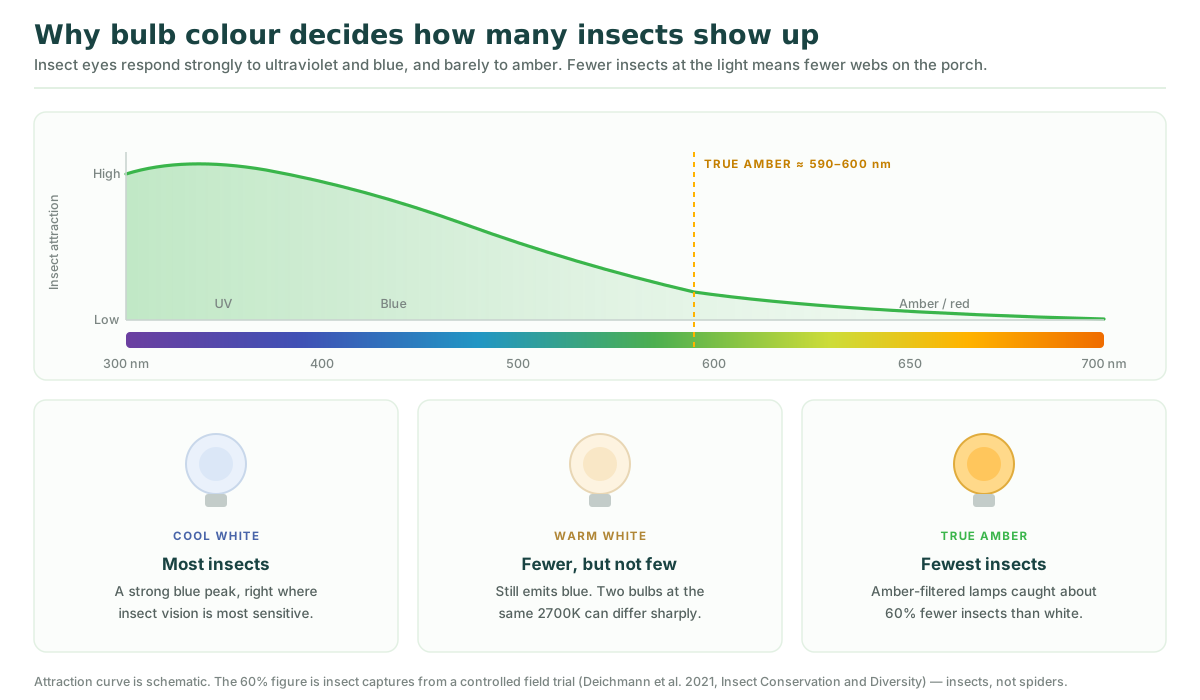
Web-building spiders set up where their food gathers, and porch lights pull in insects all night. Clemson Extension says replacing exterior white lights with yellow or sodium vapor lamps "can indirectly reduce the number of spiders." In a Smithsonian-led field trial of over 15,000 insects, amber lamps attracted nearly 60% fewer insects and 34% fewer species than white lamps. That trial counted insects, not spiders, and it ran in a tropical forest, so treat the numbers as direction and scale.
One catch: "warm white" on the box isn't the same as low attraction. A 2015 study found bulbs with the same 2700K color temperature attracted different numbers of insects. Look for true amber or "bug light" bulbs, not soft white.
2. Knock webs down and keep at it
A broom or a strong spray from a garden hose removes webs, egg sacs and spiders in one pass. Do the eaves, porch ceiling, light fixtures and window corners regularly.
3. Seal the way in
Door sweeps, weatherstripping, and caulk around windows, pipes and wires keep wandering spiders out. This matters most in late summer and fall, when males wander looking for mates. See why you see more spiders indoors in September.
4. Clear the foundation and dry things out
Move firewood, stacked pots and clutter away from the walls, trim plants back from the siding, and reduce dampness in crawl spaces and basements, where cellar spiders thrive. Vacuuming corners and baseboards indoors removes webs and egg sacs. For what to look for, see where spiders like to hide and spider eggs in the house.
If You Want Herbs Anyway: the Pet-Safe Picks
There are plenty of good reasons to grow herbs. Just not as spider control. If you have dogs or cats, the ASPCA lists basil, rosemary and lemon balm as non-toxic. Lavender, mint, eucalyptus, chrysanthemums and lemongrass are listed as toxic, and the ASPCA also lists catnip as toxic to cats. If a pet eats something it shouldn't, call the ASPCA Animal Poison Control Center at (888) 426-4435 or your vet.
When to Call a Professional
- Webs come back within days of clearing them, which usually means an insect problem is feeding them
- You're finding widow spiders or their egg sacs where children or pets play
- Activity is in a crawl space, attic or basement you can't reach or keep dry
Our spider control service in South Carolina, North Carolina and Virginia does what the research points to: removing webs and harborage, cutting the insect supply, and sealing the gaps. Worried about venomous species? See brown recluse vs. black widow.
Key Takeaways
- No living plant has been shown to repel spiders, including mint, lavender, citronella and the rest.
- Some oils repelled some species in lab tests: clove, citronella, catnip, cedarwood, and peppermint in one of three studies. Lemon, lavender and eucalyptus failed, and caraway attracted one species.
- The myth likely comes from spider mite research. Spider mites aren't spiders.
- Owners rarely see results: in the anecdotes we found, only one peppermint oil user reported a clear success, with refreshing every two weeks.
- Amber outdoor bulbs, regular web removal and sealing gaps are what actually reduce spiders.
- Pet-safe herbs: basil, rosemary and lemon balm. Lavender, mint, eucalyptus and mums are toxic to pets.
Sources: A. Fischer, M. Ayasse and M. C. B. Andrade, "Natural Compounds as Spider Repellents: Fact or Myth?", Journal of Economic Entomology 111:314 (2018); N. Gloríková et al., "Attraction or Repelling Effects of Commercial Plant Essential Oils on the Synanthropic Cheiracanthium mildei", Journal of Economic Entomology (2022); M. Chajduk et al., "Repellent effect of selected essential oils against the wolf spider Pardosa hortensis", Behavioural Processes (2025); "Essential Oils as an Alternative to Conventional Pesticides for Managing Brown Recluse Spiders", Journal of the Kansas Entomological Society 92:406 (2019); J. Jordan, "Can Plants Repel Problematic Insects?", Clemson HGIC, 2025; Clemson HGIC, "Cellar Spiders"; Burke Museum, "Myth: Spider repellents"; C. L. Deichmann et al., "Reducing the blue spectrum of artificial light at night minimises insect attraction in a tropical lowland forest", Insect Conservation and Diversity (2021); T. Longcore et al., "Tuning the white light spectrum of light emitting diode lamps to reduce attraction of nocturnal arthropods", Philosophical Transactions of the Royal Society B (2015); ASPCA Animal Poison Control, Toxic and Non-Toxic Plants; owner accounts from Reddit (via Google search excerpts) and YouTube.
Frequently Asked Questions
No living plant has been shown in research to repel spiders from a home. Mint, lavender, citronella, eucalyptus, basil, rosemary, lemon balm, chrysanthemums, marigolds and catnip are all commonly recommended, but none has been tested as a plant. Some of their oils, such as citronella and catnip, repelled certain spider species in lab tests, while peppermint gave mixed results and lavender and eucalyptus failed.
In lab tests, peppermint oil repelled two of three spider species in 2018 but had no effect on a wolf spider in 2025, and clove oil repelled the yellow sac spider. Catnip, cedarwood, cinnamon, citronella and clove oils deterred a wolf spider. Lemon oil, the most recommended scent online, had no effect, and caraway oil attracted one spiders.
Peppermint is the most-tested scent, and the results are mixed: it repelled two of three species in a 2018 lab study, but had no effect on a wolf spider in 2025 and, as reported by the 2025 authors, on the yellow sac spider in 2022. A mint plant gives off far less than those tests used, and owners rarely report lasting results. In the owner reports we found, only one described a clear success, and only with refreshing every two weeks.
There's no evidence it does. When lavender oil was tested as a repellent, it had no effect on a wolf spider (2025) and, as reported by those authors, on the yellow sac spider (2022). Many lavender claims seem to come from research on spider mites, which aren't spiders. Crab spiders even hunt on lavender flowers for the pollinators they attract. Lavender is also toxic to dogs and cats, according to the ASPCA.
Citronella oil deterred one wolf spider species in a 2025 lab study, but the living plant hasn't been tested. Clemson notes that the scent a plant gives off dissipates into the air and is reduced by a breeze.
No plant has been proven to repel spiders, but if you want pet-safe herbs, the ASPCA lists basil, rosemary and lemon balm as non-toxic to dogs and cats. Lavender, mint, eucalyptus, chrysanthemums and lemongrass are listed as toxic, and the ASPCA also lists catnip as toxic to cats.
No. The Burke Museum's arachnology department says there's no evidence that hedge apples (Osage oranges) repel spiders. Spiders live on the trees and even build webs on the fallen fruit.
Cutting their food supply and removing their webs. Switch exterior bulbs to amber or yellow so fewer insects gather at night, knock down webs regularly with a broom or hose, seal gaps around doors and windows, and keep firewood, clutter and dense plants away from the foundation.
Porch lights attract insects, and web-building spiders set up where their prey gathers. Clemson Extension notes that switching from white to yellow or sodium vapor lights can indirectly reduce spiders. In a large field trial, amber lamps drew nearly 60% fewer insects than white lamps.
The claim probably started with research on spider mites. Essential oils like lavender and peppermint have been widely studied as treatments for the twospotted spider mite, a tiny plant pest. Spider mites aren't spiders, but drop the word mite and the claim spreads.
Photo credits: Milana Zhurer, CC0; JonRichfield, CC BY-SA 3.0; via Wikimedia Commons.