




The home remedies that work on crane flies all do one thing: they dry out the top inch of soil where the larvae live. Fix drainage, water less often, dethatch, and keep turf healthy. Spraying the adults is near pointless, they live only days and do no damage. Crane flies do not bite, sting, or eat mosquitoes.

Do Crane Flies Actually Eat Mosquitoes?
No. This is the most persistent myth about the insect, and the nicknames keep it alive, mosquito hawk, skeeter eater, mosquito eater. According to the Entomological Society of America, there has yet to be found a predatory adult crane fly. They lack the mouthparts for it.
Adults feed on almost nothing. Some sponge up dew or nectar; many species do not feed at all, living just long enough to mate and lay eggs. The family Tipulidae contains roughly 15,000 known species worldwide, and not one adult is a mosquito predator.
If it is genuinely mosquitoes you are dealing with, the fix is different, see how to keep mosquitoes away from your patio, and our full breakdown of the mosquito hawk myth.
What Do Crane Flies Look Like Compared to Mosquitoes?
Size is the giveaway. A crane fly looks like a mosquito scaled up several times, with legs far too long for its body that shed easily when handled.
| What to check | Crane fly | Mosquito |
|---|---|---|
| Body length | Up to about 1 inch, legs much longer again | Roughly 1/8 to 3/8 inch |
| Mouthparts | No piercing beak; many adults cannot feed at all | Piercing proboscis used to draw blood |
| Behavior indoors | Bumbles at windows and lights, settles on walls | Seeks people; hovers and lands to bite |
| Legs | Very long, fragile, often break off | Short in proportion to body |
| Risk to you | None, no bite, no sting, no disease | Bites; can transmit disease |
Why Do I Suddenly Have So Many Crane Flies?
Because something in the yard is holding water. Females lay into damp soil, and the larvae need consistently moist ground in the top inch or two to survive. A stretch of heavy rain followed by warm weather is the classic trigger, which is why Lowcountry yards on poorly drained clay see far more of them than well-drained sandy sites.
| Condition in your yard | Why it matters | What to do about it |
|---|---|---|
| Irrigation running daily or on a fixed timer | Keeps the top inch of soil permanently damp, which is exactly the larval zone | Water deeply but less often; skip cycles after rain |
| Thatch layer thicker than about 1/2 inch | Traps moisture at the soil surface and shelters larvae from drying out | Dethatch in the growing season, then keep mowing height correct |
| Clogged gutters and downspouts draining at the foundation | Creates a permanently wet strip of soil right where you walk and notice adults | Clear gutters; extend downspouts well clear of the lawn |
| Low spots that stay wet for days after rain | Standing moisture concentrates egg-laying into a small area | Regrade or top-dress low spots so water moves off |
| Heavy shade over turf | Slows evaporation so soil never dries between waterings | Thin overhanging limbs to get air and light onto the soil |
Do Crane Flies Damage Your Lawn?
The adults do not. The larvae can. Crane fly larvae are called leatherjackets (brown, wormlike, with a notably tough skin) and they feed on grass roots and crowns below the surface. The UC Statewide IPM Program records mature larvae at 1 to 1½ inches long, with damage typically becoming noticeable in March and April.
The two species behind most turf damage are the common crane fly (Tipula oleracea) and the European crane fly (Tipula paludosa). Both run one generation per year, and adults mate and lay eggs within 24 hours of emerging, which is why killing the adults you see changes so little. The eggs are already in the ground.
How Many Leatherjackets Are Too Many?
This is where most homeowners over-treat. A healthy lawn carries leatherjackets without showing any damage at all.
Leatherjackets per square foot. Thresholds from the UC Statewide IPM Program.
| Turf condition | Larvae per square foot | What it means |
|---|---|---|
| Healthy, well fertilized and watered | About 40 | Tolerated without aesthetic damage or stand loss |
| Stressed, thin or compacted | As few as 15 | Damage can appear at this level |
| Washington State action range | 25 to 50 | Published treatment threshold band |
To count them, the UC Statewide IPM Program method is simple: cut a 6 inch by 6 inch square 1 to 2 inches deep, count the larvae, and multiply by 4 to get the figure per square foot. Do it in a few spots. If you are under the threshold, the answer is lawn health, not insecticide.
What Home Remedies Actually Reduce Crane Flies?
All of the effective ones are cultural, not chemical. They work by making the top inch of soil an inhospitable place to be a larva.
- Water deeply and infrequently. Let the surface dry between cycles instead of keeping it damp every day.
- Dethatch and aerate. Removing the moisture-holding mat removes the shelter larvae depend on.
- Mow at the correct height and feed the lawn. Vigorous turf absorbs feeding damage that thin turf shows.
- Fix drainage first. Gutters, downspouts, low spots. This is the single highest-value job on the list.
- Encourage birds. Starlings and robins work leatherjackets out of turf; a lawn they can access is a lawn under pressure.
- Turn off or shield outdoor lights. Adults are drawn to light and gather at doors and windows because of it.
Which Home Remedies Do Not Work?
Worth knowing before you spend a weekend on one.
| Remedy you will see recommended | Why it disappoints | Better use of the effort |
|---|---|---|
| Spraying the adults you see | Adults live only a matter of days and cause no damage; eggs are laid within 24 hours of emergence | Treat the soil conditions instead |
| Dish soap drenches on the lawn | Does not reliably reach larvae in the root zone and can scorch turf | Dethatch and correct watering |
| Vinegar or essential oil sprays | Contact-only and evaporates; no residual effect in soil | Fix drainage and mowing height |
| Bug zappers and light traps | Kills harmless adults while the larval population is untouched | Shield or switch off outdoor lights |
When Are Crane Flies Worst in South Carolina?
Larvae feed through the cool months and do their most visible damage as the ground warms, which puts noticeable turf symptoms in March and April. Pupation follows around mid-May, just below the soil surface, and then adults emerge and swarm, which is the point at which most people first notice them and assume they have a mosquito problem.
| Stage | When you see it | What you notice |
|---|---|---|
| Larvae feeding | Autumn through early spring | Nothing above ground at first; then thinning, yellowing patches |
| Peak damage | March and April | Spongy turf, poor root hold, patches that lift easily |
| Pupation | Around mid-May | Feeding stops; no new damage |
| Adult emergence | Late summer | Sudden clouds of long-legged flies at windows, doors and lights |
Timing differs across our markets. The Upstate runs a genuinely colder calendar than the coast, the National Weather Service record for Greenville-Spartanburg has the first 32 °F reading arriving as early as 30 September and as late as 14 December, with the freeze-free stretch running anywhere from 153 to 279 days. Coastal yards stay warm and damp later, so adult flights tend to run longer around Charleston than they do around Greenville.
Does Mosquito Spraying Kill Crane Flies?
No, and this trips up a lot of Lowcountry homeowners. Charleston County Mosquito Control runs an adult mosquito program, 8 ground ULV spray trucks working 11PM to 7AM to keep clear of bees and residents, treating 612,768 acres in 2025, most of it by truck. That program is aimed at adult mosquitoes on the wing. It is not aimed at crane flies, and it does nothing at all to the leatherjackets in your soil.
So if county trucks have been through your neighborhood and you are still seeing clouds of long-legged flies, nothing has gone wrong. You are looking at a different insect with a different life cycle, and the fix is in your lawn rather than in the air.
Are Crane Flies Dangerous to People or Pets?
No. They do not bite, they do not sting, and they carry no disease. Most adults cannot even feed. A dog that eats one is not in danger. The only real cost is nuisance, and, if larval numbers are genuinely high, thinning turf.
How Do You Keep Them Out of the House?
Adults get indoors by accident, chasing light. Repair torn window and door screens, close gaps under exterior doors, and switch off or shield porch lights during the late-summer emergence. Our mosquito hawk guide covers the exclusion detail.
When Does Professional Treatment Make Sense?
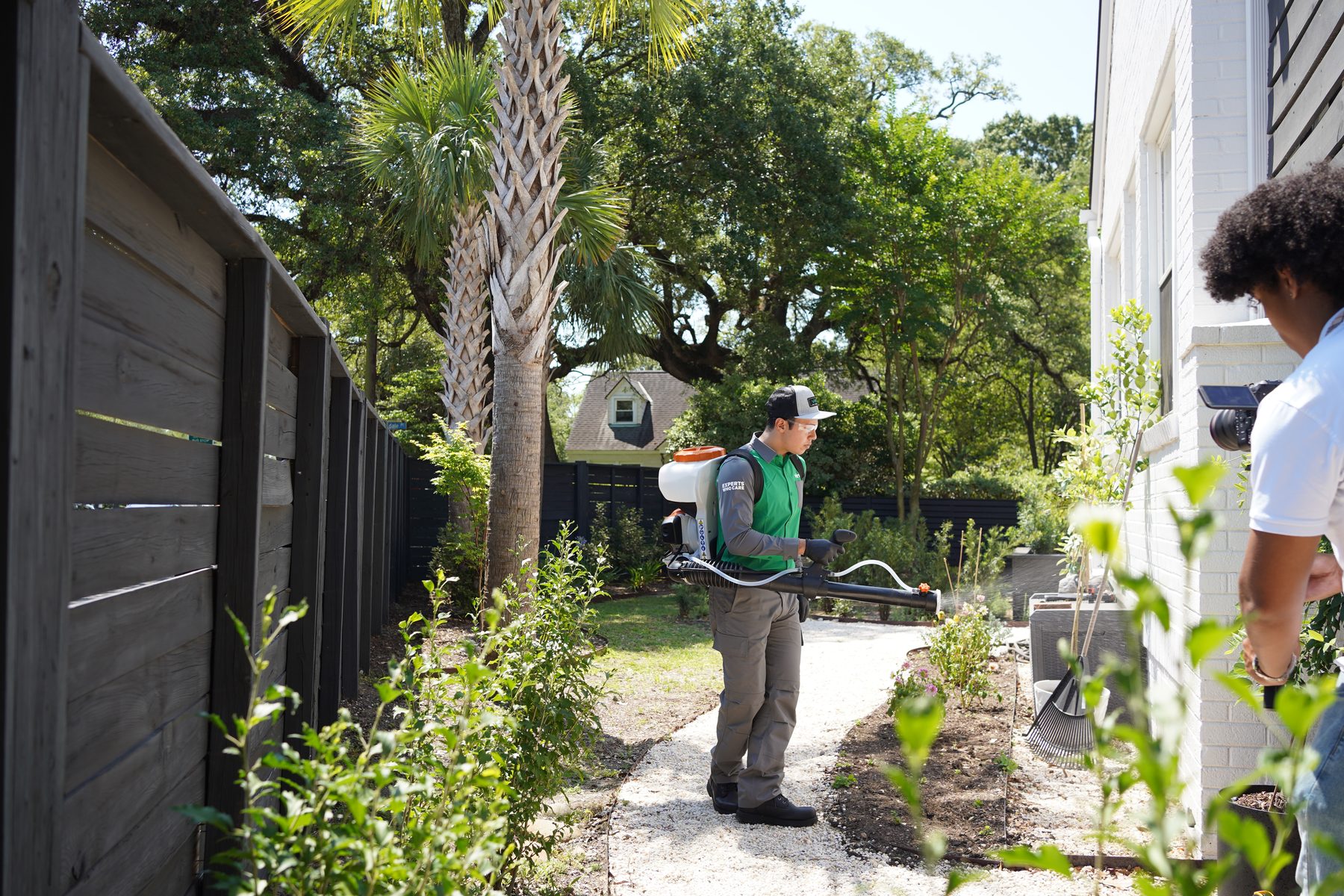
Call someone when a larval count genuinely exceeds the threshold and the lawn is visibly thinning, when damage returns each spring despite corrected watering and drainage, or when you cannot tell whether you are dealing with crane flies, mosquitoes, or something else. Vinx handles that identification and treats the soil rather than the swarm, across South Carolina, North Carolina and Virginia, see residential pest control, or mosquito control in Charleston if biting insects turn out to be the real problem.