




If you’re wondering how to identify bed bug bites, you’ve come to the right place. We get how frustrating it can be to look down at your skin and see bites. But, if we’re talking about bed bug bites, you don’t even need to look down, you can feel them because they itch like crazy! You’ve probably been googling like crazy, trying to figure out what is going on with your skin. Is it chickenpox? Mosquito bites? Flea bites? The list goes on and on. The deeper into Google you get, the more you begin to itch. You may even feel like there are bugs crawling on you as you read!
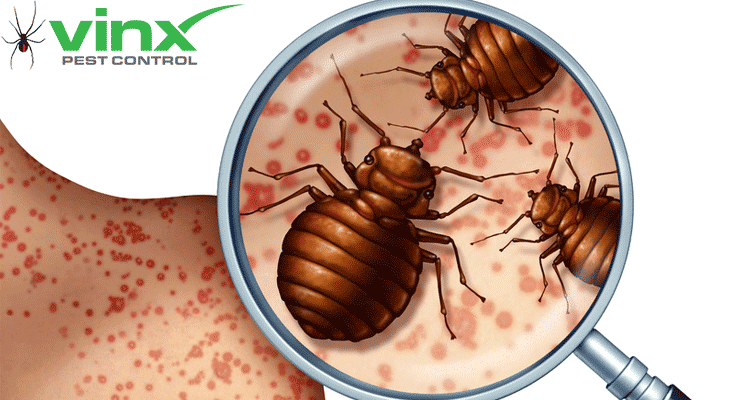
Believe us, we’ve been there. It’s the worst feeling in the world, and we don’t wish it upon our worst enemies. Because we like you, we’re going to help get you to the bottom of your bite problem. By the end, you’ll know whether or not it’s those pesky bed bugs you’re dealing with.
What are bed bugs?
Even the name is gross: Bed bugs. It’s as if your literal nightmare was created in a small, oval bug. If you’re anything like us, your bed is your safe haven. As it should be! It’s the place where you rest and recharge. It’s where you dream big and cocoon yourself in endless warmth. It is not a place for bad things to happen to you.

If we could, we’d take the problem away from you. Oh, wait…we can! We’re bed bug experts, so let’s break it down:
- Small bugs that are parasitic
- Drink blood, like ticks and fleas
- Repopulate extremely fast
- Love dark places (like your fave pillow!)
- Infestations are very common by the time you find them
Did we scare you? We’re not trying to. Basically, bed bugs are no bueno. They’ll bite you and your loved ones, leaving itchy welts that can scar if you scratch them! If you’re noticing bed bug bites and you aren’t sleeping in a hotel or someone else’s home, there’s a good chance there are other signs of the bed bugs that you aren’t seeing. And because bites often mean you can have an infestation, let’s look at the signs that you may have a bed bug infestation.
Signs of a bed bug infestation
Everyone wishes they could have an infestation of money or free candy or something good! Instead, we’re stuck with the bothersome infestations of creepy crawlies that like to suck our blood. And unlike Bella and Edward, these creepers aren’t vampires but bed bugs. However, they will watch you while you sleep just like in Twilight.
So, if you’re not into that (we don’t blame you), let’s make sure you know what to be on the lookout for. The first thing you usually see with bedbugs are the bites. But, we’ll talk about that later. Here’s the thing: Bed bugs can live up for a year. In that year, they can lay up to 500 eggs. Now imagine those 500 eggs laying an additional 500 eggs each. We’re not going to make you do math, but it’s a lot of bed bugs!
When there are that many bugs, there is usually a musty-like smell. So, if you’ve been sniffing something strange these past few months and blaming it on your husband or the dog, it’s probably not them. Or, at least they shouldn’t be completely to blame. That sweet, slightly musty, almost like your grandma’s house type of smell could be from bed bugs. They have these (not so) awesome smell glands that excrete this unappetizing smell all over their (your) home. It can be in your furniture, your sheets, your pillows, and even your clothes!
Beyond smelling like a wet or moldy home, there also may be strange rust-colored stains that pop up wherever bedbugs are. We hate to be the ones to break this to you, but it’s not rust. That would be the bed bug’s stool. You are what you eat, and since they eat blood, well, you get the picture.
Another thing that you may see around your house are bed bug sheds. And no, this isn’t where they hold all their extra gardening tools. Their sheds are their old skin that they molt out of as they grow. Remember, bed bugs are tiny. They are tinier than an apple seed! These sheds may not look like much to you. They may seem like little white bugs that look nothing like bed bugs. People often think they are small gnats or tiny beetles. But, alas, they are not. If you have seen any sort of white “bugs” dead around your house, it could be bed bug casings.
The best way to find out if you have an infestation is to check. Take a flashlight and leave the room light off. Bed bugs love the dark, so it’s best to surprise them with your flashlight. Check your furniture, and especially your bed. You’ll want to lift up the cushions or mattresses and check the edges with the flashlight. You can see bed bugs with the naked eye, but you should also be able to see molt, eggs, or feces. You may even see blood spots from where your bites have bled.
If the thought of checking for bed bugs grosses you out, we get it! That’s why we have certified techs that know exactly what to look for. If you would rather an expert take a look, give us a call. We’d be happy to send someone out to help with your problem.
How to identify bed bug bites
If you’ve found bed bugs, there’s a good chance that you have bed bug bites. But if you didn’t pause reading to play bed bug Inspector Gadget, let’s get to the bites. You’ve got all these bites, you’re frustrated beyond belief, and you don’t see a light at the end of the tunnel. We’re that light! We have ten ways for you to identify your bed bug bites for good.

1. Didn’t feel it
The first thing that helps you to identify a bug bite may be the strangest thing of all. It’s that you may not have felt it at all! The thing about bed bugs is that they inject an anesthetic that actually numbs the area that they are biting. So, you aren’t able to feel when a bed bug is attached to you. The creepiest part is that they stay attached to you from anywhere from three to ten minutes sucking your blood until they are full! That’s a long time!
2. Looks like a mosquito bite
Another way to identify whether you have bed bug bites is that they are going to look like mosquito bites. Obviously, if you haven’t been in an area with mosquitos, this will be extremely concerning. If these bites look and feel like a mosquito bite, there’s a good chance they are bed bug bites. You can expect for them to be swollen and itchy and especially red!
3. New bites when you wake up
If you haven’t guessed by now, bed bugs are eerily similar to vampires. They only come out at night! That means that you will have bites when you wake up. If you are waking up with bites that you didn’t have the night before, we’ve got some bad news. It’s probably not a spider but bed bugs that are biting you! This is one of the telltale signs that you are dealing with bed bugs and not something else.
4. Bites on anywhere skin is exposed
Bed bugs, unlike fleas, are not picky. Anywhere your skin is exposed, you can expect to see bites. If you were dealing with fleas, you would mostly see bites on your ankles. This is typical to see, but not with bed bugs. If you wear shorts, you could have bed bug bites all up your legs! If you wore nothing, well, let’s not go there. We’ll just say that the result will not be pleasant. If you’re dealing with bed bugs, cover up buttercup!
5. Clear or dark center
There are so many bug bites that it can be hard to determine one from the other. However, a really good way to determine this is what the center of the bug bite looks like. For many bug bites, you will find a hot red center. This is typical because the skin is swelling and reacting to what the toxin in the bug is.
However, you won’t see a hot red center when it comes to bed bug bites. The most typical center you will see with bed bug bites is a clear center. Other times, there may be a darker center that then fades out to a lighter red color. Bed bugs have a sort of beak that they insert into your skin and drink your blood with. It’s this beak that can often cause these clear centers.
6. Dried blood spots
Because these bugs leave a larger hole with their beak, you often continue to bleed after they say goodbye to you. If you wake up with dried blood spots on your skin where your bites are, there’s a good chance that this is a bed bug! The dried blood will be small and pinpoint-like, so it can often go unnoticed until the bites start itching severely.

There’s also the possibility that the blood will end up on your sheets rather than stick to you. So, always check your sheets when you wake up!
7. Bites in a line
Bed bug bites often run in a short line or a zigzag. The American Academy of Dermatology describes several welts, often in a line that zigzags. A bed bug feeding for three to ten minutes can be disturbed when you move, walk a little further along your skin and bite again, which leaves a row. It is a useful clue, but not proof: fleas leave the same kind of row, and plenty of bed bug bites are scattered at random.
8. Bites in threes
A cluster of three, in a row or a small triangle, is the pattern doctors call the "breakfast, lunch and dinner" sign. The name suggests three meals, but the more likely explanation is interrupted feeding: the bug is disturbed, moves a few centimeters and tries again. Dermatologists who named the sign found it in flea bites as well as bed bug bites, so three bites in a triangle point to a small biting insect that fed more than once, not specifically to bed bugs. We cover how to tell them apart below.
9. Swollen bites
Some bites swell a lot, others do not. If you have swollen bites, you know that something is irritating you. The problem with bed bugs is that everyone reacts differently. Some people’s bites won’t swell at all, but will instead look like flat, red dots across the skin. Other people’s bites will swell up like a mosquito bite and leave behind a large, raised bite.
Perhaps the scariest thing is that, although rare, bed bugs can cause some individuals to go into anaphylactic shock. This is when the airway passages swell shut. It can be life-threatening and happens very quickly. Always keep an eye on your family and how they react to bed bug bites. The last thing we want is for someone to get injured or die from bed bugs!
10. See bed bugs
Here’s a shocker, if you see bed bugs, your bites are probably from bed bugs! All kidding aside, the best way to determine if you’re dealing with bed bugs or not is to actually look and locate the bed bugs inside of your home. If you find them, you can talk to a pest control company about coming out and exterminating. Every day counts, so if you know that you have bed bugs, it’s time to call. Bed bugs are extremely resilient. If they are not treated with professional-grade tools and pesticide, your infestation will get worse.
How bed bugs bite
Ready for the nitty-gritty in how bed bugs bite? These small bugs have a strange, elongated beak. However, they aren’t like birds! These beaks will pierce your skin. Once they do that, they will suck up your blood for three to ten minutes. Often times, you won’t notice that they are there. They will inject you with an anesthetic, so you won’t feel a thing!
Bites in a Triangle or a Row: Is It Bed Bugs?
Not necessarily. Three bites in a triangle or a short row is a real pattern, but it is not a bed bug signature. A 2026 review of 84 documented bed bug cases found the classic line in fewer than half of them (45%), and the same pattern comes from flea bites. The dermatologists who described the "breakfast, lunch and dinner" sign found it in both. The pattern tells you a small insect fed more than once in the same spot. Where the bites are, and when they appeared, tells you far more about which one.
Why bites end up in threes
Fleas and bed bugs both feed in short bursts. If you roll over, or clothing rubs the spot, the insect stops, moves a few centimeters and bites again. A 2018 review in the Anais Brasileiros de Dermatologia describes the result as three or more itchy bumps, most often three, in a line or a triangle a few centimeters apart.
It is not a reliable signature, though. Stephen Doggett, one of the world's leading bed bug researchers, wrote in Australian Family Physician that most bed bug bites do not occur in a line, and when they do, nobody knows whether one bug or several made them. A 2020 case report in the Journal of Clinical and Aesthetic Dermatology notes that some researchers consider the "three meals" idea a myth, because randomly scattered bed bug bites are at least as common. Several bugs feeding at once, or bites that miss a blood vessel, produce other shapes. And the Merck Manual points out that bed bug bites usually look nonspecific, so they are hard to diagnose from appearance alone.
What else bites in a triangle
Where the bites are and when you noticed them narrows it down much more than their shape:
| Likely cause | Where the bites usually are | When they show up | Other clues |
|---|---|---|---|
| Bed bugs | Any skin exposed while you sleep: face, neck, shoulders, arms, back, legs | The morning after, or days later. First-time bites can take up to 14 days to itch | Often larger and more swollen than flea bites. Look for dark spots, shed skins and eggs along mattress seams |
| Fleas | Ankles, feet and lower legs | Any time of day, often after sitting on the couch or floor where pets rest | A pet that is scratching, or wildlife in the attic or crawlspace. Fleas also come from mice, rats, squirrels, possums and raccoons. Small, hard, very itchy bumps |
| Bird or rodent mites | Anywhere on the body, indoors | Often starts suddenly, soon after birds leave a nest in the eaves or rodents die or are removed | Tiny dark specks about the size of a period, moving slowly. They can't jump or fly |
| Chiggers | Where clothing is tight: sock line, waistband, groin, bra line | Itching starts 3 to 6 hours after being outdoors and peaks at 24 to 48 hours | Recent time in tall grass or brush. Chiggers do not burrow, whatever you have heard |
| Mosquitoes | Exposed skin, mostly outdoors at dawn and dusk | Itchy within minutes | Bites are usually scattered rather than in a neat group |
In the Carolinas and Virginia, chiggers are the one people most often forget. A summer afternoon in the yard can leave a tidy row of bites along the sock line that looks a lot like a "bed bug line." See our guide to chiggers if that sounds familiar, or when to call an exterminator for fleas if you have pets.
Why only one person gets bitten
A common story goes like this: one partner wakes up with a row of welts and the other has nothing. People set out spider traps, then flea traps and bowls of soapy water, catch nothing, and only then think of bed bugs. That exact sequence appears in forum threads going back more than 15 years.
The science explains it. In a University of Sheffield experiment led by Klaus Reinhardt, 11 of 24 people showed no skin reaction to their first bed bug bites. With repeated bites, almost all of them started reacting, and much faster. University of Kentucky entomologist Michael Potter puts long-term non-reaction at about 30% of people. Children are the opposite case for fleas: dermatologists note that kids react more strongly to flea and mite bites because they haven't built up tolerance yet, so a child can be covered in bumps while the adults in the house have none.
Is a three-dot bite a spider bite?
We could not find a medical source that describes three dots in a triangle as a spider bite. The triangle pattern in the dermatology literature belongs to fleas and bed bugs. Spider bites are also far rarer than people think: University of California, Riverside spider researcher Rick Vetter and colleagues list dozens of conditions, from skin infections to Lyme disease, that routinely get mistaken for them. Brown recluse spiders, the usual suspect, are not established in the Charleston area either. See our guide to South Carolina's two venomous spiders.
When there are bites but no bugs at all
Bed bug reactions can be delayed by days, so the bites you notice today may be from a hotel stay last week. And sometimes no pest is involved. Texas A&M urban entomologist Michael Merchant lists detergents, fabric softeners, soaps, cosmetics, some medications and dry skin among the causes of "mystery bites." If a careful inspection finds no pest, the next step is a dermatologist, not a stronger spray.
How to confirm it before you treat anything
- Check the mattress seams, box spring and headboard. Bed bugs leave dark spotting (dried excrement), pale eggs, tan shed skins and rusty smears on sheets. Our guide to what to do before the exterminator comes shows where to look.
- Check your pets and where they sleep. Flea dirt, black specks that turn reddish on a damp paper towel, points to fleas. Kentucky's extension service suggests walking through the house in white socks pulled high: fleas jump on and show up clearly.
- Put sticky traps along walls and under the bed for a few nights. Whatever you catch can be identified, which settles the question faster than looking at bites.
- Think about the last 48 hours. Tall grass, a hike or yard work plus bites at the sock line or waistband points to chiggers.
- Don't spray or fog before you know. Treating for the wrong pest wastes money, and bug bombs can scatter bed bugs into other rooms.
How to get rid of bed bug bites scars
Unfortunately, depending on how bad you react to the bed bugs, they could leave some scars behind. This is usually when you react to them pretty severely. Some people will itch and scratch at the bites as severely as they do chickenpox, so you can see how it would leave behind some nasty sores and scars!
If you do find that you have bed bug scarring, there are a few things you can do. First, is wait it out. These small bite scars may prove to actually go away with time. Second, apply some skin oil, like Bio Oil, to the bites. This can help prevent the scars from sticking around. Third, talk to a dermatologist, who may be able to help you with prescription-strength scar cream.
What to Do If You Think It Is Bed Bugs
Bites are a clue, not a diagnosis. Small red welts in a line or a cluster on skin that was exposed while you slept make bed bugs worth checking for, but until you find the bugs or their signs, it could just as easily be fleas or chiggers.
You’ll need to check the crevices and spaces in between mattresses, pillows, and furniture. If this doesn’t seem like something you want to do, we get it. Bed bugs can make you feel like there are creepy crawlies all around you, which is never fun! Call us today and we’ll do the inspecting for you. Here at Vinx, we know everything there is to know about bed bugs. Our technicians know everything there is to know about these pesky bugs. Give us a call today or fill out the form below for a free bed bug extermination quote! We can’t wait to hear from you.
Sources: J. F. Porras-Villamil and Z. C. DeVries, "Clinical manifestations of bed bug bites: A systematic review of case reports", PLoS One, 2026; S. L. Doggett and R. C. Russell, "Bed bugs: What the GP needs to know", Australian Family Physician 38(11), 2009; G. Peres, L. B. T. Yugar and V. Haddad Junior, "Breakfast, lunch, and dinner sign: a hallmark of flea and bedbug bites", Anais Brasileiros de Dermatologia, 2018; J. Monroe, "Atypical Linear Configuration of Bedbug Bites in an Eight-year-old Boy", Journal of Clinical and Aesthetic Dermatology, 2020; Merck Manual Professional Edition, "Bedbugs", 2025; American Academy of Dermatology, "Bedbugs: Signs and symptoms"; M. F. Potter, University of Kentucky, ENTFACT-636 "Bed Bugs" and ENTFACT-649 "Mystery Bites"; M. Merchant, Texas A&M AgriLife, "Diagnosing Mysterious 'Bug Bites'"; G. C. Moore and M. E. Merchant, Texas A&M AgriLife, "Chiggers"; DermNet, "Papular urticaria"; CDC, "About Fleas".
Further reading: see the guidance from the EPA.
Frequently Asked Questions
Small, red, swollen, and intensely itchy, usually a lot like a mosquito bite. Most have a clear center, or a darker center fading out to lighter red, rather than the hot red center you get from many other bites. Reactions vary, so some people swell up while others just get flat red dots.
Bed bugs bite anywhere skin is exposed, while flea bites usually concentrate around the ankles. Bed bug bites tend to come in a line or zigzag, often in groups of three, and they appear overnight while you sleep. Mosquito bites are typically scattered and single. If what you are finding is tiny red specks on the sheets that leave a rust-colored smear when crushed, those are more likely clover mites, which do not bite at all.
Bed bugs inject an anesthetic that numbs the area before they feed, so you feel nothing at the time. They stay attached for roughly three to ten minutes while they drink. You usually notice hours later when the itching starts, sometimes with pinpoint dried blood on your skin or sheets.
Leave the room light off, take a flashlight, and check the seams and edges of your mattress, cushions, and furniture. You are looking for live bugs, shed skins, dark specks of waste, eggs, and rust-colored stains. A sweet, musty odor in the room is another common sign.
Realiztically, no. Bed bugs are extremely resilient, hide in tiny crevices, and reproduce fast, so a partial treatment tends to spread them instead of ending them. Professional-grade tools and products are what clear an infestation, and every day you wait means more bugs to treat.
No. Three bites in a line or triangle is a pattern doctors see with both fleas and bed bugs, and many bed bug bites are scattered at random. Bites on the ankles and lower legs point more toward fleas, bites along the sock line or waistband toward chiggers, and bites on skin exposed while you sleep toward bed bugs.
Usually fleas or bed bugs. Both feed in short bursts and move a few centimeters when disturbed, leaving three bites close together. Chiggers can leave tidy rows where clothing is tight. Check where the bites are, then look for flea dirt on pets or dark spots and shed skins along mattress seams.
We could not find any medical source describing a three-dot triangle as a spider bite. That pattern is described for fleas and bed bugs. Spider bites are also commonly misdiagnosed, and many suspected spider bites turn out to be skin infections or other conditions.
Bed bugs hide in seams and cracks during the day, and early infestations are small, so check mattress seams, the box spring and headboard closely. It may also be fleas, chiggers or mosquitoes, and bites can appear days after they happened, so they may be from somewhere else.
Flea, chigger and mosquito bites are the most common mix-ups, and some skin conditions such as hives look similar. The Merck Manual notes that bed bug bites usually look nonspecific, which is why finding the bugs or their signs is the only reliable confirmation.
Usually both people are being bitten, but only one is reacting. In a University of Sheffield study, 11 of 24 people had no skin reaction to their first bed bug bites, and University of Kentucky entomologists estimate about 30% of people never react. The person without welts can still have bed bugs in their side of the bed.
Yes. When birds leave a nest in the eaves or rodents die or are removed from an attic, their mites can move indoors and bite people, and the bites are easily mistaken for bed bugs. The mites are tiny dark specks that can't jump or fly. Removing the nest or the rodents is the fix; the mites die without their hosts.
Photo credits: CDC / Harvard University, Dr. Gary Alpert, Public domain, via Wikimedia Commons; James Heilman, CC BY-SA 3.0, via Wikimedia Commons; Hadifn, CC BY-SA 3.0, via Wikimedia Commons.