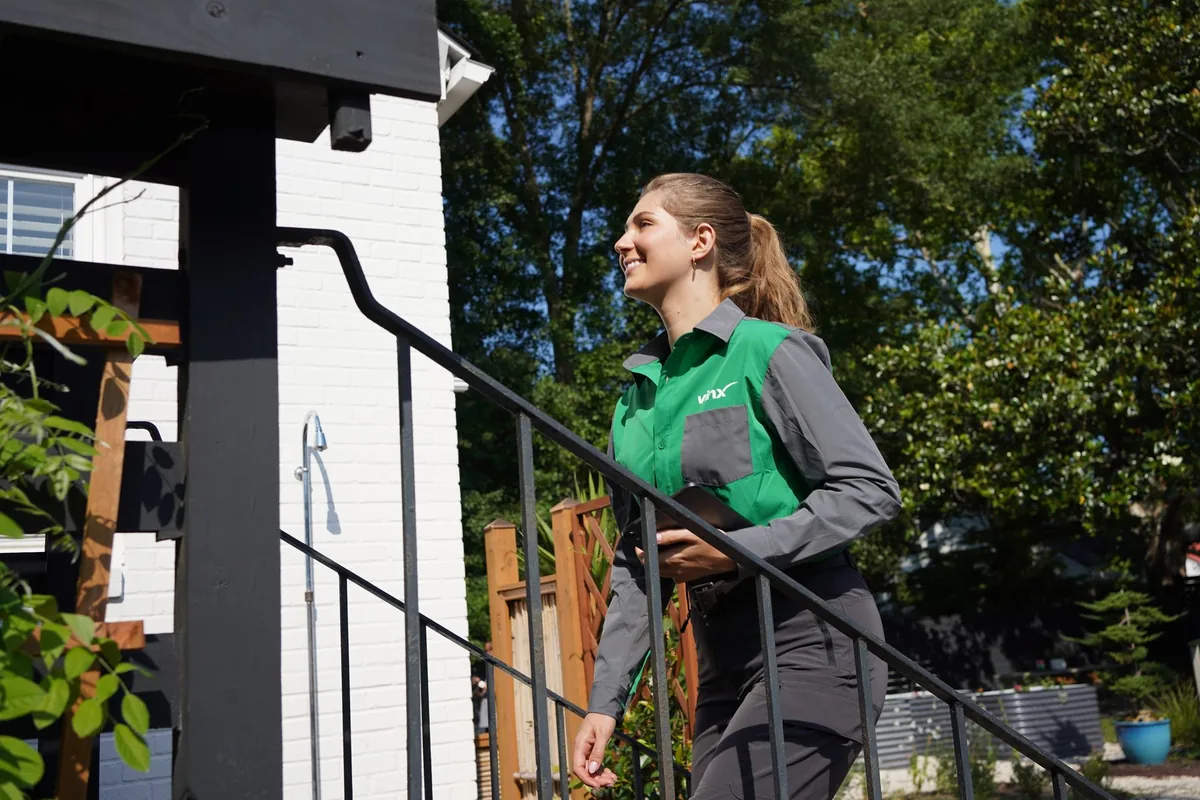
Pest Control in Columbia, SC
Full-Service Pest Control — Ants, Spiders, Cockroaches, Mosquitoes & More
Pest control in Columbia covers the full range of pests common to the Midlands — ants, spiders, cockroaches, mosquitoes, termites, and rodents. Vinx provides recurring residential service with a free re-treatment guarantee.
Get Started in 60 Seconds
Choose what’s easiest for you
Request a Quote
We usually respond in 2 minutes
Call (803) 925-8469
Get a live person (no AI agents here!)
Sign Up Online
Get pricing and schedule now





Welcome to Vinx Pest Control
A Company That Actually Backs What It Says
At Vinx, we combine professional-grade treatments with a level of service most pest control companies don't offer. Local technicians, fast response times, and a guarantee that actually means something.
Get a Free Quote"I'm not passionate about killing bugs. I'm passionate about customer service. At Vinx, you get experts who show up, do the job right, and stand behind every visit. No runaround, no fine print."
PROTECTION PLANS
Protection Plans for Columbia Homeowners
100% money-back guarantee on every plan.

Standard Residential Protection
- 4 Seasonal Treatments Per Year
- 50+ Covered Pests
- Interior, Exterior & Yard Treatment
- Unlimited Free Re-Services
- 100% Money-Back Guarantee
- Fire Ant Yard Guarantee
- Flea & Tick Coverage
- Mosquito Treatments

Upgraded Yard Protection
- 6 Home & Yard Treatments Per Year
- 50+ Covered Pests
- Interior, Exterior & Yard Treatment
- Unlimited Free Re-Services
- 100% Money-Back Guarantee
- Fire Ant Yard Elimination Guarantee
- Flea & Tick Elimination Guarantee
- Mosquito Treatments

Most Comprehensive Protection
- 9 Treatments Per Year
- 50+ Covered Pests
- Interior, Exterior & Yard Treatment
- Unlimited Free Re-Services
- 100% Money-Back Guarantee
- Fire Ant Yard Elimination Guarantee
- Interior Flea & Tick Coverage
- 8 Mosquito Treatments (Mar–Nov)
- Free Bed Bug Treatments if Needed*
*Starting rates vary by home size and area. All plans billed monthly.
Request Your Free Pest Control Quote
Fill out the form below and a Vinx team member will reach out within 2 minutes during business hours.
Prefer to talk? Call (803) 925-8469 for a live person — no AI agents.
Our Process
How Vinx Treats Your Columbia Home — Step by Step

Inspection & Reporting
Every time we come out, our technicians aren’t just treating — they’re looking. We’re checking for things you’d never notice on a normal day: early signs of termite activity, conditions around the home that could be attracting pests, moisture issues, entry points bugs might be exploiting, wasp nests forming in spots you can’t see from the ground. In Columbia's extreme summer heat, we pay close attention to crawlspace conditions and fire ant mound activity around the perimeter — both are early warning signs of bigger problems. Having a trained set of eyes on your home every 90 days means you’re not caught off guard. If we see something, we’ll tell you — straight up, no pressure, no scare tactics.
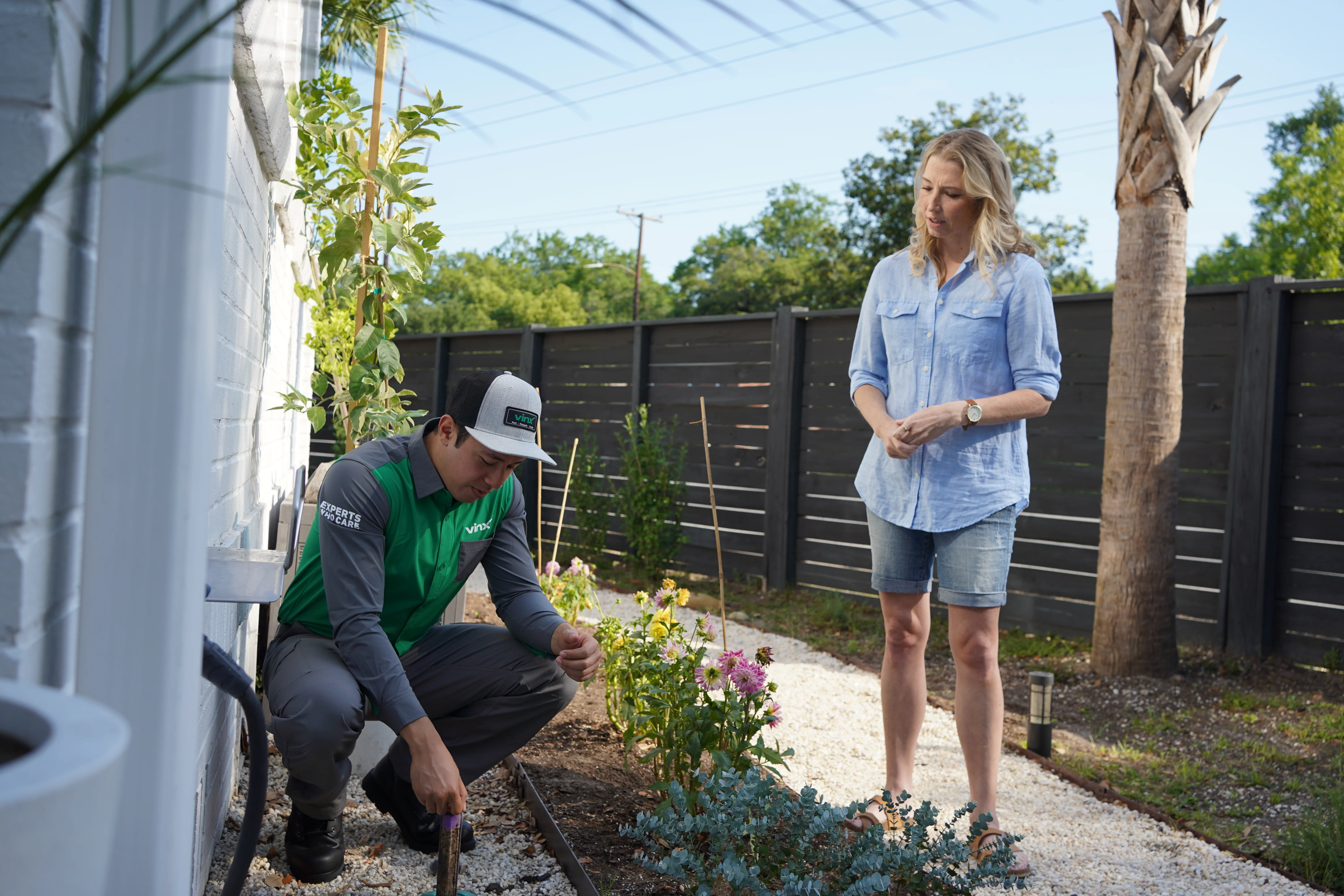
Exterior Foundation Treatment
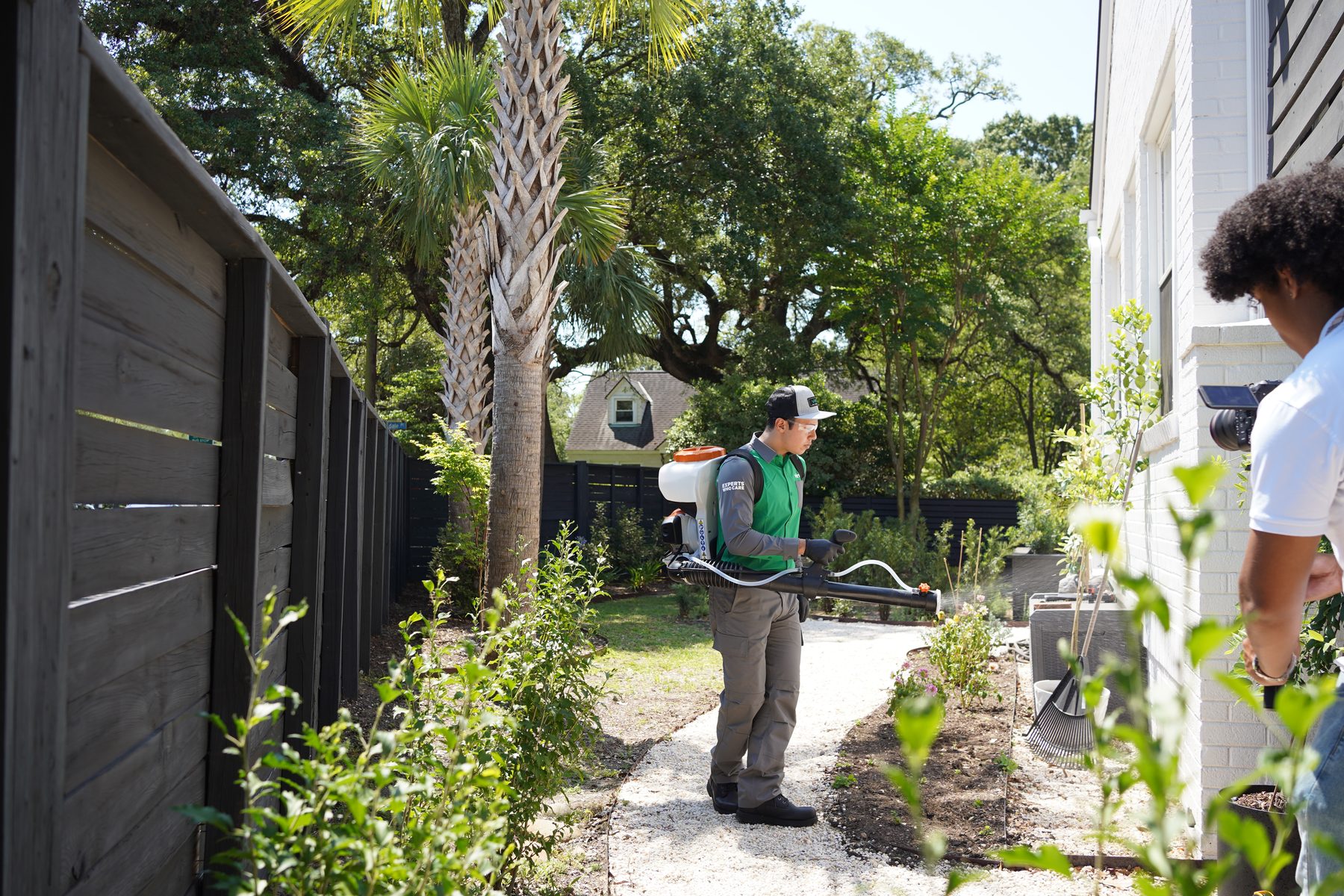
We treat the foundation with a micro-encapsulated product — a time-release barrier that attaches to pests and gets carried back to their nesting site. We go three feet up and three feet out, creating a real buffer zone. Columbia's clay soil and summer heat create the perfect conditions for subterranean termites — our foundation barrier intercepts pests at the point of entry before they make it inside. Since we’re focused almost entirely on the outside of your home, your kids and pets can stay safely inside while we work. EPA-approved products used at pet boarding facilities and child care centers — once dry in 15 to 20 minutes, they’re safe.
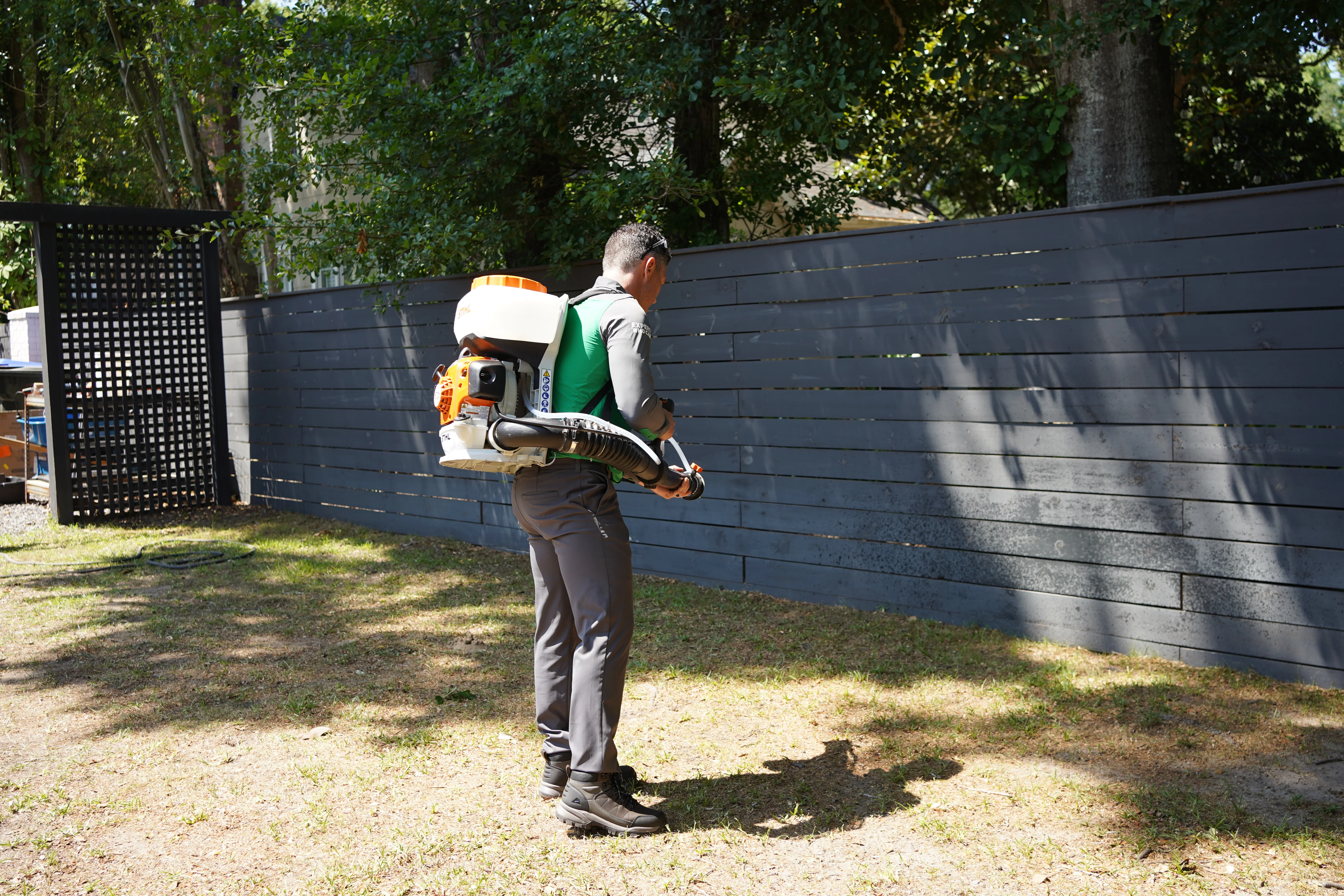
Yard Treatment
We treat the full yard, up to 30 feet out from the home, to reduce pest pressure before bugs get close to your foundation. Columbia yards deal with heavy fire ant pressure in summer — our yard treatment knocks down ant populations and creates a buffer zone so they're not building mounds close to your home. Between the yard treatment and the foundation barrier, we’re building two lines of defense — take care of the bugs on the outside so they’re never a problem on the inside.
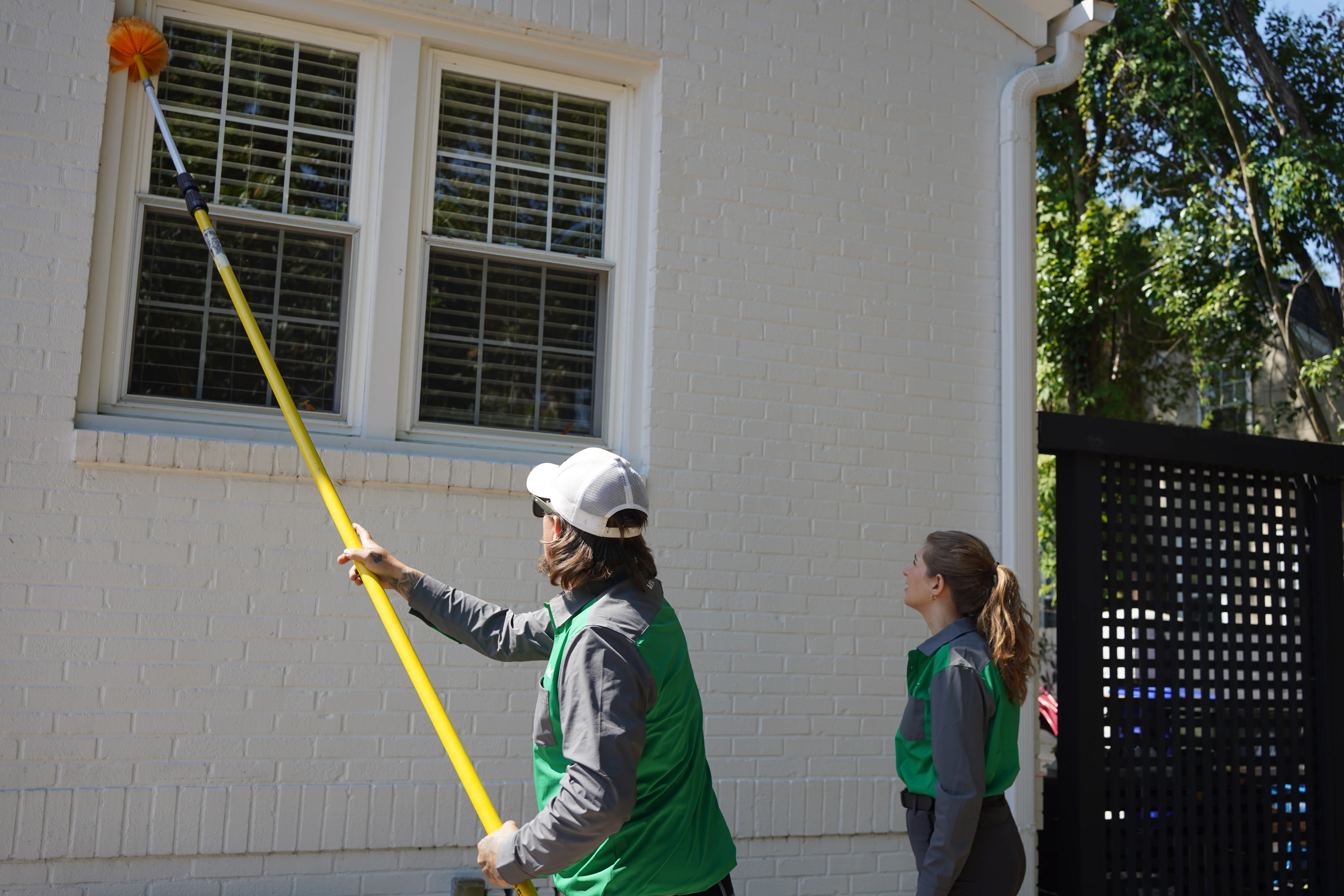
Sweep & Treat Eaves
We sweep first and second-story eaves on every visit — cobwebs, wasp nests, spider webs, all of it comes down. Then we spot treat those areas with a residual product. In Columbia's heat, wasps establish nests in eaves and soffits fast — we sweep everything down and apply a residual treatment so returning wasps encounter our product, not your home. Wasps return to spots where they’ve built before because of pheromones, but our product is waiting for them. It keeps pests from using your roofline as a staging ground and makes a visible difference every visit.
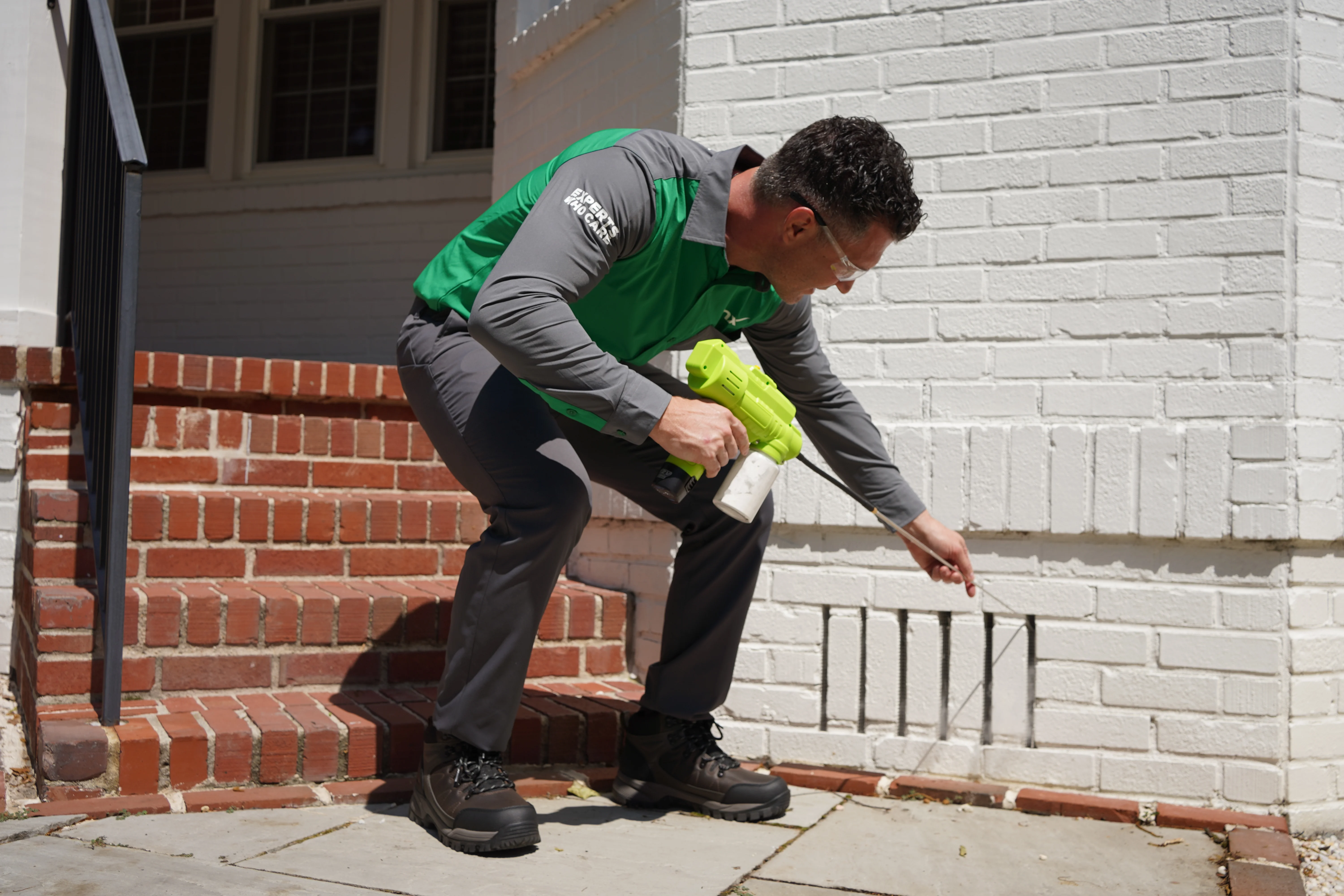
Power Dust Injection
We use a handheld compressor with a specialized tip to inject dust product deep into cracks and crevices on the outside of your home — gaps around pipes, weep holes, expansion joints, anywhere bugs try to squeeze through. Columbia's German cockroach problem is often a wall void issue — our dust injection gets into the places surface sprays never reach, flushing and eliminating the infestation at the source. The dust gets pushed deep into those areas, flushes out anything already there, and because it’s protected from rain and heat, it stays active far longer than a surface spray. Bugs aren’t quietly building up inside your walls.
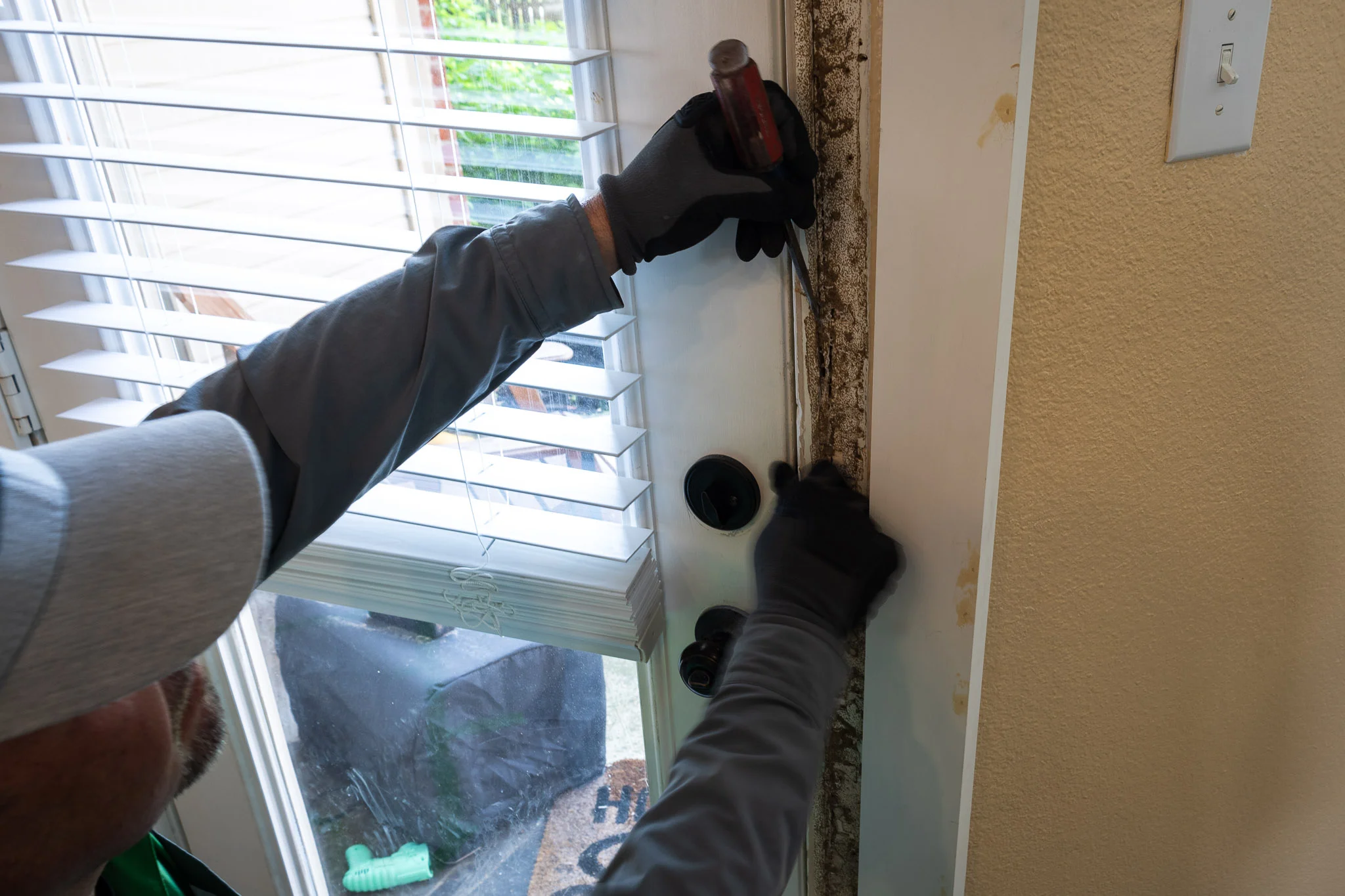
Interior Treatment (If Needed)
Here’s the honest truth — we rarely need to treat inside your home, and that’s by design. Because we do so much more on the outside than most companies, we stop the problem before it gets in. But the inside is always covered under your service guarantee at no extra charge. If cockroaches, ants, or any pest makes it inside your Columbia home, we come in and treat — baseboards, entry points, the garage — whatever it takes, at no additional charge. We treat baseboards, entry points, the garage, a detached shed — whatever you’re dealing with. Same EPA-approved products. Once they dry, safe for kids and pets. No questions, no additional cost, no hassle.
Customer Reviews
Trusted by Thousands of Happy Families
Vinx has been treating our home for over a year now and we haven't had a single issue. The technicians are always professional and thorough. Worth every penny!
Switched to Vinx after two other companies failed to solve our ant problem. Their team identified the source, treated it, and we've been bug-free since. Highly recommend.
Really impressed by the level of detail in their inspection. They explained exactly what they found and what the treatment plan would be. Very transparent company.
Great service every single visit. They always call ahead, show up on time, and the treatment works. My neighbors have seen me tell them to switch to Vinx — that says it all.
I was skeptical at first, but after the first treatment the difference was noticeable. No more roaches in the kitchen. The interior warranty gives me real peace of mind.
Vinx is the only pest company I've used that actually backs up what they promise. Had a callback issue and they came out within 48 hours at no charge. Outstanding.
Start Pest-Free Living in Columbia Today
Vinx Pest Control has earned 4.9 stars across 472 Google reviews and a BBB A+ rating by doing one thing well: showing up, doing the job right, and coming back free if anything’s missed. Plans start at $49/mo. No hidden fees. Real local Columbia technicians.
Year-Round Pest Pressure
Why Columbia Homes Need Year-Round Pest Protection
Columbia sits at the confluence of the Congaree, Saluda, and Broad Rivers — warm, humid conditions and Columbia’s “Famously Hot” summers mean pest activity never fully shuts down. Even in winter, cockroaches and rodents stay active indoors in heated homes.
Most parts of the country get a winter break from pests. Columbia does not. Columbia’s position at the confluence of three major rivers keeps soil moisture elevated year-round — ideal conditions for termites, cockroaches, and mosquitoes. Without quarterly perimeter treatment, pest pressure compounds fast.
Storm drain systems beneath Columbia streets support large cockroach populations. Rapid new construction in Lexington, Blythewood, and Irmo displaces ground-nesting ants into established neighbourhoods. Older housing stock in Downtown Columbia and West Columbia has more entry points for rodents and cockroaches to exploit.
6 Pest Pressures in Columbia
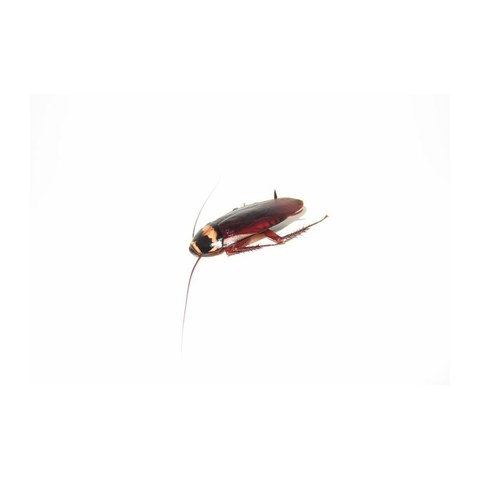
Cockroaches
American cockroach — thrives in Columbia’s river-fed humidity. Enter through drain lines, crawl space vents, and gaps around plumbing. Storm drain systems under Columbia streets support large populations that forage into adjacent homes year-round. Heaviest in Downtown Columbia, West Columbia, and along the Congaree floodplain.
Fire & Argentine Ants
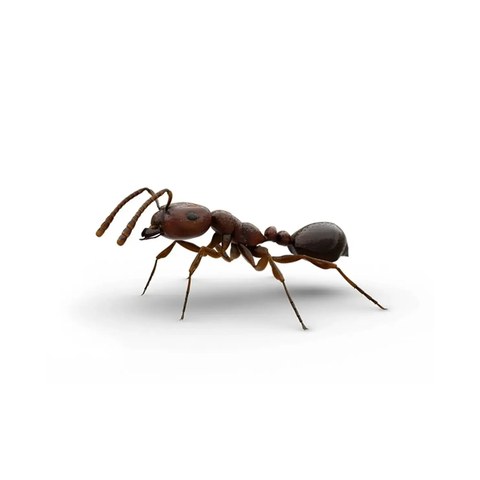
Ant mounds establish aggressively in Columbia’s clay soils. New construction in Lexington, Blythewood, and Irmo constantly displaces colonies into established neighborhoods. A single mound can contain 200,000 workers. Argentine ants form supercolonies spanning multiple properties requiring completely different treatment methods.
Termites
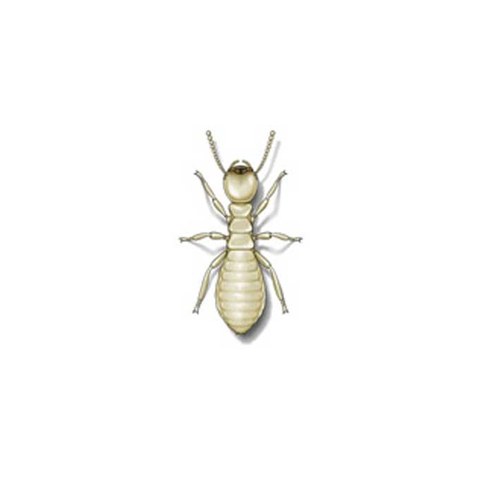
Eastern Subterranean termites are active throughout Richland and Lexington Counties. Columbia’s high soil moisture from three converging river systems keeps termite colonies foraging year-round. Termite damage is not covered by standard homeowners insurance in South Carolina. Annual inspection is the minimum level of protection.
Mosquitoes
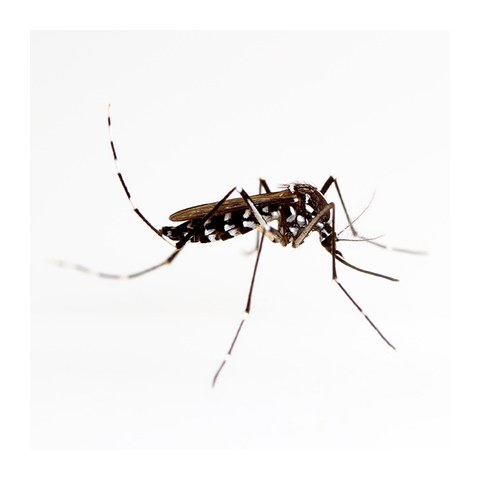
Congaree, Saluda, and Broad River corridors sustain mosquito breeding habitat from March through November. Culex carry West Nile virus. Aedes transmit Zika. Both active from early spring through late fall in Columbia’s warm climate. Monthly barrier spray included in Vinx Platinum.

Rodents
Norway rats, roof rats, and house mice are year-round problems in Columbia. Commercial corridors along Garners Ferry Road, Bush River Road, and Two Notch Road have entrenched Norway rat populations. Mild Columbia winters never deliver the cold snaps that naturally reduce rodent pressure. Roof rats access homes through rooflines and attic vents.
Spiders
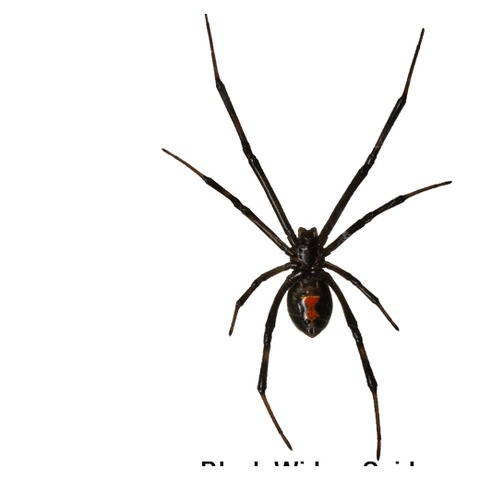
Black widows active year-round in garages, crawl spaces, and woodpiles throughout Columbia. Brown recluse present in older homes with undisturbed storage areas. Wolf spiders common in wooded residential neighborhoods like Forest Acres and Harbison. Exterior perimeter treatment and web removal on every quarterly visit.
Pest Pressure by Neighborhood
Know Your Neighborhood’s Risk
Five Points & Downtown — Cockroaches & German Cockroaches
Older commercial and residential buildings near USC create ideal conditions for cockroaches and German cockroaches. Dense student housing turns over frequently, increasing the risk of bed bug and cockroach introductions. Aging stormwater infrastructure under Five Points drives cockroaches upward into structures during heavy rain events.
Forest Acres — Ants & Spiders
Mature tree canopy and wooded buffers throughout Forest Acres support robust spider populations — particularly black widows in woodpiles and storage areas. Ant mounds establish aggressively in maintained lawns. Proximity to Sesquicentennial State Park increases occasional incursions of carpenter ants and woodland spiders.
Irmo & Dutch Fork — Ants & Mosquitoes
Lake Murray shoreline and Dutch Fork Creek corridors create persistent mosquito breeding habitat throughout summer. Ant pressure is among the highest in the Columbia metro due to open residential lots and clay soils. New residential construction in Dutch Fork disturbs established ant and rodent populations, displacing them into homes.
NE Columbia & Blythewood — Rodents & Ants
Rapid suburban expansion into wooded areas around I-77 displaces rodent and wildlife populations toward new structures. Norway rats and roof rats both present. Blythewood’s large-lot rural properties see more variety of pest species than urban Columbia. Ant mounds in open pasture-adjacent yards can exceed 40+ per acre.
Lexington — Subterranean Termites & Ants
Eastern Subterranean termite activity is well-documented throughout Lexington County. Sandy soils in many Lexington subdivisions accelerate termite foraging range. Ants are omnipresent in the open, sunny lawns common in Lexington neighborhoods. Mosquito pressure near Lake Murray recreational areas spikes May–September.
Cayce & West Columbia — Norway Rats & Cockroaches
Congaree River floodplain and older commercial corridors along Augusta Road support entrenched Norway rat populations. Palmetto bug pressure is elevated in the older housing stock near the river. Flooding events seasonally displace rodents and insects into elevated structures. Cayce industrial zones adjacent to residential areas increase pest pressure year-round.
Complete Coverage
What Vinx Treats in Your Columbia Home
Every common Columbia pest covered under one quarterly service plan

Ants
Ants, Argentine ants, carpenter ants, and odorous house ants. Perimeter bait, mound treatment, crack and crevice application.
All Plans
Cockroaches & Cockroaches
American, Asian, and German cockroaches. Gel bait in harborage areas, exterior perimeter spray, drain treatment.
All Plans
Spiders
Web removal from eaves, exterior perimeter targeting harborage. Black widow identification and targeted treatment.
All Plans
Wasps & Hornets
Nest removal from eaves, soffits, structural voids. Preventative treatment of common nesting sites on each quarterly visit.
All Plans
Fleas & Ticks
Yard treatment targeting grassy and shaded areas. Interior treatment of active infestation areas.
Plus & Platinum
Bed Bugs
Inspection, heat treatment assessment, and targeted chemical treatment. Columbia’s university population creates consistent exposure risk.
Platinum (12mo)
Rodents
Exterior bait station monitoring included in Plus and Platinum. Active infestation and full exclusion quoted separately after inspection.
Plus & Platinum
Mosquitoes
Monthly barrier spray and larvicide. Year-round service adjusted seasonally. Up to 90% population reduction per visit.
Platinum Only
Occasional Invaders
Silverfish, earwigs, centipedes, stink bugs, ladybugs, pillbugs. Crack and crevice treatment, perimeter spray, entry point ID.
All PlansWhat to Expect
Columbia Pest Activity by Season
Most pest companies in Columbia treat when you call. Vinx’s recurring plans keep your home protected through every seasonal shift — before the pressure peaks.
| Season | Active Pests | What to Watch For |
|---|---|---|
| Spring (Mar–May) | Termite swarmers, ants, mosquitoes, spiders | Termite swarmer wings on windowsills; ant mounds appearing after rain |
| Summer (Jun–Aug) | Mosquitoes, cockroaches, ants, stinging insects | Palmetto bug activity through drains; mosquito pressure near standing water |
| Fall (Sep–Nov) | Rodents, spiders, cockroaches, stink bugs | Brown recluse spiders moving indoors; mice entering through foundation gaps |
| Winter (Dec–Feb) | Rodents, German cockroaches, cockroaches | Rodent droppings in attics; roaches active near HVAC and water heaters |
Kid & Pet Safe
Our Treatments Are Safe for Your Whole Family — Including the Furry Members
Every product we use is EPA-registered and applied strictly at labeled rates by licensed SC technicians. We take the guesswork out of safety so you can feel confident letting kids and pets back into treated areas quickly.

EPA-Registered Products Only
All products are EPA-registered and applied per strict label requirements by our licensed South Carolina technicians on every visit.
Safe Re-Entry After Drying
Exterior spray treatments dry in 30–60 minutes. Once dry, treated surfaces are safe for children and pets. Your technician confirms before leaving.
Interior Treatment On Request
We treat only what’s needed, where it’s needed. Gel baits placed in areas inaccessible to pets and children for maximum safety.
Botanical Options Available
Ask your technician about our plant-derived treatment options for households that prefer a more natural approach to pest control.
Have a concern about products near your pets or children? Call (803) 925-8469 and we’ll walk you through exactly what we use and why it’s safe.
Explore More
More Pest Control Services in Columbia
Ant Control
Household ants & others
Bed Bug Treatment
Heat & liquid treatments
Mosquito Control
Monthly barrier treatments
Rodent Control
All rodents covered
Spider Control
All spider species covered
Wasp Control
Nest removal & prevention

Tick & Flea Control
Yard & pet protection
Exterminator
Same-day local exterminators
Frequently Asked Questions
Pest Control Columbia SC — Frequently Asked Questions
Columbia’s position at the confluence of the Congaree, Saluda, and Broad Rivers keeps soil moisture elevated across the entire metro year-round. Combined with Columbia’s “Famously Hot” summers regularly exceeding 100°F, this accelerates pest reproduction faster than almost any other market in South Carolina. The city’s extensive storm drain system also harbours large cockroach populations that forage into residential areas year-round.
Vinx pest control starts at $49/mo under Vinx HomeGuard, which includes 4 seasonal treatments, 50+ covered pests, and unlimited free re-services. Vinx Plus is $75/mo and adds ant and exterior flea/tick control. Vinx Platinum is $109/mo and includes monthly mosquito treatments (March–November), interior flea/tick coverage, and free bed bug treatment after 12 continuous months of Platinum.
Yes — call before noon and we can typically schedule same-day service in the Columbia metro. For re-service between scheduled visits, we’re usually back the next day at no charge on all plans. Call (803) 925-8469 to check availability.
Palmetto bug is the local name for the American cockroach — a large reddish-brown roach common throughout South Carolina. They thrive in Columbia’s humid conditions, living in mulch beds, storm drain systems, and around foundations. They enter homes through floor drains, pipe penetrations, and slab gaps. Vinx treats cockroaches under all plans using exterior barrier treatments, crack and crevice dust injection, and perimeter granular applications.
Ant control is included in Vinx Plus ($75/mo) and Vinx Platinum ($109/mo). The basic HomeGuard plan does not include ant elimination. Under Vinx Plus and Platinum, we treat visible ant mounds and apply broadcast granular products for yard-wide ant suppression.
Mosquito control is included exclusively in Vinx Platinum ($109/mo). Platinum includes monthly mosquito barrier treatments from March through November — applied to shrubs, vegetation, and shaded resting zones where mosquitoes harbour during the day.
Interior treatment is available upon request at no additional charge under all plans. We treat baseboards, kitchen areas, bathrooms, attic access points, and crawl spaces. For cockroach infestations in Columbia’s older homes, interior crack and crevice dust injection is particularly effective.
German cockroaches and termites are not covered under standard recurring pest plans. German cockroach infestations require targeted treatment — contact us at (803) 925-8469 for options. Termites are covered under a separate Termite TotalDefense plan. Mosquitoes are only covered under Platinum.
Every plan includes our free re-service guarantee. If covered pests return before your next scheduled visit, call (803) 925-8469 and we’ll come back — usually the next day — at no charge. No questions asked, no extra fees.
Yes. Fully licensed and insured. All Vinx technicians operating in Columbia and the Midlands are licensed by the South Carolina Department of Pesticide Regulation. Vinx carries full general liability and workers’ compensation coverage.
Yes — full Columbia metro coverage. Vinx serves all of Richland and Lexington Counties including Columbia, West Columbia, Cayce, Irmo, Harbison, Lexington, Chapin, Blythewood, Forest Acres, Shandon, Dentsville, Springdale, Hopkins, Elgin, and Winnsboro.
Columbia sits at the confluence of the Congaree, Saluda, and Broad Rivers — three major waterways that keep soil moisture elevated across the metro year-round. Subterranean termites thrive in consistently moist soil. Combined with Columbia’s heat, termite colonies grow rapidly and can cause significant structural damage before they’re detected. Termite protection is handled under our separate Termite TotalDefense plan — call (803) 925-8469 for details.
Absolutely — Termite TotalDefense starts at $35/mo and can be added alongside any Vinx recurring pest plan. Many Columbia homeowners bundle a pest plan with termite protection for comprehensive coverage. Call (803) 925-8469 or request a quote online to discuss bundling options.
Service Coverage
Serving All of Columbia and the Midlands
Vinx technicians cover every corner of the Columbia metro — from historic Downtown neighbourhoods to surrounding Midlands communities.