Wasp & Hornet Control in Columbia, SC
Yellow Jacket, Paper Wasp, Bald-Faced Hornet & Mud Dauber Removal for Richland & Lexington County Homeowners
Eight months of stinging insect pressure across Columbia, yellow jackets in the yard and walls, paper wasps on every eave line, bald-faced hornets in the mature canopy of Shandon and Forest Acres. Same-day service available. Call (803) 925-8469.
Get Started in 60 Seconds
Choose what’s easiest for you
Request a Quote
We usually respond in 2 minutes
Call (803) 925-8469
Get a live person (no AI agents here!)
Sign Up Online
Get pricing and schedule now





Welcome to Vinx Pest Control
A Company That Actually Backs What It Says
At Vinx, we combine professional-grade treatments with a level of service most pest control companies don't offer. Local technicians, fast response times, and a guarantee that actually means something.
Get a Free Quote"I'm not passionate about killing bugs. I'm passionate about customer service. At Vinx, you get experts who show up, do the job right, and stand behind every visit. No runaround, no fine print."
WELCOME TO VINX PEST CONTROL
Protection Plans for Columbia Homeowners

Standard Residential Protection
- 4 Seasonal Treatments Per Year
- 50+ Covered Pests
- Interior, Exterior & Yard Treatment
- Unlimited Free Re-Services
- 100% Money-Back Guarantee

Upgraded Yard Protection
- 6 Home & Yard Treatments Per Year
- 50+ Covered Pests
- Stinging Insect Elimination Guarantee
- Flea & Tick Elimination Guarantee
- 100% Money-Back Guarantee

Most Comprehensive Protection
- 9 Treatments Per Year
- 50+ Covered Pests
- 8 Mosquito Treatments (Mar–Nov)
- Flea, Tick & Ant Coverage
- Free Bed Bug Treatments if Needed*
*Starting rates vary by home size and area. All plans billed monthly.
Request Your Free Wasp & Hornet Quote
Fill out the form below and a Vinx team member will reach out within 2 minutes during business hours.
Prefer to talk? Call (803) 925-8469 for a live person, no AI agents.
Our Approach
How Vinx Removes Wasp & Hornet Nests in Columbia

Full Property Inspection
All eave lines including second-story, porch ceilings, outdoor structures, under-deck areas, wall gaps and soffit penetrations (for yellow jacket wall void assessment), and yard zones with reported ground activity. Species identification before treatment, the correct approach depends entirely on which species you have and where they’re nesting.
Species-Specific Treatment
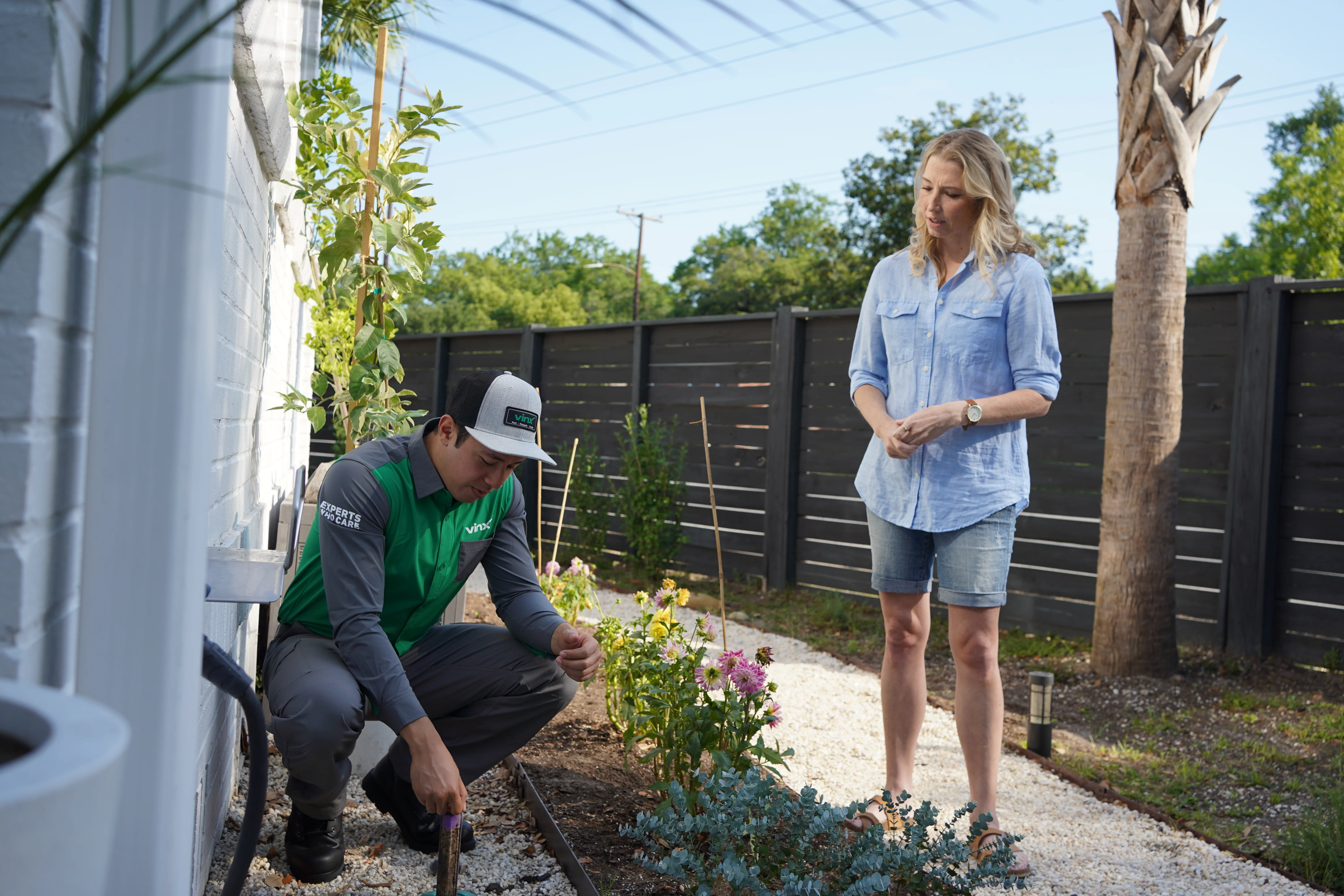
Yellow jacket ground nests treated at dusk with direct nest entrance application, all workers inside when treatment is applied. Wall void yellow jacket nests treated by void injection at the entry gap, entry point is not sealed before treatment. Paper wasp nests: removed and treated. Bald-faced hornet nests treated at dusk with professional protective equipment and physically removed. Mud dauber tubes removed mechanically. All applications documented by product, location, and time of treatment.
Eave & Structure Removal: Plus & Platinum Plans
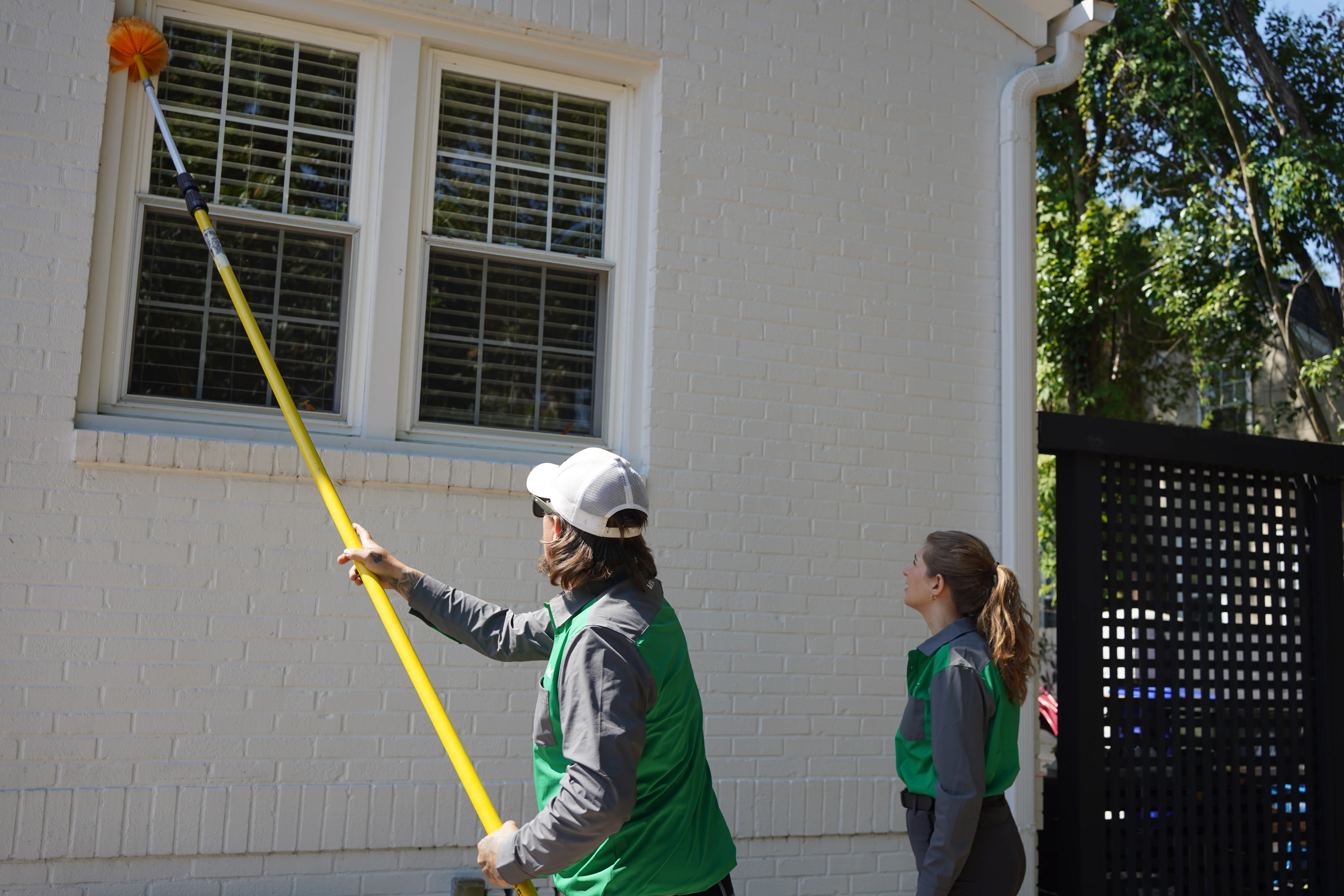
Wasp nest removal from all accessible eave lines, porch ceilings, and structure surfaces included on every Plus and Platinum service visit throughout Columbia's eight-month active season. The founding nest removed in late March is never the August established colony with 30 workers over the back door. Cobweb removal included simultaneously on every visit.
Free Return If Needed
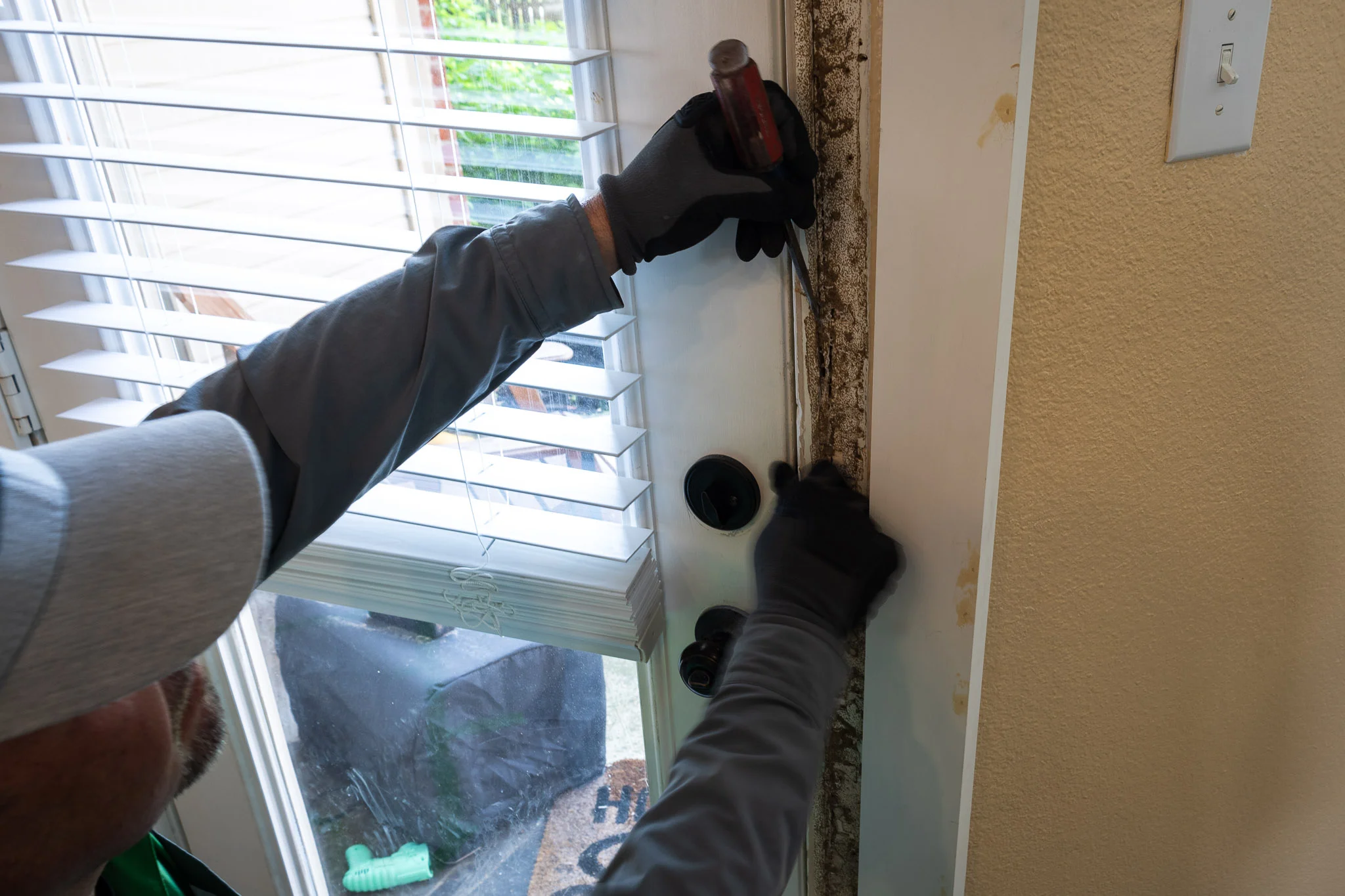
Free return visit if yellow jacket activity continues 72 hours after treatment. If wasps return between scheduled service visits at any point during the season, call (803) 925-8469, we return at no charge.
What Customers Say
What Columbia Customers Say About Vinx: 4.8 Stars on Google
Leon made extensive search to find wasp nests. He took care of the problem
The technician was courteous and thorough.
Wonderful company that I am happy to work with!
The technician was knowledgeable, respectful and polite. So far thee treatment appears to bee working.
Thank you Vinx Pest Control for keeping the creepy crawlers in check. Zach did an amazing job, thank you for checking for spiders and other pests.
Adrian was fantastic. He always provides great service by breaking down the packages and how I can benefit from each. He answers my questions and I feel well informed. Thanks Adrian!
By Neighborhood
Wasp & Hornet Pressure Across Columbia & the Midlands
Shandon, Earlewood & Elmwood Park
Columbia's most established historic neighborhoods carry the mature tree canopy and established ornamental plantings that create consistent bald-faced hornet aerial nest habitat each season. The large water oaks, pecan trees, and mature camellias and hollies throughout these neighborhoods host bald-faced hornet nests at heights that bring them into contact with homeowner yard activity. Paper wasp nests consistent on the historic eave lines and large porch structures characteristic of these neighborhoods.
Forest Acres & Arcadia Lakes
Established residential neighborhoods with mature tree canopy and the lake-adjacent naturalized vegetation of Arcadia Lakes providing insect prey that sustains larger wasp colonies than drier interior neighborhoods. Ground yellow jacket pressure in the undisturbed turf margins along lake edges and naturalized vegetation adjacent to residential lots. Bald-faced hornet nests in the ornamental tree plantings throughout Forest Acres's established landscape.
Five Points & Rosewood
The university rental housing concentration in Five Points and Rosewood creates seasonal paper wasp accumulation on rental properties that receive minimal exterior maintenance through the summer occupancy gap. Paper wasp nests that establish on rental property eave lines in April reach full establishment by August student return, creating sting incidents at move-in that are entirely preventable with recurring spring eave removal. Late-summer yellow jacket foraging at Five Points outdoor venues attracts foragers from surrounding residential ground nests during peak outdoor activity months.
Lake Murray Corridor & Irmo
The Lake Murray shoreline and the naturalized vegetation along its coves and inlets sustain insect prey populations that support larger and more persistent wasp colonies in adjacent residential areas. Ground yellow jacket nesting in the undisturbed shoreline vegetation and turf margins of lakeside properties. The dock structures and boat sheds throughout the Lake Murray corridor are consistent mud dauber nesting territory throughout the active season.
Harbison & Lexington County
The rapid residential development throughout the Harbison corridor and Lexington County carries heavy new-construction yellow jacket ground nest pressure: cleared agricultural and wooded land produces displaced yellow jacket populations that move toward new residential structures. Properties with naturalized lot margins adjacent to undeveloped land have elevated ground yellow jacket pressure throughout the development season.
Northeast Columbia & Blythewood
Newer residential development in northeast Columbia and the Blythewood corridor with the wooded lot margins and undisturbed soil conditions that yellow jacket queens prefer for ground nest establishment. Paper wasp and bald-faced hornet pressure follows the standard Columbia Midlands active season pattern throughout these communities. Yellow jacket ground nest encounters during fall lawn cleanup are the most common sting incident pattern in these neighborhoods.
8-Month Season. 4 Species.
Wasp & Hornet Pressure Across Columbia. One Number to Call.
Columbia faces stinging insect pressure from four species simultaneously, not one. Every species nests in its own way, responds to different treatments and wants a different service approach. Getting the species wrong is where DIY attempts come undone.
The wasp sprays on hardware store shelves are contact killers. They kill what you spray but do nothing for the colony. By next morning the colony has new foragers out and the problem persists.
Professional wasp and hornet control targets the nest structure and colony directly, using treatments that eliminate the colony, remove the nest, and prevent re-establishment. Call (803) 925-8469 for same-day service.
Columbia Stinging Insect Species
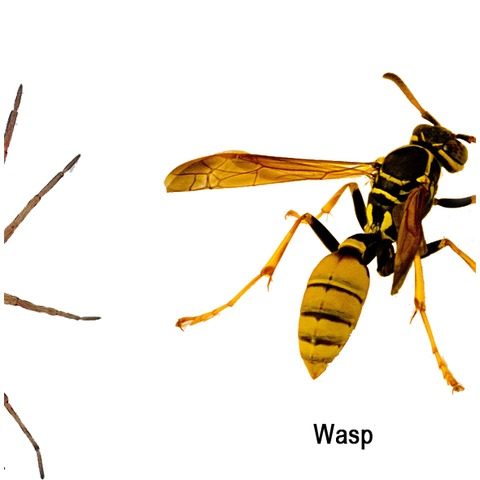
Yellow Jackets
Ground nesters throughout Richland and Lexington County residential yards, in turf voids, beneath landscape timbers, under deck structures, and in undisturbed soil margins along wooded lot edges. The Harbison corridor and Lexington County’s newer developments carry yellow jacket ground pressure from land that was recently agricultural or wooded. The reason late summer is when people get stung is not heat, it is food. Clemson puts it plainly: in late summer and fall normal food materials are in short supply, so yellowjackets scavenge for alternate food sources, which leads to major conflicts with human activities. The list Clemson gives is a cookout in one line, carbonated beverages, juices, candy, various meats, cakes, fruit, vegetables and ice cream.
Wall void nesting is a significant Columbia-specific concern in the city’s abundant older rental housing stock in Five Points, Rosewood, and the university-adjacent neighborhoods, older wood-frame construction with siding gaps, soffit penetrations, and mortar joint voids gives yellow jackets abundant wall void access. A yellow jacket wall void nest in a rental property should never be sealed at the entry point before treatment.
- Highest sting risk, ground & wall void nesting
- Peak population: August – October
- Most common: Harbison corridor & older rental housing

Paper Wasps
Ubiquitous throughout all Columbia neighborhoods on eave lines, porch ceilings, door frames, window casings, grill covers, and outdoor furniture. The university rental housing stock in Five Points, Rosewood, and the Vista corridor accumulates paper wasp nests through the summer on properties that may not receive regular exterior inspection, returning students in August regularly encounter fully established colonies on eaves that were small founding nests when they left in May.
The Five Points outdoor entertainment corridor also produces paper wasp and yellow jacket encounters during late-summer outdoor events when foraging workers are attracted to food and drink.
- Moderate risk, eave & structure nesting
- Season: late March – November
- Most common: Five Points, Rosewood rental eaves

Bald-Faced Hornets
The mature canopy of established Columbia neighborhoods (Shandon, Earlewood, Elmwood Park, Forest Acres, and the older Lexington neighborhoods) provides premium bald-faced hornet aerial nest habitat. Large camellias, hollies, crepe myrtles, and the native water oak canopy throughout these areas carry bald-faced hornet nests each season. The Congaree River corridor’s mature bottomland hardwoods also sustain bald-faced hornet populations that establish in the large ornamental trees adjacent to the Granby Mill and Cayce areas.
By August, a bald-faced hornet nest in a Columbia yard camellia or holly is at full size. Clemson puts colonies at an average of about 400 workers with a range of 100 to 700, and the nests themselves at up to 14 inches across and over 23 inches long. Clemson describes the species as known for its defensive behavior, and notes stings typically happen when someone stumbles on a hidden nest or the nest sits next to an area of human activity. A disturbed worker releases alarm pheromone that triggers coordinated colony defense.
- Do not approach, professional removal required
- Peak: August – October
- Most common: Shandon, Forest Acres mature canopy

Mud Daubers
Present throughout all Columbia neighborhoods from March through October. Carport ceilings, porch ceilings, and the exterior walls of detached garages throughout the city’s established neighborhoods are the most common mud dauber nesting surfaces. Clemson is clear that these are not social insects and not aggressive, and that they rarely sting unless threatened or inadvertently contacted. Clemson goes further than most pest companies will: mud daubers are not pests, though some might describe them as nuisances. They are also useful, since the common species here prey exclusively on spiders. Clay tube removal on every Vinx service visit eliminates the seasonal buildup.
- Low risk, nuisance only
- Active: March – October
- Most common: carport ceilings, detached garages
Cicada Killers
The one we get called about most in July and August, and usually the one we tell people to leave alone. Clemson describes a wasp of almost one and a half inches with a nearly three inch wingspan, rust-colored head and thorax and a black body banded with white and yellow, active in mid to late summer. At that size the alarm is understandable, but the behavior does not match the appearance. Females have a powerful sting yet rarely sting humans, males may poke but have no venom at all, and Clemson calls them benign while they are focused on hunting.
They are solitary rather than social, so there is no colony defending a nest. Each female digs her own burrow, though several may nest in the same patch of bare, well-drained soil, which is what makes a lawn look overrun when it is not. Clemson’s guidance is explicit: it does not recommend management unless the wasps pose a threat to vulnerable people or pets, because they prey on plant-feeding cicadas and are considered beneficial. If you have them and nobody in the household is at risk, the honest answer is that you do not need to pay anyone, including us. If the burrows are in a doorway or a play area, that is a different conversation.
What to Look For
Signs of a Wasp or Hornet Problem at Your Columbia Property
Nest Under Eaves
Paper or comb-style nests on eave undersides, porch ceilings, and awning frames, paper wasp activity
Ground Entry Holes
Dome-shaped mounds in lawn or garden areas, can reach 18 inches in height
Large Gray Aerial Nest
Football-sized enclosed gray papery nest in tree canopy or shrubs, bald-faced hornet colony, do not approach
Wall Void Activity
Wasps entering and exiting through siding gaps or mortar joints, yellow jacket wall void nesting common in older Columbia housing
Mud Tubes on Surfaces
Clay cylinder tubes on porch ceilings or outbuilding walls, mud dauber activity, nuisance but low sting risk
Increased Aggression
Stinging incidents near outdoor dining or yard work, yellow jacket forager activity peaks in August and September
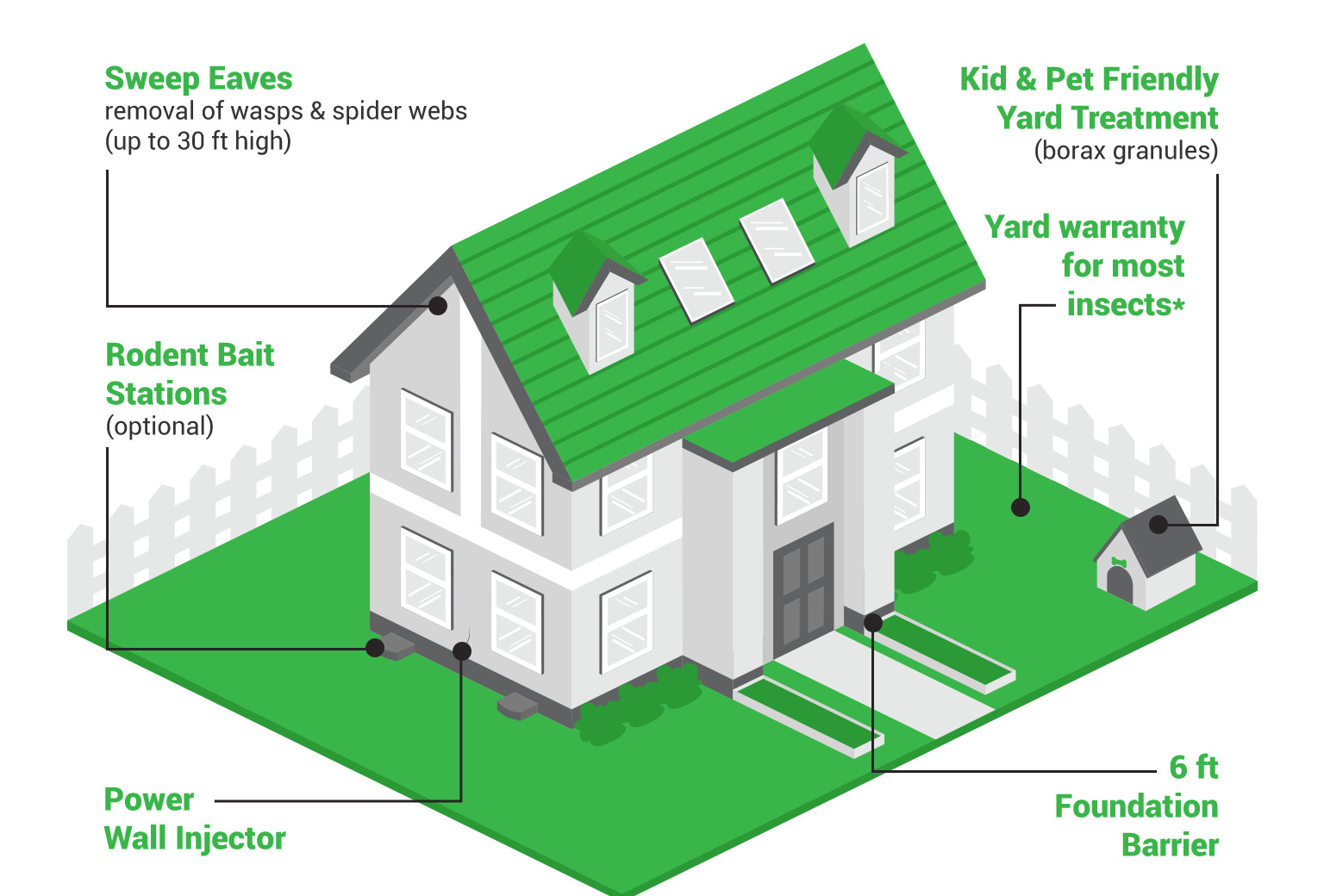
Vinx HomeGuard Plan
What Happens at Every Visit
Our technicians don’t just spray and leave. Every quarterly service covers your full exterior and interior, done right, backed by a written guarantee.
- Sweep Eaves: Wasp nests & spider webs removed up to 30 ft
- Power Wall Injector: Treats wall voids where pests hide
- 6 ft Foundation Barrier: Full perimeter treatment every visit
- Yard Warranty: Free retreatment for most insects
- Kid & Pet Safe Yard Treatment: Borax granules, safe after dry
Homeowner Tips
6 Ways to Reduce Wasp & Hornet Pressure Around Your Columbia Property
Local Conditions
The Stinging Insect Calendar, and the Two We Tell You to Leave Alone
Most wasp pages are written to make you nervous about everything with a stinger. Clemson publishes a South Carolina specific calendar and is clear that two of the four things people call us about do not need treating at all.
April to First Frost, With August as the Turn
Clemson gives the arc for South Carolina rather than the country: yellowjacket colonies begin in April or May when the overwintered queen emerges, grow rapidly and may reach several hundred workers by August, then decline rapidly in autumn as the original queen and workers die off with the cold. Paper wasps mostly die by the first hard frost. That is why timing changes the price and the risk. A founding nest on an eave in April is a two-minute job; the same nest in late August is a colony.
Why August Is When People Actually Get Stung
Not heat, and not aggression for its own sake. Clemson explains it as a food shortage: in late summer and fall normal food materials run short, so yellowjackets scavenge for alternate food sources, which leads to major conflicts with human activities. The attractant list Clemson gives describes a Columbia tailgate almost exactly, carbonated beverages, juices, candy, various meats, cakes, fruit, vegetables and ice cream. So the sting risk shifts in autumn from the nest to wherever you are eating outdoors.
Two You Do Not Need to Pay Anyone For
Cicada killers are the big one, literally: nearly one and a half inches with a three inch wingspan, and every July somebody calls convinced their garden is dangerous. Clemson does not recommend management unless they threaten vulnerable people or pets, because they prey on plant-feeding cicadas and are beneficial. Females rarely sting and males have no venom. Mud daubers are the other: Clemson says they are not social, not aggressive, rarely sting unless grabbed, and are not pests at all, though some might call them a nuisance. They also hunt spiders. We will still take the tubes off your carport, but you should know what you are paying for.
What the Sting Risk Actually Is
Worth stating in real numbers rather than adjectives. The CDC recorded 788 deaths from hornet, wasp and bee stings across the United States between 2011 and 2021, averaging about 72 a year, 84% of them men. Published estimates put the share of US adults who have had a systemic allergic reaction to an insect sting at roughly 0.5% to 3%, and being sensitized on a test is far more common than actually reacting to a sting. The realiztic household risk is not one sting, it is many at once, which is what a mower or a shovel over a hidden ground nest produces.
Kid & Pet Safe
Our Treatments Are Safe for Your Whole Family: Including the Furry Members
Every product we use is EPA-registered and applied strictly at labeled rates by licensed technicians. We take the guesswork out of safety so you can feel confident letting kids and pets back into treated areas quickly.

EPA-Registered Products Only
All products we apply are EPA-registered and used strictly per label requirements. Our licensed technicians are trained to apply the right product in the right place at the right rate, every time.
Dry Time Before Re-Entry
Exterior spray treatments dry in 30–60 minutes. Once dry, treated surfaces are safe for children and pets to contact. Your technician will confirm the all-clear before leaving your property.
Interior Treatment On Request
We treat only what’s needed, where it’s needed. Gel baits in cabinets and crack-and-crevice applications keep products away from areas pets and children frequent most.
Botanical Options Available
Have specific sensitivities? Ask your technician about our plant-derived treatment options. We offer botanical alternatives for households that prefer a more natural approach.
Have a concern about products used near your pets or children? Call (803) 925-8469 and we’ll walk you through exactly what we use and why it’s safe.
Explore More
More Pest Control Services in Columbia

Pest Control Columbia
Year-round protection plan

Mosquito Control Columbia
Monthly barrier treatments
Termite Control Columbia
Bait systems & liquid treatment

Rodent Control Columbia
All rodents covered
Cockroach Control Columbia
American & German roaches

Bed Bug Control Columbia
Heat & liquid treatments

Spider Control Columbia
All spider species covered

Tick & Flea Control Columbia
Yard & pet protection
Exterminator Columbia
Same-day local exterminators
Ant Control Columbia
Household ants & others
Frequently Asked Questions
Wasp & Hornet Control in Columbia, Your Questions Answered
This is a very common August situation in Columbia's student housing market, paper wasp nests that established on rental property eave lines in April become the sting incident for arriving students in August. Call (803) 925-8469 for same-day nest removal. Going forward, a Vinx Plus or Platinum plan with recurring eave removal on every service visit through Columbia's active season catches paper wasp founding nests in March and April before workers emerge, preventing the August established colony entirely. The cost of recurring spring nest removal is a fraction of the liability from a student sting incident at move-in.
Eave and structure wasp nest removal from accessible locations is included on every Plus and Platinum service visit. For a standalone one-time active nest removal (a ground yellow jacket nest, a bald-faced hornet nest, or a large established paper wasp colony) call (803) 925-8469 for same-day service and pricing. Emergency nest removal is available regardless of existing plan status.
Vinx serves all of Columbia and the surrounding Midlands: Shandon, Earlewood, Elmwood Park, Forest Acres, Arcadia Lakes, Five Points, Rosewood, the Lake Murray corridor, Irmo, Harbison, Lexington County, Northeast Columbia, Blythewood, Cayce, and surrounding communities. Call (803) 925-8469 to confirm scheduling for your address.
Clemson gives South Carolina a specific calendar: yellowjacket colonies begin in April or May when the overwintered queen emerges, the colony grows rapidly and may reach several hundred workers by August, then the parent colony declines rapidly in autumn and the original queen and workers die with the first cold. Paper wasps follow a similar arc, with most dying by the first hard frost. That is why a nest you ignore in May is a different proposition in August, and why spring removal is far cheaper and safer than late-season removal.
It is food, not heat. Clemson states that in late summer and fall normal food materials are in short supply, so yellowjackets scavenge for alternate food sources, which leads to major conflicts with human activities. The attractants Clemson lists read like a tailgate: carbonated beverages, juices, candy, various meats, cakes, fruit, vegetables and ice cream. That is why the sting incidents cluster around outdoor eating from August onward rather than around the nest itself.
Yellow jackets nesting in a wall void show consistent traffic at a specific point on the siding, soffit edge, or mortar joint, workers entering and exiting through the same gap repeatedly in the same direction over a period of minutes to hours. A wasp flying near a wall without consistent directional traffic is foraging or exploring, not nesting. If you see 5 or more wasps entering and exiting the same specific gap on your wall within a 10-minute observation window, you likely have a wall void nest. Do not seal the gap. Call (803) 925-8469, wall void yellow jacket treatment requires void injection through the entry gap before any sealing occurs. Sealing first drives surviving workers to find an interior exit, sometimes through interior walls into living spaces.
Probably not, and we would rather tell you that than sell you a treatment. That is almost certainly a cicada killer, which Clemson describes as nearly one and a half inches long with a three inch wingspan, active in mid to late summer. Despite the size, females rarely sting humans and males have no venom at all. Clemson does not recommend management unless the wasps pose a threat to vulnerable people or pets, because they prey on plant-feeding cicadas and are considered beneficial. If the burrows are in a doorway, a play area, or someone in the house has a sting allergy, that changes the answer.
No, and it is worth being precise because both get reported loosely. The yellow-legged hornet has been found in South Carolina, but Clemson's trapping program covers thirteen counties in the Lowcountry and Upstate and Richland, Lexington, Kershaw and Orangeburg are not among them. There has been no Midlands detection. The northern giant hornet, the one that was called the murder hornet, has never been found in South Carolina at all: the only US specimens were in northwest Washington State, and federal and state agriculture agencies have since declared it eradicated from the United States.
Serious reactions are rare but real, and the honest numbers are less alarming than most pages imply. The CDC recorded 788 deaths from hornet, wasp and bee stings across the United States between 2011 and 2021, an average of about 72 a year, with 84% of them among men. Published estimates put the share of US adults who have had a systemic allergic reaction to an insect sting at roughly 0.5% to 3%, and sensitization is far more common than actual reaction. The practical risk for most households is not one sting but many at once, which is what happens when a mower or a shovel goes over a hidden ground nest.
If it is on the house, call us. Clemson advises wearing a veil, a hat and a pressurized container of wasp or hornet spray when dealing with these in summer and autumn, which tells you how it treats the risk. Clemson lists the usual nest sites as porch ceilings, window and door frames, roof overhangs, attic rafters and under decks, and notes that paper wasps do not readily attack people but will sting if they feel threatened. Worth knowing the other half of Clemson's advice too: nests in natural areas away from structures should generally be left alone, because the wasps feed on garden pests.
Service Coverage
Wasp & Hornet Control Across Columbia & the Midlands
Serving every neighborhood in the Columbia metro area