Spider Control in Columbia, SC
Widow Spider Specialists: Web Removal + Barrier Spray
In Columbia, spider control comes down to the black widow, the only genuinely dangerous spider commonly encountered, plus the ordinary house spiders most homeowners want rid of. Brown recluses are far less common than their reputation suggests. Most reported sightings are harmless look-alikes, so getting the identification right beats treating everything. Vinx takes the webs down, applies a residual barrier spray and treats entry points. Free re-treatment guarantee.
Get Started in 60 Seconds
Choose what’s easiest for you
Request a Quote
We usually respond in 2 minutes
Call 855-800-8469
Get a Live Person (no AI agents here!)
Sign Up Online
Get pricing and schedule now





Welcome to Vinx Pest Control
A Company That Actually Backs What It Says
At Vinx, we combine professional-grade treatments with a level of service most pest control companies don't offer. Local technicians, fast response times, and a guarantee that actually means something.
Get a Free Quote"I'm not passionate about killing bugs. I'm passionate about customer service. At Vinx, you get experts who show up, do the job right, and stand behind every visit. No runaround, no fine print."
WELCOME TO VINX PEST CONTROL
Spider Control Plans for Columbia Homeowners
Standard Residential Protection
- 4 Seasonal Treatments Per Year
- 50+ Covered Pests
- Interior, Exterior & Yard Treatment
- Unlimited Free Re-Services
- 100% Money-Back Guarantee

Upgraded Yard Protection
- 6 Home & Yard Treatments Per Year
- 50+ Covered Pests
- Yard Ant Elimination Guarantee
- Flea & Tick Elimination Guarantee
- 100% Money-Back Guarantee

Most Comprehensive Protection
- 9 Treatments Per Year
- 50+ Covered Pests
- 8 Mosquito Treatments (Mar–Nov)
- Flea, Tick & Ant Coverage
- Free Bed Bug Treatments if Needed*
*Starting rates vary by home size and area. All plans billed monthly.
Request Your Free Spider Control Quote
Fill out the form below and a Vinx team member will reach out within 2 minutes during business hours.
Prefer to talk? Call 855-800-8469 for a live person, no AI agents.
Our Approach
How Vinx Eliminates Spiders in Your Columbia Home
De-Webbing
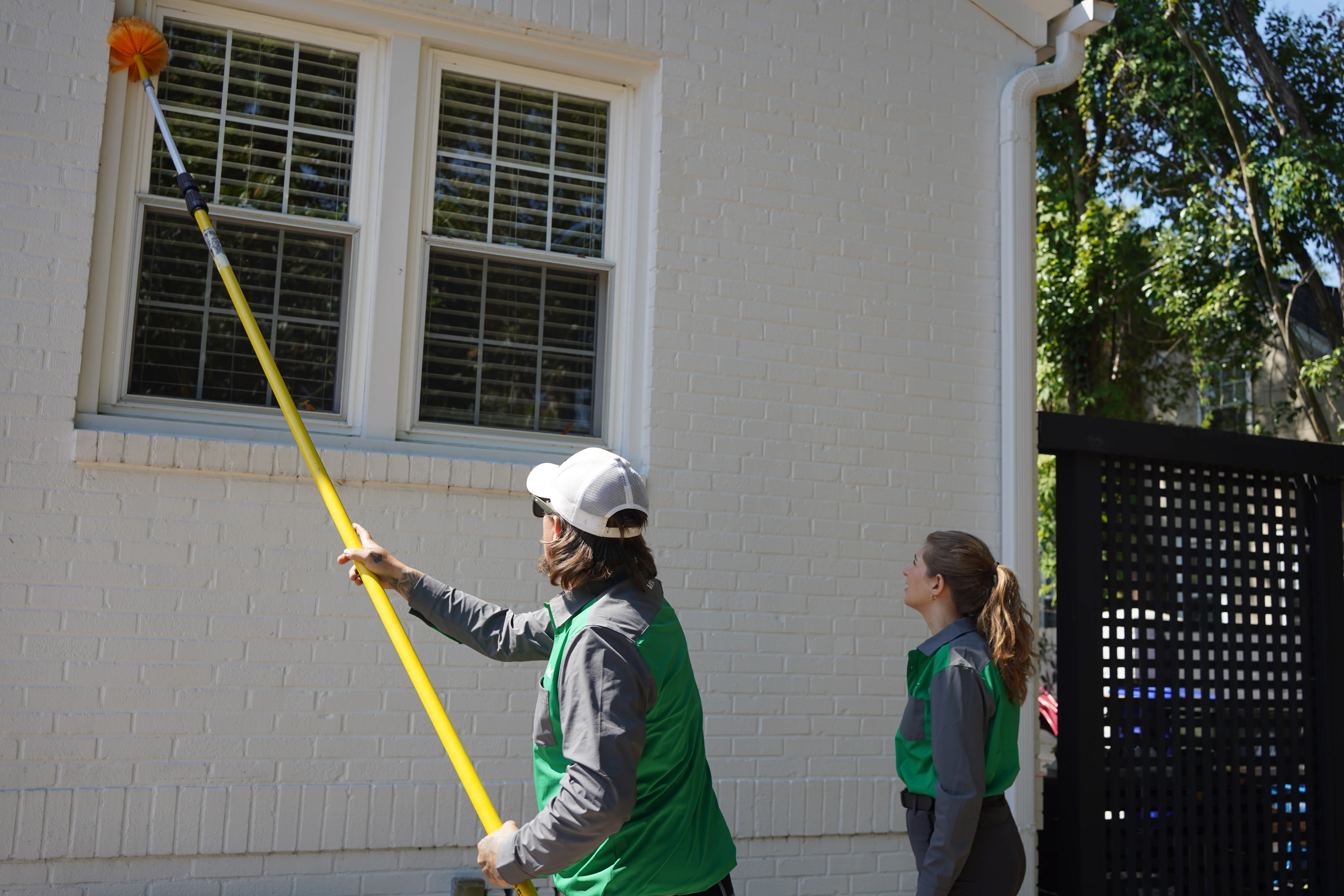
Each visit includes a full exterior de-web covering eaves, window frames, corners, light fixtures and the foundation areas. Clearing active webs and egg sacs eliminates harborage and stops the next generation before it hatches; a single sac can carry hundreds of spiderlings. Consistent de-webbing each quarter prevents accumulation between visits.
Residual Perimeter Spray
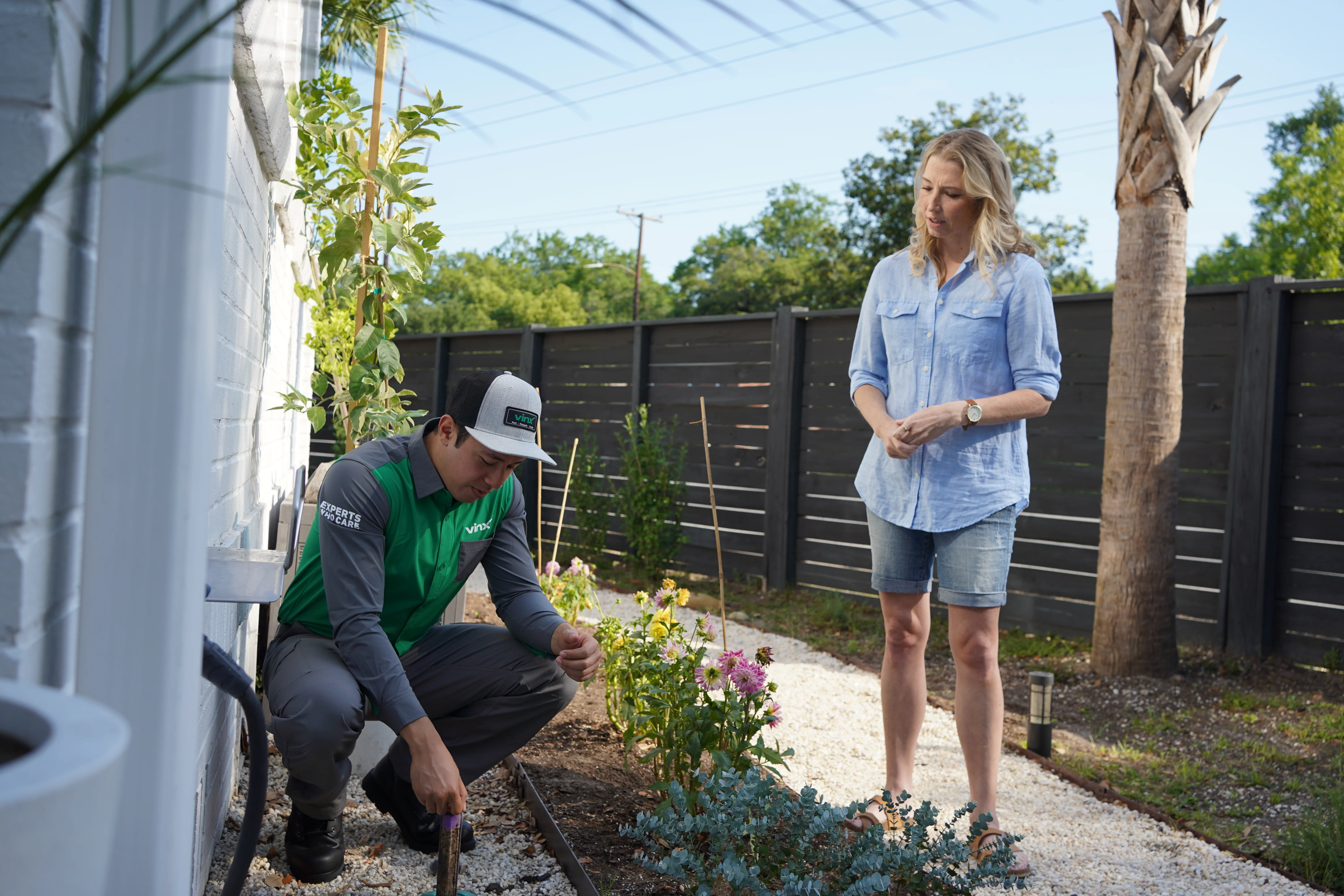
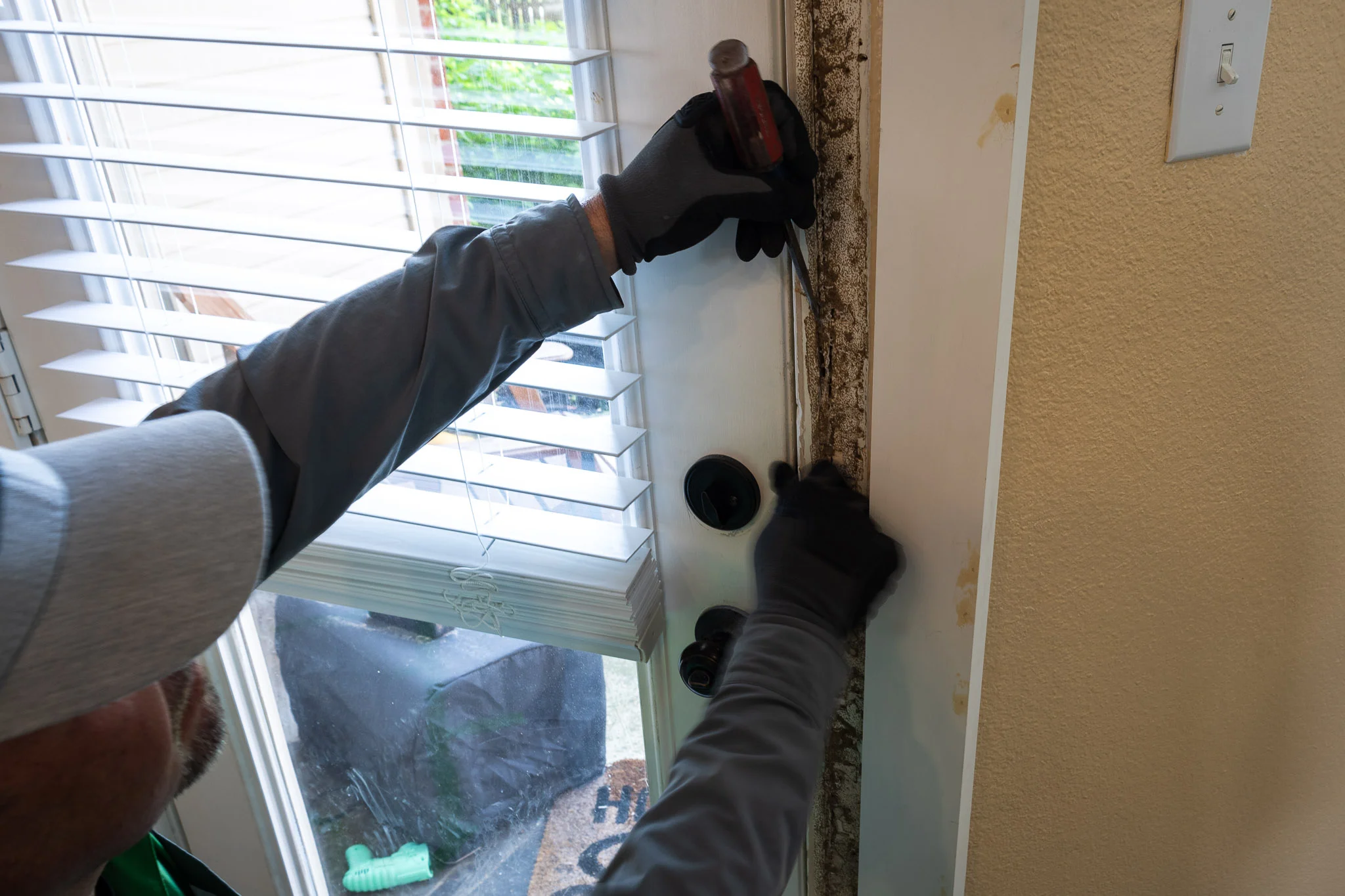
A micro-encapsulated residual insecticide covers the entire foundation band, window and door frames, garage perimeter and crawlspace openings. Spiders that cross the treated zone are killed on contact. That time-release formulation carries on between quarterly visits, maintaining the barrier against spiders arriving from wooded lot edges.
Interior Treatment
Confirmed interior infestations, whether black widows in the garage, widow spiders in closets and storage areas, or established house spiders in basements and crawlspaces, get targeted residual dust or liquid in void spaces, wall junctions and harborage. Every service visit includes interior treatment on request, at no extra charge.

Harborage Reduction Assessment
At the end of every visit the technician documents the conditions driving spider pressure, woodpile positions near the structure, excessive mulch depth against the foundation, debris piles, dense ground cover next to entry points, and the exterior lighting attracting the insects spiders eat. You receive written recommendations after each inspection.
What Customers Say
Real Reviews from Columbia Homeowners
Jonathan did an awesome job. I Love the video. His showing it was very impressive. It meant a lot, detailing the service he did👍🏾.
5 Star Service from a pest control company!!! Adrian was great, and I’m super impressed with how thorough and complete of a job he does. Above and beyond anything I have had in the past. If you hate bugs (and I do) then give these guys a shout, because I haven’t seen any in months!!!
Jonathan is wonderful! I love having yhe same tech. He text and calls before arrival and after he completes the service. Rescheduling is simple. We do not see spiders in the garage or our shed anymore. 🥰
Johnathan is very professional and very impressive young man. He did an outstanding job and I hope that he will be my tech forever.
Great company I’ve been using them for years. Johnathan always does an amazing job!
Adrian is amazing!! He represents his company well!! He explained everything that He was doing!!
Vinx HomeGuard Plan
What Happens at Every Visit
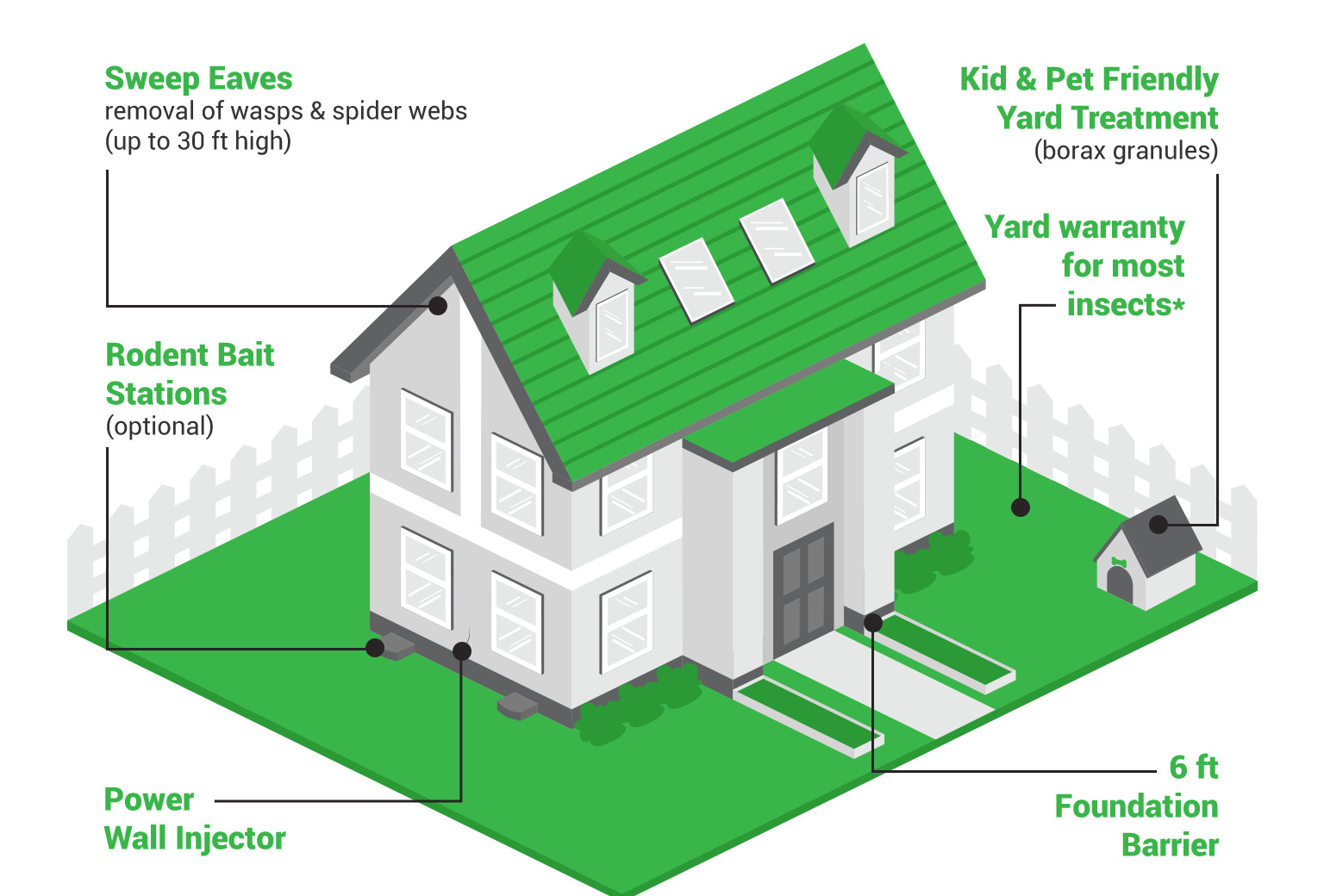
Our technicians don't just spray and leave. Every quarterly service covers your full exterior and interior, done right, backed by a written guarantee.
- Sweep Eaves: Wasp nests & spider webs removed up to 30 ft
- Power Wall Injector: Treats wall voids where pests hide
- 6 ft Foundation Barrier: Full perimeter treatment every visit
- Yard Warranty: Free retreatment for most insects
- Kid & Pet Safe Yard Treatment: Borax granules, safe after dry
6 Species. Year-Round.
Why Columbia Has a Year-Round Spider Problem
Spiders get filed as a seasonal problem by most homeowners: bad in late summer, gone by winter. In Columbia it does not work that way.
The Columbia area’s mild winters mean the insects that spiders feed on stay active year-round. Steady insect activity produces steady spider activity. Columbia's climate keeps cockroaches, flies, mosquitoes and moths active in every month, and spiders follow their food supply. Treat the spiders alone and you have solved half of it. Vinx handles both sides, exterior perimeter spray for the spiders and the insects sustaining them, plus web removal on every visit.
The outdoor living culture in Columbia brings its own particular pressure. Homeowners use porches, patios and screened enclosures heavily, and those are the very places spiders concentrate around exterior lights at night. Moths and other flying insects come to exterior lights. Spiders follow the moths. When you finally notice a web across the porch ceiling, the population in the eaves and nearby vegetation is already established.
Columbia Spider Species

Southern Black Widow
The southern black widow is the most medically significant spider in Columbia. Adult females are shiny black with a distinctive red hourglass marking on the underside of the abdomen. Clemson notes all three of South Carolina’s widow species are shy and will try to flee rather than bite. Black widows are non-aggressive and typically bite in self-defense when pressed against skin or guarding an egg sac. The egg sac is papery, tan to gray colored, and spherical, finding one in a garage corner or crawl space is a stronger indicator of established black widow presence than finding the spider itself.
Symptoms of a black widow bite include severe joint pain, muscle weakness, tremors, difficulty breathing, and clammy skin. An effective antiserum is available, seek medical attention immediately if you believe you have been bitten. In Columbia, black widows are most commonly found in garages, crawl spaces, woodpiles, under decks, and in meter boxes. They are active year-round in the Columbia area’s mild climate.
Brown Widow
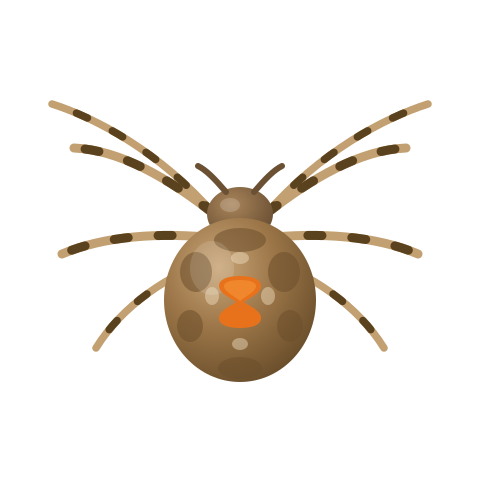
The brown widow has been expanding its range in South Carolina over the past decade and now turns up across the Columbia metro. Brown widows are tan to brown with an orange rather than red hourglass marking. Clemson’s framing is the accurate one: the brown widow’s venom has been reported as toxic as the black widow’s, but they are less likely to bite and do not defend their webs as vigorously. Brown widows prefer warmer, more sheltered locations, they are commonly found inside outdoor furniture, under patio chairs, in rolled-up tarps and garden hoses, and inside mailboxes. If you are reaching into outdoor storage areas without checking first, brown widows are the species most likely to be present.
Brown Recluse
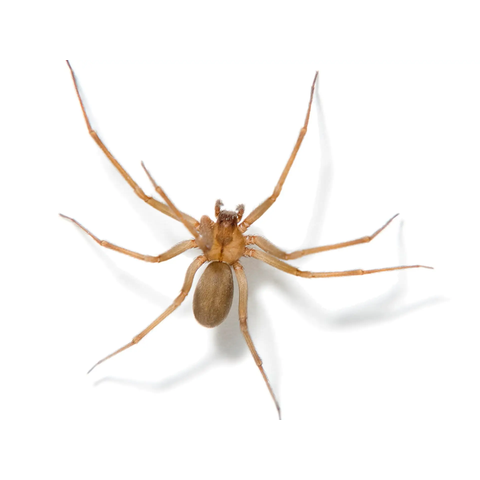
The brown recluse is identified by the distinctive violin-shaped marking on its back, a dark brown fiddle shape with the neck pointing toward the abdomen. Brown recluses are not aggressive, they bite only when trapped against skin, typically when someone puts on clothing or shoes that have been stored undisturbed. Before worrying about that, though, check whether you actually have one. Published research counted 44 verified South Carolina specimens dating back to 1953, from six of the state’s 46 counties, against 738 physician-diagnosed recluse bites in 2004 alone, and every verified SC specimen came from a man-made structure rather than natural habitat. Where they do occur they prefer undisturbed harborage, inside stored boxes, behind shelving, in rarely used closets, and in attic insulation. Established populations are rare this far east. The species' natural range is the Midwest and south-central states, and verified specimens here are heavily outnumbered by suspected bites — most turn out to be another brown spider, or a wound with a different cause entirely.
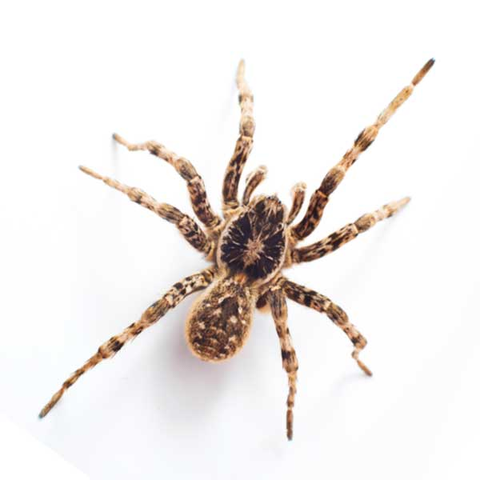
Wolf Spider
Wolf spiders are large, fast-moving, and frequently mistaken for brown recluses by Columbia homeowners. They are not venomous to the degree that warrants medical concern but their size, up to an inch and a half, makes them alarming. Wolf spiders are ground hunters that do not build webs. They chase prey actively and are most commonly found in garages, basements, and along exterior foundations. They enter homes through gaps at ground level and are most active at night. Despite their intimidating appearance, wolf spiders are not medically significant.
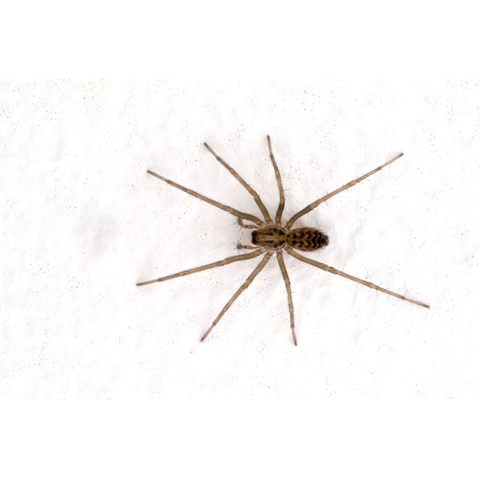
House Spider & Cellar Spider
The species seen most often in Columbia homes are common house spiders and cellar spiders, sometimes called daddy long-legs. They do no harm at all and are actively beneficial, consuming other insects. Their webs on eaves, ceilings and in corners are what produce the visible spider presence behind most calls. At every service visit Vinx removes webs from all accessible areas, inside and out.
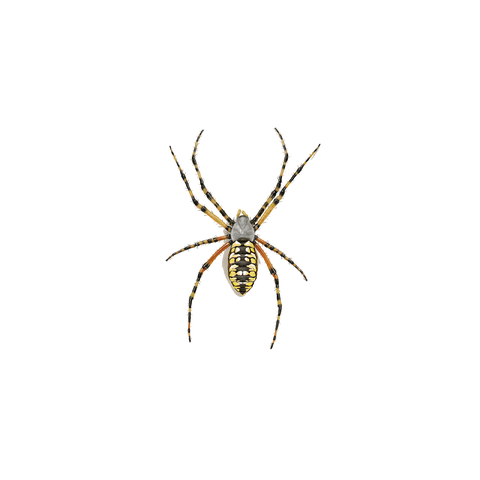
Orb Weaver
Orb weavers build the large, distinctive circular webs commonly found across porch ceilings and in garden vegetation in Columbia. They are active from late summer through autumn and their large webs are the most visible sign of seasonal spider pressure. Orb weavers are harmless and ecologically beneficial but their webs across entry points and outdoor living areas create nuisance pressure that peaks from August through November.
Pest Pressure by Neighborhood
Know Your Neighborhood’s Risk
Five Points & Downtown: Cellar Spiders and Basements
Dense older building stock near USC, much of it subdivided into flats, produces the classic urban spider profile rather than the dangerous one. Cellar spiders in stairwells, basements and utility rooms, house spiders behind stored furniture, and the occasional widow in a meter box or an outside cupboard. Student turnover means storage areas get emptied and refilled constantly, which is when people reach into a box and find something. Web removal on a recurring visit does more here than any spray.
Forest Acres: Mature Canopy, Older Outbuildings
Forest Acres has the oldest housing stock in the metro, 73.8% built before 1980, and the mature tree canopy to match. That combination favors widows specifically: detached garages, woodpiles, crawl space vents, meter boxes and undisturbed storage are exactly where southern black widows sit. Proximity to Sesquicentennial State Park adds orb weavers and wolf spiders through late summer, both of which are alarming to look at and neither of which is a medical concern.
Irmo & Dutch Fork: Orb Weavers and Boat Storage
The Lake Murray corridor generates the two calls we get most here, and they are opposites. Late summer orb weavers strung across decks, docks and garden paths, which look dramatic and are harmless. And widows in boat covers, dock boxes, trailer frames and lakeside outbuildings, which are the ones worth taking seriously. Anything stored outdoors and left undisturbed through the season is the habitat, so the fix is inspection and web removal rather than blanket spraying.
NE Columbia & Blythewood: New Builds Against the Treeline
Blythewood has the newest housing in the metro, a median build year of 2010 with 72.5% put up since 2000, and subdivisions here run straight up against wooded and formerly agricultural land. New construction pushes ground-hunting spiders toward the nearest structure, so wolf spiders in garages and ground-floor rooms are the common complaint, particularly after heavy rain. They are large, fast and frequently mistaken for something dangerous, which is why identification matters more than treatment volume.
Lexington: Garages and Newer Subdivisions
Lexington is newer stock, a median build year of 2002 with 57.5% built since 2000, so the harborage is less about old outbuildings and more about attached garages, storage rooms and the gap under a roller door. That is prime widow habitat: dark, sheltered, undisturbed and full of insect traffic. The practical advice is the same one Clemson gives, that widow bites happen when a spider is pressed against skin, so shake out gloves, boots and stored clothing rather than reaching in blind.
Cayce & West Columbia: River Corridor Webs
Sitting at the confluence of the Broad and Saluda, these are damp, insect-rich neighborhoods, and spiders follow the insects. Riverfront and Greenway-adjacent properties see heavy orb weaver and house spider webbing through late summer, and the older housing stock, 60.1% pre-1980 in Cayce and 55.1% in West Columbia, gives widows the undisturbed crawl spaces and outbuildings they want. High insect pressure is the underlying cause, which is why spider control here works better as part of a general perimeter program than as a one-off.
Complete Coverage
What Vinx Treats in Your Columbia Home
Every common Columbia pest covered under one quarterly service plan

Ants
Imported fire ants, Argentine ants, carpenter ants, and odorous house ants. Perimeter bait, mound treatment, crack and crevice application.
All Plans
Cockroaches & Palmetto Bugs
American, smokybrown, and German cockroaches. Gel bait in harborage areas, exterior perimeter spray, drain treatment.
All Plans
Spiders
Web removal from eaves, exterior perimeter targeting harborage. Black widow identification and targeted treatment.
All Plans
Wasps & Hornets
Nest removal from eaves, soffits, structural voids. Preventative treatment of common nesting sites on each quarterly visit.
All Plans
Fleas & Ticks
Yard treatment targeting grassy and shaded areas. Interior treatment of active infestation areas.
Plus & Platinum
Bed Bugs
Inspection, heat treatment assessment, and targeted chemical treatment. Columbia’s university population creates consistent exposure risk.
Platinum (12mo)
Rodents
Exterior bait station monitoring included in Plus and Platinum. Active infestation and full exclusion quoted separately after inspection.
Plus & Platinum
Mosquitoes
Monthly barrier spray and larvicide. Year-round service adjusted seasonally. Up to 90% population reduction per visit.
Platinum Only
Occasional Invaders
Silverfish, earwigs, centipedes, stink bugs, ladybugs, pillbugs. Crack and crevice treatment, perimeter spray, entry point ID.
All PlansWhat to Look For
Signs of a Spider Infestation in Your Columbia Home
Webs in Eaves & Corners
Visible web building in sheltered areas, garages, crawl spaces and attics above all
Papery Egg Sacs
On webs or concealed in sheltered spots, with each sac holding hundreds of eggs
Activity Near Exterior Lights
A build-up of spiders around porch lights at night; the moths pull in insects and the insects pull in spiders
Large Fast-Moving Spiders
Spiders seen on the floor at night, typically wolf spiders
Low Ground-Level Webs
Small dark spiders in irregular ground-level webs, which may be black widow or brown widow
Shed Spider Skins
In undisturbed spots, which points to an established population rather than passing individuals
Local Conditions
The Spider You Are Worried About Is Probably Not the One You Have
More money is spent on the wrong spider in South Carolina than on the right one. The published research on this is unusually clear, so here is what it actually says.
44 Verified Specimens Since 1953, Against 738 Diagnosed Bites in One Year
That gap is the whole story. A study published in the Journal of the American Board of Family Medicine found South Carolina physicians diagnosed 478 brown recluse bites in 1990 and 738 in 2004, while across the same state, dating back to 1953, just 44 brown recluse specimens have ever been verified, from six of South Carolina’s 46 counties. Every verified SC specimen was collected from a man-made structure rather than natural habitat, which the authors read as evidence of isolated introductions that are localized and unlikely to spread. Diagnoses outnumber the spiders by an enormous margin.
What You Actually Have Here Is a Widow
Clemson lists three widow spiders in South Carolina: the southern black widow, the northern black widow and the brown widow. The brown widow has spread through the state over the past decade. On risk, Clemson is measured rather than dramatic: the brown widow’s venom has been reported as toxic as the black widow’s, but it is less likely to bite and does not defend its web as vigorously, and all three species are shy and will try to flee rather than bite a human. That is a real medical concern handled with respect, not a horror story.
Bites Happen One Specific Way
This is the most useful sentence on the page, and it comes straight from Clemson: bites occur when a spider is pressed against the skin, such as when putting on clothes or shoes, or when a hand is reached into a dark area where the spider is present. Nothing about widows hunting people. So the prevention is behavioral and free. Shake out boots, gloves and stored clothing. Look before reaching into a meter box, a woodpile, a dock box or the back of a garage shelf. Wear gloves for outdoor storage work.
Almost Everything Else Is Harmless
Clemson’s framing for the rest is worth quoting: all spiders have venom, but the majority are not inclined to bite, and if they bite most species cause no serious injury, with black widow and brown recluse venom being the medically relevant exceptions. Wolf spiders are the ones most often mistaken for recluses here, and they are large and fast but not a medical concern. Orb weavers on a deck in September look alarming and are not. The joro spider is now becoming more common across Georgia, South Carolina, Tennessee and North Carolina, and Clemson states its venom is not medically relevant and not known to harm people or pets.
Kid & Pet Safe
Our Treatments Are Safe for Your Whole Family: Including the Furry Members
Every product we use is EPA-registered and applied strictly at labeled rates by licensed SC technicians.
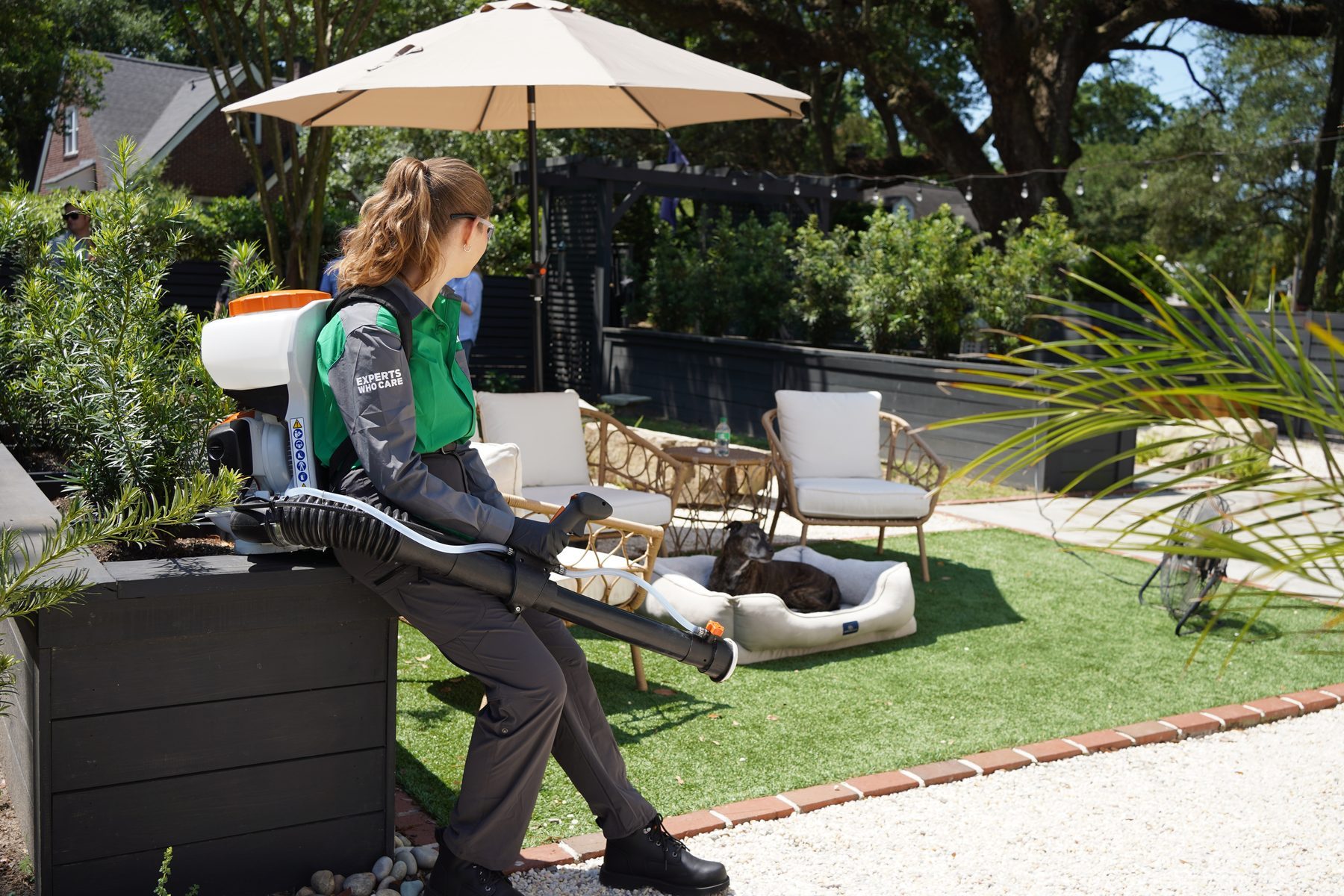
EPA-Registered Products Only
All products are EPA-registered and applied per strict label requirements by our licensed South Carolina technicians.
Safe Re-Entry After Drying
Exterior spray treatments dry in 30–60 minutes. Your technician confirms the all-clear before leaving your property.
Interior Treatment On Request
We treat only what’s needed, where it’s needed. Products placed away from areas pets and children frequent most.
Botanical Options Available
Ask your technician about plant-derived treatment options for households that prefer a more natural approach.
Questions about product safety near your family? Call 855-800-8469 and we’ll walk you through exactly what we use.
Explore More
More Pest Control Services in Columbia

Pest Control Columbia
Year-round protection plan
Ant Control Columbia
Household ants & others
Bed Bug Control Columbia
Heat & liquid treatments
Cockroach Control Columbia
American & German roaches
Mosquito Control Columbia
Monthly barrier treatments
Rodent Control Columbia
All rodents covered
Termite Control Columbia
Bait systems & liquid treatment

Tick & Flea Control Columbia
Yard & pet protection
Exterminator Columbia
Same-day local exterminators
Wasp Control Columbia
Nest removal & prevention
Homeowner Tips
6 Ways to Reduce Spider Pressure Right Now
Frequently Asked Questions
Spider Control FAQ for Columbia Homeowners
The Vinx HomeGuard plan at $49 per month includes quarterly spider control: exterior perimeter treatment, web and egg sac removal and in-wall power dusting. That handles spider pressure year-round, with free re-treatment whenever activity comes back between visits.
Yes. Southern black widows remain active year-round given Columbia's mild climate. You find them most often in garages, crawl spaces, woodpiles, under decks and inside meter boxes. The brown widow has spread through South Carolina over the past decade and now turns up across the metro, increasingly in outdoor furniture, garden hoses and outdoor storage. Clemson lists three widow species in South Carolina, the southern black widow, the northern black widow and the brown widow, and notes all three are shy and will try to flee rather than bite.
In Columbia, brown recluses are genuinely rare. The species' natural range is the Midwest and south-central states, and verified specimens this far east are heavily outnumbered by suspected bites, most of which turn out to be another brown spider. The numbers are worth knowing. Published research counted 44 verified brown recluse specimens in South Carolina dating back to 1953, from six of the state’s 46 counties, against 738 physician-diagnosed brown recluse bites in 2004 alone. Every verified SC specimen came from a man-made structure rather than natural habitat, which points to isolated introductions rather than an established population. So if you find a brown spider with a violin-shaped marking, get it identified rather than assumed. Call 855-800-8469 for a same-day inspection.
Adult female black widows are shiny black, marked by a red hourglass on the abdomen's underside. They sit upside down in ragged webs in sheltered, dark spots. The egg sac is papery, tan to gray, and spherical, finding an egg sac is often a better indicator of established black widow activity than finding the spider itself. Do not touch it; call 855-800-8469 and we will inspect the same day.
Lighting outside gathers moths and flying insects, which in turn attracts the spiders feeding on them. At night, orb weavers and other web-building species cluster at lit eaves, porch ceilings and window frames. Exterior bulbs in the white and blue spectrum attract many more insects than amber or yellow. Treating the exterior quarterly and removing webs reduces the population between visits.
Yes. All of the products Vinx uses carry EPA registration. Once dry, normally within one to two hours, the exterior perimeter spray is safe for pets and children. Dust application is limited to non-living spaces such as crawl spaces and garages. Spray treatments are never applied with children or pets present in the area.
Yes. Every Vinx service visit includes web and egg sac removal. Cobwebs and egg sacs are swept from all accessible eaves, soffits, porch ceilings, second-story overhangs and garage ceilings. Egg sac removal is especially important: a single black widow sac can contain 200 to 300 eggs. Leave the sacs and spray anyway and you have delayed the next infestation by six to eight weeks.
Garages in Columbia make ideal black widow, brown widow and wolf spider habitat, being dark, sheltered and busy with insects. What works best is exterior perimeter spray plus targeted dust injection into garage ceiling corners, web and sac removal and cutting clutter. Ring 855-800-8469 for a same-day garage spider inspection.
Yes. Same-day or next-day is available for most Columbia spider control appointments. Call 855-800-8469. If you are searching spider exterminators near me in Columbia, Vinx is the local choice with same-day availability. Should we fail to service your home by the next business day, the initial visit costs nothing.
Spiders go where the insects are. If spiders are there, so is an active insect population in or around the home. Common draws include moth-attracting exterior lights, foundation and garage-door gaps that admit insects, moisture in crawl spaces, and garage and attic clutter that harbors insects. Treating spiders while ignoring the insect population means replacements establish in the same place within weeks. Both are treated at every Vinx visit.
Service Coverage
Spider Control Across Columbia & Richland County
Serving every neighborhood in the Columbia metro area
Serving the Greater Columbia Area