
Termite Control in Mount Pleasant, SC
Formosan & Subterranean Termite Treatment: Sentricon TotalDefense Program
Mount Pleasant sits inside the core range of Formosan subterranean termites, the most destructive termite species in the United States. A mature Formosan colony can hollow out structural framing, floor joists, and wall framing in a fraction of the time it takes an Eastern subterranean colony. Old Village homes with historic pier-and-beam construction are at the highest risk. But no Mount Pleasant property is immune. Termite damage is not covered by homeowners insurance. Proactive protection is the only real defense.
Get Started in 60 Seconds
Choose what’s easiest for you
Schedule Free Inspection
We usually respond in 2 minutes
Call (843) 305-4029
Get a Live Person (no AI agents here!)
Sign Up Online
Get pricing and schedule now





Welcome to Vinx Pest Control
A Company That Actually Backs What It Says
At Vinx, we combine professional-grade treatments with a level of service most pest control companies don’t offer. Local technicians, fast response times, and a guarantee that actually means something.
“I’m not passionate about killing bugs. I’m passionate about customer service. At Vinx, you get experts who show up, do the job right, and stand behind every visit. No runaround, no fine print.”

Founder & Owner, Vinx Pest Control
PROTECTION PLANS
Protection Plans for Mount Pleasant Homeowners
Unlimited free re-services on every plan.

Standard Residential Protection
- 4 Seasonal Treatments Per Year
- 40+ Covered Pests
- Interior, Exterior & Yard Treatment
- Unlimited Free Re-Services
- Guaranteed Coverage for Common Household Pests
- Fire Ant Warranty
- Flea & Tick Coverage
- Mosquito Treatments

Upgraded Yard Protection
- 6 Home & Yard Treatments Per Year
- 40+ Covered Pests
- Interior, Exterior & Yard Treatment
- Unlimited Free Re-Services
- Guaranteed Coverage for Common Household Pests
- Fire Ant Warranty
- Exterior Flea & Tick Warranty
- Mosquito Treatments

Most Comprehensive Protection
- 9 Treatments Per Year
- 40+ Covered Pests
- Interior, Exterior & Yard Treatment
- Unlimited Free Re-Services
- Guaranteed Coverage for Common Household Pests
- Fire Ant Warranty
- Interior Flea & Tick Coverage
- 8 Mosquito Treatments (Apr–Nov)
- Free Bed Bug Treatment After 12 Months on Platinum
*Starting rates vary by home size and area. All plans billed monthly.
Protect Your Mount Pleasant Home from Termites Before It’s Too Late
Termite damage in Mount Pleasant happens silently, for months or years before it’s discovered. A free termite inspection takes 30–60 minutes. Call (843) 305-4029 or fill out the form below.
Our Process
How Vinx Treats Termites in Mount Pleasant

Free Termite Inspection
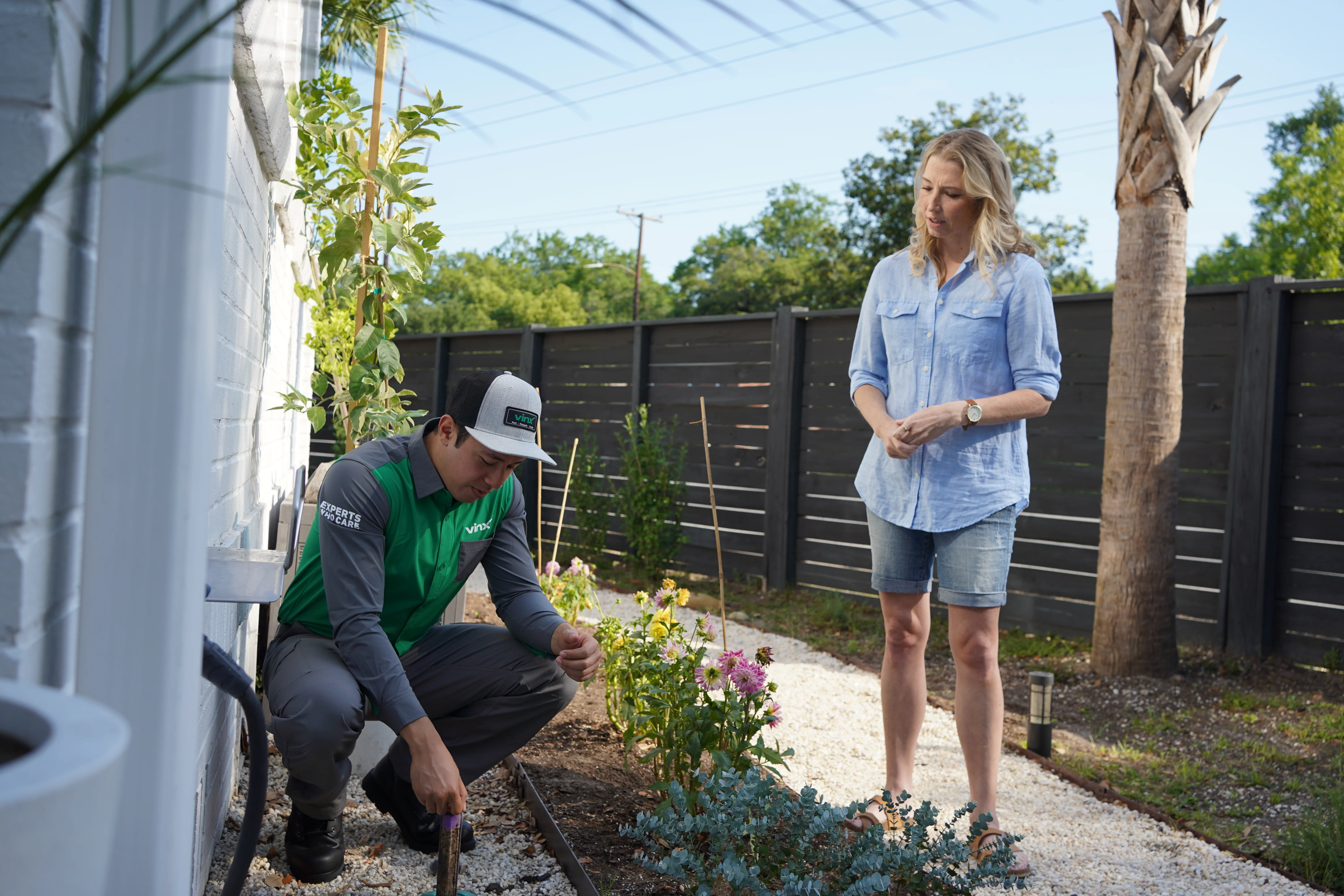
Your Vinx technician conducts a thorough inspection of the full property, exterior foundation perimeter, crawlspace, garage, interior baseboards, door and window frames, and any outbuildings. We inspect for active mud tubes, frass, carton nests, conducive conditions (wood-to-soil contact, moisture intrusion, excessive mulch depth), and any structural damage already present. In Mount Pleasant, we pay particular attention to crawlspace pier bases, subfloor framing, and any historic timber elements in older homes.
Sentricon Bait Station Installation
Sentricon in-ground bait stations are installed every 10 feet around the full perimeter of your home, in the soil where subterranean termites forage. Each station contains Recruit HD termite bait, which termite workers actively prefer over wood. Workers carry the bait back to the colony and share it with nestmates including the queen. The colony is eliminated from the inside out. Installation typically takes 2–4 hours for an average Mount Pleasant home. No trenching, no drilling through your foundation slab.
Annual Station Inspection & Bait Replacement
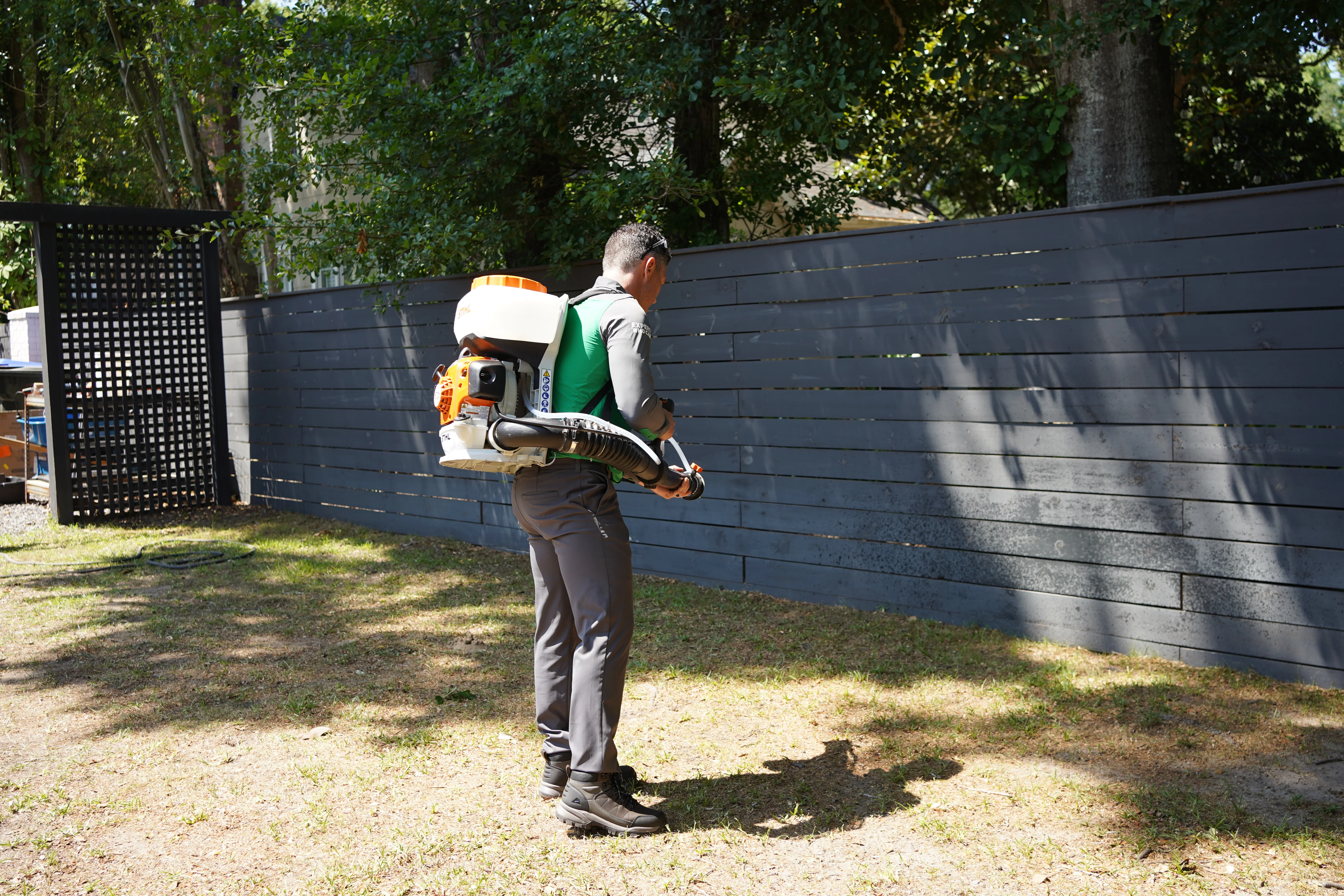
Once per year, your Vinx termite technician inspects every bait station around your home, checking for termite activity, assessing bait consumption, and replacing any stations that need it at no additional charge. The annual visit also includes a full property inspection reviewing the foundation perimeter, crawlspace, and any areas previously flagged as conducive conditions. Unlike liquid barrier treatments that degrade and require reapplication, Sentricon stations remain active year after year.
Conducive Condition Documentation
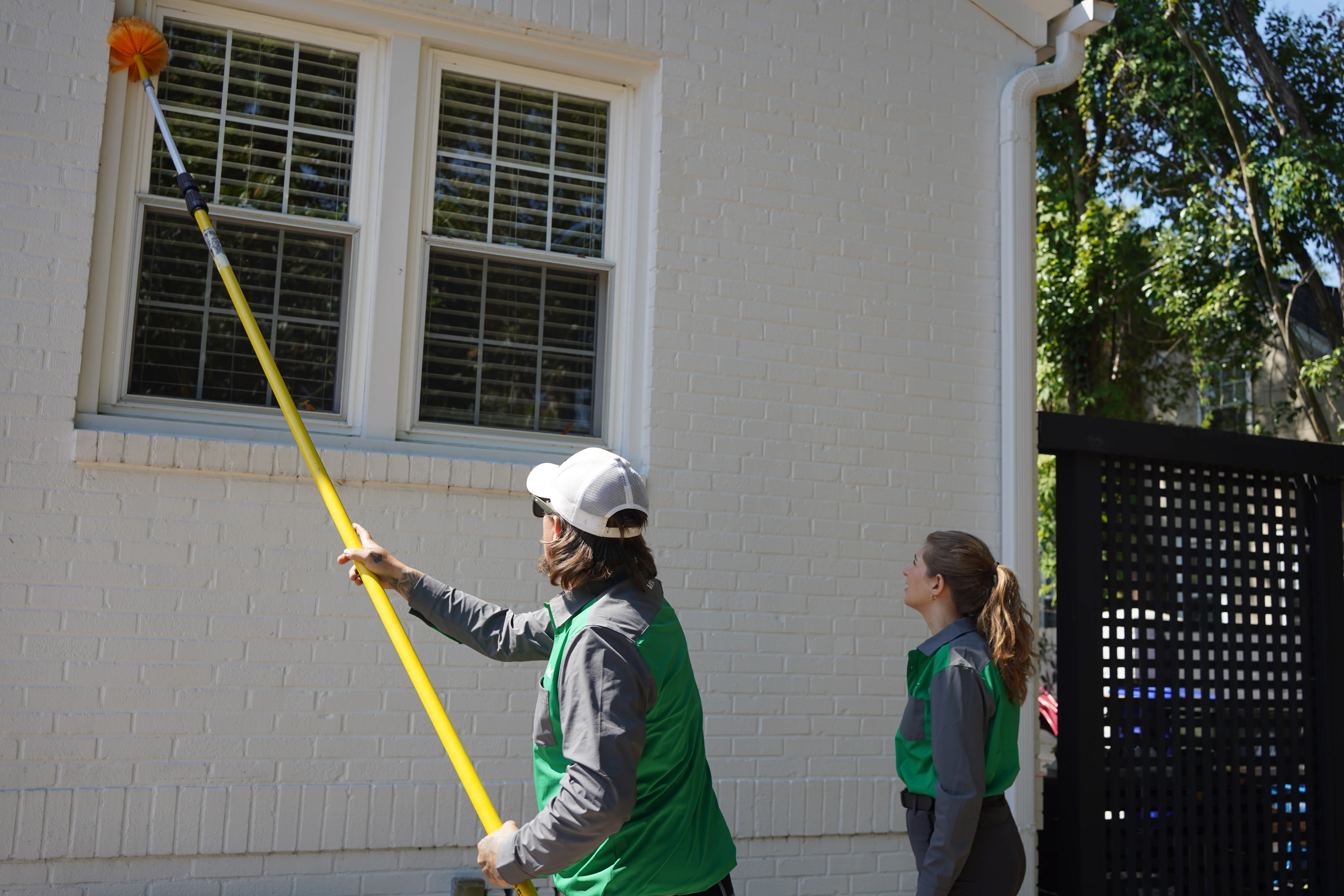
After every inspection visit, your technician provides a written report of any conditions that increase termite risk on your property, wood-to-soil contact, moisture intrusion into the crawlspace, excessive mulch depth against the foundation, vegetation touching the structure, or clogged gutters causing water to pool near the foundation. Addressing these conditions reduces your long-term termite risk significantly.
Re-Treat Warranty & Damage Warranty
Every Sentricon TotalDefense program includes a re-treat warranty, if termites ever bypass the stations and cause an infestation, Vinx will perform any necessary termite treatments at no additional cost. Qualifying homes can also receive a damage warranty, which covers certain structural repairs in the unlikely event that termite damage occurs while the program is active. Warranty eligibility is determined at inspection.
Customer Reviews
Trusted by Mount Pleasant Families: 4.8 Stars on Google
Dalon did a great job with the inspection 🐜
Leon was excellent. Friendly, personable, and extremely thorough throughout the inspection process. Having dealt with termite damage in the past(Not a vinx home), I especially appreciated the care and attention he put into examining everything. His detailed approach gave me confidence that nothing was overlooked. I highly recommend Leon and Vinx for anyone looking for a knowledgeable and diligent inspector.
Austin was very thorough and knowledgeable. He took the time to explain everything clearly. Really appreciated his professionalism.
Thank you for a smooth operation. All baits were inspected and replaced the needed ones. Very professional and always friendly. I recommend Vinx to anyone.
It’s that time of year for pests in the Low Country and along with all the bugs comes termite swarms. Austin made time at the end of his busy 90 degree day to get us taken care of. He explained the swarming and type of termite, along with spiders, fire ant hills and general extermination. We really appreciate his professional hard work!!! Thank you Austin and Vinx for getting us scheduled asap!
Leon is very knowledgeable. I felt comfortable with his suggestion on treating termite.
Year-Round Termite Pressure
Why Mount Pleasant Has One of the Highest Termite Risks in South Carolina
South Carolina ranks among the highest-risk states for termite activity in the US, and within South Carolina, the coastal counties including Charleston County are the highest-risk region in the state. Three factors drive Mount Pleasant’s elevated termite risk above the state average:
The soil under your house never really dries out. The Charleston area takes just over 51 inches of rain across about 119 wet days a year, and the water table sits so high that homes here are built without basements at all. Subterranean termites in that soil never get the dry spell that slows colonies inland, so they forage, tunnel and expand every month of the year. There is no low-pressure termite season in the Lowcountry.
Pier-and-beam and crawlspace construction is prevalent. Old Village, the Coleman Boulevard corridor homes, and a significant portion of Mount Pleasant’s residential stock are built on pier-and-beam foundations or have full crawlspaces. These create direct or near-direct wood-to-soil contact and elevated indoor humidity, ideal termite conditions.
You are next door to the oldest Formosan foothold in America. Clemson’s own factsheet dates the arrival plainly: “Since their introduction in Charleston in the mid-1950’s, Formosan subterranean termites have caused concern.” Charleston County is one of 16 South Carolina counties where Formosans are established, and Mount Pleasant sits inside it. The difference matters: a mature Formosan colony runs into the millions of workers against several hundred thousand for a native subterranean, it does damage far faster, and treatment typically costs 20–40% more. Any home here can hold both species at once. Worth noting Clemson’s caveat too, that a county listing does not mean uniform infestation across it.
Two Termite Species in Mount Pleasant
Formosan Subterranean Termite
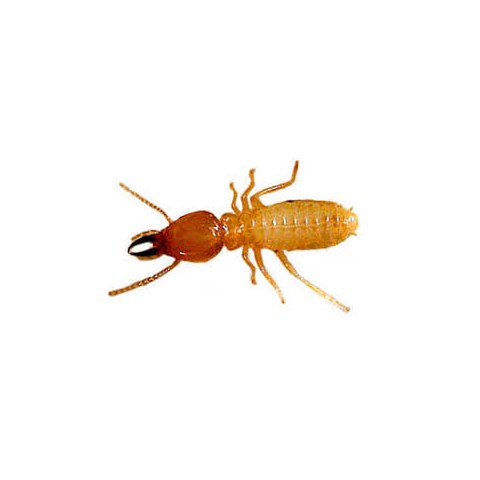
The most destructive termite species in the United States and the dominant species throughout the Lowcountry. Colonies contain 1 to 10 million workers and can consume over 13 ounces of wood per day, roughly 300 feet of 2x4 framing per year. They swarm evenings April through June. Old Village historic homes at peak risk. Formosans can build carton nests above ground inside walls and attics, making them far harder to detect.
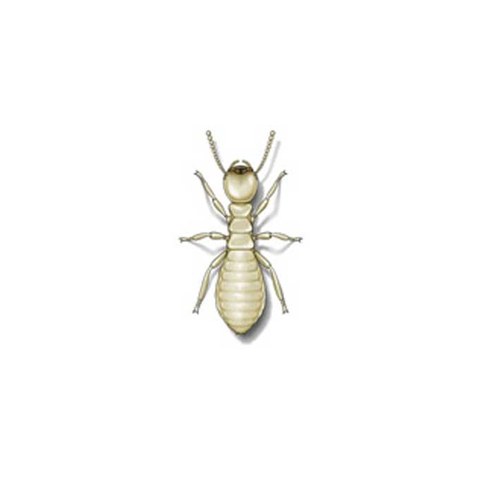
Eastern Subterranean Termite
The most widely distributed termite in North America, present throughout South Carolina and active in every Mount Pleasant neighborhood. Colonies of 100,000–500,000 workers. They swarm during the day in February–April, often confused with flying ants. Build mud tubes, pencil-width brown tunnels running up your foundation wall or crawlspace piers. Both species may be present in the same home simultaneously.
Termite Swarm Season in Mount Pleasant
Formosan: April – June, evening hours after sunset. Attracted strongly to outdoor and indoor lighting. Eastern Subterranean: February – April, daytime hours, often following rain events. By the time a colony swarms, it has typically been active for 3 to 5 years. Seeing swarmers means an established colony is already present. Call (843) 305-4029 immediately, collect specimens in a sealed bag if possible.
Swarm Season
Termite Swarm Season in Mount Pleasant
Seeing termite swarmers is one of the most alarming things a homeowner can experience. But the swarmers themselves are not the problem, the established colony producing them is. By the time a colony is large enough to produce swarmers, it has typically been active in or around your home for 3 to 5 years.
Formosan Swarm Season
April – June, evening hours after sunset. Attracted strongly to outdoor and indoor lighting. Often confused with large flying ants. Swarmers have straight antennae, equal-length wings, and a thick waist.
Eastern Subterranean Swarm Season
February – April, daytime hours, often following rain events or warm spells. May emerge indoors from infested wall voids or crawlspaces. Finding swarmers or discarded wings on windowsills indoors is a strong indicator of an established colony inside the structure.
If you see swarmers: Don’t panic, but do act. Call (843) 305-4029 immediately. Collect a few specimens in a sealed bag if possible.
Warning Signs
Signs of Termite Activity in Your Mount Pleasant Home
Mud Tubes
Pencil-width brown tubes running up foundation walls, piers, or crawlspace framing. Eastern subterranean termites build these as protected travel pathways from soil to wood.
Swarmer Wings
Discarded wings on windowsills, near light fixtures, or on floors near doors. Swarmers shed their wings immediately after landing.
Hollow-Sounding Wood
Tap baseboards, door frames, and floor joists with a screwdriver handle. A hollow sound indicates termites have consumed the interior while leaving the surface intact.
Tight-Fitting Doors & Windows
Termite damage to framing causes warping and swelling that makes doors and windows stick or no longer close properly.
Bubbling or Uneven Paint
Paint bubbling away from walls, especially near baseboards or window frames, can indicate moisture damage from termite activity behind the surface.
Carton Nests
Formosan-specific: brownish papery material found in wall voids, attics, or inside hollow structural elements. A unique Formosan behavior not seen with Eastern subterranean.
Call (843) 305-4029, free same-day termite inspection available
Termite Risk by Neighborhood
Termite Risk Across Mount Pleasant Neighborhoods
Old Village: HIGHEST RISK
Mount Pleasant’s highest termite risk neighborhood without question. Most lots in this 37-block historic district were platted in the 1770s, and the Town’s 2017 drainage study found storm infrastructure installed 60-plus years ago, original roadside swales lost to resident parking, and pockets with no outfall at all. Water sits. Add historic pier-and-beam construction with direct wood-to-soil contact on the piers, and flood rules that require openings in solid crawlspace perimeter walls, and you have ideal Formosan and Eastern subterranean conditions. Any Old Village home without active termite monitoring is at significant risk. Sentricon installation is strongly recommended, annual inspection alone is not sufficient protection for homes with these construction characteristics.
Snee Farm & Hobcaw Point: ELEVATED RISK
These two sit on the Town’s own list of drainage problem areas, and that matters more for termites than most homeowners realize. Mount Pleasant describes Snee Farm’s entrance road as flooding during rain events with several homes repeatedly taking water damage, and calls Hobcaw Point an older neighborhood with substandard drainage containing repetitive-loss homes. The Groves, Shemwood and Brookgreen are on the same list. Moisture is the primary driver of subterranean termite activity, and it is also one of the two things a CL-100 inspection measures. If you are planning to sell, a wet crawlspace can produce a moisture finding on the report before a single termite is involved.
I’On & Seaside Farms: ELEVATED RISK
Both neighborhoods feature crawlspace foundations in direct proximity to tidal water, a combination that keeps subfloor and soil moisture consistently elevated year-round. Moisture is the primary driver of subterranean termite activity, and homes in I'On and Seaside Farms that haven’t addressed crawlspace moisture management are at meaningful termite risk. Annual Sentricon monitoring is the appropriate protection level for these properties.
Rivertowne & Marsh-Adjacent Properties: ELEVATED RISK
Properties backing onto tidal marsh and wooded riparian buffers carry elevated termite risk from both soil moisture and the proximity of wooded areas where termite colonies establish. Formosan termites readily travel from wooded lots into adjacent residential properties. Homes with any wood elements touching or near the soil (fence posts, deck framing, landscaping timbers) provide easy entry points.
Carolina Park & Oyster Point: MODERATE RISK
Newer construction here typically uses pressure-treated lumber for ground-contact framing, which is meaningful but not absolute protection, and it had a mandatory soil pre-treatment before the slab was poured, which South Carolina requires statewide on new construction rather than county by county. That protection is not permanent. The adjacent wooded lots and undeveloped land around many Carolina Park and Oyster Point homes harbor established colonies. As treated lumber ages and as construction activity disturbs surrounding soil, termite pressure increases. Proactive monitoring is worthwhile, especially for homes with slab foundations where access for inspection is more limited.
Belle Hall & Park West: MODERATE RISK
Well-established neighborhoods with mature landscaping and irrigation systems, both of which sustain soil moisture levels that support subterranean termite activity. Homes with wood mulch heavily applied against the foundation, landscape timbers, or wooden deck framing in contact with soil carry the highest individual property risk. Regular inspection and Sentricon monitoring is recommended.
Wando & Cainhoy: ELEVATED RISK
Larger rural lots with wooded perimeters and less developed adjacent land create conditions where termite colonies establish readily in undisturbed soil and wooded areas before migrating into structures. Homes here often have outbuildings, wooden fencing, and other wood structures on the property that provide additional termite entry points. Sentricon coverage for the full property perimeter is appropriate.
Kid & Pet Safe
Our Treatments Are Safe for Your Whole Family: Including the Furry Members
Every product we use is EPA-registered and applied strictly at labeled rates by licensed technicians. We take the guesswork out of safety so you can feel confident letting kids and pets back into treated areas quickly.

EPA-Registered Products Only
All products we apply are EPA-registered and used strictly per label requirements. Our licensed technicians are trained to apply the right product in the right place at the right rate, every time.
Dry Time Before Re-Entry
Exterior spray treatments dry in 30–60 minutes. Once dry, treated surfaces are safe for children and pets to contact. Your technician will confirm the all-clear before leaving your property.
Contained Bait Stations
Sentricon bait is sealed inside tamper-resistant in-ground stations, inaccessible to children and pets while remaining fully effective against termite colonies.
No Trenching or Drilling
Unlike liquid barrier treatments, Sentricon requires no chemical injection into soil or slabs, minimizing any environmental or household exposure during and after installation.
Have a concern about products used near your pets or children? Call 855-800-8469 and we’ll walk you through exactly what we use and why it’s safe.
Explore More
More Pest Control Services in Mount Pleasant

Pest Control Mount Pleasant
Year-round protection plan

Ant Control Mount Pleasant
Household ants & others

Mosquito Control Mount Pleasant
Monthly barrier treatments

Rodent Control Mount Pleasant
All rodents covered

Spider Control Mount Pleasant
All spider species covered

Bed Bug Treatment Mount Pleasant
Heat & liquid treatments

Wasp Control Mount Pleasant
Nest removal & prevention

Tick & Flea Control Mount Pleasant
Yard & pet protection
Exterminator Mount Pleasant
Same-day local exterminators

Cockroach Control Mount Pleasant
Roach removal & prevention
Frequently Asked Questions
Termite Control in Mount Pleasant: Your Questions Answered
Vinx’s Sentricon TotalDefense program starts at $35/month. Final pricing is based on your home size, the number of stations required for full perimeter coverage, and inspection findings. A free termite inspection is required for an accurate quote, most Mount Pleasant homes are quoted at the inspection visit. Vinx pest control plan customers receive $100–$400 off Sentricon installation depending on their plan level.
No. Standard homeowners insurance policies explicitly exclude termite damage, it is classified as a preventable pest infestation rather than a sudden, accidental loss. This means every dollar of termite repair comes directly out of pocket. Average termite damage repairs in the US range from $3,000 to $8,000. Structural damage in heavily infested homes can cost $30,000 or more. Proactive termite protection through Sentricon TotalDefense is the only way to protect yourself financially.
Two species are active in Mount Pleasant: the Formosan subterranean termite (Coptotermes formosanus) and the Eastern subterranean termite (Reticulitermes flavipes). Formosans are the more destructive of the two, colonies can reach millions of workers and can cause significant structural damage far faster than Eastern subterranean colonies. Mount Pleasant sits inside the Formosan’s core US range. Both species may be present in the same property simultaneously. Sentricon’s Recruit HD bait has been proven effective against both species.
Formosan subterranean termites swarm in the evenings from April through June, attracted to outdoor and indoor lighting. Eastern subterranean termites swarm during the day, typically February through April, often following rain events or warm spells. If you see swarmers (winged insects emerging in large numbers from the ground, walls, or crawlspace) it means an established colony is already present, often for several years. Call (843) 305-4029 immediately if you observe swarming. Collect a few specimens in a sealed bag if possible to help with species identification.
The most common signs of termite activity include mud tubes on foundation walls or crawlspace piers, discarded swarmer wings near light fixtures or windowsills, hollow-sounding wood when tapped, tight-fitting doors or windows that have recently become harder to operate, and in the case of Formosans, papery carton nests inside wall voids. However, many termite infestations in Mount Pleasant produce no visible surface signs until significant damage has occurred. The only reliable way to know your home is termite-free is a professional inspection. Vinx offers free termite inspections, call (843) 305-4029 to schedule.
For an average Mount Pleasant home, Sentricon station installation takes 2–4 hours. Your technician inserts in-ground stations at 10-foot intervals around the full foundation perimeter. No trenching, no drilling through slabs, and no significant disruption to your landscaping. The stations are low-profile and nearly invisible once installed.
Yes. Sentricon bait is contained within sealed in-ground stations and is not accessible to children, pets, or wildlife under normal conditions. The active ingredient is present in very small quantities within each station. There is no soil injection, no surface spray, and no chemical applied in or around living areas. In Mount Pleasant’s coastal environment, Sentricon’s contained delivery system is specifically appropriate given the proximity of tidal systems and groundwater.
Liquid barrier treatment involves trenching or drilling around your foundation and injecting termiticide into the soil. It protects against entry but does not eliminate the colony, the colony survives and may find new entry points as the chemical degrades over time (typically 5–10 years in coastal conditions). Sentricon bait stations work differently: termite workers find the bait, carry it back to the colony, and feed it to nestmates including the queen. The entire colony is eliminated from within. Sentricon stations don’t degrade the way liquid barriers do.
The re-treat warranty means that if termites ever bypass the Sentricon stations and establish an active infestation in your home while the program is active, Vinx will perform any necessary termite treatments at no additional cost. Qualifying homes can also receive a damage warranty that covers certain structural repairs. Warranty eligibility is determined at the initial inspection. Homes with pre-existing termite damage may qualify for the damage warranty after a waiting period once the infestation is eliminated.
In practice, almost certainly. The CL-100 is South Carolina’s Official Wood Infestation Report (form SC 1099), and it is requested in most real estate transactions because most lenders require one. It can only be issued by an inspector licensed in the wood-destroying organism category, Category 7A, under Clemson University’s Department of Pesticide Regulation. It covers wood-destroying insects and wood-destroying fungi, but the fungi portion applies only below the first main living-area floor, so your crawlspace and substructure are in scope while siding and fascia are not.
No, and this is the most common misunderstanding about it. The regulation states the report “is not a warranty against future infestation, nor does it place any obligation for the correction of reported damage or infestation upon the applicator or business issuing the report.” Any duty to repair comes from your purchase contract or your lender’s conditions, not from the state. You will also see it claimed that a CL-100 is valid for 30 days; no validity period appears anywhere in the regulation. That is lender and contract practice, so confirm the window with your lender rather than assuming a legal deadline.
Because moisture is measured on its own terms. The regulation defines excessive moisture numerically: wood moisture at or above 20%, or standing water in the crawlspace or around the foundation. In Mount Pleasant that is a common finding for reasons that have nothing to do with insects. The Town has documented chronic standing water in Old Village, Snee Farm, Hobcaw Point, The Groves and Shemwood, flood rules require openings in solid crawlspace perimeter walls so water can pass through, and Charleston County’s hazard mitigation plan advises letting a crawlspace dry and checking it for mold, mildew and rot after flooding. Fixing drainage and grading is usually the durable answer, and it lowers your termite risk at the same time.
Vinx services all of Mount Pleasant for termite control including Old Village, Snee Farm, Hobcaw Point, Carolina Park, Oyster Point, Belle Hall, Park West, I'On, Seaside Farms, Rivertowne, Wando, and Cainhoy. We also service nearby Isle of Palms, Sullivan’s Island, Awendaw, and McClellanville.
Service Coverage
Termite Control Across Mount Pleasant & the Lowcountry
Vinx delivers Sentricon termite protection across all of Mount Pleasant and surrounding Lowcountry communities.
Serving the Greater Mount Pleasant Area