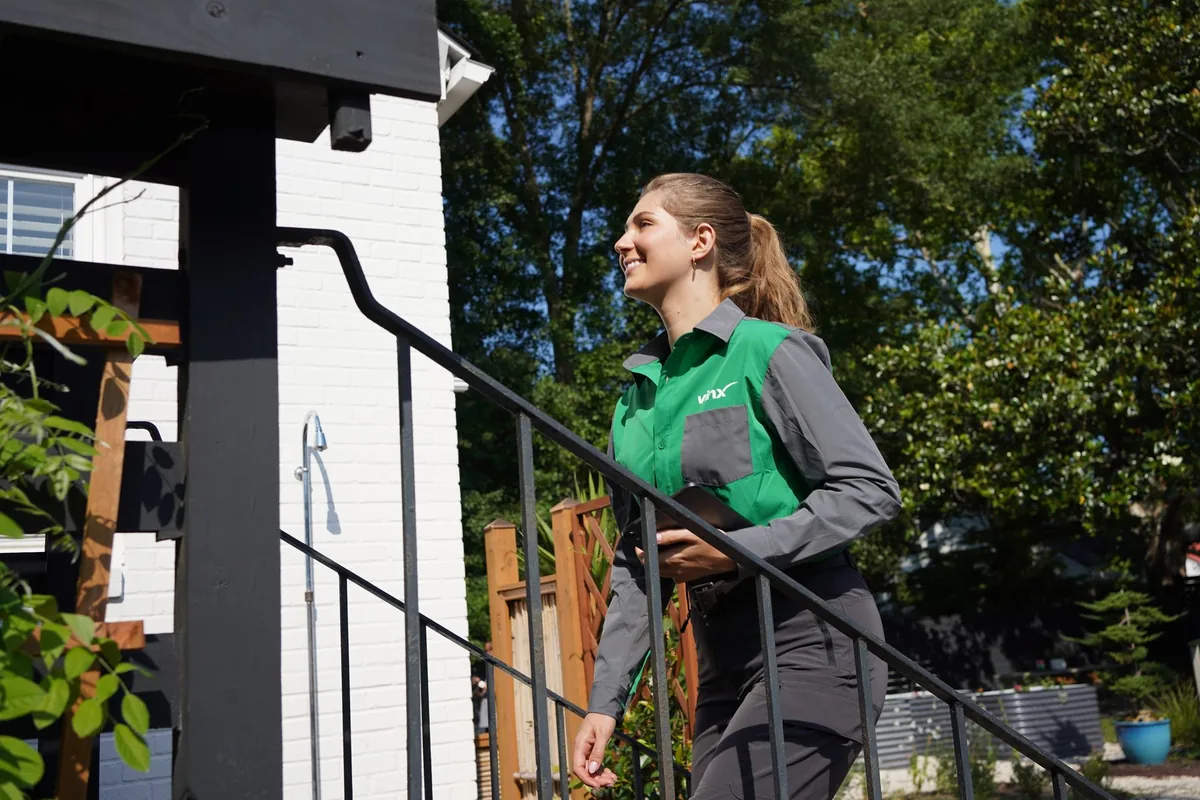
Mosquito Control in Mount Pleasant, SC
Year-Round Mosquito Treatment for Lowcountry Homes: Monthly Service During Peak Season
Telling a Mount Pleasant homeowner to eliminate standing water to control mosquitoes is like telling someone to bail a boat with a cup. The real problem is the tidal marsh system surrounding this city. Those water sources sustain mosquito breeding populations from late February through November regardless of what happens on your property. Vinx treats the resting sites (bushes, shrubs, foliage) not just the perimeter. That’s the difference.
Get Started in 60 Seconds
Choose what’s easiest for you
Request a Quote
We usually respond in 2 minutes
Call (843) 305-4029
Get a Live Person (no AI agents here!)
Sign Up Online
Get pricing and schedule now





Welcome to Vinx Pest Control
A Company That Actually Backs What It Says
At Vinx, we combine professional-grade treatments with a level of service most pest control companies don’t offer. Local technicians, fast response times, and a guarantee that actually means something.
“I’m not passionate about killing bugs. I’m passionate about customer service. At Vinx, you get experts who show up, do the job right, and stand behind every visit. No runaround, no fine print.”

Founder & Owner, Vinx Pest Control
WELCOME TO VINX PEST CONTROL
Protection Plans for Mount Pleasant Homeowners

Standard Residential Protection
- 4 Seasonal Treatments Per Year
- 40+ Covered Pests
- Interior, Exterior & Yard Treatment
- Unlimited Free Re-Services
- Guaranteed Coverage for Common Household Pests

Upgraded Yard Protection
- 6 Home & Yard Treatments Per Year
- 40+ Covered Pests
- Fire Ant Warranty
- Exterior Flea & Tick Warranty
- Guaranteed Coverage for Common Household Pests

Most Comprehensive Protection
- 9 Treatments Per Year
- 40+ Covered Pests
- 8 Mosquito Treatments (Apr–Nov)
- Flea, Tick & Fire Ant Coverage
- Free Bed Bug Treatment After 12 Months on Platinum
*Starting rates vary by home size and area. All plans billed monthly.
Stop Letting Mosquitoes Own Your Mount Pleasant Outdoor Space
You invested in a home in one of the most beautiful coastal communities in the Southeast. You shouldn’t have to choose between enjoying your backyard and getting eaten alive. Call (843) 305-4029 or fill out the form below.
Our Process
How Vinx Treats Mosquitoes in Mount Pleasant

Property Assessment
Your Vinx technician walks the full property before treatment, identifying resting vegetation zones, any on-property breeding sites (standing water, low-lying mulch, dense ground cover, container water), and the specific pest pressure pattern for your property’s location. Marsh-adjacent properties in I'On or Seaside Farms require different treatment emphasis than an irrigated Belle Hall lawn. We assess your specific situation and adjust accordingly.
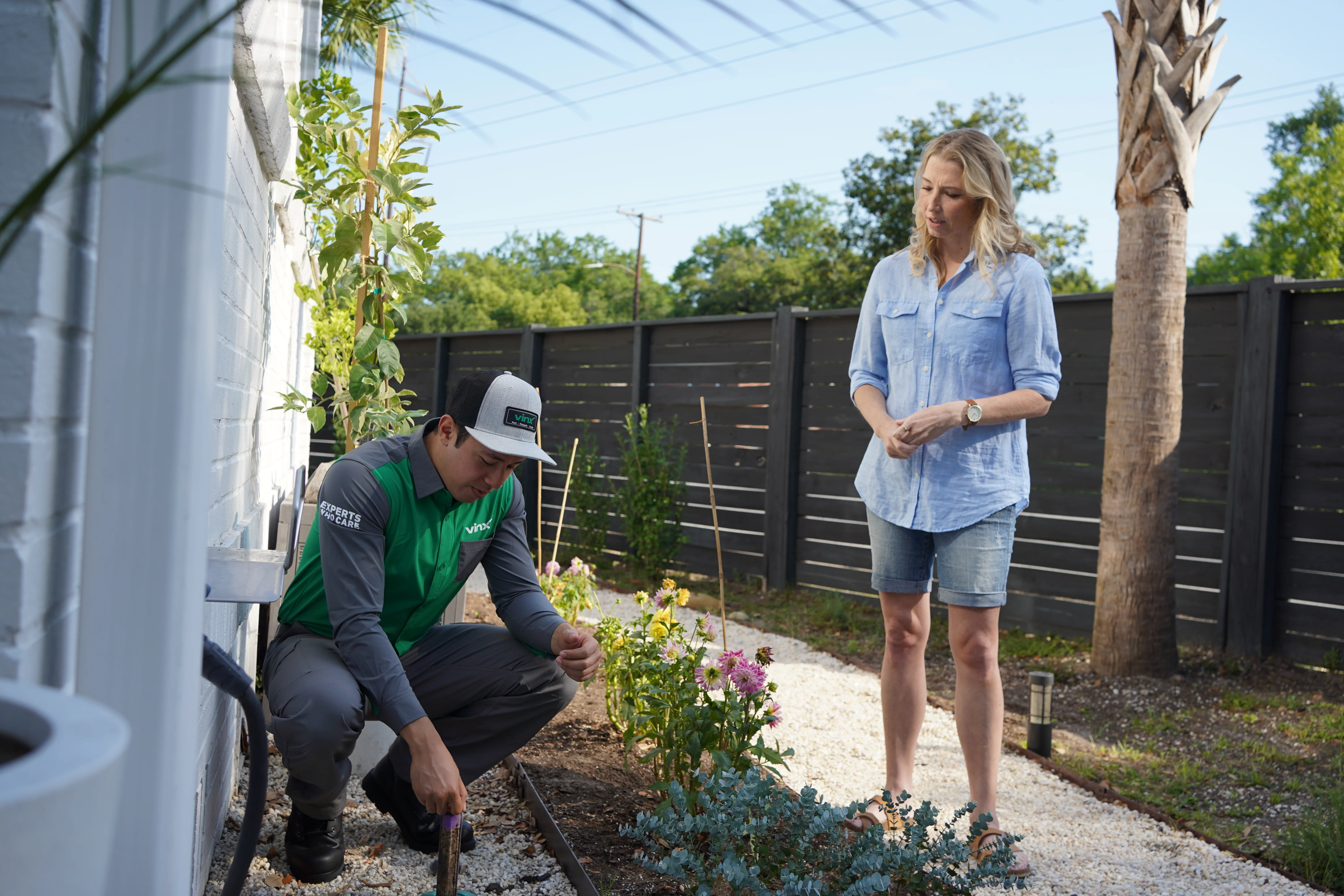
Resting Vegetation Treatment
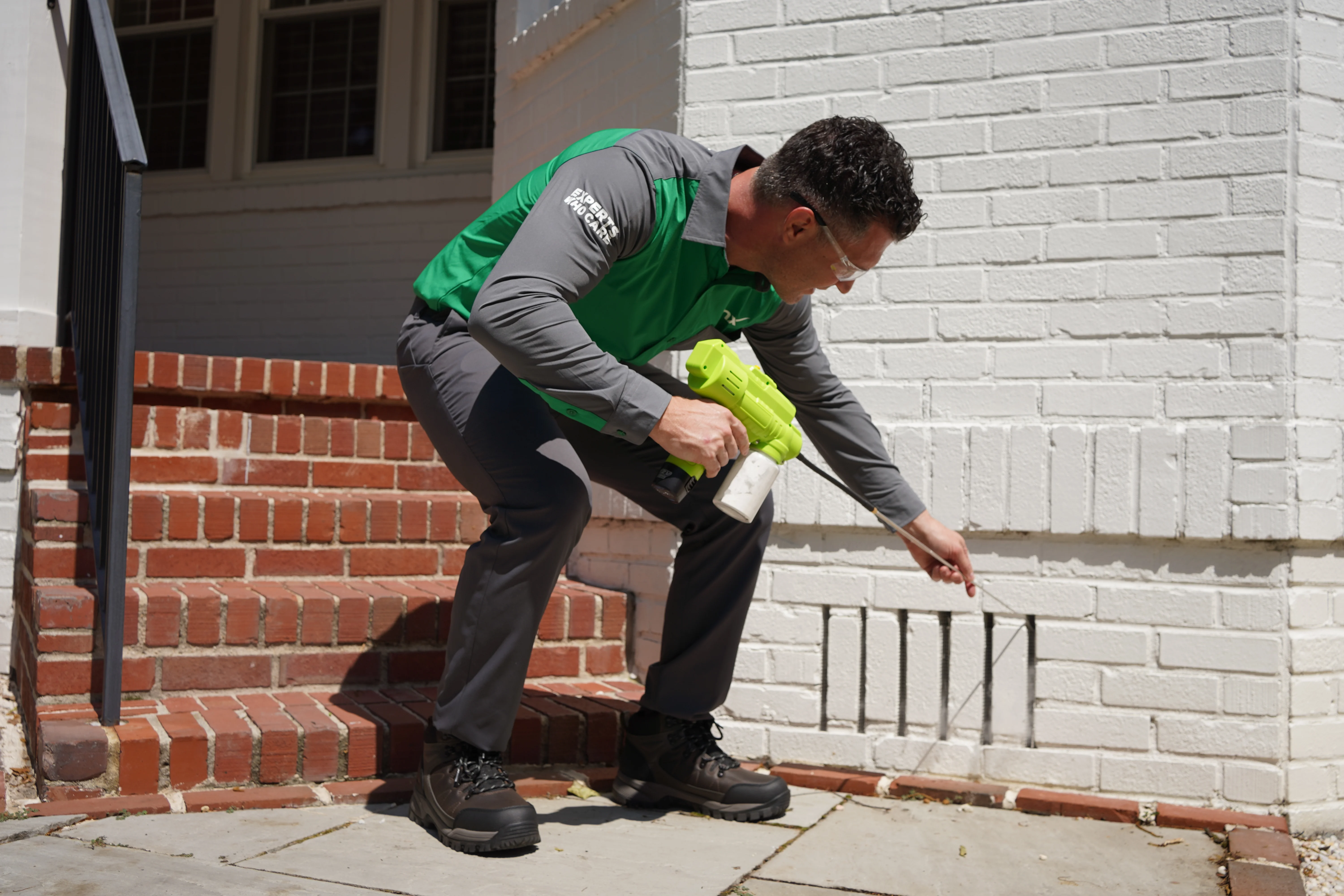
Adult mosquitoes spend approximately 95% of their time resting in vegetation during the day, hiding in the cool, shaded undersides of leaves in ornamental shrubs, ground cover, along fence lines, and in the lower canopy of trees. They emerge to feed at dawn, dusk, and overnight, then return to those resting sites. This is why Vinx Platinum mosquito treatment covers bushes, shrubs, and foliage. The core of every service: We apply a fine mist treatment to all ornamental shrubs, ground cover, lower tree canopy edges, and dense vegetation on and around your property, targeting the resting sites where adult mosquitoes spend the majority of their time. Results are typically noticeable within 24–48 hours of treatment and remain effective for 3–4 weeks, which is why monthly service during peak season delivers consistent control.
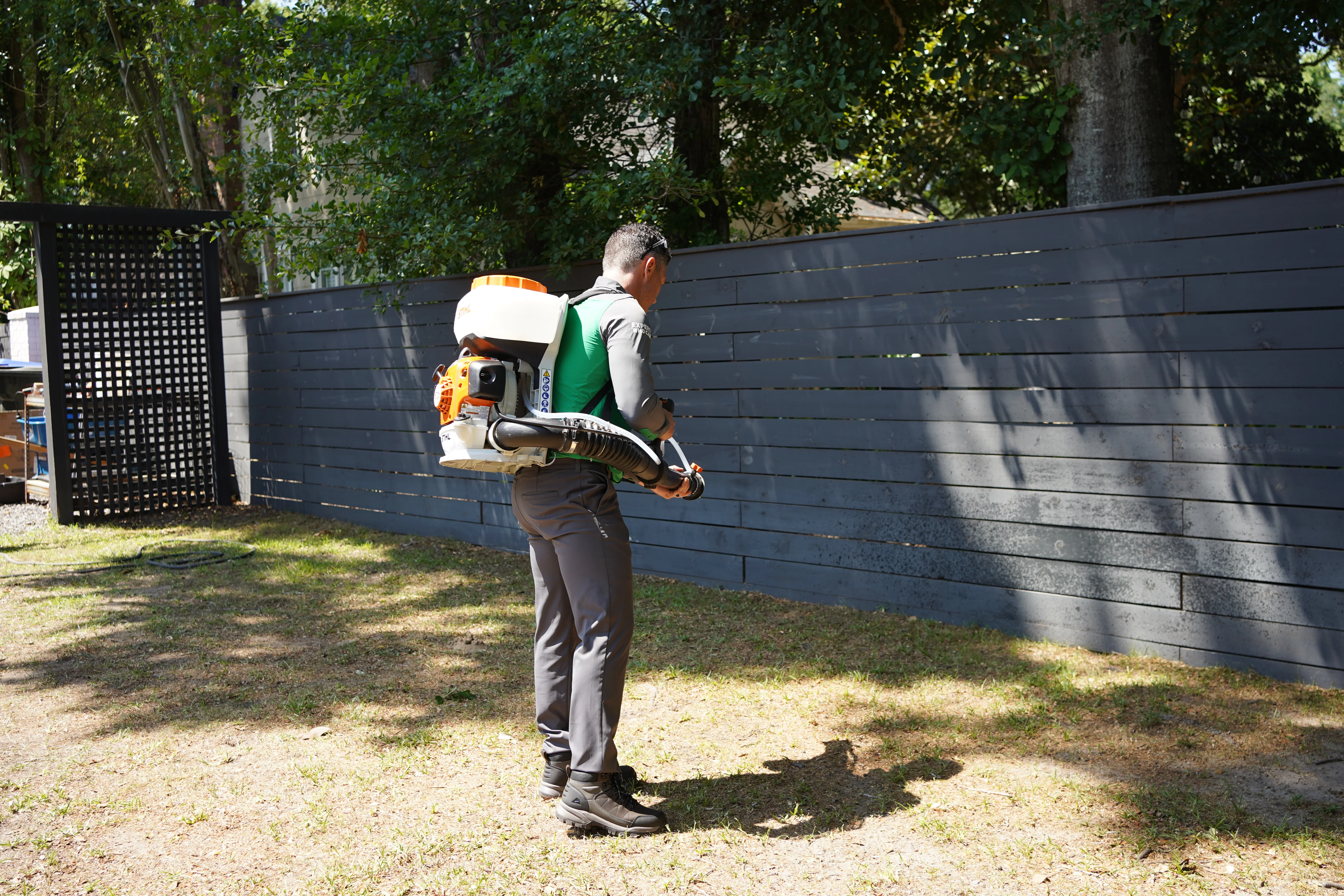
Fence Line & Border Treatment
Fence lines and property borders are primary travel corridors and resting zones for mosquitoes migrating from adjacent properties, wooded lots, and tidal areas. We treat along fence lines, property border vegetation, and any dense shrub or ground cover at the perimeter of your outdoor living areas, creating a treated buffer between your yard and the mosquito pressure from adjacent land.
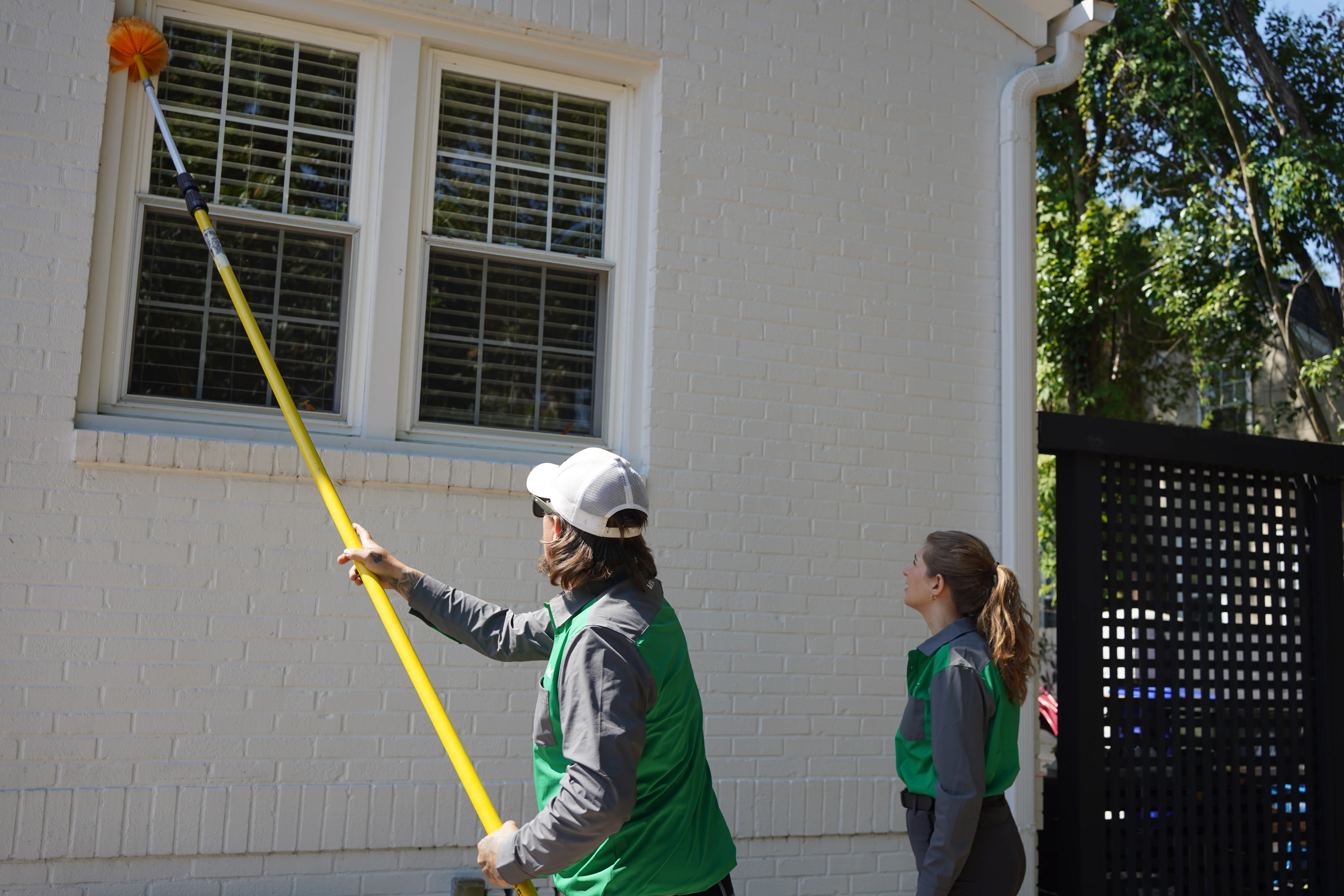
Deck, Patio & Outdoor Living Area Treatment
Patios, decks, outdoor dining areas, and playgrounds are covered on every visit, treating the undersides of deck boards, around outdoor furniture, and along the edges of hardscaped areas where mosquitoes rest in the shade. These are the spaces where your family actually spends time outdoors, and they receive specific attention on every Platinum service visit.
Breeding Site Identification & Documentation
Your technician identifies and documents any on-property breeding sites contributing to your mosquito pressure, standing water in gutters, around AC condensate drain lines, in plant saucers or containers, in low-lying areas of the lawn, or in any structures holding water. A written report of findings is provided after every visit. Addressing on-property breeding sites between visits extends the effectiveness of each treatment.
Monthly Return Service (April–Nov) + Winter Visit
Vinx Platinum mosquito service visits every month during peak season, April through November, plus one winter service between December and March. Monthly frequency is essential in Mount Pleasant because the tidal marsh system continuously replenishes the adult mosquito population from sources outside your property. A single treatment lasts 3–4 weeks. Monthly service maintains a consistent reduction in biting pressure throughout the season.
Customer Reviews
Trusted by Mount Pleasant Families: 4.8 Stars on Google
Devin was efficient and informative. I’d love to have him back next time!
Jack did a great job addressing all areas of concern. He was kind and professional
Jack is professional, thorough, polite, and efficient. Great service!
Leon was great! He arrived early and was very professional throughout the visit. He actually listened to my specific concerns and walked me through exactly how he was going to handle them. Very thorough service
Anthony does a great job servicing our house. He is very thorough and always takes his time.
Anthony is the man. He takes great care of my house. He has great communication and goes the extra mile.
Year-Round Mosquito Pressure
Why Mount Pleasant Has One of the Longest Mosquito Seasons in South Carolina
Mosquito season in most of inland South Carolina runs roughly May through September, about five months. In Mount Pleasant it stretches from late February into November. The calendar explains why: around Charleston the first frost usually holds off until December and the last one is gone by February, so there is only a short stretch when cold suppresses the population at all.
The tidal system is the root cause. Mount Pleasant is bordered by the Wando River, Charleston Harbor and the Intracoastal Waterway, and bisected by Shem Creek and Hobcaw Creek, with Copahee Sound behind the waterway to the northeast. Those marshes are permanent breeding habitat. They are not puddles you can tip over or gutters you can clean, and no amount of work on your own lot changes them.
Rainfall does the rest. The Charleston area takes just over 51 inches across about 119 wet days a year, and in much of Mount Pleasant it drains badly. The Town’s own records describe rear-yard swales it calls non-functional, original roadside swales lost to resident parking in Old Village, obstructed ditches along Mathis Ferry Road where it states that a health hazard exists due to standing water, and neighborhoods such as Snee Farm and Hobcaw Point where water lingers after every storm. Charleston County’s hazard mitigation plan puts the consequence plainly: stagnant water in drainage ditches often fosters mosquitoes.
Then there is your own yard. Irrigation systems, ornamental water features, clogged gutters, plant saucers, and low mulch beds supply the small-container habitat that the day-biting species need, and those are the sites treatment can actually reach.
3 Mosquito Species in Mount Pleasant
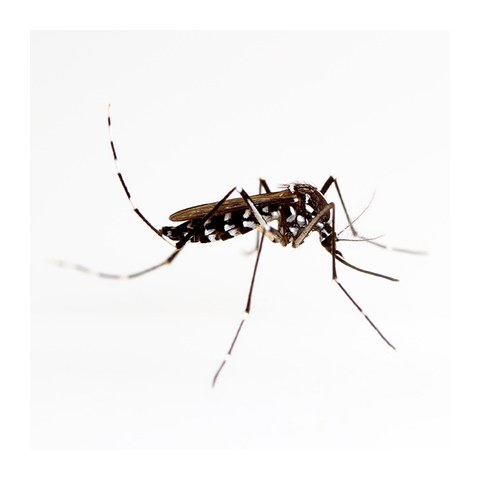
Aedes albopictus (Asian Tiger Mosquito)
Responsible for most of the biting pressure you feel during outdoor activities. Identifiable by its black-and-white striped legs, it is an aggressive daytime biter, most active in the two hours after sunrise and before sunset, and it breeds in small containers: clogged gutters, plant saucers, toys, bottle caps. It is the container-breeding species of Mount Pleasant’s residential yards. It is a competent vector of dengue, Zika and chikungunya, though Aedes aegypti is the primary vector worldwide. None of those viruses are locally transmitted in South Carolina, where cases are travel-associated. This is the species that yard treatment and source reduction control best.
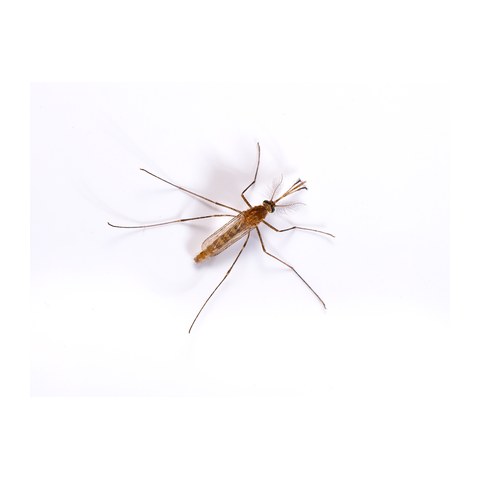
Culex quinquefasciatus
The dominant night-biting species in Mount Pleasant and the primary vector for West Nile Virus in South Carolina. Most active from dusk through the night, breeding in larger bodies of stagnant water, retention ponds, drainage ditches, and slow-moving tidal creek edges. Populations are highest near retention ponds in Carolina Park and Oyster Point, along drainage channels in Belle Hall and Park West, and near tidal creek edges throughout I’On and Seaside Farms. West Nile Virus cases are reported in South Carolina every year.

Aedes sollicitans & Aedes taeniorhynchus
The true salt marsh mosquitoes, and the reason marsh-adjacent yards feel unliveable in brood weeks. Eggs are laid on damp soil at the upper edge of the marsh rather than in water, then hatch in the pools left by an exceptional high tide or heavy rain, and adults can emerge in as little as four to five days. Broods move inland together, generally less than five miles, which is why a calm evening in Rivertowne, Seaside Farms, I’On, or along the Wando can turn suddenly. Both species are known vectors of Eastern equine encephalitis and dog heartworm. Yard treatment cuts what lands on your property, but it cannot treat the marsh itself.
Health & Safety
Mosquito-Borne Disease Risk in the Mount Pleasant Area
Mosquitoes in Mount Pleasant are not just a nuisance, they are active disease vectors. South Carolina reports mosquito-borne illnesses every year, and the Lowcountry’s extended season and large mosquito populations create meaningful exposure risk.
West Nile Virus
The most commonly reported mosquito-borne illness in South Carolina. Transmitted primarily by Culex quinquefasciatus, the night-biting species that breeds in retention ponds and drainage channels throughout Mount Pleasant. Per the CDC, about 80% of infected people have no symptoms, roughly 1 in 5 develop fever, headache and body aches, and less than 1% develop severe illness affecting the central nervous system. South Carolina reports West Nile cases every summer.
Eastern Equine Encephalitis (EEE)
A rare but serious viral illness transmitted by mosquitoes in wetland environments, exactly the habitat surrounding much of Mount Pleasant. The CDC reports that approximately 30% of people who develop severe EEE die, and survivors often have lasting neurological effects. EEE virus has been isolated from salt marsh mosquitoes in coastal South Carolina. South Carolina’s coastal wetland areas are within the known EEE transmission zone. While individual risk is low, the severity makes mosquito population reduction in marsh-adjacent neighborhoods particularly important.
Heartworm in Pets
Heartworm disease is transmitted exclusively by mosquitoes and is endemic throughout South Carolina, including Mount Pleasant. Dogs and cats are at year-round heartworm exposure risk given the extended mosquito season. While veterinary preventatives are the primary protection for pets, reducing the mosquito population around your home reduces the exposure burden on dogs who spend time in treated yards. Monthly heartworm preventatives are strongly recommended for all pets in Mount Pleasant.
Mosquito Pressure by Neighborhood
Mosquito Risk Across Mount Pleasant Neighborhoods
I'On, Seaside Farms & Rivertowne: HIGHEST PRESSURE
Properties in these neighborhoods back directly onto tidal marsh or tidal creek systems, placing them in immediate proximity to permanent salt marsh and Culex breeding habitat that cannot be eliminated. Mosquito pressure here is the highest in Mount Pleasant during peak season, sustained by marsh-edge populations that regenerate continuously regardless of on-property treatment. Monthly Platinum service is the minimum appropriate level. Properties directly on the marsh may find that additional barrier treatments at the fence line provide meaningful supplemental reduction.
Old Village & Shem Creek Area: HIGHEST PRESSURE
Old Village’s mature tree canopy, proximity to Shem Creek, and high ambient humidity create excellent daytime mosquito resting habitat on top of the tidal breeding pressure from Shem Creek itself. Aedes populations are particularly high here due to the dense ornamental vegetation in established residential landscaping. The combination of daytime Aedes biters and tidal Culex and salt marsh pressure makes Old Village one of the most consistently uncomfortable outdoor environments in Mount Pleasant without professional treatment.
Belle Hall & Park West: ELEVATED PRESSURE
Irrigation-heavy landscaping and the wetland preservation areas adjacent to both neighborhoods sustain significant Aedes and Culex populations. Irrigation systems that run overnight create pooling in low-lying lawn areas that serve as Aedes breeding sites. The drainage channels and retention features along the boundaries of both neighborhoods support Culex populations. Monthly treatment covering both resting vegetation and breeding site documentation is strongly recommended.
Carolina Park & Oyster Point: ELEVATED PRESSURE
Retention ponds throughout Carolina Park, Oyster Point and Park West are significant Culex breeding sites, they are large enough to support major populations and close enough to residential backyards to deliver meaningful nightly biting pressure. New construction activity disturbs soil and creates temporary standing water that accelerates Aedes breeding during active development phases. Monthly treatment with specific attention to fence lines bordering retention features is appropriate.
Wando & Cainhoy: ELEVATED PRESSURE
Larger lots with undeveloped wooded and wetland adjacent areas create conditions where Aedes and the freshwater-breeding Anopheles quadrimaculatus establish heavily. Less dense residential landscaping means there may be fewer container breeding sites, but proximity to undisturbed wetland habitat more than compensates. Properties here with significant wooded edges or low-lying areas adjacent to the structure carry some of the most persistent mosquito pressure in the Mount Pleasant service area.
Interior Neighborhoods: MODERATE PRESSURE
Homes in more centrally located, higher-density residential areas that don’t back onto tidal water or have significant wooded wetland adjacency experience moderate mosquito pressure, primarily from on-property Aedes breeding sites and migration from adjacent properties. Regular treatment addressing resting vegetation and breeding site management delivers meaningful control. Monthly Platinum service during peak season is still recommended; Aedes day-biters are active even in neighborhoods with no direct tidal exposure.
Kid & Pet Safe
Our Treatments Are Safe for Your Whole Family: Including the Furry Members
Every product we use is EPA-registered and applied strictly at labeled rates by licensed technicians. We take the guesswork out of safety so you can feel confident letting kids and pets back into treated areas quickly.

EPA-Registered Products Only
All products we apply are EPA-registered and used strictly per label requirements. Our licensed technicians are trained to apply the right product in the right place at the right rate, every time.
Dry Time Before Re-Entry
Exterior spray treatments dry in 30–60 minutes. Once dry, treated surfaces are safe for children and pets to contact. Your technician will confirm the all-clear before leaving your property.
Targeted Application
We treat only resting vegetation and breeding zones, keeping products away from play areas, gardens, and surfaces pets and children frequent most.
Botanical Options Available
Have specific sensitivities? Ask your technician about our plant-derived treatment options. We offer botanical alternatives for households that prefer a more natural approach.
Have a concern about products used near your pets or children? Call 855-800-8469 and we’ll walk you through exactly what we use and why it’s safe.
Explore More
More Pest Control Services in Mount Pleasant

Pest Control Mount Pleasant
Year-round protection plan

Ant Control Mount Pleasant
Household ants & others

Rodent Control Mount Pleasant
All rodents covered

Termite Control Mount Pleasant
Bait systems & liquid treatment

Spider Control Mount Pleasant
All spider species covered

Bed Bug Treatment Mount Pleasant
Heat & liquid treatments

Cockroach Control Mount Pleasant
All cockroach species covered

Wasp Control Mount Pleasant
Nest removal & prevention

Tick & Flea Control Mount Pleasant
Yard & pet protection
Exterminator Mount Pleasant
Same-day local exterminators
Frequently Asked Questions
Mosquito Control in Mount Pleasant: Your Questions Answered
Mosquito control is included in Vinx Platinum, starting at $109/month for homes up to 3,000 sq ft. Platinum includes 9 mosquito treatments per year (monthly April–November plus one winter service), plus full general pest control coverage, fire ant treatment, flea and tick coverage, and all standard pest services. Homes 3,000–4,000 sq ft: $112/mo. Homes 4,000–5,000 sq ft: $115/mo. Homes 5,000+ sq ft: from $119/mo. We publish all pricing online, no need to call just to find out what you’ll pay.
Mount Pleasant’s mosquito season runs from late February through November, up to 9 months, compared to roughly 5 months in inland SC. Two factors drive this: first, the tidal marsh system provides permanent breeding habitat that sustains mosquito populations regardless of seasonal conditions. Second, mild coastal winters rarely deliver a hard freeze that would reset mosquito populations. The result is earlier emergence in spring and later activity in fall than homeowners from inland areas typically expect.
It helps, and we always recommend eliminating on-property standing water, but it won’t solve the problem on a Mount Pleasant property near tidal marsh. The tidal marsh system around the town provides permanent breeding habitat that no individual homeowner can eliminate. Culex and salt marsh mosquitoes that breed in the marsh are strong fliers capable of traveling miles. Standing water elimination on your property reduces the on-site Aedes breeding contribution but doesn’t address the marsh-sourced population. Professional treatment targeting resting vegetation is the only effective way to reduce the biting pressure from marsh-migrating populations.
Most Mount Pleasant homeowners notice a significant reduction in biting pressure within 24–48 hours of treatment. The treatment kills adult mosquitoes resting in vegetation and remains residually active in treated areas for approximately 3–4 weeks. Monthly service maintains consistent control throughout the season. The first treatment after a period without service often produces the most dramatic immediate reduction, subsequent monthly visits maintain that level.
Yes. All products are EPA-registered and applied at labeled rates. Treated areas are safe for children and pets once dry, typically 30–60 minutes after treatment. We use fine mist application rather than heavy saturation. Your technician will advise you of specific dry times at each visit. Mount Pleasant families regularly use treated outdoor spaces the same day as a morning service visit.
We take pollinator impact seriously and apply treatments in a targeted way to minimize non-target effects. Treatment is applied to vegetation as a fine mist during early morning or late evening when bees are least active. We avoid treating flowering plants in bloom where possible. If you have beehives on your property, please let us know before your first treatment so we can adjust our approach accordingly.
Rain events do two things simultaneously: they wash away some of the residual treatment on vegetation, reducing effectiveness temporarily, and they create or replenish standing water breeding sites throughout the property and surrounding area. In Mount Pleasant specifically, heavy rain events also cause tidal surge in marsh areas, which can temporarily drive large numbers of marsh-edge mosquitoes into residential areas as water levels rise and retreat. If you notice increased pressure after a significant rain event, call us, re-treatment between scheduled visits is included on Platinum at no charge.
It does, and it helps, but it does not replace treating your own yard. The Town of Mount Pleasant’s own FAQ confirms that mosquito control services here are provided by Charleston County, through Charleston County Mosquito Abatement at (843) 202-7880. That program works at county scale: surveillance, larviciding standing water, ULV spray trucks, and helicopter treatment over large areas. What it cannot do is treat the resting vegetation on your specific lot, clear your gutters, or find the plant saucer breeding tiger mosquitoes ten feet from your patio. County abatement knocks down the regional population; a yard program controls the ones biting you.
That is a salt marsh brood. Species like Aedes sollicitans lay their eggs on damp soil at the upper edge of the marsh rather than in standing water, and those eggs wait until an exceptional high tide or heavy rain floods them. Once flooded they hatch together, and adults can emerge in as little as four to five days, which is why a marsh-adjacent Mount Pleasant yard can go from tolerable to unusable almost overnight. The brood then moves inland as a group, generally less than five miles. If your worst weeks track the tide calendar rather than the rain, this is why.
Vinx services all of Mount Pleasant for mosquito control including Old Village, Snee Farm, Hobcaw Point, Carolina Park, Oyster Point, Belle Hall, Park West, I'On, Seaside Farms, Rivertowne, Wando, and Cainhoy. We also service nearby Isle of Palms, Sullivan’s Island, Awendaw, and McClellanville.
Service Coverage
Mosquito Control Across Mount Pleasant & the Lowcountry
Monthly Platinum mosquito service across all of Mount Pleasant and surrounding coastal communities.
Serving the Greater Mount Pleasant Area