Rodent Control in Mount Pleasant, SC
Roof Rat & Mouse Control: Exterior Treatment, Exclusion & Free Re-Treatment Guarantee
Most pest control content about rodents focuses on Norway rats, the ground-burrowing species. In Mount Pleasant, that’s largely the wrong conversation. The dominant rodent species in the coastal SC Lowcountry is the roof rat, and it behaves completely differently. Roof rats don’t burrow under your foundation. They travel along fence lines, overhead power lines, and tree canopy branches before dropping onto your roofline and entering through gaps at the gable vents, soffit edges, ridge cap, and pipe boots. By the time you hear them scratching overhead at night, they’re already nesting in your attic insulation.
Get Started in 60 Seconds
Choose what’s easiest for you
Request a Quote
We usually respond in 2 minutes
Call (843) 305-4029
Get a Live Person (no AI agents here!)
Sign Up Online
Get pricing and schedule now





Welcome to Vinx Pest Control
A Company That Actually Backs What It Says
At Vinx, we combine professional-grade treatments with a level of service most pest control companies don’t offer. Local technicians, fast response times, and a guarantee that actually means something.
“I’m not passionate about killing bugs. I’m passionate about customer service. At Vinx, you get experts who show up, do the job right, and stand behind every visit. No runaround, no fine print.”

Founder & Owner, Vinx Pest Control
WELCOME TO VINX PEST CONTROL
Protection Plans for Mount Pleasant Homeowners

Standard Residential Protection
- 4 Seasonal Treatments Per Year
- 50+ Covered Pests
- Rodents (mice & rats) included
- Exterior perimeter & fence line treatment
- Unlimited Free Re-Services
- 100% Money-Back Guarantee

Upgraded Yard Protection
- 6 Home & Yard Treatments Per Year
- Rodents included + enhanced coverage
- Yard Fire Ant Elimination Guarantee
- Flea & Tick Elimination Guarantee
- 100% Money-Back Guarantee

Most Comprehensive Protection
- 9 Treatments Per Year
- Rodents included on all visits
- Monthly Mosquito (Mar–Nov)
- Flea, Tick & Fire Ant Coverage
- Free Bed Bug Treatments if Needed*
*Rodent exterior treatment included on HomeGuard ($49/mo), Plus ($75/mo), and Platinum ($109/mo). For active interior infestations, interior treatment is coordinated at your service visit. Starting rates vary by home size and area.
Don’t Wait Until You Hear Them in the Ceiling
Roof rats in Mount Pleasant are active, present, and expanding. By the time you hear scratching overhead at night, they’ve already been nesting in your attic for weeks. Wiring may already be damaged. Call (843) 305-4029 or fill out the form below.
Our Process
How Vinx Treats Rodents in Mount Pleasant

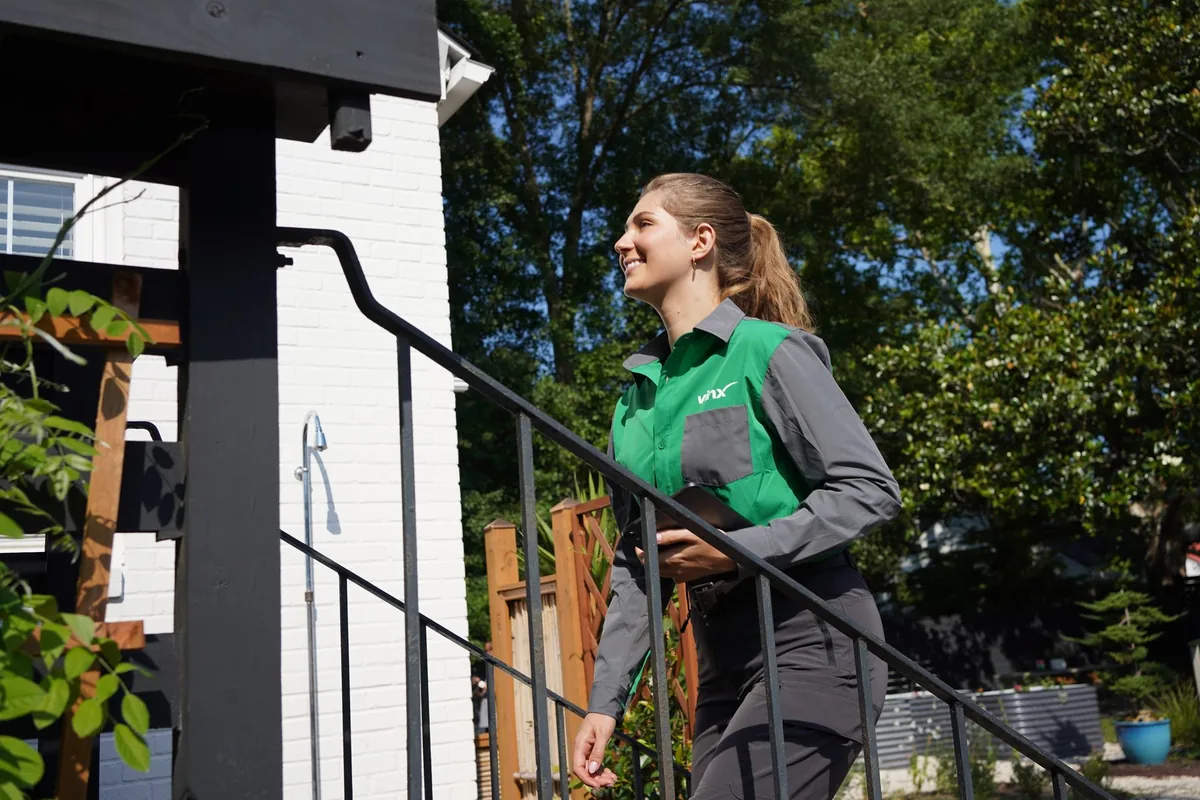
Full Property Inspection: Exterior & Roofline Focus
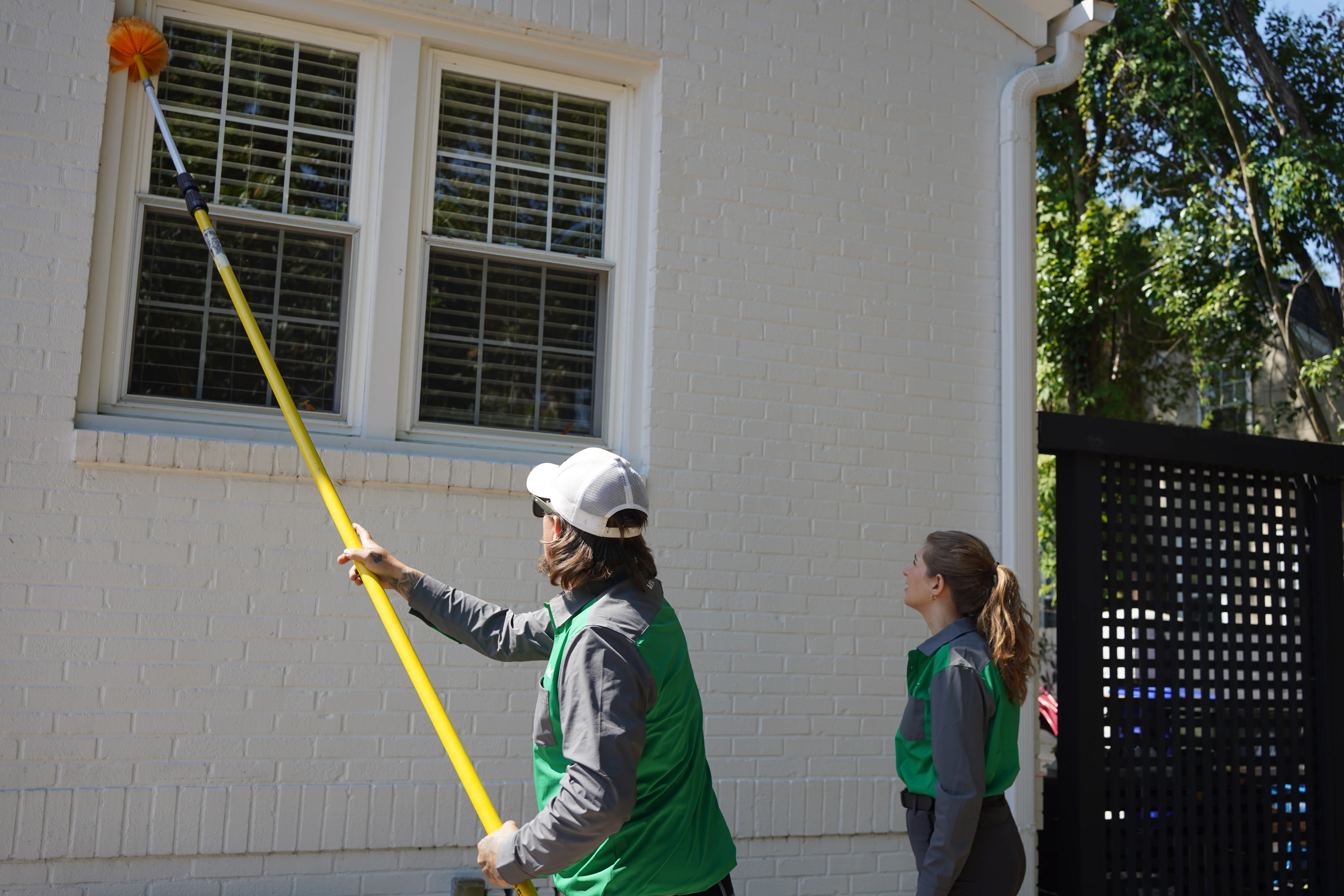
Your Vinx technician inspects the full property with a specific focus on roofline-level entry points, gable vents, soffit condition, ridge cap integrity, pipe boots, and utility penetrations at the upper structure. We also inspect the fence line perimeter, tree canopy contact with the roofline, and ground-level conditions relevant to Norway rat and mouse activity. A written findings report documents every identified entry point and conducive condition. This inspection approach is what separates Mount Pleasant-specific rodent treatment from generic rodent control that starts and ends at the foundation.
Exterior Perimeter & Fence Line Treatment
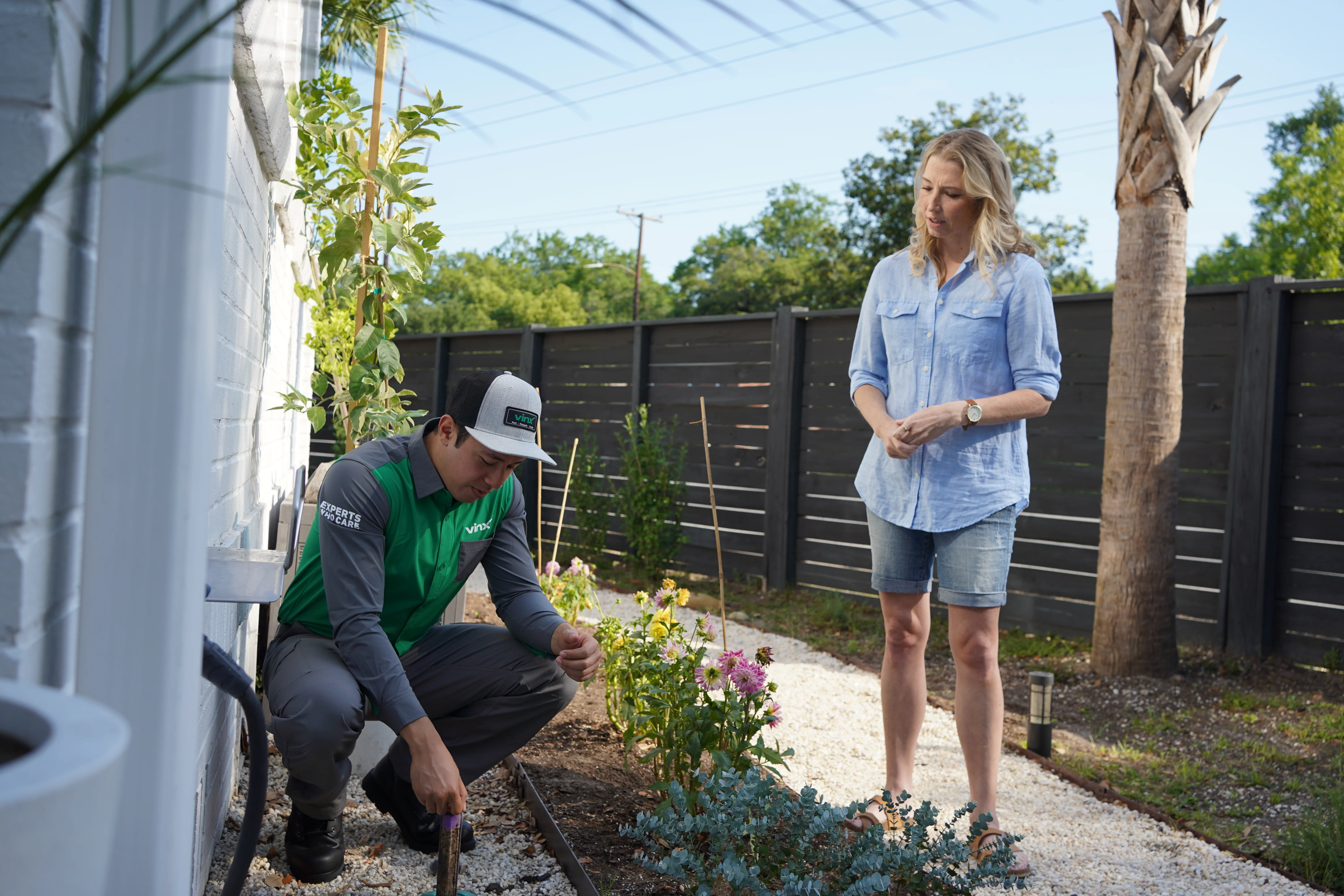
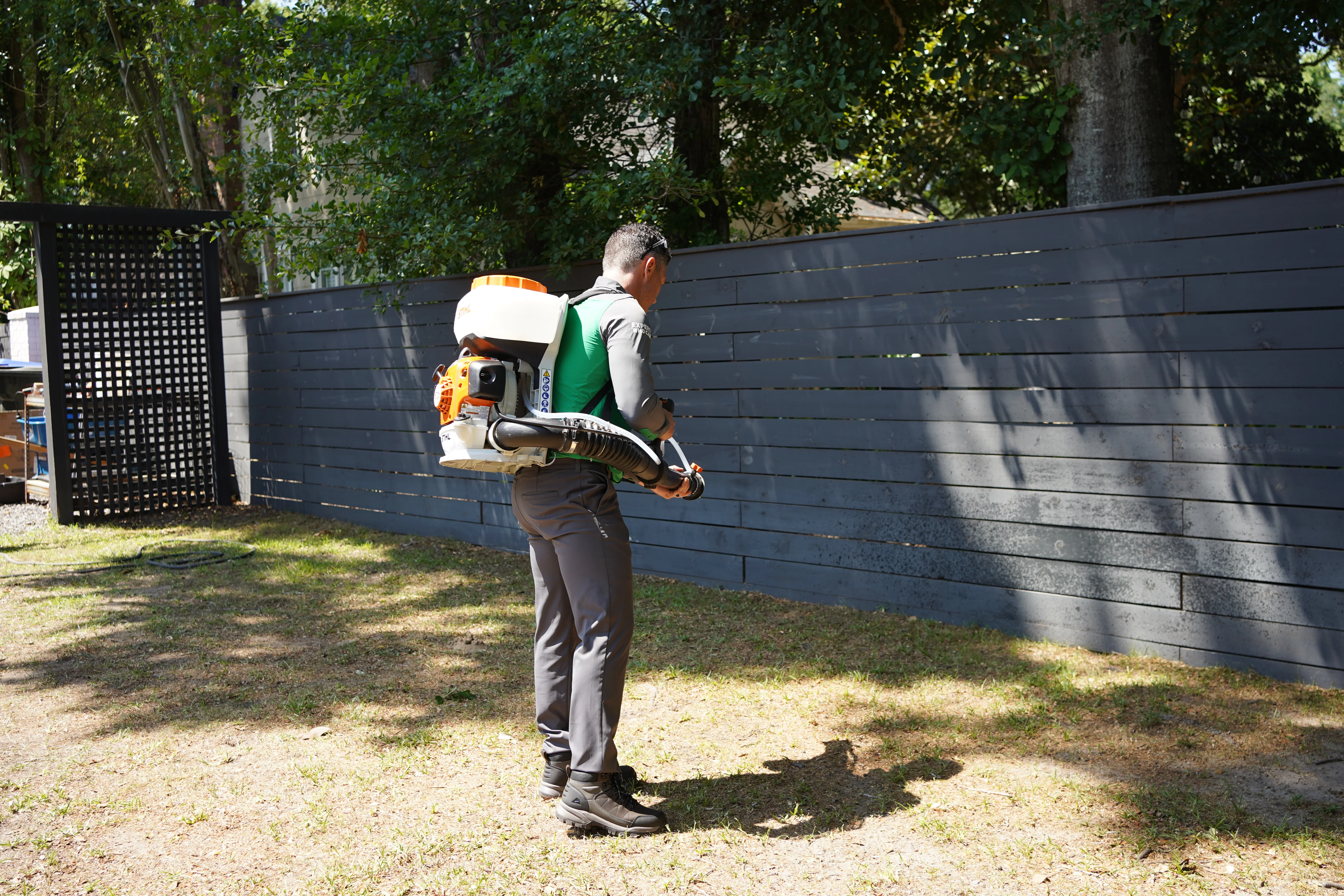
Exterior rodent treatment is included on all Vinx plans. Treatment targets the perimeter of the structure, fence lines, and any travel corridors identified during inspection. Bait stations are placed in tamper-resistant housings at the exterior, positioned along identified travel routes where roof rats and Norway rats are most active. Interior placements are recommended and coordinated separately for confirmed interior infestations.
Exclusion Recommendations
Treatment eliminates the existing population. Exclusion prevents re-entry. After every rodent inspection, your technician provides a written exclusion recommendation report covering all identified entry points, what needs to be sealed, how, and with what materials. Roof rat exclusion focuses on roofline gaps, gable vent screening, and pipe boot replacement. Mouse exclusion focuses on foundation gaps, door sweeps, and utility penetrations. Exclusion work can be completed by your contractor or by Vinx, ask about our exclusion services at your inspection visit.
Interior Treatment (For Active Interior Infestations)
For confirmed interior infestations (roof rats in the attic, mice in wall voids or kitchen areas) interior treatment using snap traps and tamper-resistant bait stations is coordinated in accessible areas. Attic treatments are performed with appropriate protective equipment given the health risks associated with rodent droppings and contaminated insulation. Your technician will advise on safety precautions for the attic space if a heavy infestation is confirmed.
Follow-Up & Free Re-Treatment
Rodent control in coastal Mount Pleasant is an ongoing process, not a one-time fix. New populations migrate from adjacent properties, wooded lots, and marsh-edge habitat continuously. Quarterly Vinx service visits maintain exterior treatment at all identified travel routes and entry points. If rodent activity returns inside your home between scheduled visits, call us, re-treatment is included at no charge on all plans.
Customer Reviews
Trusted by Mount Pleasant Families: 4.8 Stars on Google
Leon was very helpful and knowledgeable. I appreciate him being a key member of the team.
Devin was tremendous and would highly recommend this company to anyone!
Austin was our technician, very professional and punctual.
Always pleasant, helpful, and provides a good service. I feel satisfied after Austin has left my house and I watch his video of the service.
Devin was extremely thorough and professional. Did a great job of trapping the rodents and the exclusion service.
Cameron was great! He was quick but efficient! He answered all of my questions with strong knowledge. Thanks again!
Rodent Pressure in Mount Pleasant
Why Roof Rats Get Into Mount Pleasant Attics
Roof rats (Rattus rattus, also called black rats or ship rats) reached North America aboard sailing ships and remain concentrated in coastal, port, and southern regions. Archaeological work at four Charleston sites documents black rats in the Lowcountry from the colonial period onward. Unlike ground-dwelling Norway rats, roof rats nest in elevated spaces, which is why they are the species behind most attic and roofline infestations here.
Mature tree canopy is a roof rat highway. Old Village, Belle Hall, I’On, and much of the established residential stock in Mount Pleasant is characterized by mature live oaks whose branches extend over and onto residential rooflines. Roof rats are exceptional climbers, they move through tree canopy with the ease of squirrels, using branches that touch or overhang rooflines as direct bridges into the structure.
Tidal vegetation provides established habitat. The marsh-edge vegetation along Shem Creek, the Wando River corridor, and throughout Rivertowne and Seaside Farms provides established roof rat habitat. Roof rats from these marsh-edge colonies migrate into adjacent residential properties as populations expand, traveling along fence lines from the marsh edge to the structure.
3 Rodent Species in Mount Pleasant
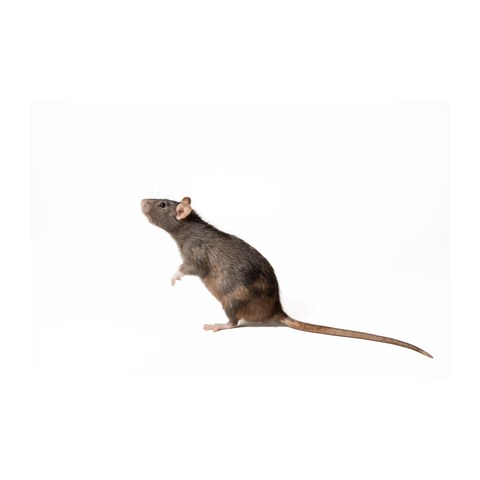
Roof Rat (Rattus rattus)
Size: 6–8 inches body, long thin tail. Slender build, large ears, pointed snout.
Behavior: Arboreal, climbs readily. Travels via fence lines, power lines, tree canopy. Enters homes at roofline level through gaps as small as half an inch. Nests in attic insulation, wall voids.
Signs: Scratching sounds overhead at night. Spindle-shaped droppings ~½ inch long. Gnaw marks on wiring. Greasy rub marks along travel routes.
Why it matters: Gnawing on electrical wiring is a documented fire hazard. A pair can produce 40+ offspring per year.
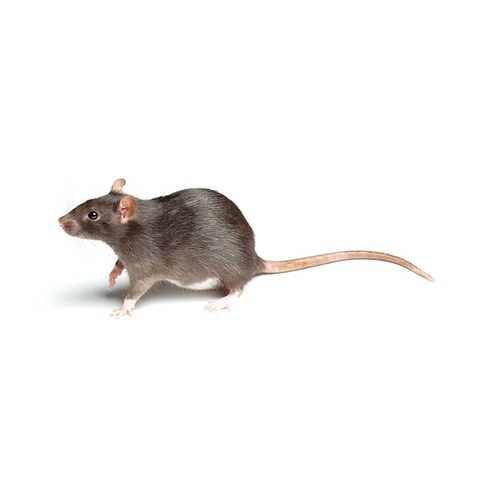
Norway Rat (Rattus norvegicus)
Size: 7–9 inches body, heavy-bodied, tail shorter than body. Blunt snout, small ears.
Behavior: Ground-level, burrows under foundations, crawlspaces, debris piles. Less common in elevated coastal areas but present in older neighborhoods with ground-level debris or crawlspace access.
Signs: Burrow entrances near foundation, under decking. Larger blunt-ended droppings (~¾ inch). Gnaw damage at ground level.
Where found in MP: More common in Wando and Cainhoy rural lots, older crawlspace-foundation homes.

House Mouse (Mus musculus)
Size: 2–3 inches body, large ears relative to body. Dusty brown-gray.
Behavior: Highly adaptable, nests in wall voids, kitchen cabinets, garage storage. Can squeeze through gaps as small as a quarter inch. A pair can produce 6–10 litters per year with 5–6 pups per litter.
Signs: Rice-grain-sized droppings near food storage, under sinks, behind appliances. Gnaw marks on food packaging and wiring. Musky odor in enclosed spaces.
Why it matters: Spread Salmonella and lymphocytic choriomeningitis virus, and contaminate far more food than they eat. Hantavirus is carried by deer mice, not house mice.
Active construction displaces established populations. Every time development breaks ground in Carolina Park, Oyster Point, or along the Highway 41 corridor, construction equipment disturbs established rodent nesting sites and drives displaced populations into adjacent established neighborhoods.
Growth keeps the food supply rising. Between 2013 and 2017 the Town’s own service figures show garbage cans tipped per week climbing from about 30,100 to 33,732, and tons of garbage and trash collected rising from 5,655 to 17,592. More households, more waste, more to forage. Mount Pleasant is also still on roughly 1,000 septic systems, which the Town flags as an aging public health concern, and Charleston County’s hazard mitigation plan notes that standing water under houses attracts cockroaches and vermin. Rodents follow food and moisture, and this town supplies both.
Their presence is usually detected far too late. A roof rat colony can establish in an attic and grow for months before the homeowner notices any signs. They are neophobic, wary of new objects, and this is more pronounced in roof rats than in Norway rats, so they often ignore traps and bait for days or weeks. The fix is to bait traps and leave them unset until the rats feed readily, then set them. By the time scratching sounds are heard overhead, the colony is established, insulation has been contaminated, and wiring may already bear gnaw marks.
Warning Signs
Signs of Rodent Activity in Your Mount Pleasant Home
Scratching Sounds Overhead
The most common first sign of roof rat activity. Scratching, scurrying, or rolling sounds in the ceiling or attic, typically at night when roof rats are most active. Often mistaken for squirrels.
Spindle-Shaped Droppings
Roof rat droppings are approximately half an inch long with pointed ends. Found along travel routes, in attic insulation, and near entry points. Distinguishable from the larger Norway rat droppings and tiny rice-grain mouse droppings.
Gnaw Marks on Wiring
Roof rats gnaw on electrical wiring in the attic and wall voids, one of the most dangerous consequences of an established infestation. Exposed wiring is a documented fire hazard. If you see wire insulation stripped in the attic, treat this as urgent.
Greasy Rub Marks
Roof rats leave greasy brown smear marks along surfaces they travel regularly, rafters, joists, pipe runs, and wall edges in the attic. These rub marks are caused by oils in their fur and indicate established travel routes.
Entry Points at Roofline
Gaps around gable vents, soffit damage, missing or damaged ridge cap flashing, open pipe boots on the roof surface, and gaps where utility lines enter the structure at roofline level are all common roof rat entry points.
Disturbed Attic Insulation
Tunneling, nesting cavities, and general disturbance of attic insulation. Roof rat nests are made from shredded insulation, paper, and soft materials. Heavily contaminated insulation may require full replacement.
Where Roof Rats Enter
Roof Rat Entry Points in Mount Pleasant Homes
Roof rats enter at elevation, not at ground level. Every entry point below is at roofline level or above. If a pest company inspects your foundation perimeter and calls it a thorough rodent inspection in Mount Pleasant, they’ve looked in the wrong place.
Gable Vents
Damaged or unscreened gable vents are one of the most common roof rat entry points in Mount Pleasant. Standard plastic gable vents deteriorate in coastal UV and humidity, cracks and gaps as small as half an inch are sufficient for entry.
Soffit Gaps
Gaps where soffit panels meet fascia boards, or where soffit material has pulled away from the structure, provide direct attic access. Common in older homes throughout Old Village and established neighborhoods.
Ridge Cap & Roof Flashing
Damaged or lifted ridge cap sections and improperly sealed roof flashing around chimneys, skylights, and dormers create entry opportunities. Coastal wind and UV exposure accelerates deterioration.
Pipe Boots
The rubber boots sealing plumbing vent pipes where they exit through the roof surface degrade over time, leaving a gap between the boot and the pipe. This is a frequently overlooked and very commonly used roof rat entry point.
Utility Line Penetrations
Where electrical, cable, and HVAC lines enter the structure at roofline or upper wall level, gaps around unsealed penetrations provide entry. Roof rats follow utility lines as travel routes.
Tree Branch Contact
Branches touching or overhanging the roof are direct bridges. UC IPM recommends removing overhanging limbs within 6 feet of the roofline, and keeping shrubs at least 2 feet off the structure. In Mount Pleasant you cannot simply take the tree down: any tree 16 inches in diameter or more is protected and needs Town approval, and at 24 inches or more it is historic, and removal requires an arborist report and/or a variance from the Board of Zoning Appeals. Prune instead, no more than 25% of the live crown in a year, and never top a tree.
Rodent Damage
What Roof Rats and Rodents Do to Mount Pleasant Homes
🔥 Electrical Fire Risk
Roof rats gnaw the insulation off electrical wiring in attics and wall voids, and bare conductors can arc. You will see a claim online that rodents cause 20% of house fires of undetermined cause; it is not an NFPA figure and we will not repeat it. What NFPA does report is roughly 32,620 home fires a year involving electrical distribution and lighting equipment (2015–2019). Fire-cause coding never breaks out rodents, which is exactly why no honest national percentage exists.
🏠 Insulation Contamination
Roof rats nest in and tunnel through attic insulation, compressing and contaminating it with droppings, urine, and nesting material. Heavily contaminated insulation loses R-value and may require full replacement, a significant remediation cost.
🦠 Disease Transmission
Roof rats and Norway rats are associated with leptospirosis, salmonellosis, murine typhus, and rat-bite fever, spread through droppings, urine, and contaminated surfaces. One correction worth making: hantavirus pulmonary syndrome is carried by deer mice, not rats, and 94% of US hantavirus cases have occurred west of the Mississippi. Rat droppings in an attic are still a real problem, and can become airborne when the HVAC runs.
💧 Structural & Plumbing Damage
Gnawing on PVC plumbing pipes and HVAC ductwork in the attic causes leaks and HVAC efficiency loss. In coastal Mount Pleasant where crawlspace and attic humidity is already elevated, plumbing leaks cause rapid secondary damage.
Rodent Risk by Neighborhood
Rodent Pressure Across Mount Pleasant Neighborhoods
Old Village: HIGHEST PRESSURE
Mount Pleasant’s highest roof rat pressure neighborhood. Mature live oak canopy throughout Old Village provides an established aerial highway system, branches touching or overhanging rooflines on many properties give roof rats direct access without ever touching the ground. Older construction with deteriorating soffit, aged gable vents, and less rigorous construction sealing provides abundant entry opportunities. Quarterly Vinx exterior treatment plus exclusion assessment is essential for Old Village properties.
Wando & Cainhoy: HIGHEST PRESSURE
Larger lots with extensive wooded perimeters and undeveloped adjacent land create conditions where both roof rats and Norway rats establish at high densities. Less manicured vegetation along property boundaries means more undisturbed habitat immediately adjacent to structures. Roof rats traveling from wooded edges to residential structures via fence lines are extremely common. Properties here with fruit trees or bird feeders carry the highest individual risk, both are major food attractants for roof rats.
Seaside Farms & Rivertowne: ELEVATED PRESSURE
Marsh-edge vegetation along the tidal boundaries of both neighborhoods provides established roof rat habitat. Properties backing directly onto marsh or wooded riparian buffers see the most consistent migration of roof rats from the marsh vegetation into adjacent structures. Fence line treatment is particularly important for these properties, the fence line between the yard and the marsh-edge vegetation is the primary travel corridor.
Carolina Park & Oyster Point: ELEVATED PRESSURE
Active construction continuously displaces established rodent populations from undeveloped land into adjacent residential properties. New construction homeowners surrounded by active development sites are regularly dealing with displaced roof rat and Norway rat populations. This is a predictable pattern that repeats throughout Mount Pleasant’s active development zones.
Belle Hall & Park West: MODERATE PRESSURE
Established residential density with maintained landscaping means lower individual property risk than wooded-edge neighborhoods, but roof rat migration from adjacent properties and the wooded preservation areas bordering both neighborhoods means pressure is consistent. Bird feeders and fruit trees are the most common attractants in Belle Hall and Park West properties with recurring roof rat issues. Quarterly exterior treatment maintains control effectively in these neighborhoods.
I'On: MODERATE PRESSURE
I'On’s design includes significant natural and semi-natural areas between homes, mature canopy, naturalized planting zones, and marsh views that create good roof rat habitat adjacent to residential structures. Properties on the marsh-facing side of I'On carry higher pressure than those in the interior. Tree canopy overhanging rooflines is a recurring issue in several I'On micro-neighborhoods. Annual roofline inspection plus quarterly exterior treatment is appropriate.
Kid & Pet Safe
Our Treatments Are Safe for Your Whole Family: Including the Furry Members
Every product we use is EPA-registered and applied strictly at labeled rates by licensed technicians. We take the guesswork out of safety so you can feel confident letting kids and pets back into treated areas quickly.

EPA-Registered Products Only
All products we apply are EPA-registered and used strictly per label requirements. Our licensed technicians are trained to apply the right product in the right place at the right rate, every time.
Dry Time Before Re-Entry
Exterior spray treatments dry in 30–60 minutes. Once dry, treated surfaces are safe for children and pets to contact. Your technician will confirm the all-clear before leaving your property.
Tamper-Resistant Bait Stations
All exterior bait stations use tamper-resistant housings that prevent children and pets from accessing rodenticide, placed only along identified travel routes away from family areas.
Botanical Options Available
Have specific sensitivities? Ask your technician about our plant-derived treatment options. We offer botanical alternatives for households that prefer a more natural approach.
Have a concern about products used near your pets or children? Call 855-800-8469 and we’ll walk you through exactly what we use and why it’s safe.
Explore More
More Pest Control Services in Mount Pleasant

Pest Control Mount Pleasant
Year-round protection plan

Ant Control Mount Pleasant
Household ants & others

Mosquito Control Mount Pleasant
Monthly barrier treatments

Termite Control Mount Pleasant
Bait systems & liquid treatment

Spider Control Mount Pleasant
All spider species covered

Bed Bug Treatment Mount Pleasant
Heat & liquid treatments

Cockroach Control Mount Pleasant
All cockroach species covered

Wasp Control Mount Pleasant
Nest removal & prevention

Tick & Flea Control Mount Pleasant
Yard & pet protection
Exterminator Mount Pleasant
Same-day local exterminators
Frequently Asked Questions
Rodent Control in Mount Pleasant: Your Questions Answered
Exterior rodent treatment is included on all Vinx plans starting at $49/month for the HomeGuard quarterly plan. You don’t need a separate rodent service, mice and rats (exterior) are covered on every visit as part of your standard plan. For active interior infestations requiring additional interior treatment or a full exclusion program, your technician will assess and advise on next steps at your inspection visit.
The dominant rodent species in coastal Mount Pleasant is the roof rat (Rattus rattus), not the Norway rat that most people picture when they think of rats. Roof rats are arboreal, they climb trees, travel fence lines and power lines, and enter homes at roofline level through gable vents, soffit gaps, pipe boots, and ridge cap damage. Norway rats are also present, primarily in areas with ground-level habitat. House mice are common throughout all Mount Pleasant neighborhoods year-round.
Both make scratching and scurrying sounds in the attic, but there are reliable differences. Squirrels are active during daylight hours; roof rats are nocturnal. If the sounds are at night, roof rats are far more likely. Squirrel droppings are larger and more barrel-shaped; roof rat droppings are spindle-shaped at approximately half an inch. Squirrels typically enter at larger openings; roof rats can enter through gaps as small as half an inch. If you’re unsure, call us, your technician will identify the species from droppings, entry point evidence, and activity patterns during the inspection.
Both are necessary for lasting control. Treatment, traps and bait, addresses the existing population. Exclusion, sealing entry points, prevents new individuals from entering after the existing population is eliminated. Treatment without exclusion means new roof rats from adjacent properties, wooded lots, and marsh-edge habitat will re-enter through the same gaps as soon as the treated population is gone. After every rodent inspection, Vinx provides a written exclusion recommendation report identifying every entry point that needs to be sealed.
Roof rats are present year-round in coastal Mount Pleasant’s mild climate, but indoor pressure increases significantly in fall, September through November, as outdoor temperatures begin to drop and roof rats seek warmer nesting sites inside structures. Spring also sees increased activity as winter colonies produce offspring and populations expand. The sounds homeowners most commonly notice, scratching overhead at night, typically peak in October and November as roof rats consolidate into attic nesting sites for the cooler months.
Yes. All exterior rodent bait stations are tamper-resistant, the bait is locked inside a housing that prevents access by children, pets, and non-target animals. Interior placements use snap traps or tamper-resistant bait stations positioned in inaccessible locations. Your technician advises you of all placement locations and any relevant precautions at every visit. We work with families with young children and dogs every day and rodent treatment safety is built into every placement decision.
The most effective individual steps are: trim tree branches to maintain at least 4 feet clearance from the roofline (removing the aerial bridge roof rats use); inspect and repair gable vents, soffit gaps, and pipe boots annually; remove food attractants, bird feeders, fallen fruit from citrus or fig trees, unsecured garbage or compost; and maintain quarterly professional exterior treatment. No single measure is sufficient on a coastal Mount Pleasant property near established habitat, the combination of exclusion, attractant removal, and regular treatment delivers lasting control.
Not in Mount Pleasant, not without permission. Any tree 16 inches in diameter or larger is protected and requires Town approval to remove, and at 24 inches or larger it is a historic tree, and removal requires an arborist report and/or a variance from the Board of Zoning Appeals. Pine trees are their own case: protected at 24 inches or more, removable below that. Sweet gum, Callary pear, river birch, mimosa, chinaberry, Chinese tallow, camphor and white poplar can be removed without a permit at any size unless they sit in a buffer, right-of-way or easement. The good news is you do not need to remove the tree. UC IPM’s guidance is to clear overhanging limbs within 6 feet of the roofline, and pruning is allowed, with limits: no more than 25% of the live crown in a single year, and topping a tree is not an acceptable practice. Measure diameter at 4.5 feet up the trunk before you call anyone.
Because Mount Pleasant homes are built to let water through underneath. The Old Village stormwater ordinance requires openings in solid crawlspace perimeter walls so floodwater can move unimpeded, and caps fully enclosed area below the design flood elevation at 200 square feet. Those openings are there for good reason, and they are also a ground-level entry route. Add a damp crawlspace after a storm and you have shelter, water, and cover in one place. We inspect both elevations, roofline and foundation, because in this town treating only one is treating half the house.
Vinx services all of Mount Pleasant for rodent control including Old Village, Snee Farm, Hobcaw Point, Carolina Park, Oyster Point, Belle Hall, Park West, I’On, Seaside Farms, Rivertowne, Wando, and Cainhoy. We also service nearby Isle of Palms, Sullivan’s Island, Awendaw, and McClellanville.
Service Coverage
Rodent Control Across Mount Pleasant & the Lowcountry
Quarterly exterior rodent treatment across all of Mount Pleasant and surrounding Lowcountry communities, included on every Vinx plan.
Serving the Greater Mount Pleasant Area