Exterminator in Mount Pleasant, SC
Licensed exterminators for Mount Pleasant homes and businesses — next-day appointments, an inspection matched to your home’s building era, and a guarantee behind the work.
Get Started in 60 Seconds
Choose what’s easiest for you
Request a Quote
We usually respond in 2 minutes
Call (843) 305-4029
Get a Live Person (no AI agents here!)
Sign Up Online
Get pricing and schedule now





Welcome to Vinx Pest Control
A Company That Actually Backs What It Says
At Vinx, we combine professional-grade treatments with a level of service most pest control companies don’t offer. Local technicians, fast response times, and a guarantee that actually means something.
“I’m not passionate about killing bugs. I’m passionate about customer service. At Vinx, you get experts who show up, do the job right, and stand behind every visit. No runaround, no fine print.”

Founder & Owner, Vinx Pest Control
PROTECTION PLANS
Mount Pleasant Exterminator Pricing
100% money-back guarantee on every plan.

Standard Residential Protection
- 4 Seasonal Treatments Per Year
- 50+ Covered Pests
- Interior, Exterior & Yard Treatment
- Unlimited Free Re-Services
- 100% Money-Back Guarantee
- Fire Ant Yard Guarantee
- Flea & Tick Coverage
- Mosquito Treatments

Upgraded Yard Protection
- 6 Home & Yard Treatments Per Year
- 50+ Covered Pests
- Interior, Exterior & Yard Treatment
- Unlimited Free Re-Services
- 100% Money-Back Guarantee
- Fire Ant Yard Elimination Guarantee
- Flea & Tick Elimination Guarantee
- Mosquito Treatments

Most Comprehensive Protection
- 9 Treatments Per Year
- 50+ Covered Pests
- Interior, Exterior & Yard Treatment
- Unlimited Free Re-Services
- 100% Money-Back Guarantee
- Fire Ant Yard Elimination Guarantee
- Interior Flea & Tick Coverage
- 8 Mosquito Treatments (Mar–Nov)
- Free Bed Bug Treatments if Needed*
*Starting rates vary by home size and area. All plans billed monthly.
Request Your Free Pest Control Quote
Fill out the form below and a Vinx team member will reach out within 2 minutes during business hours.
Prefer to talk? Call (843) 305-4029 for a live person, no AI agents.
Our Process
How Vinx Exterminators Work a Mount Pleasant Property: Step by Step

Inspection & Reporting
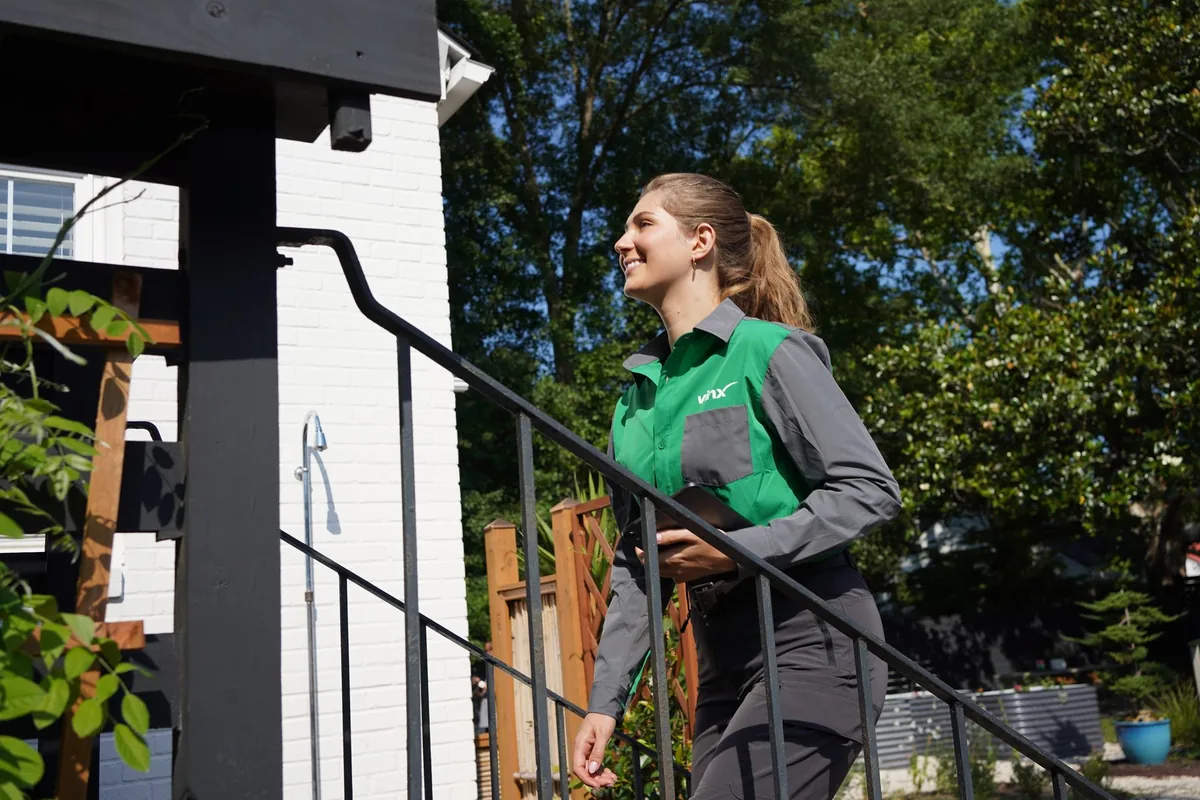
An exterminator visit in Mount Pleasant starts with figuring out which Mount Pleasant you live in. A 1759 Old Village house, a mid-century Coleman Boulevard rebuild and a 2020s slab each hide their pests differently, so nothing gets applied until a technician has identified the pest, traced it to its harborage and noted the conditions feeding it — including whether it is the native eastern subterranean termite or a Formosan colony, since Charleston County is on Clemson’s documented Formosan list. You hear what we found, in plain terms, with a firm price, before any work begins.
Exterior Foundation Treatment
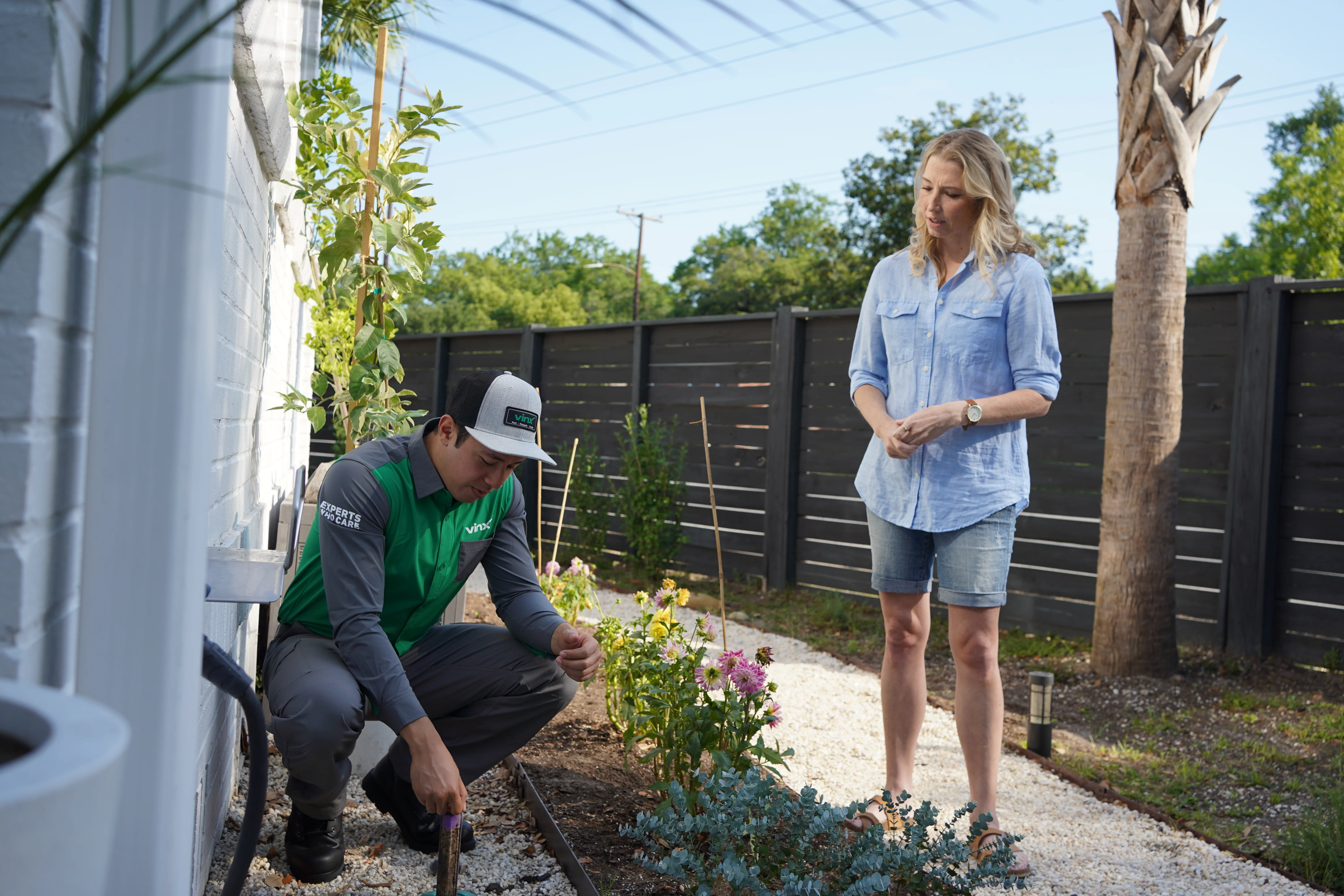
With the problem identified, the exterior gets a defensive line so the next wave never makes it inside. We apply a micro-encapsulated barrier around the foundation, three feet up and three feet out, at the slab gaps, weep holes and thresholds insects actually use to enter. On Old Village masonry that has moved for two centuries, and on any lot with a large protected oak, the foundation and soil line are where ninety-four percent of infestations in a Charleston-area study actually began.
Yard Treatment
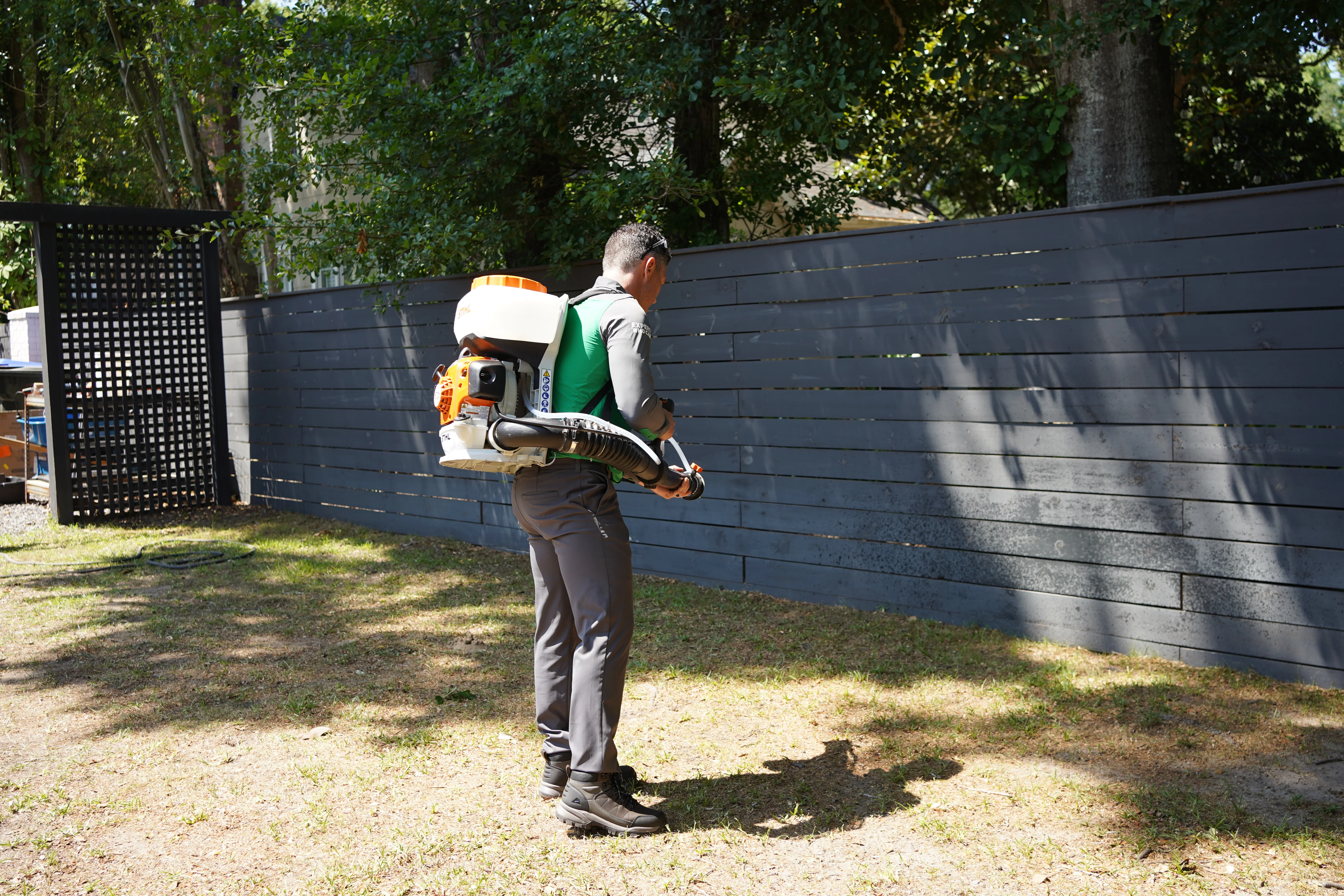
The yard gets treated up to thirty feet out, because most of what ends up indoors staged outside first. In Mount Pleasant that includes the standing canopy itself — a large oak can host a Formosan colony in living wood and still look sound from the street — so a suspect tree gets inspected and treated before any removal permit is even discussed, never the reverse.
Sweep & Treat Eaves
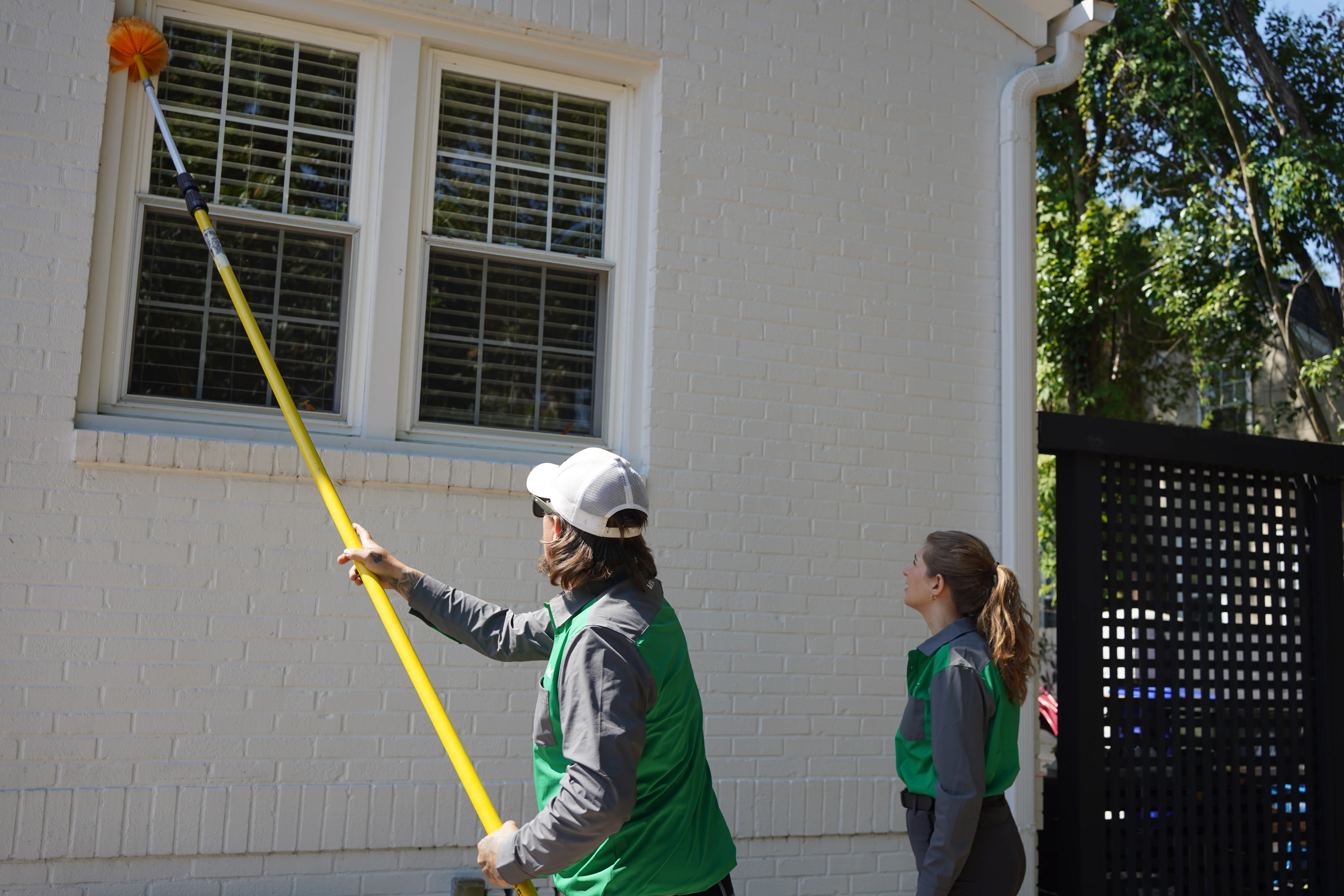
Rooflines are swept clear of webs and early wasp nests on every visit, then spot-treated with a residual product so returning insects contact the treatment instead of rebuilding. The eaves pass doubles as an inspection of the routes overhead, which matters most on Old Village and downtown building stock where decades of alteration have opened more entry points than a ground-level look alone would catch.
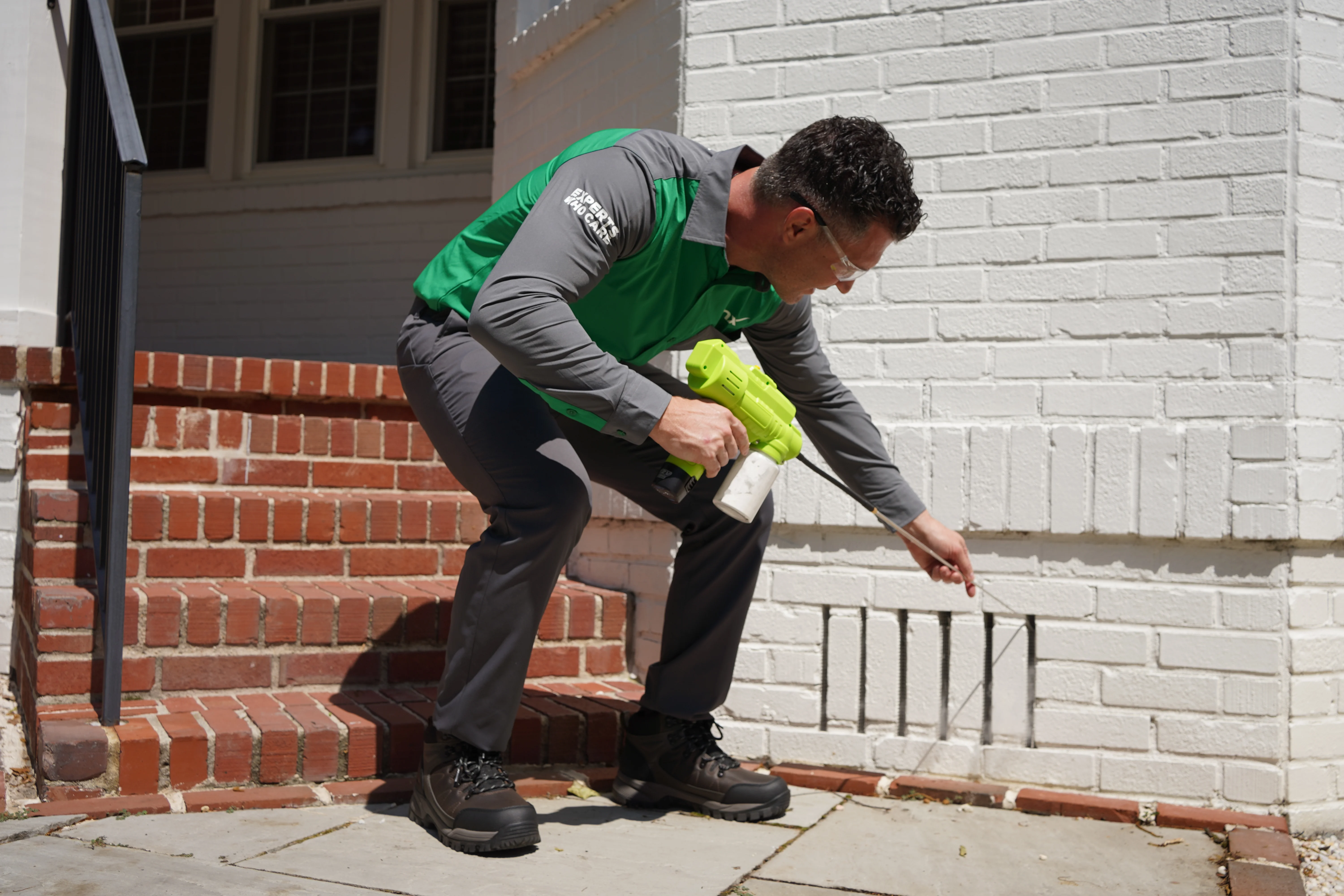
Power Dust Injection
Cracks, weep holes, pipe penetrations and expansion joints get a dust product driven deep with a compressor tip. This is the treatment that reaches wall voids, which matters across Mount Pleasant’s five decades of housing stock — from raised Old Village masonry to a 1980s subdivision whose pre-construction soil treatment has long since expired.
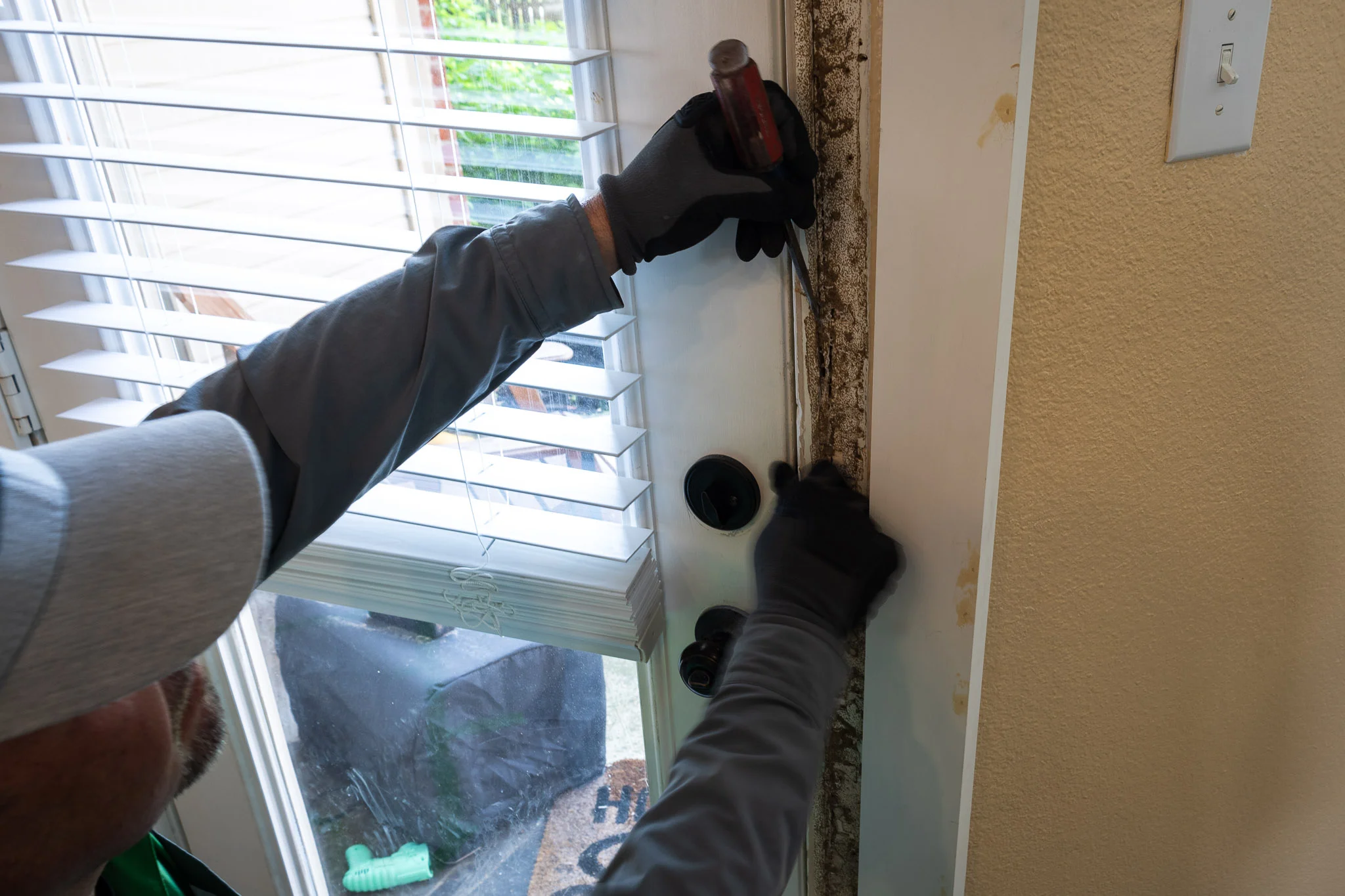
Interior Treatment (If Needed)
Where an infestation is already established indoors, we treat the interior directly and document every visit in writing. Because the housing here spans a 1759 farmhouse to a slab poured last year, that written record is what actually tells a future buyer, lender or your own memory which era of the house was treated and when.
Conducive Condition Report
At the end of every visit, your technician documents any conditions increasing pest pressure, moisture entry points, foundation gaps, vegetation contact, clogged gutters, standing water near the foundation. Mount Pleasant's coastal environment creates specific conducive conditions that most companies never flag. We do, every single time.
Customer Reviews
Trusted by Mount Pleasant Families: 4.8 Stars on Google
Jack did an excellent job He was very professional, efficient and friendly
We usually just have the outside of our house sprayed, but the second I told Jack that we'd seen a few bugs inside, he immediately grabbed his gear and took care of the inside as well. Couldn't ask for better service.
Jack came out to take care of my quarterly pest control treatment. During his visit he really took the time to explain to me all of what the service entails, what type of products he uses and tips for improving my house/yard to avoid pests from making my home their home. He treated my property with respect and made sure I was happy before leaving.
Very detailed about what was done. I have been with them for awhile and am satisfied
Austin did an excellent job I had problems with spiders he made sure he sprayed every inch of my home this is there second time coming out I love this company.
Austin has always been an awesome service technician, He is willing to listen to our concerns when we have any and can be trusted to do quality work weather we are at home or not. You can't go wrong with Vinx Pest Control
Mount Pleasant Pest Facts
Why Pest Control in Mount Pleasant Is a Year-Round Commitment
Last updated: September 5, 2026
In 1970 this was a town of about 6,155 people. At the 2020 census it was 92,799 — roughly a fifteenfold increase in fifty years — and it means Mount Pleasant contains almost every American construction era at once: a 1759 house in the Old Village, a 1970s ranch, an eighties subdivision and a slab poured last year, all inside one municipality. Census QuickFacts records the trajectory in full: 6,155 in 1970, 30,108 by 1990, 47,900 in 2000, 67,843 in 2010 and 92,799 in 2020, now the sixth-largest municipality in South Carolina — not fourth-largest, which is a stale 2010 figure that still circulates. Which layer of the town you live in decides your pest plan: a pre-war house sits on a raised foundation with masonry that has moved for two centuries, mid-century stock is wood frame over ventilated crawl space, a 1980s or 90s subdivision has a pre-construction soil treatment long since expired, and a 2020s build has almost nothing worth worrying about yet.
6 Reasons Mount Pleasant Calls an Exterminator

Palmetto Bugs
Palmetto bugs — American cockroaches — work moisture-heavy crawl spaces from the Old Village out to newer subdivisions, and the older the housing stock, the more entry points a settling foundation tends to open. Treatment goes to the harborage with gel bait and growth regulator rather than chasing the insect on the wall.
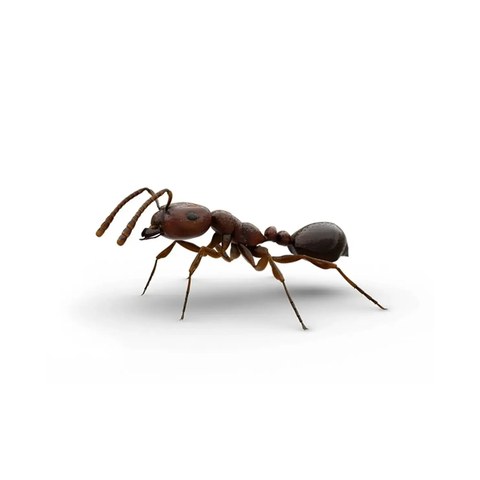
Fire & Argentine Ants
Fire ants and Argentine ants both turn up on disturbed and graded ground across Mount Pleasant’s newer construction, while odorous house ants work older foundations after rain. Direct mound treatment paired with a yard-wide bait program handles fire ants; Argentine colonies need the whole trail treated, not just the visible one.

Termites
Identification comes first here, because Charleston County is on Clemson’s documented Formosan termite list alongside the native eastern subterranean termite. Ninety-four percent of infestations in a Charleston-area study started at ground level, so the inspection goes to the soil line first, then the canopy — and a suspect protected oak gets treated before any removal is even discussed.

Mosquitoes
Mosquito pressure follows Mount Pleasant’s low-lying, marsh-adjacent ground, and roughly half the year’s rain falling June through September keeps water standing longer than people expect. Larvicide on standing water paired with a barrier treatment on shaded resting cover is what actually knocks the population down between visits.

Rodents
Rodents work the older building stock downtown and near Coleman Boulevard, and move toward newer subdivisions whenever nearby construction clears their outdoor cover. Exclusion on the structure plus exterior trapping and monitored bait stops the cycle rather than just reducing the count temporarily.

Spiders
Spider calls in Mount Pleasant are almost always common house species rather than anything dangerous, and identification comes before any treatment priced at widow rates, and worth knowing: the brown recluse is not established in the Lowcountry, so a “recluse” here is almost always a southern house spider or a wolf spider. A protected oak canopy is also spider habitat, so an eaves and canopy check is part of every visit.
Mount Pleasant protects its trees, and the rules are species-specific rather than blanket. Under the Town’s tree protection rules, residential trees are protected at 16 inches diameter at breast height, while pines are protected only at 24 inches, with historic trees at 24 inches or more requiring an arborist report or a variance from the Board of Zoning Appeals. The benefit is obvious on every live-oak street; the pest consequence is less obvious. A USDA Forest Service co-authored survey around Charleston found thirty-seven percent of surveyed forest patches infested with Formosan subterranean termites, with oaks and maples the most damaged genera, and the species hollows living trunks outward from the dead heartwood — so a tree can look sound from the street and be substantially empty. If a large oak near the house is suspect, the order is inspect, treat, then apply for removal if still warranted, never the reverse.
Charleston County is on Clemson’s documented list of the sixteen South Carolina counties with Formosan colonies, and Clemson HGIC dates the species’ introduction in Charleston to the mid-1950s. This is not the Upstate, where the pitch usually overstates the risk — here it is real. Two Clemson findings shape the work: ninety-four percent of infested buildings in a Charleston study were entered from ground-based colonies rather than aerial ones, so inspections are soil-first regardless of the canopy, and Formosan swarms run mid-May into July in the evening toward lights, a different signature from the native eastern subterranean termite’s daytime spring swarm. Clemson still cautions that a listed county does not mean uniform presence, so an inspection settles your own property rather than the county doing it for you.
This landscape was farmed long before it was subdivided, and that leaves a legacy in the soil. The National Park Service describes Charles Pinckney National Historic Site as a 28-acre remnant of an original 715-acre plantation known as Snee Farm, and Boone Hall nearby retains a slave street described as one of the few surviving in South Carolina. The practical residue is ground that was cleared, worked and drained for agriculture, then graded for housing — old field ditches, filled low ground and altered drainage lines persist under subdivisions, which is why two houses on the same street can behave completely differently after heavy rain, and why we walk the lot rather than assuming the neighborhood.
Pest Pressure by Era & Location
Know Your Neighborhood’s Risk in Mount Pleasant
The Old Village: Two Centuries of Moving Masonry
The Old Village Historic District was listed on the National Register in 1973, covering thirty blocks between Charleston Harbor, Shem Creek, Royal Avenue and McCants Drive, with its oldest surviving house dating to 1759. Raised foundations and masonry that has settled for two centuries mean the inspection starts at the substructure and masonry penetrations, on its own schedule rather than a standard checklist.
Mid-Century Stock: Fifty Years of Alterations
Housing closer to Coleman Boulevard is wood frame over ventilated crawl space carrying fifty years of re-plumbing and additions. The inspection goes to the crawl space, sill line, grading and any wood-to-soil contact created by a later deck, patio or utility trench.
Subdivisions With an Expired Soil Treatment
An eighties or nineties subdivision was built with a pre-construction soil treatment that has long since expired, and decades of decks, trenching and rebuilt beds have had time to bridge whatever barrier remains. The inspection checks the slab edge and penetrations, plus the year that original treatment went in.
Protected Canopy: Habitat, Not Just Scenery
Any lot with a large protected oak carries a standing habitat that can host a Formosan colony in living wood while looking sound from the street. Under Town rules those trees need an arborist report or a variance before removal, so the sequence is inspect, treat, then apply — never the reverse.
The Islands We Cover From Here
Sullivan’s Island is accreting land under a 1991 conservation deed, with 27.3% of housing built before 1940, while Isle of Palms is mostly rented, with about 40% of dwellings holding a rental license. Both are genuinely different jobs from the mainland town, which is why each has its own dedicated page.
Complete Coverage
What Our Mount Pleasant Exterminators Treat
Every common Lowcountry pest covered under one recurring service plan
Palmetto Bugs
Year-round pressure. Drain lines, crawlspace vents, plumbing penetrations.
All Plans
Fire & Argentine Ants
Sandy coastal soil & new construction displacement. Requires Plus or Platinum.
Plus & PlatinumSpiders
Black widow, wolf spider. Cobweb removal included every visit.
All Plans
Wasps & Hornets
Nest removal from soffits and eaves. Persistent in warm coastal climate.
All Plans
Fleas & Ticks
Exterior flea/tick treatment. Interior flea covered in Platinum.
Plus & PlatinumMosquitoes
Monthly treatment Mar–Oct. Tidal proximity demands this level.
Platinum OnlyRodents
Roof rats, fence lines, power lines, roofline gaps. Exterior bait stations.
All PlansTermites
Formosan termite core range. Sentricon TotalDefense from $35/mo+.
Add-On
Bed Bugs
Covered after 12 months of Platinum service.
Platinum 12moKid & Pet Safe
Our Treatments Are Safe for Your Whole Family: Including the Furry Members
Every product we use is EPA-registered and applied strictly at labeled rates by licensed South Carolina technicians. We take the guesswork out of safety so you can feel confident letting kids and pets back into treated areas quickly.

EPA-Registered Products Only
All products we apply are EPA-registered and used strictly per label requirements. Our licensed technicians are trained to apply the right product in the right place at the right rate, every time.
Dry Time Before Re-Entry
Exterior spray treatments dry in 30–60 minutes. Once dry, treated surfaces are safe for children and pets to contact. Your technician will confirm the all-clear before leaving your property.
Interior Treatment On Request
We treat only what’s needed, where it’s needed. Gel baits and crack-and-crevice applications keep products away from areas pets and children frequent most.
Botanical Options Available
Have specific sensitivities? Ask your technician about our plant-derived treatment options. We offer botanical alternatives for households that prefer a more natural approach.
Have a concern about products used near your pets or children? Call (843) 305-4029 and we’ll walk you through exactly what we use and why it’s safe.
Explore More
More Pest Control Services in Mount Pleasant
Ant Control Mount Pleasant
Household ants & others
Mosquito Control Mount Pleasant
Monthly barrier treatments
Rodent Control Mount Pleasant
All rodents covered
Termite Control Mount Pleasant
Bait systems & liquid treatment
Spider Control Mount Pleasant
All spider species covered
Bed Bug Treatment Mount Pleasant
Heat & liquid treatments
Cockroach Control Mount Pleasant
American & German roaches
Wasp Control Mount Pleasant
Nest removal & prevention

Tick & Flea Control Mount Pleasant
Yard & pet protection

Pest Control Mount Pleasant
Year-round protection plans
Frequently Asked Questions
Exterminator Mount Pleasant SC: Frequently Asked Questions
Recurring plans start at $49 a month and cover more than fifty pests. One-off treatment is priced by pest and property, and termite, mosquito and flea-and-tick work is quoted separately. Because the housing here spans five decades, the inspection genuinely sets the price. Call 855-800-8469.
Not any more — that is a 2010 figure that still circulates. Census QuickFacts puts the 2020 population at 92,799, which makes it the sixth-largest municipality in the state. It was fourth-largest in 2010 with 67,843.
Yes. Clemson’s county tracking lists Charleston County among the sixteen with documented colonies and Clemson HGIC dates the introduction in Charleston to the mid-1950s. Unlike the Upstate, this is not a case of the pitch overstating the risk — though Clemson still notes a listed county does not mean uniform presence, so an inspection settles your own property.
Quite possibly. Under the Town of Mount Pleasant’s tree protection rules residential trees are protected at 16 inches diameter and pines at 24 inches, with a named exemption list, and historic trees at 24 inches or more need an arborist report or a variance. So treat the colony first and apply second — disturbing an untreated colony can push it toward the house while you wait.
Because it is habitat, not just scenery. a USDA Forest Service co-authored survey around Charleston found thirty-seven percent of surveyed forest patches around Charleston infested, with oaks and maples most damaged, and Formosans hollow living trunks from the heartwood outward. A tree can look sound from the street and be largely empty.
The age of the pre-construction soil treatment, and anything built since that bridges it — a deck footing, a raised bed, a trenched utility line or lumber stored against a wall. On that cohort those are the findings we actually make.
Yes, and they have their own pages because they are genuinely different problems — a barrier island that is mostly rented, and an island that is accreting new land under a conservation deed. Both are linked above.
Not every exterminator can. South Carolina’s Official Wood Infestation Report, form SC 1099 and universally called the CL-100, may only be issued by an inspector licensed in the wood-destroying organism category, Category 7A, under Clemson University’s Department of Pesticide Regulation. Most lenders ask for one, which is why it appears in most residential transactions here. It covers wood-destroying insects and wood-destroying fungi, but the fungi portion applies only below the first main living-area floor, so your crawl space and substructure are in scope while siding and fascia are not. Ask any company you call whether the person doing your inspection holds 7A, not merely whether the company does pest control.
No, and this is the most common misunderstanding in a Lowcountry closing. The regulation states the report “is not a warranty against future infestation, nor does it place any obligation for the correction of reported damage or infestation upon the applicator or business issuing the report.” Any duty to repair comes from your purchase contract or your lender’s conditions, not from the state. You will also hear that a CL-100 is valid for 30 days; no validity period appears anywhere in the regulation, so treat that as lender or contract practice and confirm the window with your lender. One local wrinkle worth expecting: excessive moisture has a numeric definition, wood at or above 20% or standing water in the crawl space, and in the older parts of Mount Pleasant that finding often traces back to drainage rather than to any insect.
We cover the whole town from the Old Village out to Carolina Park and Park West, plus Isle of Palms, Sullivan’s Island and Daniel Island. Most calls get a next-day appointment. Call 855-800-8469.
Service Coverage
Pest Control Across Mount Pleasant & the Lowcountry
Serving every neighborhood in the Mount Pleasant metro area