
Flea and Tick Control in Mount Pleasant, SC
Year-Round Flea & Tick Treatment for Coastal SC Homes: Exterior & Interior Coverage Available
If you moved to Mount Pleasant from an inland city, the flea and tick season here will surprise you. Fleas are active year-round in the Lowcountry, no hard freeze resets the population. Ticks remain active through most of the winter on warm days. Pets going outside in December in Mount Pleasant are still at tick exposure risk. Vinx exterior flea and tick treatment is included in Plus and Platinum plans. Call (843) 305-4029 for a free quote.
Get Started in 60 Seconds
Choose what’s easiest for you
Request a Quote
We usually respond in 2 minutes
Call (843) 305-4029
Get a Live Person (no AI agents here!)
Sign Up Online
Get pricing and schedule now





Welcome to Vinx Pest Control
A Company That Actually Backs What It Says
At Vinx, we combine professional-grade treatments with a level of service most pest control companies don't offer. Local technicians, fast response times, and a guarantee that actually means something.
Get a Free Quote"I'm not passionate about killing bugs. I'm passionate about customer service. At Vinx, you get experts who show up, do the job right, and stand behind every visit. No runaround, no fine print."
Serving the Greater Mount Pleasant Area
Tick & Flea Control Near You
WELCOME TO VINX PEST CONTROL
Protection Plans for Mount Pleasant, SC Homeowners

Standard Residential Protection
- 4 Seasonal Treatments Per Year
- 50+ Covered Pests
- Interior, Exterior & Yard Treatment
- Unlimited Free Re-Services
- 100% Money-Back Guarantee

Upgraded Yard Protection
- 6 Home & Yard Treatments Per Year
- 50+ Covered Pests
- Stinging Insect Elimination Guarantee
- Flea & Tick Elimination Guarantee
- 100% Money-Back Guarantee

Most Comprehensive Protection
- 9 Treatments Per Year
- 50+ Covered Pests
- 8 Mosquito Treatments (Mar–Nov)
- Flea, Tick & Ant Coverage
- Free Bed Bug Treatments if Needed*
*Starting rates vary by home size and area. All plans billed monthly.
Request Your Free Flea & Tick Quote
Fill out the form below and a Vinx team member will reach out within 2 minutes during business hours.
Prefer to talk? Call 843-305-4029 for a live person, no AI agents.
Our Approach
How Vinx Treats Fleas & Ticks in Mount Pleasant, SC
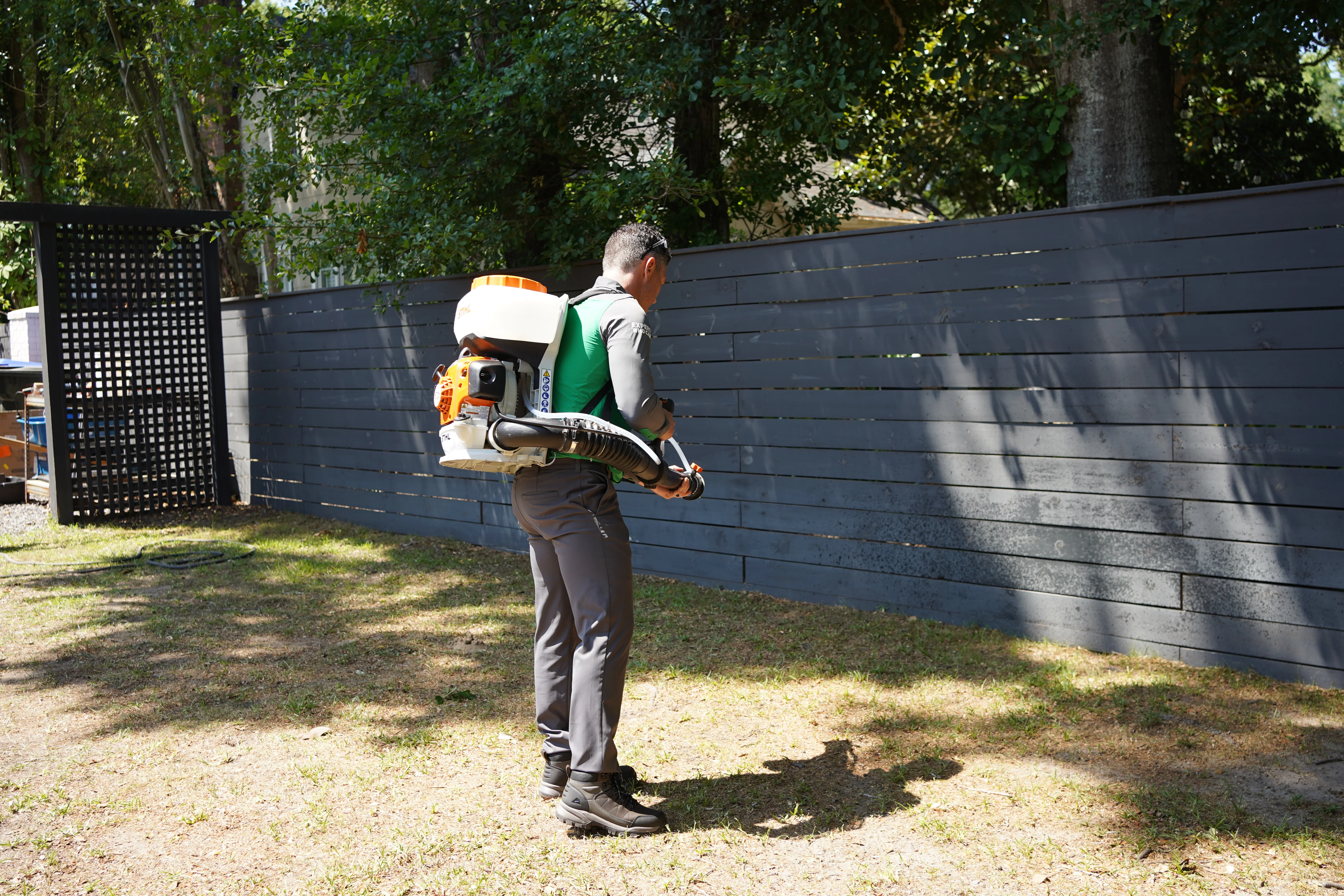
Property Assessment: Identifying Flea & Tick Hot Zones
Your Vinx technician identifies the specific flea and tick pressure zones on your property before treatment, shaded resting areas where pets spend time (flea hot zones), the transition between maintained lawn and taller vegetation (tick questing zones), mulch beds and ground cover (flea development zones), fence lines bordering wooded lots or adjacent properties (tick migration corridors), and any areas with wildlife evidence such as deer trails. Treatment is then applied with emphasis on the identified high-pressure zones rather than as a uniform broadcast application.
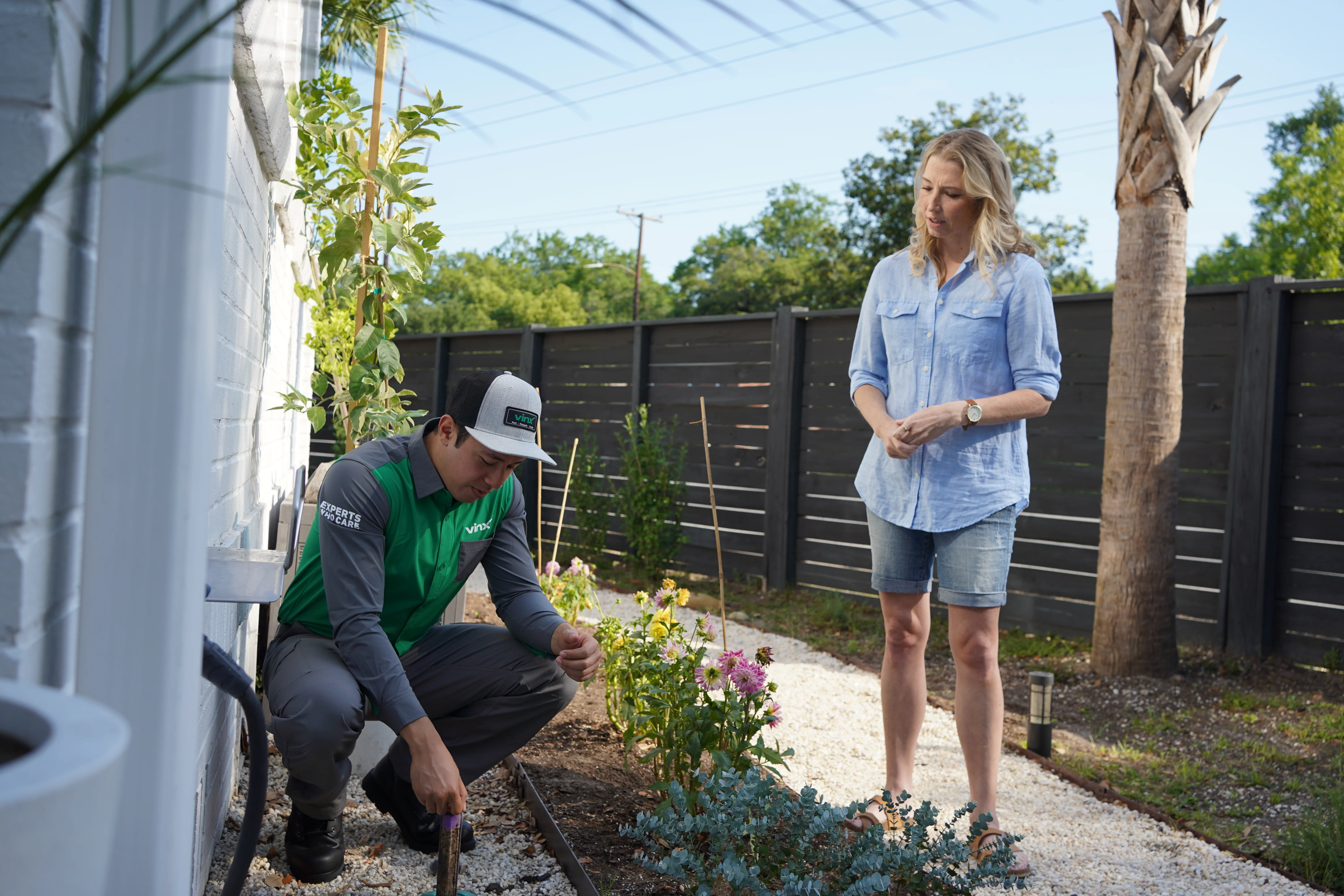
Exterior Yard Treatment: Lawn, Mulch Beds & Ground Cover
Treatment covers the full yard area, lawn surface, mulch beds, ground cover vegetation, and the base of ornamental plantings. A combination of adulticide (kills adult fleas and ticks on contact) and insect growth regulator (IGR, prevents eggs and larvae from developing) is applied to the shaded, protected places where flea immatures actually develop and where ticks quest: under decks, along the foundation, kennel and pet-resting areas, mulch beds and the base of plantings. Flea larvae need at least 75% relative humidity and avoid sunlight, so open sunlit lawn is poor flea habitat. As University of Kentucky extension puts it, it is seldom necessary to treat the entire yard or areas exposed to full sun. This exterior treatment is the foundational step, treating only the pet without treating the environment means re-infestation continues from the yard.
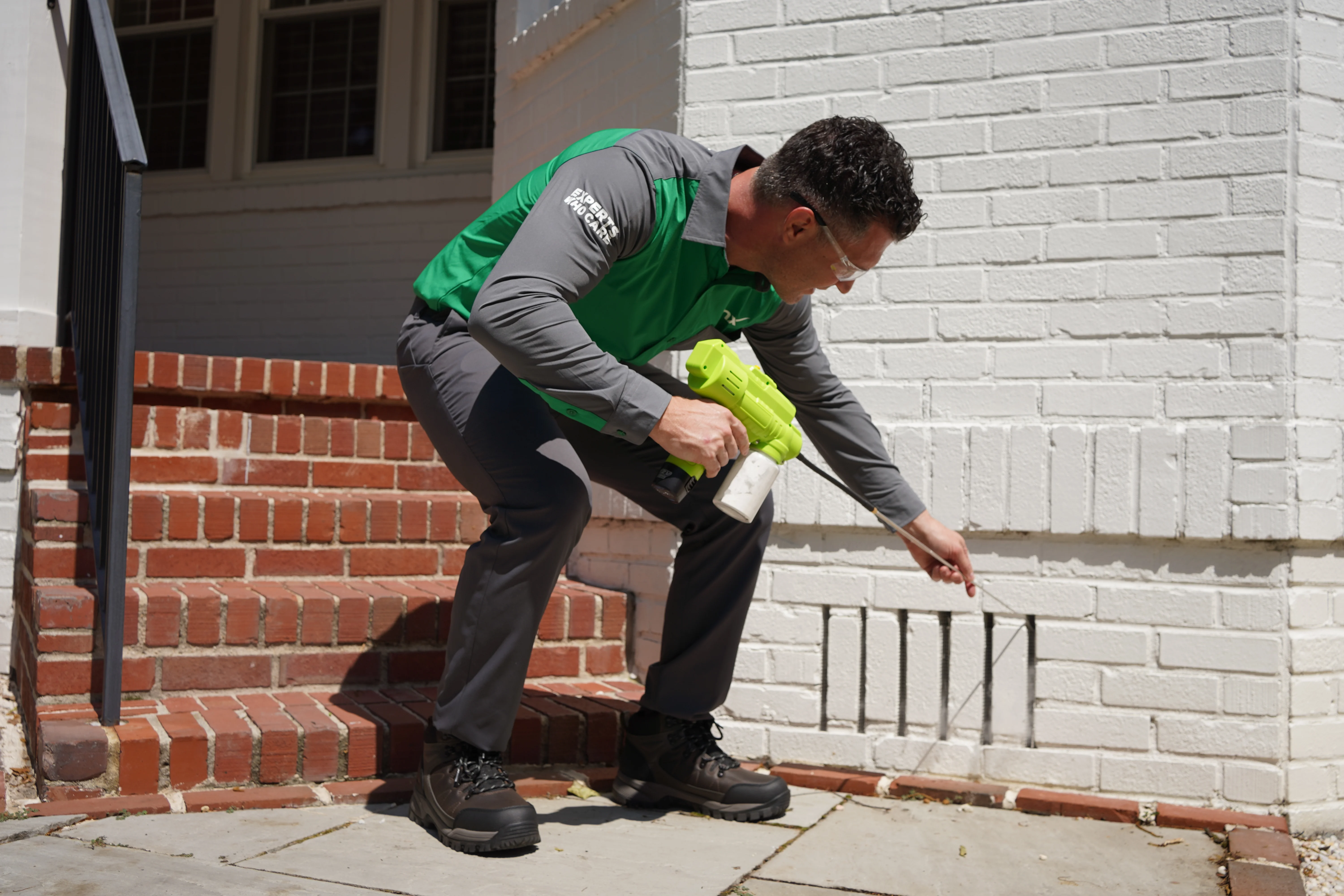
Fence Line & Border Vegetation Treatment
Fence lines bordering adjacent properties, wooded lots, and tidal vegetation are primary tick questing and migration corridors. Treatment applied along fence lines and border vegetation creates a treated buffer between adjacent tick habitat and the areas where your family and pets spend time. For properties in Wando, Cainhoy, Seaside Farms, and Rivertowne where wildlife movement along fence lines is significant, this treatment step is particularly important.
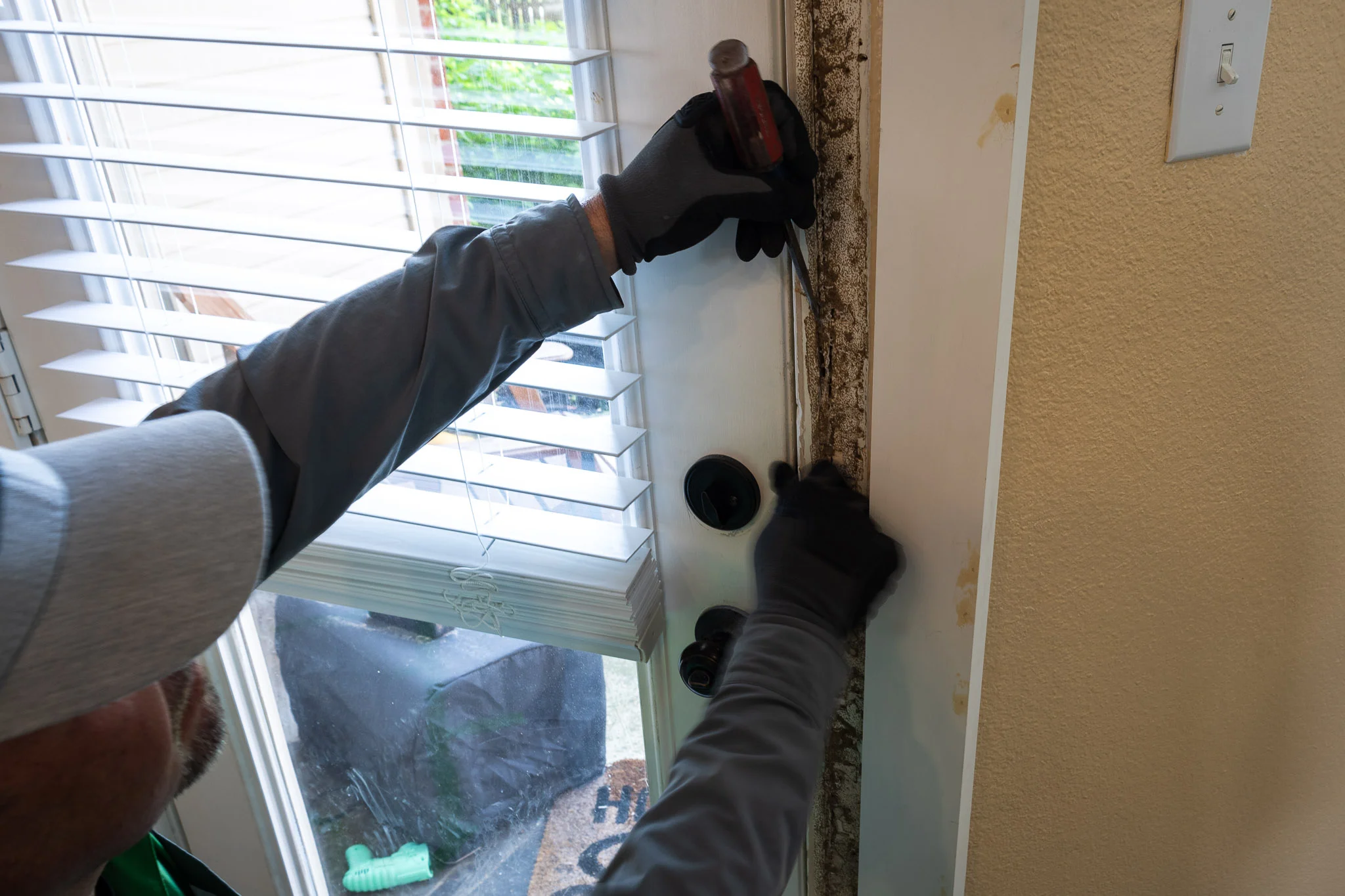
Interior Flea Treatment with IGR: Platinum Plan
For established indoor flea infestations (where flea eggs, larvae, and pupae have accumulated in carpeting, furniture, and pet bedding areas) interior treatment is included in the Platinum plan. Application targets carpet areas where pets rest, under furniture, along baseboards, and in any area where flea development has been identified. The IGR component prevents flea eggs and larvae from developing, interrupting the life cycle and preventing the rebound that occurs when only adult fleas are killed.

Conducive Condition Documentation
After every visit your technician identifies and documents outdoor conditions sustaining flea and tick pressure, dense ground cover along deer trails, wood debris accumulation providing wildlife harborage, unmaintained vegetation bordering wooded lot edges, and any standing water attracting wildlife into the yard. Written report provided after every service visit.
What Customers Say
What Mount Pleasant, SC Customers Say About Vinx: 4.8 Stars on Google
Leon was great! He arrived early and was very professional throughout the visit. He actually listened to my specific concerns and walked me through exactly how he was going to handle them. Very thorough service
Austin is professional, polite, and confident the treatment will do it’s job, which is helping me rest easy.
Jack is very knowledgeable, professional, and friendly. He made sure to inquire about issues we may have inside the house. That helped us remember that we needed service inside our house as well. Thank you Jack, so happy to have you as our technician!
My tech was Jack he was very polite and personable. He was quick and thorough with his service and was very open and concerned about any issues i might be having regarding pest.
Jack did a great job today! He was friendly and very professional. He made sure to ask if there were any concerns. He took care to spray for spiders on my back porch, which I appreciate. Thanks!
Jack was amazing, he explained everything he was going to do and what is covered with the service. I will definitely recommend Vinx Pest Control for your pest control needs interior and exterior.
By Neighborhood
Flea & Tick Pressure Across Mount Pleasant Neighborhoods
Wando & Cainhoy
Highest Tick Pressure The highest tick pressure in the Mount Pleasant service area. Large lots with wooded perimeters, undeveloped adjacent land, and active deer populations create conditions where all three tick species are present and well-established. Properties with deer trails crossing the yard or wooded edges adjacent to the structure see the most significant tick burden on pets. Fence line treatment and border vegetation treatment are essential for these properties. Year-round Plus or Platinum coverage is strongly recommended.
Belle Hall & Park West
Highest Flea Pressure Heavy irrigation, dense ornamental landscaping, and the warm humid microclimate created by mature plantings throughout both neighborhoods create excellent outdoor flea development conditions year-round. Shaded mulch beds and dense ground cover under ornamental shrubs are primary flea development zones. Dogs that spend time resting in shaded landscaping areas pick up fleas that have developed in those exact zones. Year-round Plus coverage with exterior flea treatment is the appropriate baseline for pet-owning households.
Seaside Farms & Rivertowne
Elevated Tick Pressure Marsh-adjacent properties with wooded riparian buffers and active wildlife movement (deer, raccoons, opossums) carry elevated tick pressure from all three species. The tidal vegetation bordering these neighborhoods provides permanent questing habitat adjacent to residential properties. Fence line treatment targeting the boundary between residential yards and marsh-edge or wooded vegetation is essential for controlling tick migration.
Carolina Park & Oyster Point
Elevated Flea & Tick Pressure Active development adjacent to undeveloped wooded land creates tick introduction as deer and wildlife are displaced into residential areas. New construction landscaping with fresh mulch and irrigated ground cover establishes quickly as flea development habitat. Properties adjacent to undeveloped lots, particularly those with wooded edges, see the most consistent combined flea and tick pressure throughout the active season.
Old Village & I’On
Elevated Flea & Tick Pressure Mature landscaping with abundant shade, tidal proximity sustaining year-round humidity, and naturalized planting zones create year-round outdoor flea development conditions and tick questing habitat within the residential fabric. Lone star ticks are particularly active in the brush and taller vegetation of I’On’s preserved areas. Dogs walked through I’On’s naturalized common areas should be checked for ticks after every walk during the active season.
Year-Round Season. 4 Species.
Why Flea & Tick Control in Mount Pleasant Requires Professional Yard Treatment
One Clemson finding reframes this page. The lone star tick is the most collected tick species in South Carolina, not the blacklegged tick most people picture. Clemson associates it with alpha-gal syndrome, the delayed red meat allergy that can follow a bite, plus ehrlichiosis and STARI. The blacklegged tick is the Lyme vector. Rocky Mountain spotted fever belongs to the American dog tick and brown dog tick, which is worth saying because a lot of pages attach it to the wrong species.
Mount Pleasant’s flea and tick pressure is driven by its coastal Lowcountry climate and active wildlife populations. Fleas are active year-round, no hard winter freeze interrupts the outdoor flea life cycle. Ticks are active through 10+ months of the year, with deer movement through Wando, Cainhoy, and wooded-edge properties being the primary tick introduction mechanism. White-tailed deer browsing wooded property edges and tidal vegetation margins deposit tick populations in the transition zones adjacent to residential yards continuously through the active season.
Veterinary tick and flea prevention protects your pet during outdoor exposure. It does not eliminate the outdoor tick and flea population in your yard vegetation that your pet continuously re-introduces on every return home. Yard treatment addresses the environmental source.
Professional yard treatment covers the ground cover, mulch beds, wildlife rest areas, and vegetation margins where flea eggs accumulate and ticks wait for hosts, the outdoor reservoir that veterinary prevention alone cannot reach. Call (843) 305-4029 for a free quote.
Mount Pleasant, SC Flea & Tick Species

Black-Legged Tick (Deer Tick) (Ixodes scapularis)
Identification: Small tick (1–3mm unfed). Orange-brown body with dark legs. Nymphs the size of a poppy seed are the most common Lyme disease transmission stage, frequently missed during tick checks.
In Mount Pleasant: Found in wooded areas with leaf litter, brush, and dense vegetation. Requires humid, shaded environments, found along wooded property edges, in leaf litter, and in brush bordering tidal vegetation. Most common in Wando, Cainhoy, and any property with significant wooded adjacency. White-tailed deer are the primary adult host, deer movement through residential properties is the primary introduction mechanism.
Disease risk: Lyme disease, anaplasmosis, babesiosis. Lyme disease in South Carolina is far less prevalent than in the Northeast: the CDC classifies SC as a low-incidence state, with 44 confirmed cases statewide in 2022, about 0.9 per 100,000. Where Lyme risk does exist in the Carolinas it sits in the mountains and Upstate, not on the coast. A 2018–2023 North Carolina survey found blacklegged nymph density highest in the Blue Ridge Mountains and lowest in the coastal province, with Borrelia burgdorferi in 21% of mountain nymphs and none at all in coastal nymphs, and in statewide South Carolina surveillance every blacklegged tick tested was negative for Borrelia. Transmission typically requires 36–48 hours of attachment, prompt tick removal is critical.
- Lyme vector, but SC is a CDC low-incidence state
- Nymph season: late spring through summer (hardest to see)
- Highest pressure: Wando, Cainhoy & wooded-edge properties
Lone Star Tick (Amblyomma americanum)
In Mount Pleasant: Females have a distinctive single white spot on the dorsal shield. More aggressive in seeking hosts than black-legged ticks, actively quests at the tips of vegetation waiting for passing hosts. Common throughout South Carolina including Mount Pleasant’s wooded and brush-edge environments. More likely to actively seek human hosts than either the American dog tick or black-legged tick. Can infest an area in large numbers in brush and vegetation adjacent to human activity areas.
Disease risk: Primary vector for ehrlichiosis. Also associated with alpha-gal syndrome, a red meat allergy triggered by tick saliva. Alpha-gal syndrome is increasingly diagnosed in South Carolina and is a uniquely distressing condition: after a lone star tick bite, the affected person develops an allergic reaction (ranging from hives to anaphylaxis) when eating red meat. There is currently no cure.
- Alpha-gal syndrome documented in SC residents, no cure
- Active quester, most likely to seek human hosts
- Highest pressure: brush edges & taller vegetation throughout Mount Pleasant
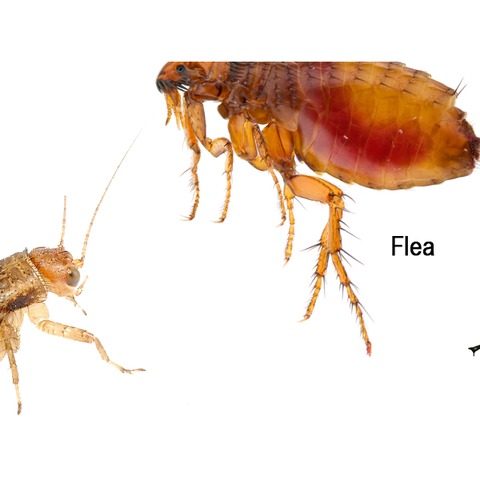
Cat Flea (Ctenocephalides felis)
In Mount Pleasant: The primary flea species on dogs and cats throughout coastal SC. Mount Pleasant’s coastal climate rarely delivers the sustained cold temperatures needed to interrupt the outdoor flea life cycle, keeping outdoor flea populations viable year-round. Heavy irrigation, dense ornamental landscaping, and the warm humid microclimate created by mature plantings throughout Mount Pleasant neighborhoods create excellent outdoor flea development conditions. Pets going outside in January in Mount Pleasant are still at flea exposure risk.
Life cycle: Adult fleas on your pet are the smallest part of the problem. The eggs, larvae and pupae all develop off the animal, in carpet, pet bedding, floor cracks and shaded soil, which is why treating the pet alone never ends an infestation. (You will see a precise 5%/95% split quoted for this; it is an industry rule of thumb rather than a figure any extension source publishes, so we do not lean on the number.) Treating the yard addresses the source that pets pick up fleas from. Treating indoors (Platinum) addresses the environmental population already brought inside.
- Year-round active season, no winter reset in coastal Mount Pleasant
- Outdoor reservoir: shaded mulch beds, dense ground cover, pet resting areas
- Interior IGR treatment: Platinum plan
American Dog Tick (Dermacentor variabilis)
In Mount Pleasant: Medium-large tick (3–5mm unfed), reddish-brown with white or yellowish markings. The most commonly encountered tick species in residential areas of Mount Pleasant. Found in open grassy areas, lawn edges, trails, and vegetation bordering wooded areas, does not require a heavily wooded environment, found throughout maintained residential landscapes. Most active spring through summer. Dogs are the primary host but readily bites humans, cats, and other mammals.
Disease risk: Primary vector for Rocky Mountain Spotted Fever (RMSF), a serious bacterial illness that can be fatal if not treated promptly. RMSF cases are reported in South Carolina every year. Symptoms include fever, headache, and a spotted rash appearing on wrists and ankles 2–5 days after the bite.
- Rocky Mountain Spotted Fever vector, can be fatal without prompt treatment
- Peak season: spring through summer
- Habitat: lawn edges, mulch beds, transition zone between lawn and taller vegetation
What to Look For
Signs of Flea & Tick Pressure at Your Mount Pleasant, SC Property
Ticks on Pets After Yard Time
Finding ticks on dogs or cats after routine yard or lake-margin activity, the primary indicator of active tick pressure in your yard vegetation
Ground Entry Holes
Dome-shaped mounds in lawn or garden areas, can reach 18 inches in height
Deer Trails Through Yard Margins
Visible deer travel routes through wooded lot edges or naturalized borders, primary tick deposition corridors on properties backing onto maritime forest, the Wando River bottomland, or the wooded margins along Highway 17
Excessive Scratching in Pets
Pets scratching, biting, or restless despite current veterinary prevention, may indicate an established outdoor environmental flea population reintroducing fleas on every yard outing
Wildlife Rest Areas in Yard
Shaded, sheltered vegetation areas under decking, along fence lines, or in dense ground cover, raccoon and opossum rest areas are primary outdoor flea egg concentration zones
Seed Tick Clusters on Children
Clusters of tiny tan dots on ankles and legs after playing in brush-adjacent areas, lone star tick larvae, common along maritime forest edges and the brushy margins of undeveloped lots in summer
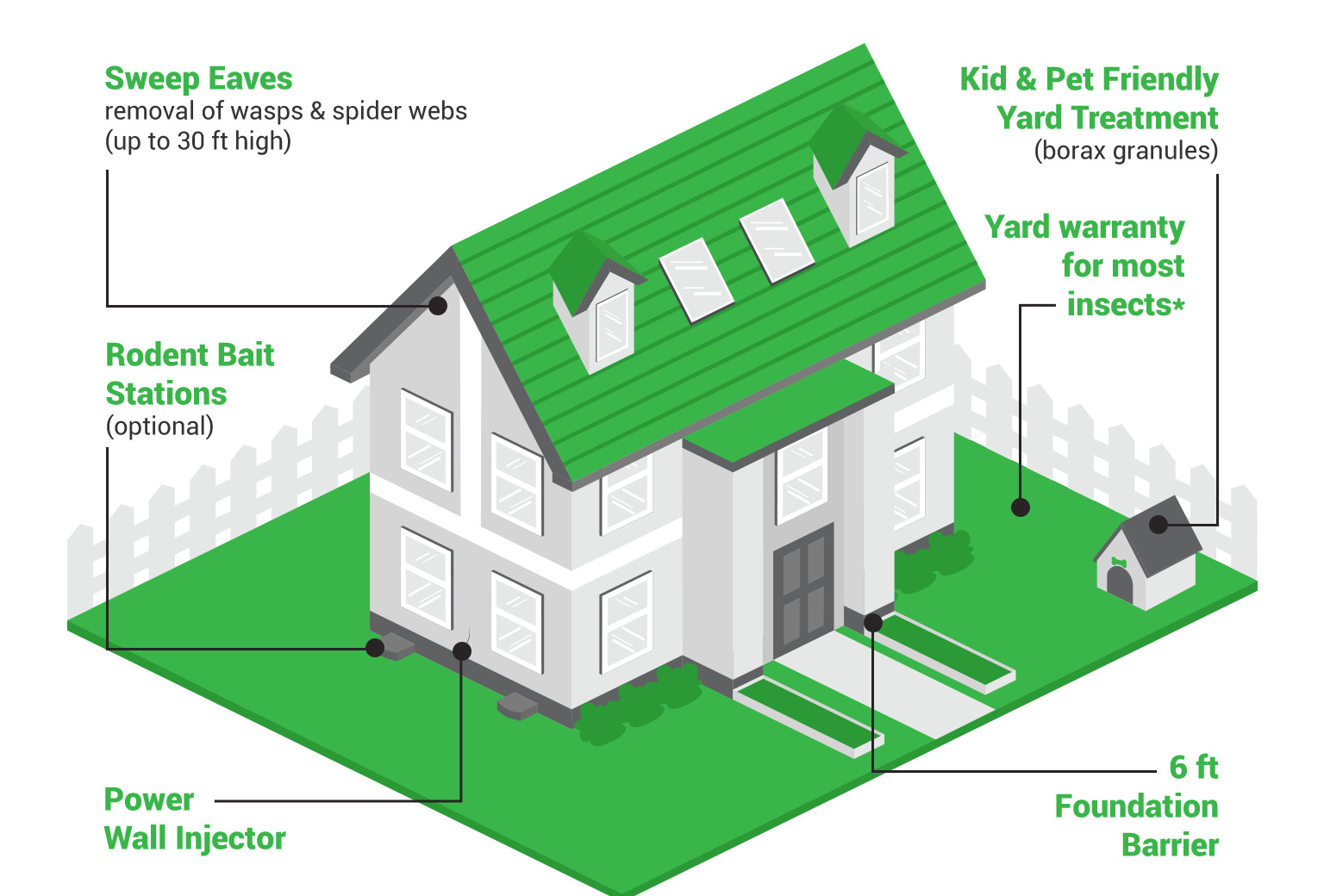
Vinx HomeGuard Plan
What Happens at Every Visit
Our technicians don’t just spray and leave. Every quarterly service covers your full exterior and interior, done right, backed by a written guarantee.
- Yard & Margin Treatment: Ground cover, mulch beds, and vegetation borders treated every visit
- Power Wall Injector: Treats wall voids where pests hide
- 6 ft Foundation Barrier: Full perimeter treatment every visit
- Yard Warranty: Free retreatment for most insects
- Kid & Pet Safe Yard Treatment: Borax granules, safe after dry
Homeowner Tips
6 Ways to Reduce Flea & Tick Pressure Around Your Mount Pleasant, SC Property
Kid & Pet Safe
Our Treatments Are Safe for Your Whole Family: Including the Furry Members
Every product we use is EPA-registered and applied strictly at labeled rates by licensed technicians. We take the guesswork out of safety so you can feel confident letting kids and pets back into treated areas quickly.

EPA-Registered Products Only
All products we apply are EPA-registered and used strictly per label requirements. Our licensed technicians are trained to apply the right product in the right place at the right rate, every time.
Dry Time Before Re-Entry
Exterior spray treatments dry in 30–60 minutes. Once dry, treated surfaces are safe for children and pets to contact. Your technician will confirm the all-clear before leaving your property.
Interior Treatment On Request
We treat only what’s needed, where it’s needed. Gel baits in cabinets and crack-and-crevice applications keep products away from areas pets and children frequent most.
Botanical Options Available
Have specific sensitivities? Ask your technician about our plant-derived treatment options. We offer botanical alternatives for households that prefer a more natural approach.
Have a concern about products used near your pets or children? Call 855-800-8469 and we’ll walk you through exactly what we use and why it’s safe.
Explore More
More Pest Control Services in Mount Pleasant, SC

Pest Control Mount Pleasant
Year-round protection plan

Mosquito Control Mount Pleasant
Monthly barrier treatments

Termite Control Mount Pleasant
Bait systems & liquid treatment

Rodent Control Mount Pleasant
All rodents covered
Cockroach Control Mount Pleasant
American & German roaches

Bed Bug Control Mount Pleasant
Heat & liquid treatments

Spider Control Mount Pleasant
All spider species covered

Exterminator Mount Pleasant
Same-day local exterminators
Ant Control Mount Pleasant
Household ants & others

Wasp Control Mount Pleasant
Nest removal & prevention
Frequently Asked Questions
Flea & Tick Control FAQ for Mount Pleasant Homeowners
Flea and tick exterior treatment is included in the Vinx Plus plan at $75/month (bi-monthly service) and the Platinum plan at $109/month (monthly during peak season). Interior flea treatment for established indoor infestations is included in Platinum. Call (843) 305-4029 for a free quote.
Yes: Mount Pleasant’s coastal climate rarely delivers the sustained cold temperatures needed to interrupt the outdoor flea life cycle. Cat fleas require several days below approximately 37°F to kill populations and interrupt development. Mount Pleasant’s mild winters keep outdoor flea populations viable year-round. Pets going outside in January in Mount Pleasant are still at flea exposure risk, which surprises many homeowners who moved here from inland cities where winter genuinely resets flea pressure.
Because the adult fleas on your pet are the smallest part of the infestation. The eggs, larvae and pupae are distributed through your carpet, furniture, pet bedding and shaded outdoor areas. Treating only the pet eliminates adult fleas but leaves the environmental reservoir intact. As eggs and pupae continue to develop and emerge in the environment, they re-infest the pet. Effective flea control requires treating both the pet (with veterinary preventatives) and the environment (yard and interior) simultaneously.
Three tick species are active in Mount Pleasant carrying different disease risks. The American dog tick transmits Rocky Mountain Spotted Fever, a serious illness that can be fatal without prompt antibiotic treatment. The black-legged (deer) tick transmits Lyme disease, though SC cases are less prevalent than in the Northeast. The lone star tick transmits ehrlichiosis and is associated with alpha-gal syndrome, a red meat allergy that can cause reactions ranging from hives to anaphylaxis. Contact your doctor promptly if symptoms appear after a tick bite.
Alpha-gal syndrome is a red meat allergy triggered by lone star tick bites. The tick introduces a sugar molecule (alpha-galactose) into the bloodstream during feeding, which causes the immune system to develop an allergic response to red meat and mammalian products. Reactions develop 3–6 hours after eating red meat and range from hives and gastrointestinal distress to anaphylaxis. Worth knowing how South Carolina actually compares: a 2024–2025 CDC blood donor study put alpha-gal antibody prevalence here at 5.5%, well below Arkansas at 31.2%, Missouri at 26.0%, Virginia at 22.8% and Tennessee at 21.5%. The CDC noted that despite the documented presence of lone star ticks in South Carolina, estimated seroprevalence in this state was low, for reasons that are still unknown. The lone star tick is the tick you are most likely to encounter here, but the Lowcountry is not an alpha-gal hotspot. There is currently no cure. If you’ve had tick bites in coastal SC and develop delayed reactions after eating red meat, ask your doctor about alpha-gal testing.
Vinx services all of Mount Pleasant for flea and tick control including Old Village, Snee Farm, Hobcaw Point, Carolina Park, Oyster Point, Belle Hall, Park West, I’On, Seaside Farms, Rivertowne, Wando, and Cainhoy. We also service nearby Isle of Palms, Sullivan’s Island, Awendaw, and McClellanville. Call (843) 305-4029 to confirm scheduling for your specific address.
Both are necessary, they address different parts of the flea and tick lifecycle. Yard treatment reduces the flea and tick population in the outdoor environment your pet is exposed to. Veterinary prevention kills parasites that reach your pet despite outdoor treatment. Neither fully substitutes for the other: yard-only without vet prevention leaves your pet unprotected on contact; vet-only without yard treatment leaves the outdoor source population untreated and your pet continuously re-exposed through every visit to the treated areas.
The clearest indicators: your pet scratching more than usual; small dark specks (“flea dirt”) on pet bedding or light-colored carpet near pet rest areas (flea dirt turns red when wet because it is digested blood); small bites on human ankles near carpet edges or on lower legs in the morning. Flea populations in carpet are almost entirely in the egg, larva and pupa stages rather than on the pet. If you see these signs, call for interior IGR treatment included in the Platinum plan.
No, treatment is not necessary or effective during the low-activity winter months. The active season covered by Plus plan bi-monthly treatment runs approximately March through October for Upstate SC markets and March through November for Lowcountry and coastal markets. Vinx visits are scheduled within the active season window. There is no benefit to treating in January or February when tick populations are dormant and flea outdoor reproduction has stopped.
Service Coverage
Flea & Tick Control Across Mount Pleasant & Surrounding Areas
Serving every neighborhood in Mount Pleasant and surrounding communities