Ant Control in Charleston, SC
Charleston’s Ant & Argentine Ant Experts: Six Species Treated
Ant control in Charleston requires treating six distinct ant species, each with different biology and a different treatment method. Vinx identifies the species before treating the colony at its source. Free re-treatment guarantee.
Get Started in 60 Seconds
Choose what’s easiest for you
Request a Quote
We usually respond in 2 minutes
Call 855-800-8469
Get a Live Person (no AI agents here!)
Sign Up Online
Get pricing and schedule now





Welcome to Vinx Pest Control
A Company That Actually Backs What It Says
At Vinx, we combine professional-grade treatments with a level of service most pest control companies don't offer. Local technicians, fast response times, and a guarantee that actually means something.
Get a Free Quote"I'm not passionate about killing bugs. I'm passionate about customer service. At Vinx, you get experts who show up, do the job right, and stand behind every visit. No runaround, no fine print."
WELCOME TO VINX PEST CONTROL
Ant Control Plans for Charleston Homeowners

Standard Residential Protection
- 4 Seasonal Treatments Per Year
- 50+ Covered Pests
- Interior, Exterior & Yard Treatment
- Unlimited Free Re-Services
- 100% Money-Back Guarantee

Upgraded Yard Protection
- 6 Home & Yard Treatments Per Year
- 50+ Covered Pests
- Yard Ant Elimination Guarantee
- Flea & Tick Elimination Guarantee
- 100% Money-Back Guarantee

Most Comprehensive Protection
- 9 Treatments Per Year
- 50+ Covered Pests
- 8 Mosquito Treatments (Mar–Nov)
- Flea, Tick & Ant Coverage
- Free Bed Bug Treatments if Needed*
*Starting rates vary by home size and area. All plans billed monthly.
Request Your Free Pest Control Quote
Fill out the form below and a Vinx team member will reach out within 2 minutes during business hours.
Prefer to talk? Call 855-800-8469 for a live person, no AI agents.
Our Approach
How Vinx Eliminates Ants in Your Charleston Home

Ant Inspection & Colony Identification
Your technician inspects the full property (foundation, entry points, kitchen, bathrooms, and yard) to identify the ant species and locate colonies, trails, and nesting sites. Different species require different treatments; correct identification is the first step to lasting control.
Exterior Perimeter Treatment
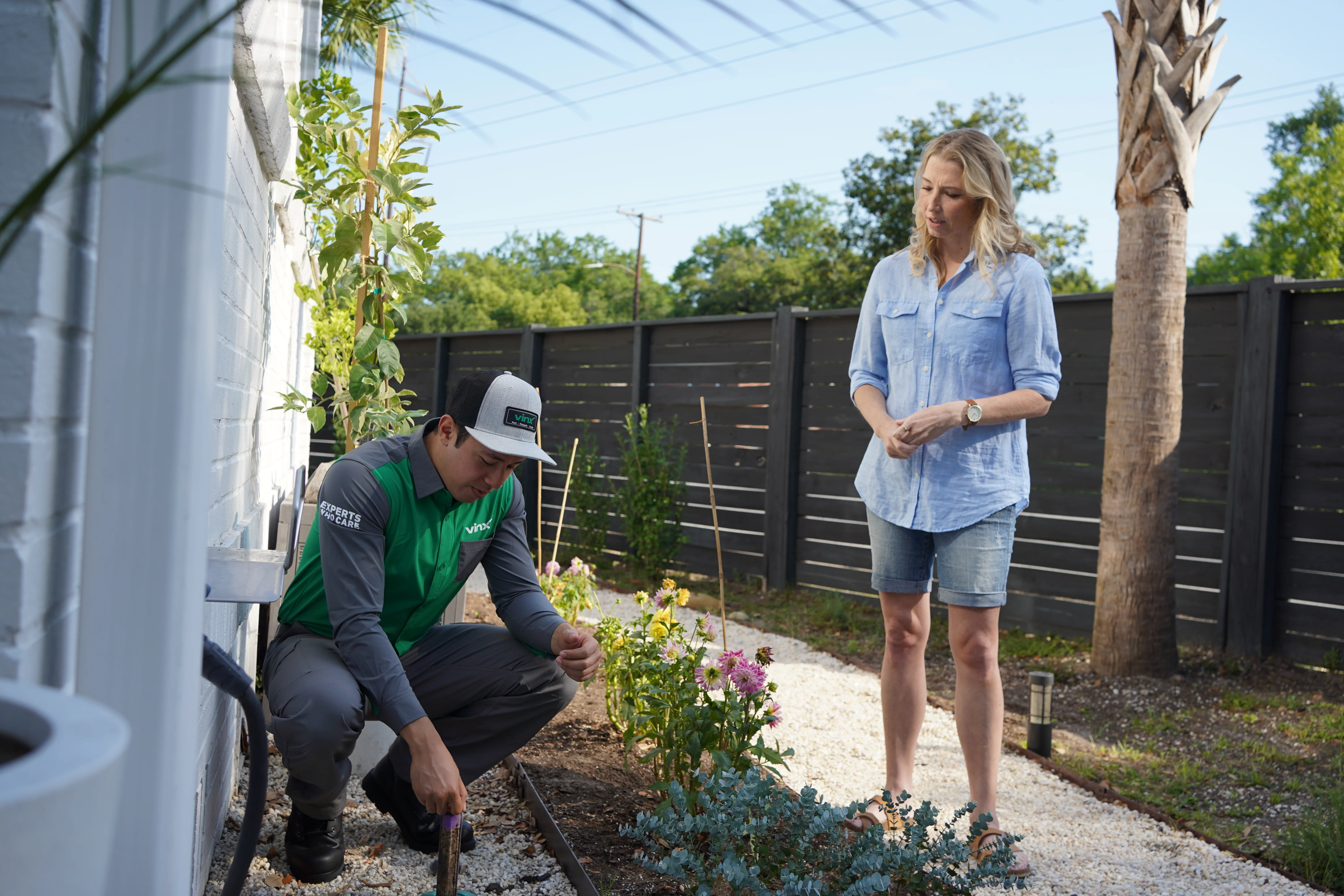
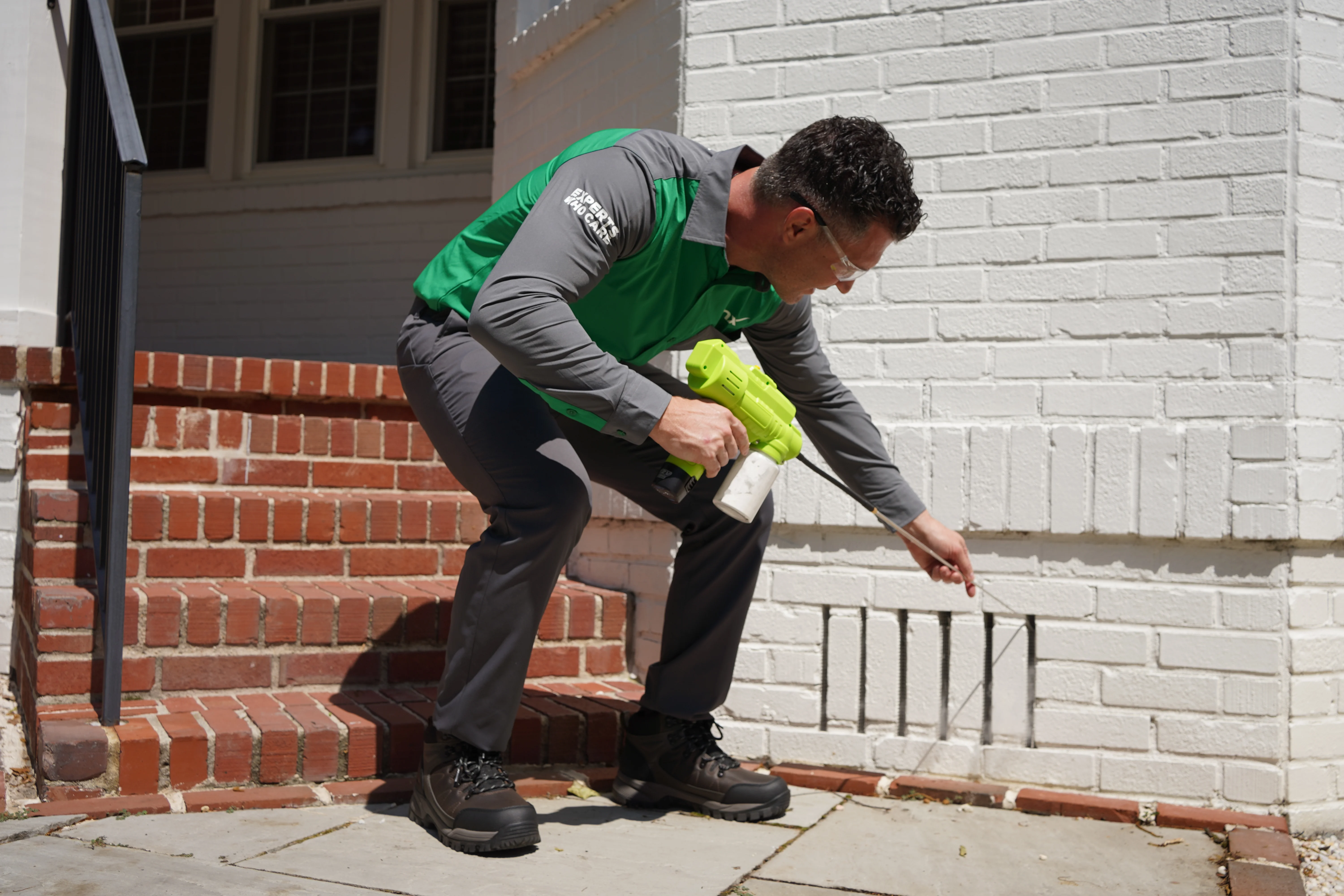
A residual insecticide barrier is applied around the full foundation, entry points, window and door frames, and utility penetrations. Ants crossing the treated zone are eliminated and carry product back to the colony. The time-release formula maintains the barrier between quarterly visits.
Bait & Interior Treatment
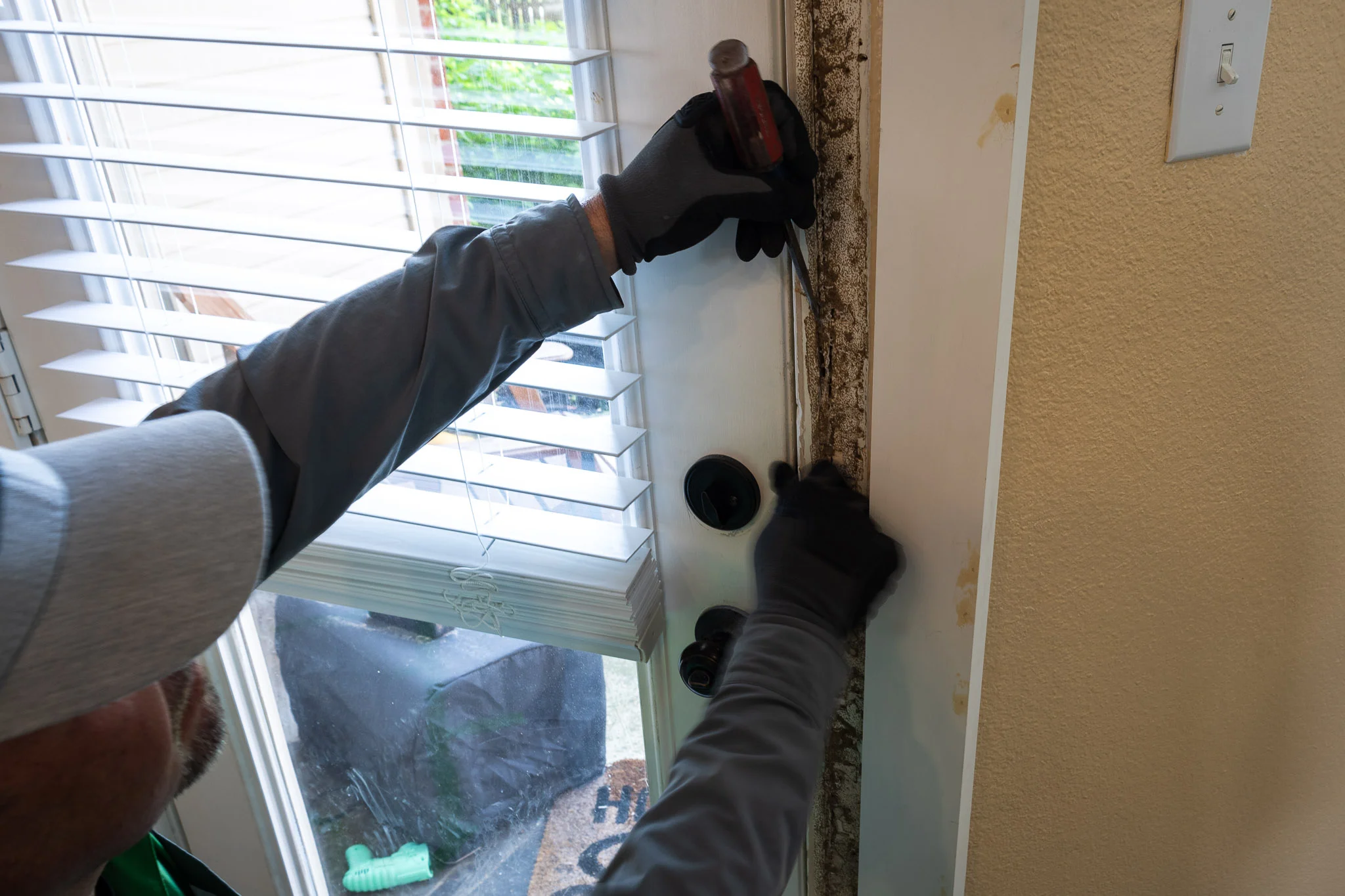
Slow-acting bait is placed along active trails and near nest sites so foragers carry it back and eliminate the colony from the inside out. Interior cracks, wall voids, and problem areas receive targeted treatment where ants are actively entering or nesting inside the structure.
Quarterly Maintenance & Free Re-Treatments
Quarterly visits keep the perimeter barrier fresh and catch any new colonies before they establish indoors. If ants return between scheduled services, we come back at no charge. Your technician also advises on conducive conditions (moisture, food storage, and landscaping) that attract ants to your property.
What Customers Say
Real Reviews from Charleston Homeowners
This is my first experience with Vinx and so far I have been very happy. Hayden was my first contact and he was very professional, knowledgeable and thoroughly explained their service’s. Scott was our technician and was great. He was very helpful in explaining the services he was providing and what we could expect going forward. Any questions or concerns I had were answered in a very timely manner.
My dad had several ant bites while sleeping last night. Vinx was the only company that made time to go to his house to exterminate for the ants as he is disabled. I would strongly recommend this company as they show compassion and professionalism.
I was less than thrilled when I was first informed that my husband decided to switch pest control companies, but after almost 2 years of using Vinx we have had a great experience. I do need to give a shout out to Leon, one of the techs that services our home. Leon is Professional, friendly, efficient, well spoken and overall gives fantastic customer service!
Our pest control technician Anthony was great on yesterday, he listened and responded proactively to the call and our needs. He did an awesome job and we haven’t seen any bugs or ants and we haven’t had any more problems, we will be sure to contact him back if any issues arise as he was very professional and got the job done in a reasonable timeframe. Thanks
Anthony of Vinx Pest Control has done a great job and it is measured in what one does not see anymore. No roaches, ants, or pests in existence any longer. Get on a monthly plan and aspects happen and no issues.👍
They did a great job gave inspection of the exterior area and the crawl space gave me estimated statement. Brush off the spider pods and spray ant hill mound.the service manager was very helpful and Brandon.. Leonard has returns knock out any issue if the gate is lock he reach out informed me and comes back.
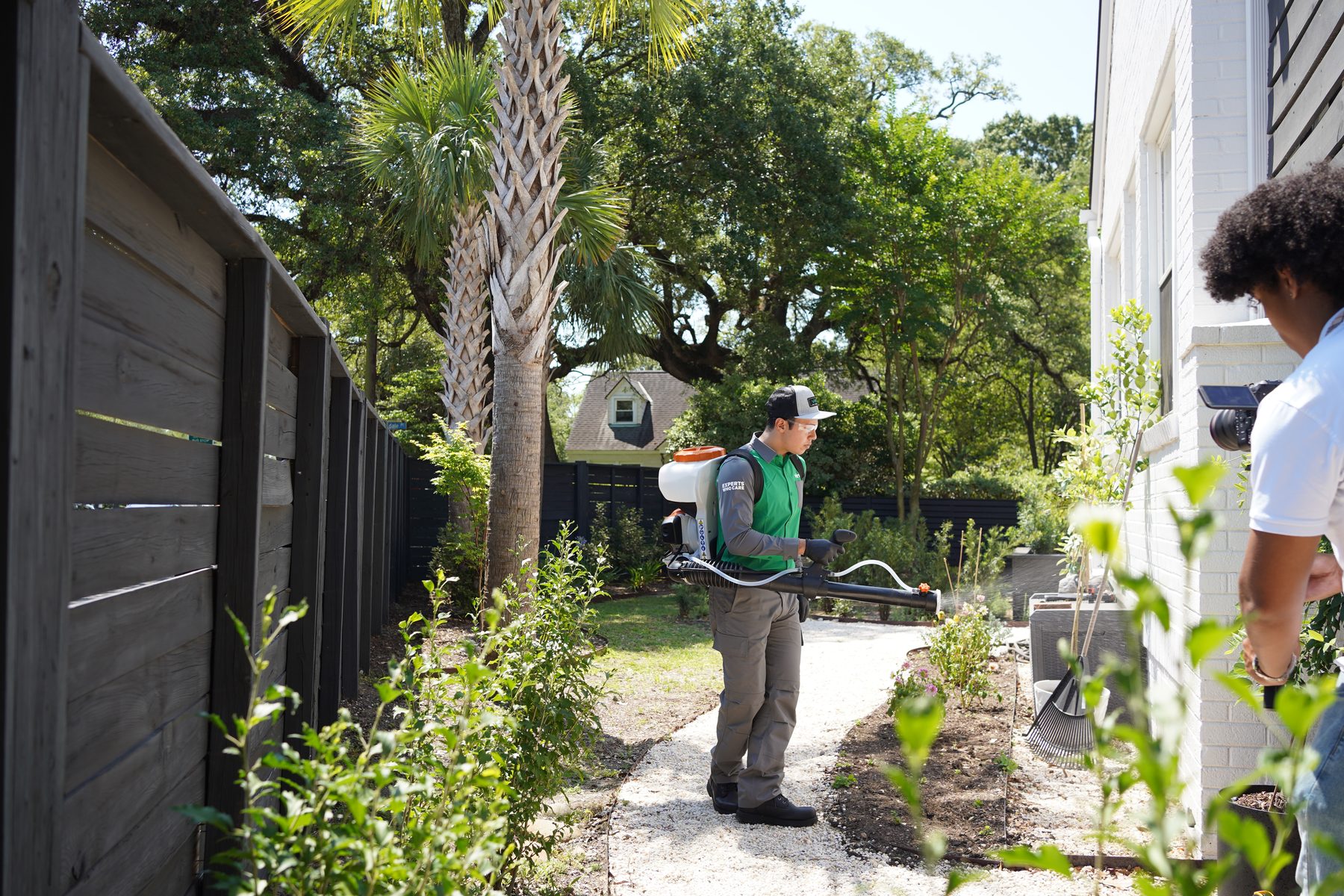
Six Ant Species in One City. One Number to Call.
Free inspection. Same-day appointments available. Species identified before any treatment begins.
Call 855-800-8469Ant Pressure by Neighborhood
Know Your Neighborhood’s Ant Risk
Downtown & French Quarter: Argentine & Odorous House Ants
The historic core is an indoor-nesting problem rather than a lawn problem. Argentine ants exploit settled mortar joints, brick piers, stucco cracks, and crawl space voids, and they bud satellite nests readily, so a repellent spray tends to multiply the number of nests instead of removing them. Aged drainage and persistently high crawl space humidity keep moisture-seeking odorous house ants trailing toward kitchens and bathrooms year-round. Fire ants are a comparatively minor factor downtown, since the peninsula has very little of the open sunny turf they require.
West Ashley: Fire Ants & Argentine Ants
Open residential lawns and routine irrigation make West Ashley some of the most dependable fire ant mound habitat in the city. Low-lying topography and the drainage canal network keep soil moisture high, which also favors Argentine ants along fence lines, irrigation boxes, and utility penetrations. After a heavy rain, mounds reappear across lawns within a day or two and colonies shift toward the driest available ground, which is usually the foundation line or a slab edge.
James Island: Carpenter Ants & Fire Ants
The dense live oak canopy over older James Island streets makes this the metro’s strongest carpenter ant habitat. Colonies establish in dead, decaying, and storm-damaged limb wood inside otherwise healthy trees, then follow any branch touching the roofline into soffits, fascia, and attic framing. Fire ants hold the open sunny sections of lawn, and tidal flooding along the marsh edges repeatedly pushes colonies toward higher, drier ground near foundations.
Johns Island: Fire Ants & Large-Lot Perimeters
Agricultural land across Johns Island and out toward Wadmalaw keeps fire ant density well above the urban core. Field margins, pasture, and well-drained sandy soil are close to ideal habitat, so rural properties face continuous re-invasion from adjoining land rather than a single colony that can be eliminated once. Large lot sizes also mean substantially more linear perimeter footage to treat, which your technician measures at inspection.
Summerville & Goose Creek: Fire Ants in New Construction
Freshly graded lots, new sod, and heavy irrigation are the three conditions red imported fire ants exploit fastest. Rapid development across Summerville and Goose Creek strips out the established vegetation and competing ant species that previously held them in check, so mound density is typically highest on the newest streets. Builder soil pre-treatment is inconsistent, and first mounds commonly appear within a season of landscaping going in.
North Charleston: Pharaoh, Ghost & Pavement Ants
Older housing stock and a higher density of multi-family and commercial buildings shift the species mix here. Pharaoh and ghost ants, which nest in wall voids and behind appliances and are made distinctly worse by over-the-counter sprays that trigger colony budding, are more common in North Charleston than in the outer suburbs. Pavement ants work expansion joints, driveways, and slab edges. Fire ants remain a factor wherever there are open lots and maintained turf.
Mount Pleasant: Carpenter Ants & Fire Ants
Mature oak and pine canopy through the older neighborhoods west of Highway 17 supports carpenter ant colonies in dead limb wood, with roof and gutter contact the usual entry route. East of 17, new construction on formerly wooded tracts produces exactly the disturbed, sunny, irrigated turf that fire ants colonize first. Wando River and tidal creek proximity keeps soil moisture high enough to sustain Argentine ants along irrigated property lines.
South of Broad & Harleston Village: Argentine Ant Nest Networks
The residential peninsula is a shared-structure problem more than a yard problem. Row houses, carriage houses, and attached single houses through Harleston Village, Ansonborough, and Radcliffeborough share party walls, adjoining crawl spaces, and continuous masonry, and Argentine ants move satellite nests through those voids without ever crossing open ground. Treating one address while the attached structure goes untreated is the most common reason ants are back within weeks here. Settled mortar joints and brick pier foundations supply effectively unlimited nesting voids close to soil moisture.
Daniel Island & Cainhoy: Fire Ants in Freshly Disturbed Ground
Daniel Island combines what red imported fire ants actively select for: graded and filled ground, young landscaping, and wide open sunny lawns. Mound density on maintained turf here is among the highest in the metro. Continued build-out toward Cainhoy keeps generating fresh disturbed soil, and new sod and nursery stock are a routine way a colony arrives on a property that previously had none.
Folly Beach, Isle of Palms & Sullivan’s Island: Fire Ants in Sandy Soil
Fast-draining sandy barrier island soil suits fire ants well, and open dune-adjacent lawns give them the full sun exposure they prefer. Colonies frequently nest beside and beneath elevated pilings, deck footings, outdoor showers, and irrigation boxes, none of which are reached by an interior treatment. Rental turnover matters here too: ant trails reported by guests are almost always an established exterior colony working a specific entry point, not a housekeeping problem.
6 Species. One City.
Why Ant Control in Charleston Is More Complicated Than Most Cities
Charleston faces ant pressure from six species simultaneously, not one. Every species answers to different conditions, settles in different places and needs a different treatment approach. Treating every ant the same way is the commonest single reason DIY ant control fails.
Most over-the-counter ant sprays work as repellents. Spray a repellent on a forager trail and the visible ants die, but the colony's survival response kicks in. The colony breaks into multiple satellite nests. One manageable colony becomes three or four smaller ones spread across the property. This is why Charleston homeowners experience revolving door infestations.
Professional ant control relies on non-repellent products, fipronil-based among them, that workers carry back to the nest unknowingly. The active ingredient gets to the queen. The colony is cleared at source.
Charleston Ant Species
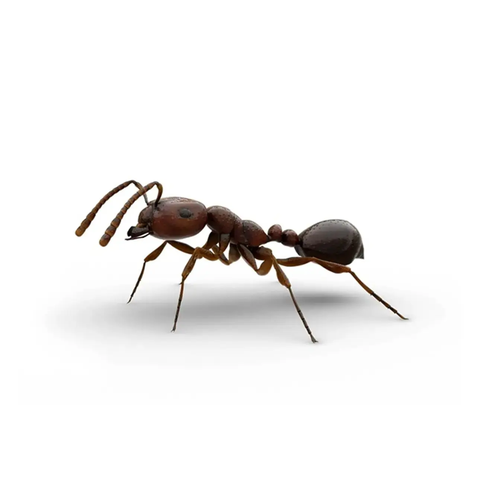
Fire Ant (Red Imported)
The red imported fire ant, Solenopsis invicta, is the most medically significant pest in South Carolina. Fire ant stings cause a systemic allergic reaction in roughly 0.5% to 2% of people who are stung, ranging from widespread hives to life-threatening anaphylaxis. A single fire ant mound can contain 200,000 workers and multiple queens. Fire ants are highly territorial, disturbing a mound triggers an immediate mass attack within seconds. Children, elderly adults, and pets are at highest risk.
In Charleston, fire ant pressure is heaviest in Summerville, Goose Creek, and North Charleston where rapid residential development has created large areas of disturbed, well-drained sandy soil. Fire ants establish mounds from March through November but remain viable underground through the winter. A property treated in September can have new mounds established from neighboring colonies by April.
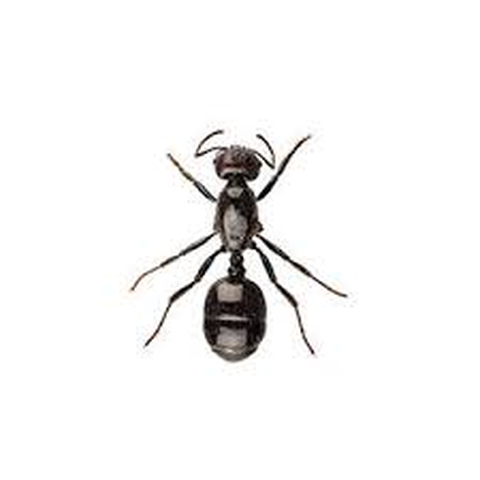
Argentine Ant
The Argentine ant is arguably more difficult to control than ants, not because of its sting (Argentine ants do not sting) but because of its colony structure. Unlike most ant species with one queen per colony, Argentine ants form multi-queen colonies linked across connected underground nest networks. A single Argentine ant colony network can extend across several adjoining properties, which is why treating one yard in isolation rarely holds.
Argentine ants are responsible for the majority of persistent kitchen ant infestations in Charleston. They follow pheromone trails to food and moisture sources with remarkable precision. Because of that linked nest structure, they require sustained bait treatment across the full trail network rather than a single mound treatment.
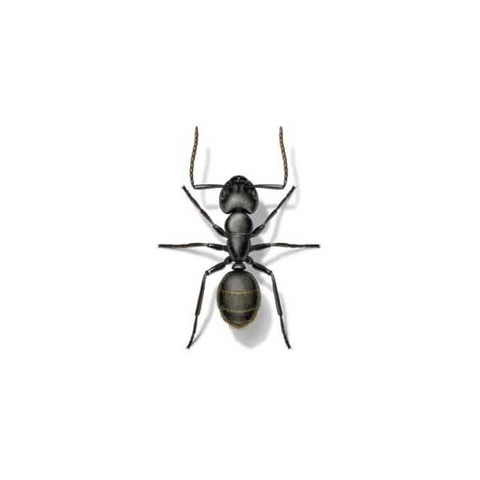
Carpenter Ant
Carpenter ants are the most structurally destructive ant species in Charleston. They do not eat the wood; they excavate it to build nesting galleries. Properties near tidal marshes in Mount Pleasant, James Island, and Folly Beach face the highest carpenter ant pressure because moisture-damaged wood is their primary nesting material.
A mature carpenter ant colony contains 2,000 to 3,000 workers and takes three to six years to fully establish. By the time homeowners notice carpenter ant activity, frass piles that look like coarse sawdust mixed with insect parts, significant structural damage may have already occurred.
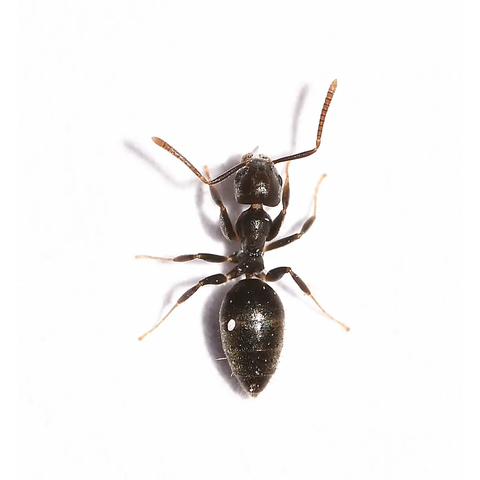
Odorous House Ant
The odorous house ant is the most common kitchen ant in the United States. When crushed, it releases a smell described as rotten coconuts, the most reliable field identification method. Colonies can contain up to 100,000 workers with multiple queens and build nests inside wall voids, under flooring, beneath mulch, and inside potted plants. They follow long foraging trails and remain active year-round in Charleston’s climate.
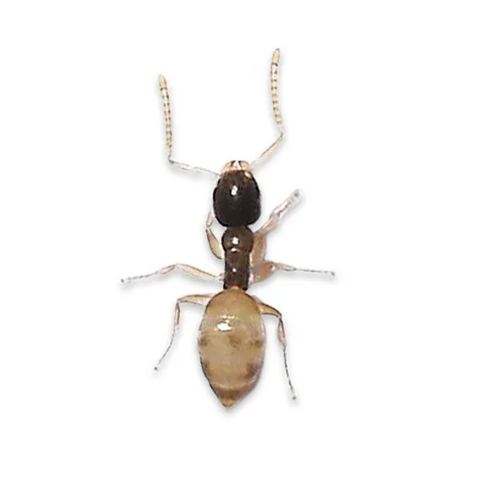
Pharaoh & Ghost Ant
The pharaoh ant is unique among ant species in its ability to survive and reproduce entirely indoors. Pharaoh ants are minute at just 1/16 of an inch, yellow with red and black markings. Pharaoh ant colonies, like Argentine ones, run multiple queens and split when repellent products threaten them. Repellent sprays should never go near a pharaoh ant infestation; they make it significantly worse.
Ghost ants are a small pale species increasingly common in Charleston’s coastal neighborhoods. They nest in wall voids close to moisture and get mistaken for pharaoh ants. Both species need the same slow-acting bait approach.
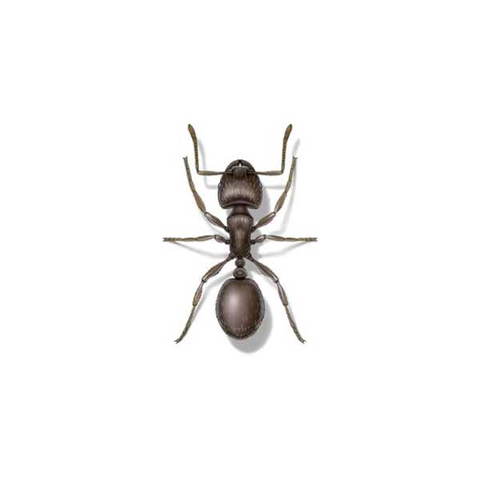
Pavement Ant
Pavement ants build nests in and under concrete, sidewalks, driveways, slab foundations, and patios. You recognize them by the fine soil and sand they push up through cracks in concrete while excavating. Pavement ant colonies can contain up to 30,000 workers and frequently wage wars against neighboring colonies, leaving trails of dead ants across concrete surfaces after a conflict.
Climate & Ant Behavior
Why Charleston’s Weather Decides When Ants Come Inside
Ants do not come indoors because a kitchen is dirty. They come indoors because something outside changed: it got hotter, it flooded, or it dried out. Charleston does all three, hard, and each one moves a different species toward your foundation.
More Foraging Days Every Year
Ants forage inside a temperature window, and Charleston’s window keeps widening. Climate modeling puts the city at roughly 7 days a year above 94°F around 1990, projected toward 34 days a year by 2050. Warmer soil speeds brood development, so colonies reach full worker strength earlier in the season and rebound faster after being knocked back. It also pushes foraging into the night during peak heat, which is why homeowners often find trails first thing in the morning.
Heavy Rain Pushes Mounds Up and Ants In
Charleston takes in about 49 inches of rain a year, projected past 51 inches, with July and August each averaging 15 rainy days. More of it now falls as downpours, two-day bursts over 1.2 inches. Rain percolates through a fire ant colony and collapses its tunnels and chambers, and the ants rebuild by pushing that soil back to the surface, which is why fresh mounds seem to appear across a lawn overnight. The population has not grown, it has relocated, and it relocates toward the driest ground within reach: slab edges, foundation lines, planter beds, and expansion joints.
Flooding Relocates Colonies Instead of Killing Them
Flood modeling puts roughly 81% of Charleston’s buildings at some level of flood risk, with 90 of the city’s 114 census tracts having more than half their buildings significantly exposed. Flooding rarely solves an ant problem. Red imported fire ants survive inundation by linking into a floating raft of live workers that carries the queen and brood. Laboratory colonies stayed afloat from 12 hours up to about 12 days, and rafts were photographed across the state during South Carolina’s October 2015 floods. The colony rides out the water and comes ashore on whatever dry high ground it reaches, frequently a raised foundation, crawl space pier, or bermed flower bed.
Dry Spells Send Ants to Your Plumbing
Charleston sits in the Cooper River watershed, which has had some part of it in drought during roughly half of all weeks since 2000. A dry stretch does not reduce ant pressure, it relocates it indoors. When outdoor moisture disappears, ants follow the water that is left: condensation on supply lines, dishwasher and refrigerator pans, AC condensate, pet bowls, and slab-edge plumbing. Fire ants and Argentine ants are the two that make this move most reliably, and heavy rain produces the same result by flooding them out instead.
Charleston Ant Calendar
When Each Charleston Ant Species Is Active
Charleston’s coldest month still averages 50°F, so no local ant colony gets a killing winter. What changes through the year is where the colony is and what it is looking for, which is what decides whether baiting or barrier treatment does the work.
December to February: 50–53°F
Colonies move deeper and go quiet on the surface without dying off. Fire ant mounds stay viable below grade and workers surface on warm afternoons. Argentine ants overwinter in wall voids, under slabs, and in crawl space insulation, which means they keep foraging indoors all winter. Carpenter ant colonies sit dormant in their galleries. The useful rule for this quarter: ants seen indoors in January almost always mean a nest inside the structure, not one out in the yard.
March to May: 59–73°F
Mound-building season and the highest-value treatment window of the year. Fire ant mounds reappear across turf as soil warms, and new colonies founded now are still small enough to eliminate cheaply. Argentine ant colonies expand and bud into new satellite nests. Carpenter ant swarmers emerge in spring and are routinely mistaken for termite swarmers, worth having identified rather than guessed at. Ant mounds establish aggressively on any soil disturbed over the winter.
June to August: 79–83°F
Peak foraging and peak rainfall arrive together, since July and August are both Charleston’s hottest and wettest months at around 15 rainy days each. Fire ant mounds hit maximum worker count. Repeated downpours reset mounds and push colonies toward foundations every few days. Odorous house ants trail hardest to kitchens now. In extreme heat, foraging shifts to dawn, dusk, and overnight, so trails are often found before anyone sees an ant.
September to November: 68–77°F
Colonies consolidate and stockpile before winter, foraging heavily for fats and sugars to build reserves. That appetite is exactly why bait programs do some of their best work in the fall: workers carry more of it back to the queen. Hurricane-season rain and flooding relocate colonies again, and as nights cool, ants press toward the warm dry side of the foundation. Rainfall eases to 6 or 7 days a month, but storm debris and stacked yard waste leave new nesting sites behind.
Charleston Landscape & Building Stock
Live Oaks, Historic Masonry, and New Ground: Where Charleston Ants Actually Nest
Four features define this city physically: a mature live oak canopy, preserved 18th and 19th century masonry, fast-growing new suburbs, and working farmland at the edges. Each one hosts a different ant species, and each one needs the nest found before anything gets sprayed.
Live Oaks and Carpenter Ants
Mature hardwoods, live oaks included, are prime carpenter ant habitat, and Charleston has them shading the Battery, Waterfront Park, and the older residential streets of James Island and Mount Pleasant. Colonies do not need a dying tree, only pockets of dead, decaying, or storm-damaged wood inside a healthy one, and Charleston’s storm history supplies plenty. A mature colony can also establish a satellite nest in a nearby wall void. Any limb touching the roof, gutter, or fascia becomes a bridge indoors. Coarse sawdust mixed with insect parts beneath a limb or along a sill is the tell.
Historic Masonry and Argentine Ants
Homes South of Broad and through the French Quarter, Harleston Village, and Ansonborough offer settled mortar joints, brick pier foundations, stucco cracks, and unsealed crawl spaces, all held at high humidity by a shallow water table. Argentine ants depend on steady moisture, and irrigated beds, mulch, and slow leaks supply it. They nest in exactly these voids and move between attached houses through shared party walls without ever crossing open ground, which is why treating a single address in a row rarely holds for long.
Disturbed Soil and New Construction
Red imported fire ants are a disturbed-ground specialist. Research on their spread finds that founding queens actively select newly disturbed, open, sunny ground, which is why a new subdivision sees pressure so quickly: graded lots, fresh sod, and young landscaping deliver exactly that. Daniel Island, Cainhoy, Summerville, and Goose Creek see the highest mound densities on their newest streets, and new sod or nursery stock is a common way a first colony arrives on a property that had none.
Farmland Edges and Sandy Island Soil
Working agricultural land across Johns Island and Wadmalaw keeps fire ant density well above the urban core, and properties bordering fields or pasture face continuous re-invasion rather than a single colony. On Folly Beach, Isle of Palms, and Sullivan’s Island, fast-draining sandy soil and open dune-adjacent lawns suit fire ants equally well, with colonies nesting beside pilings, deck footings, outdoor showers, and irrigation boxes.
Not sure which species you have, or where the nest actually is? That identification is the whole job. Call 843-920-8469 for a free inspection and we will find the colony before we treat anything.
What to Look For
Signs of an Ant Infestation in Your Charleston Home
Forager Trails
Single file trails along baseboards, countertops, or window sills
Ant Mounds
Dome-shaped mounds in lawn or garden areas, can reach 18 inches in height
Frass Piles
Coarse sawdust mixed with dead insect parts near wood structures, carpenter ant activity
Soil Through Concrete
Small piles of soil pushed up through cracks in concrete or slab, pavement ant activity
Tiny Yellow Ants
Visible trail near food preparation areas, pharaoh or Argentine ant activity
Activity After Rain
Ant activity increases after rain events as colonies seek higher ground
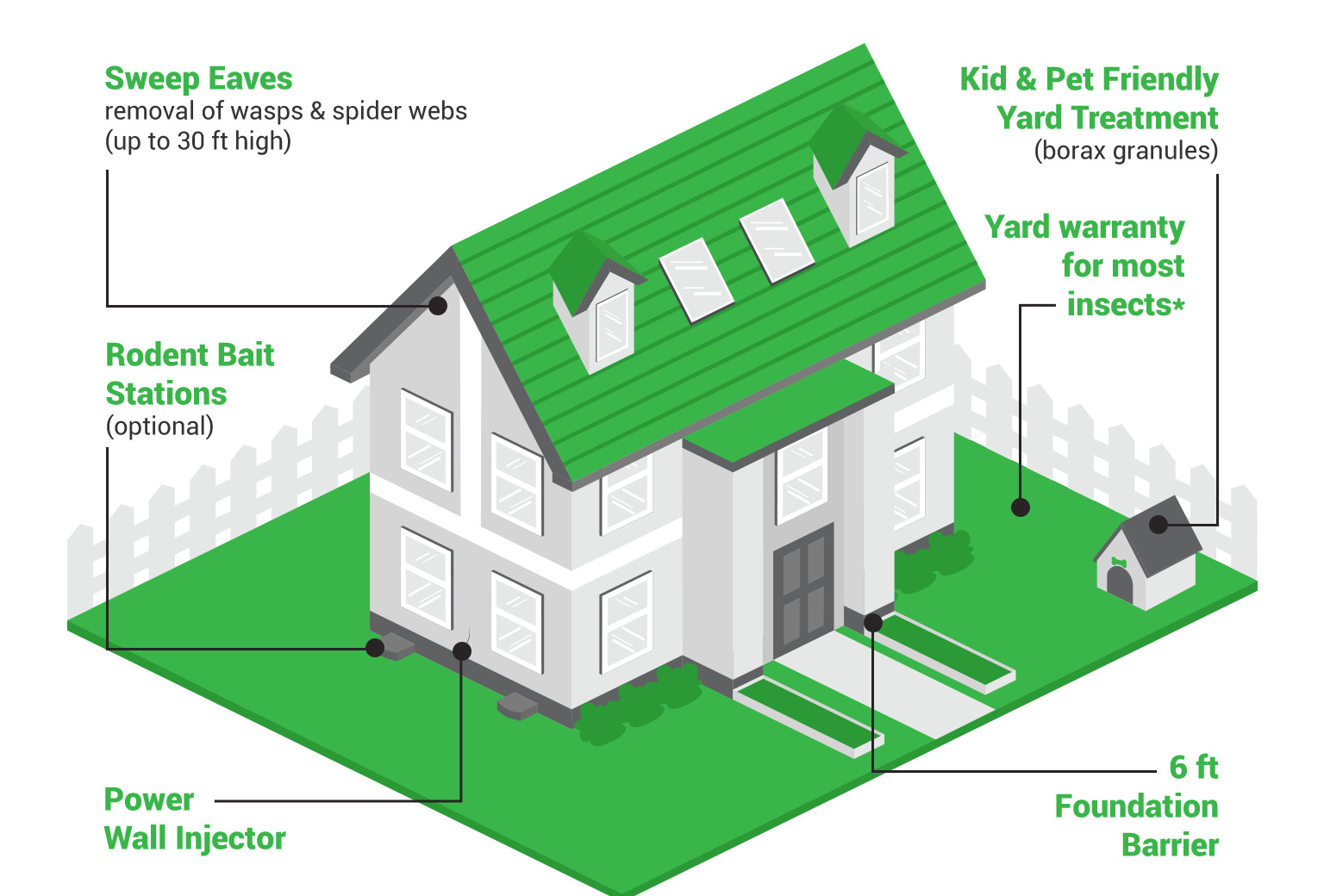
Vinx HomeGuard Plan
What Happens at Every Visit
Our technicians don't just spray and leave. Every quarterly service covers your full exterior and interior, done right, backed by a written guarantee.
- Sweep Eaves: Wasp nests & spider webs removed up to 30 ft
- Power Wall Injector: Treats wall voids where pests hide
- 6 ft Foundation Barrier: Full perimeter treatment every visit
- Yard Warranty: Free retreatment for most insects
- Kid & Pet Safe Yard Treatment: Borax granules, safe after dry
Homeowner Tips
6 Ways to Reduce Ant Pressure Right Now
Kid & Pet Safe
Our Treatments Are Safe for Your Whole Family: Including the Furry Members
Every product we use is EPA-registered and applied strictly at labeled rates by licensed technicians. We take the guesswork out of safety so you can feel confident letting kids and pets back into treated areas quickly.

EPA-Registered Products Only
All products we apply are EPA-registered and used strictly per label requirements. Our licensed technicians are trained to apply the right product in the right place at the right rate, every time.
Dry Time Before Re-Entry
Exterior spray treatments dry in 30–60 minutes. Once dry, treated surfaces are safe for children and pets to contact. Your technician will confirm the all-clear before leaving your property.
Interior Treatment On Request
We treat only what’s needed, where it’s needed. Gel baits in cabinets and crack-and-crevice applications keep products away from areas pets and children frequent most.
Botanical Options Available
Have specific sensitivities? Ask your technician about our plant-derived treatment options. We offer botanical alternatives for households that prefer a more natural approach.
Have a concern about products used near your pets or children? Call 855-800-8469 and we’ll walk you through exactly what we use and why it’s safe.
Explore More
More Pest Control Services in Charleston

Pest Control Charleston
General pest protection

Bed Bug Control Charleston
Heat & liquid treatments

Cockroach Control Charleston
Palmetto bug & roach removal

Mosquito Control Charleston
Monthly barrier treatments

Rodent Control Charleston
All rodents covered

Spider Control Charleston
All spider species covered

Termite Control Charleston
Bait systems & liquid treatment

Tick & Flea Control Charleston
Yard & pet protection

Exterminator Charleston
Same-day local exterminators

Wasp Control Charleston
Nest removal & prevention
Frequently Asked Questions
Ant Control FAQ for Charleston Homeowners
Quarterly ant control for general household species comes with the Vinx HomeGuard plan at $49 per month. Guaranteed ant coverage on bi-monthly treatments comes with the Vinx Plus plan at $75 per month. Carpenter ant work that needs a structural assessment is quoted separately once the free inspection is done.
Persistent kitchen ant infestations in Charleston are almost always caused by Argentine ants or odorous house ants following pheromone trails to food and moisture sources. Over-the-counter sprays worsen it: they kill the foragers in sight but push the colony to split into multiple satellite nests. Professional slow-acting bait gets to the queen and eliminates the colony at source. Call 855-800-8469 for a same-day ant inspection.
Yes. Red imported fire ants are the most medically significant pest in South Carolina. Their stings cause a systemic allergic reaction in roughly 0.5% to 2% of people who are stung, ranging from widespread hives to life-threatening anaphylaxis. A single disturbed mound triggers a mass attack within seconds. Children, elderly adults, and pets are at highest risk. Call 855-800-8469 for a same-day ant inspection.
Ants build visible dome-shaped mounds in open sunny areas and deliver painful stings. Argentine ants build underground colonies with no visible mound, do not sting, and are responsible for the majority of persistent kitchen ant infestations in Charleston. Argentine ants form multi-queen colony networks that can extend across several adjoining properties. Treating the two species identically is why DIY ant control fails.
Most over-the-counter sprays are repellents. They kill the foragers in view but set off a survival response that splits the colony into multiple satellite nests. Professional non-repellent treatment uses fipronil-based products that worker ants unknowingly carry back to the nest, reaching the queen and eliminating the colony at the source.
Because the rain changed the ground, not your house. Charleston averages about 49 inches of rain a year and increasingly gets it in two-day downpours over 1.2 inches. When soil saturates, colonies have to move. Water collapses the tunnels and chambers of a fire ant colony, and the ants push that soil back to the surface as they rebuild, which is why fresh mounds seem to appear across a lawn overnight. The population has not increased, it has relocated, and it heads for the driest ground within reach. That is usually a slab edge, foundation line, expansion joint, or planter bed against the house. Activity that starts within a day or two of a storm is a relocation, so the fix is an exterior perimeter barrier rather than an indoor spray.
Yes, which surprises most homeowners. Red imported fire ants survive inundation by linking into a floating raft of live workers that carries the queen and brood, staying afloat anywhere from 12 hours to about 12 days, so flood water tends to relocate a colony rather than drown it. The colony comes ashore on the nearest dry high ground, and on a Charleston lot that is often a raised foundation, crawl space pier, or bermed bed right against the house. Given that roughly 81% of Charleston’s buildings carry some level of flood risk, the practical takeaway is to have the perimeter checked after a flooding event instead of assuming the water solved the problem.
Dry weather does not reduce ant pressure, it redirects it indoors. Charleston sits in the Cooper River watershed, which has had some part of it in drought during roughly half of all weeks since 2000. When outdoor moisture disappears, ants follow whatever water is left, and inside your home that means condensation on supply lines, dishwasher and refrigerator drip pans, AC condensate, pet bowls, and slab-edge plumbing. Fire ants and Argentine ants make this move most reliably here. Sightings clustered around sinks, dishwashers, and bathrooms during a dry spell are a moisture problem before they are a food problem.
Carpenter ants excavate wood, leaving frass near exit holes that looks like coarse sawdust mixed with dead insect parts. Termites eat the wood outright, leaving mud tubes, hollow-sounding wood and fine powdery frass. Carpenter ants run larger than termites, with a narrow waist, bent antennae and dark coloring. Call 855-800-8469 for a free inspection, identifying the species correctly determines the treatment approach.
Ant mounds are most visible from March through November as colonies expand in warmer temperatures. However ants remain viable underground through Charleston’s mild winters, colonies do not die off. New mounds can show up as early as late February in a warm spell. Year-round quarterly treatment with guaranteed ant coverage holds a barrier that keeps new colonies from establishing.
Yes. Every product Vinx uses is EPA-registered. The exterior perimeter spray is safe for pets and children once dry, usually within one to two hours. Granular ant bait goes onto lawn areas clear of play surfaces. Interior gel bait goes into hidden harborage areas that pets and children cannot reach.
Yes. Most Charleston ant control appointments are available same-day or next-day. Call 855-800-8469. If we cannot get to your home the next business day, the initial service costs nothing.
Rapid residential development has created large areas of freshly disturbed, well-drained sandy soil, the ideal ant nesting environment. New construction strips the vegetation cover that had been holding ant populations down. Leon Givens handles ant treatments across Summerville and reports new mound establishment as one of the most consistent issues he addresses on initial inspections.
Yes, and in Charleston that is one of the most common routes. Carpenter ants do not need a dead tree, only pockets of dead, decaying, or storm-damaged wood inside an otherwise healthy one, and Charleston’s mature hardwood canopy, live oaks included, plus its storm history supply plenty of both. Once a colony is established in a limb, any branch touching the roof, gutter, or fascia is a direct bridge into soffits and attic framing. Look for coarse sawdust mixed with insect parts beneath limbs or along sills. Trimming limbs back off the roofline is the single highest-value prevention step, and it is why we inspect the canopy and not just the foundation.
Usually because the colony is not only in your house. Homes South of Broad and through the French Quarter, Harleston Village, and Ansonborough have settled mortar joints, brick pier foundations, stucco cracks, and unsealed crawl spaces held at high humidity by a shallow water table, which is close to ideal Argentine ant nesting habitat. Attached row houses and carriage houses share party walls and adjoining crawl spaces, so a colony moves between addresses without ever crossing open ground. Treating one unit while the attached structure goes untreated is the most common reason ants return within weeks downtown.
Yes. New sod, potted nursery stock, and delivered topsoil are all routine ways a first fire ant colony lands on a property that previously had none, which is part of why mound density is highest on the newest streets in Daniel Island, Cainhoy, Summerville, and Goose Creek. Freshly graded lots give them the open sun and disturbed soil they prefer, and irrigation on a timer supplies the moisture. Charleston County, like all 46 South Carolina counties, also sits inside the USDA federal Imported Fire Ant Quarantine, which regulates moving soil, sod, nursery stock, and baled hay out of the quarantine zone. If you are putting in new landscaping, it is worth inspecting the perimeter about two to four weeks afterward, before a young colony has time to mature and start budding.
Service Coverage
Ant Control Across Charleston & the Lowcountry
Serving every neighborhood in the Charleston metro area
Serving the Greater Charleston Area