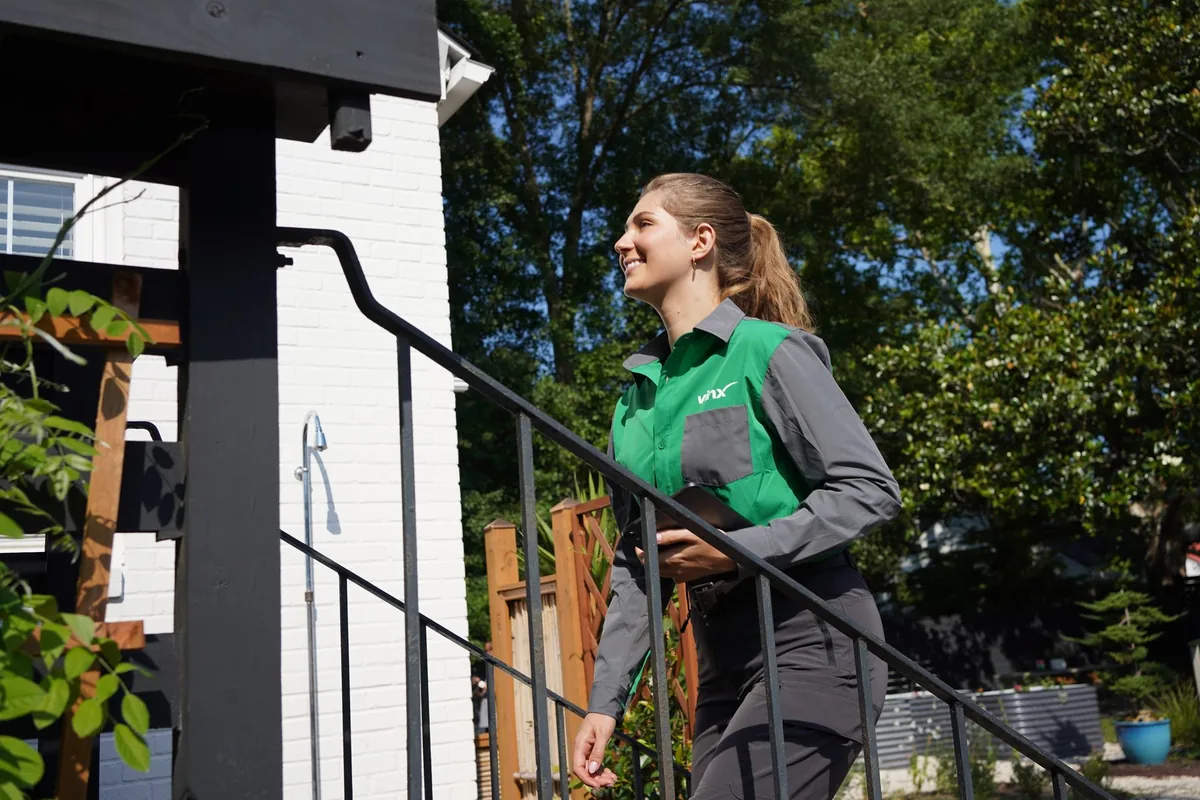
Termite Control in Charleston, SC
Sentricon Bait System + Liquid Barrier: Subterranean & Drywood Termites
Termite control in Charleston addresses the two species most active here, subterranean termites and drywood termites. Vinx uses the Sentricon bait system and liquid barrier treatment for subterranean colonies, and targeted wood treatment where drywood termites are confirmed. Free re-treatment guarantee.
Get Started in 60 Seconds
Choose what’s easiest for you
Request a Quote
We usually respond in 2 minutes
Call 855-800-8469
Get a Live Person (no AI agents here!)
Sign Up Online
Get pricing and schedule now




Welcome to Vinx Pest Control
A Company That Actually Backs What It Says
At Vinx, we combine professional-grade treatments with a level of service most pest control companies don't offer. Local technicians, fast response times, and a guarantee that actually means something.
Get a Free Quote"I'm not passionate about killing bugs. I'm passionate about customer service. At Vinx, you get experts who show up, do the job right, and stand behind every visit. No runaround, no fine print."
WELCOME TO VINX PEST CONTROL
Protection Plans for Charleston Homeowners
Standard Residential Protection
- 4 Seasonal Treatments Per Year
- 50+ Covered Pests
- Interior, Exterior & Yard Treatment
- Unlimited Free Re-Services
- 100% Money-Back Guarantee

Upgraded Yard Protection
- 6 Home & Yard Treatments Per Year
- 50+ Covered Pests
- Yard Ant Elimination Guarantee
- Flea & Tick Elimination Guarantee
- 100% Money-Back Guarantee

Most Comprehensive Protection
- 9 Treatments Per Year
- 50+ Covered Pests
- 8 Mosquito Treatments (Mar–Nov)
- Flea, Tick & Ant Coverage
- Free Bed Bug Treatments if Needed*
*Starting rates vary by home size and area. All plans billed monthly.
Request Your Free Termite Inspection
Fill out the form below and a Vinx team member will reach out within 2 minutes during business hours.
Prefer to talk? Call 855-800-8469 for a live person, no AI agents.
Our Approach
How Vinx Protects Your Charleston Home from Termites

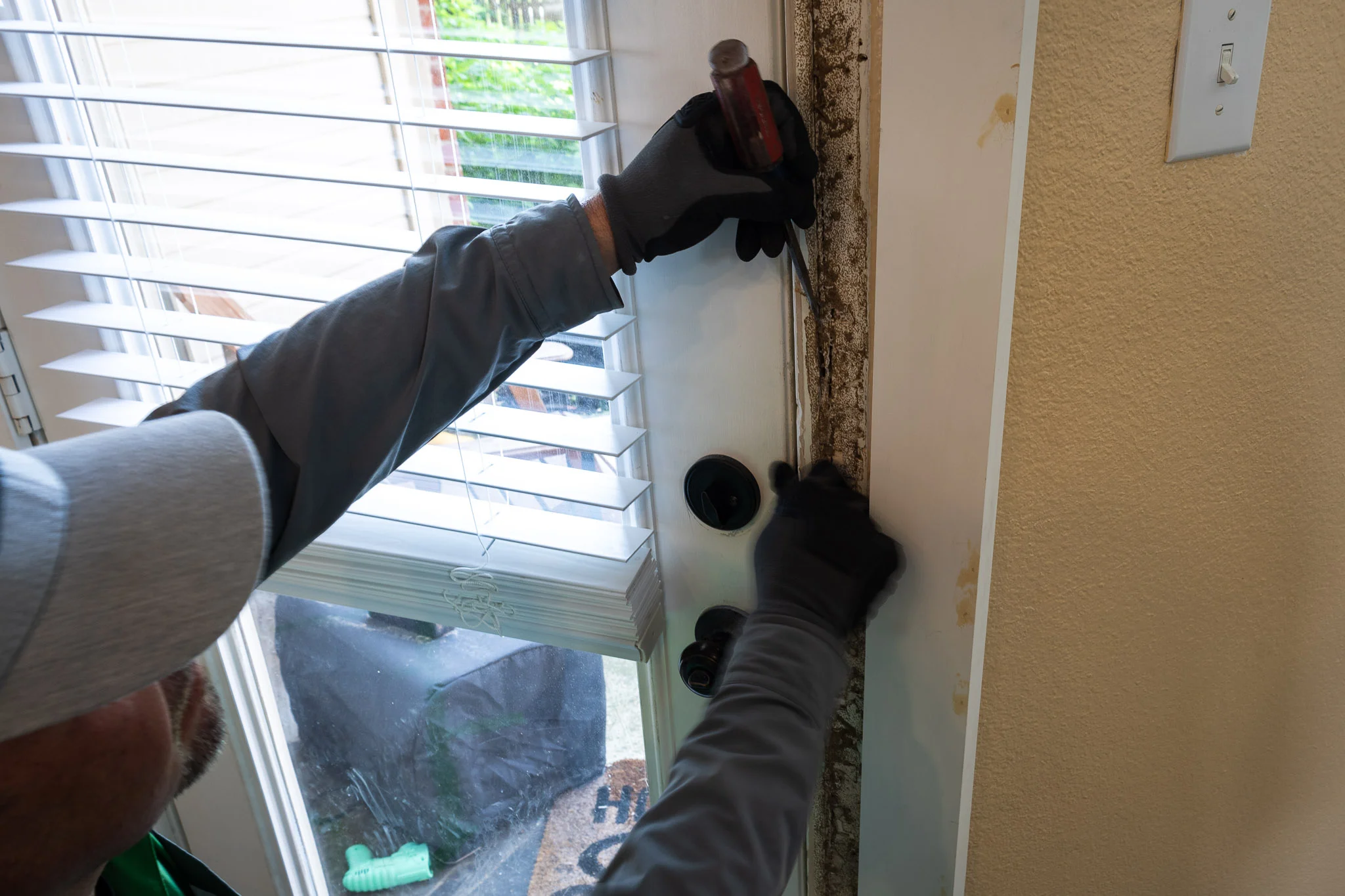
Thorough Termite Inspection
Your technician inspects the full structure, foundation, crawlspace, attic, interior walls, window and door frames, and all wood-to-soil contact points. We identify mud tubes, frass, hollow-sounding wood, swarm evidence, and conducive conditions like moisture intrusion or improper drainage. The inspection report records every finding and shapes your treatment plan.
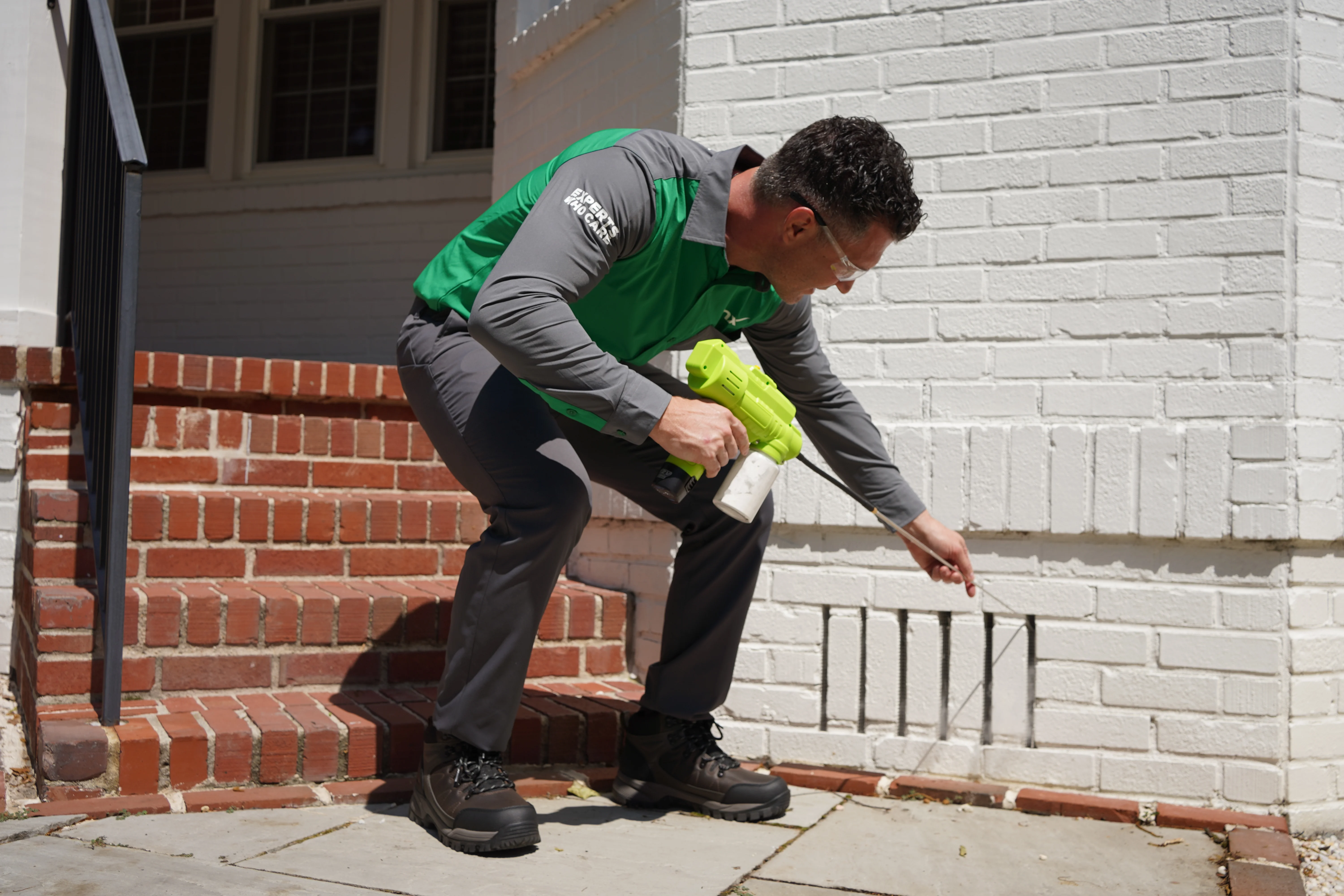
Foundation & Perimeter Treatment
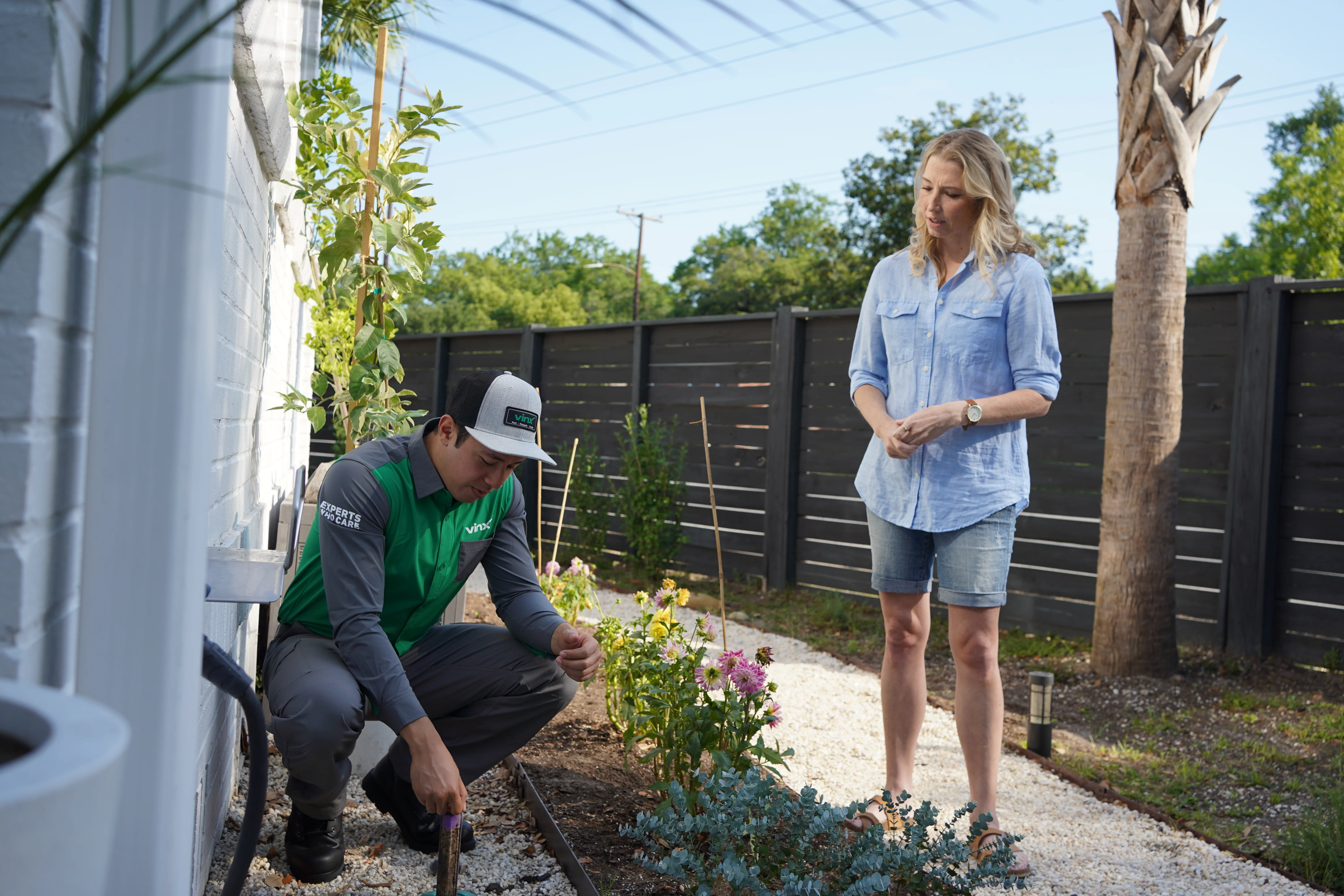
A liquid termiticide barrier is applied around the full foundation perimeter, including beneath slabs and around utility penetrations. That produces a continuous treated zone, killing termites on contact and keeping new colonies out. Both interior and exterior foundation walls are treated for full protection.
Direct Colony Treatment
Active termite galleries and mud tubes are treated directly with termiticide foam or dust, reaching deep into the colony tunneling network. The targeted approach clears the existing colony fast while the perimeter barrier keeps re-infestation out. Affected wood members are documented, with repair recommendations supplied.
Annual Inspection & Re-Treatment Guarantee
Annual termite inspections keep your protection current and catch any new activity early. If termites return between scheduled visits, we re-treat at no additional charge, that is our guarantee. Your technician also advises on moisture control, wood contact elimination, and landscaping adjustments that reduce long-term termite pressure.
What Our Customers Say
What Charleston Homeowners Say About Vinx Termite Control
Jack was very professional yet personable. He was thorough, took time to listen to my concerns. Jack also explained what he was doing so I’d understand the benefits of the services that I purchased.
We have used Vinx for years. Great communication, Great service and care for our property. We would highly recommend
Jonathan was polite, professional and expedient. He stopped and showed me one of the “traps and explained what would have been seen if there had been termites. I am so happy with the service that I am encouraging my daughter to sign up with Vincent as well
I am a Very satisfied customer of Vinx pest control. I have received top customer care and service since 2020. The technicians are always polite, friendly and accommodating. The technicians have been servicing my home so long that they are mindful not to show up too early as they are familiar with my work from home schedule. I appreciate the flexibility and consideration. I am a happy customer. 😊
Courteous and prompt service. Pleasant and professional team members. Affordable services.
The tech who came by was a very nice guy. He answered all my questions and I could tell that he was good at his job. He gave me confidence that I made the right choice going with Vinx for our termite bond.
Just changed from prior pest control service to Vinx after concerns with prior company’s cost for pest and termite services. While researching found 2 of my friends used Vinx and both were highly satisfied with value and service. Just had 2 different services performed and was impressed by both teams I worked with - all were professional, knowledgeable, polite and efficient. Glad I selected them.
Referred by a friend. Ryan and Jack have always been great! Upgraded to Vinx Plus for the extra coverage :-) we will be going with them when our termite bond is up also! They price matched for a great deal!
Dylan was fantastic very thorough and great to work with.
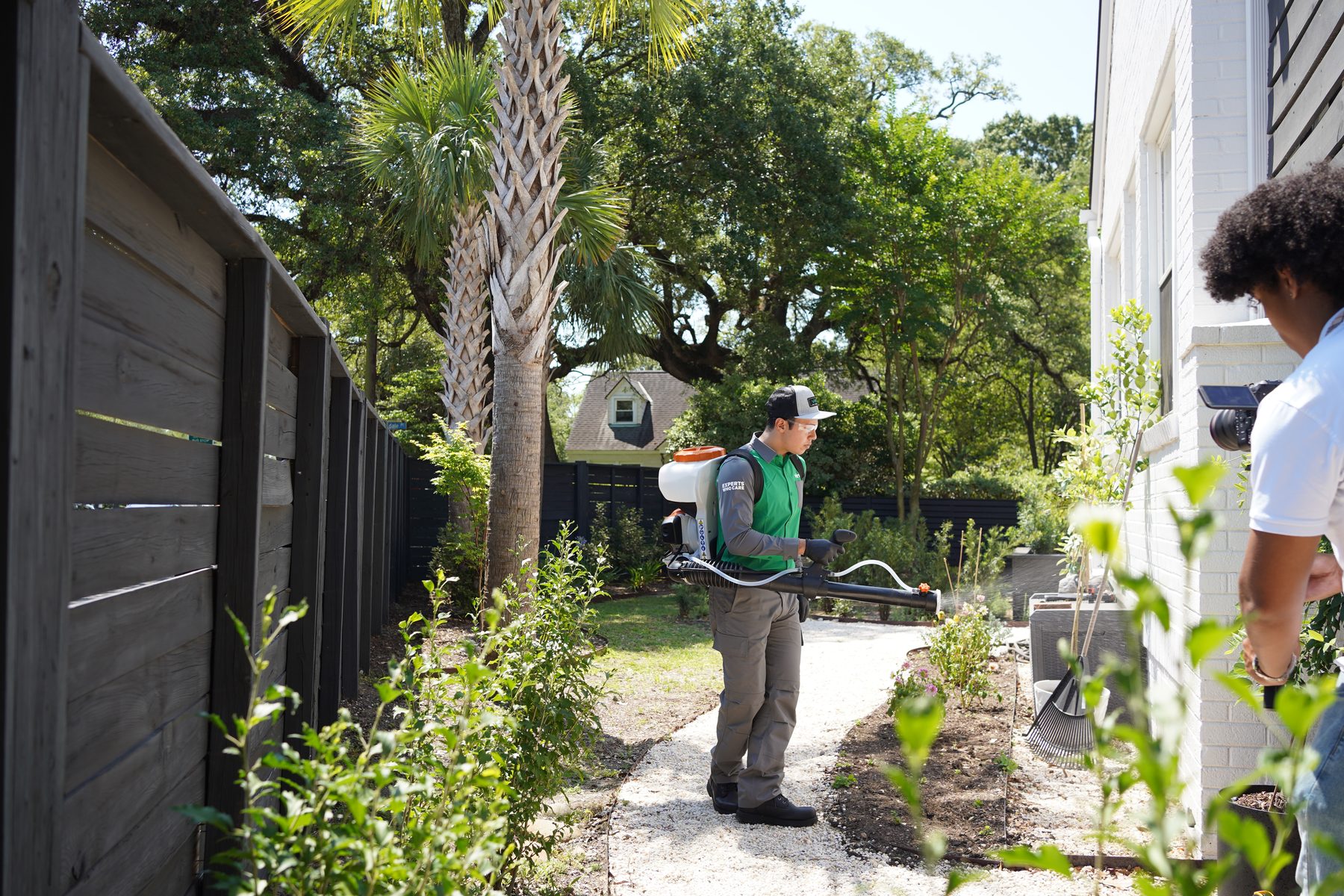
Ready to Protect Your Charleston Home?
Schedule your free termite inspection today. Same-day availability in most of the Charleston area. No obligation, no pressure, just honest information about what we find and what it takes to fix it.
The Local Threat
Why Charleston Sits in the Middle of the Formosan Termite’s Oldest US Foothold
The Lowcountry's combination of humidity, mild winters, and sandy soil creates near-perfect conditions for termites year-round. While most of the country sees a 4-to-6-month termite season, Charleston-area colonies stay active for 11 to 12 months out of the year. According to Clemson University Cooperative Extension, South Carolina consistently ranks among the highest-risk states in the nation for structural termite damage.
Pier-and-beam and crawl space foundations, common throughout the peninsula and historic neighborhoods, give subterranean termites direct access to structural wood with minimal exposure to detection. Mature oak and palmetto root systems create soil channels that colonies travel through unseen, and coastal moisture keeps wood permanently primed for infestation. The result: Charleston homeowners face an above-average risk of significant structural damage every single year they go unprotected.
Termite Species in Charleston
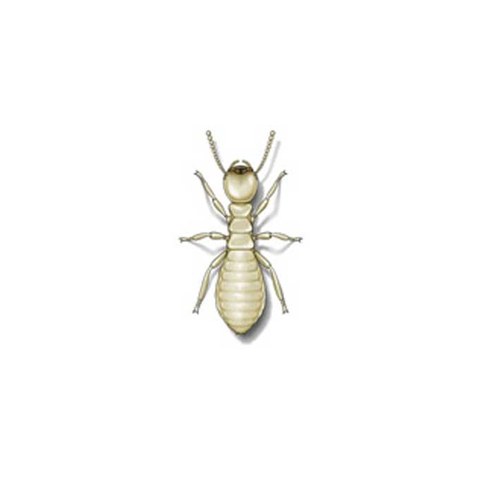
Eastern Subterranean Termite
The most common termite species in South Carolina, Eastern Subterranean termites live in colonies 20 to 30 feet underground. They travel upward through soil and mud tubes to reach the wood in your home's foundation, floor joists, and wall studs, all without breaking the surface of the paint or drywall above.
Colonies can contain hundreds of thousands of workers and cause thousands of dollars in structural damage before a single sign is visible from inside the home. Quarterly inspections and bait station monitoring are the most reliable way to detect activity before it becomes a major repair.
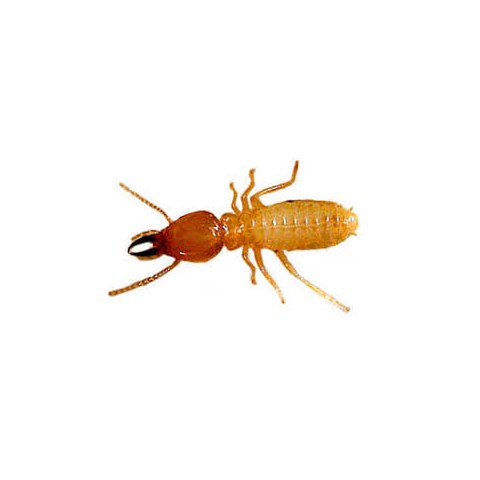
Formosan Subterranean Termite
Far more destructive than the Eastern species, Formosan termites form colonies of several million individuals and are uniquely capable of storing water within their carton nests, allowing them to infest wood above ground without a direct soil connection. They consume wood at a rate several times faster than Eastern Subterranean termites.
Charleston has one of the highest concentrations of Formosan termite populations of any city in South Carolina. The historic district and the peninsula are considered highest-risk zones due to the age of the structures, the density of wooden construction, and the presence of established Formosan super-colonies in the soil. If you live on or near the peninsula, Formosan termites are not a hypothetical risk, they are almost certainly in your neighborhood.
Know Your Risk
Termite Risk by Charleston Neighborhood
French Quarter, Harleston Village & South of Broad: Highest Risk
The historic peninsula combines the conditions termites exploit most effectively. These neighborhoods feature some of the oldest residential construction in the Southeast, much of it built before modern pest-proofing standards existed. Pier-and-beam and crawl space foundations are standard, giving subterranean termites unobstructed access to structural framing. Established Formosan super-colonies have been documented throughout the peninsula.
- Pier-and-beam & crawl space construction
- Pre-1970s structures without treated lumber
- Mature live oak root systems create soil channels
- High Formosan colony density documented by Clemson University
- French Quarter
- Harleston Village
- South of Broad
- Cannonborough-Elliotborough
James Island, Johns Island & West Ashley: High Risk
Low-lying terrain and clay-heavy soils in West Ashley and the Sea Islands create persistent moisture conditions that support large, active termite colonies. Many neighborhoods were developed in the 1960s–1980s on land that was previously tidal marsh or wetland, soil that retains water at depth year-round.
- Low-lying lots with elevated water tables
- Moisture-prone clay soils
- Mix of crawl space & slab construction
- James Island
- Johns Island
- West Ashley (including Avondale & Windermere)
- Folly Beach area
Summerville, Goose Creek & North Charleston: Moderate–High Risk
Suburban communities north and west of Charleston are predominantly slab-on-grade construction, which reduces some entry points but doesn't eliminate the risk. New construction on previously wooded land introduces structures into soil that already contains established termite colonies. Plumbing penetrations and expansion joints are common termite entry points in slab foundations.
- Slab foundations with plumbing penetrations
- New construction on formerly wooded tracts
- Untreated soil beneath slabs in older developments
- Summerville
- Goose Creek
- North Charleston
- Daniel Island
- Mount Pleasant
Warning Signs
Signs of Termites in Your Charleston Home
Mud Tubes on Foundation
Pencil-width tunnels of soil along foundation walls or piers, the primary travel route for subterranean termites from soil to wood.
Hollow-Sounding Wood
Tap structural wood with a screwdriver handle. A hollow or papery sound indicates termites have consumed the interior while leaving the surface intact.
Sticking Doors & Windows
Termite damage and the moisture they introduce can warp door and window frames, making them difficult to open or close properly.
Bubbling or Peeling Paint
Paint that bubbles, blisters, or peels in unusual patterns, especially near baseboards or window frames, can indicate moisture from termite activity below the surface.
Frass Near Baseboards
Drywood termites push fecal pellets (frass) out of small kick-out holes. These tiny, sand-like piles accumulate near baseboards and window sills.
Discarded Wings Near Windows
Termite swarmers shed their wings after finding a new nesting site. Piles of discarded wings on window sills or near light fixtures are a classic early warning sign.
Soft Spots in Floors
Floors that feel spongy, bouncy, or soft underfoot, particularly in crawl space homes, can indicate termites have damaged the subfloor or floor joists below.
Pinholes in Drywall
Small, round entry or exit holes in drywall, sometimes accompanied by faint clicking or rustling sounds inside walls, can signal an active termite infestation.
Charleston & the Formosan Termite
Charleston Is One of the Two Oldest Formosan Infestations on the US Mainland
This is not marketing language. Charleston has a specific, documented place in the history of the most destructive termite in North America, and recent research has changed what we know about where it lives here.
1957, and the Caveat Worth Keeping
The earliest known Formosan subterranean termite specimens in the continental United States were collected in Charleston in 1957. The honest detail usually left out: they were not identified as Formosans until years afterward, and Texas has a 1956 discovery with the first published identification. Hawaii was infested long before either. So Charleston and New Orleans are the two oldest known mainland infestations, arriving almost certainly through the port in infested wooden crating after the Second World War.
No Longer Just a Downtown Problem
A 2019 study in Biological Invasions surveyed 113 forest patches around Charleston and New Orleans and found 37% of the Charleston patches infested. Infested patches held 32% more trees with hollows, and those hollows were two to three times larger. Oaks and maples took the most damage. Formosans are established in the tree canopy across the metro, not confined to historic downtown structures, which is worth knowing if you have mature oaks on the property.
94% Came Up From the Ground
Clemson researchers surveyed 50 Formosan-infested structures in Charleston and found 94% were infested from ground-based colonies rather than from aerial swarmers landing on the roof. That single figure is the argument for soil and perimeter work over treating only what is visible indoors, and it is specific to this city rather than borrowed from somewhere else.
Sixteen Counties, Unevenly
Clemson has documented established Formosan populations in sixteen South Carolina counties, with the heaviest concentration along the coast from Charleston down to Beaufort. Clemson’s own caveat matters and we will repeat it rather than round it up: presence in a county does not mean uniform distribution within it. Your street can differ from the next one over, which is what an inspection is for.
Straight Answers
Four Termite Claims Worth Getting Right
Termite marketing runs on a handful of figures and half-truths that do not survive checking. Here are the ones we get asked about most, answered against the actual sources.
“More Damage Than Fires and Floods Combined”
This one is simply false, and the arithmetic gives it away. The widely quoted five billion dollar figure comes from a pest industry trade association with no published methodology, while the National Fire Protection Association put US direct fire property damage alone at 19.1 billion dollars in 2024. The defensible number comes from peer-reviewed work instead: the annual US cost of subterranean termites, control plus repairs, runs into the tens of billions, with Formosans alone accounting for over four billion.
Mulch Does Not Attract Termites
Research at the University of Florida found termites survive the chipping process poorly and do worse still once separated from a colony, so bagged mulch is not delivering an infestation to your yard. What genuinely matters is placement. Mulch piled against the foundation holds moisture and hides the soil-to-wood contact point where an inspection needs to look. Keep it thin, and never touching siding or door and window framing.
Treated Lumber Is Not Immune
USDA Forest Service testing found Formosan attack on preservative-treated wood was more severe than native termite attack across every treatment tested, concentrating at cut ends and anywhere preservative penetration was incomplete. Formosans will also chew through plastic, foam insulation, mortar and asphalt to reach wood. They cannot eat concrete or brick, and any claim otherwise is wrong, but a masonry house is not exempt: termites travel expansion joints, cracks and utility penetrations.
Read What Your Bond Actually Covers
Clemson puts this bluntly: some firms limit their liability for damage done after treatment, and others specifically exclude damage from Formosan termites. A bond is not automatically damage coverage. The one warranty South Carolina regulation does mandate is on new construction, where the applicator must provide a one-year transferable warranty covering retreatment and repair of subterranean termite damage. For an existing home, the contract is the whole answer, so read the exclusions before you sign anything, including ours.
Homeowner Tips
6 Ways to Reduce Termite Risk Right Now
Kid & Pet Safe
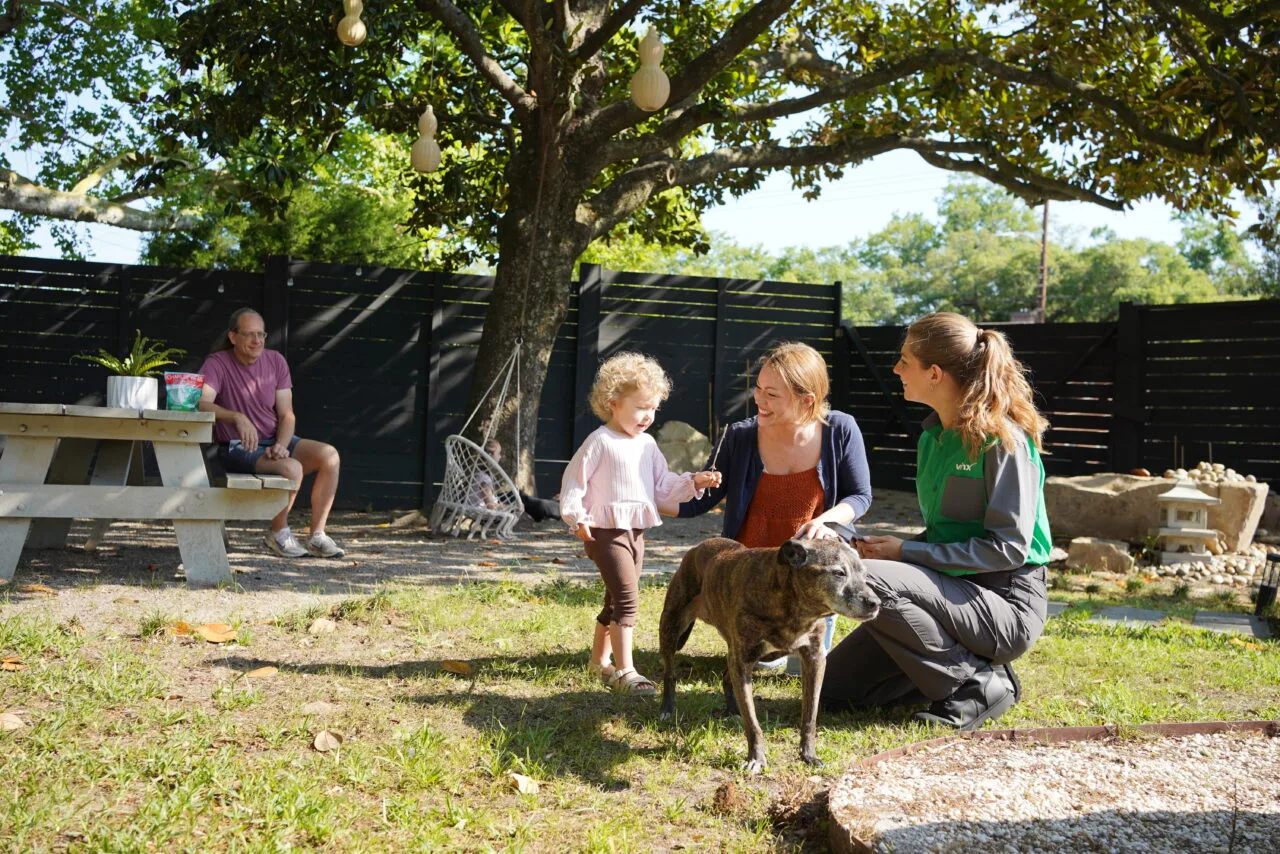
Our Treatments Are Safe for Your Whole Family: Including the Furry Members
Every product we use is EPA-registered and applied strictly at labeled rates by licensed technicians. We take the guesswork out of safety so you can feel confident letting kids and pets back into treated areas quickly.
EPA-Registered Products Only
All products we apply are EPA-registered and used strictly per label requirements. Our licensed technicians are trained to apply the right product in the right place at the right rate, every time.
Dry Time Before Re-Entry
Exterior spray treatments dry in 30–60 minutes. Once dry, treated surfaces are safe for children and pets to contact. Your technician will confirm the all-clear before leaving your property.
Interior Treatment On Request
We treat only what’s needed, where it’s needed. Gel baits in cabinets and crack-and-crevice applications keep products away from areas pets and children frequent most.
Botanical Options Available
Have specific sensitivities? Ask your technician about our plant-derived treatment options. We offer botanical alternatives for households that prefer a more natural approach.
Have a concern about products used near your pets or children? Call 855-800-8469 and we’ll walk you through exactly what we use and why it’s safe.
Explore More
More Pest Control Services in Charleston

Pest Control Charleston
General pest protection
Ant Control Charleston
Household ants & others

Bed Bug Control Charleston
Heat & liquid treatments
Cockroach Control Charleston
Palmetto bug & roach removal
Mosquito Control Charleston
Monthly barrier treatments

Rodent Control Charleston
All rodents covered
Spider Control Charleston
All spider species covered

Tick & Flea Control Charleston
Yard & pet protection
Exterminator Charleston
Same-day local exterminators

Wasp Control Charleston
Nest removal & prevention
Frequently Asked Questions
Termite Control FAQ for Charleston Homeowners
Vinx termite protection begins at $75/month within the Protection Plus plan, covering Sentricon bait station installation, ongoing monitoring and the free re-treatment guarantee. Initial installation is priced on the linear footage of your foundation. Call 855-800-8469 for an exact quote specific to your property.
Yes. Sentricon bait stations are sealed underground units, so the active ingredient is never reachable by children or pets above ground. Unlike liquid soil treatment, nothing is injected into your soil or foundation. Every product Vinx uses is EPA-registered. Your family and pets can stay in the house through installation and after it.
Installing Sentricon initially runs 2 to 4 hours, depending on the property's size and how many stations are needed. No tenting, no fumigation, and no reason to leave the house. Later monitoring visits run 30 to 60 minutes.
Sentricon provides continuous protection rather than a one-time treatment. Once installed, stations are checked on a regular schedule through the year. While your monitoring plan stays active, the home is continuously protected. Detect activity and we treat it at once, at no extra charge.
Yes. Find live termites in a structure we have treated and Vinx re-treats at no extra charge, with no deductible, no argument and no fine print. The guarantee comes with Protection Plus and Premium and stays active for as long as annual monitoring continues.
Most Charleston appointments are available same-day or next-day. Call 855-800-8469 to book. If we cannot get to your home the next business day, the initial service costs nothing. We serve the entire Lowcountry from the peninsula to Summerville, Goose Creek, and Mount Pleasant.
Eight, and the split is worth understanding because it drives the treatment. Clemson counts four drywood species and four subterranean species in South Carolina. The subterranean ones do most of the damage and are the focus of most treatment: three of those four are native, and one is not — the Formosan subterranean termite, introduced in the 1950s. Drywood termites need no soil contact at all and are handled differently, which is why identification comes before any treatment plan. On the Formosan question, Clemson is blunt about the marketing: they are not ‘super termites’. Set a native worker and a Formosan worker side by side and you could not tell them apart, and given a block of wood they would eat it at about the same rate. What makes a Formosan infestation harder is colony size — a mature colony can run to millions of workers against several hundred thousand for a native one — and Clemson notes they are also the most likely subterranean termite to establish an above-ground infestation. Charleston County is on Clemson’s list of counties with documented established colonies, but the same caveat applies as everywhere: being on the list does not mean uniform distribution across the county.
Yes. Charleston has one of the highest concentrations of Formosan subterranean termites in South Carolina. The species is well-established throughout the peninsula, historic district, and surrounding neighborhoods. Formosan colonies are significantly more destructive than Eastern Subterranean colonies, capable of causing major structural damage within 2 to 3 years of infestation.
Eastern Subterranean termites typically swarm in Charleston between February and April, often triggered by warm days following rainfall. Formosan termites swarm later, from mid-May through July according to Clemson, in the evening and strongly drawn to porch and street lights. Swarmers or discarded wings near windows or doors are among the clearest signs of an active colony close by. If you are seeing swarmers right now, call 855-800-8469 today, swarm season is when colonies are most actively expanding.
No, and this is not a South Carolina rule, which is how it often gets described. Standard homeowners policies nationwide exclude damage from insects and vermin, because insurers treat termite damage as gradual deterioration rather than a sudden loss. So repair costs, anywhere from a few thousand dollars to tens of thousands where the structural damage is significant, fall entirely on you. Your only financial protection against that risk is a termite monitoring plan.
A CL-100, officially the South Carolina Wood Infestation Report, documents visible evidence of wood-destroying insects and organisms in accessible areas, including termites, wood-boring beetles, and wood-decaying fungi. Worth being precise about the legal position, because it is widely misstated: South Carolina law does not require a CL-100 to sell a home. It is most mortgage lenders and closing attorneys that require one, and Clemson's Department of Pesticide Regulation actually recommends the buyer obtain it rather than the seller. It must be issued by a licensee certified in Category 7A, and the form states plainly that it is not a guarantee or warranty against future infestation or damage. You will also hear that a CL-100 is valid for 30 days; no validity period appears anywhere in the regulation, so treat that as lender or closing-attorney practice and confirm the window with your lender rather than assuming a legal deadline. What state law does require, under S.C. Code 27-50-40, is that a seller disclose present or unrepaired past infestation on the property condition disclosure statement. Vinx can perform CL-100 inspections, call us for scheduling and pricing.
A termite bond is a service agreement between homeowner and licensed pest control company providing ongoing termite protection. In Charleston, where both Formosan and Eastern Subterranean termites are active year-round, a termite bond is standard practice, not a luxury. At closing, lenders usually ask for a CL-100 wood infestation report rather than a bond, but many buyers like to see an active bond on the house. The Vinx Plus plan functions as your termite protection agreement with transparent monthly pricing and a zero-deductible re-treatment guarantee. Get in touch if you need bond documentation for a closing.
On the structure, not on a preference. A liquid termiticide is applied to the soil under and beside the building to create a treated zone, and Clemson is clear about what that requires: for full protection the barrier must be continuous, which in practice means trenching around the foundation and drilling through slab sections so there is no gap. It acts at the barrier straight away. Its weakness is completeness — complicated footings, additions poured at different times, and hardscape all create places the barrier can break, and termites need one. Bait stations work the other way. Clemson describes below-ground stations installed every ten to twenty feet around the structure and monitored on a schedule; they leave no residual chemical in the soil and can reduce and even eliminate a colony rather than simply keeping it out of one building. They are slower to act and they depend on the monitoring actually being done. Clemson also notes that how long a liquid treatment stays effective varies with the thoroughness of the application, foraging pressure, conducive conditions and local soil and climate — so neither option is a one-off purchase.
Service Coverage
Termite Control Across Charleston & the Lowcountry
Serving every neighborhood in the Charleston metro area
Serving the Greater Charleston Area