Spider Control in Charleston, SC
Black Widow & Brown Widow Specialists: Web Removal + Barrier Spray
Spider control in Charleston turns on the black widow, the one genuinely dangerous spider people actually meet here, alongside the common house spiders most homeowners simply want gone. The brown recluse is much rarer than its reputation implies, and most reported sightings prove to be harmless look-alikes, which is why identification matters more than blanket treatment. Vinx clears the webs, lays a residual barrier spray and treats the entry points. Free re-treatment guarantee.
Get Started in 60 Seconds
Choose what’s easiest for you
Request a Quote
We usually respond in 2 minutes
Call 855-800-8469
Get a Live Person (no AI agents here!)
Sign Up Online
Get pricing and schedule now





Welcome to Vinx Pest Control
A Company That Actually Backs What It Says
At Vinx, we combine professional-grade treatments with a level of service most pest control companies don't offer. Local technicians, fast response times, and a guarantee that actually means something.
Get a Free Quote"I'm not passionate about killing bugs. I'm passionate about customer service. At Vinx, you get experts who show up, do the job right, and stand behind every visit. No runaround, no fine print."
WELCOME TO VINX PEST CONTROL
Spider Control Plans for Charleston Homeowners

Standard Residential Protection
- 4 Seasonal Treatments Per Year
- 50+ Covered Pests
- Interior, Exterior & Yard Treatment
- Unlimited Free Re-Services
- 100% Money-Back Guarantee

Upgraded Yard Protection
- 6 Home & Yard Treatments Per Year
- 50+ Covered Pests
- Yard Ant Elimination Guarantee
- Flea & Tick Elimination Guarantee
- 100% Money-Back Guarantee

Most Comprehensive Protection
- 9 Treatments Per Year
- 50+ Covered Pests
- 8 Mosquito Treatments (Mar–Nov)
- Flea, Tick & Ant Coverage
- Free Bed Bug Treatments if Needed*
*Starting rates vary by home size and area. All plans billed monthly.
Request Your Free Pest Control Quote
Fill out the form below and a Vinx team member will reach out within 2 minutes during business hours.
Prefer to talk? Call 855-800-8469 for a live person, no AI agents.
Our Approach
How Vinx Eliminates Spiders in Your Charleston Home
De-Webbing
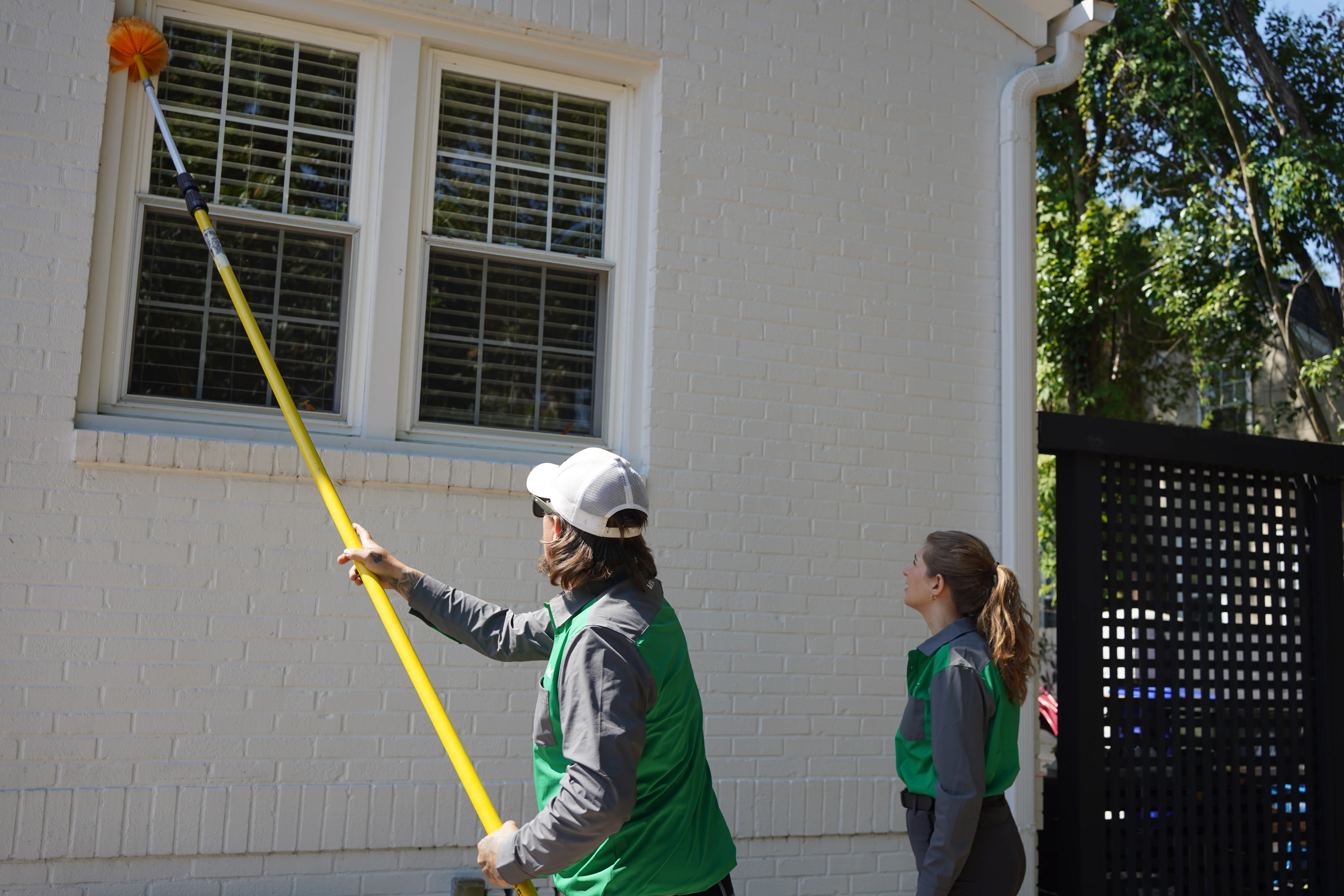
Every service visit begins with a complete exterior de-webbing across eaves, window frames, corners, light fixtures and foundation areas. Taking down active webs and egg sacs removes the harborage and the next generation together, since one egg sac can hold hundreds of spiderlings. Quarterly de-webbing, done consistently, stops the buildup between visits.
Residual Perimeter Spray
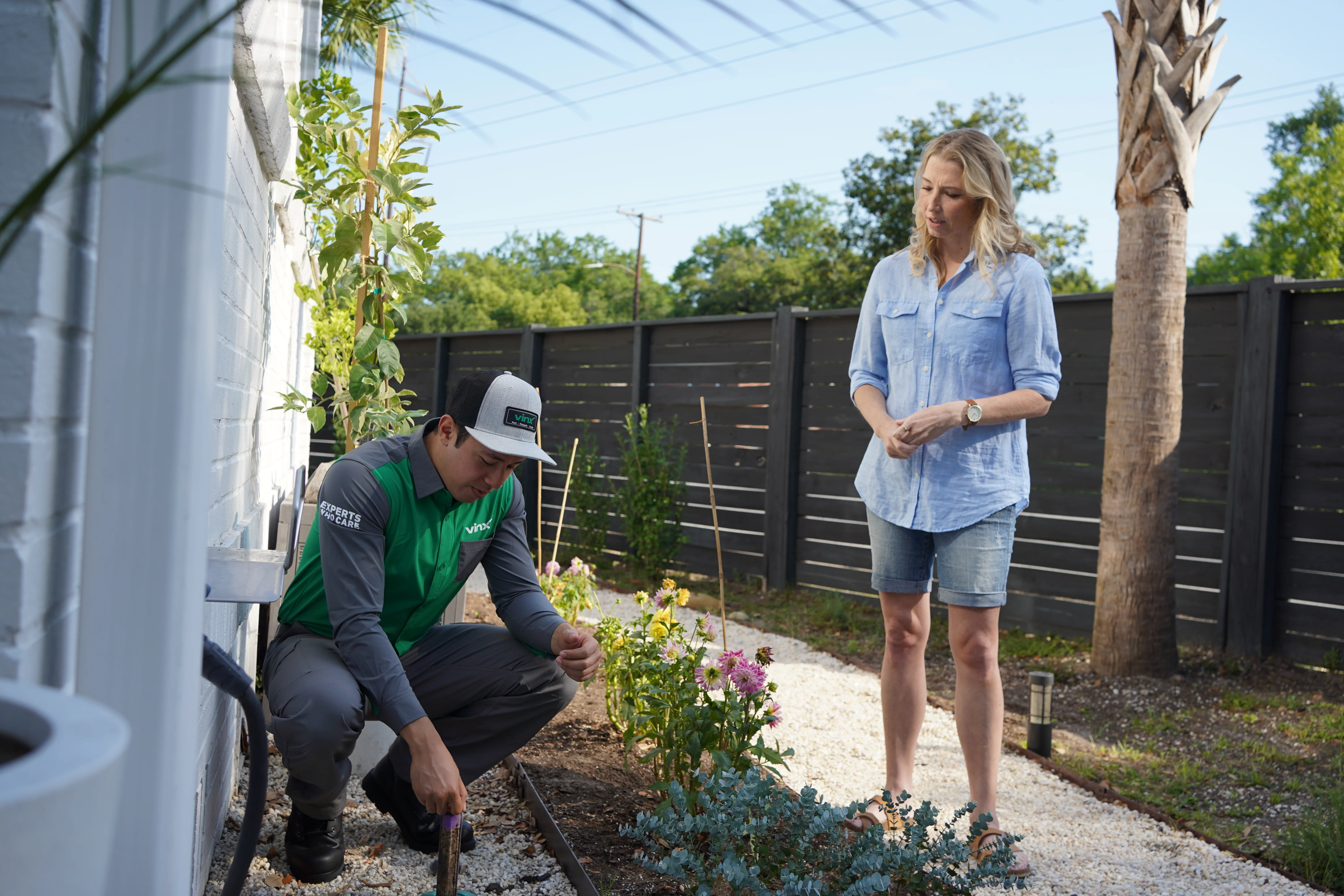
Micro-encapsulated residual insecticide goes around the full foundation band, the window and door frames, the garage perimeter and every crawlspace opening. Any spider crossing the treated band dies on contact. The time-release formulation keeps working between quarterly visits, holding a barrier against populations moving in from wooded lot edges.
Interior Treatment
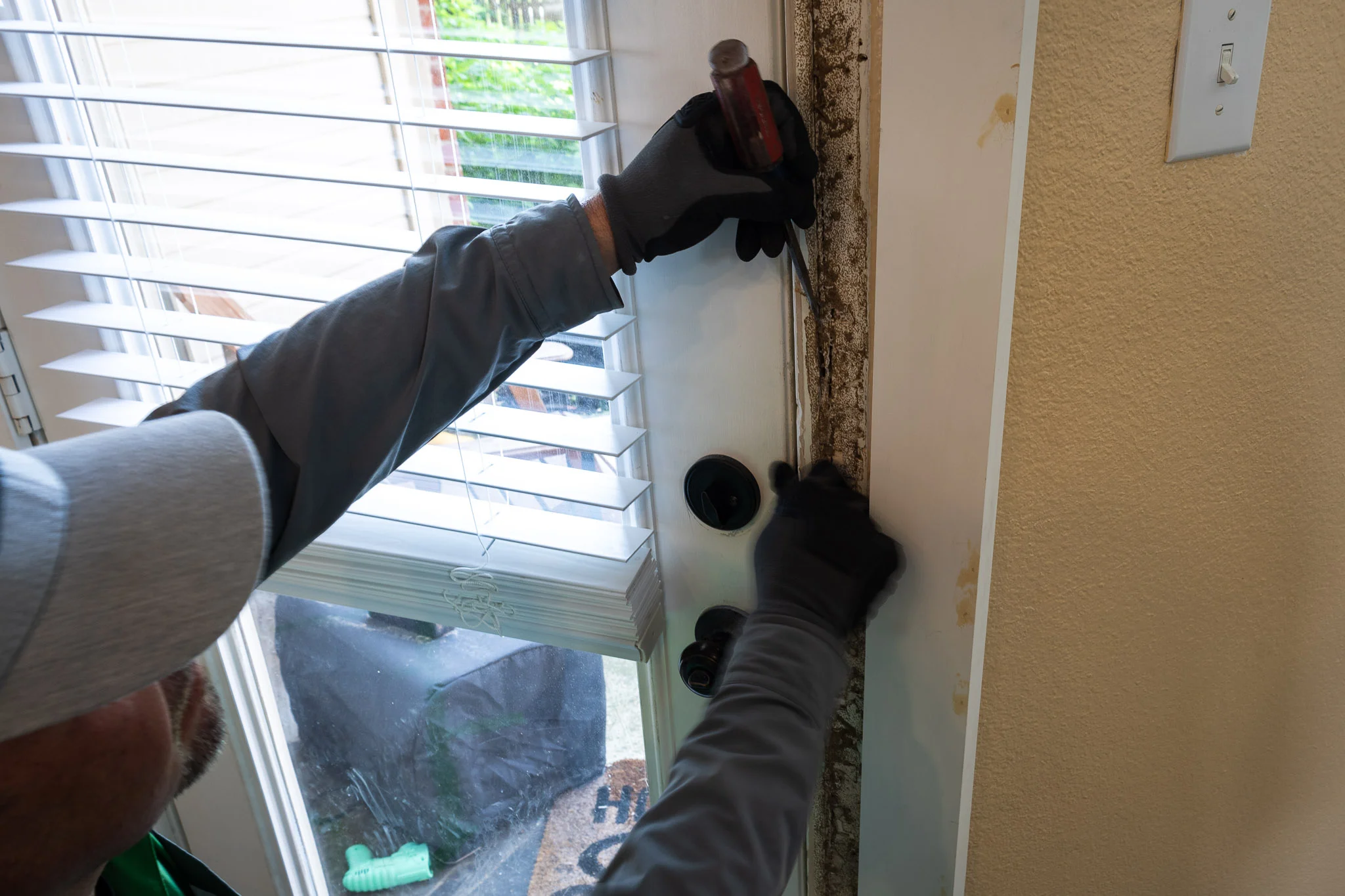
Where an interior infestation is confirmed, black widows in the garage, widow spiders in closets or storage, or established house spiders in basements and crawlspaces, targeted residual dust or liquid goes into void spaces, wall junctions and harborage. Interior treatment is available on every visit at no additional charge.

Harborage Reduction Assessment
Each visit closes with your technician identifying and recording what is raising spider pressure: woodpiles near the structure, mulch piled too deep at the foundation, debris piles, dense ground cover beside entry points, and exterior lighting drawing the insects spiders feed on. Recommendations go to you in writing after every inspection.
What Customers Say
Real Reviews from Charleston Homeowners
I’ve been with Vinx for roughly 5 years. They always call and text with a heads up regarding the scheduled service date. Leon has been at my property most of the time we’ve had Vinx service. He is courteous, helpful, thorough, and asks what else he might be able to do (e.g. - spray inside house or garage, termite trap inspection scheduling, etc…).
I am a Very satisfied customer of Vinx pest control. I have received top customer care and service since 2020. The technicians are always polite, friendly and accommodating. The technicians have been servicing my home so long that they are mindful not to show up too early as they are familiar with my work from home schedule. I appreciate the flexibility and consideration. I am a happy customer. 😊
They did a great job gave inspection of the exterior area and the crawl space gave me estimated statement. Brush off the spider pods and spray ant hill mound.the service manager was very helpful and Brandon.. Leonard has returns knock out any issue if the gate is lock he reach out informed me and comes back.
Leon did a great job of spraying around the perimeter and sweeping down the spider webs and wasp nests. He is always pleasant to do business with.
Josh contacted Today Paul and his partner performed the work to prevent termites. They arrived right on time and got right to work. Both performed the work professionally and diligently. They installed the Sentricon (spelling?) system. I am anxious to discover if any termites "took the bait"! Vinx Pest Control Company continues to exceed in all their work. I have already found dead bugs, a positive sign their treatment works. I highly recommend Vinx to provide pest control services. As usual, great work! I am pleased with Vinx. No bugs or pests were found.
Vinx has always done a great job treating my house and yard. Austin has always been on time that he gives as well and is greatly appreciated.
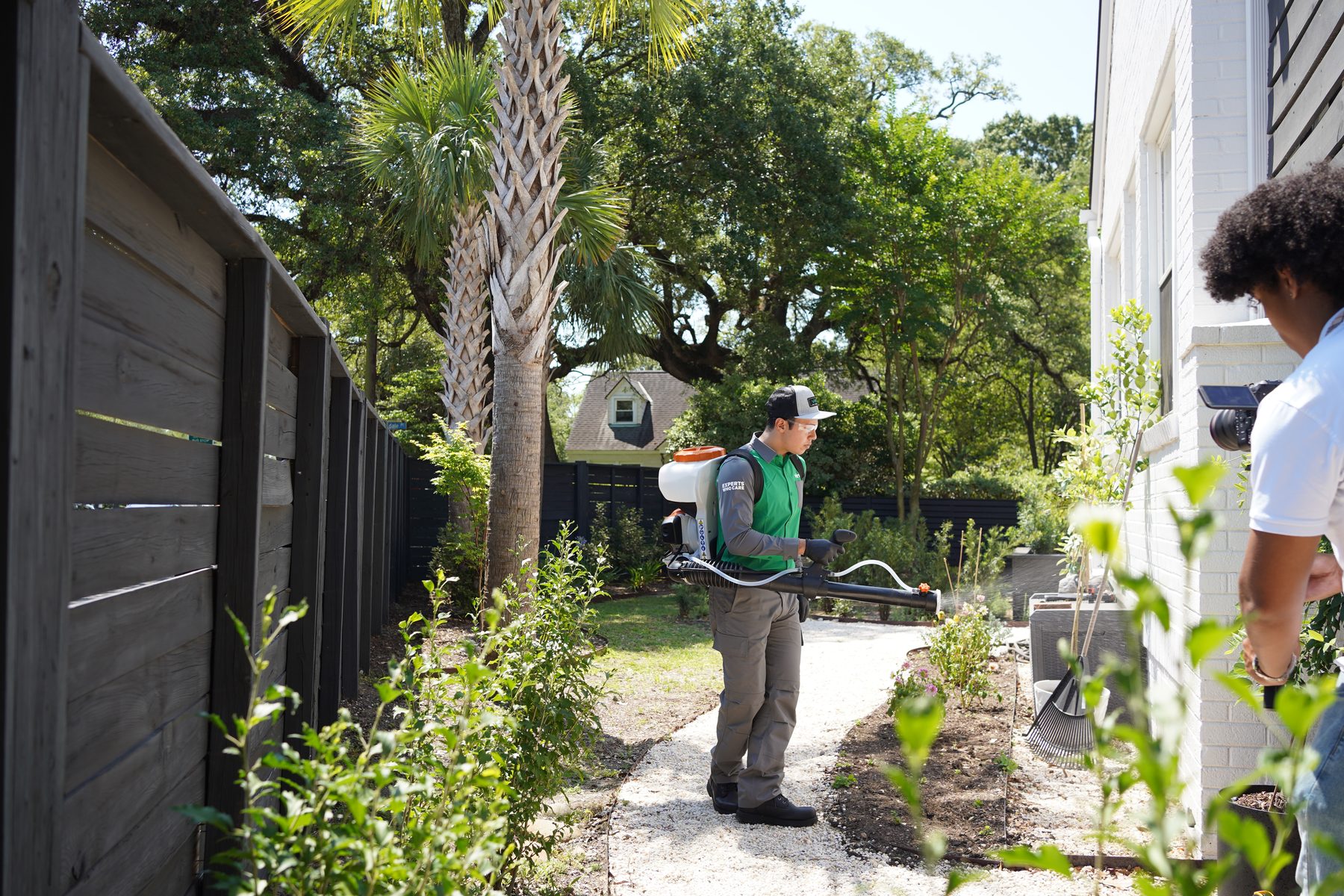
Black Widows in Your Garage? Webs on Your Porch? Call Vinx.
Free inspection. Web and egg sac removal included. Same-day appointments available.
Call 855-800-8469Spider Pressure by Neighborhood
Know Your Neighborhood’s Spider Risk
Downtown & French Quarter: Cellar Spiders & Widows at Ground Level
Historic cellars, crawl spaces, and utility voids hold steady humidity, which suits cellar spiders and common house spiders year-round. Black widows take the undisturbed low, dark spaces instead: cellar corners, old brick voids, and the underside of exterior stair treads. Attached row houses share crawl spaces and party-wall voids, so de-webbing one property only partly helps if the building next door is untreated. Courtyard and piazza lighting runs all night and keeps delivering the insects the webs are built for.
West Ashley: Orb Weavers in the Open, Widows in the Clutter
Open lawns with shrub borders and fence lines support the large orb weaver webs that appear across late summer and autumn. Those are the conspicuous ones, and they are harmless. Black widows are the species worth attention, and they favor ground-level clutter: wood piles, stacked pots, irrigation and meter boxes, and the underside of deck framing. The drainage canal network raises local insect volume, and spider numbers track their prey.
James Island: Wolf Spiders & Ground-Level Harborage
Marsh edges and dense tree cover suit wolf spiders, which hunt on the ground rather than building webs, so they turn up indoors through door sweeps and garage gaps rather than in a corner. Mulch beds, leaf litter, and yard debris stacked against the foundation are the harborage that matters. Golden silk orbweavers become conspicuous along wooded edges late in the season and are harmless. Widows occupy sheds and crawl space piers.
Johns Island & Wadmalaw: Outbuildings & Field Edges
Rural properties see the widest species mix, because field and wood edges supply far more prey than a suburban lawn. Barns, equipment sheds, and stored materials are prime widow habitat, and reaching blind into them is how most bites actually happen. Large lots mean more linear perimeter and more detached structures to include in the plan. A single bright light on a barn or workshop concentrates insects, and therefore spiders, at that spot.
Summerville & Goose Creek: New Construction Gaps
New slab construction moves spider entry to garage door seals, weep holes, and gaps behind siding rather than crawl space vents. Fresh landscaping and leftover construction debris give ground-hunting spiders cover right against the foundation. Widows colonise new irrigation boxes, meter boxes, and downspout elbows within a season. Newer neighborhoods also tend to have bright, uniform exterior lighting, which reliably concentrates prey insects at doorways.
North Charleston: Older Stock & Commercial Lighting
Older residential stock has more gaps at doors, windows, and utility penetrations, and spiders follow the insects that come through them. Commercial and industrial lighting nearby lifts night-time insect volume across whole blocks, which shows up as heavier webbing on the houses closest to it. Multi-family buildings share exterior corridors and stairwells, so treatment has to cover those rather than one unit’s patio. Cellar and house spiders dominate interior sightings here.
Mount Pleasant: Canopy, Creeks & Screened Porches
Wooded neighborhoods west of Highway 17 hold humidity and prey, which supports orb weavers and wolf spiders. Screened porches are the most common complaint in this part of the metro, because they trap insects and give web-builders protected anchor points that weather never disturbs. Waterfront and creek-side properties see higher insect volume and correspondingly heavier webbing. Widows use boat covers, dock boxes, and under-deck framing.
Folly, Isle of Palms & Sullivan’s: Under-House Framing
Elevated construction leaves joists, ductwork, and piling framing open underneath, and that space is dry, sheltered, and rarely disturbed, which makes it the best widow habitat on the island. Outdoor showers, ground-floor storage rooms, and dock boxes are exactly the places people reach into without looking. Salt air corrodes screens and door sweeps faster than inland, reopening gaps that were previously sealed. Marsh-side insect volume keeps orb weaver webs rebuilding overnight.
Daniel Island & Cainhoy: New Build & Irrigation
Young landscaping, continuous irrigation, and new hardscape combine to give a lot of ground-level cover alongside high insect volume. Widows establish in irrigation and meter boxes, downspout elbows, and under new deck framing quickly, often within the first season after landscaping goes in. Uniform street and architectural lighting across the island concentrates insects at doorways. Garage door seals on new builds are the most common entry gap found here.
South of Broad & Harleston Village: Piazzas & Shared Voids
Piazzas and porch ceilings are close to ideal for web-builders: sheltered anchor points along columns, railings, and ceiling corners that rain never reaches. Attached single houses share crawl spaces and party-wall voids, so neighboring properties keep re-supplying each other regardless of how thoroughly one is treated. Original brick and mortar voids at ground level are classic widow harborage. Gas lanterns and architectural uplighting run all night and keep prey arriving.
6 Species. Year-Round.
Why Charleston Has a Year-Round Spider Problem
Most homeowners treat spiders as seasonal, worse in late summer and gone by winter. That is not how it works in Charleston.
The Lowcountry’s mild winters mean the insects that spiders feed on stay active year-round. Consistent insect activity means consistent spider activity. Cockroaches, flies, mosquitoes and moths are active in Charleston's climate every month of the year, and spiders go where the food is. Treating spiders on their own solves only half the problem. Vinx treats both: an exterior perimeter spray covering spiders and the insect populations feeding them, with web removal every visit.
Charleston's outdoor living culture adds pressure of its own. People spend a great deal of time on porches, patios and screened enclosures, which are exactly where spiders gather around exterior lighting after dark. Exterior lights draw moths and flying insects. Spiders follow the moths. By the time a web spans your porch ceiling, an established population is already sitting in the eaves and the surrounding vegetation.
Charleston Spider Species

Southern Black Widow
The southern black widow is the most medically significant spider in Charleston. Adult females are shiny black with a distinctive red hourglass marking on the underside of the abdomen. Only the adult female is of any concern; males are much smaller and essentially do not envenomate people. Black widows are non-aggressive and typically bite in self-defense when pressed against skin or guarding an egg sac. The egg sac is papery, tan to gray colored, and spherical, finding one in a garage corner or crawl space is a stronger indicator of established black widow presence than finding the spider itself.
Symptoms of a black widow bite include severe joint pain, muscle weakness, tremors, difficulty breathing, and clammy skin. An effective antiserum is available, seek medical attention immediately if you believe you have been bitten. In Charleston, black widows are most commonly found in garages, crawl spaces, woodpiles, under decks, and in meter boxes. They are active year-round in the Lowcountry’s mild climate.
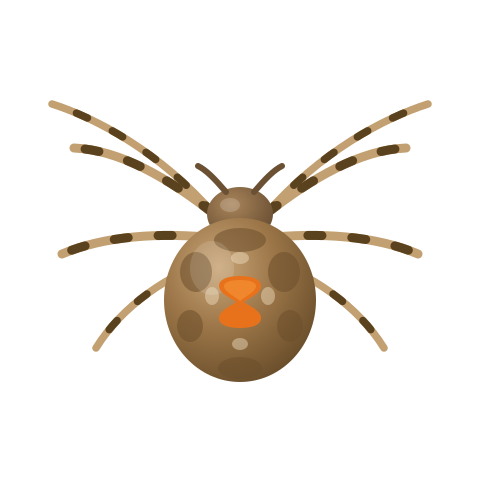
Brown Widow
The brown widow has been expanding its range in South Carolina over the past decade and is now firmly established in Charleston’s coastal neighborhoods. Brown widows are tan to brown with an orange rather than red hourglass marking. Clemson Extension puts it plainly: the brown widow’s venom is as toxic as the black widow’s, but brown widows are far less likely to bite and do not defend their webs as vigorously. The difference is temperament, not potency. Brown widows prefer warmer, more sheltered locations, they are commonly found inside outdoor furniture, under patio chairs, in rolled-up tarps and garden hoses, and inside mailboxes. If you are reaching into outdoor storage areas without checking first, brown widows are the species most likely to be present.
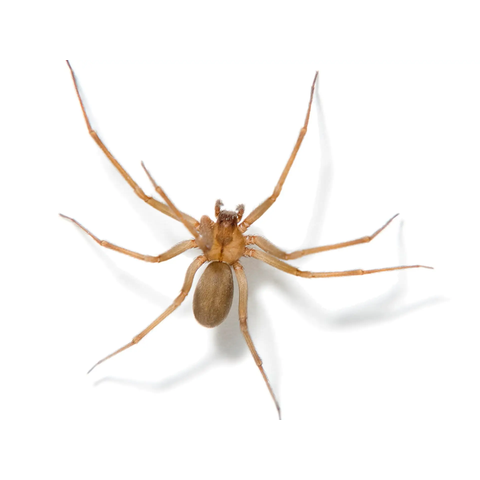
Brown Recluse
The brown recluse is identified by the distinctive violin-shaped marking on its back, a dark brown fiddle shape with the neck pointing toward the abdomen. Brown recluses are not aggressive, they bite only when trapped against skin, typically when homeowners put on clothing or shoes that have been stored undisturbed. Where the species is genuinely established its bite can occasionally cause a slow-healing wound, but that is not the Charleston situation. A coastal South Carolina study collected 118 spiders submitted by the public as suspected recluses and found not a single one. If you have a sore that darkens or spreads over several days, see a doctor rather than assuming a spider: in one emergency-department study of people convinced they had a spider bite, about 86% actually had a bacterial skin infection. Brown recluses prefer undisturbed harborage areas, inside stored boxes, behind shelving, in rarely used closets, and in attic insulation. Established populations are rare this far east. The species' natural range is the Midwest and south-central states, and verified specimens here are heavily outnumbered by suspected bites — most turn out to be another brown spider, or a wound with a different cause entirely.
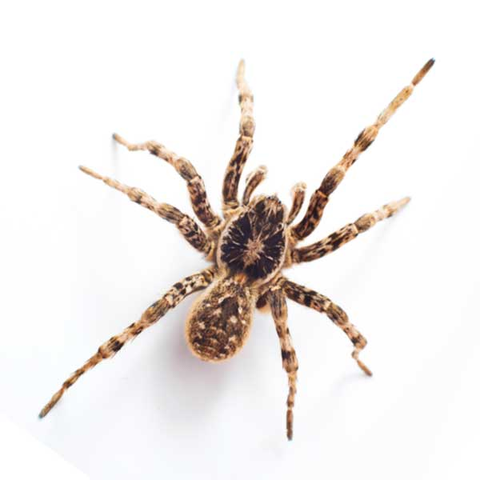
Wolf Spider
Wolf spiders are large, fast-moving, and frequently mistaken for brown recluses by Charleston homeowners. They are not venomous to the degree that warrants medical concern but their size, up to an inch and a half, makes them alarming. Wolf spiders are ground hunters that do not build webs. They chase prey actively and are most commonly found in garages, basements, and along exterior foundations. They enter homes through gaps at ground level and are most active at night. Despite their intimidating appearance, wolf spiders are not medically significant.
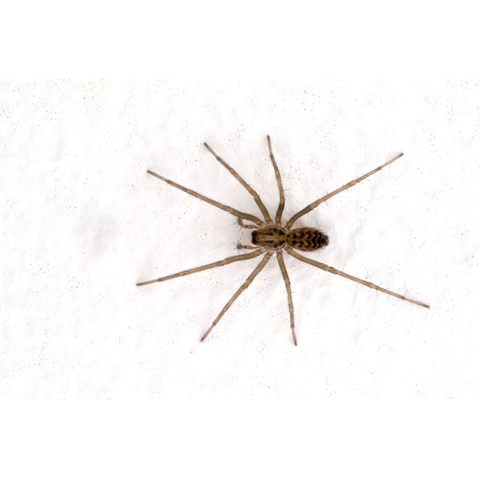
House Spider & Cellar Spider
House spiders and cellar spiders, often called daddy long-legs, are what turns up most often inside Charleston homes. They are completely harmless and genuinely useful, since they eat other insects. It is their webs on eaves, ceilings and in corners that create the visible presence prompting most calls. Vinx clears webs from every accessible exterior and interior area on each service visit.
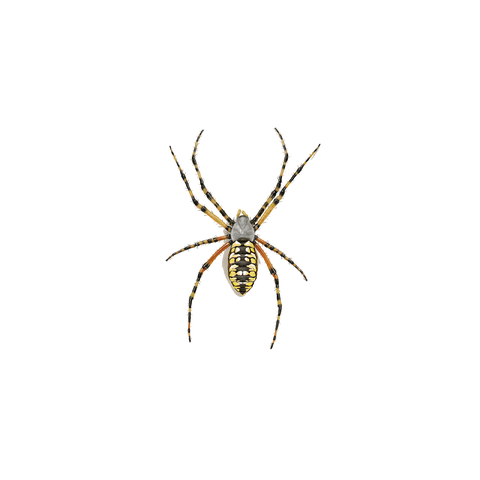
Orb Weaver
Orb weavers build the large, distinctive circular webs commonly found across porch ceilings and in garden vegetation in Charleston. They are active from late summer through autumn and their large webs are the most visible sign of seasonal spider pressure. Orb weavers are harmless and ecologically beneficial but their webs across entry points and outdoor living areas create nuisance pressure that peaks from August through November.
The Evidence on Bites
Two Spiders Here Matter Medically. The Rest Is Reputation.
Spider fear is mostly misplaced, and pest control companies are largely responsible for that. Here is what the research actually shows about Charleston spiders, including the parts that are bad for our sales pitch.
Most “Spider Bites” Are Not Spider Bites
In an emergency-department study of 182 people who arrived convinced they had been bitten by a spider, only 7 of them, under 4%, actually had a spider bite. About 86% had a skin or soft-tissue infection instead, many of them believed to be MRSA. If you have a sore that is spreading, darkening, or getting more painful over days, the single most useful thing you can do is see a doctor rather than a pest control company.
The Brown Recluse Is Not a Charleston Spider
This is worth being blunt about, because our own page used to imply otherwise. South Carolina physicians diagnosed several hundred brown recluse bites a year through the 1990s and 2000s, against just 44 verified specimens ever collected in the entire state since 1953. When researchers asked the public in Beaufort and Jasper counties to submit suspected recluses, 118 spiders came in and not one was a recluse. Most were wolf spiders. Clemson does not even publish a brown recluse factsheet for South Carolina.
Black Widow Bites, Honestly
The southern black widow is found throughout South Carolina and is the one genuinely worth respecting. Its bite is painful and can cause muscle cramping, sweating, and nausea that warrants prompt medical evaluation. But across more than 23,000 recorded exposures, 65% produced only minor effects and 1.4% were severe, symptoms typically resolve within 24 to 48 hours, antivenom is reserved for the small number of serious cases, and no US deaths have been reported in decades.
The Egg Sac Tells You Which Widow
The brown widow arrived in South Carolina through Charleston and Beaufort in the late 1990s and is now common across the Lowcountry. Telling the two widows apart is easiest from the egg sac rather than the spider: a black widow’s sac is smooth and papery, while a brown widow’s is covered in pointed projections, closer to a sandspur seed. A brown widow female can produce 10 to 20 sacs in her life, roughly 250 eggs each, which is why finding sacs matters more than finding one spider.
What to Look For
Signs of a Spider Infestation in Your Charleston Home
Webs in Eaves & Corners
Especially in garages, crawl spaces and attics: visible web building in sheltered areas
Papery Egg Sacs
Fixed to webs or tucked into sheltered areas, and each sac can hold hundreds of eggs
Activity Near Exterior Lights
Spiders concentrating at porch lights after dark, because the moths draw insects and the insects draw spiders
Large Fast-Moving Spiders
Floor-level sightings after dark, which is wolf spider activity
Low Ground-Level Webs
Small dark spiders in ragged webs close to the ground, possibly black widow or brown widow
Shed Spider Skins
Found in undisturbed areas, indicating an established population rather than the occasional wanderer
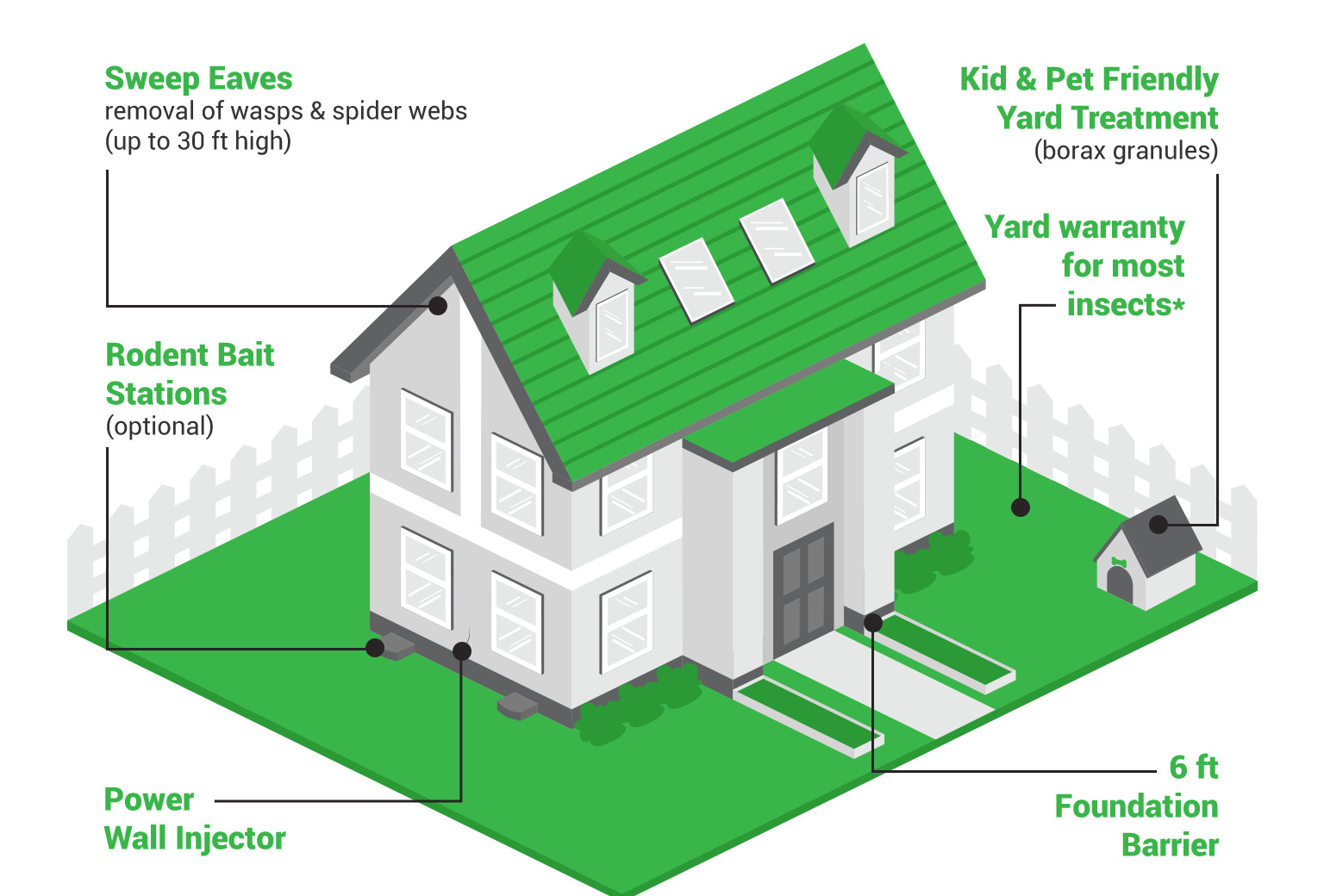
Vinx HomeGuard Plan
What Happens at Every Visit
Our technicians don't just spray and leave. Every quarterly service covers your full exterior and interior, done right, backed by a written guarantee.
- Sweep Eaves: Wasp nests & spider webs removed up to 30 ft
- Power Wall Injector: Treats wall voids where pests hide
- 6 ft Foundation Barrier: Full perimeter treatment every visit
- Yard Warranty: Free retreatment for most insects
- Kid & Pet Safe Yard Treatment: Borax granules, safe after dry
Homeowner Tips
6 Ways to Reduce Spider Pressure Right Now
Kid & Pet Safe
Our Treatments Are Safe for Your Whole Family: Including the Furry Members
Every product we use is EPA-registered and applied strictly at labeled rates by licensed technicians. We take the guesswork out of safety so you can feel confident letting kids and pets back into treated areas quickly.
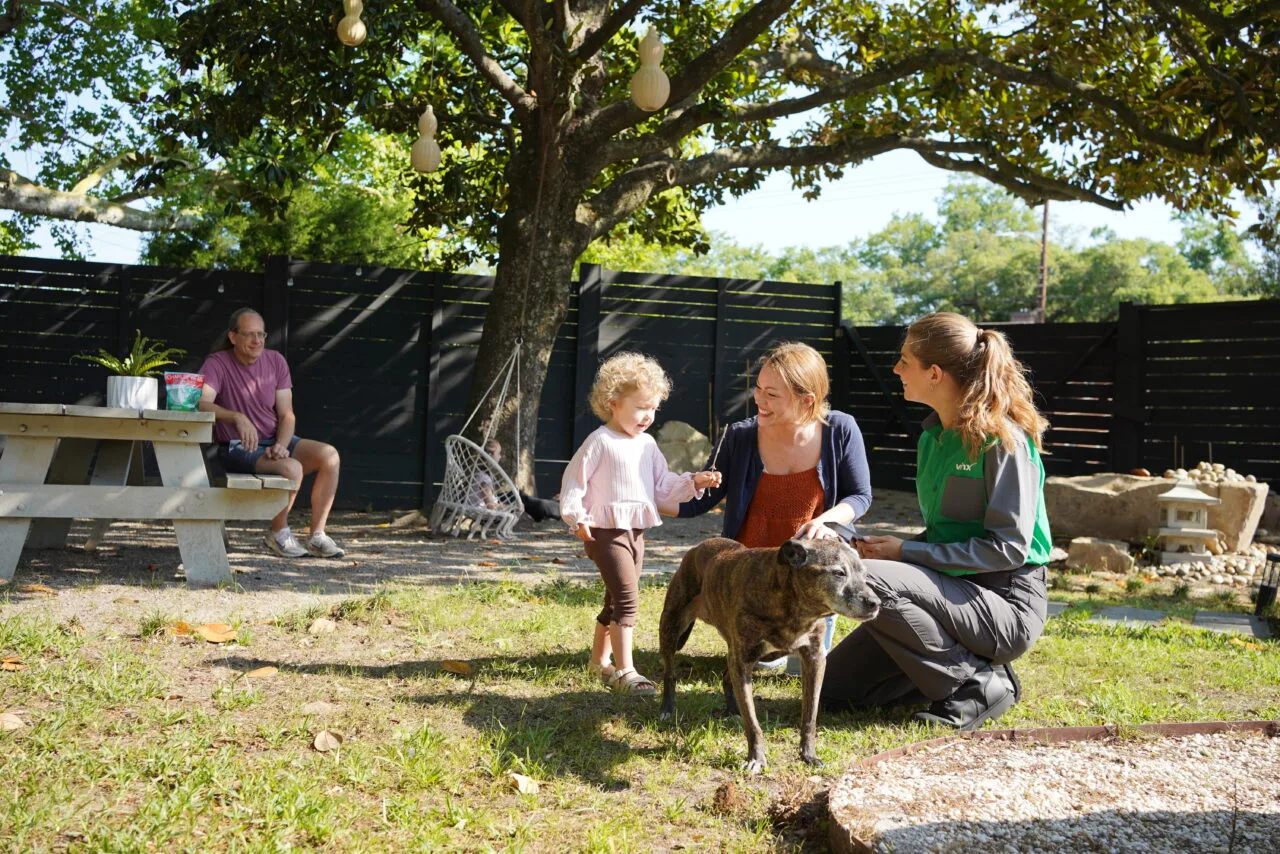
EPA-Registered Products Only
All products we apply are EPA-registered and used strictly per label requirements. Our licensed technicians are trained to apply the right product in the right place at the right rate, every time.
Dry Time Before Re-Entry
Exterior spray treatments dry in 30–60 minutes. Once dry, treated surfaces are safe for children and pets to contact. Your technician will confirm the all-clear before leaving your property.
Interior Treatment On Request
We treat only what’s needed, where it’s needed. Gel baits in cabinets and crack-and-crevice applications keep products away from areas pets and children frequent most.
Botanical Options Available
Have specific sensitivities? Ask your technician about our plant-derived treatment options. We offer botanical alternatives for households that prefer a more natural approach.
Have a concern about products used near your pets or children? Call 855-800-8469 and we’ll walk you through exactly what we use and why it’s safe.
Explore More
More Pest Control Services in Charleston

Pest Control Charleston
General pest protection

Ant Control Charleston
Household ants & others

Bed Bug Control Charleston
Heat & liquid treatments

Cockroach Control Charleston
Palmetto bug & roach removal

Mosquito Control Charleston
Monthly barrier treatments

Rodent Control Charleston
All rodents covered

Termite Control Charleston
Bait systems & liquid treatment

Tick & Flea Control Charleston
Yard & pet protection
Exterminator Charleston
Same-day local exterminators

Wasp Control Charleston
Nest removal & prevention
Frequently Asked Questions
Spider Control FAQ for Charleston Homeowners
Quarterly spider control sits in the Vinx HomeGuard plan at $49 per month, covering exterior perimeter treatment, web and egg sac removal and in-wall power dusting. It covers spider pressure through the year and includes free re-treatment if activity returns between visits.
Yes. In Charleston's mild climate, southern black widows stay active all year. Garages, crawl spaces, woodpiles, the space under decks and meter boxes are where they turn up most. The brown widow has also established in Charleston’s coastal neighborhoods and is increasingly found in outdoor furniture, garden hoses, and outdoor storage areas. Both species are medically significant and should be treated as such.
Brown recluses are rare in Charleston. The species' natural range is the Midwest and south-central states, and verified specimens this far east are heavily outnumbered by suspected bites, most of which turn out to be another brown spider. They are found in undisturbed harborage areas, inside stored boxes, behind shelving, in rarely accessed closets, and in attic insulation. Where the species is established its bite can occasionally cause a slow-healing wound, but South Carolina records show hundreds of physician-diagnosed recluse bites a year against only 44 verified specimens ever collected in the state, and a coastal study found none among 118 spiders the public submitted as suspected recluses. A sore that darkens or spreads over several days is far more likely a bacterial skin infection and should be seen by a doctor. If you do find a brown spider with a violin-shaped marking on its back, call 855-800-8469 for a same-day inspection.
An adult female black widow is glossy black with a red hourglass beneath the abdomen. They hang inverted in irregular webs in dark, sheltered places. The egg sac is papery, tan to gray, and spherical, finding an egg sac is often a better indicator of established black widow activity than finding the spider itself. Leave it alone and call 855-800-8469 for a same-day inspection.
Exterior lighting pulls in moths and flying insects, and those draw the spiders that feed on them. Orb weavers and other web-builders gather around lit eaves, porch ceilings and window frames after dark. White and blue-spectrum bulbs outside draw far more insects than amber or yellow ones. Quarterly exterior treatment with web removal keeps the population down between visits.
Yes. Every product Vinx uses is EPA-registered. The exterior perimeter spray is safe for pets and children once dry, usually one to two hours. Dust in crawl spaces and garages stays within non-living spaces. We never spray while children or pets are in the treatment area.
Yes. Web and egg sac removal comes with every Vinx service visit. We clear cobwebs and egg sacs from every accessible eave, soffit, porch ceiling, second-story overhang and garage ceiling. Removing the egg sacs matters particularly, since one black widow sac can hold 200 to 300 eggs. Spraying while leaving the egg sacs in place only postpones the next infestation by six to eight weeks.
A Charleston garage is prime habitat for black widows, brown widows and wolf spiders: dark, sheltered, with steady insect activity. The best approach combines exterior perimeter spray, targeted dust injection into garage ceiling corners, web and egg sac removal and clutter reduction. Call 855-800-8469 and we will inspect the garage the same day.
Yes. Most spider control appointments in Charleston are same-day or next-day. Call 855-800-8469. Search for spider exterminators near me in Charleston and Vinx is the local option, with same-day availability. If we cannot reach your home by the next business day, the initial service is free.
Spiders follow the food, and the food is insects. Spiders present means an active insect population inside or around the house. The usual attractants are exterior lighting drawing moths, gaps at the foundation or garage door letting insects through, damp crawl spaces, and clutter in garages and attics giving insects harborage. Treat the spiders without touching the insect population and new ones establish in the same spot within weeks. Vinx handles both on every visit.
Service Coverage
Spider Control Across Charleston & the Lowcountry
Serving every neighborhood in the Charleston metro area
Serving the Greater Charleston Area