Ant Control in Charleston, SC
Charleston’s Ant & Argentine Ant Experts — Six Species Treated
Ant control in Charleston requires treating six distinct ant species — each with different biology and a different treatment method. Vinx identifies the species first, then treats the colony at its source. Free re-treatment guarantee.
Get Started in 60 Seconds
Choose what’s easiest for you
Request a Quote
We usually respond in 2 minutes
Call 855-800-8469
Get a Live Person (no AI agents here!)
Sign Up Online
Get pricing and schedule now





Welcome to Vinx Pest Control
A Company That Actually Backs What It Says
At Vinx, we combine professional-grade treatments with a level of service most pest control companies don't offer. Local technicians, fast response times, and a guarantee that actually means something.
Get a Free Quote"I'm not passionate about killing bugs. I'm passionate about customer service. At Vinx, you get experts who show up, do the job right, and stand behind every visit. No runaround, no fine print."
WELCOME TO VINX PEST CONTROL
Ant Control Plans for Charleston Homeowners
Standard Residential Protection
- 4 Seasonal Treatments Per Year
- 50+ Covered Pests
- Interior, Exterior & Yard Treatment
- Unlimited Free Re-Services
- 100% Money-Back Guarantee

Upgraded Yard Protection
- 6 Home & Yard Treatments Per Year
- 50+ Covered Pests
- Yard Ant Elimination Guarantee
- Flea & Tick Elimination Guarantee
- 100% Money-Back Guarantee

Most Comprehensive Protection
- 9 Treatments Per Year
- 50+ Covered Pests
- 8 Mosquito Treatments (Mar–Nov)
- Flea, Tick & Ant Coverage
- Free Bed Bug Treatments if Needed*
*Starting rates vary by home size and area. All plans billed monthly.
Request Your Free Pest Control Quote
Fill out the form below and a Vinx team member will reach out within 2 minutes during business hours.
Prefer to talk? Call 855-800-8469 for a live person — no AI agents.
Our Approach
How Vinx Eliminates Ants in Your Charleston Home

Ant Inspection & Colony Identification
Your technician inspects the full property — foundation, entry points, kitchen, bathrooms, and yard — to identify the ant species and locate colonies, trails, and nesting sites. Different species require different treatments; correct identification is the first step to lasting control.
Exterior Perimeter Treatment
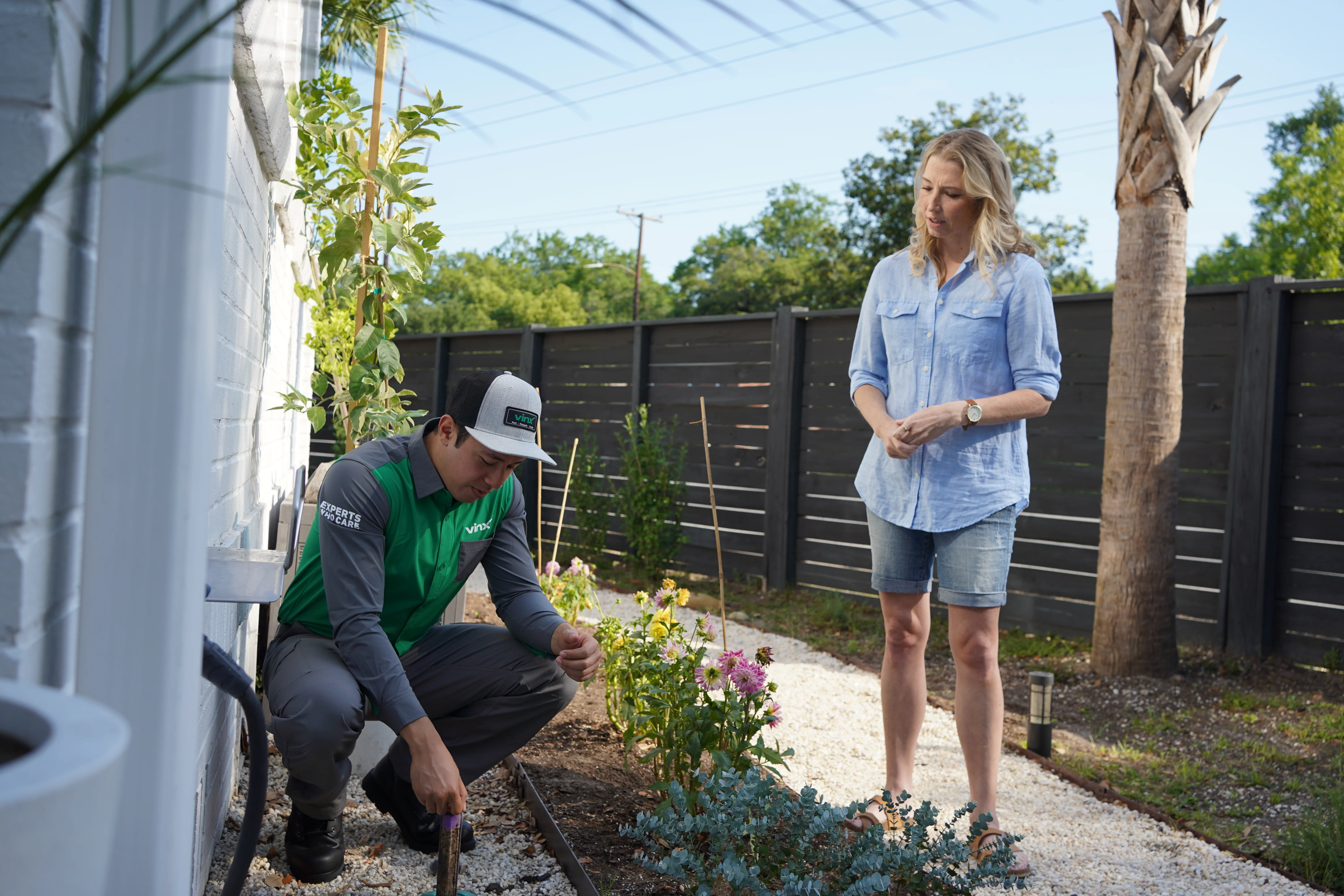
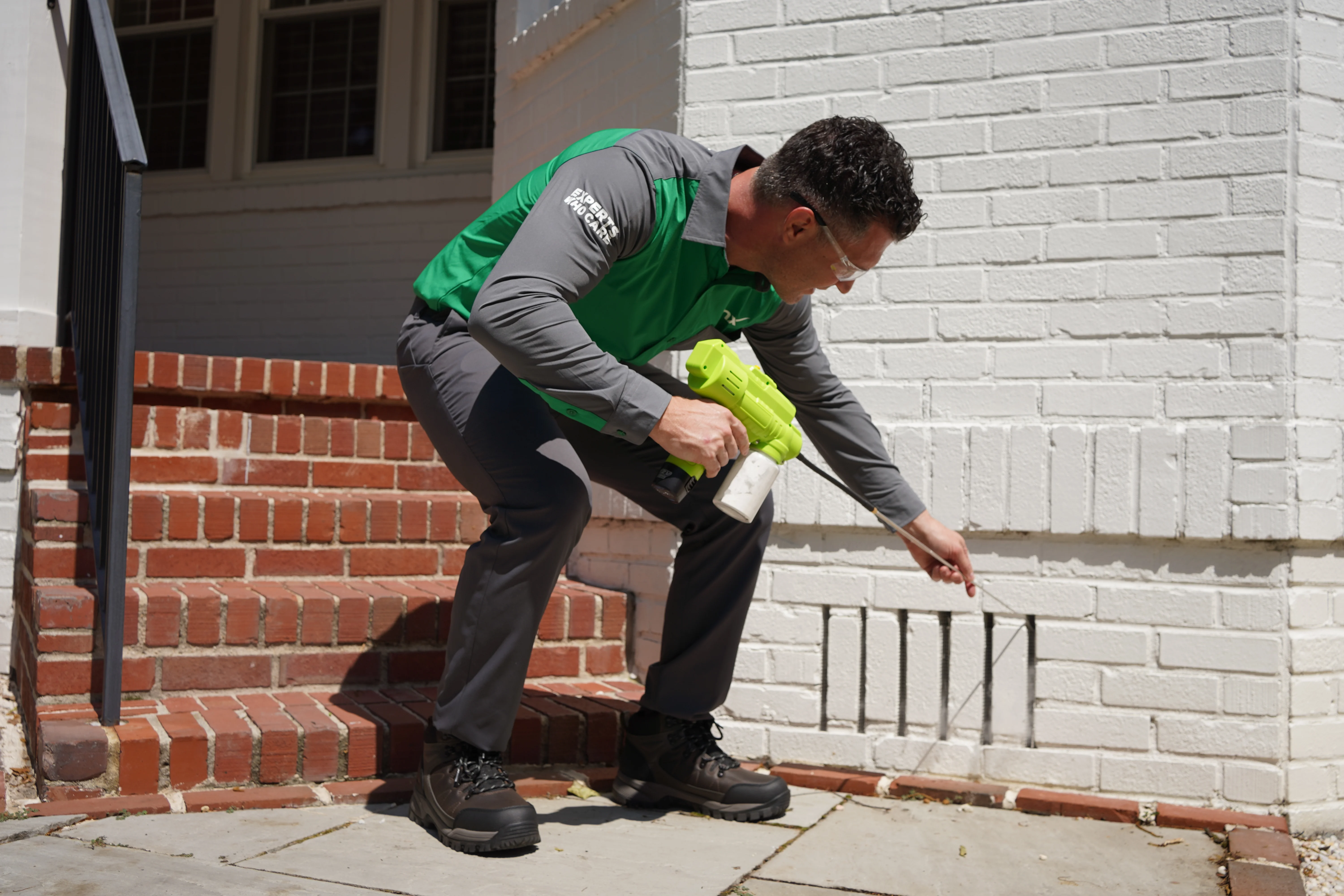
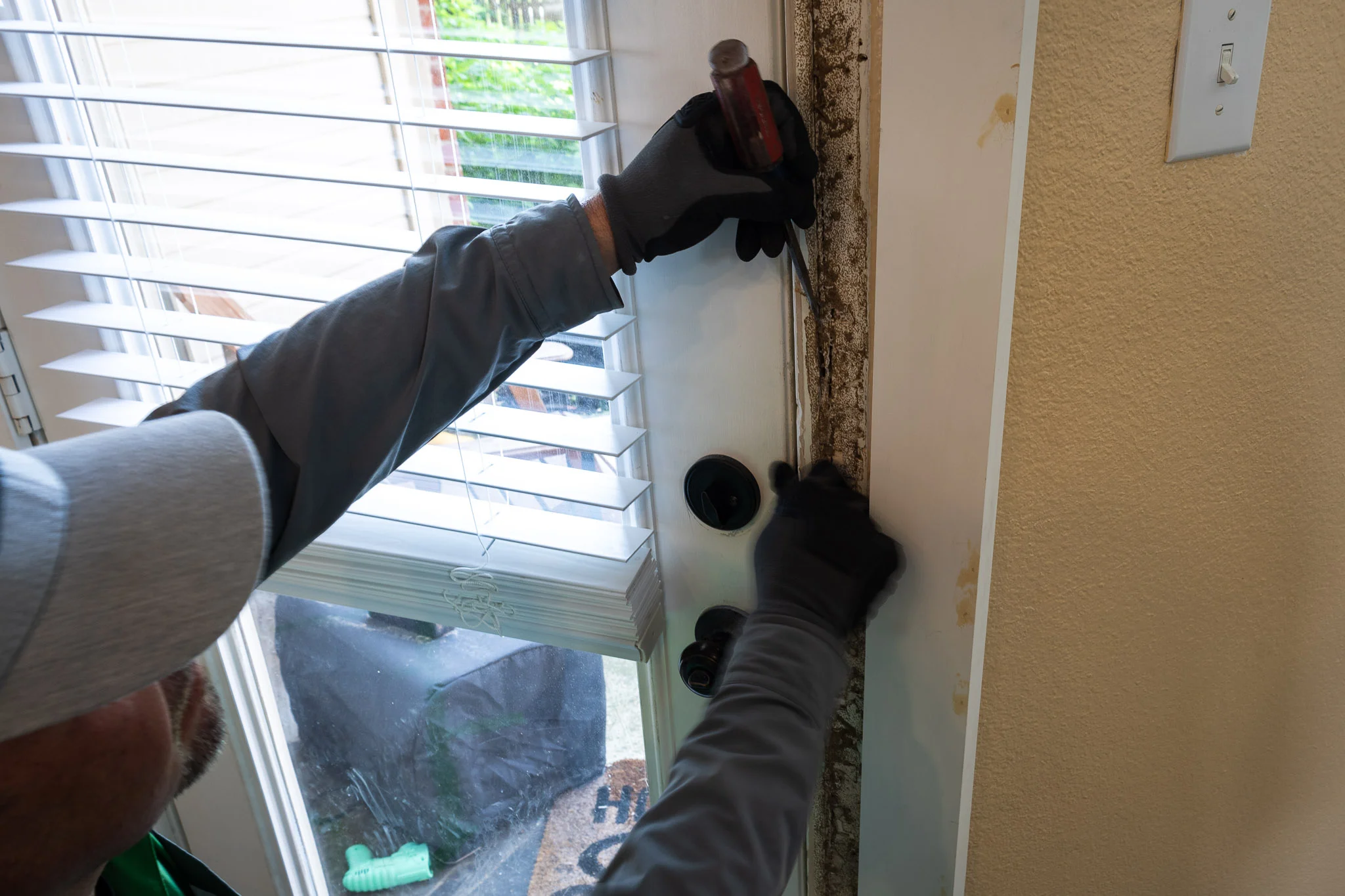
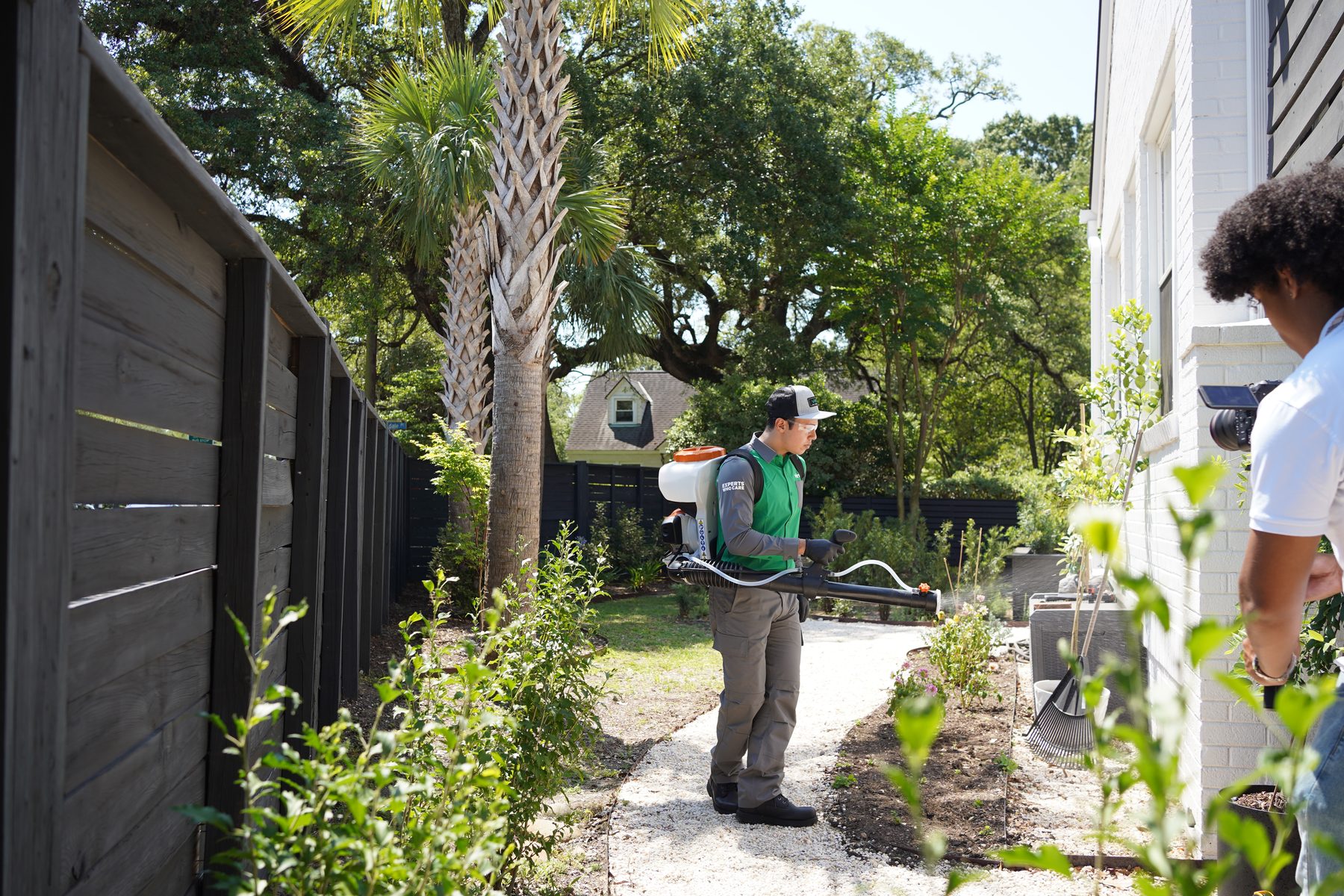
A residual insecticide barrier is applied around the full foundation, entry points, window and door frames, and utility penetrations. Ants crossing the treated zone are eliminated and carry product back to the colony. The time-release formula maintains the barrier between quarterly visits.
Bait & Interior Treatment
Slow-acting bait is placed along active trails and near nest sites so foragers carry it back and eliminate the colony from the inside out. Interior cracks, wall voids, and problem areas receive targeted treatment where ants are actively entering or nesting inside the structure.
Quarterly Maintenance & Free Re-Treatments
Quarterly visits keep the perimeter barrier fresh and catch any new colonies before they establish indoors. If ants return between scheduled services, we come back at no charge. Your technician also advises on conducive conditions — moisture, food storage, and landscaping — that attract ants to your property.
What Customers Say
Real Reviews from Charleston Homeowners
“Anthony of Vinx Pest Control has done a great job. No roaches, ants, or pests in existence any longer.”
“My dad had several ant bites while sleeping. Vinx was the only company that made time to go to his house. They show compassion and professionalism.”
“Leon does a good job. He cares about his customers and tries to meet their needs as best as he can.”
“Ants had taken over my entire backyard. One treatment from Vinx and they were completely gone within a week. The technician was thorough and professional.”
“We had carpenter ants destroying the trim around our windows. Vinx found the colony, treated it, and the damage stopped. Great service from start to finish.”
“Argentine ants were getting into everything in my kitchen. After Vinx treated the perimeter and interior, they vanished within days. Worth every penny.”
Six Ant Species in One City. One Number to Call.
Free inspection. Same-day appointments available. Species identified before any treatment begins.
Call 855-800-8469Pest Pressure by Neighborhood
Know Your Neighborhood’s Risk
Downtown & French Quarter — Cockroaches & Formosan Termites
Cockroaches and Formosan termites dominate. Pier-and-beam foundations with direct soil contact and aged drainage infrastructure create highest cockroach pressure in the city. Historic timber framing in the French Quarter and South of Broad sits directly above some of the most Formosan-active soil in South Carolina.
West Ashley — Ants & Mosquitoes
Drainage canals and low-lying topography create standing water year-round. Norway rats use canals as corridors toward residential structures. Mosquito pressure from Stono River marsh edges is among the highest in the metro. Ant mounds establish aggressively in the open residential lawns common throughout West Ashley.
James Island — Roof Rats & Mosquitoes
Marsh edges and wooded residential streets create persistent roof rat harborage. Tidal flooding displaces rodent populations toward structures seasonally. Mosquito pressure from tidal flats year-round. Dense tree canopy throughout James Island gives roof rats unobstructed access to rooflines from overhanging branches.
Johns Island — Ants & Rodents
Agricultural land proximity means ant pressure significantly higher than urban Charleston. Rural residential properties see more rodent species variety than the urban core. Large lot sizes mean perimeter treatments cover more linear footage — technician advises at inspection. Eastern Subterranean termite pressure also elevated along the rural wooded corridors.
Summerville & Goose Creek — Ants & Eastern Subterranean Termites
Newly disturbed soil from rapid residential development creates ideal ant mound establishment conditions. Pre-construction soil treatment inconsistent across builders. Eastern Subterranean termites well-established in the heavily wooded corridors throughout Summerville. New slab construction creates plumbing penetration entry points that require ongoing monitoring.
North Charleston — Norway Rats & Cockroaches
Highest Norway rat pressure in the metro due to Port of Charleston activity. Industrial and residential areas adjacent to the port see rat populations established for decades. Palmetto bug pressure elevated in the older residential areas north of the airport where drainage infrastructure is aged. Warehouse and commercial adjacency accelerates rodent pressure in residential zones.
Mount Pleasant — Roof Rats & Mosquitoes
Wooded neighborhoods east of the Ravenel Bridge give roof rats tree canopy access to rooflines. Wando River and Intracoastal Waterway proximity drives Culex mosquito pressure year-round. New construction east of Highway 17 continues to expand into wooded tracts where established rodent populations are displaced into new structures. Ant pressure also elevated in newer developments.
6 Species. One City.
Why Ant Control in Charleston Is More Complicated Than Most Cities
Charleston faces ant pressure from six species simultaneously — not one. Each species is driven by different conditions, established in different locations, and requires a different treatment approach. Treating all ants the same way is the single most common reason DIY ant control fails.
Most over-the-counter ant sprays are repellents. When you spray a repellent on a forager trail, you kill the visible ants — but you trigger a survival response in the colony. The colony splits into multiple satellite nests. Instead of one manageable colony, you now have three or four smaller ones spread across your property. This is why Charleston homeowners experience revolving door infestations.
Professional ant control uses non-repellent products — including fipronil-based treatments — that worker ants unknowingly carry back to the nest. The active ingredient reaches the queen. The colony is eliminated at the source.
Charleston Ant Species
Ant (Red Imported)
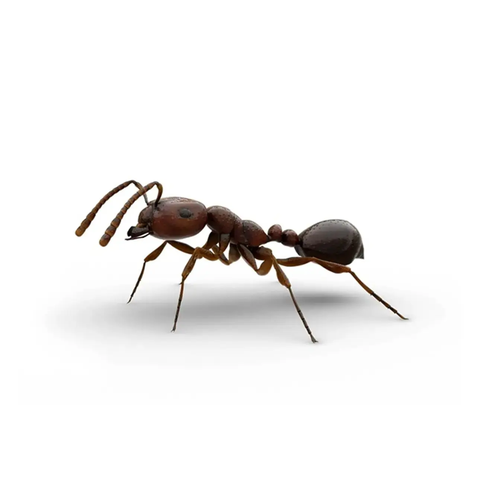
The red imported ant — Solenopsis invicta — is the most medically significant pest in South Carolina. Ant stings cause anaphylactic reactions in roughly 2% of the population. A single ant mound can contain 200,000 workers and multiple queens. Ants are highly territorial — disturbing a mound triggers an immediate mass attack within seconds. Children, elderly adults, and pets are at highest risk.
In Charleston, ant pressure is heaviest in Summerville, Goose Creek, and North Charleston where rapid residential development has created large areas of disturbed, well-drained sandy soil. Ants establish mounds from March through November but remain viable underground through the winter. A property treated in September can have new mounds established from neighbouring colonies by April.
Argentine Ant
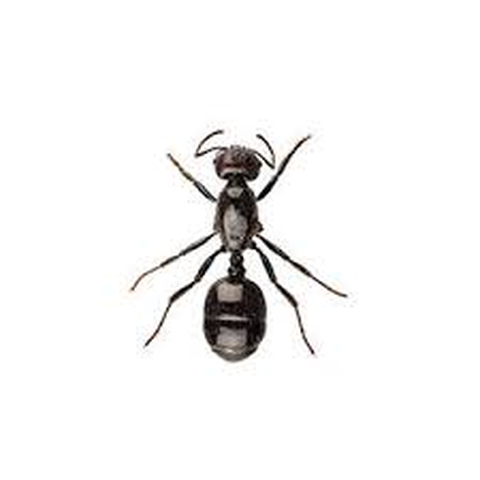
The Argentine ant is arguably more difficult to control than ants — not because of its sting (Argentine ants do not sting) but because of its colony structure. Unlike most ant species with one queen per colony, Argentine ants form supercolonies with multiple queens connected across vast underground networks. A single Argentine ant supercolony can span multiple neighbouring properties — sometimes entire city blocks.
Argentine ants are responsible for the majority of persistent kitchen ant infestations in Charleston. They follow pheromone trails to food and moisture sources with remarkable precision. Because of their supercolony structure, they require sustained bait treatment across the full trail network rather than a single mound treatment.
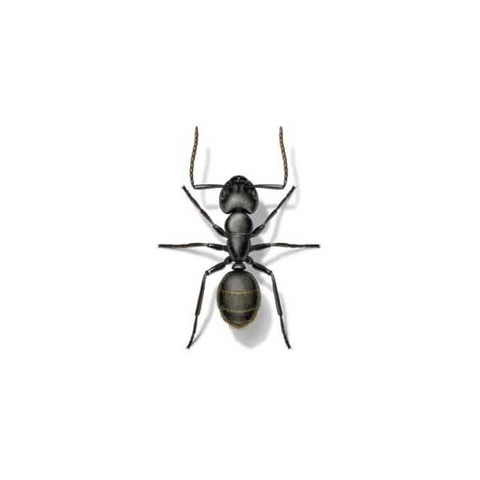
Carpenter Ant
Carpenter ants are the most structurally destructive ant species in Charleston. They do not eat wood — they excavate it to build nesting galleries. Properties near tidal marshes in Mount Pleasant, James Island, and Folly Beach face the highest carpenter ant pressure because moisture-damaged wood is their primary nesting material.
A mature carpenter ant colony contains 2,000 to 3,000 workers and takes three to six years to fully establish. By the time homeowners notice carpenter ant activity — frass piles that look like coarse sawdust mixed with insect parts — significant structural damage may have already occurred.
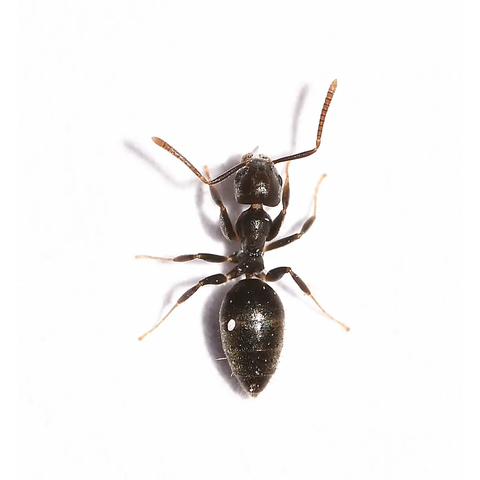
Odorous House Ant
The odorous house ant is the most common kitchen ant in the United States. When crushed, it releases a smell described as rotten coconuts — the most reliable field identification method. Colonies can contain up to 100,000 workers with multiple queens and build nests inside wall voids, under flooring, beneath mulch, and inside potted plants. They follow long foraging trails and remain active year-round in Charleston’s climate.
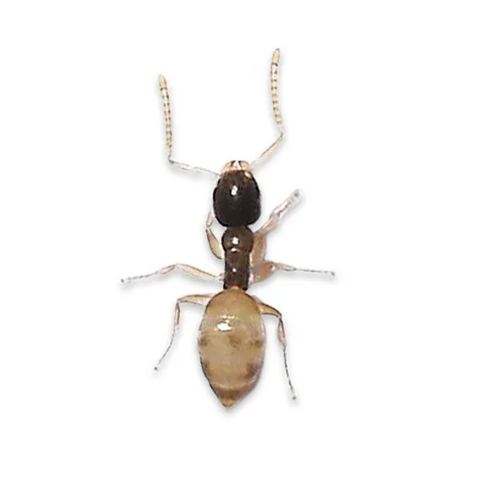
Pharaoh & Ghost Ant
The pharaoh ant is unique among ant species in its ability to survive and reproduce entirely indoors. Pharaoh ants are tiny — just 1/16 of an inch — yellow with red and black markings. Like Argentine ants, pharaoh ant colonies have multiple queens and split when threatened by repellent products. Repellent sprays must never be used on pharaoh ant infestations — they make the problem significantly worse.
Ghost ants are a small pale species increasingly common in Charleston’s coastal neighbourhoods. They nest in wall voids near moisture and are often mistaken for pharaoh ants. Both species require the same slow-acting bait approach.
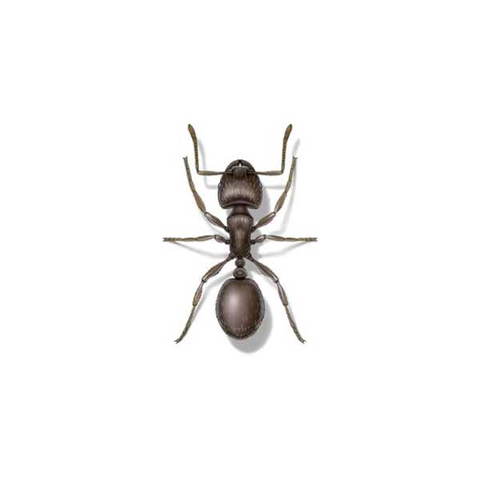
Pavement Ant
Pavement ants build nests in and under concrete — sidewalks, driveways, slab foundations, and patios. They are recognised by the fine soil and sand pushed up through cracks in concrete as they excavate. Pavement ant colonies can contain up to 30,000 workers and frequently wage wars against neighbouring colonies — leaving trails of dead ants across concrete surfaces after a conflict.
What to Look For
Signs of an Ant Infestation in Your Charleston Home
Forager Trails
Single file trails along baseboards, countertops, or window sills
Ant Mounds
Dome-shaped mounds in lawn or garden areas, can reach 18 inches in height
Frass Piles
Coarse sawdust mixed with dead insect parts near wood structures — carpenter ant activity
Soil Through Concrete
Small piles of soil pushed up through cracks in concrete or slab — pavement ant activity
Tiny Yellow Ants
Visible trail near food preparation areas — pharaoh or Argentine ant activity
Activity After Rain
Ant activity increases after rain events as colonies seek higher ground
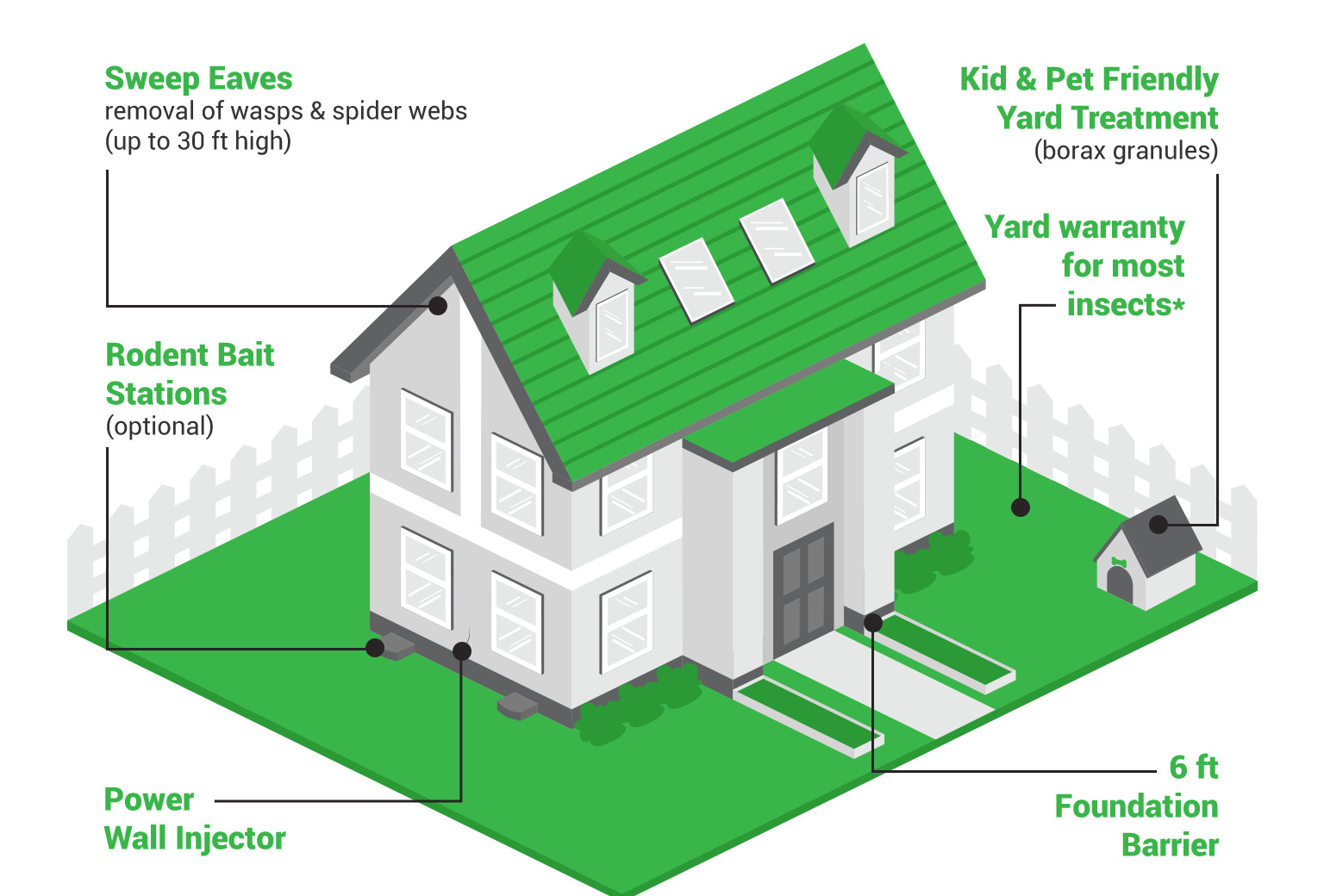
Vinx HomeGuard Plan
What Happens at Every Visit
Our technicians don't just spray and leave. Every quarterly service covers your full exterior and interior — done right, backed by a written guarantee.
- Sweep Eaves — Wasp nests & spider webs removed up to 30 ft
- Power Wall Injector — Treats wall voids where pests hide
- 6 ft Foundation Barrier — Full perimeter treatment every visit
- Yard Warranty — Free retreatment for most insects
- Kid & Pet Safe Yard Treatment — Borax granules, safe after dry
Your Local Team
The Technicians Behind Your Ant Control
Anthony
Charleston & North Charleston
Anthony covers ant treatments and general pest control across Charleston and North Charleston. His customers consistently report zero ant activity between quarterly visits — not reduced activity. Zero.
Jonathan
West Ashley & Downtown Charleston
Jonathan flags moisture issues on nearly every inspection he runs on older homes in West Ashley and downtown Charleston — moisture is the first thing carpenter ants follow into older Charleston homes.
Leon Givens
Summerville & Greater Lowcountry
Leon Givens handles ant and general ant treatments across Summerville. In five years of reviews from Summerville customers, Leon’s name appears more often than any other Vinx technician in that area. He knows the Summerville ant pressure better than anyone on the Charleston team.
Homeowner Tips
6 Ways to Reduce Ant Pressure Right Now
Kid & Pet Safe
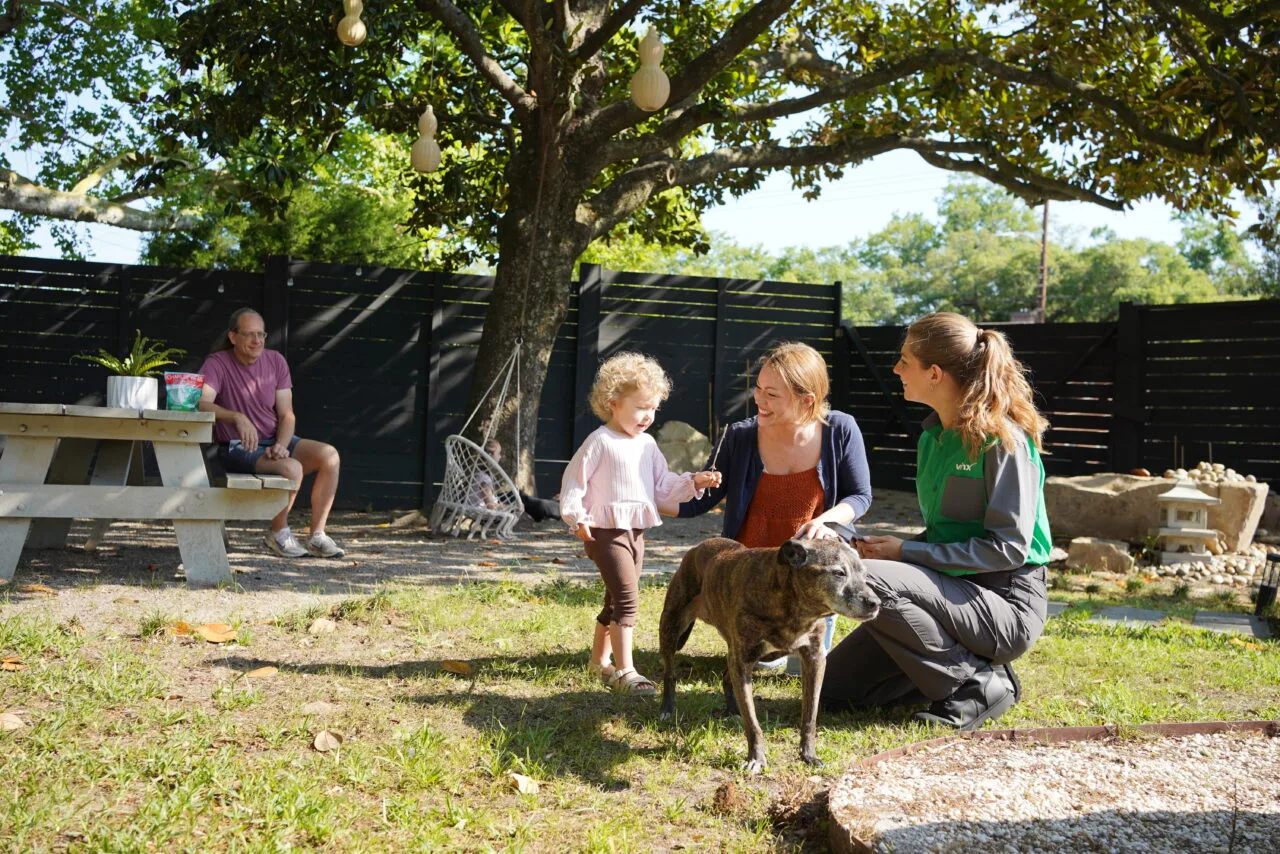
Our Treatments Are Safe for Your Whole Family — Including the Furry Members
Every product we use is EPA-registered and applied strictly at labeled rates by licensed technicians. We take the guesswork out of safety so you can feel confident letting kids and pets back into treated areas quickly.
EPA-Registered Products Only
All products we apply are EPA-registered and used strictly per label requirements. Our licensed technicians are trained to apply the right product in the right place at the right rate — every time.
Dry Time Before Re-Entry
Exterior spray treatments dry in 30–60 minutes. Once dry, treated surfaces are safe for children and pets to contact. Your technician will confirm the all-clear before leaving your property.
Interior Treatment On Request
We treat only what’s needed, where it’s needed. Gel baits in cabinets and crack-and-crevice applications keep products away from areas pets and children frequent most.
Botanical Options Available
Have specific sensitivities? Ask your technician about our plant-derived treatment options. We offer botanical alternatives for households that prefer a more natural approach.
Have a concern about products used near your pets or children? Call 855-800-8469 and we’ll walk you through exactly what we use and why it’s safe.
Explore More
More Pest Control Services in Charleston






Frequently Asked Questions
Ant Control FAQ for Charleston Homeowners
Quarterly ant control for general household ant species is included in the Vinx HomeGuard plan at $49 per month. Guaranteed ant coverage with bi-monthly treatments is included in the Vinx Plus plan at $75 per month. Carpenter ant treatments requiring structural assessment are quoted separately after the free inspection.
Persistent kitchen ant infestations in Charleston are almost always caused by Argentine ants or odorous house ants following pheromone trails to food and moisture sources. Over-the-counter sprays make this worse — they kill the foragers you can see but trigger the colony to split into multiple satellite nests. Professional slow-acting bait treatment reaches the queen and eliminates the colony at the source. Call 855-800-8469 for a same-day ant inspection.
Yes. Red imported ants are the most medically significant pest in South Carolina. Their stings cause anaphylactic reactions in roughly 2% of the population. A single disturbed mound triggers a mass attack within seconds. Children, elderly adults, and pets are at highest risk. Call 855-800-8469 for a same-day ant inspection.
Ants build visible dome-shaped mounds in open sunny areas and deliver painful stings. Argentine ants build underground colonies with no visible mound, do not sting, and are responsible for the majority of persistent kitchen ant infestations in Charleston. Argentine ants form supercolonies with multiple queens spanning multiple properties. Treating both species the same way is why DIY ant control fails.
Most over-the-counter sprays are repellents. They kill the foragers you can see but trigger a survival response causing the colony to split into multiple satellite nests. Professional non-repellent treatment uses fipronil-based products that worker ants unknowingly carry back to the nest — reaching the queen and eliminating the colony at the source.
Carpenter ants excavate wood and leave behind frass that looks like coarse sawdust mixed with dead insect parts near exit holes. Termites consume wood entirely and leave behind mud tubes, hollow-sounding wood, and fine powdery frass. Carpenter ants are larger than termites and have a narrow waist, bent antennae, and dark colouring. Call 855-800-8469 for a free inspection — identifying the species correctly determines the treatment approach.
Ant mounds are most visible from March through November as colonies expand in warmer temperatures. However ants remain viable underground through Charleston’s mild winters — colonies do not die off. New mounds can appear as early as late February during warm spells. Year-round quarterly treatment with guaranteed ant coverage maintains a barrier that prevents new colonies from establishing.
Yes. All products Vinx uses are EPA-registered. Exterior perimeter spray is safe for pets and children once dry, typically within one to two hours. Granular ant bait is applied to lawn areas away from play surfaces. Interior gel bait is applied in hidden harborage areas inaccessible to pets and children.
Yes. Most Charleston ant control appointments are available same-day or next-day. Call 855-800-8469. If we cannot service your home the next business day, your initial service is free.
Rapid residential development has created large areas of freshly disturbed, well-drained sandy soil — the ideal ant nesting environment. New construction removes vegetation cover that previously kept ant populations in check. Leon Givens handles ant treatments across Summerville and reports new mound establishment as one of the most consistent issues he addresses on initial inspections.
Service Coverage
Ant Control Across Charleston & the Lowcountry
Serving every neighbourhood in the Charleston metro area