
Cockroach Control in Mount Pleasant, SC
Smokybrown, American & German Cockroach Experts: Boundary Treatment, Harborage Reduction & Exclusion
The large roaches most Mount Pleasant homeowners meet do not live in the house. They live in the trees, the mulch and the gutters outside it, and Clemson says so in as many words. That single fact should change where your money goes — because a town that protects its canopy by ordinance has made that outdoor habitat permanent.
Get Started in 60 Seconds
Choose what’s easiest for you
Request a Quote
We usually respond in 2 minutes
Call (843) 305-4029
Get a Live Person (no AI agents here!)
Sign Up Online
Get pricing and schedule now





Welcome to Vinx Pest Control
A Company That Actually Backs What It Says
At Vinx, we combine professional-grade treatments with a level of service most pest control companies don’t offer. Local technicians, fast response times, and free re-services for covered pests between visits.
“I’m not passionate about killing bugs. I’m passionate about customer service. At Vinx, you get experts who show up, do the job right, and stand behind every visit. No runaround.”

Founder & Owner, Vinx Pest Control
WELCOME TO VINX PEST CONTROL
Cockroach Control Pricing in Mount Pleasant

Standard Residential Protection
- 4 Seasonal Treatments Per Year
- 40+ Covered Pests
- Cockroaches & palmetto bugs included
- Exterior perimeter & fence line treatment
- Unlimited Free Re-Services
- Guaranteed Coverage for Common Household Pests

Upgraded Yard Protection
- 6 Home & Yard Treatments Per Year
- Cockroaches + enhanced exterior coverage
- Fire Ant Warranty
- Exterior Flea & Tick Warranty
- Guaranteed Coverage for Common Household Pests

Most Comprehensive Protection
- 9 Treatments Per Year
- Cockroaches covered on all visits
- Monthly Mosquito (Apr–Nov)
- Flea, Tick & Fire Ant Coverage
- Free Bed Bug Treatment After 12 Months on Platinum
One-off treatment priced by pest and property, or recurring plans from $49/mo, with unlimited free re-services on every plan. Mosquitoes come with Platinum and flea and tick with Plus or Platinum; only termite work is quoted separately. Free inspection and a firm price first — call 855-800-8469.
Not Sure Which Roach You Have? That Is the Whole Question
A large roach in the evening and a small roach at noon are two different jobs, and the wrong plan is the most common wasted spend in this town. Tell us what you are seeing and when, and we will tell you which one it is. Call (843) 305-4029 or fill out the form below.
Our Process
How Our Mount Pleasant Cockroach Control Works

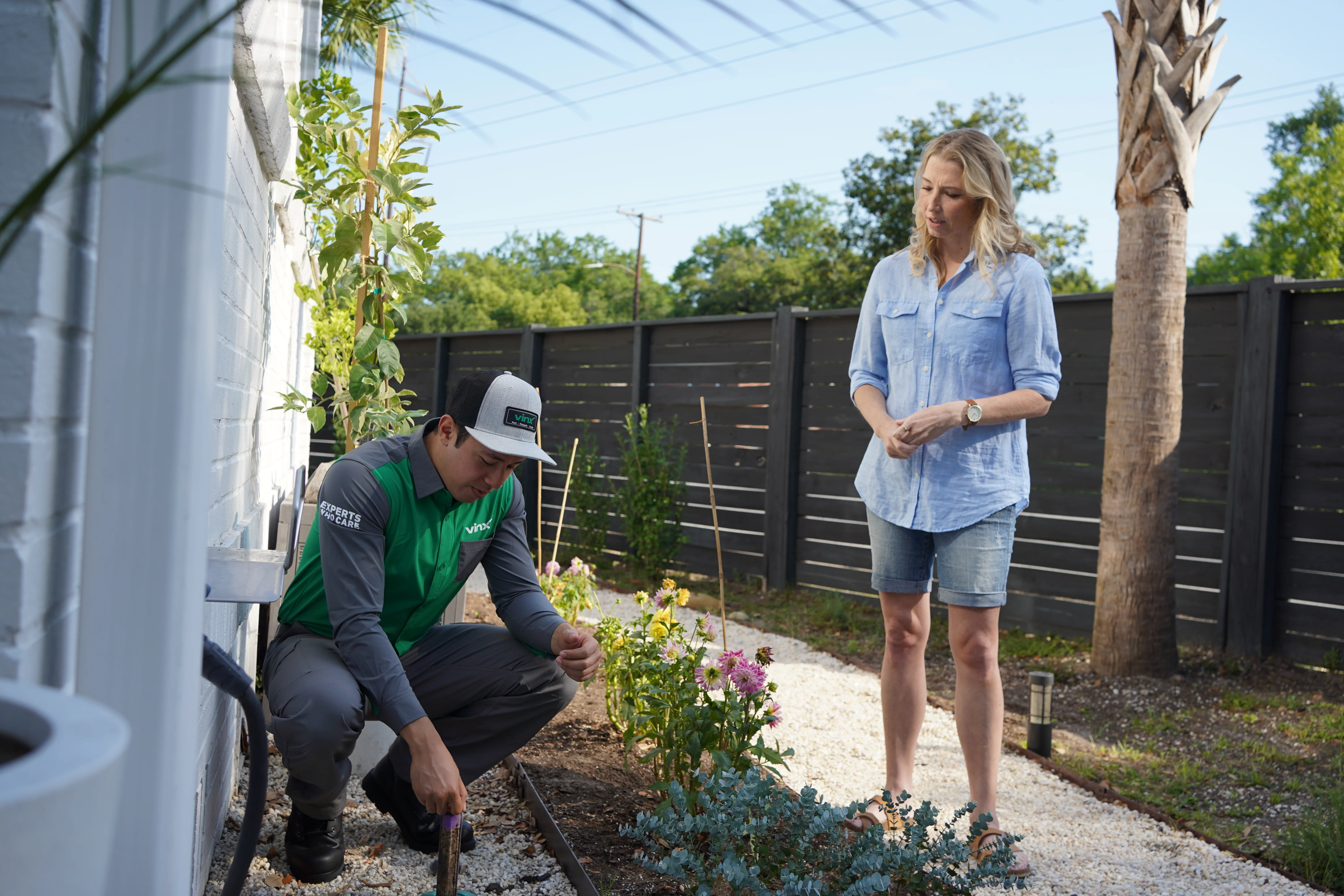
Free Inspection That Starts Outside
Canopy, palmettos, mulch depth, gutters, wood piles and leaf litter — the habitats Clemson actually names — before we look at a kitchen. Boundary-first for the outdoor species, bait-first for the indoor ones.
Species Identification
Large outdoor visitor or small indoor breeder. These need opposite plans, and getting it wrong is the most common wasted spend in this town. Large roaches in ones and twos in the evening near a door, garage or crawl entrance are a resident of the yard that came inside; small roaches in numbers, at all hours, are an indoor breeding population.
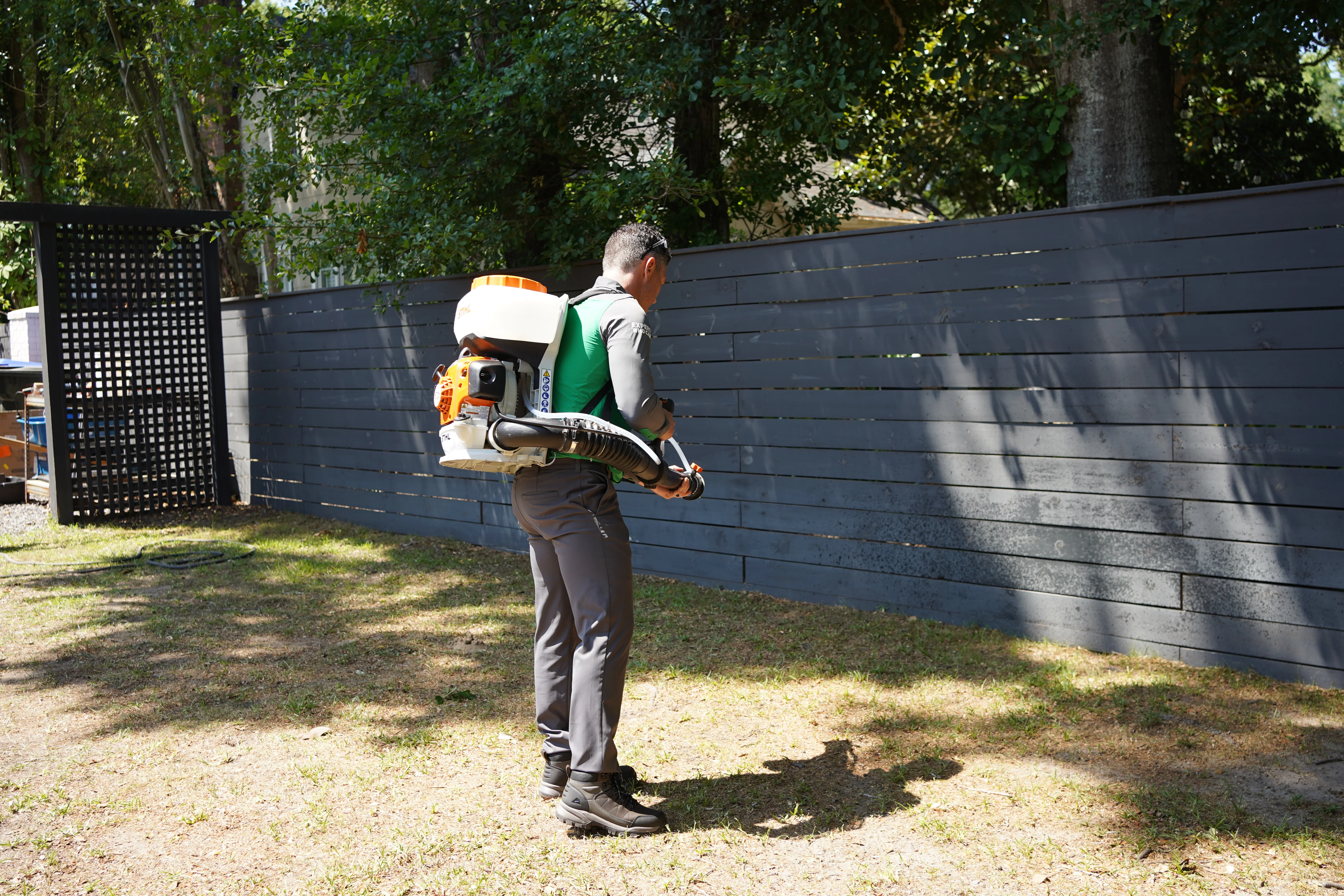
Harborage Reduction Where the Ordinance Allows, and Exclusion at the Envelope
Mulch pulled back, gutters cleared, wood raised and moved off the wall, litter cleared from the foundation — the protected trees left alone. Then door sweeps, crawl and utility penetrations, garage thresholds and hose-bib gaps, because a permanent outdoor population makes the route in the thing that matters.
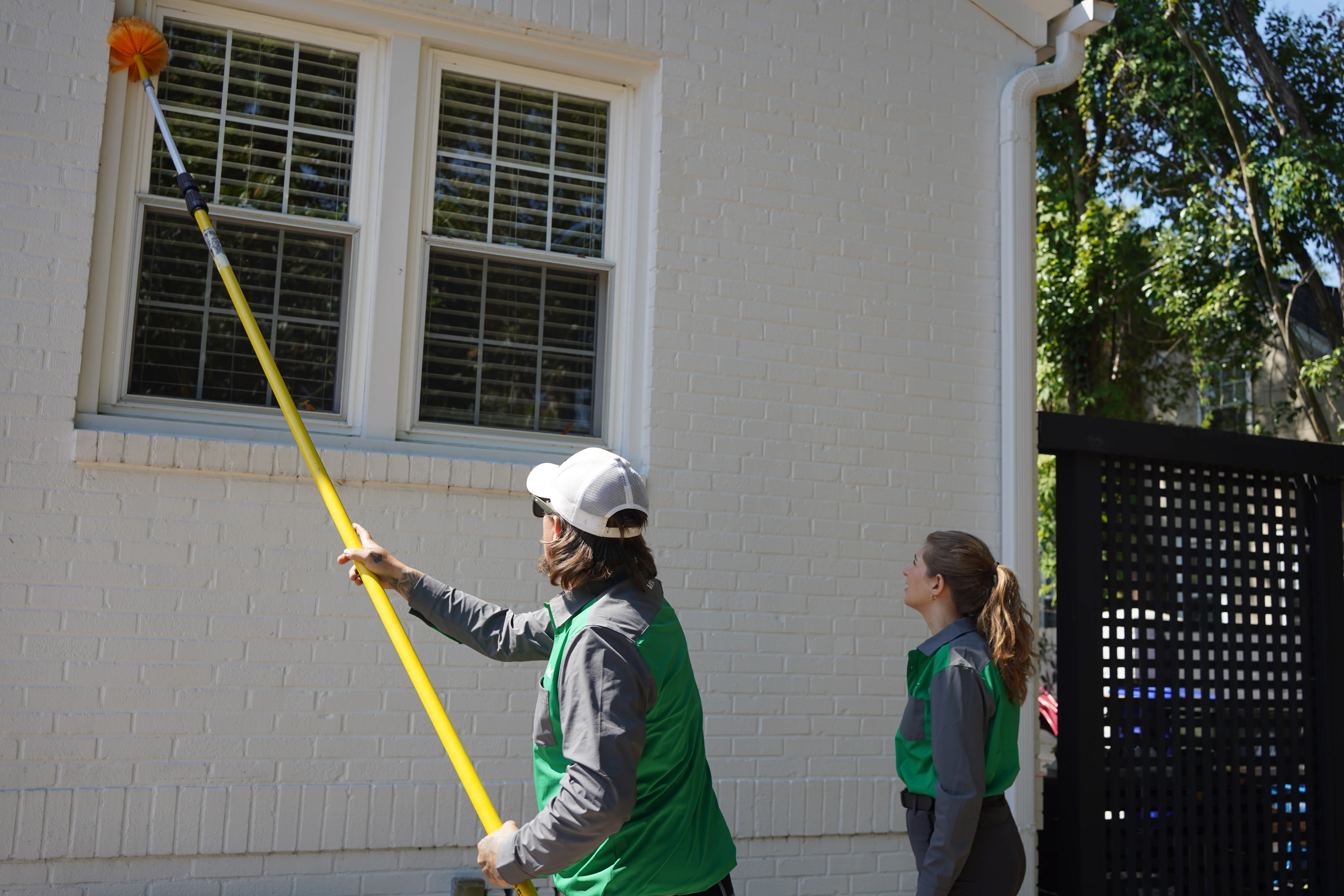
Bait and Growth Regulator Indoors Only Where Warranted
Gel bait plus an insect growth regulator where an indoor population is confirmed, with allergen-aware cleanup on an established infestation and a return visit to verify rather than assume. A repellent spray is actively counterproductive there, because it scatters survivors deeper into wall voids and appliance housings.
Follow-Up & Free Re-Treatment
Outdoor cockroach pressure in coastal Mount Pleasant is a standing condition, not a one-time fix. A protected canopy, mulch beds and gutters under leaf fall keep regenerating the habitat, so recurring visits maintain the treated boundary and the exclusion work. If cockroach activity returns inside your home between scheduled visits, call us — re-treatment is included at no charge on all plans.
Customer Reviews
Real Reviews from Mount Pleasant Customers
Anthony was as friendly as he was thorough. Vinx has been an absolute wonderful company. Have been serviced by them for about half a decade and hopefully many more years to come!!!!!
Cameron was great! He was quick but efficient! He answered all of my questions with strong knowledge. Thanks again!
Anthony is the man. He takes great care of my house. He has great communication and goes the extra mile.
Leon was excellent. Friendly, personable, and extremely thorough throughout the inspection process. Having dealt with termite damage in the past(Not a vinx home), I especially appreciated the care and attention he put into examining everything. His detailed approach gave me confidence that nothing was overlooked. I highly recommend Leon and Vinx for anyone looking for a knowledgeable and diligent inspector.
A new tech came to service my home today, named Anthony (from the Bronx). We discussed my problem, he did a thorough application but what impressed me the most was him sharing information on what to look for, what type of ground cover to avoid to help reduce different types of bugs and how to better secure my attic and crawl space from rodents. He was quite informative, I was impressed and appreciated his tips. Highly recommend Anthony. Hey to Anthony’s supervisor — recommend a bonus or raise for him. He’s a wonderful company representative and someone you will want to retain.
Austin was very thorough and knowledgeable. He took the time to explain everything clearly. Really appreciated his professionalism.
Mount Pleasant Cockroach Pressure
Clemson Puts the Big Ones in the Trees
This is not an inference. Clemson HGIC 2449 describes the large outdoor species of South Carolina directly. The smokybrown cockroach prefers “dark, warm, humid environments” and “will use a variety of habitats such as mulch, log piles, thick vegetation, and gutters around roofs. Along the coast they may be found in trees, especially palmettos.” The American cockroach favors dark, moist, warm places around sewers, storage and garbage areas, and Clemson adds that “along the coast they may be found in trees.” Wood cockroaches are found in “wood piles, mulch, and leaf litter.”
Read that list against a typical Mount Pleasant lot. Live oaks and palmettos. Deep pine-straw and hardwood mulch beds. Leaf litter in a shaded corner. Gutters under a heavy canopy. A woodpile by the fence. Every single habitat Clemson names is a normal, desirable feature of a property here — in a town that has been Tree City USA for more than thirty years.
So when a large roach turns up in the kitchen in ones and twos, usually in the evening and often near a door, garage or crawl entrance, that is not an infestation of the house. It is a resident of the yard that came inside. Treating the kitchen every month against it is the most common wasted spend we see in this town, because the population never lived there to begin with.
3 Cockroach Species in Mount Pleasant
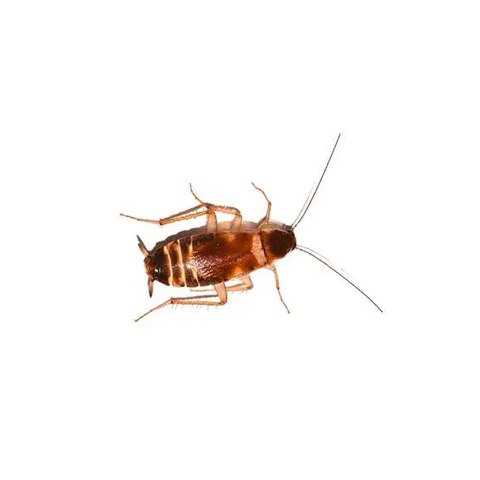
Smokybrown Cockroach (Periplaneta fuliginosa)
Where Clemson puts it: “mulch, log piles, thick vegetation, and gutters around roofs,” and along the coast “they may be found in trees, especially palmettos.”
What you can change: the mulch, the wood piles and the gutters — clearing gutters under a heavy canopy is the cheapest high-value fix on the list. The trees themselves are protected, so those get managed at the boundary instead.
How it reads indoors: ones and twos, usually in the evening, near a door, garage or crawl entrance.
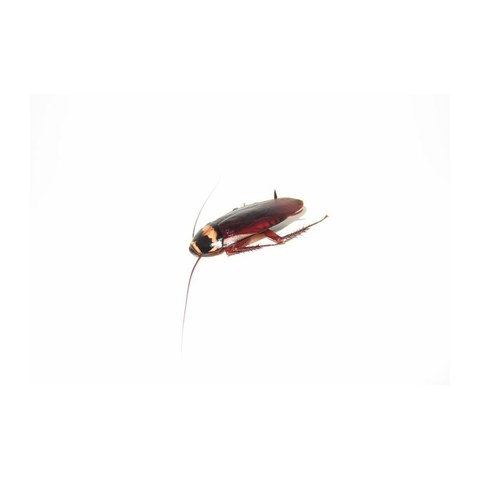
American Cockroach (Periplaneta americana)
Where Clemson puts it: dark, moist, warm places around sewers, storage and garbage areas — and “along the coast they may be found in trees.”
What you can change: drainage, refuse storage and any standing water under the house. The Charleston Regional Hazard Mitigation Plan notes that “standing water under houses also attracts cockroaches and vermin.”
How it reads indoors: the same evening visits as the smokybrown, and a short spike after heavy rain as saturated harborage pushes the population to move.
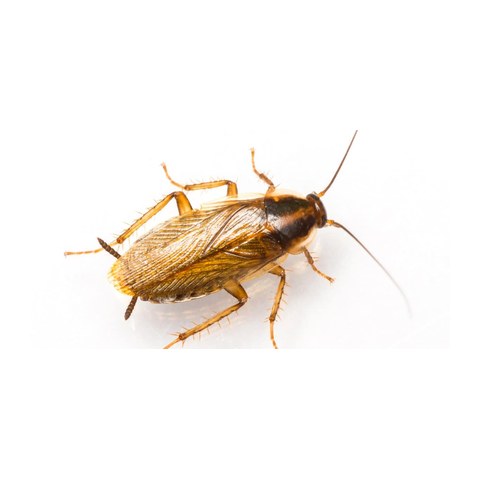
German Cockroach (Blattella germanica)
Where it lives: indoors, and only indoors. This is the species that actually breeds in a kitchen or bathroom.
How it reads: small roaches, in numbers, active at all hours rather than only in the evening, with egg cases in cabinet corners or behind appliances. No amount of gutter clearing will touch it.
What the money should buy: gel bait plus an insect growth regulator — bait carried back into harborage a technician never sees, and a product that stops the next generation reaching breeding age — with a scheduled return visit.
Here is what makes Mount Pleasant different from an inland town with the same species: the habitat is not going anywhere, by law. Under the Town of Mount Pleasant’s tree protection rules, residential trees are protected at 16 inches diameter at breast height and pines at 24 inches, measured by taking the circumference at four and a half feet and dividing by pi. A named list is exempt — pines under 24 inches, sweet gum, Callery pear varieties, river birch, mimosa, chinaberry, Chinese tallow, camphor and white poplar — unless the tree sits in a buffer, right-of-way or easement. Trees classed as historic at 24 inches or larger need an arborist report, a variance from the Board of Zoning Appeals, or both.
That is a good ordinance and we are not arguing with it. But it means the mature canopy over your roof, and the palmettos Clemson specifically names, are a fixed feature of your property rather than something you could remove if you wanted to. The honest conclusion follows: outdoor roach pressure here is a standing condition to be managed at the boundary, not a problem to be eliminated. Anyone promising to make it go away is either ignoring the ordinance or ignoring the biology.
Harborage Reduction
What You Can Change, and What You Cannot
Gutters Under the Canopy
Clemson names gutters around roofs explicitly. Under a heavy canopy they fill continuously with leaf litter and hold moisture, which is precisely the environment described. Clearing them is unglamorous and among the highest-value things you can do here.
Mulch Depth and Placement
Deep mulch banked against siding is a direct harborage-to-structure bridge. Pulled back to leave a visible gap at the wall, and kept to a moderate depth, it stops being one.
Log and Wood Piles
Named by Clemson for both smokybrown and wood cockroaches. Off the ground, away from the wall, and not against the crawl space vent.
Leaf Litter in Shaded Corners
The same. A protected tree does not oblige you to leave its litter banked against the foundation.
The Entry Points Themselves
If the population lives outside permanently, exclusion is what actually protects the interior: door sweeps, crawl and utility penetrations, garage thresholds, and the gaps around a hose bib or dryer vent.
The Protected Trees: What You Cannot Change
You cannot remove a protected oak or a palmetto, and you should not want to. That is why the plan here is a treated boundary and a sealed envelope rather than a promise to eliminate the population.
Read the Signs
Reading Which Problem You Actually Have
Size, timing and place tell you which job you have, and the two jobs need opposite plans. Match what you are seeing to the row below before anyone quotes you a schedule.
Large Roaches, Ones and Twos, in the Evening
Near a door, garage or crawl entrance. This is an outdoor species visiting, not an infestation of the house. The money should buy boundary treatment, harborage reduction and exclusion — not monthly kitchen spraying.
Large Roaches After Heavy Rain
Displacement from saturated mulch and litter. Drainage and harborage work is the fix, and you should expect a short spike rather than a new infestation.
Small Roaches, Many, at All Hours, in the Kitchen
An indoor breeding population, and a completely different job. Gel bait plus an insect growth regulator, with a scheduled return visit.
Egg Cases Behind Appliances or in Cabinet Corners
Confirmed indoor reproduction. Treatment plus removal of harborage material and allergen load, because the allergens matter as much as the insects.
Roaches in the Gutters or the Mulch Bed Itself
Outdoor habitat confirmed, exactly where Clemson says to look. Clearing gutters and pulling mulch back from the siding are the cheapest high-value fixes on the list.
Plenty of Cellar Spiders in the Crawl Space Too
A moisture problem with two symptoms, and the roaches are the second. Ventilation, vapor barrier and grading come before any additional product.
The Indoor Picture
When It Is Actually an Indoor Problem
🏠 A Different Picture, and an Easy One to Read
Small roaches, in numbers, in a kitchen or bathroom, active at all hours rather than only in the evening, with egg cases in cabinet corners or behind appliances — that is an indoor breeding population, and no amount of gutter clearing will touch it. That work is gel bait plus an insect growth regulator: bait carried back into harborage a technician never sees, and a product that stops the next generation reaching breeding age.
🚫 Why a Repellent Spray Backfires Indoors
On a confirmed indoor population a repellent spray is actively counterproductive, because it scatters survivors deeper into wall voids and appliance housings. That is the opposite of what bait does, and it is why the two approaches should not be mixed.
📊 What the Allergen Numbers Actually Say
The National Survey of Lead and Allergens in Housing sampled 831 homes and found detectable cockroach allergen somewhere in about 63% of US homes, rising to 84% of high-rise apartment living rooms, worth knowing in a town where roughly 28% of the housing stock is multi-family. The reassuring half is rarely quoted: only 2.7% of living room floors nationally carried enough to cross the level associated with asthma morbidity. Detectable is not the same as clinically meaningful. The clearest result comes from the inner-city asthma study, where children who were both allergic to cockroach allergen and living with high bedroom levels averaged 0.37 hospitalizations a year against 0.11 for everyone else. Both conditions were required: sensitization alone did not do it, and exposure alone did not either. That is the honest shape of the risk.
🦠 The Real Health Issue Is Allergens, Not Germs
Clemson HGIC 2449 identifies “the allergic reaction many people have to their shed skin and droppings” as the most serious medical problem associated with cockroaches. On an established indoor infestation that means removing harborage material matters as much as killing insects, particularly with asthma in the house. Extension guidance makes the point sharper: keep cleaning thoroughly even after an infestation is eliminated, because the allergens persist after the cockroaches are gone. Clemson also notes that cockroaches “can be found anywhere, not only in unclean places,” so finding one says nothing about your housekeeping — and embarrassment is the main reason people wait.
💧 Cellar Spiders Are a Humidity Signal
Clemson HGIC treats cellar spiders as an indicator of humidity rather than a pest in their own right. If your crawl space has plenty of them, you have a moisture problem with two symptoms, and the roaches are the second. This is also where Clemson on integrated pest management earns its keep — change the conditions and close the routes, then apply product narrowly.
Cockroach Risk by Neighborhood
Cockroach Pressure Across Mount Pleasant Neighborhoods
Old Village: Highest Outdoor Pressure
The oldest housing stock in town under the heaviest live oak canopy, on lots many of which were platted in the 1770s. Drainage infrastructure across much of the Old Village was installed sixty or more years ago, and the Town’s own drainage study records substandard drainage through the business district. Canopy overhead means gutters that fill continuously; poor drainage means damp crawl space soil. The Charleston Regional Hazard Mitigation Plan puts it plainly: “standing water under houses also attracts cockroaches and vermin.”
Snee Farm & Hobcaw Point: Yards That Stay Wet
Both sit on the Town’s own list of drainage problem areas, which is exactly the condition this page is about. Mount Pleasant describes Snee Farm’s entrance road as flooding during rain events with several homes repeatedly taking water damage, and calls Hobcaw Point an older neighborhood with substandard drainage containing repetitive-loss homes. The Groves, Shemwood and Brookgreen are on the same list, and the Town separately describes rear-yard swales across town as non-functional. Where the yard holds water after every storm the outdoor population never gets a dry spell, and the flood rules that require openings in solid crawl space perimeter walls give it a way under the house. Grading and drainage do more here than any spray.
Wando & Cainhoy: Wooded Lot Pressure
Newer construction on wooded lots backing pine and hardwood. The buildings themselves seal well, so the pressure is almost entirely the outdoor species working leaf litter, pine straw and wood piles at the treeline. Harborage reduction at the perimeter does more here than any indoor treatment.
Seaside Farms & Rivertowne: Irrigated Landscaping
Heavily landscaped neighborhoods with irrigation running through the warm months. Irrigated mulch beds stay damp, which is the smokybrown’s preferred habitat sitting directly against the foundation. Pulling mulch back to leave a visible gap at the siding, and moderating the depth, is the single highest-value change on these lots.
Carolina Park & Oyster Point: New Build, Fresh Mulch
Some of the newest construction in Mount Pleasant, where more than a third of the town’s housing stock has gone up since 2000. Tight new envelopes keep the indoor species out, but fresh deep mulch beds and young landscaping give the outdoor species everything they need. Expect evening visitors near garage thresholds and door sweeps rather than a kitchen population.
Belle Hall & Park West: Mature Landscaping, Drainage Work
Established neighborhoods with mature plantings and, in the Belle Hall area, drainage work on the Town’s own project list. Thick foundation plantings and low corners slow to drain are the two conditions to address. Thinning and lifting plantings off the wall where the ordinance allows makes a measurable difference.
I'On: Dense Planting, Narrow Lots
Dense, deliberate landscaping on compact lots with alleys and outbuildings, all of it under canopy. Thick vegetation is one of the habitats Clemson names by name, and here it sits close to the structure by design. Boundary treatment plus exclusion at door sweeps, crawl vents and utility penetrations is the workable plan.
Kids & Pets
Treating Around Your Whole Family: Including the Furry Members
Every product we use is EPA-registered and applied strictly at labeled rates by licensed technicians. Your technician tells you exactly when kids and pets can go back into treated areas.

EPA-Registered Products Only
All products we apply are EPA-registered and used strictly per label requirements. Our licensed technicians are trained to apply the right product in the right place at the right rate, every time.
Dry Time Before Re-Entry
Exterior treatments dry in 30–60 minutes. Keep children and pets off treated surfaces until they are dry. Your technician will confirm the all-clear before leaving your property.
Gel Bait Placed Out of Reach
Indoor gel bait goes into cracks, cabinet voids and appliance housings in small, targeted amounts — placed where cockroaches travel and children and pets do not.
Botanical Options Available
Have specific sensitivities? Ask your technician about our plant-derived treatment options. We offer botanical alternatives for households that prefer a more natural approach.
Have a concern about products used near your pets or children? Call 855-800-8469 and we’ll walk you through exactly what we use and when treated areas can be used again.
Explore More
More Pest Control Services in Mount Pleasant

Pest Control Mount Pleasant
Year-round protection plan

Ant Control Mount Pleasant
Household ants & others

Mosquito Control Mount Pleasant
Monthly barrier treatments

Termite Control Mount Pleasant
Bait systems & liquid treatment

Spider Control Mount Pleasant
All spider species covered

Bed Bug Treatment Mount Pleasant
Heat & liquid treatments

Rodent Control Mount Pleasant
Rats, mice & exclusion

Wasp Control Mount Pleasant
Nest removal & prevention

Tick & Flea Control Mount Pleasant
Yard & pet protection
Exterminator Mount Pleasant
Same-day local exterminators
Frequently Asked Questions
Mount Pleasant Cockroach Questions
Recurring plans start at $49 a month and cover cockroaches among more than forty pests. An established indoor infestation is quoted separately because it needs a repeat schedule and harborage cleanup. Inspection is free and the price is firm before work starts. Call 855-800-8469.
Outside, and Clemson is specific about it. Clemson HGIC 2449 says smokybrown cockroaches use “mulch, log piles, thick vegetation, and gutters around roofs” and that along the coast they may be found in trees, especially palmettos — with American cockroaches also found in coastal trees. On a Mount Pleasant lot that is a description of your yard.
Not by removing them, and that is worth understanding rather than resenting. The Town of Mount Pleasant protects residential trees at 16 inches diameter at breast height and pines at 24 inches, with trees classed as historic at 24 inches or larger needing an arborist report or a Board of Zoning Appeals variance. So the canopy is a permanent feature and the work happens at the boundary and the building envelope instead.
Because the route indoors is entirely fixable even when the habitat is not. Exclusion, mulch and gutter management, and a treated boundary reduce what gets inside substantially. What we will not do is promise to eliminate a population living in a protected canopy.
No. Clemson states plainly that cockroaches “can be found anywhere, not only in unclean places.” In this town it is more often a description of your landscaping than your housekeeping. Waiting out of embarrassment is the thing that actually costs money.
Yes, though not chiefly as germ carriers. Clemson HGIC 2449 identifies the most serious medical problem as the allergic reaction many people have to shed skin and droppings, which is why cleanup of harborage material belongs in the scope on an established infestation, particularly with asthma in the house.
Displacement. Saturated mulch, litter and log piles push the outdoor population to move, and some of it moves toward the structure. It is a short spike rather than a new infestation, and drainage plus harborage work shortens it.
We cover the whole town from the Old Village out to Carolina Park and Park West, plus Isle of Palms, Sullivan's Island and Daniel Island. Most calls get a next-day appointment. Call 855-800-8469.
Service Coverage
Cockroach Control Across Mount Pleasant & the Lowcountry
Boundary treatment, harborage reduction and exclusion across all of Mount Pleasant and surrounding Lowcountry communities, included on every Vinx plan.
Serving the Greater Mount Pleasant Area