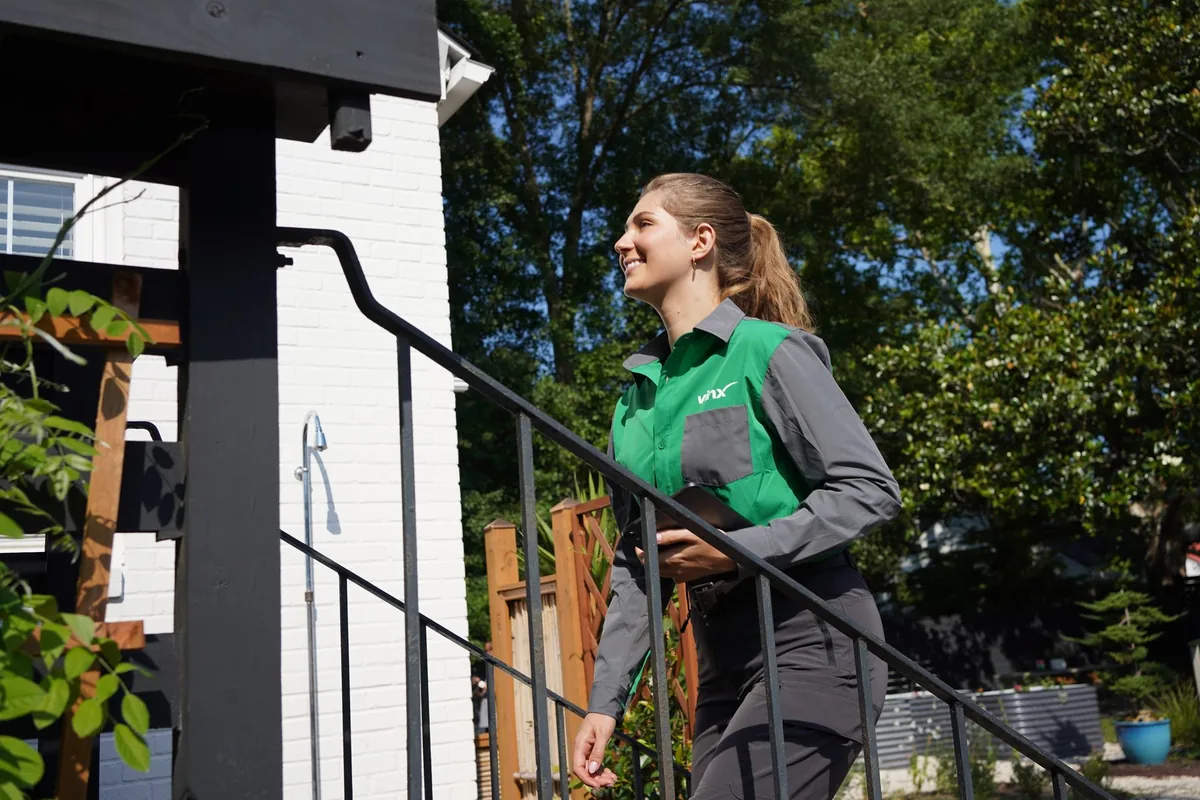
Mosquito Control in Lugoff, SC
Asian Tiger, Common Malaria, Treehole & Southern House Mosquito Experts
Mosquito pressure in Lugoff follows standing water more than it follows any single neighborhood. Asian tiger mosquitoes breed in containers along the I-20 and Highway 601 corridor, common malaria mosquitoes favor the marshy banks of the Wateree River and the Wateree Swamp that I-20 crosses on overflow bridges east of town, treehole mosquitoes hatch in the wooded acreage of rural Kershaw County, and southern house mosquitoes stick to the storm drains, septic systems, and detention ponds of Doby’s Mill, the school district neighborhoods, and the new subdivisions that grew Lugoff by 34.5% in a decade. Kershaw County runs no public spraying program, so Vinx treats the species that’s actually breeding on your property.
Get Started in 60 Seconds
Choose what’s easiest for you
Request a Quote
We usually respond in 2 minutes
Call 855-800-8469
Get a Live Person (no AI agents here!)
Sign Up Online
Get pricing and schedule now





Welcome to Vinx Pest Control
A Company That Actually Backs What It Says
At Vinx, we pair professional-grade treatment with a level of follow-through most pest control companies skip. Local technicians, fast response, and a guarantee that holds up after the invoice is paid.
Get a Free Quote“I’m not passionate about killing bugs. I’m passionate about customer service. At Vinx, you get experts who show up, do the job right, and stand behind every visit. No runaround, no fine print.”
PROTECTION PLANS
Mosquito Control Plans for Lugoff Homeowners
100% money-back guarantee on every plan.

Standard Residential Protection
- 4 Seasonal Treatments Per Year
- 50+ Covered Pests
- Interior, Exterior & Yard Treatment
- Unlimited Free Re-Services
- 100% Money-Back Guarantee
- Fire Ant Yard Guarantee
- Flea & Tick Coverage
- Mosquito Treatments

Upgraded Yard Protection
- 6 Home & Yard Treatments Per Year
- 50+ Covered Pests
- Interior, Exterior & Yard Treatment
- Unlimited Free Re-Services
- 100% Money-Back Guarantee
- Fire Ant Yard Elimination Guarantee
- Flea & Tick Elimination Guarantee
- Mosquito Treatments

Most Comprehensive Protection
- 9 Treatments Per Year
- 50+ Covered Pests
- Interior, Exterior & Yard Treatment
- Unlimited Free Re-Services
- 100% Money-Back Guarantee
- Fire Ant Yard Elimination Guarantee
- Interior Flea & Tick Coverage
- 8 Mosquito Treatments (Mar–Nov)
- Free Bed Bug Treatments if Needed*
All plans include a $329 initial treatment and a 12-month agreement. Monthly mosquito treatments run March through October to match the region’s active mosquito season, which in the Midlands stretches from the first warm rains of March to the early-November freeze, tapering to a single dormant-season service in winter. Kershaw County is not among the local mosquito control agencies SC DPH lists, so there is no county truck to fill the gaps between visits. Hosting an outdoor event or managing a property along the I-20 corridor? Ask about a one-time event mosquito treatment. *Starting rates vary by home size and area. All plans billed monthly.
Get Started
Get Your Free Lugoff Mosquito Inspection
Tell us about your property and we'll respond in minutes, (855) 800-8469 · 24/7
How It Works
How Vinx Eliminates Mosquitoes in Your Lugoff Yard

Inspection & Breeding Site Identification
Your technician walks the property looking for standing water — containers and parking-lot drainage along the I-20 corridor, marshy river-edge vegetation, wooded tree holes on rural acreage, and clogged storm drains in established neighborhoods — and identifies which mosquito species is actually breeding. On Lugoff’s sandy uplands, 331 feet above sea level and well above the river, puddles drain fast and breeding concentrates in containers, gutters, and detention ponds; down in the Wateree bottoms, water sits for the week or more a larva needs.
Larvicide Treatment
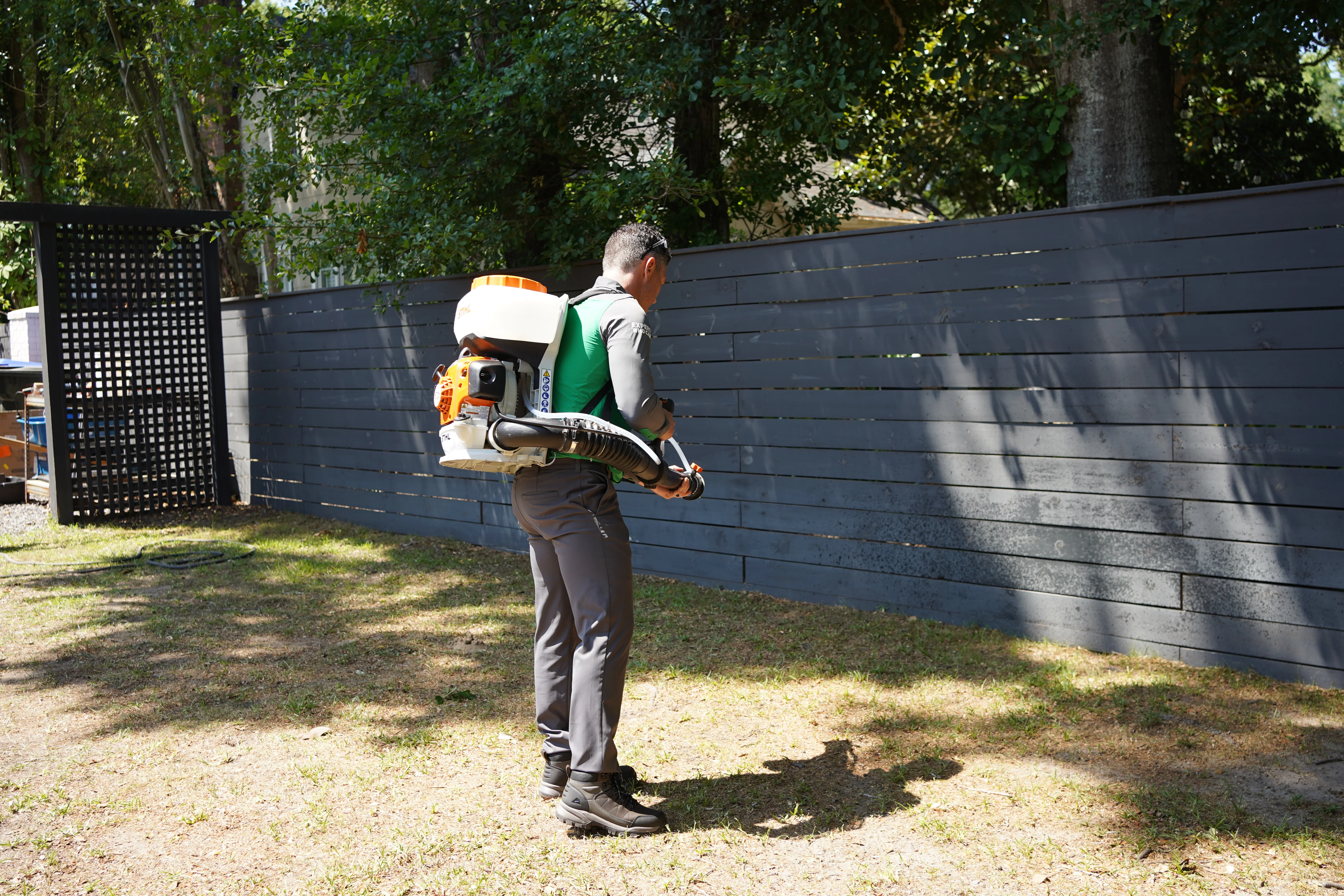
Standing water that can’t be eliminated is treated with larvicide to stop mosquitoes before they reach adulthood, particularly important for tree holes on wooded rural properties, livestock troughs on the county’s farms, and the backwater the Wateree leaves behind after a crest like Helene’s 37.4 feet in September 2024, two feet above major flood stage.
Barrier Treatment for Adult Mosquitoes
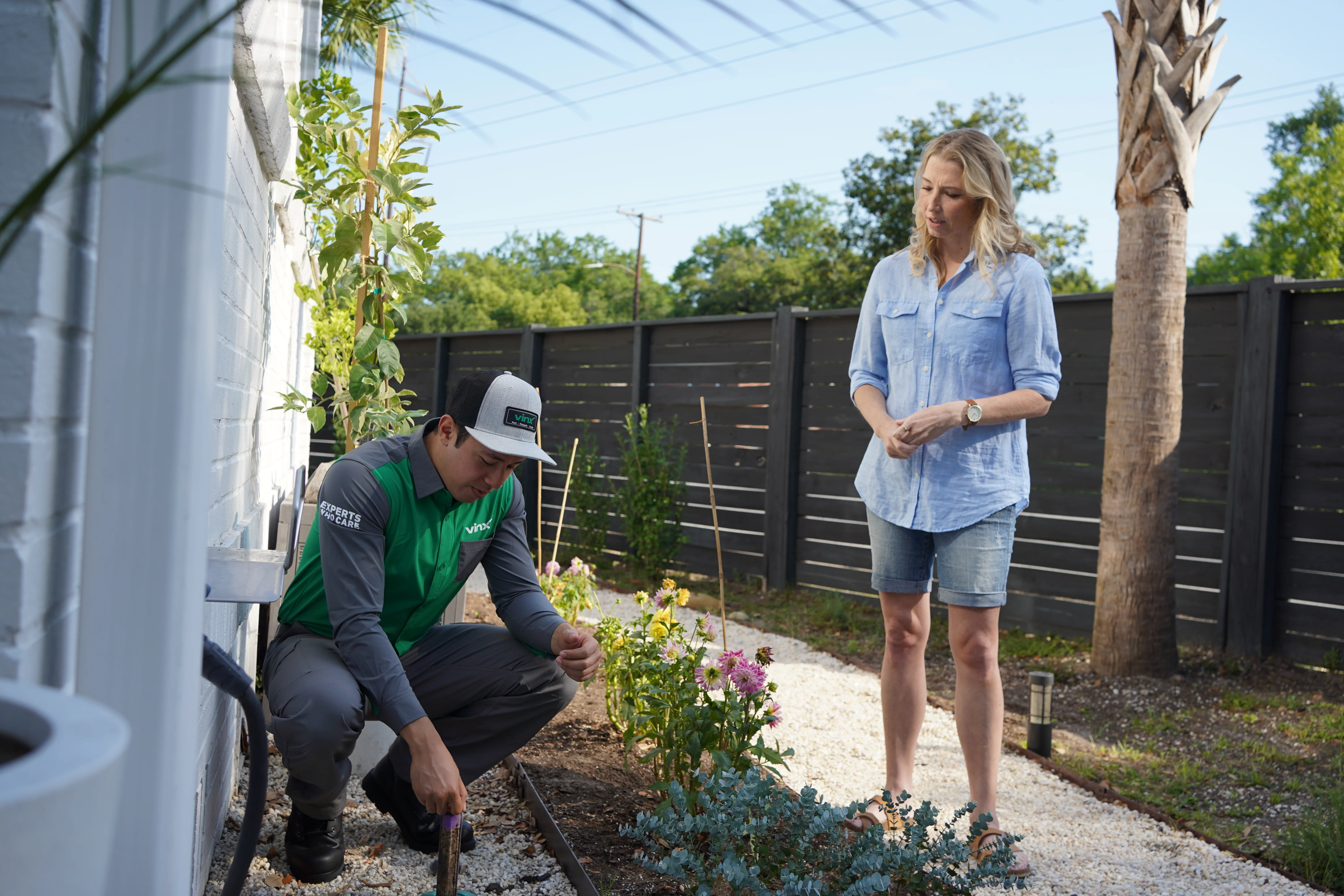
Vegetation, shaded resting areas, and property perimeters are treated to knock down adult mosquito populations, targeting the day-biting Asian tiger mosquito along the I-20 and Highway 601 corridor, with resting-site treatment kept away from stalls, troughs, and poultry houses on farm properties.
Ongoing Monitoring & Retreatment
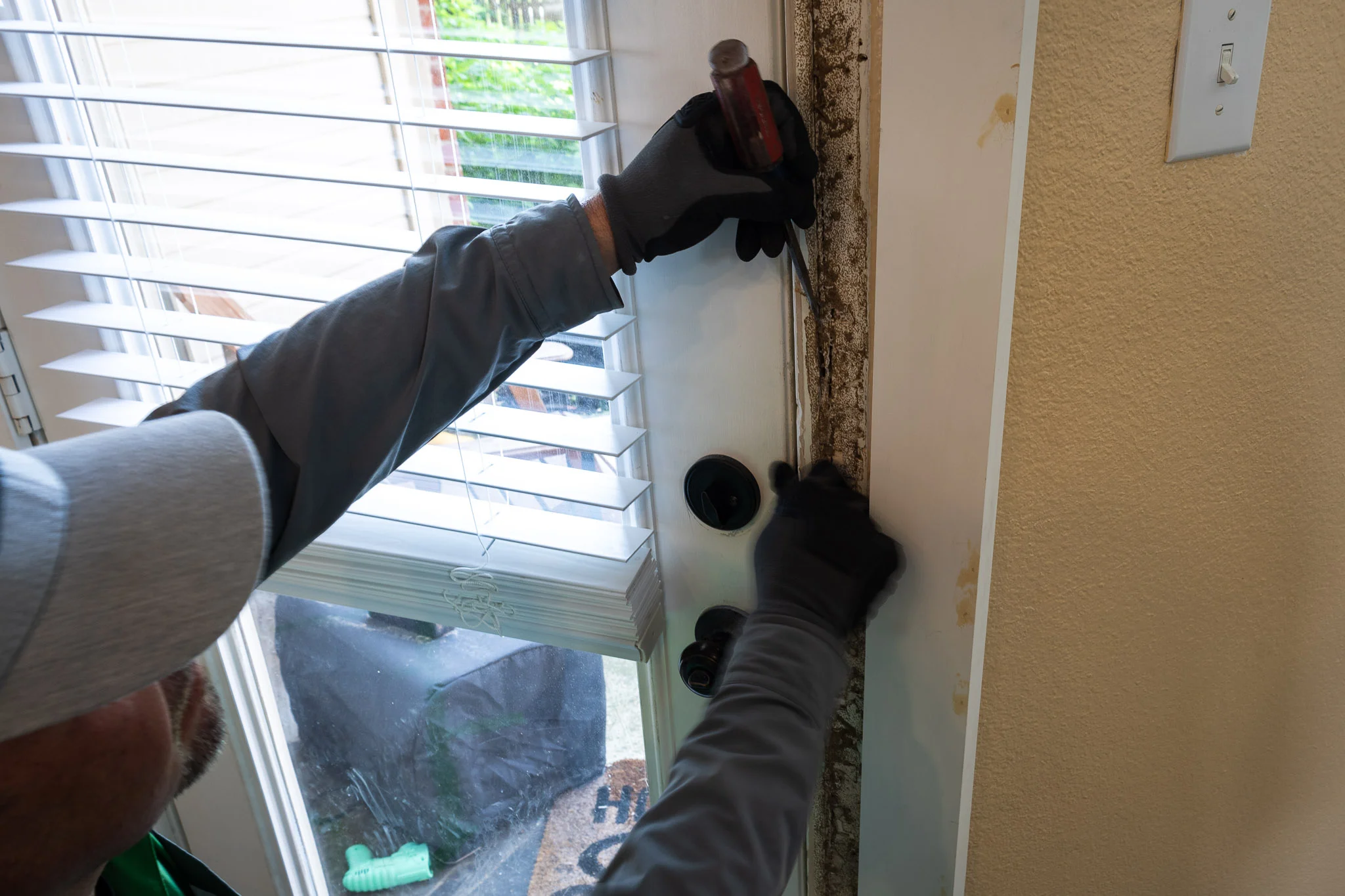
Follow-up visits maintain protection through the Midlands’ long, humid mosquito season, roughly 46 inches of rain a year and hot, muggy weather from June through August. Because Kershaw County runs no spraying program of its own, your yard treatment is the only treatment happening, with free re-service between visits if activity returns.
What Customers Say
Real Reviews from Lugoff Customers
Just had my yard sprayed for the first time. The tech was thorough and professional. Looking forward to getting rid of the annoying mosquitos I have around the yard.
Verified Google ReviewCame in and took care of everything that we talked about quickly and efficiently.
Verified Google ReviewI have rodent service, now basement and attic are sealed ( new screens on all openings) Jason was polite and professional and take care on all problems.
Verified Google ReviewVinx Pest Control sent Adrian out to treat my property on Friday and I noticed results first thing on Saturday, talk about fast results. Vinx also have a great employee in Adrian, he came out and got straight to the point of working and knew where and how to treat my property especially around my fruit 🌳s really appreciate this young man.
Verified Google Review5 Star Service from a pest control company!!! Adrian was great, and I’m super impressed with how thorough and complete of a job he does. Above and beyond anything I have had in the past. If you hate bugs (and I do) then give these guys a shout, because I haven’t seen any in months!!!
Verified Google ReviewAdrian was great, very informative but not pushy when I asked about mosquito service. Also gave me a very detailed explanation of what he was going to do over the phone and then what he did in a video he sent me. Great service! Keep up the great work!!
Verified Google ReviewLugoff Mosquito Pressure
Why Mosquito Control in Lugoff Isn’t One-Size-Fits-All
A lot of pest control companies run the same generic fogging treatment everywhere, regardless of what’s actually breeding or why. That’s a mistake in Lugoff, where a genuinely varied mix of an interstate commercial corridor, the Wateree River and its swamp, wooded rural acreage across a county with 575 working farms, and residential neighborhoods old and new creates mosquito pressure that varies zone by zone.
4 Mosquito Species Common to Lugoff
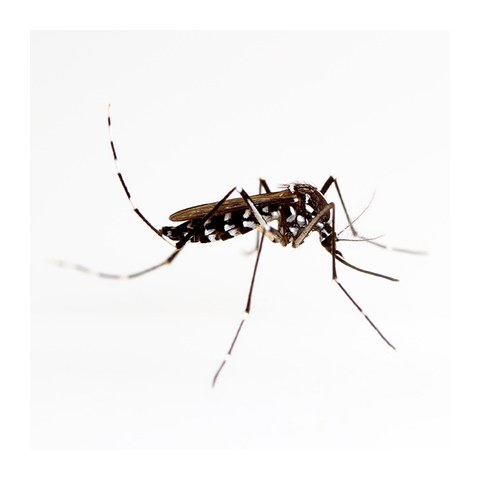
Asian Tiger Mosquito (Aedes albopictus)
An aggressive, day-biting mosquito with distinctive black-and-white striped legs. Clemson HGIC confirms it breeds in almost any small container that holds water — buckets, tires, clogged gutters, birdbaths — making it the dominant species along the I-20 and Highway 601 commercial corridor’s hotels, motels, and parking lots. Because it works in daylight, it is the one that ruins a cookout, and it rarely flies more than a few hundred feet from the container it hatched in.
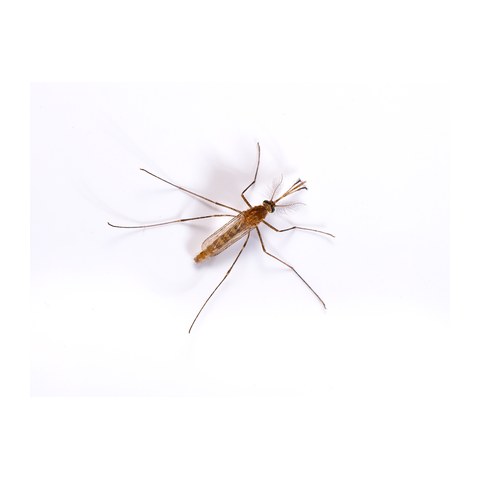
Southern House Mosquito (Culex quinquefasciatus)
A night-biting species that breeds readily in polluted or stagnant water, including storm drains, septic systems, neglected birdbaths, and unscrubbed livestock troughs. Common throughout the established residential streets of Doby’s Mill and the Lugoff-Elgin school district neighborhoods, and the Midlands’ main West Nile virus vector; SC DPH declared a West Nile outbreak in the Midlands in late August 2026 after four human cases.

Common Malaria Mosquito (Anopheles quadrimaculatus)
A species that prefers fresh, slow-moving water with dense aquatic vegetation, including flood-plain and lake-edge habitats per USDA research. This makes the marshy banks of the Wateree River corridor and the Wateree Swamp a natural fit for this species, the same one already confirmed a few miles upstream in neighboring Camden, and a crest above the 35-foot major flood stage, as happened after Helene in 2024, spreads that habitat well beyond the bank for weeks.
Eastern Treehole Mosquito (Aedes triseriatus)
A species native to the eastern United States that favors hardwood habitats and breeds in natural tree holes, occasionally biting during the day in wooded areas. This is a genuine fit for the mature oak and hardwood stands found across rural Kershaw County’s wooded, lower-density acreage, where the Census of Agriculture counts more than 46,000 acres of farm woodland. It is the primary vector of La Crosse encephalitis, which is why a wooded lot with children deserves larvicide in the cavities, not just a fogger.
The Asian tiger mosquito is a container breeder that thrives around discarded cups, clogged gutters, and parking-lot debris, making the hotels, motels, and businesses along the I-20 and Highway 601 corridor a genuine concern; a bottle cap of water is enough, and it needs to travel only a few hundred feet from where it hatched. Along the Wateree River corridor, USDA research shows the common malaria mosquito favors flood-plain and lake-edge habitats with slow-moving, vegetated water — exactly what this stretch of the river offers, the same species already confirmed on the same river just a few miles away in neighboring Camden, and the Wateree Swamp that I-20 crosses on overflow bridges keeps that habitat wet long after the river drops. Across the wooded, lower-density acreage of rural Kershaw County’s outskirts, the eastern treehole mosquito, a species native to the eastern United States that favors hardwood habitats, breeds in natural tree holes found throughout mature oak and hardwood stands, and is the primary carrier of La Crosse encephalitis, a childhood illness the CDC tracks in the eastern states. And throughout Doby’s Mill and the Lugoff-Elgin school district neighborhoods, the southern house mosquito, a species that breeds readily in polluted, stagnant water, takes advantage of storm drains, septic systems, neglected birdbaths, and the detention ponds behind newer subdivisions. This is also the group that carries West Nile virus, and SC DPH confirmed four human cases in the Midlands in August 2026.
The water that shapes this problem mostly sits outside the community itself. The Census Bureau measures Lugoff at 15.3 square miles, of which only about 1.64 percent — roughly two tenths of a square mile — is water, and the Wateree River runs some two and a half miles to the east, beyond the boundary. So there is very little standing natural water inside Lugoff proper. Nearly every breeding site that matters on a given property is one somebody made: a clogged gutter, a tarp over a boat, a livestock trough, a tire behind the shed. That is genuinely good news, because made water can be found and emptied.
By Neighborhood
Mosquito Pressure Across Lugoff
I-20 & Highway 601 Corridor: Asian Tiger Mosquito Risk
Hotels, motels, and businesses near Exit 92 give the Asian tiger mosquito the containers, clogged gutters, and parking-lot debris it favors, and Kershaw County’s ordinance against accumulated junk and trash behind a store is one more reason to clear it.
Doby’s Mill: Southern House Mosquito Risk
Storm drains, septic systems, and neglected birdbaths throughout this established neighborhood give the southern house mosquito the stagnant water it needs, and this is the Culex group SC DPH tied to the Midlands’ four human West Nile cases in August 2026.
Wateree River Corridor: Common Malaria Mosquito Risk
Marshy, vegetated river-edge water gives the common malaria mosquito the flood-plain habitat it prefers, and the Wateree Swamp that I-20 crosses on overflow bridges holds that water long after the gauge near Camden drops back below its 16-foot action stage.
Lugoff-Elgin School District Corridor: Southern House Mosquito Risk
Family neighborhoods around Lugoff’s schools carry the same southern house mosquito drainage risk found in Doby’s Mill, and the detention ponds and unfinished lots in the newer subdivisions nearby add breeding water the older streets never had.
Rural Kershaw County Outskirts: Eastern Treehole Mosquito Risk
Mature oak and hardwood stands across this wooded, lower-density area give the eastern treehole mosquito the natural tree-hole habitat it needs, and the county’s 1,160 horses and nearly 4,000 cattle mean troughs and hoof-cut pasture as well; with 10 Eastern equine encephalitis (EEE) positive horses reported statewide in 2025, that water is a veterinary issue too.
Complete Coverage
What Vinx Treats in Your Lugoff Home
Every common Lugoff pest covered under one quarterly service plan

Ants
Ants, Argentine ants, carpenter ants, and odorous house ants. Perimeter bait, mound treatment, crack and crevice application.
All Plans
Cockroaches
American, Asian, and German cockroaches. Gel bait in harborage areas, exterior perimeter spray, drain treatment.
All Plans
Spiders
Web removal from eaves, exterior perimeter targeting harborage. Black widow identification and targeted treatment.
All Plans
Wasps & Hornets
Nest removal from eaves, soffits, structural voids. Preventative treatment of common nesting sites on each quarterly visit.
All Plans
Fleas & Ticks
Yard treatment targeting grassy and shaded areas. Interior treatment of active infestation areas.
Plus & Platinum
Bed Bugs
Inspection, heat treatment assessment, and targeted chemical treatment.
Platinum (12mo)
Rodents
Exterior bait station monitoring included in Plus and Platinum. Active infestation and full exclusion quoted separately after inspection.
Plus & Platinum
Mosquitoes
Monthly barrier spray and larvicide. Year-round service adjusted seasonally. Up to 90% population reduction per visit.
Platinum Only
Occasional Invaders
Silverfish, earwigs, centipedes, stink bugs, ladybugs, pillbugs. Crack and crevice treatment, perimeter spray, entry point ID.
All PlansWarning Signs
Signs You Need Professional Mosquito Control
Bites During the Day
A hallmark of the Asian tiger mosquito, common along the I-20 corridor’s hotels, motels, and parking lots.
Mosquitoes Concentrated Near the River
Consistent with common malaria mosquito activity along the Wateree River corridor.
Mosquitoes Emerging From Wooded Areas Even Without Standing Water in Your Yard
Often treehole mosquitoes breeding in tree holes across rural Kershaw County, a species that carries La Crosse encephalitis.
Evening and Nighttime Bites Near Storm Drains or Septic Areas
Often southern house mosquito activity throughout Doby’s Mill and the school district neighborhoods.
Standing Water in Containers, Tarps, or Birdbaths
A breeding site for multiple species regardless of neighborhood.
A Surge After the Wateree Runs High
Floodwater left in the swamp and low pastures after a crest hatches mosquitoes for weeks, as it did after Helene in 2024.
Because treehole mosquitoes breed in natural cavities you can’t easily drain, wooded rural properties often need targeted larvicide treatment rather than simple yard cleanup.
Homeowner Tips
6 Ways to Reduce Mosquito Activity Around Your Lugoff Home or Business
Common Questions
Mosquito Control FAQ for Lugoff Homeowners & Businesses
Mosquito reduction treatment is included in Vinx’s Platinum plan at $109/mo, with a $329 initial treatment and 12-month agreement. Standalone and event treatments are also available. Unlike seasonal spray-only services that run April through September, the plan covers March through October with a dormant-season visit, which matters in a county with no public spraying program. Call 855-800-8469 for a free quote.
That’s a hallmark of the Asian tiger mosquito, a container-breeding species common along the I-20 and Highway 601 corridor’s parking lots, planters, and clogged gutters. It needs only a bottle cap of water and rarely travels more than a few hundred feet, so the source is almost always on the property.
The common malaria mosquito prefers flood-plain and lake-edge habitats with vegetated, slow-moving water, which the Wateree River corridor and the Wateree Swamp provide naturally. After a high crest, as when the river hit 37.4 feet after Helene in September 2024, that habitat spreads inland for weeks.
Eastern treehole mosquitoes breed in natural tree holes rather than obvious standing water, which is why wooded rural properties across Kershaw County can have mosquito pressure even with a well-maintained yard. This species is also the primary carrier of La Crosse encephalitis, so larvicide in the cavities matters more than a fogger.
Yes, we treat both. Larvicide treatment addresses tree holes and other natural water sources common on wooded rural properties, while barrier treatment addresses residential yards and vegetation. On farm properties, treatment stays clear of stalls, troughs, feed rooms, and poultry houses.
Not that we can find. Richland County runs a vector control program, but Kershaw County does not appear among the local mosquito control agencies SC DPH lists, so there is no truck coming down Highway 1. Whatever treatment your yard gets is the treatment you arrange, which is why our plan pairs larvicide at the source with a monthly barrier for adults.
Yes. The I-20 and Highway 601 corridor sees more Asian tiger mosquito activity tied to containers and parking-lot debris, while Doby’s Mill and the school district neighborhoods see more southern house mosquito activity tied to storm drains and septic systems.
Yes. We offer one-time barrier treatments ahead of outdoor events, which is popular with property owners hosting gatherings throughout the season.
Yes. We use EPA-registered products applied at labeled rates by licensed South Carolina technicians, with an exterior-focused approach that keeps treatment away from where your family and guests spend time.
Yes. We work with hotel, motel, and business operators along the I-20 and Highway 601 corridor on recurring commercial mosquito treatment schedules.
Yes. Vinx Pest Control is licensed and insured to operate in South Carolina under Pest Control Operator license B3623, regulated by Clemson University’s Department of Pesticide Regulation, with technicians trained to identify and treat the specific mosquito species found throughout Lugoff and the greater Columbia area.
Yes, for people, pets, and horses. SC DPH confirmed four human West Nile virus cases in the Midlands in August 2026 and declared an outbreak, it reported 10 Eastern equine encephalitis (EEE) positive horses in South Carolina in 2025, and the treehole mosquito on wooded lots carries La Crosse encephalitis. Mosquitoes also transmit heartworm to dogs. Reducing standing water and treating what cannot be drained lowers the exposure for everyone on the property.
Where We Serve
Mosquito Control Across Lugoff & the Greater Columbia Area
Serving the Greater Columbia Area