Mosquito Control in Goose Creek, SC
Asian Tiger, Southern House & Freshwater Swamp Mosquito Experts: Seasonal Service March–November
Goose Creek’s mosquito pressure comes from freshwater, not the salt marsh that drives coastal Charleston, freshwater wetlands line the Cooper and Back Rivers and Foster Creek, and the 600-acre Goose Creek Reservoir sits at the city’s edge. Three species dominate: the daytime Asian tiger mosquito breeding in the smallest container of standing water, the dusk-to-dawn Southern house mosquito (the local West Nile vector), and Culex erraticus, a freshwater specialist along the river margins and a known carrier of Eastern Equine Encephalitis. County and city spraying don’t reach standing water on private property, that’s where Vinx picks up. Free re-treatment guarantee.
Get Started in 60 Seconds
Choose what’s easiest for you
Request a Quote
We usually respond in 2 minutes
Call (855) 800-8469
Get a Live Person (no AI agents here!)
Sign Up Online
Get pricing and schedule now





Welcome to Vinx Pest Control
A Company That Actually Backs What It Says
At Vinx, we combine professional-grade treatments with a level of service most pest control companies don't offer. Local technicians, fast response times, and a guarantee that actually means something.
Get a Free Quote"I'm not passionate about killing bugs. I'm passionate about customer service. At Vinx, you get experts who show up, do the job right, and stand behind every visit. No runaround, no fine print."
WELCOME TO VINX PEST CONTROL
Protection Plans for Goose Creek Homeowners

Standard Residential Protection
- 4 Seasonal Treatments Per Year
- 50+ Covered Pests
- Interior, Exterior & Yard Treatment
- Unlimited Free Re-Services
- 100% Money-Back Guarantee

Upgraded Yard Protection
- 6 Home & Yard Treatments Per Year
- 50+ Covered Pests
- Yard Ant Elimination Guarantee
- Flea & Tick Elimination Guarantee
- 100% Money-Back Guarantee

Most Comprehensive Protection
- 9 Treatments Per Year
- 50+ Covered Pests
- 8 Mosquito Treatments (Mar–Nov)
- Flea, Tick & Ant Coverage
- Free Bed Bug Treatments if Needed*
*Starting rates vary by home size and area. All plans billed monthly.
Request Your Free Mosquito Control Quote
Fill out the form below and a Vinx team member will reach out within 2 minutes during business hours.
Prefer to talk? Call (855) 800-8469 for a live person, no AI agents.
Our Approach
How Vinx Controls Mosquitoes in Your Goose Creek Yard

Property Inspection & Breeding Site Survey
Your technician walks the property looking for freshwater, not marsh: the grassy edge of a pond or ditch where Culex erraticus lays its egg rafts, the shaded corner where the Naval Weapons Station’s wooded buffer meets your fence, and the small containers, saucers, tarps and gutter corners, that supply the Asian tiger mosquito close to the house.
Yard Treatment
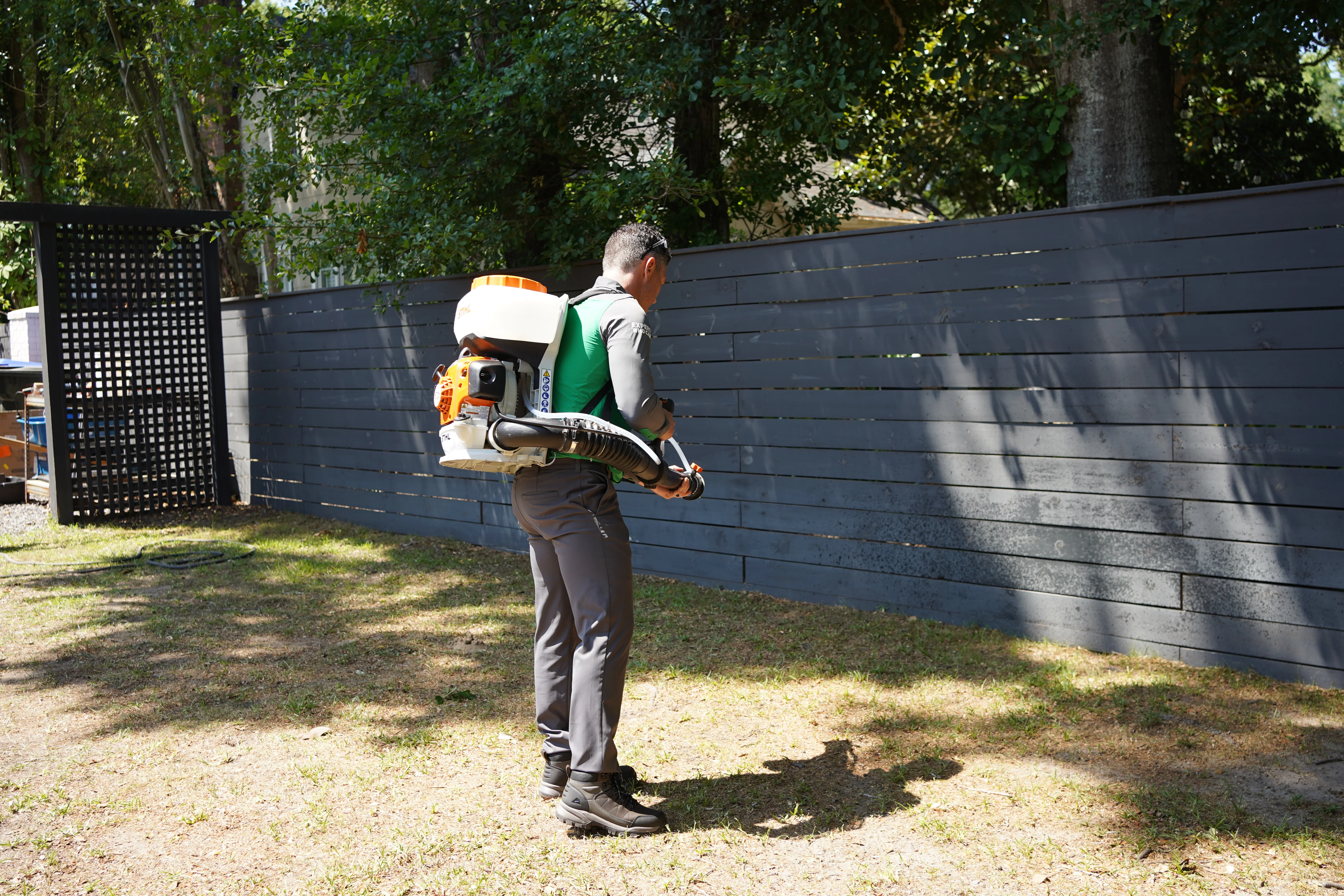
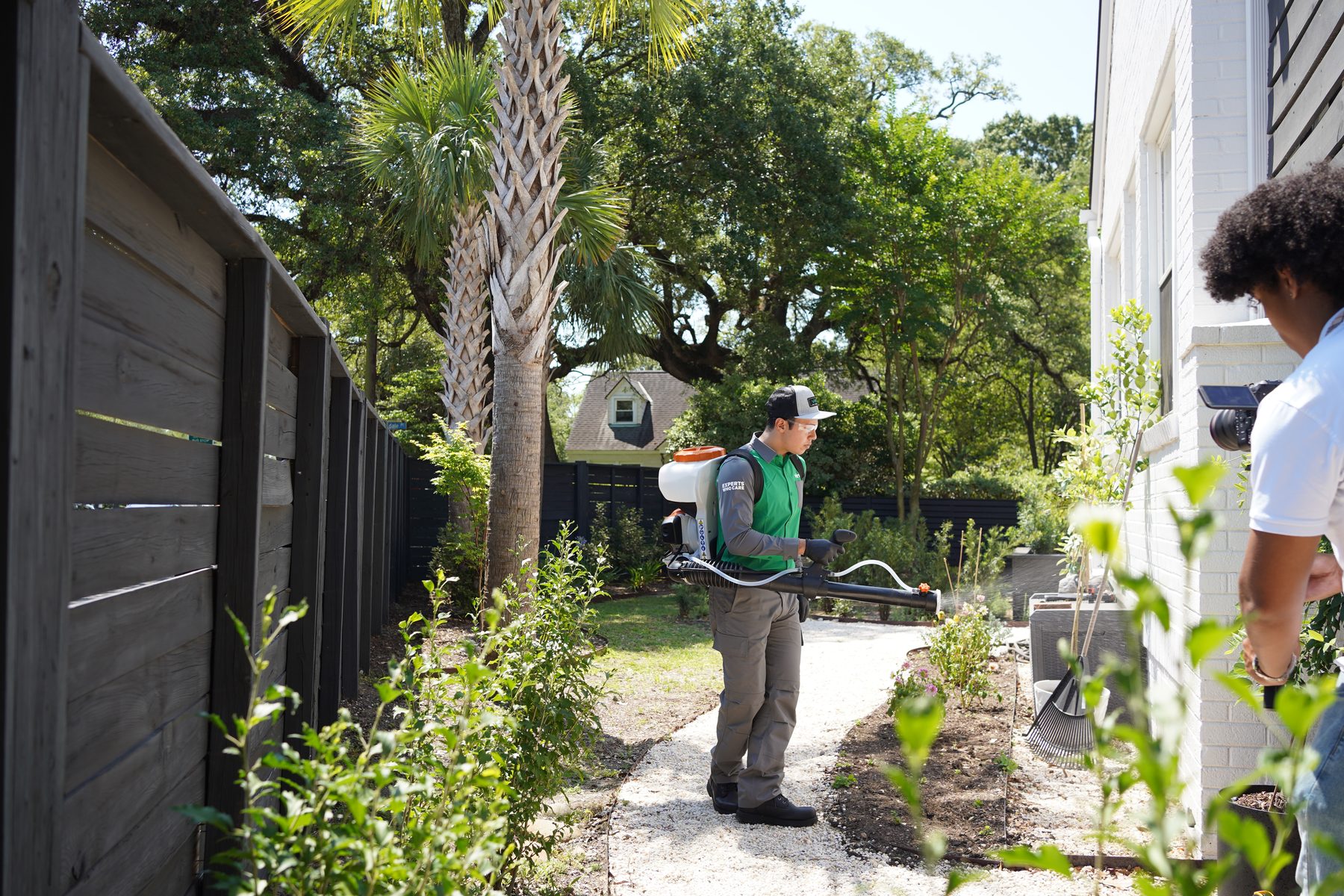
A fine-mist residual is applied to the underside of shrubs, lower tree canopy, tall grass and fence lines, the shaded cover where adult mosquitoes rest during the day. On a Crowfield or Devon Forest lot with mature, irrigated landscaping that cover is dense, which is why the treatment holds for 3–4 weeks between visits.

Larvicide Application
Larvicide goes into any standing water we cannot remove: a wet ditch, a pond margin on your side of the line, a drain that never fully empties. In Goose Creek the freshwater specialists breed in exactly that permanent, vegetated water, so larvicide does work the barrier spray cannot.
Monthly Service & Free Re-Treatments
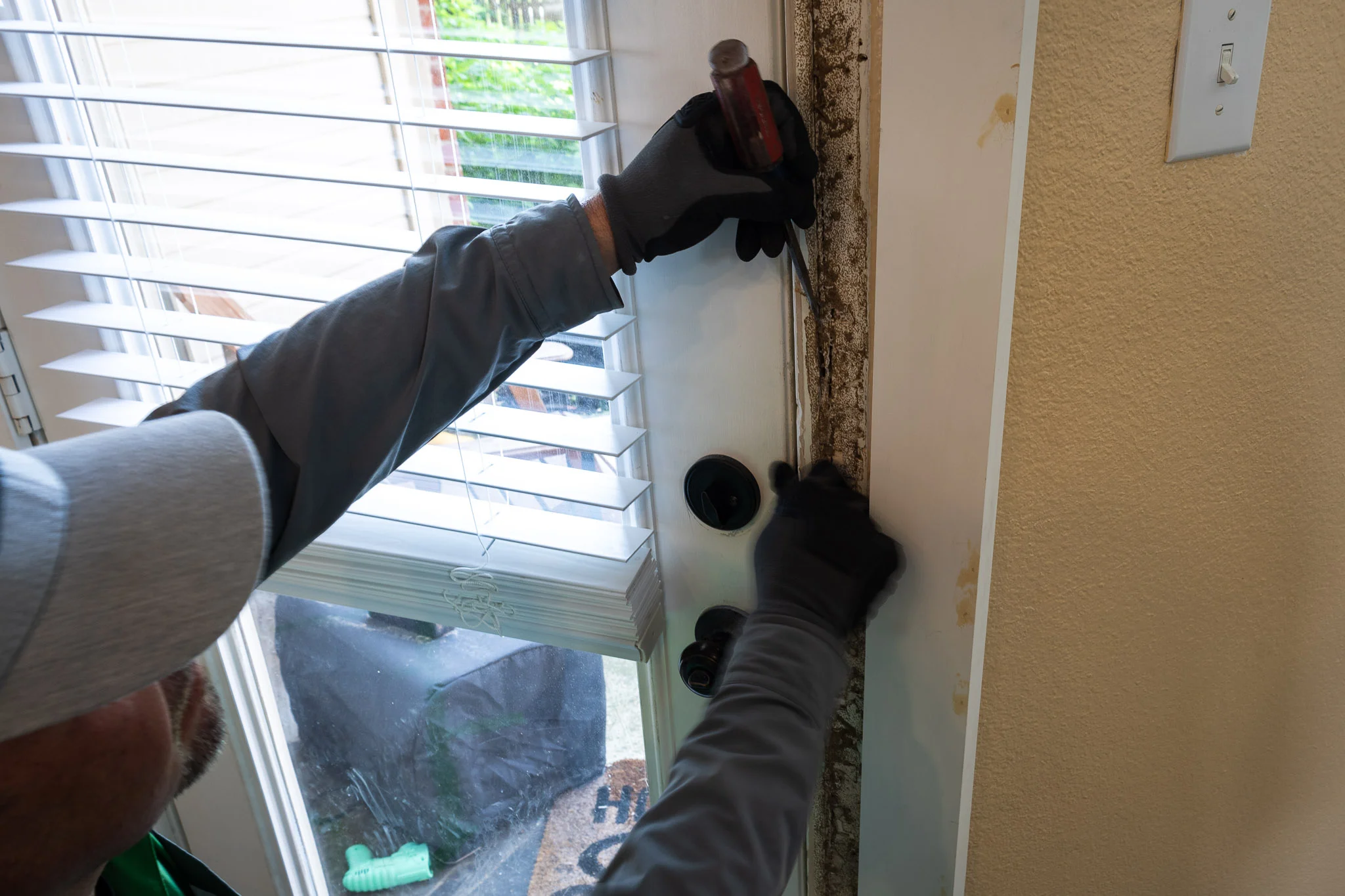
Monthly visits through Goose Creek’s March-to-November season keep pressure on the population, and if activity returns before the next visit we come back at no charge. Your technician also flags the drainage and vegetation changes that lower pressure for good.
What Our Customers Say
What Goose Creek Homeowners Say About Vinx Mosquito Control
I'm very satisfied with Vinx and have been for a couple of years. Ever since they took over our pest control we've had zero issues with bugs, and their mosquito service keeps our pool area bug free during swim season. Highly recommend them!
We have used Vinx for a few years now and have never had a problem. Our tech today was Jack and he was great!
I hadn’t been home the last few times Vince came out so I scheduled a time. James could not have been more accommodating. He was very professional and met all of the needs and concerns I had.
Technician was on time and very thorough checking my bait stations. Highly recommend him and Vinx. I have been a satisfied customer for over 5 years.
The technician Devon was great! He was very thorough and very professional. All the people at Vince are always so on top of our treatments and super easy to work with. I highly recommend them.
Vinx has always gone above and beyond to keep our house protected against pest. They are highly professional and offer services from termite to mosquitos, rodents even bees. They not only work at getting rid of these issues but also have the ability for preventative measures. I strongly recommend
Ready to Take Back Your Yard?
Warm weeks in March are when the reservoir margins and the pond edges at Crowfield start producing. Start treatment before the population peaks, not after. Free inspection, same-day availability.
The Local Threat
Why Goose Creek Needs Year-Round Mosquito Control
Goose Creek is a freshwater town, and that changes the calendar. There is no tidal brood to wait for here; the pressure comes from the emergent wetlands along the Cooper and Back Rivers and Foster Creek, the 600-acre Goose Creek Reservoir, and ordinary container water in the yards of Crowfield Plantation and Devon Forest. Culex erraticus starts laying floating egg rafts on grassy pond margins as soon as the water warms, and Asian tiger eggs in a gutter hatch the first week above 50°F, often in late February. A May start misses two months of that.
Goose Creek’s mosquito pressure comes from freshwater, not salt marsh. The city’s own resiliency planning documents describe freshwater emergent wetlands lining the Cooper and Back Rivers and Foster Creek, and the 600-acre Goose Creek Reservoir sits at the edge of the city. That freshwater geography, paired with ordinary residential container breeding, is what drives mosquito pressure here, a different mix than the coast, built around three species with genuinely different breeding habits.
The Asian tiger mosquito (per Clemson University, the most prevalent species across South Carolina’s urban and suburban areas and the state’s most common daytime biter) breeds in small containers around the home, while Culex erraticus, a freshwater specialist, breeds in the grassy margins of ponds and rivers and carries Eastern Equine Encephalitis. No part of Goose Creek is low-risk during the long active season.
The habit of holding water on this land is three centuries old. A 1732 notice in the South-Carolina Gazette offered building leases on eight eight-acre lots fronting the Broad Path in the parish of St. James, Goose Creek, describing the land as all cleared and very proper for pasture, corn or rice, within twenty miles of Charlestown and four of Goose Creek Bridge. Rice is grown in deliberately impounded water, and the low ground here has been shaped for holding it far longer than any subdivision has stood on it. The standing water that matters now is mostly engineered drainage rather than rice field, but it sits in the same places.
Mosquito Species in Goose Creek
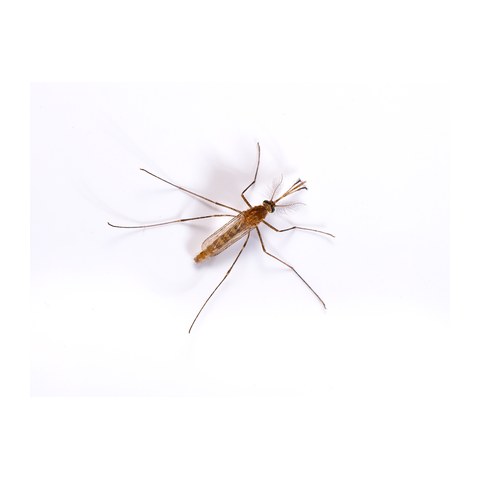
Freshwater Swamp Mosquito (Culex erraticus)
- A freshwater specialist that lays floating egg clusters along grassy, shallow pond and marsh margins.
- Well suited to the freshwater wetlands bordering the Cooper and Back Rivers and Foster Creek.
- A known carrier of Eastern Equine Encephalitis, a real, if uncommon, concern near the riverbank.
- Most common on river- and pond-adjacent properties, not container water around the house.
- Clearing grassy debris along water edges plus larvicide is the effective approach.
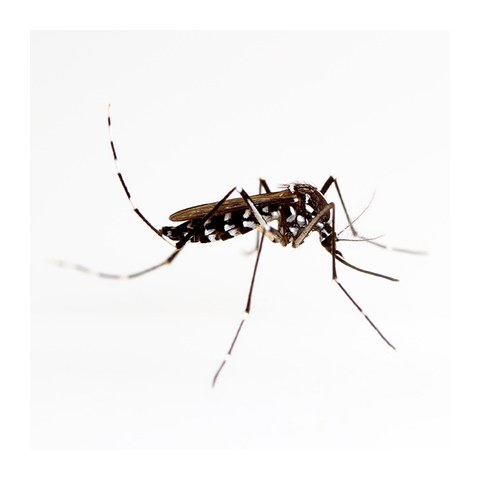
Asian Tiger Mosquito (Aedes albopictus)
- A single white stripe down the back and legs marks it out.
- Aggressive and active by day, exactly when you are outdoors.
- Seldom travels beyond a few hundred feet of its hatching site.
- It breeds in the smallest standing water: a blocked gutter, kiddie pool, tarp or construction debris.
- Its short range means removing standing water produces a measurable difference.
Southern House Mosquito (Culex quinquefasciatus)
- Active from dusk to dawn.
- It wants larger stagnant volumes: ditches, storm drains, retention ponds.
- This is the region's primary West Nile virus mosquito.
- Treating standing water with larvicide is essential, not just barrier spray for adults.
- A single bite can also transmit heartworm to dogs and cats.
Mosquito Pressure by Area
Mosquito Pressure Across Goose Creek
Crowfield Plantation: Asian Tiger Mosquitoes
- Mature landscaping and irrigation features throughout this large community create ample small-container breeding habitat.
- Ideal Asian tiger mosquito habitat, the state’s most common daytime biter.
- Aggressive daytime biters that rarely travel far, eliminating container water close to the house makes a real difference.
- The minimum effective approach is monthly barrier spray to foliage with larvicide on any standing water.
Devon Forest: Asian Tiger Mosquitoes
- Established homes with mature yards see the same container-breeding conditions favorable to the Asian tiger mosquito.
- Clogged gutters, plant saucers, and yard debris hold the small pockets of water Asian tiger mosquitoes rely on.
- Aggressive by day, with an unusable daytime yard as the hallmark.
- Weekly dumping of standing water plus barrier treatment works best.
St. James & Otranto Historic Corridor: Culex erraticus
- Proximity to the freshwater wetlands bordering the Cooper and Back Rivers gives this corridor grassy, marshy margins.
- Those margins support Culex erraticus, a freshwater specialist and known carrier of Eastern Equine Encephalitis.
- Clearing grassy debris along water edges is as important as clearing gutters here.
- Monthly barrier spray plus larvicide of the marshy margins is the effective approach.
Sedgefield: Southern House Mosquitoes
- Established drainage ditches and older stormwater infrastructure throughout this neighborhood hold standing water after rain.
- Sufficient to sustain Southern house mosquito activity from dusk to dawn across the summer.
- Locally it is this species that carries the strongest West Nile link, so larvicide on standing water counts.
- We recommend monthly treatment year-round, because seasonal-only opens a gap as spring builds.
Naval Weapons Station Corridor: Southern House Mosquitoes
- Older infrastructure and wooded buffer zones around the base hold standing water that supports ongoing populations.
- Ideal Southern house mosquito breeding in storm drains and stagnant water.
- They bite dusk to dawn, which makes larvicide on retention ponds and drainage a key part of control.
- Monthly treatment March through November keeps the population knocked down.
Warning Signs
Signs Mosquito Pressure Needs Professional Attention
Daytime Bites Near the House
Asian tiger mosquitoes breeding within a few hundred feet, almost always in a container on your lot or a neighbor’s.
Mosquitoes Over Grassy Pond Edges
Culex erraticus, the freshwater swamp mosquito, working the shallow vegetated margins it lays egg rafts on.
Standing Water Past Five Days
Clemson’s rule: any water standing five days or more will breed mosquitoes, some species in a tablespoon.
Mosquitoes Indoors
If they are past the screens and doors, the outdoor population around the house is heavy.
Dusk Bites on the Patio
Southern house mosquitoes from a drain or retention pond nearby, the species most linked to West Nile virus.
Family Goes Inside at Sunset
An unusable yard in the evening means the population exceeds what containers alone would account for.
Homeowner Tips
6 Ways to Reduce Mosquito Pressure Right Now
Kid & Pet Safe
Our Treatments Are Safe for Your Whole Family: Including the Furry Members
Every product we use is EPA-registered and applied strictly at labeled rates by licensed technicians. We take the guesswork out of safety so you can feel confident letting kids and pets back into treated areas quickly.

EPA-Registered Products Only
All products we apply are EPA-registered and used strictly per label requirements. Our licensed technicians are trained to apply the right product in the right place at the right rate, every time.
Dry Time Before Re-Entry
Exterior spray treatments dry in 30–60 minutes. Once dry, treated surfaces are safe for children and pets to contact. Your technician will confirm the all-clear before leaving your property.
Interior Treatment On Request
We treat only what’s needed, where it’s needed. Gel baits in cabinets and crack-and-crevice applications keep products away from areas pets and children frequent most.
Botanical Options Available
Have specific sensitivities? Ask your technician about our plant-derived treatment options. We offer botanical alternatives for households that prefer a more natural approach.
Have a concern about products used near your pets or children? Call (855) 800-8469 and we’ll walk you through exactly what we use and why it’s safe.
Explore More
More Pest Control Services in Goose Creek

Pest Control Goose Creek
General pest protection

Termite Control Goose Creek
Sentricon bait system

Ant Control Goose Creek
Household ants & others

Spider Control Goose Creek
All spider species covered

Cockroach Control Goose Creek
Palmetto bug & roach removal

Rodent Control Goose Creek
All rodents covered

Bed Bug Treatment Goose Creek
Heat & liquid treatments

Tick & Flea Control Goose Creek
Yard & pet protection
Exterminator Goose Creek
Same-day local exterminators
Frequently Asked Questions
Mosquito Control FAQ for Goose Creek Homeowners
Vinx Platinum at $109/mo includes year-round mosquito treatment: monthly through the season and one winter service. There is also a mosquito-only service outside the plan. Ring (855) 800-8469 for property-specific pricing.
No. Goose Creek has no salt marsh, so there is no Eastern saltmarsh brood arriving after a King Tide. The pressure here is freshwater: the emergent wetlands along the Cooper and Back Rivers and Foster Creek, the 600-acre reservoir, and container water around homes. That means the freshwater swamp mosquito, Culex erraticus, matters here in a way it does not on James Island, and larvicide of vegetated water matters more than tide timing.
Yes. All products are EPA-registered and applied to label. Treated areas are fine for children and pets once dry, typically 2 to 4 hours, and we never apply with them present.
Yes. Warm January and February days bring Southern house mosquitoes out of semi-dormancy, and Asian tiger eggs in gutters hatch the moment temperatures hold above 50°F. The winter service shuts the gap that restarting in May would leave.
Barrier treatment typically eliminates up to 90% of the adult population per application, and most Goose Creek yards see an 80% or better reduction after the first two monthly visits. Lots backing onto the reservoir or the river wetlands hold their results best when the pond and ditch margins are also larvicided.
A barrier application lasts around three weeks. Coverage stays continuous across the season through monthly visits.
Earlier than most people expect. Asian tiger eggs hatch in late February in a warm year, and Culex erraticus starts laying on pond margins as soon as the water warms in March. Peak pressure runs May through October and tails into November.
Yes. Every visit includes adulticide barrier spray on resting foliage and larvicide for standing water that cannot be drained. In Goose Creek the larvicide matters more than in marsh towns, because the freshwater species breed in permanent, vegetated water rather than a tide.
Yes. For a gathering at a Goose Creek home we time a barrier treatment a day or two ahead so the patio and lawn foliage is treated when guests arrive. Ring (855) 800-8469 with your date.
West Nile virus, carried mainly by the Southern house mosquito, and Eastern Equine Encephalitis, for which the freshwater Culex erraticus is a documented vector. A single mosquito bite can also transmit heartworm to dogs and cats.
Because the water is permanent and its margins are vegetated. The City’s own resiliency documents describe freshwater emergent wetlands along the Cooper and Back Rivers, and the reservoir’s shallow shoreline never drains the way a tide does. Culex erraticus lays floating egg rafts on exactly that kind of grassy edge, season after season.
Most Goose Creek appointments are same-day or next-day. Call (855) 800-8469. Should we fail to service your home by the next business day, the initial visit costs nothing.
Treatment goes on shaded foliage and leaf undersides where mosquitoes rest, not on flowering plants where pollinators feed, and it is scheduled early or late when bees are least active. Let your technician know about pollinator plantings and we work around them.
Service Coverage
Mosquito Control Across Goose Creek & the Tri-County Area
Serving every neighborhood in and around Goose Creek
Serving the Greater Charleston Area