Mosquito Control in Simpsonville, SC
Monthly Barrier Treatment • Larvicide Application • Free Re-Treatment Guarantee
Vinx delivers monthly barrier spray and larvicide treatments that knock down active mosquitoes and break the breeding cycle, so you can enjoy your yard all season without the bites.
Get Started in 60 Seconds
Choose what’s easiest for you
Request a Quote
We usually respond in 2 minutes
Call 855-800-8469
Get a Live Person (no AI agents here!)
Sign Up Online
Get pricing and schedule now





Welcome to Vinx Pest Control
A Company That Actually Backs What It Says
At Vinx, we combine professional-grade treatments with a level of service most pest control companies don’t offer. Local technicians, fast response times, and a guarantee that actually means something.
“I’m not passionate about killing bugs. I’m passionate about customer service. At Vinx, you get experts who show up, do the job right, and stand behind every visit. No runaround, no fine print.”

Founder & Owner, Vinx Pest Control
PROTECTION PLANS
Mosquito Treatment Plans for Simpsonville Homes

Standard Residential Protection
- 4 Seasonal Treatments Per Year
- General pest perimeter protection
- Unlimited Free Re-Services
- 100% Satisfaction Guarantee
- Mosquito treatment not included

Includes Monthly Mosquito Treatment
- 6 Home & Yard Treatments Per Year
- Monthly Mosquito Barrier Treatment (Mar–Nov)
- Larvicide Application at Standing Water
- Free Re-Treatments Between Visits
- Fire Ant Broadcast Treatment
- Flea & Tick Coverage
- 100% Money-Back Guarantee

Full-Coverage Premium Plan
- 9 Treatments Per Year
- Monthly Mosquito Barrier Treatment (Mar–Nov)
- Larvicide + Breeding Site Assessment
- Monthly Mosquito Re-Treatments Included
- Fire Ant, Flea, Tick & Bed Bug Coverage
- Free Bed Bug Treatments if Needed
- 100% Money-Back Guarantee
Standalone mosquito treatments are quoted based on property size and mosquito pressure. Mosquito coverage is included in Plus & Platinum plans.
Request Mosquito Control Service in Simpsonville
Fill out the form below and a Vinx specialist will contact you same day to schedule your inspection and first treatment.
Our Approach
How Vinx Controls Mosquitoes in Your Simpsonville Yard

Property Inspection & Breeding Site Assessment
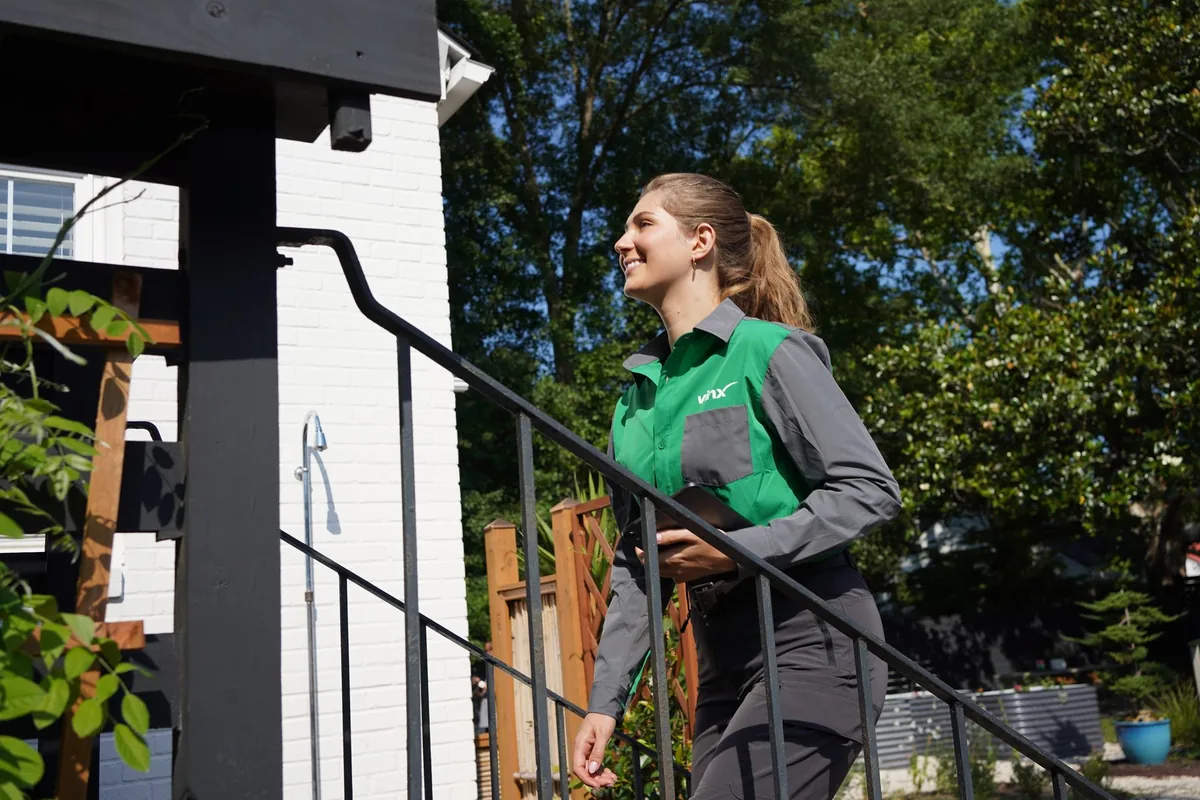
Your technician walks the full property to identify mosquito resting areas (dense vegetation, shaded shrubs, wood piles) and standing water breeding sites such as gutters, low spots, ornamental pots, and tarps. A targeted treatment plan is built around what is actually driving mosquito pressure on your specific property.
Barrier Yard Treatment
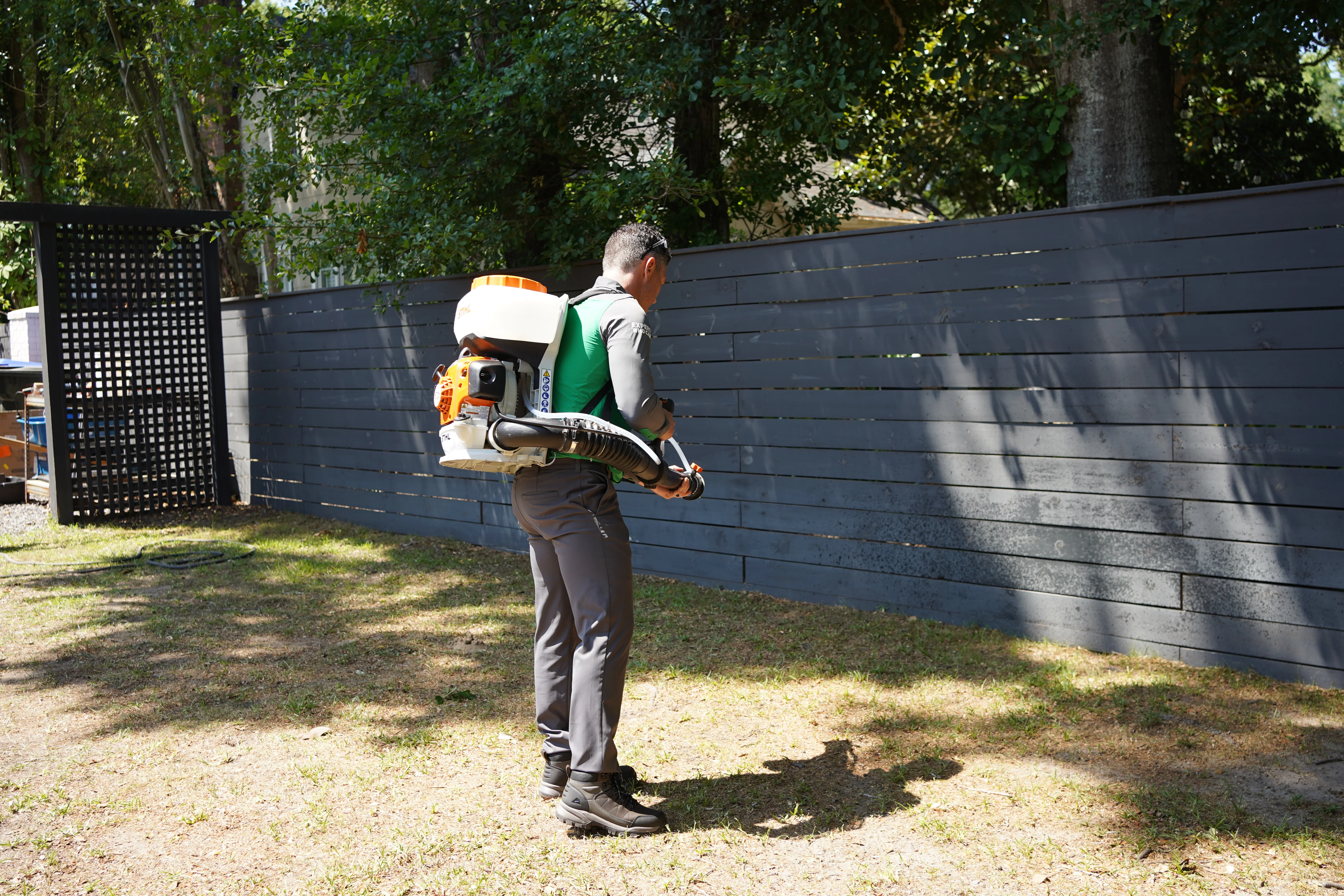
A fine-mist application of residual insecticide is applied to the underside of shrubs, lower tree canopies, tall grass, fence lines, and other resting areas. The treatment kills active mosquitoes on contact and provides a residual barrier effect that continues working for 3–4 weeks between monthly service visits.
Larvicide Application
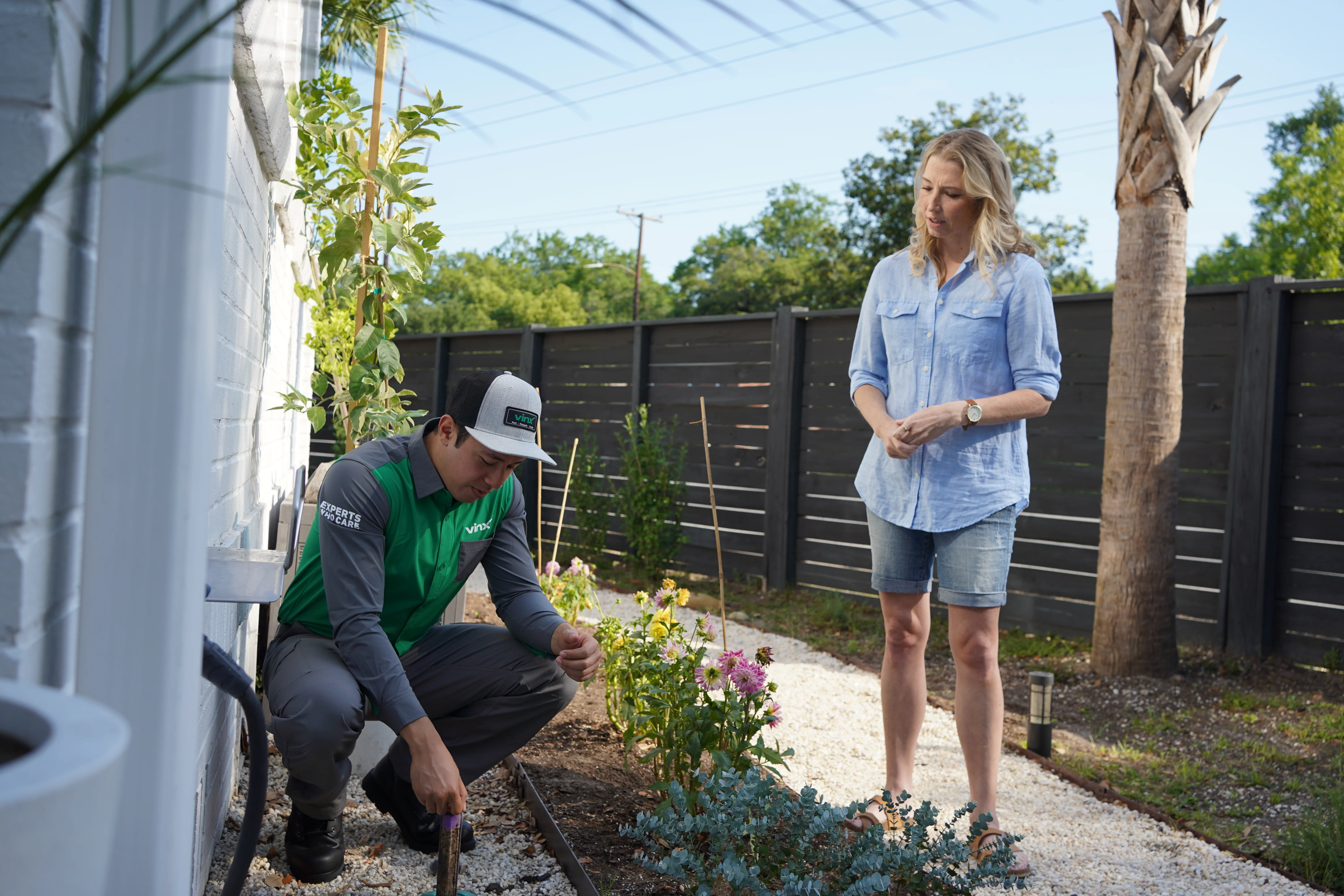
Larvicide tablets or liquid are applied to any standing water that cannot be eliminated, retention areas, drainage ditches, decorative ponds. Larvicide prevents mosquito larvae from maturing into biting adults and continues working for 30 days, breaking the breeding cycle between visits.
Monthly Service & Free Re-Treatments
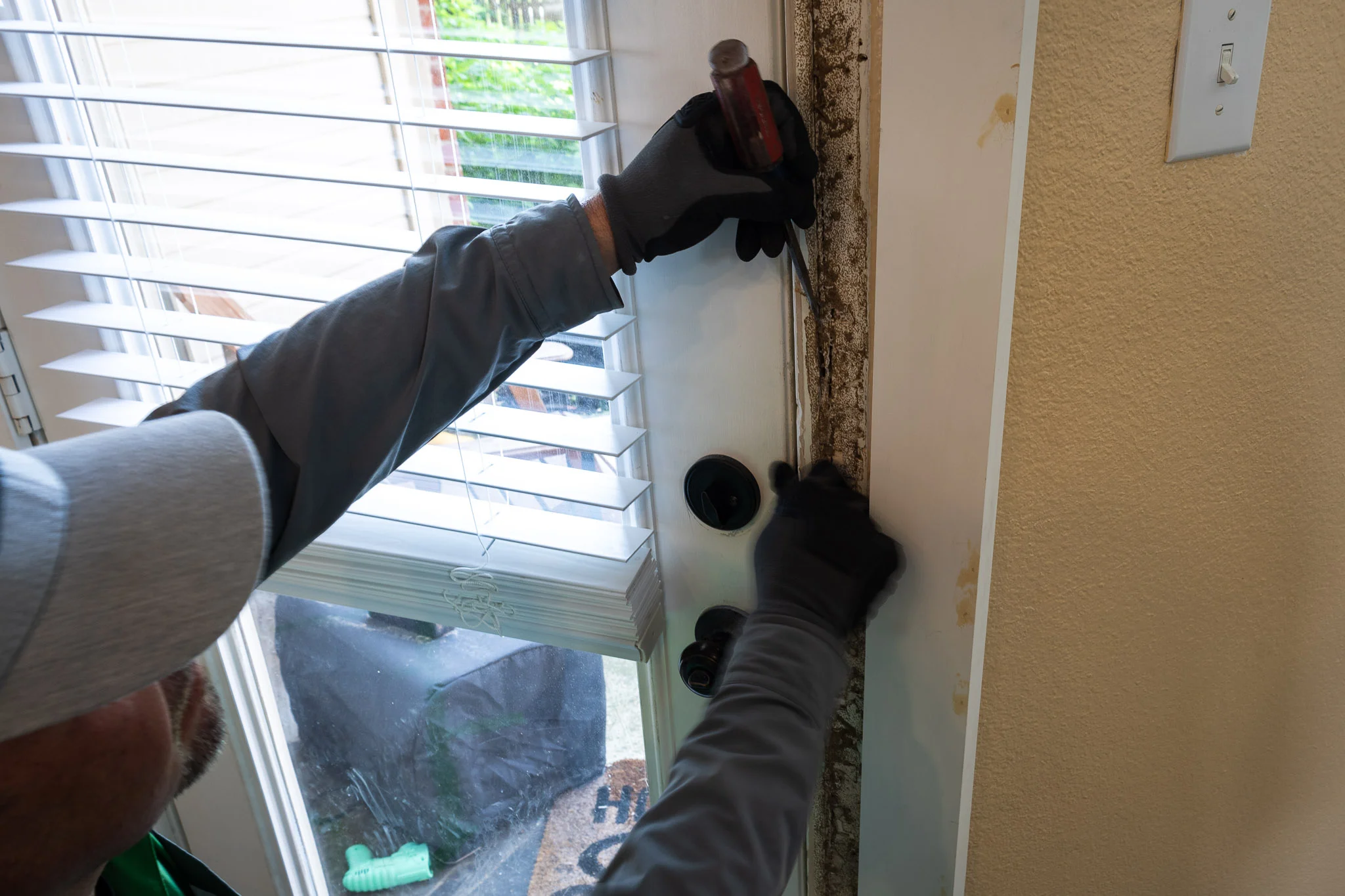
Monthly visits maintain continuous pressure on the mosquito population throughout the season. If mosquito activity returns within the service period, we come back and re-treat at no additional charge. Your technician also recommends property modifications (drainage corrections, vegetation management) that reduce long-term mosquito pressure.
Mosquito-Free Guarantee
If mosquitoes return between scheduled visits, we come back and re-treat at no charge. Your Plus or Platinum plan includes unlimited re-treatments throughout the mosquito season. We stand behind every service, no fine print, no runaround.
Customer Reviews
What Simpsonville Customers Are Saying
Kyngstyn! Thank you so much for your professionalism and kindness while treating my home and lawn. You did an awesome job. Again. Also thanks for putting my furby in the screened porch.
Alex, and all of the Techs I've met, have been very professional and accommodating.
Professional and knowledgeable diagnosis of the situation, he reached out to get specialists to further determine the specific pest.
John Middleton is an exceptional part of the Vinx team. He is professional, knowledgeable, considerate of the Client’s property, Communicates well, and if he says he’s going to do something, you can count on his word.
Mike was very friendly and informative about what he was doing. Thanks
Mosquito Pressure in Simpsonville
Why Mosquitoes Are Hard to Control Without Professional Treatment
Simpsonville’s warm, humid climate creates a long mosquito season: March through November. The Reedy River watershed, retention ponds throughout Five Forks and the Woodruff Road corridor, and the area’s frequent summer storms all create abundant standing water breeding sites. A single female mosquito can lay 100–300 eggs in a bottle cap’s worth of water.
Store-bought sprays and citronella candles don’t work. Contact sprays kill mosquitoes that land on treated surfaces but have no residual effect and no impact on larvae in standing water. The breeding cycle continues uninterrupted. Professional barrier treatment combined with larvicide is the only approach that breaks the cycle and provides measurable, sustained reduction in mosquito populations.
Two different mosquitoes, two different problems. Aedes albopictus, the Asian tiger mosquito, is established throughout Simpsonville and causes most of the biting: a daytime biter, most active at dawn and dusk, breeding in very small containers. It is a competent vector of dengue, Zika and chikungunya, none of which are locally transmitted in South Carolina. West Nile virus is carried primarily by Culex mosquitoes, which bite at dusk and after dark and breed in stagnant, organically enriched water, so the two species need different tactics on the same property. A professional treatment program targeting resting sites and breeding sources is the most effective way to reduce exposure risk for your family.
3 Mosquito Species in Simpsonville
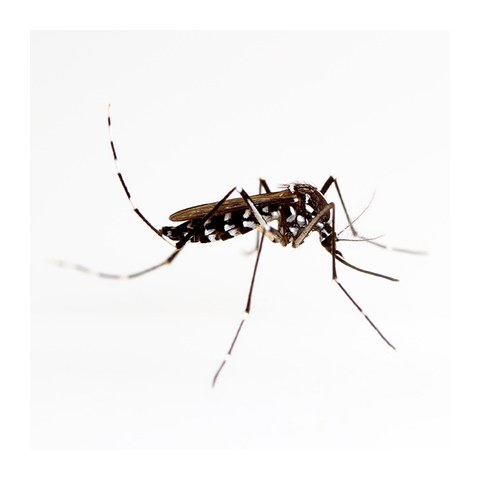
Asian Tiger Mosquito (Aedes albopictus)
Small, black with distinctive white stripes. Daytime biter, most aggressive at dawn and dusk. Breeds in very small containers: flower pots, gutters, tarps, tree holes, bird baths. Established throughout Simpsonville and all of Greenville County, and the species behind most of the biting you actually notice. It is a competent vector of dengue, Zika and chikungunya, though none of those are locally transmitted in South Carolina, where cases are travel-associated. West Nile is a different story and belongs to Culex, not to this mosquito. The primary target of Vinx barrier and larvicide treatments.
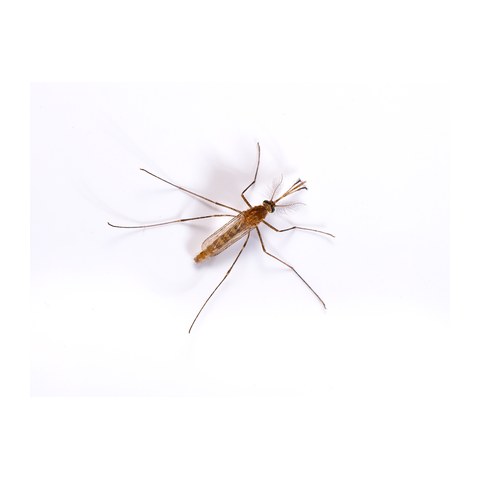
Culex Mosquito (Culex quinquefasciatus)
Tan to light brown, the most common mosquito in the southeastern United States. Primarily a dusk and nighttime biter. Breeds in stagnant, organically enriched water, clogged gutters, retention ponds, ditches. Common throughout the Woodruff Road corridor and Five Forks. Primary vector of West Nile virus in SC. Targeted by perimeter barrier and standing water larvicide.
Yellow Fever Mosquito (Aedes aegypti)
Similar in appearance to the Asian tiger mosquito but with a lyre-shaped silver pattern on the thorax. Primarily a container breeder, tires, buckets, clogged gutters, ornamental water features. Active during the day. Worth setting expectations: across the southeastern United States this species has been largely displaced by the Asian tiger mosquito since the 1980s, and it is not established in the Upstate. What gets identified as a yellow fever mosquito here is almost always Ae. albopictus, which is why we identify before we treat. The container-breeding habits are the same either way, so emptying and larviciding small containers is the work that pays.
Mosquito Risk by Neighborhood
Mosquito Risk Across Simpsonville Neighborhoods
Five Forks: HIGHEST MOSQUITO PRESSURE
Five Forks has the highest mosquito pressure in the Simpsonville area due to its combination of active development, retention ponds required by stormwater ordinances, and dense residential landscaping. Construction sites create standing water in ruts, low spots, and equipment depressions. Retention ponds in newer subdivisions are prime Culex and Asian tiger mosquito breeding sites. Five Forks homeowners with yards adjacent to ponds or construction activity see the most severe mosquito pressure and benefit most from a monthly Plus or Platinum plan.
Rocky Creek, West of the Tracks: HIGH MOSQUITO PRESSURE
Rocky Creek collects water from most of Simpsonville, and the City’s zoning keeps a riparian buffer of 15 to 50 feet along it where all vegetation must be retained. That shaded brush is permanent resting habitat for Asian tiger mosquitoes, and slow pools along the creek and its feeder branches breed Culex. The creek itself cannot be treated, so the barrier goes on the shaded vegetation along your side of the fence line, with larvicide in any standing water on the property. Homes backing onto the buffer see the heaviest pressure.
Durbin & Horsepen Creeks, East of the Tracks: ELEVATED MOSQUITO PRESSURE
The subdivisions built along Durbin and Horsepen Creeks since 2000 sit beside intact creek woodland, and some come with their own retention ponds. Greenville County’s mosquito program is explicit that it “does not spray privately owned bodies of water,” including private ponds and HOA retention areas, so those ponds are the HOA’s and the homeowner’s to manage. Culex breed in the pond margins and Asian tigers rest in the wooded edge. Monthly barrier treatment plus larvicide in on-property water is the effective combination here.
Woodruff Road Corridor: ELEVATED MOSQUITO PRESSURE
The Woodruff Road corridor has a high density of commercial properties with large parking lots, retention basins, and ornamental landscaping, all of which create standing water breeding sites. Culex mosquitoes breed in the retention ponds and catch basins common along this corridor and migrate into adjacent residential neighborhoods. Homeowners within a half mile of the Woodruff Road commercial strip see elevated evening mosquito pressure from Culex populations breeding in nearby commercial stormwater systems.
Heritage Park & Fairview Road: ELEVATED DAYTIME MOSQUITO PRESSURE
Homes around Heritage Park sit beside the park’s wooded edges, where Asian tiger mosquitoes rest in the shade and bite through the day. Greenville County does fog inside Simpsonville, by request and in the evenings, but Clemson notes that “night time applications of insecticide fogs by mosquito control agencies often do not effectively control Asian tiger mosquitos because they are active mainly during daylight hours.” A monthly barrier treatment on the shaded plantings where they rest covers the hours the fogging truck misses.
Downtown & Main Street: ELEVATED CONTAINER-BREEDER PRESSURE
Outside a few ponds, the City’s plan notes, Simpsonville has no large standing bodies of water, so around the Clock Tower and Main Street the breeding happens in containers. Mature canopy over the older streets fills gutters with leaves, and where blocks still lack curbs, runoff sheets into yards and sits in low spots, tarps and planters. Asian tigers need only a bottle cap of water to lay eggs. Clearing gutters and tipping containers weekly, plus monthly barrier treatment from March through November, is the effective approach here.
Kid & Pet Safe
Our Treatments Are Safe for Your Whole Family: Including the Furry Members
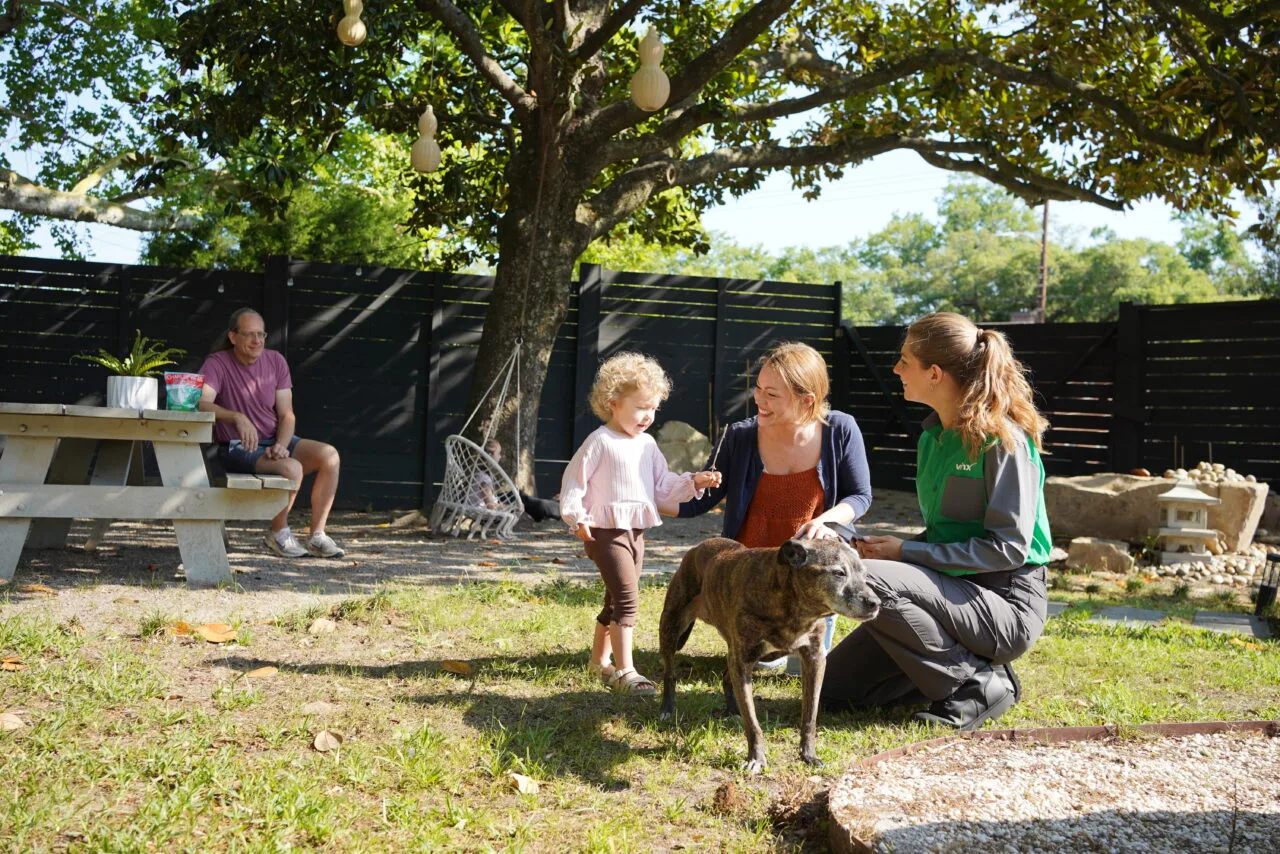
Every product we use is EPA-registered and applied strictly at labeled rates by licensed technicians. We take the guesswork out of safety so you can feel confident letting kids and pets back into treated areas quickly.
EPA-Registered Products Only
All products we apply are EPA-registered and used strictly per label requirements. Our licensed technicians are trained to apply the right product in the right place at the right rate, every time.
30-Minute Dry Time
Barrier spray treatments dry in approximately 30 minutes. Once dry, treated surfaces are safe for children and pets to contact. Your technician will confirm the all-clear before leaving your property.
Larvicide Is Fish-Safe
The biological larvicide (Bacillus thuringiensis israelensis) we use in ornamental ponds and water features is EPA-approved, fish-safe, and does not affect beneficial insects. It specifically targets mosquito larvae without impacting the broader ecosystem.
Botanical Options Available
Have specific sensitivities? Ask your technician about our plant-derived treatment options. We offer botanical alternatives for households that prefer a more natural approach without sacrificing effectiveness.
Have a concern about products used near your pets or children? Call (855) 800-8469 and we’ll walk you through exactly what we use and why it’s safe.
Explore More
More Pest Control Services in Simpsonville

Pest Control Simpsonville
Year-round protection plan
Ant Control Simpsonville
6 species treated
Bed Bug Control Simpsonville
Chemical + follow-up protocol
Cockroach Control Simpsonville
American & German roaches
Termite Control Simpsonville
Bait systems & liquid treatment

Rodent Control Simpsonville
All rodents covered
Spider Control Simpsonville
Black & brown widows, wolf spiders
Wasp Control Simpsonville
Nest removal & prevention

Tick & Flea Control Simpsonville
Yard & pet protection
Exterminator Simpsonville
Same-day local exterminators
Frequently Asked Questions
Mosquito Control in Simpsonville: Your Questions Answered
Simpsonville is inside the county program, but two details matter. First, it runs by request rather than on a fixed route, so nothing happens unless somebody calls. Second, the coverage is not uniform across this page’s service area: the county program covers the unincorporated areas plus Greenville, Greer, Simpsonville and Travelers Rest, and Mauldin and Fountain Inn are not on that list — Mauldin runs its own city program on roughly a 21-day neighborhood cycle. Either way it does not replace treating your own yard, and Clemson explains why: “night time applications of insecticide fogs by mosquito control agencies often do not effectively control Asian tiger mosquitos because they are active mainly during daylight hours.” The tiger mosquito is a day-biting container breeder. Fogging after dark largely misses it.
It changes where the water sits, which is the same thing. The City’s comprehensive plan notes that “the railroad tracks through the city sit on the divide between two watersheds,” with the Reedy River watershed west of the tracks and the Enoree east of it. Rocky Creek collects runoff from most of Simpsonville on the west side; Durbin and Horsepen Creeks drain the east. The plan also notes the city has few large standing water bodies, so your mosquito pressure is driven less by a lake than by creek margins, retention ponds, roadside ditches and the containers in your own yard. Add the Piedmont’s “thin, stony clay soils,” which shed water slowly, and low spots stay wet long enough to produce a brood.
Mosquito treatment is included in the Plus plan ($75/mo) and Platinum plan ($109/mo). Standalone seasonal mosquito programs are quoted based on property size. Call (855) 800-8469 or fill out the quote form for a same-day estimate.
Mosquito season in Simpsonville typically runs March through November. Asian tiger mosquitoes can be active on warm days as early as February and as late as December during mild years. Vinx recommends starting the monthly program in March to establish a barrier before peak pressure in May–September.
The residual barrier treatment typically lasts 3–4 weeks. Monthly service visits maintain continuous coverage throughout the season. If mosquito activity returns before your next scheduled visit, call us and we will re-treat at no charge under the Plus and Platinum plans.
Yes, once the spray treatment has dried (approximately 30 minutes), the yard is safe for children and pets. Your technician will let you know when the all-clear is given before leaving your property.
No. As long as we have access to the yard, your technician can complete the treatment without you present. We will leave a service summary and notify you when the treatment is complete. Just ensure gates are unlocked on service day.
Mosquitoes can re-enter treated areas from neighboring properties, wooded areas, or untreated standing water on or near your property. If you have significant standing water that wasn’t treated with larvicide, new adults will continue emerging. Call us and we’ll come back and re-treat, it’s covered under the Plus and Platinum plans.
Yes. We apply biological larvicide (Bti) to ornamental ponds, birdbaths, and water features that cannot be drained. Bti is fish-safe, non-toxic to beneficial insects, and specifically targets mosquito larvae. We cannot treat natural waterways or municipal stormwater infrastructure.
The most effective property modification is eliminating standing water: empty and scrub birdbaths weekly, clean gutters, remove tarps and containers that hold water, and correct any drainage low spots. Trimming dense vegetation reduces resting habitat. These measures combined with professional barrier treatment deliver the best results.
Service Coverage
Simpsonville & Greenville County Service Area
Serving Simpsonville and surrounding Greenville County communities for mosquito control.