
Mosquito Control in Chesapeake, VA
Asian Tiger, Eastern Salt Marsh, Floodwater & Common Malaria Mosquito Experts
Mosquito pressure in Chesapeake follows standing water more than it follows any single part of the city. Vinx treats the species that’s actually breeding on your property.
Get Started in 60 Seconds
Choose what’s easiest for you
Request a Quote
We usually respond in 2 minutes
Call (855) 800-8469
Get a live person (no AI agents here!)
Sign Up Online
Get pricing and schedule now




Welcome to Vinx Pest Control
A Company That Actually Backs What It Says
At Vinx, we pair professional-grade treatment with a level of follow-through most pest control companies skip. Local technicians, fast response, and a guarantee that holds up after the invoice is paid.
Get a Free Quote"I'm not passionate about killing bugs. I'm passionate about customer service. At Vinx, you get experts who show up, do the job right, and stand behind every visit. No runaround, no fine print."
PROTECTION PLANS
Mosquito Control Plans for Chesapeake Homeowners
Pricing varies by home size — larger properties fall into a higher size tier on all three plans.
Hosting an outdoor event, managing an apartment community near Greenbrier, or renting waterside property near Great Bridge? Ask about a one-time event mosquito treatment.
Standard Residential Protection
- 4 Seasonal Treatments Per Year
- 50+ Covered Pests
- Interior, Exterior & Yard Treatment
- Unlimited Free Re-Services
- 100% Money-Back Guarantee
- Fire Ant Yard Guarantee
- Flea & Tick Coverage
- Mosquito Treatments

Upgraded Yard Protection
- 6 Home & Yard Treatments Per Year
- 50+ Covered Pests
- Interior, Exterior & Yard Treatment
- Unlimited Free Re-Services
- 100% Money-Back Guarantee
- Fire Ant Yard Elimination Guarantee
- Flea & Tick Elimination Guarantee
- Mosquito Treatments

Most Comprehensive Protection
- 9 Treatments Per Year
- 50+ Covered Pests
- Interior, Exterior & Yard Treatment
- Unlimited Free Re-Services
- 100% Money-Back Guarantee
- Fire Ant Yard Elimination Guarantee
- Interior Flea & Tick Coverage
- 8 Mosquito Treatments (Mar–Nov)
- Free Bed Bug Treatments if Needed*
All plans include a $329 initial treatment and a 12-month agreement. Termite protection (Termite TotalDefense, starting at $35/mo standalone) is quoted separately after a free inspection. *Starting rates vary by home size and area. All plans billed monthly.
Request Your Free Chesapeake Mosquito Quote
Fill out the form below and a Vinx team member will reach out within 2 minutes during business hours.
Prefer to talk? Call (855) 800-8469 for a live person, no AI agents.
Our Process
How Vinx Controls Mosquitoes in Chesapeake

Inspection & Breeding Site Identification
Your technician walks the property looking for standing water — gutters and containers in South Norfolk, courtyard drains and retention ponds near Greenbrier, tidal marsh edges along the Intracoastal Waterway near Great Bridge, woodland pools bordering the Great Dismal Swamp near Deep Creek, and farm ponds and drainage ditches out toward Hickory — and identifies which mosquito species is actually breeding.
Larvicide Treatment
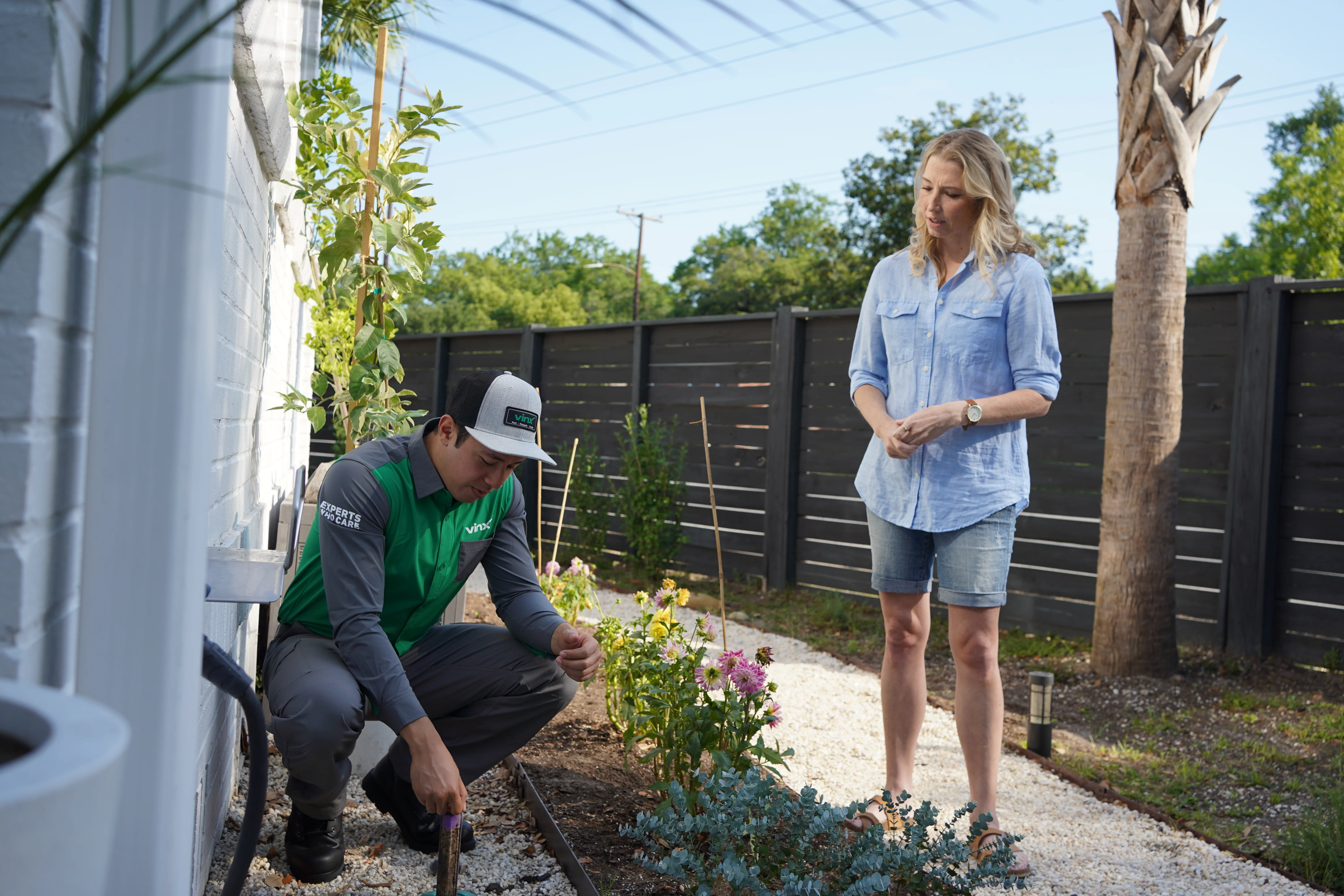
Standing water that can’t be eliminated is treated with larvicide to stop mosquitoes before they reach adulthood, particularly important for retention ponds near Greenbrier and farm ponds toward Hickory.
Barrier Treatment for Adult Mosquitoes
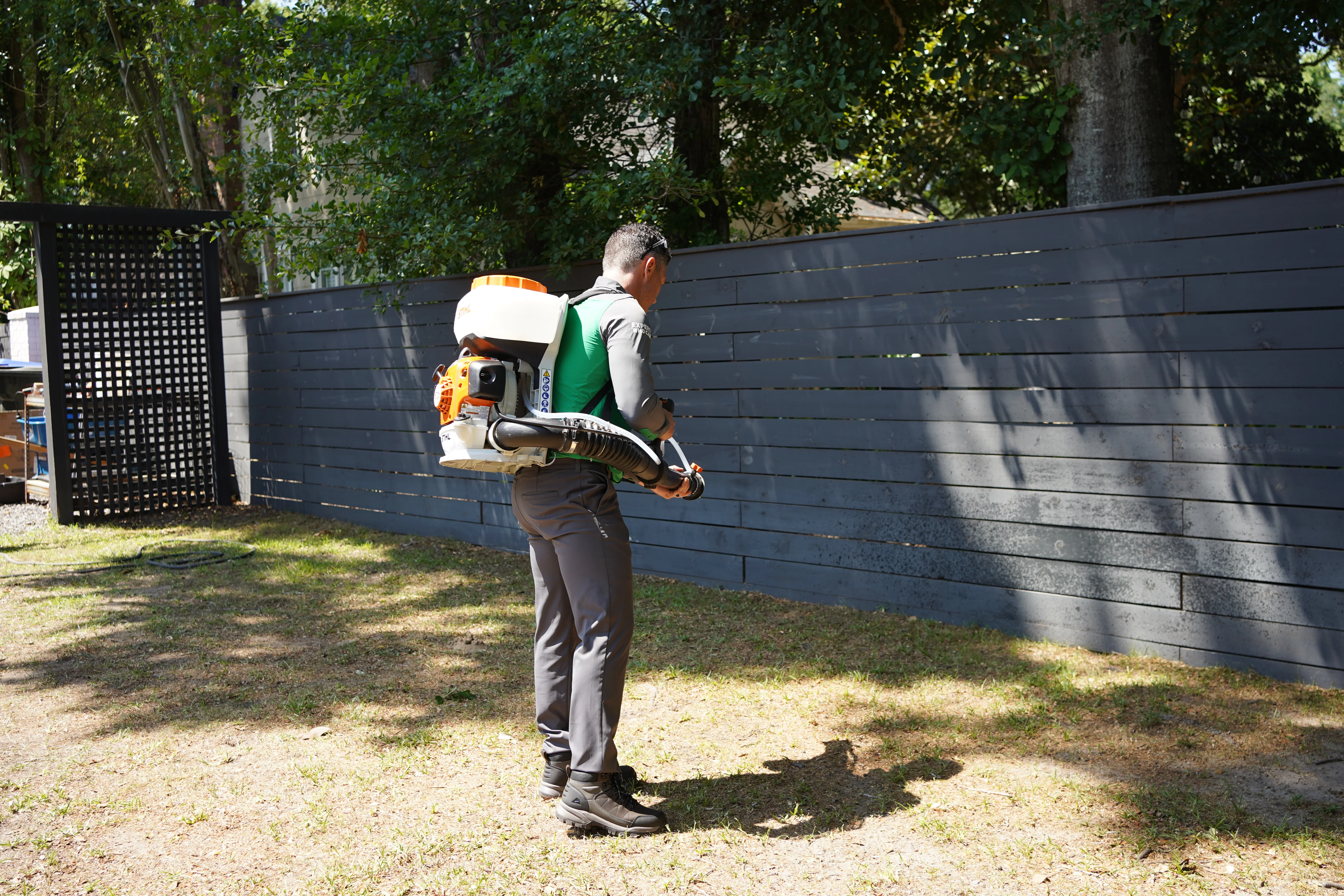
Vegetation, shaded resting areas, and property perimeters are treated to knock down adult mosquito populations, targeting the day-biting Asian tiger mosquito around containers and gutters in South Norfolk and near Greenbrier.
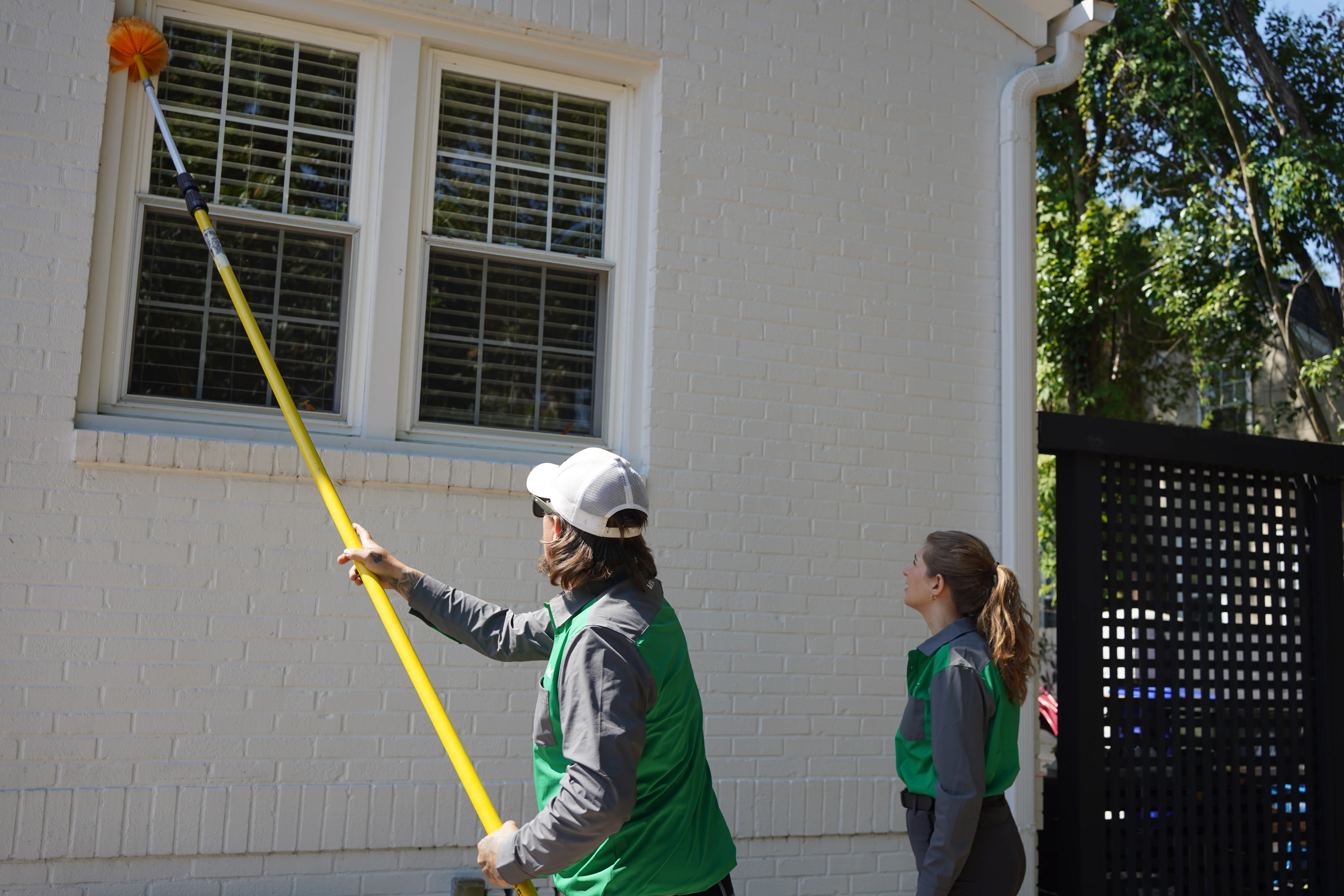
Ongoing Monitoring & Retreatment
Follow-up visits maintain protection through Hampton Roads’ long, humid mosquito season, with free re-service between visits if activity returns.
What Customers Say
Real Reviews from Chesapeake Homeowners
Kennard was incredible! Extremely detailed in his work stayed and serviced for well over an hour. Took videos of concerns. I never felt rushed when asking questions. He is the best!!!!
Brad was fantastic and worked with us around our dogs and handled our property with care. Very happy to be with Vinx
Brandon always does a great job spraying our yard every month in the summer. We have very minimal mosquitoes and he is always willing to come back if we do have any mosquitoes. Highly recommend.
I’ve been using Vinx for over a year and I couldn’t be happier. The mosquitos are all gone which was my main concern because they seem to love me, lol. Daniel is the tech who’s sprayed my house a few times and he’s always polite and professional, so I wanted to give a compliment here.
Our tech today was Cameron, he was so polite, patient and helpful. He answer all our questions and concerns.
The Local Threat
Why Mosquito Control in Chesapeake Isn’t One-Size-Fits-All
Mosquito pressure in Chesapeake follows standing water more than it follows any single part of the city. The Asian tiger mosquito breeds in the gutters, planters, and discarded containers common to South Norfolk’s dense older housing and in the courtyard drains and retention ponds around Greenbrier’s apartment communities, the eastern salt marsh mosquito hatches out of the tidal brackish marsh along the Intracoastal Waterway near Great Bridge, the floodwater mosquito breeds in the woodland pools and swamp edges bordering the Great Dismal Swamp near Deep Creek, and the common malaria mosquito favors the farm ponds and drainage ditches out toward Hickory and rural southern Chesapeake. Vinx treats the species that’s actually breeding on your property.
A lot of pest control companies run the same generic fogging treatment everywhere, regardless of what’s actually breeding or why. That’s a mistake in a city like Chesapeake, which mixes a historic waterside crossing along a tidal canal, a former independent city’s dense older housing, a modern apartment and retail corridor, a wetland bordering a national wildlife refuge, and working farmland toward the North Carolina line.
The City of Chesapeake maintains its own Mosquito Control Commission, which treats the natural breeding habitat across the city — ditches, swamps, and low-lying ground. The Commission’s own guidance draws a clear line around the rest: many mosquito species prefer to breed in artificial containers such as tires, buckets, toys, and tools, and eliminating that standing water around your home is what reduces those populations. In other words two different mosquito problems can exist in the same city at once, and the one in your own yard is the one the city’s program is not designed to reach.
Near Great Bridge, along the tidal, brackish stretches of the Intracoastal Waterway, the eastern salt marsh mosquito is the more likely culprit — a species that develops in flooded marsh grass and is known for flying long distances and biting aggressively well away from the water itself. Near Deep Creek, where the Great Dismal Swamp National Wildlife Refuge keeps low ground consistently wet after rain, the floodwater mosquito breeds in exactly the kind of woodland and swamp-edge pools the city’s program targets. Throughout South Norfolk’s dense, older urban housing and around the apartment communities, courtyards, and retention ponds concentrated near Greenbrier, the Asian tiger mosquito is the dominant concern, relying on gutters, planters, and any small container that holds water for more than a few days. And out toward Hickory and the working farmland of rural southern Chesapeake, the common malaria mosquito takes advantage of the fresh, slow-moving water found in farm ponds and drainage ditches.
Rural Chesapeake has a mosquito feature most cities do not, and the City names it plainly: “a typical feature of the rural landscape of the City of Chesapeake is the widespread use of manmade drainage ditches and canals alongside roadways and property lines.” That is a network of shallow, slow, vegetated water running the length of the road and along the boundary of the property — not a pond someone can point at, but a linear breeding site that follows the lot line. Add 45.74 inches of rain in an average year and soils the City classes as 80 to 90 percent hydric, and the water has nowhere quick to go. Treating the yard and ignoring the ditch line is why so much mosquito work here does not hold.
Mosquito Species Relevant to Chesapeake
Asian Tiger Mosquito
Aedes albopictus
An aggressive, day-biting mosquito with distinctive black-and-white striped legs, and the species most commonly encountered across Virginia. Prince William County’s government confirms it does not breed in swamps or other wet natural habitats, relying instead on small containers — gutters, planters, tires, and discarded trash — which makes it a genuine concern both in South Norfolk’s dense, older housing and around the apartment communities, courtyards, and retention ponds near Greenbrier.
Eastern Salt Marsh Mosquito
Aedes sollicitans
A mosquito that develops in flooded salt marsh grass along tidal, brackish water, well documented in academic mosquito-trapping research across the broader Chesapeake Bay region. It’s known for flying long distances from its breeding site and biting aggressively, which fits the tidal stretches of the Intracoastal Waterway near Great Bridge.
Floodwater Mosquito
Aedes vexans
A species that breeds in temporary woodland pools, floodwater pools, and swamp-edge habitat left behind after rain — the same natural habitat the City of Chesapeake’s Mosquito Control Commission treats. This makes it a genuine fit for the low, frequently saturated ground near Deep Creek and the Great Dismal Swamp National Wildlife Refuge.
Common Malaria Mosquito
Anopheles quadrimaculatus
A species that prefers fresh, slow-moving water with dense aquatic vegetation. This makes the farm ponds and drainage ditches out toward Hickory and rural southern Chesapeake a close and direct fit for this species.
Mosquito Risk by Neighborhood
Mosquito Risk Across Chesapeake
Great Bridge — Eastern Salt Marsh Mosquito Risk
The tidal, brackish stretches of the Intracoastal Waterway near the historic Great Bridge crossing give the eastern salt marsh mosquito the flooded marsh grass habitat it needs to develop.
South Norfolk — Asian Tiger Mosquito Risk
The dense, older urban housing left behind by South Norfolk’s history as its own independent city gives the Asian tiger mosquito ample gutters, planters, and discarded containers to breed in.
Greenbrier — Asian Tiger Mosquito Risk
The apartment communities, courtyards, and retention ponds concentrated around Greenbrier give the Asian tiger mosquito the same small-container habitat it favors in South Norfolk, just from a different, more modern source.
Deep Creek — Floodwater Mosquito Risk
Low ground bordering the Great Dismal Swamp National Wildlife Refuge stays saturated after rain, giving the floodwater mosquito the woodland pool and swamp-edge habitat this species needs.
Hickory & Rural South Chesapeake — Common Malaria Mosquito Risk
Farm ponds and drainage ditches on the working farmland stretching toward the North Carolina line give the common malaria mosquito the fresh, slow-moving water it prefers.
Warning Signs
Signs of Mosquito Activity Around Your Chesapeake Home or Business
Daytime Bites
In South Norfolk or near Greenbrier, a hallmark of the Asian tiger mosquito
Biting Away From Water
Near Great Bridge, often the salt marsh mosquito, which flies miles
Spikes After Heavy Rain
Near Deep Creek, consistent with floodwater mosquito activity
Clustered Near Farm Ponds
Toward Hickory, consistent with the common malaria mosquito
City Spraying Did Not Help
A sign the source is a container the city program does not treat
Mosquitoes Entering the Home
Resting vegetation close to doors and windows is usually the cause
Homeowner Tips
6 Ways to Reduce Mosquito Activity Around Your Chesapeake Home or Business
Kid & Pet Safe
Our Treatments Are Safe for Your Whole Family: Including the Furry Members
Every product we use is EPA-registered and applied strictly at labeled rates by technicians registered with the Virginia Department of Agriculture and Consumer Services (VDACS).

EPA-Registered Products Only
Applied strictly at labeled rates by technicians registered with the Virginia Department of Agriculture and Consumer Services (VDACS).
Targeted Barrier & Larvicide Treatment
Focuses on breeding sites and resting vegetation rather than broad fogging.
Exterior-Focused Approach
Treatment happens outside, so your family and animals can stay safely clear during service.
Questions About What We Use?
Have a concern about products used near pets, kids, or guests? Call (855) 800-8469 and we’ll walk you through exactly what we use.
Explore More
More Pest Control Services in Chesapeake
Termite Control Chesapeake
Bait systems & liquid treatment
Ant Control Chesapeake
Fire ants & all ant species
Pest Control Chesapeake
Ants, spiders, roaches & more
Tick & Flea Control Chesapeake
Yard & interior treatments

Rodent Control Chesapeake
All rodents covered
Cockroach Control Chesapeake
American & German roaches

Bed Bug Control Chesapeake
Heat & liquid treatments
Spider Control Chesapeake
All spider species covered
Exterminator Chesapeake
Same-day local exterminators
Frequently Asked Questions
Mosquito Control FAQ for Chesapeake Homeowners & Businesses
Mosquito reduction treatment is included in Vinx’s Platinum plan at $109/mo, with a $329 initial treatment and 12-month agreement. Standalone and event treatments are also available. Call (855) 800-8469 for a free quote.
Yes. The City’s Mosquito Control Commission treats the natural breeding habitat across the city — ditches, swamps, and low-lying ground. Its own guidance is clear that many species breed in artificial containers instead, and that eliminating standing water around your home is what reduces those populations, which is why yards in South Norfolk and near Greenbrier can still have heavy activity despite city treatment.
That’s consistent with the eastern salt marsh mosquito, a species that develops in flooded marsh grass along tidal water and is known for flying long distances from its breeding site to bite.
Low ground bordering the Great Dismal Swamp National Wildlife Refuge holds water after rain, giving the floodwater mosquito the woodland pool and swamp-edge habitat it needs to breed.
That’s a hallmark of the Asian tiger mosquito, a container-breeding species common around gutters, planters, retention ponds, and courtyard drains.
The common malaria mosquito prefers fresh, slow-moving water with dense aquatic vegetation, which farm ponds and drainage ditches on the rural southern Chesapeake fringe provide naturally.
Yes. We offer one-time barrier treatments ahead of outdoor events, which is popular with property owners near Great Bridge and anyone hosting gatherings toward Hickory.
Yes. We use EPA-registered products applied at labeled rates by technicians registered with the Virginia Department of Agriculture and Consumer Services (VDACS), with an exterior-focused approach that keeps treatment away from where your family and guests spend time.
Yes. We work with property managers near Greenbrier and business operators throughout Chesapeake on recurring commercial mosquito treatment schedules.
Yes. Vinx Pest Control is licensed and insured to operate in Virginia, with technicians trained to identify and treat the specific mosquito species found throughout Chesapeake and the greater Hampton Roads region.
Service Coverage
Mosquito Control Across Chesapeake & the Greater Hampton Roads Area
Serving every neighborhood and business in and around Chesapeake.
Nearby Coverage