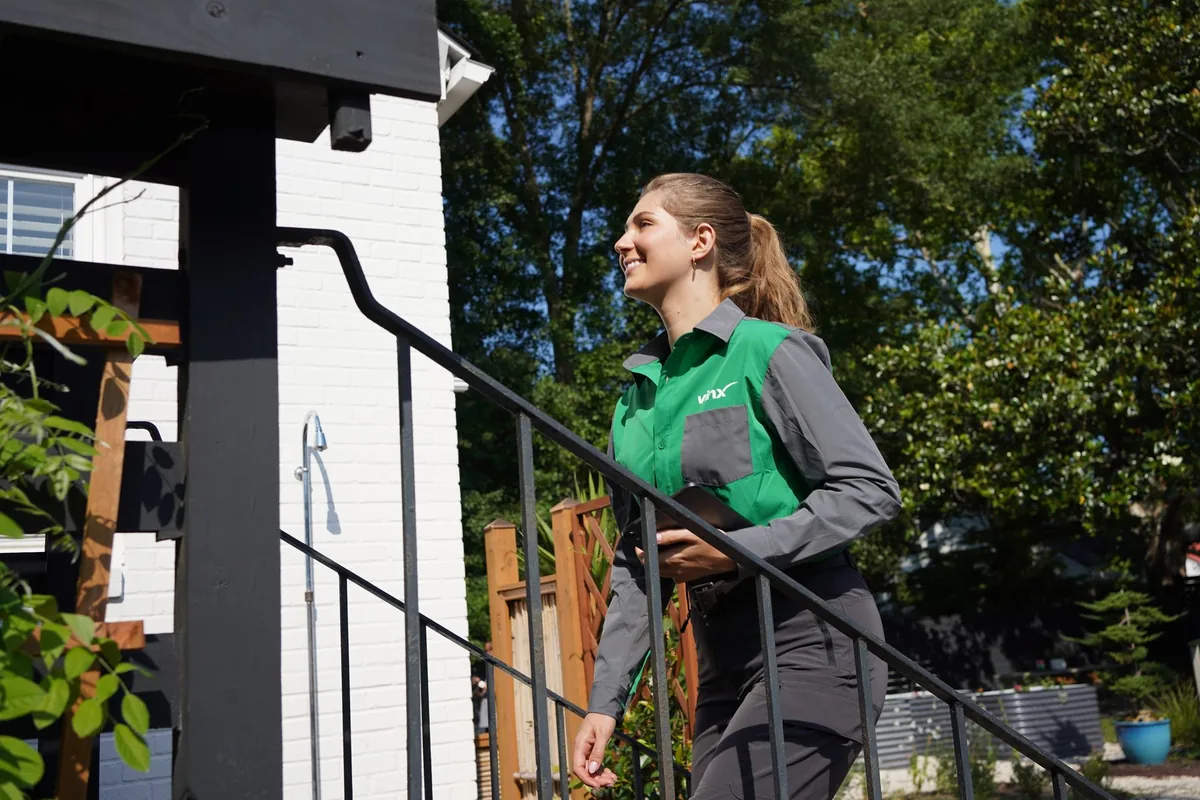
Mosquito Control in Johns Island, SC
Saltmarsh, Asian Tiger and Southern House Mosquito Control, Monthly March to October
Three mosquitoes drive most complaints in Johns Island, the Eastern saltmarsh mosquito breeding by the billions in the tidal Stono River salt marsh along River Road and biting day and night, the dusk-to-dawn Southern house mosquito in the ditches and stormwater drains of the Maybank Highway corridor, and the daytime Asian tiger mosquito breeding in livestock troughs and oak tree holes near Mullet Hall and Angel Oak. Vinx treats every one of the three with barrier spray and larvicide. Free re-treatment guarantee.
Get Started in 60 Seconds
Choose what’s easiest for you
Request a Quote
We usually respond in 2 minutes
Call (855) 800-8469
Get a Live Person (no AI agents here!)
Sign Up Online
Get pricing and schedule now





Welcome to Vinx Pest Control
A Company That Actually Backs What It Says
At Vinx, we combine professional-grade treatments with a level of service most pest control companies don't offer. Local technicians, fast response times, and a guarantee that actually means something.
Get a Free Quote"I'm not passionate about killing bugs. I'm passionate about customer service. At Vinx, you get experts who show up, do the job right, and stand behind every visit. No runaround, no fine print."
WELCOME TO VINX PEST CONTROL
Protection Plans for Johns Island Homeowners

Standard Residential Protection
- 4 Seasonal Treatments Per Year
- 50+ Covered Pests
- Interior, Exterior & Yard Treatment
- Unlimited Free Re-Services
- 100% Money-Back Guarantee

Upgraded Yard Protection
- 6 Home & Yard Treatments Per Year
- 50+ Covered Pests
- Yard Ant Elimination Guarantee
- Flea & Tick Elimination Guarantee
- 100% Money-Back Guarantee

Most Comprehensive Protection
- 9 Treatments Per Year
- 50+ Covered Pests
- 8 Mosquito Treatments (Mar–Nov)
- Flea, Tick & Ant Coverage
- Free Bed Bug Treatments if Needed*
*Starting rates vary by home size and area. All plans billed monthly.
Request Your Free Mosquito Control Quote
Fill out the form below and a Vinx team member will reach out within 2 minutes during business hours.
Prefer to talk? Call (855) 800-8469 for a live person, no AI agents.
Our Approach
How Vinx Controls Mosquitoes in Your Johns Island Yard

Property Survey & Breeding Site Assessment
Your technician walks the whole property, not just the house, because on a Johns Island lot the water is often at the outbuilding, the field ditch or the trough rather than the patio. Then the marsh edge along the Stono if you have one, the low ground on poorly drained Meggett or Capers soil, and the small containers close to the door.
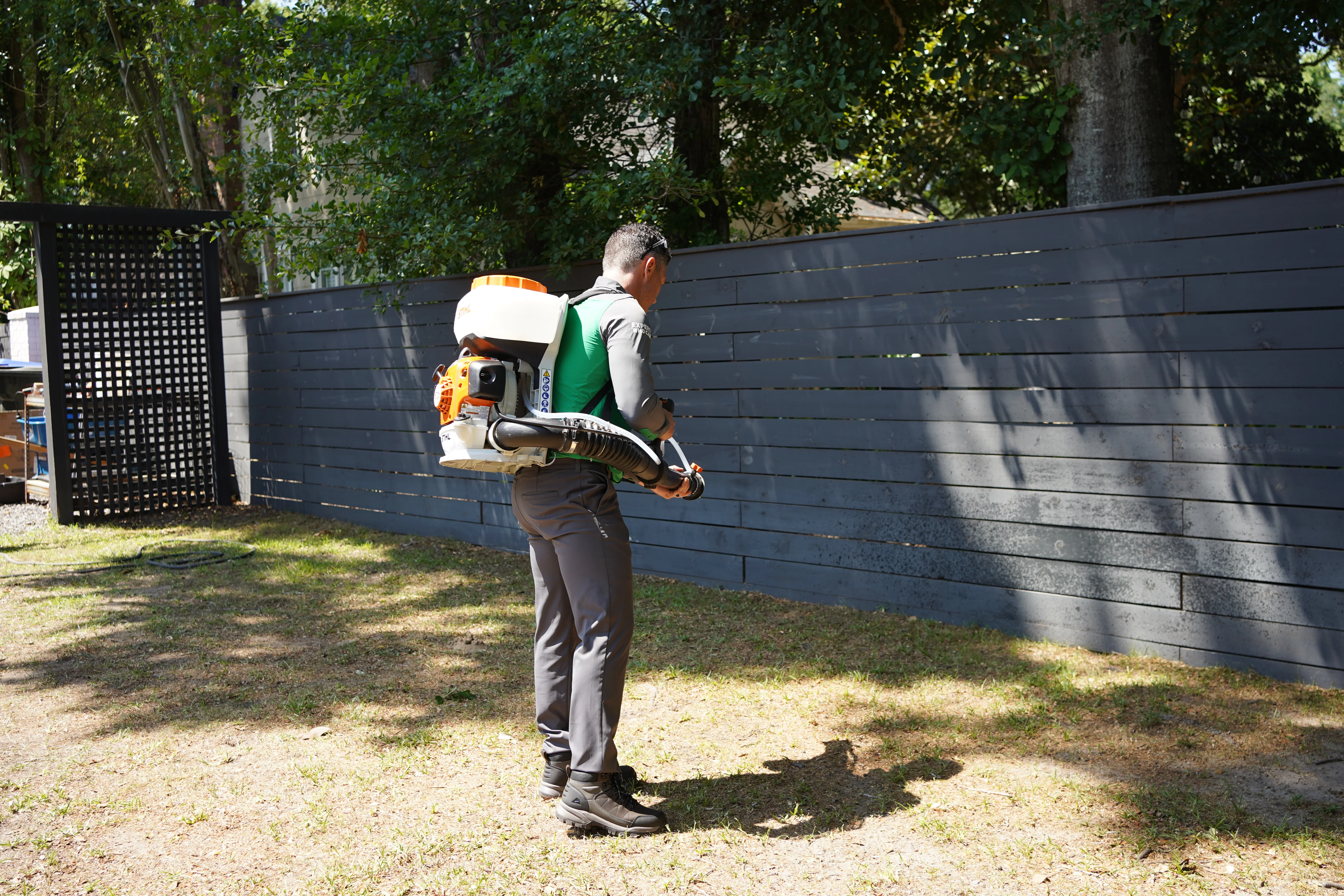
Yard Treatment
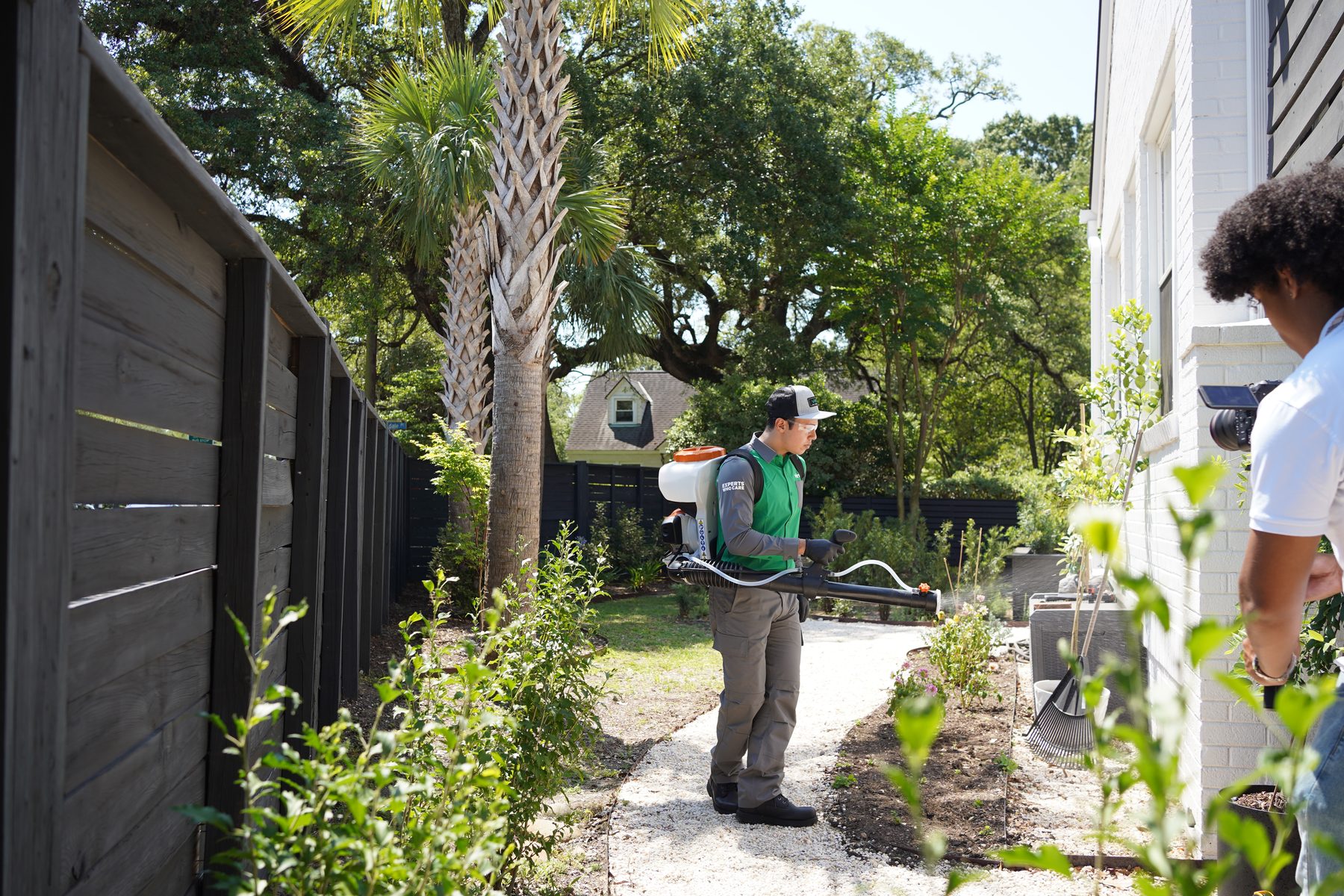
A fine-mist residual is applied to the underside of shrubs, the lower canopy of the live oaks around Main Road and Angel Oak, tall grass and fence lines, the shaded cover where adults rest through the heat of the day. The treatment holds for 3–4 weeks between visits.
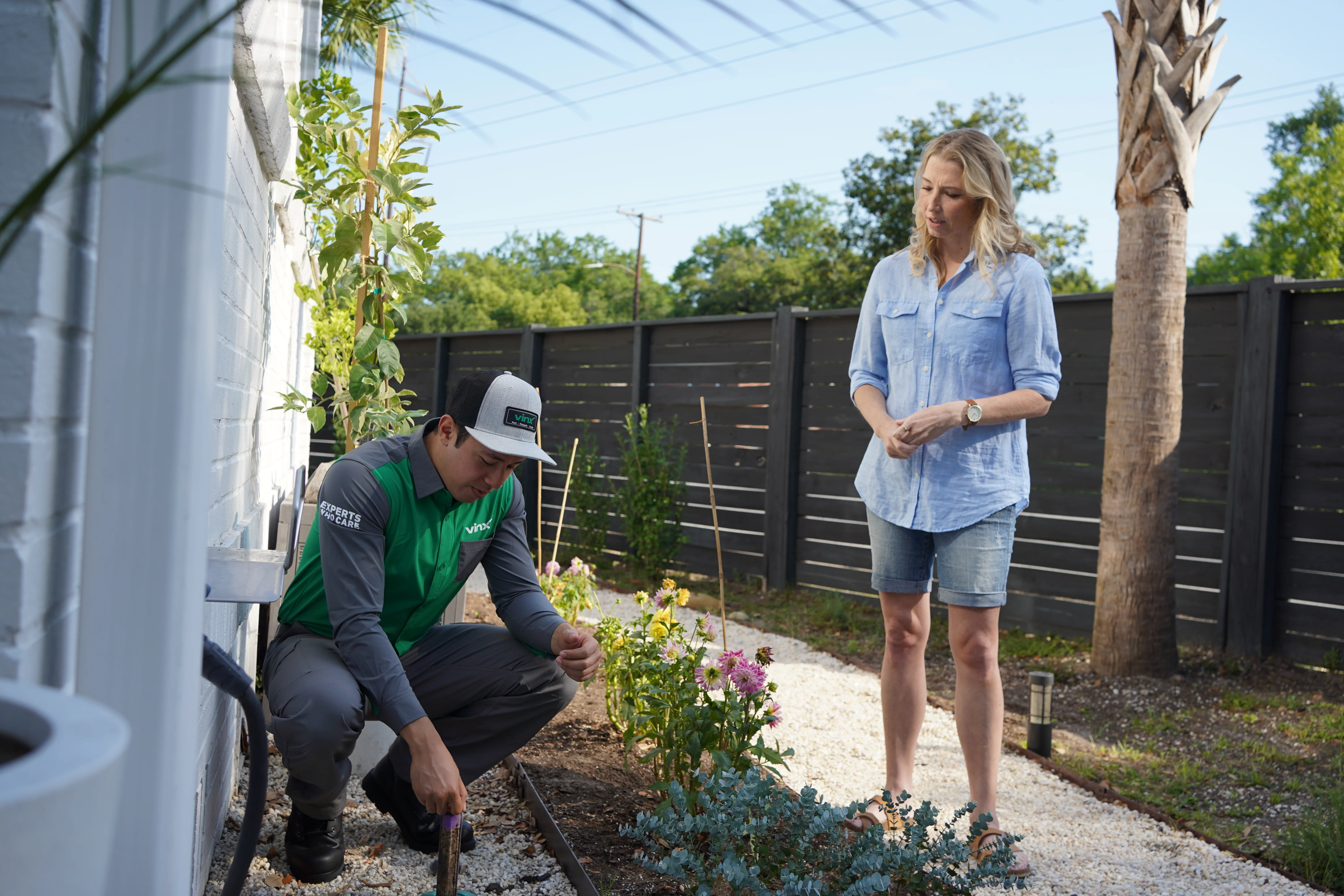
Larvicide Application
Larvicide goes into water that cannot be removed: a farm ditch that stays wet, a low corner on clay soil that holds after every rain, a pond margin. On Johns Island this is where much of the population comes from, so larvicide does work the barrier spray cannot, and it keeps working for 30 days.
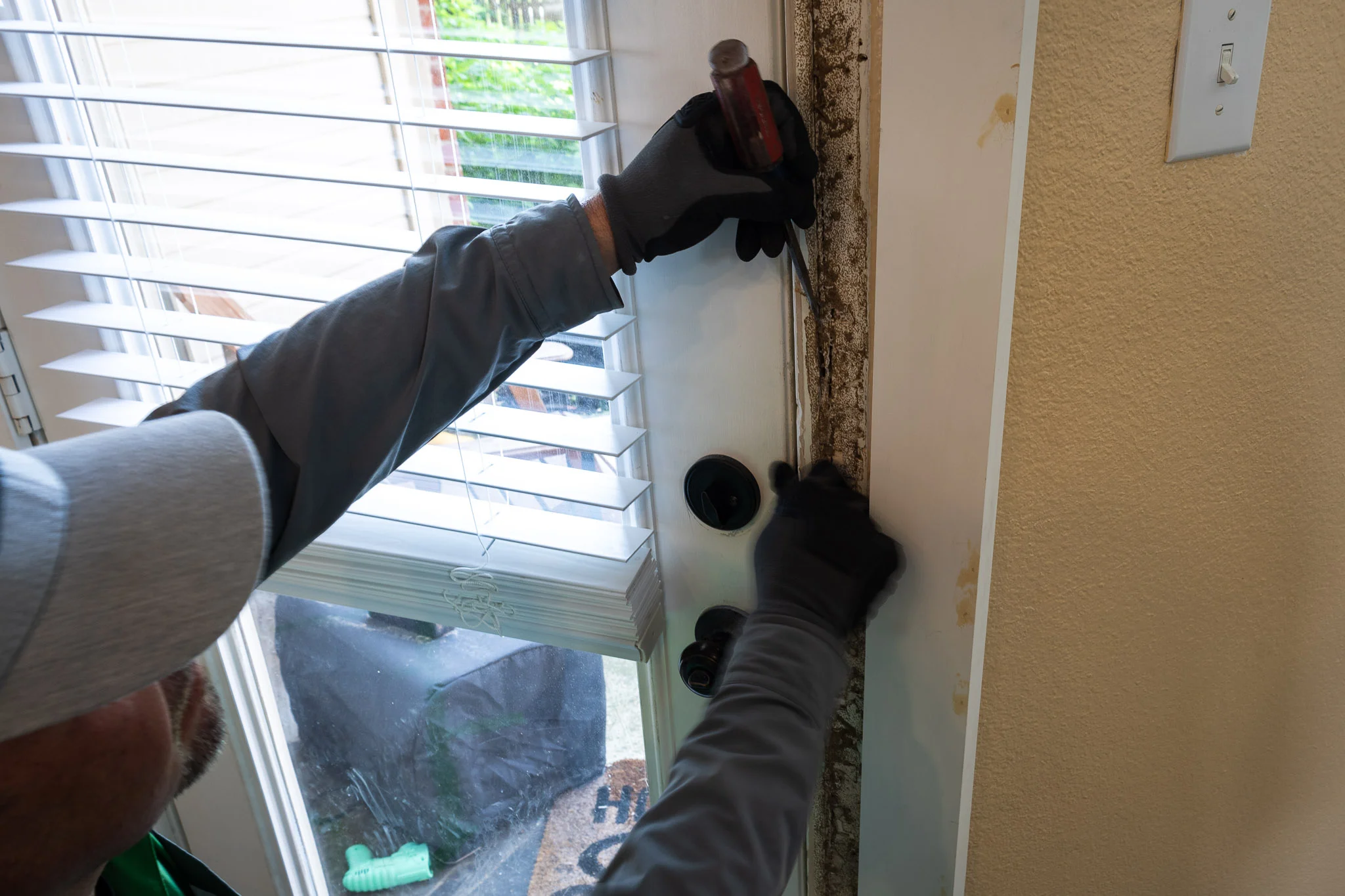
Monthly Service & Free Re-Treatments
Monthly visits keep the population pressured across the season, with a no-charge return if mosquitoes come back early. Your technician also documents which parts of the lot hold water past five days, so drainage fixes can follow.
What Our Customers Say
What Johns Island Homeowners Say About Vinx Mosquito Control
thorough and quick! Have never been disappointed w any service tech! You guys are great!
I'm very satisfied with Vinx and have been for a couple of years. Ever since they took over our pest control we've had zero issues with bugs, and their mosquito service keeps our pool area bug free during swim season. Highly recommend them!
We have used Vinx for a few years now and have never had a problem. Our tech today was Jack and he was great!
I hadn’t been home the last few times Vince came out so I scheduled a time. James could not have been more accommodating. He was very professional and met all of the needs and concerns I had.
Technician was on time and very thorough checking my bait stations. Highly recommend him and Vinx. I have been a satisfied customer for over 5 years.
The technician Devon was great! He was very thorough and very professional. All the people at Vince are always so on top of our treatments and super easy to work with. I highly recommend them.
Ready to Take Back Your Yard?
On Johns Island the first warm flood tide along the Stono and the first week of standing water in a field ditch both come before May. Start treatment before the population peaks, not after. Free inspection, same-day availability.
The Local Threat
Why Johns Island Needs Year-Round Mosquito Control
Johns Island is about 74 square miles, the largest island in South Carolina, and the USDA maps much of it as poorly to very poorly drained: Capers silty clay loam and the Dawhoo-Rutlege soils, Leon fine sand and the Meggett soils. That is the ground that made this a truck-farming island, and it is ground that holds water after rain for the five days Clemson says a mosquito needs. Add the Stono River’s salt marsh on one side and working farms with ditches, troughs and irrigation on the other, and a May-to-October spray schedule starts late and stops early.
Johns Island sits in one of the most mosquito-active regions on the East Coast. The brackish, tidal salt marsh bordering the Stono River, described by researchers as a well-mixed estuary dominated by Spartina alterniflora salt marsh, creates thousands of acres of shallow, slow-moving water that never fully drains, and this genuinely rural island’s working farms and larger lots add their own container-breeding pressure on top of it.
The Eastern saltmarsh mosquito breeds there, one of the most aggressive biters in the country, active day and night and able to move a mile or more inland after heavy rain and a high tide. No part of Johns Island is low-risk at any time of year.
On an island of this size the water that matters is mapped, not guessed at. Johns Island runs to about 74 square miles — the largest island in the state — and within it the USDA maps Capers silty clay loam and the Dawhoo-Rutlege soils as very poorly drained, with Leon fine sand and the Meggett soils poorly drained, sitting beside the excessively drained Crevasse-Dawhoo ridges. Those very poorly drained units are where water genuinely stands between tides and after rain. A property is not simply near marsh or away from it: it is on one of those units or it is not, and that difference sets the treating line.
Mosquito Species in Johns Island
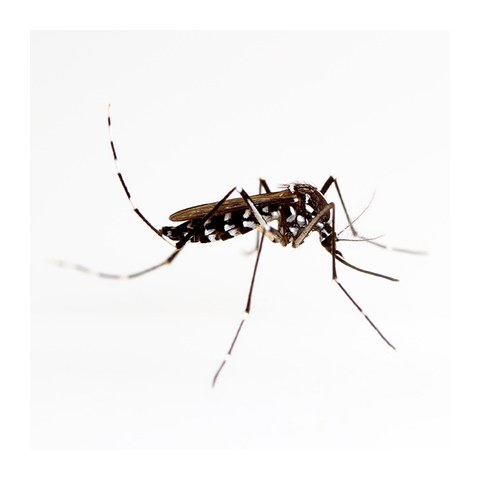
Eastern Saltmarsh Mosquito (Aedes sollicitans)
- Breeds by the billions in the brackish, tidal salt marsh lining the Stono River along River Road.
- Unlike most, it bites aggressively through both day and night.
- Heavy rain plus a high tide can push swarms a mile or more inland.
- A genuinely coastal problem, and one inland SC towns do not share to the same degree.
- Treating only your yard may not be enough, so the timing against tide cycles matters.
Asian Tiger Mosquito (Aedes albopictus)
- The single white stripe down back and legs identifies it.
- An aggressive biter by day, active precisely when you are outside.
- It seldom ranges beyond a few hundred feet of where it hatched.
- Breeds in tiny amounts of standing water: a livestock trough or bucket near Mullet Hall’s barns, a natural tree hole in Angel Oak’s live oaks, or a clogged gutter.
- Its habit of staying local makes clearing standing water measurably effective.
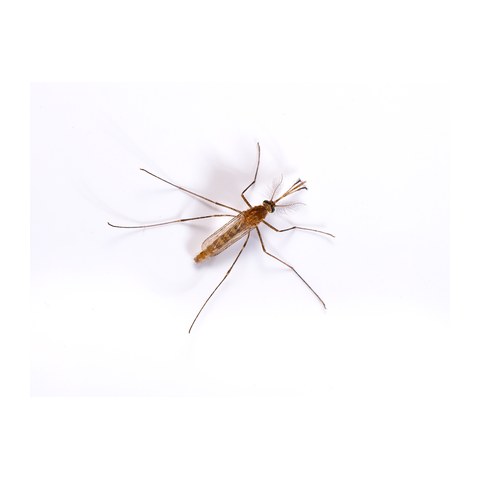
Southern House Mosquito (Culex quinquefasciatus)
- Active from dusk to dawn.
- Breeds in larger volumes of stagnant water: the ditches, storm drains, and stormwater ponds of the Maybank Highway corridor and newer subdivisions.
- The leading mosquito species associated with West Nile virus here.
- Larvicide treatment of standing water is what counts, not just spraying for adults.
- It also carries heartworm to dogs and cats through a single bite.
Mosquito Pressure by Area
Mosquito Pressure Across Johns Island
River Road & Stono River Corridor: Eastern Saltmarsh Mosquitoes
- Deepwater estates along the tidal Stono River sit directly against genuine salt marsh, the single largest breeding source on the island.
- Capable of throwing swarms well beyond the waterfront once heavy rain meets a high tide.
- Tides restock the breeding sites regardless of dry spells, and marsh edges repopulate a treated yard within days absent larvicide.
- Timing barrier treatment against tide and rain cycles counts for more here than anywhere on the island.
Angel Oak & Main Road Corridor: Asian Tiger Mosquitoes
- Natural tree holes in centuries-old live oak canopy hold water and breed Asian tiger mosquitoes close to the home.
- Mulch beds and leaf litter beneath the oaks give the species daytime harborage.
- Aggressive daytime biters that stay local, making the removal of standing water near the house genuinely effective.
- Monthly barrier spray to the foliage with larvicide for tree holes and containers is the effective minimum.
Mullet Hall & Equestrian Corridor: Asian Tiger Mosquitoes
- Livestock water troughs, buckets, and equipment around this 738-acre equestrian center collect small pockets of standing water.
- Exactly the container habitat Asian tiger mosquitoes rely on, close to barns and stables.
- Aggressive daytime biters that stay local, making the removal of standing water near the house genuinely effective.
- Monthly barrier spray on the foliage with larvicide for standing water is the minimum effective plan.
Maybank Highway Corridor: Southern House Mosquitoes
- Stormwater ditches and drainage infrastructure along Johns Island’s commercial spine hold standing water after rain.
- Enough to support dusk-to-dawn Southern house mosquito activity all summer.
- Of the local species this one is most tied to West Nile, which puts larvicide of standing water front and center.
- Monthly year-round treatment is recommended, as seasonal-only permits a spring buildup gap.
New Growth Corridor: Southern House Mosquitoes
- New-construction stormwater ponds and drainage systems can hold standing water before landscaping and grading are complete.
- Enough to sustain dusk-to-dawn Southern house mosquito activity in freshly built neighborhoods.
- Of the local species this one is most tied to West Nile, which puts larvicide of standing water front and center.
- Monthly year-round treatment is recommended, as seasonal-only permits a spring buildup gap.
Warning Signs
Signs Mosquito Pressure Needs Professional Attention
Bites in Full Daylight
Asian tiger mosquitoes from a container within a few hundred feet, or a tree hole in the oak canopy around Main Road.
A Swarm After a Flood Tide
The saltmarsh brood off the Stono River hatches together and arrives together, four to five days after the marsh floods.
Ground That Stays Wet for a Week
Poorly drained Meggett and Capers soils hold rain past Clemson’s five-day threshold; the puddle is a nursery.
Mosquitoes Indoors
Getting past the screens and doors points to a heavy outdoor population around the house.
Dusk Bites Near a Ditch or Trough
Southern house mosquitoes from farm ditches, troughs and the retention ponds of new subdivisions, the species tied to West Nile virus.
Livestock or Horses Bothered at Evening
Around Mullet Hall and River Road, animals stamping and swishing at dusk mean the pasture edge is producing.
Homeowner Tips
6 Ways to Reduce Mosquito Pressure Right Now
Kid & Pet Safe
Our Treatments Are Safe for Your Whole Family: Including the Furry Members
Every product we use is EPA-registered and applied strictly at labeled rates by licensed technicians. We take the guesswork out of safety so you can feel confident letting kids and pets back into treated areas quickly.

EPA-Registered Products Only
All products we apply are EPA-registered and used strictly per label requirements. Our licensed technicians are trained to apply the right product in the right place at the right rate, every time.
Dry Time Before Re-Entry
Exterior spray treatments dry in 30–60 minutes. Once dry, treated surfaces are safe for children and pets to contact. Your technician will confirm the all-clear before leaving your property.
Interior Treatment On Request
We treat only what’s needed, where it’s needed. Gel baits in cabinets and crack-and-crevice applications keep products away from areas pets and children frequent most.
Botanical Options Available
Have specific sensitivities? Ask your technician about our plant-derived treatment options. We offer botanical alternatives for households that prefer a more natural approach.
Have a concern about products used near your pets or children? Call (855) 800-8469 and we’ll walk you through exactly what we use and why it’s safe.
Explore More
More Pest Control Services in Johns Island

Pest Control Johns Island
General pest protection
Termite Control Johns Island
Sentricon bait system
Ant Control Johns Island
Household ants & others

Spider Control Johns Island
All spider species covered
Cockroach Control Johns Island
Palmetto bug & roach removal

Rodent Control Johns Island
All rodents covered

Bed Bug Treatment Johns Island
Heat & liquid treatments

Tick & Flea Control Johns Island
Yard & pet protection
Exterminator Johns Island
Same-day local exterminators
Frequently Asked Questions
Mosquito Control FAQ for Johns Island Homeowners
Year-round mosquito treatment is part of Vinx Platinum at $109/mo, monthly in season plus one winter service. Mosquito-only service is also available outside the plan, and larger rural lots are quoted after a walk. Call (855) 800-8469.
The water is different. A subdivision yard breeds mosquitoes in containers and retention ponds; a working lot breeds them in troughs, feed tubs, field ditches and the low clay ground the USDA maps as poorly drained, all of which hold water past five days. The house may be the same, but the survey starts at the outbuilding and the ditch, not the patio.
Yes. All of it is EPA-registered and applied to the label. Treated areas are safe for children and pets once dry, normally 2 to 4 hours, and nothing is applied while they are present. Tell your technician about horses or livestock so pasture and paddock edges are handled to label.
Yes. Southern house mosquitoes show up on warm January days, and Aedes eggs in gutters and tree holes hatch once temperatures hold above 50°F, sometimes in late February. A winter service seals the gap that a May restart would leave open.
Barrier treatment typically eliminates up to 90% of the adult population per application, and most yards see 80% or better after the first two monthly visits. Lots on the Stono marsh will still receive a brood after an exceptional tide, and lots on poorly drained soil hold their results best when the low ground is larvicided.
Each barrier application is good for about three weeks. Monthly visits hold coverage continuous through the season.
With the first exceptional high tide of warm weather along the Stono, or the first week of standing water in a field ditch, whichever comes first. Peak pressure runs May through October, and Asian tiger eggs hatch as early as late February.
Yes. Each visit applies adulticide to resting foliage and larvicide to water that cannot be drained. On Johns Island the larvicide often does more of the work than the spray, because so much of the island’s water is ditches, troughs and low clay ground rather than containers.
Yes. For a wedding or gathering on a Johns Island property we time a barrier treatment a day or two ahead so the lawn and patio foliage is treated when guests arrive. Call (855) 800-8469 with your date and the size of the grounds.
West Nile virus, carried mainly by the Southern house mosquito, and Eastern Equine Encephalitis, which is also a serious disease of horses, a real concern around Mullet Hall and River Road’s equestrian properties. Mosquitoes also carry heartworm to dogs and cats with a single bite.
Researchers describe the Stono as a well-mixed estuary dominated by Spartina alterniflora salt marsh. The saltmarsh mosquito lays eggs on the high marsh and the whole brood hatches when an exceptional tide or heavy rain floods it, finishing in four to five days and flying about a mile a day inland. River Road’s low, poorly drained ground then holds rain long enough to add freshwater species on top.
Most Johns Island appointments are same-day or next-day. Call (855) 800-8469. Should we not service your home the next business day, the initial service is free.
We treat the shaded foliage and leaf undersides where mosquitoes rest, not flowering plants or crops where pollinators feed, and we schedule early or late when bee activity is lowest. Tell your technician about hives, pollinator plantings or produce and we work around them.
Service Coverage
Mosquito Control Across Johns Island & the Tri-County Area
Serving every neighborhood in and around Johns Island
Serving the Greater Charleston Area