Mosquito Control in Raleigh, NC
The Research Triangle’s Most Trusted Mosquito Treatment
Local, Reliable, and 100% Guaranteed. Mosquitoes ruining your back porch from March through November. The mosquitoes biting you are almost certainly breeding in containers on your own lot rather than out on the reservoir. Raleigh’s humid subtropical climate and its retention pond infrastructure make the Research Triangle one of the most mosquito-active markets in North Carolina.
Get Started in 60 Seconds
Choose what’s easiest for you
Request a Quote
We usually respond in 2 minutes
Call (984) 600-8469
Get a live person (no AI agents here!)
Sign Up Online
Get pricing and schedule now





Welcome to Vinx Pest Control
A Company That Actually Backs What It Says
At Vinx, we combine professional-grade treatments with a level of service most pest control companies don't offer. Local technicians, fast response times, and a guarantee that actually means something.
Get a Free Quote"I'm not passionate about killing bugs. I'm passionate about customer service. At Vinx, you get experts who show up, do the job right, and stand behind every visit. No runaround, no fine print."
Protection Plans
Compare Packages & Get Protected Today
Standard Residential Protection
- 4 Comprehensive Seasonal Treatments Per Year
- Coverage for ants, spiders, cockroaches, wasps, silverfish, earwigs, centipedes, crickets, pillbugs and hornets
- Unlimited Free Re-Services
- 100% Money-Back Guarantee
- Interior treatment upon request, no extra charge
- Mosquito treatment not included, upgrade to Platinum

Upgraded Residential Protection
- 6 Home & Yard Treatments Per Year
- Yard Ant Elimination Guarantee
- Exterior Flea & Tick Treatment
- Unlimited Free Re-Services
- 100% Money-Back Guarantee
- Interior treatment upon request, no extra charge
- Mosquito treatment not included, upgrade to Platinum

Most Comprehensive Protection: Mosquito Included
- 9 Treatments Per Year
- Monthly Mosquito Treatments March through November
- 1 Specialized Winter Protection Service
- Interior Flea & Tick Coverage
- Free Bed Bug Treatment after 12 Continuous Months of Platinum*
- 100% Money-Back Guarantee
- Interior treatment upon request, no extra charge
Mosquito control is included exclusively in Vinx Platinum. HomeGuard ($49/mo) and Vinx Plus ($75/mo) do not include mosquito treatment. Platinum gives you monthly mosquito treatments March through November plus ant control, flea and tick coverage, general pest protection, and the free bed bug service benefit after 12 continuous months.
Request Your Free Mosquito Control Quote
Fill out the form below and a Vinx team member will reach out within 2 minutes.
Prefer to talk? Call (984) 600-8469, no AI agents.
Our Approach
How Vinx Controls Mosquitoes in Your Raleigh Yard

Property Inspection & Breeding Site Assessment
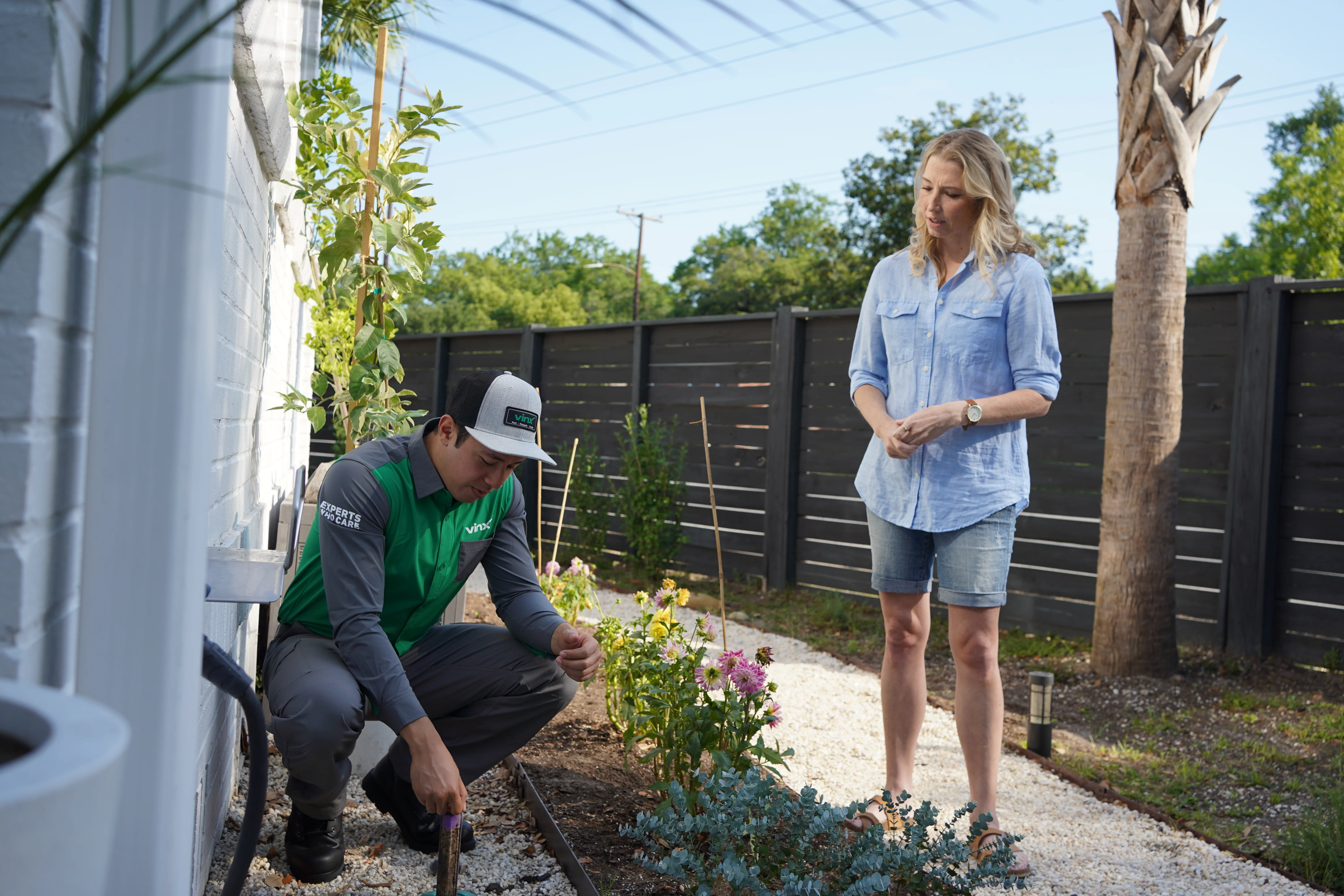
Your technician walks the full property to identify mosquito resting areas (dense vegetation, shaded shrubs, wood piles) and standing water breeding sites such as gutters, low spots, ornamental pots, and tarps. A targeted treatment plan is built around what is actually driving mosquito pressure on your property.
Yard Treatment
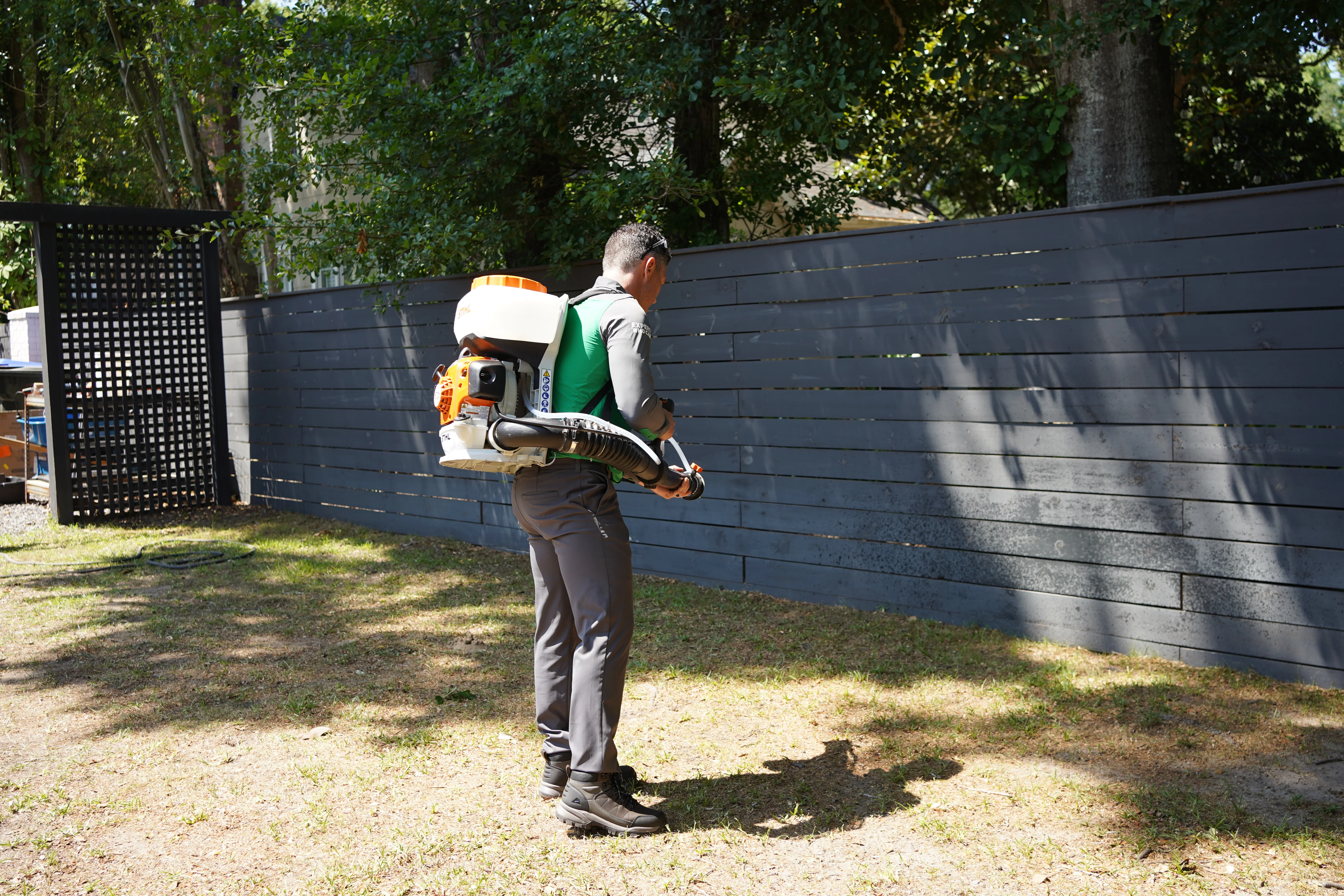
A fine-mist application of residual insecticide is applied to the underside of shrubs, lower tree canopies, tall grass, fence lines, and other resting areas. The treatment kills active mosquitoes on contact and provides a residual effect that continues working for 3–4 weeks between monthly service visits.
Larvicide Application
Larvicide tablets or liquid is applied to any standing water that cannot be eliminated, retention areas, drainage ditches, decorative ponds. Larvicide prevents mosquito larvae from maturing into biting adults and continues working for 30 days, breaking the breeding cycle between visits.
Monthly Service & Free Re-Treatments
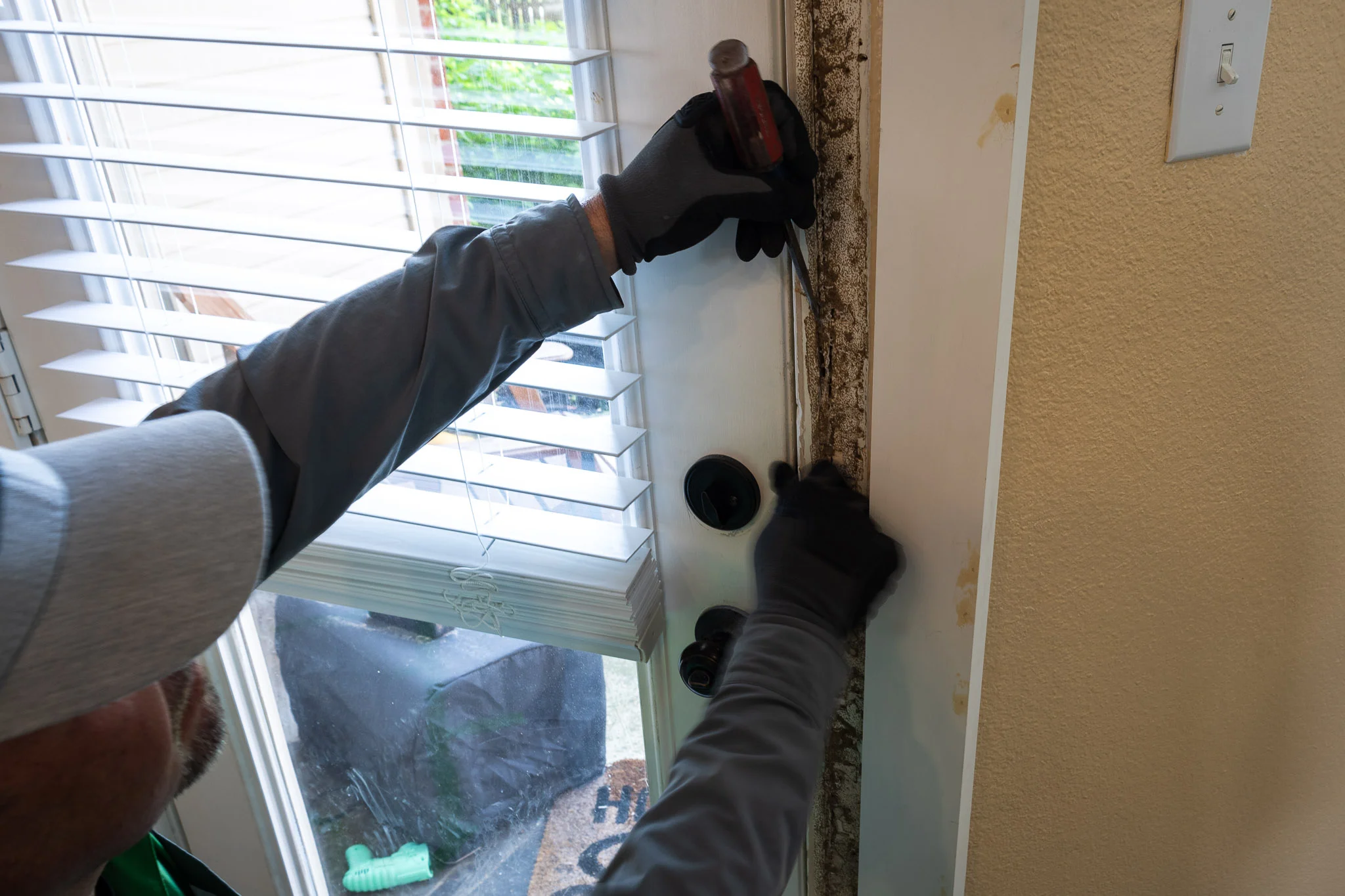
Monthly visits maintain continuous pressure on the mosquito population throughout the season. If mosquito activity returns within the service period, we come back and re-treat at no additional charge. Your technician also recommends property modifications (drainage corrections, vegetation management) that reduce long-term mosquito pressure.
Customer Reviews
Real Reviews from Raleigh Homeowners
Scott our technician today was great to educate about what attracts pests into the home from the outside and do a thorough explanation of what to expect from their service as well as answer all of my questions and requests. Thanks again!
Verified Google ReviewVery nice and communicative. Professional and did the job quickly.
Verified Google ReviewVinx has great service and great pricing. The technicians are knowledgeable, friendly and extremely responsive. 100% recommend!
Verified Google ReviewAdrian arrived on time, was professional, and worked thoroughly and efficiently. His attention to detail and respectful approach made the whole experience easy and reassuring. The service felt honest, reliable, and high‑quality. I highly recommend this company and especially Adrian for anyone needing dependable pest control.
Verified Google ReviewDerek did a great job on treating my property. He called and informed me of when he would arrive. Once he got here, he explained the treatment process and made sure I was ok with everything. He was quick and efficient. I am very pleased with the service.
Verified Google ReviewI had the pleasure of speaking with Matt regarding the company he represents and the services he offered. He took time to understand my needs and work with me so that all issues were addressed. Professional and respectful
Verified Google ReviewScott did a wonderful job informing me about the company the services and chemicals being used. I highly recommend the service.
Verified Google ReviewMatt was very upfront and good at communicating. Miguel did a great job in getting around the house and the yard sprayed.
Verified Google ReviewWe became new Vinx Pest Control customers today, and the experience was excellent from the very start. Matt provided clear, helpful, and accurate guidance, which made everything easy to understand. Abbas delivered the service the same day, very cordial, efficient, and thorough in his work. Overall, the service was professional and reassuring, and we truly appreciate the quality of their support.
Verified Google ReviewScott has done a great job and always communicates well. Very easy to work with!
Verified Google ReviewAwesome young man! Very engaging. He’s going to be very successful in life!
Verified Google ReviewWhy Raleigh Has High Mosquito Pressure
Why Mosquito Pressure Is So High in Raleigh, NC
Falls Lake sits to the north of Raleigh in northern Wake and Durham Counties, a 12,000-acre reservoir with 26,000 acres of surrounding watershed and an extensive natural shoreline that generates sustained mosquito breeding pressure throughout the warm season. Jordan Lake to the southwest spans 14,000 acres across Chatham, Wake, and Durham Counties with an even larger watershed. Neither, though, is where your biting population comes from. NC State Extension is explicit that ponds and lakes “are typically not major breeding areas for the mosquitoes that most concern us”, because fish and predatory insects eat the larvae. What matters near a reservoir is the shoreline and creek margin, not the open water.
Every new subdivision built across Cary, Morrisville, Apex, Holly Springs, and Fuquay-Varina in the last twenty years was engineered with retention ponds and stormwater management infrastructure. These retention ponds are one of the most significant drivers of suburban mosquito pressure in the Research Triangle. The shallow, grassy, sun-warmed edges of retention ponds create near-perfect breeding conditions from May through October.
Raleigh’s humid subtropical climate produces mosquito conditions that run significantly longer than the national average. Meaningful mosquito activity begins in March and extends through October and often into November during warm falls, an eight to nine-month season that requires consistent monthly treatment to manage effectively.
Mosquito Species in Raleigh
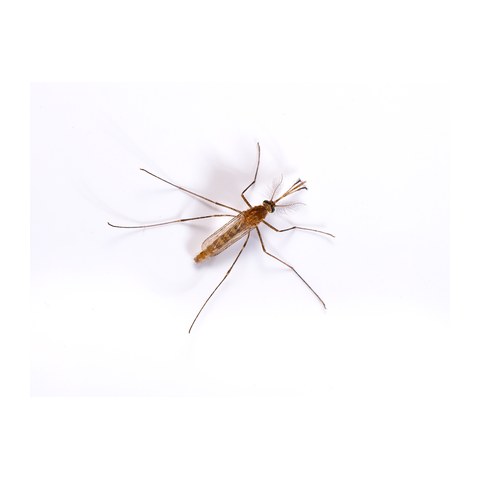
Culex Pipiens: Southern House Mosquito
The southern house mosquito is the most common mosquito species in Raleigh and the primary vector for West Nile Virus in North Carolina. Most active from dusk to dawn, the species responsible for that familiar evening buzzing around your patio, and breeds in stagnant, organically enriched water including bird baths, clogged gutters, and storm drain catch basins. Strongly associated with the retention pond infrastructure across Cary, Morrisville, and Apex.
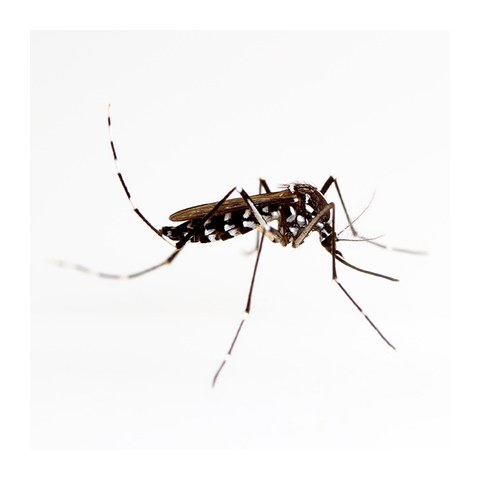
Aedes Albopictus: Asian Tiger Mosquito
This is the one that matters most here. NC State calls it the most common mosquito species in North Carolina and an aggressive daytime biter, and it is the species that catches Raleigh homeowners off guard. Unlike most mosquito species, tiger mosquitoes bite aggressively in broad daylight rather than only at dawn and dusk. They are identifiable by their distinctive black and white striped legs and breed in very small water containers, plant saucers, bottle caps, children’s toys left outside, the cavities of tree stumps. They have spread aggressively across Wake County.
Aedes Triseriatus: Eastern Treehole Mosquito
A daytime biter that NC public health lists among North Carolina’s important vectors, breeding in tree holes and small man-made containers with a flight range of roughly half a mile to a mile. It is the main carrier of La Crosse virus, and the geography there deserves precision rather than alarm: North Carolina led the entire United States for La Crosse neuroinvasive disease in 2024 with 15 of the 37 national cases, but the state’s own surveillance is clear that infections occur primarily in western North Carolina. Six mountain counties have accounted for 19% of all US cases over 22 years, and Buncombe County alone was 14% of US cases in 2024. It is overwhelmingly a childhood illness, with a median age of 8. We treat for this species in Wake County because it is here and it bites; we are not going to tell you the mountain disease numbers are yours.
Anopheles Quadrimaculatus: A Night Biter, Not a Malaria Risk
This species carries the common name “common malaria mosquito” for historical reasons, and it is worth being clear that it does not describe a risk in North Carolina. NC public health states that malaria cases here are contracted while traveling outside the continental US, and when the US saw its first locally acquired malaria transmission in twenty years in 2023, the cases were in Florida, Texas, Maryland and Arkansas, not North Carolina. What this mosquito actually is, for a Raleigh homeowner, is a persistent dusk-to-dawn biter found near the larger natural water bodies in the area, particularly Falls Lake and Jordan Lake to the north and west, the Neuse River floodplain in Garner and Clayton, and the creek and river corridor environments throughout Wake and Johnston Counties. Lakeshore communities around Falls Lake and Jordan Lake consistently see the highest Anopheles pressure in the Raleigh metro area.
Mosquito Risk by Neighborhood
Know Your Raleigh Neighborhood’s Mosquito Risk
Downtown Raleigh & Glenwood South: Crabtree Creek Corridor
Downtown Raleigh and Glenwood South deal with mosquito pressure primarily from Crabtree Creek, which runs through the heart of the city and creates moist, shaded habitat in the greenway corridors adjacent to some of Raleigh’s densest residential areas. Ornamental water features, rooftop gardens, and decorative planters common in Downtown’s more urban residential properties add small-container breeding pressure from Asian tiger mosquitoes throughout the summer.
North Raleigh & Wake Forest: Creek Margins, Not the Lake
North Raleigh and Wake Forest sit closest to Falls Lake, and the instinct is to blame the reservoir. NC State says otherwise: ponds and lakes are typically not major breeding areas, because fish and predators keep larvae down. What does drive pressure in northern Wake County is the shoreline vegetation, the shaded creek margins feeding the lake, and the tree holes in mature canopy. Those hold the still, protected water that migrate directly into the residential communities of North Raleigh, Wake Forest, Rolesville, and Zebulon throughout the warm season.
Cary & Morrisville: Highest Retention Pond Density
Cary and Morrisville have among the highest retention pond density of any community in Wake County, and that infrastructure creates year-round mosquito breeding habitat adjacent to residential yards throughout these communities. Morrisville’s position directly adjacent to RDU International Airport means frequent business travelers, a high-mosquito-awareness demographic, are among the community’s most engaged mosquito control customers.
Apex & Holly Springs: Jordan Lake Pressure
Apex and Holly Springs sit in the southwestern Research Triangle between Jordan Lake to the northwest and the growing suburban corridors of southwestern Wake County. Jordan Lake’s massive 14,000-acre surface and surrounding watershed generate sustained mosquito migration pressure into the residential communities of southwestern Wake County throughout summer.
Garner & Clayton: Neuse River Floodplain
Garner and Clayton sit along the Neuse River corridor, and the Neuse River floodplain generates some of the most sustained mosquito pressure in the Research Triangle’s eastern communities. The natural floodplain soils along the Neuse River stay moist long after rainfall, creating breeding conditions that are harder to interrupt than the artificial retention pond environments of western Wake County.
Durham & Chapel Hill: University Lake & Jordan Lake
Durham and Chapel Hill experience mosquito pressure from University Lake and Farrington Pond reservoirs in Chatham County, along with Jordan Lake’s northwestern shoreline. Durham’s older residential neighborhoods (with their larger lots, mature landscaping, and more ornamental water features) provide both breeding and resting habitat. Duke University’s extensive wooded campus creates a large corridor of moist, shaded mosquito habitat adjacent to the surrounding residential communities.
Know the Signs
Signs Your Raleigh Home Needs Mosquito Control
Daytime Biting
Being bitten aggressively during daylight hours, not just at dusk, indicates Asian tiger mosquito pressure, which does not respond to dawn-and-dusk-only prevention advice.
Standing Water Near Home
Retention ponds, ornamental ponds, birdbaths, low-lying lawn areas, and even plant saucers create breeding sites that generate new adult mosquitoes every 7–10 days.
Season Longer Than Expected
If mosquitoes are active in October or early November, you are experiencing Raleigh’s genuine 9-month season, not the shorter season some companies advertise coverage for.
Proximity to Falls Lake or Jordan Lake
Living within a half-mile of Falls Lake, Jordan Lake, the Neuse River, Crabtree Creek, or a retention pond significantly elevates your mosquito pressure beyond what DIY methods can manage.
West Nile Activity in Area
North Carolina recorded 27 neuroinvasive West Nile cases in 2024, the highest in the state’s history, with three deaths, and state surveillance notes the cases occurred all over North Carolina rather than in one region. Culex suppression is the part of mosquito work that is genuinely about health rather than comfort.
Outdoor Space Unusable
Unacceptable mosquito pressure in your yard in spring, summer, or fall is solvable, monthly Platinum treatments progressively reduce local populations as the breeding cycle is interrupted.
Call (984) 600-8469: 24/7 emergency service available
Mosquito Season
Raleigh NC Mosquito Season: Month by Month
| Season | Activity in Raleigh, NC |
|---|---|
| March | Activity begins as temperatures consistently hit 55°F+; early breeding in standing water; southern house mosquito adults emerge from overwintering |
| April | Populations building rapidly; tiger mosquitoes become active; first significant biting pressure in warm years |
| May | Active season underway; retention pond breeding at full pace; Falls Lake and Jordan Lake populations migrating into residential areas |
| June | High pressure; all three primary species active; daytime biting from tiger mosquitoes begins in earnest |
| July | Peak season; maximum biting pressure; breeding cycles running at 7–10 day intervals in warm water |
| August | Peak continues; Culex populations at yearly maximum; West Nile Virus transmission risk highest |
| September | High but declining pressure; tiger mosquitoes still active during warm days; retention pond edges still breeding |
| October | Moderate activity continues in warm years; Raleigh’s warm falls extend season well past what most homeowners expect |
| November | Activity ends as temperatures consistently drop below 50°F |
Local Conditions
Who Actually Controls Mosquitoes in Wake County, and Who Does Not
This is the most misunderstood thing about mosquitoes in the Triangle, and the answer is on the public record. In most of the South there is at least some public spraying happening around you. Here there is none.
Wake County Does Not Spray. At All.
The county puts it in capitals on its own page: it does not operate a spraying program, on the grounds that spraying insecticide is only a short-term solution to a long-term nuisance problem. There is no City of Raleigh program either, and the city’s only mosquito rule is a requirement that stormwater ponds use non-chemical measures such as level alteration, aeration, bird or bat boxes, or mosquito fish. So unlike Charleston or Columbia, where county and city trucks are out at night, nothing is being treated around you here. The county’s number, 919-250-4462, is a complaint line rather than a spray request.
Nobody Is Even Testing Locally
This goes a step beyond no spraying, and almost nobody knows it. North Carolina’s mosquito surveillance is run county by county rather than statewide, and when mosquito pools were submitted to the State Laboratory of Public Health for West Nile testing in 2024, they came from just nine counties: Beaufort, Brunswick, Cabarrus, Columbus, Forsyth, Gaston, Mecklenburg, New Hanover and Pitt. Wake was not among them. State surveillance is candid about the resulting blind spots. So in Wake County there is no public treatment and no local disease monitoring either.
It Is Breeding on Your Lot, Not the Reservoir
Almost every page in this market blames Falls Lake and Jordan Lake, and NC State says the opposite: ponds and lakes “are typically not major breeding areas for the mosquitoes that most concern us”, because fish and predatory insects eat the larvae. The species doing the biting is the Asian tiger mosquito, which NC State calls the most common in North Carolina, and it breeds in discarded tires, bird baths, bottle caps and potted plants. The clincher is its range: NC State puts it at “100-300 yards from where they emerged.” A lake three miles away is not your problem. A neighbor’s gutter is.
West Nile Is the Local Risk. The Rest Is Not.
Worth stating precisely, because this is where most pages overreach. North Carolina recorded 27 neuroinvasive West Nile cases in 2024, the highest in its history, with three deaths, and state surveillance notes they occurred all over North Carolina rather than in one region. That is the one you can reasonably worry about here. Eastern equine encephalitis averages about one NC case a year, mostly in the Coastal Plain, with no positive mosquito pools found statewide in 2024. La Crosse is a genuine North Carolina story but a mountain one. And dengue, Zika, chikungunya and malaria in North Carolina are contracted while traveling, not acquired here.
Kid & Pet Safe
Our Treatments Are Safe for Your Whole Family: Including the Furry Members
Every product we use is EPA-registered and applied strictly at labeled rates by licensed technicians. We take the guesswork out of safety so you can feel confident letting kids and pets back into treated areas quickly.
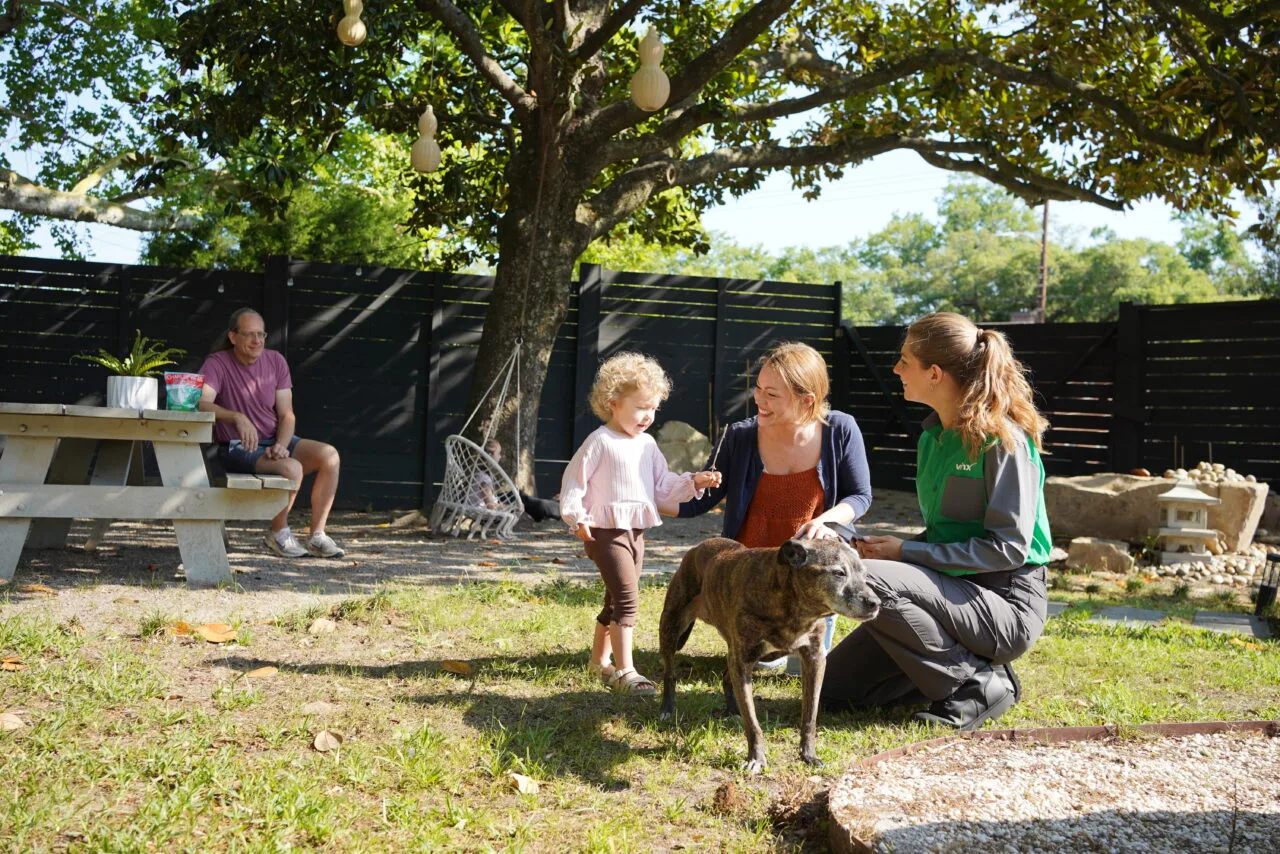
EPA-Registered Products Only
All products are EPA-registered and applied per strict label requirements by our licensed technicians on every visit.
Safe Re-Entry After Drying
Exterior spray treatments dry in 30–60 minutes. Your technician confirms the all-clear before leaving your property.
Interior Treatment On Request
We treat only what’s needed, where it’s needed. Products placed away from areas pets and children frequent most.
Botanical Options Available
Ask your technician about plant-derived treatment options for households that prefer a more natural approach.
Questions about product safety? Call 984-600-8469 and we’ll walk you through exactly what we use and why it’s safe.
Explore More
More Pest Control Services in Raleigh
Ant Control Raleigh
Household ants & others
Termite Control Raleigh
Bait systems & liquid treatment
Cockroach Control Raleigh
American & German roaches
Bed Bug Treatment Raleigh
Heat & liquid treatments
Tick & Flea Control Raleigh
Yard & pet protection
Exterminator Raleigh
Same-day local exterminators

Pest Control Raleigh
General pest protection
Rodent Control Raleigh
All rodents covered
Spider Control Raleigh
All spider species covered
Wasp Control Raleigh
Nest removal & prevention
Frequently Asked Questions
Mosquito Control Raleigh NC: FAQs
Raleigh’s mosquito pressure is driven by four geographic factors working together: Falls Lake’s 12,000-acre surface to the north, Jordan Lake’s 14,000-acre surface to the southwest, the Neuse River and Crabtree Creek corridors running through the metro, and the retention pond infrastructure across hundreds of newer Wake County subdivisions. Combined with Raleigh’s humid subtropical climate that keeps mosquito season active from March through November and Wake County’s clay soil that retains standing water after every rainfall.
Mosquito control is included in Vinx Platinum at $109/mo, which also covers ants, fleas, ticks, and all general pests. Monthly mosquito treatments run from March through November. All Platinum plans include a $329 initial treatment fee and a 12-month service agreement.
Mosquito season in Raleigh typically begins in March as temperatures consistently reach 55°F, earlier than most homeowners expect. It peaks through June, July, and August, and remains active through October and often into November during Raleigh’s warm falls. This is a nine-month season, some Raleigh mosquito companies advertise only April through September coverage, which leaves you unprotected during Raleigh’s genuine March and October–November activity periods.
Yes, call before noon and we can typically schedule same-day service. 24/7 emergency service is available at (984) 600-8469. Re-services for existing Platinum customers are performed usually the next day at no charge.
Mosquito control is included exclusively in Vinx Platinum ($109/mo). HomeGuard ($49/mo) and Vinx Plus ($75/mo) do not include mosquito treatment. Platinum gives you monthly mosquito treatments March through November plus ant control, flea and tick coverage, general pest protection, and the free bed bug service benefit after 12 continuous months.
Yes, full Research Triangle coverage including Downtown Raleigh, North Raleigh, Cary, Morrisville, Apex, Holly Springs, Fuquay-Varina, Garner, Clayton, Wake Forest, Knightdale, Wendell, Zebulon, Durham, Chapel Hill, and Carrboro.
You should see around 80% mosquito reduction after the first couple of Platinum treatments. Results continue to improve through the season as the breeding cycle is progressively interrupted with each monthly visit. Complete elimination of all mosquitoes is not realiztic in an environment surrounded by Falls Lake, Jordan Lake, and the Neuse River corridor, but dramatic reduction that makes your outdoor space genuinely usable is absolutely achievable.
Yes, all Vinx mosquito treatments are EPA-registered and fully safe for children and pets once dry, typically 30–45 minutes after application. We target treatment to shaded resting vegetation and deliberately avoid flowering plants and blooms to protect pollinators including bees and butterflies.
Yes, we apply granular or liquid larvicide to standing water that cannot be eliminated on your property, including ornamental ponds, drainage features, retention pond edges, low-lying lawn areas, and downspout pooling zones.
Every Platinum plan includes our free re-service guarantee, we come back usually the next day at no charge. If we return more than twice for the same pest issue between visits and the problem still persists, we refund your most recent service payment. Call (984) 600-8469 anytime.
Yes. Fully licensed and registered under the NC Department of Agriculture’s Structural Pest Control program and fully insured. 4.8 stars across 3,600+ Google reviews.
Mosquito control is only available as part of Vinx Platinum ($109/mo), it cannot be added as a standalone service to HomeGuard or Plus plans. Upgrading to Platinum also adds ant control, interior flea and tick coverage, and the free bed bug service benefit after 12 continuous months. Call (984) 600-8469 to discuss upgrading.
Service Coverage
Serving All of Raleigh and the Research Triangle for Mosquito Control
Whether you are in North Raleigh near Falls Lake, Cary or Morrisville with retention ponds in your backyard, or anywhere across the Research Triangle: Vinx has your mosquito season covered March through November.
Serving the Greater Raleigh Area