Mosquito Control in North Charleston, SC
Saltmarsh, Asian Tiger & Southern House Mosquito Specialists, Monthly Service March to October
Three mosquitoes drive most complaints in North Charleston, the Eastern saltmarsh mosquito breeding by the billions in the tidal Ashley and Cooper River marsh and biting day and night, the dusk-to-dawn Southern house mosquito in ditches and storm drains, and the daytime Asian tiger mosquito breeding in the smallest container of standing water. Vinx deals with all three via barrier spray and larvicide. Free re-treatment guarantee.
Get Started in 60 Seconds
Choose what’s easiest for you
Request a Quote
We usually respond in 2 minutes
Call (843) 920-8469
Get a Live Person (no AI agents here!)
Sign Up Online
Get pricing and schedule now





Welcome to Vinx Pest Control
A Company That Actually Backs What It Says
At Vinx, we combine professional-grade treatments with a level of service most pest control companies don't offer. Local technicians, fast response times, and a guarantee that actually means something.
Get a Free Quote"I'm not passionate about killing bugs. I'm passionate about customer service. At Vinx, you get experts who show up, do the job right, and stand behind every visit. No runaround, no fine print."
WELCOME TO VINX PEST CONTROL
Protection Plans for North Charleston Homeowners
Standard Residential Protection
- 4 Seasonal Treatments Per Year
- 50+ Covered Pests
- Interior, Exterior & Yard Treatment
- Unlimited Free Re-Services
- 100% Money-Back Guarantee

Upgraded Yard Protection
- 6 Home & Yard Treatments Per Year
- 50+ Covered Pests
- Yard Ant Elimination Guarantee
- Flea & Tick Elimination Guarantee
- 100% Money-Back Guarantee

Most Comprehensive Protection
- 9 Treatments Per Year
- 50+ Covered Pests
- 8 Mosquito Treatments (Mar–Nov)
- Flea, Tick & Ant Coverage
- Free Bed Bug Treatments if Needed*
*Starting rates vary by home size and area. All plans billed monthly.
Request Your Free Mosquito Control Quote
Fill out the form below and a Vinx team member will reach out within 2 minutes during business hours.
Prefer to talk? Call (843) 920-8469 for a live person, no AI agents.
Our Approach
How Vinx Controls Mosquitoes in Your North Charleston Yard

Property Inspection & Assessment of Breeding Sites
Your technician walks the property with the city’s two rivers in mind: whether your lot faces the Ashley or Cooper marsh, whether it sits on Park Circle’s early-1900s drainage or beside one of the newer retention ponds off Dorchester Road, and where the small water is, the gutter corners, saucers and tarps that supply Asian tiger mosquitoes within a few hundred feet of the door.
Yard Treatment
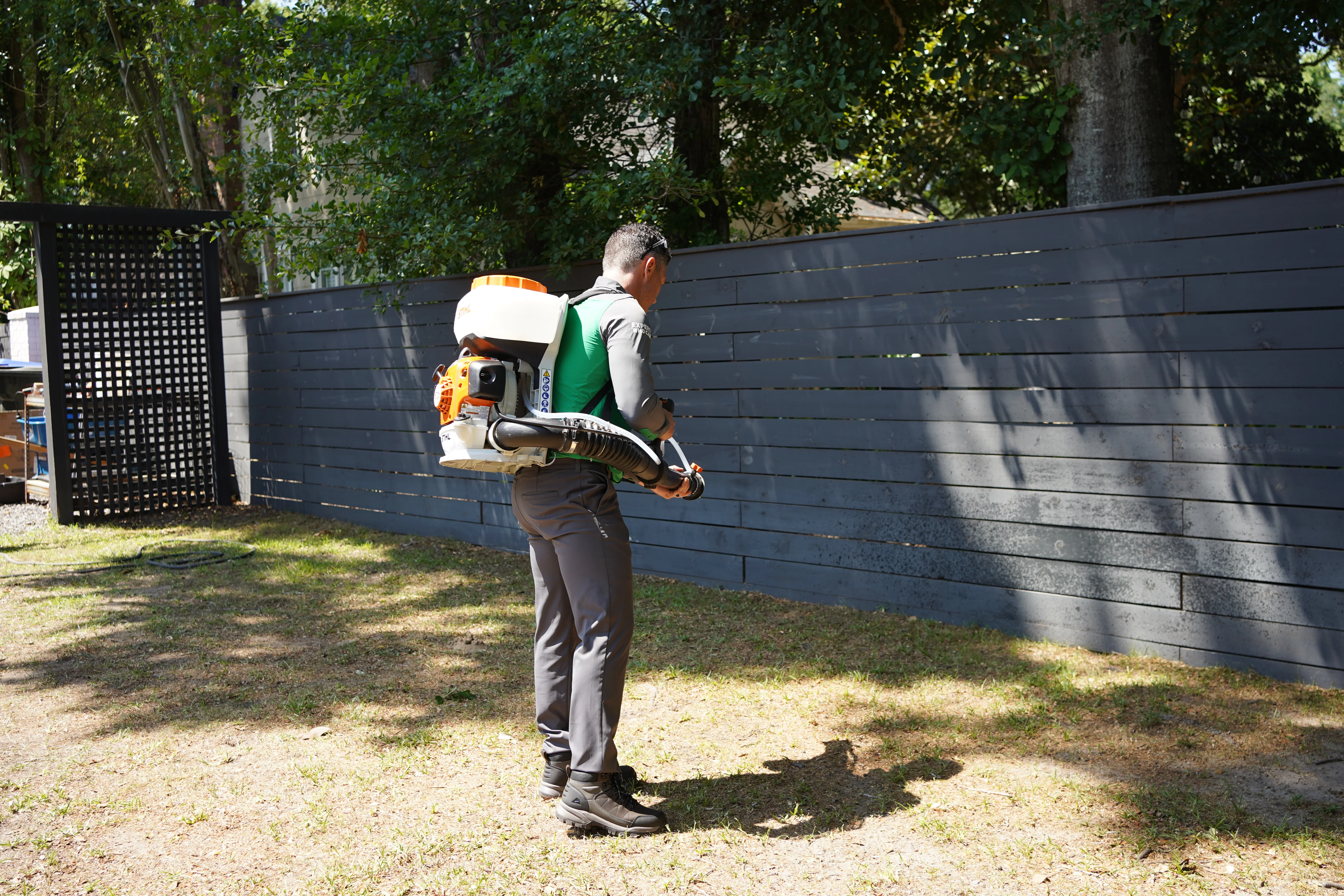
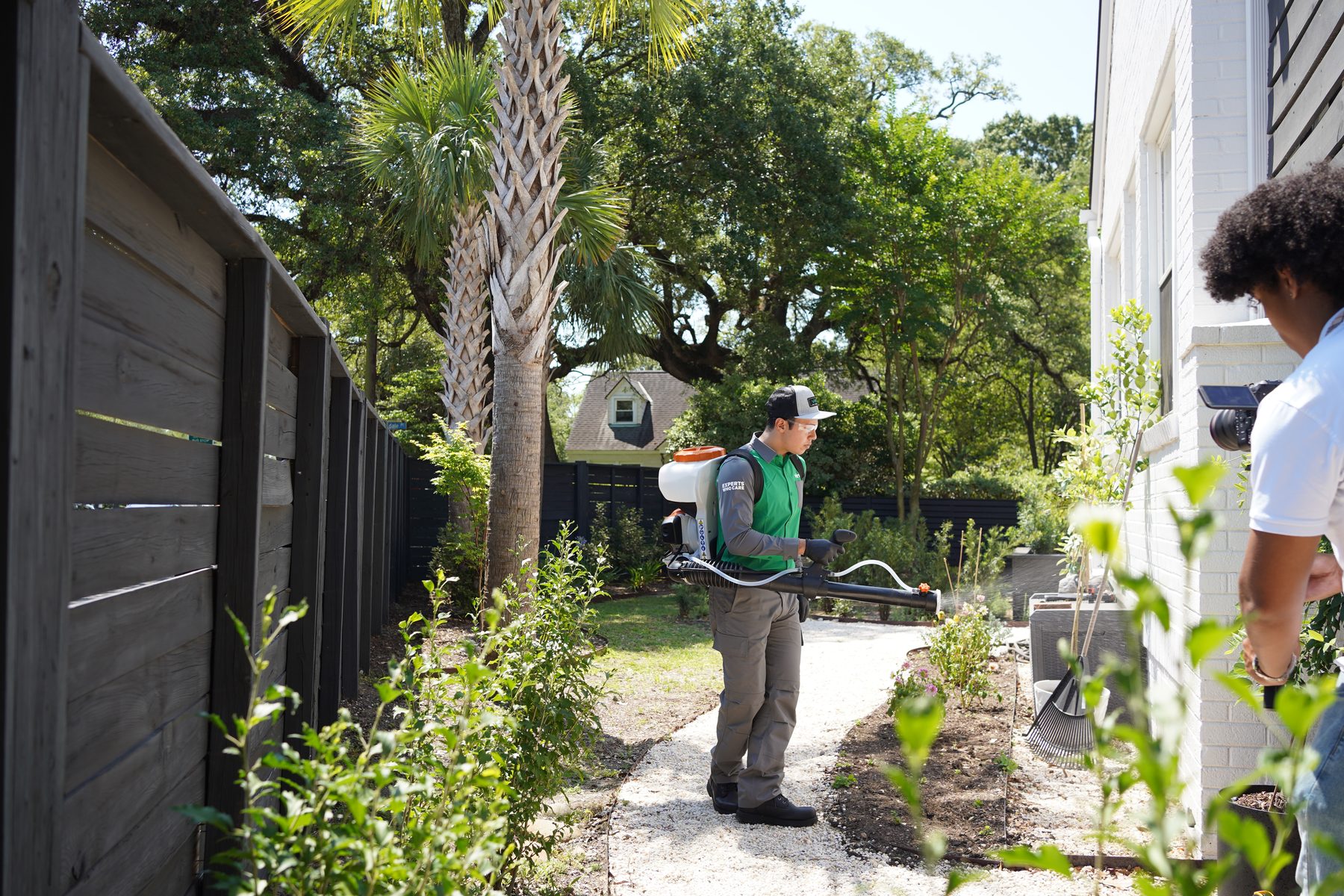
A fine-mist residual is applied to the underside of shrubs, the lower canopy of the mature trees in Park Circle, Waylyn and Chicora-Cherokee, tall grass and fence lines. The saltmarsh mosquito rests in that shaded cover after it flies in off the river, and the treatment holds for 3–4 weeks between visits.
Larvicide Application
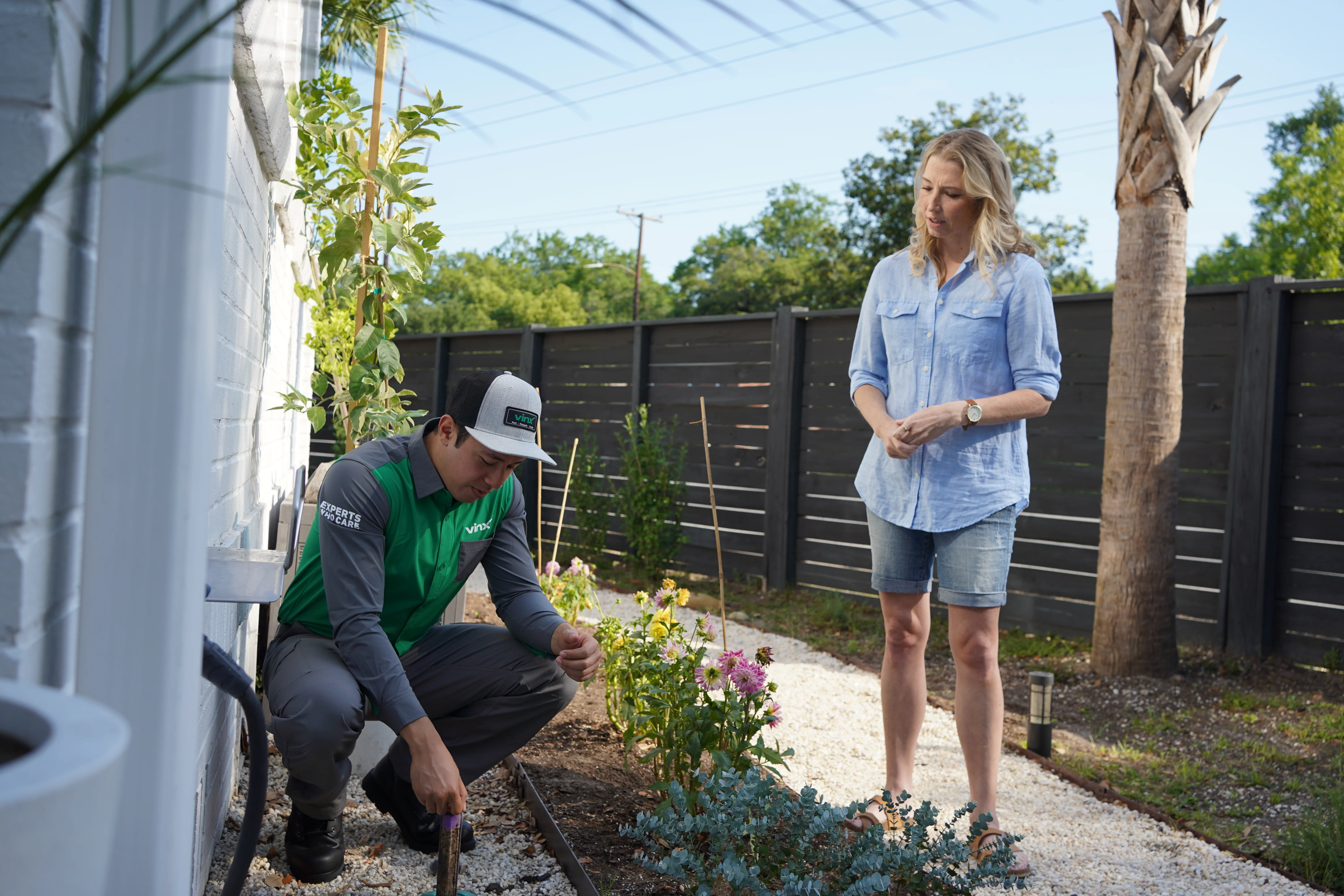
Larvicide goes into water that cannot be removed: a low corner that holds after a flood tide, a retention pond edge in Indigo Fields or Whitehall, a drain that stays wet. Southern house mosquitoes breed in exactly that stagnant water, and in a city with this much drainage infrastructure the larvicide is what keeps it from producing between visits.
Monthly Service & Free Re-Treatments
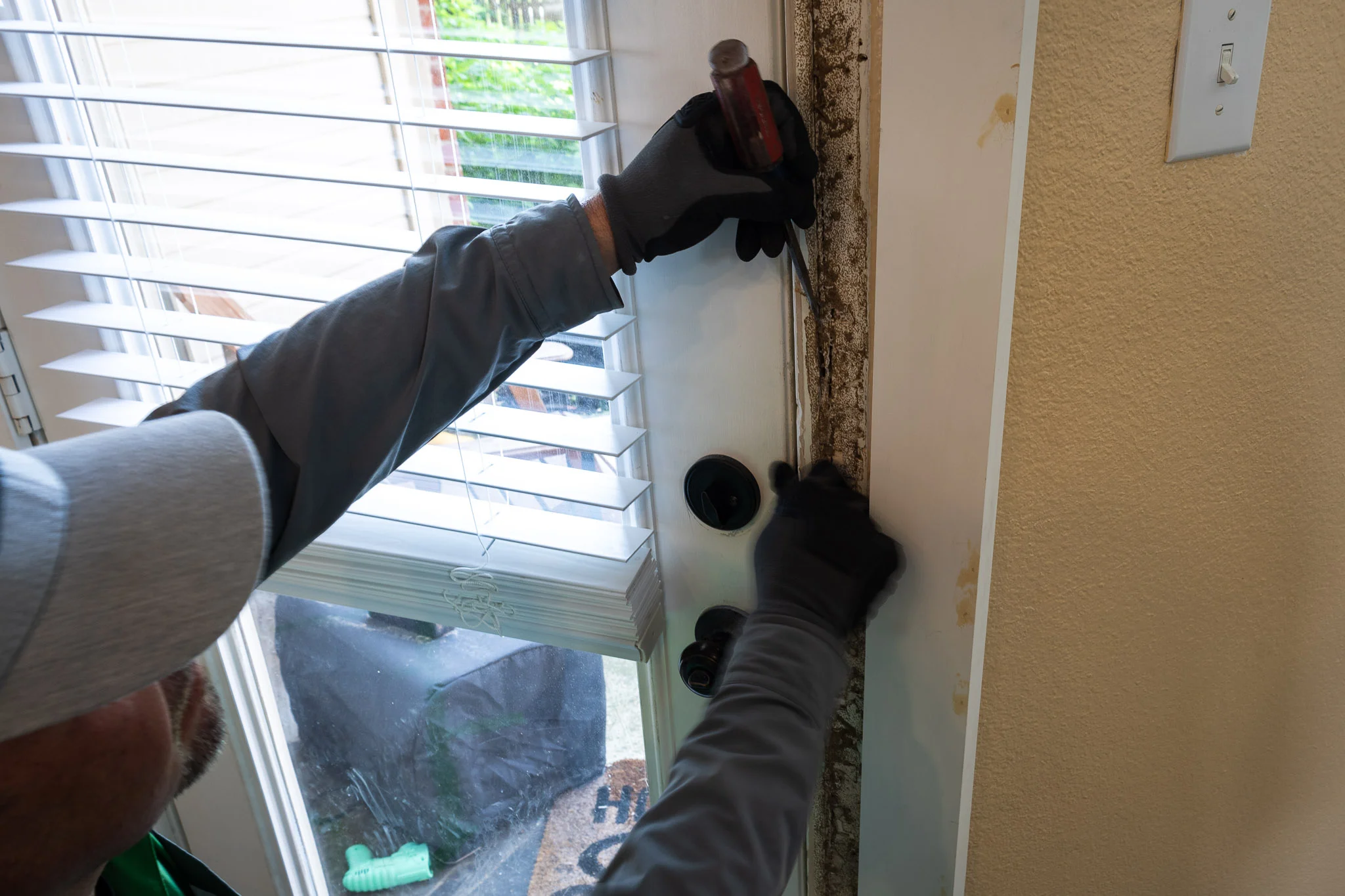
Monthly visits hold the population down through the season, and if mosquitoes return before the next one we come back free. Your technician also notes what the lot is doing to help them, such as a downspout emptying into a bed that never dries.
What Our Customers Say
What North Charleston Homeowners Say About Vinx Mosquito Control
I'm very satisfied with Vinx and have been for a couple of years. Ever since they took over our pest control we've had zero issues with bugs, and their mosquito service keeps our pool area bug free during swim season. Highly recommend them!
We have used Vinx for a few years now and have never had a problem. Our tech today was Jack and he was great!
I hadn’t been home the last few times Vince came out so I scheduled a time. James could not have been more accommodating. He was very professional and met all of the needs and concerns I had.
Technician was on time and very thorough checking my bait stations. Highly recommend him and Vinx. I have been a satisfied customer for over 5 years.
The technician Devon was great! He was very thorough and very professional. All the people at Vince are always so on top of our treatments and super easy to work with. I highly recommend them.
Vinx has always gone above and beyond to keep our house protected against pest. They are highly professional and offer services from termite to mosquitos, rodents even bees. They not only work at getting rid of these issues but also have the ability for preventative measures. I strongly recommend
Ready to Take Back Your Yard?
The first warm King Tide floods the Ashley and Cooper marsh edges weeks before most companies start. Get the barrier down before that brood flies over Park Circle and the river neighborhoods. Free inspection, same-day availability.
The Local Threat
Why North Charleston Needs Year-Round Mosquito Control
North Charleston is bracketed by two tidal rivers, the Ashley on its southwestern edge and the Cooper on its southeastern, and the Census Bureau counts 3.43 square miles of water inside the city limits, about 4.23 percent of the city. That is the structural fact behind the season. The saltmarsh brood along both rivers follows the first exceptional tide of warm weather, the early-1900s drainage under Park Circle holds small water for Asian tiger mosquitoes from the first week above 50°F, and a company that starts in May has missed both.
North Charleston sits in one of the most mosquito-active regions on the East Coast. The brackish, tidal marsh bordering the Ashley and Cooper Rivers creates thousands of acres of shallow, slow-moving water that never fully drains, the single largest breeding source in town.
The Eastern saltmarsh mosquito that breeds there is one of the country's most aggressive biters, working day and night and able to travel a mile or more inland after heavy rain and a high tide. No part of North Charleston is low-risk at any time of year.
The city is bracketed by two tidal rivers, and that is the structural fact behind its mosquito season. The Ashley River forms a large part of North Charleston’s southwestern border and the Cooper River its southeastern one, and the Census Bureau records 3.43 square miles of water inside the city limits — about 4.23 percent of its total area. That is not a pond somewhere on the edge of town; it is tidal water threaded down two long flanks of the city, which is why saltmarsh species reach so far inland here and why the treated line matters most on the river side of a property.
Mosquito Species in North Charleston
Eastern Saltmarsh Mosquito (Aedes sollicitans)
- Breeds by the billions in the brackish, tidal marsh lining the Ashley and Cooper Rivers.
- It bites aggressively at all hours, unlike most species.
- Swarms can reach a mile or more inland after heavy rain and high tide.
- A properly coastal pressure, not something inland SC towns experience to the same degree.
- Treating your yard by itself can be insufficient, so timing to the tide cycle counts.
Asian Tiger Mosquito (Aedes albopictus)
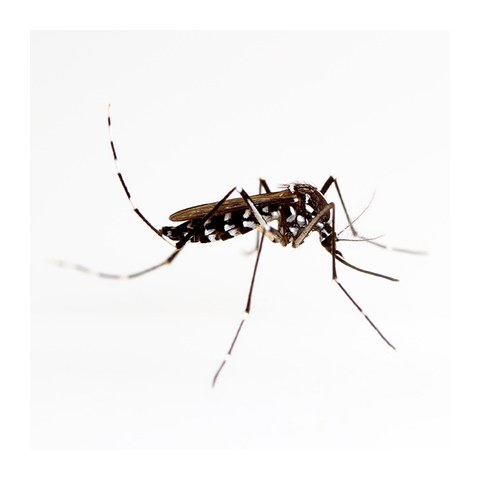
- Identifiable from the single white stripe down its back and legs.
- A daytime biter that bites hard, active while you are outdoors.
- It rarely strays more than a few hundred feet from where it hatched.
- A clogged gutter, kiddie pool, tarp or construction debris holds enough standing water for it to breed.
- Short-range habits mean eliminating standing water makes a measurable difference.
Southern House Mosquito (Culex quinquefasciatus)
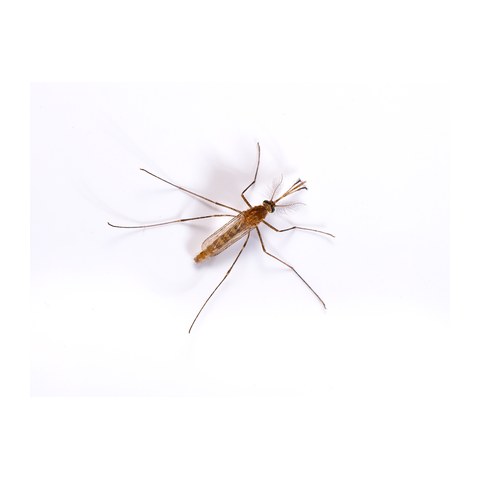
- Active from dusk to dawn.
- It needs larger amounts of stagnant water, ditches, storm drains, retention ponds.
- The primary regional mosquito species connected to West Nile virus.
- Larvicide on standing water sources is central, not merely adult barrier spray.
- It transmits heartworm to dogs and cats as well, in one bite.
Mosquito Pressure by Area
Mosquito Pressure Across North Charleston
The Ashley & Cooper River Corridor: Eastern Saltmarsh Mosquitoes
- The brackish, tidal marsh lining both rivers is the single largest mosquito breeding source in North Charleston.
- They produce swarms capable of moving well beyond the waterfront after heavy rain and a high tide.
- The tide replenishes breeding sites through any dry spell, and marsh edges will refill a treated yard within days unless larvicide is applied.
- Timing barrier treatment around tide and rain cycles matters more here than anywhere else in town.
Park Circle & the Historic Naval Base District: Asian Tiger Mosquitoes
- Mature tree canopy and older drainage infrastructure collect small pockets of standing water Asian tiger mosquitoes rely on.
- Historic gutters and drainage hold standing water longer than modern systems.
- Aggressive daytime biters with limited range, so eliminating standing water close to the house matters.
- Monthly barrier spray to foliage combined with larvicide for standing water is the effective minimum.
Northwoods & the I-26 Corridor: Southern House Mosquitoes
- Dense commercial development and retail parking lot drainage around Northwoods Mall hold standing water after rain.
- Enough to sustain Southern house mosquito activity, dusk to dawn, across the summer.
- It carries the strongest local West Nile association, so larvicide on standing water is essential.
- Year-round monthly treatment is what we recommend, because seasonal-only misses the spring buildup.
Waylyn, Chicora-Cherokee & Pepperhill: Asian Tiger Mosquitoes
- Established landscaping and ongoing revitalization construction create a steady supply of small standing-water pockets.
- Exactly the container habitat Asian tiger mosquitoes depend on.
- Aggressive daytime biters, the hallmark being a yard you cannot use in daylight.
- The best combination is dumping standing water weekly alongside barrier treatment.
Indigo Fields, Whitehall & the Dorchester Road Corridor: Southern House Mosquitoes
- Newer stormwater retention ponds and construction-related drainage hold larger volumes of standing water.
- Ideal Southern house mosquito breeding near Boeing and the airport.
- Dusk-to-dawn biters, making larvicide of retention ponds and drainage essential to control.
- Monthly treatment March through October keeps the population knocked down.
Warning Signs
Signs Mosquito Pressure Needs Professional Attention
Bites in Full Daylight
Asian tiger mosquitoes from a container or a tree hole within a few hundred feet, common under Park Circle’s mature canopy.
A Wave Following High Tide
The saltmarsh brood off the Ashley or Cooper hatches together and arrives together, days after an exceptional tide floods the marsh.
Standing Water Past Five Days
Clemson’s threshold: water standing five days or more breeds mosquitoes, some species in a tablespoon.
Mosquitoes Indoors
Getting in past screens and doors means heavy outdoor numbers around the house.
Dusk Bites Near a Parking Lot or Pond
Southern house mosquitoes from the retail drainage around Northwoods or a retention pond off Dorchester Road, the species tied to West Nile virus.
Family Goes Inside at Sunset
If the yard becomes unusable in the evening, the population is past what containers alone account for.
Homeowner Tips
6 Ways to Reduce Mosquito Pressure Right Now
Kid & Pet Safe
Our Treatments Are Safe for Your Whole Family: Including the Furry Members
Every product we use is EPA-registered and applied strictly at labeled rates by licensed technicians. We take the guesswork out of safety so you can feel confident letting kids and pets back into treated areas quickly.

EPA-Registered Products Only
All products we apply are EPA-registered and used strictly per label requirements. Our licensed technicians are trained to apply the right product in the right place at the right rate, every time.
Dry Time Before Re-Entry
Exterior spray treatments dry in 30–60 minutes. Once dry, treated surfaces are safe for children and pets to contact. Your technician will confirm the all-clear before leaving your property.
Interior Treatment On Request
We treat only what’s needed, where it’s needed. Gel baits in cabinets and crack-and-crevice applications keep products away from areas pets and children frequent most.
Botanical Options Available
Have specific sensitivities? Ask your technician about our plant-derived treatment options. We offer botanical alternatives for households that prefer a more natural approach.
Have a concern about products used near your pets or children? Call (843) 920-8469 and we’ll walk you through exactly what we use and why it’s safe.
Explore More
More Pest Control Services in North Charleston

Pest Control North Charleston
General pest protection
Termite Control North Charleston
Sentricon bait system
Ant Control North Charleston
Household ants & others

Spider Control North Charleston
All spider species covered
Cockroach Control North Charleston
Palmetto bug & roach removal

Rodent Control North Charleston
All rodents covered

Bed Bug Treatment North Charleston
Heat & liquid treatments

Tick & Flea Control North Charleston
Yard & pet protection
Exterminator North Charleston
Same-day local exterminators
Frequently Asked Questions
Mosquito Control FAQ for North Charleston Homeowners
Year-round mosquito treatment is covered by Platinum at $109/mo: monthly through the season and a winter service. Mosquito-only service is available separately from the plan. Call (843) 920-8469 for property-specific pricing.
Yes, and the difference is the water. Park Circle was laid out in the early 1900s with drainage to match, and its mature canopy fills gutters and tree holes, so the pressure is Asian tiger mosquitoes close to the house. The newer subdivisions in Indigo Fields and Whitehall drain to stormwater retention ponds, which is Southern house mosquito habitat at dusk. Same city, different species, different treatment emphasis.
Yes. Every product used is EPA-registered and applied to label. Children and pets may use treated areas once dry, typically 2 to 4 hours, and we never apply while they are present.
Yes. Southern house mosquitoes come out on warm days in January, and Aedes eggs in gutters and tree holes hatch as soon as temperatures hold above 50°F, sometimes in late February. A winter service covers the gap a May restart leaves behind.
Barrier treatment usually accounts for up to 90% of the adult population per application. River-corridor lots along the Ashley and Cooper usually see 80% or better after the first two monthly visits, with the marsh-edge vegetation as the priority zone because that is where the tidal brood lands.
Each barrier treatment holds about three weeks. Monthly visits ensure coverage stays continuous through the season.
It never fully ends. The peak pressure period is May to October. The first saltmarsh brood along the Ashley and Cooper follows the first exceptional high tide of warm weather, and Asian tiger eggs hatch as early as late February.
Yes. Adulticide on resting foliage plus larvicide for undrainable water is part of every visit. In a city with this much storm drainage and retention infrastructure, the larvicide is what keeps a treated yard from being refilled with Southern house mosquitoes between visits.
Yes. For a gathering at a North Charleston home we time a barrier treatment a day or two ahead so the patio and lawn foliage is treated when guests arrive. Call (843) 920-8469 with your date.
West Nile virus, carried mainly by the Southern house mosquito breeding in retention ponds and parking-lot drainage, and Eastern Equine Encephalitis. West Nile is reported by South Carolina in Charleston County, a coastal county, in most years. Mosquitoes also give heartworm to dogs and cats in one bite.
Because both are tidal, and together they put 3.43 square miles of water inside the city. The saltmarsh mosquito lays eggs on the high marsh and the whole brood hatches together when an exceptional tide or heavy rain floods it, finishing in four to five days and flying about a mile a day inland. Riverfront Park and the old naval base sit right on that edge.
Most North Charleston appointments are same-day or next-day. Call (843) 920-8469. If your home goes unserviced past the next business day, the initial visit is free.
We treat shaded foliage and the undersides of leaves where mosquitoes rest, leaving flowering plants where pollinators feed, and schedule early or late when bee activity is lowest. Let the technician know about pollinator plantings and we will work around them.
Service Coverage
Mosquito Control Across North Charleston & the Tri-County Area
Serving every neighborhood in and around North Charleston
Serving the Greater Charleston Area