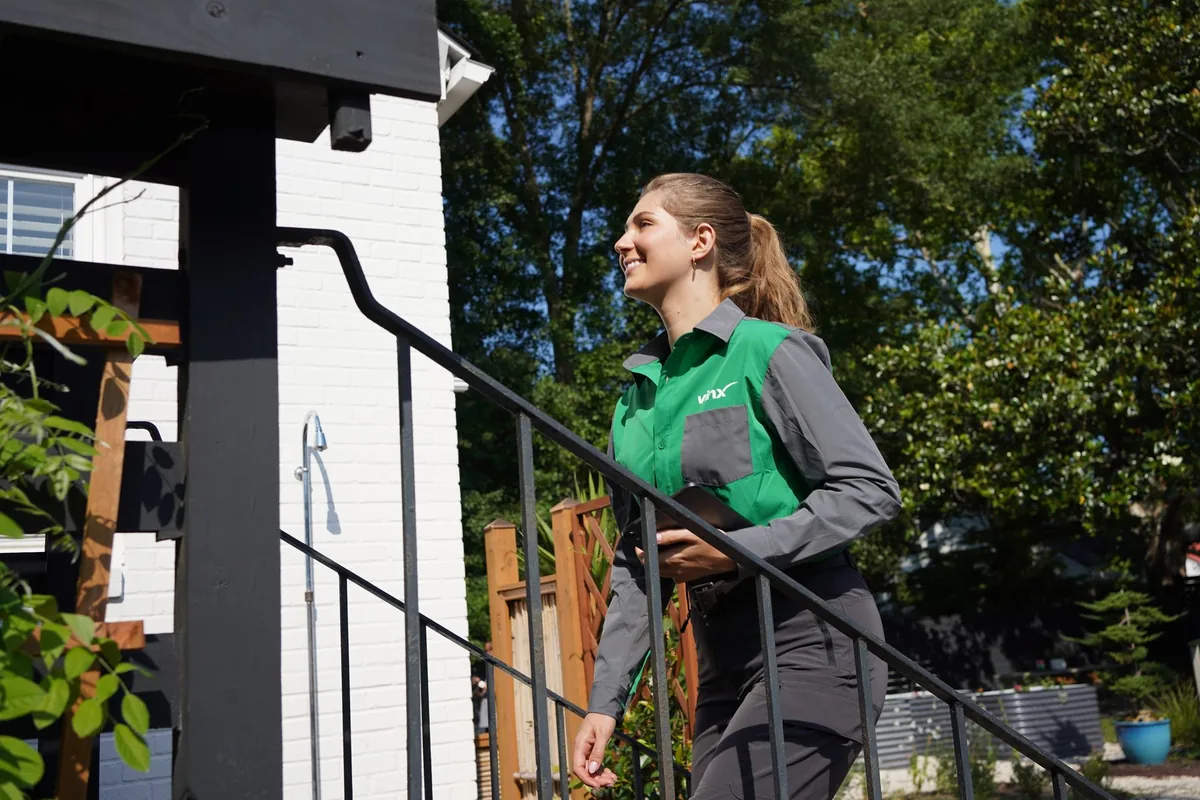
Mosquito Control in Spartanburg, SC
Monthly Barrier Treatments • Larvicide • Standing Water Elimination • March–November
Mosquito spraying in Spartanburg depends on which side of the city line you are on, and most people do not know that. Spartanburg County appears nowhere on South Carolina’s list of local mosquito control agencies — there is no county abatement district at all. The City of Spartanburg does spray, but only inside its own limits and only reactively, in a half-mile radius, once West Nile virus is confirmed. That has happened here: a human case inside the city limits in 2017, and the virus found in birds in 2022, which triggered spraying at Duncan Park, Forest Park, Hampton Heights and South Converse. Outside those triggers, treatment is private. Vinx treats the species actually breeding on your property.
Get Started in 60 Seconds
Choose what’s easiest for you
Request a Quote
We usually respond in 2 minutes
Call 855-800-8469
Get a Live Person (no AI agents here!)
Sign Up Online
Get pricing and schedule now





Welcome to Vinx Pest Control
A Company That Actually Backs What It Says
Vinx mosquito treatments target the places mosquitoes actually rest and breed, not just the open air. Monthly barrier treatments applied to shaded vegetation, larvicide in standing water sources, and harborage elimination combine to cut mosquito populations dramatically and keep them down throughout the season.
“I’m not passionate about killing bugs. I’m passionate about customer service. At Vinx, you get experts who show up, do the job right, and stand behind every visit. No runaround, no fine print.”

Founder & Owner, Vinx Pest Control
PROTECTION PLANS
Mosquito Control Plans for Spartanburg Homes

Standard Residential Protection
- 4 Seasonal Treatments Per Year
- 50+ Covered Pests
- Interior, Exterior & Yard Treatment
- Unlimited Free Re-Services
- 100% Money-Back Guarantee

Upgraded Yard Protection
- 6 Home & Yard Treatments Per Year
- 50+ Covered Pests
- Yard Ant Elimination Guarantee
- Flea & Tick Elimination Guarantee
- 100% Money-Back Guarantee

Most Comprehensive Protection
- 9 Treatments Per Year
- 50+ Covered Pests
- 8 Mosquito Treatments (Mar–Nov)
- Flea, Tick & Ant Coverage
- Free Bed Bug Treatments if Needed*
- 100% Money-Back Guarantee
Mosquito treatments are included in the Platinum plan (8 treatments, Mar–Nov). Add-on mosquito service available for HomeGuard and Plus plans. Call (855) 800-8469 for details.
Request Mosquito Control in Spartanburg
Fill out the form and a Vinx specialist will contact you same day to schedule your first barrier treatment.
Our Approach
How Vinx Reduces Mosquitoes in Your Spartanburg Yard

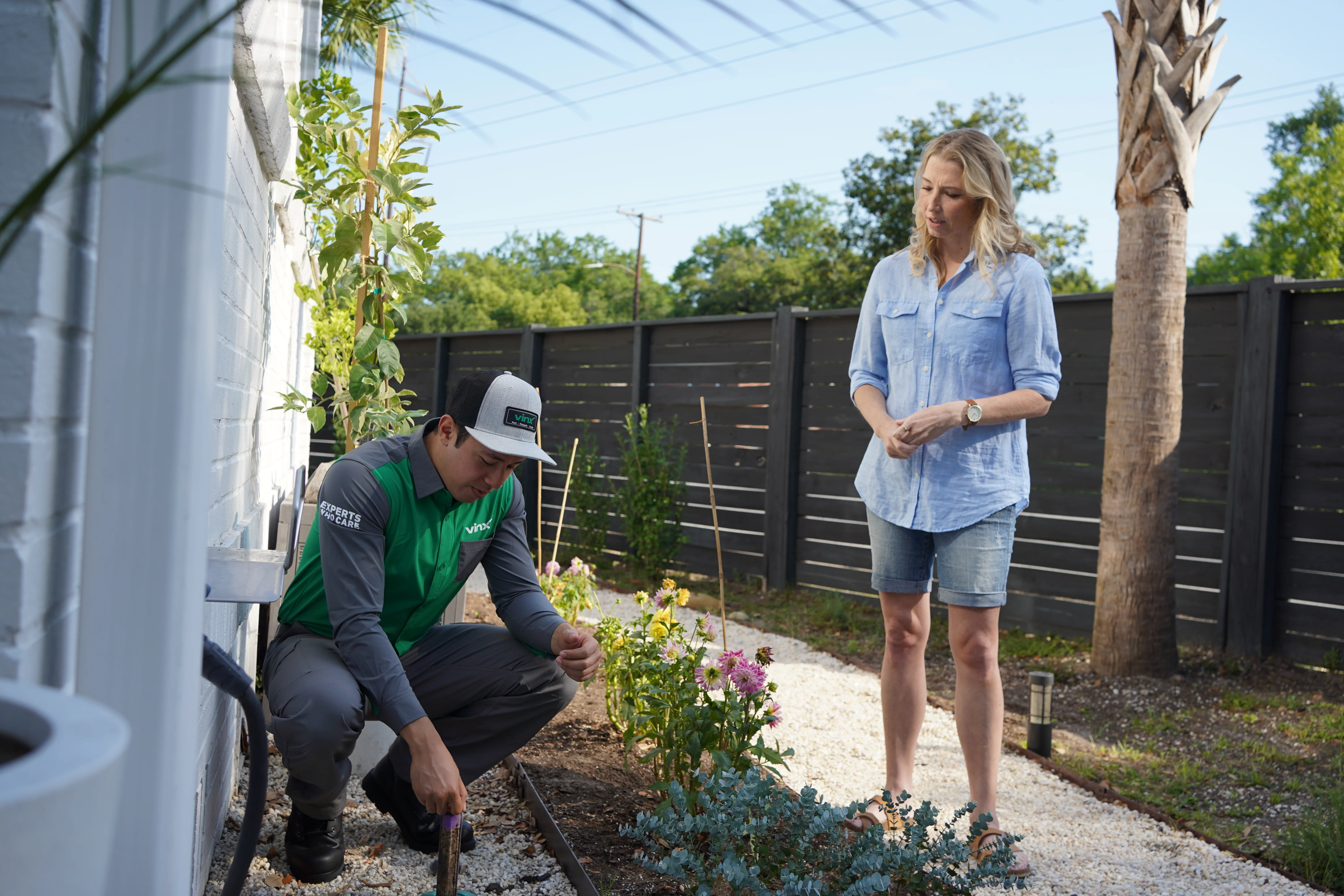
Yard Inspection & Source Identification
Your Vinx technician walks the full perimeter of your property to identify mosquito resting sites, standing water sources, and harborage conditions. Mosquitoes rest in shaded foliage during the heat of the day, shrubs, tall grass, dense groundcover, and the undersides of leaves along fence lines are the primary targets for barrier treatment. Standing water sources, even as small as a bottle cap, are documented for larvicide or elimination. The inspection creates a complete picture of where mosquito pressure is highest on your specific property before any treatment is applied.
Barrier Treatment: Resting Vegetation & Perimeter
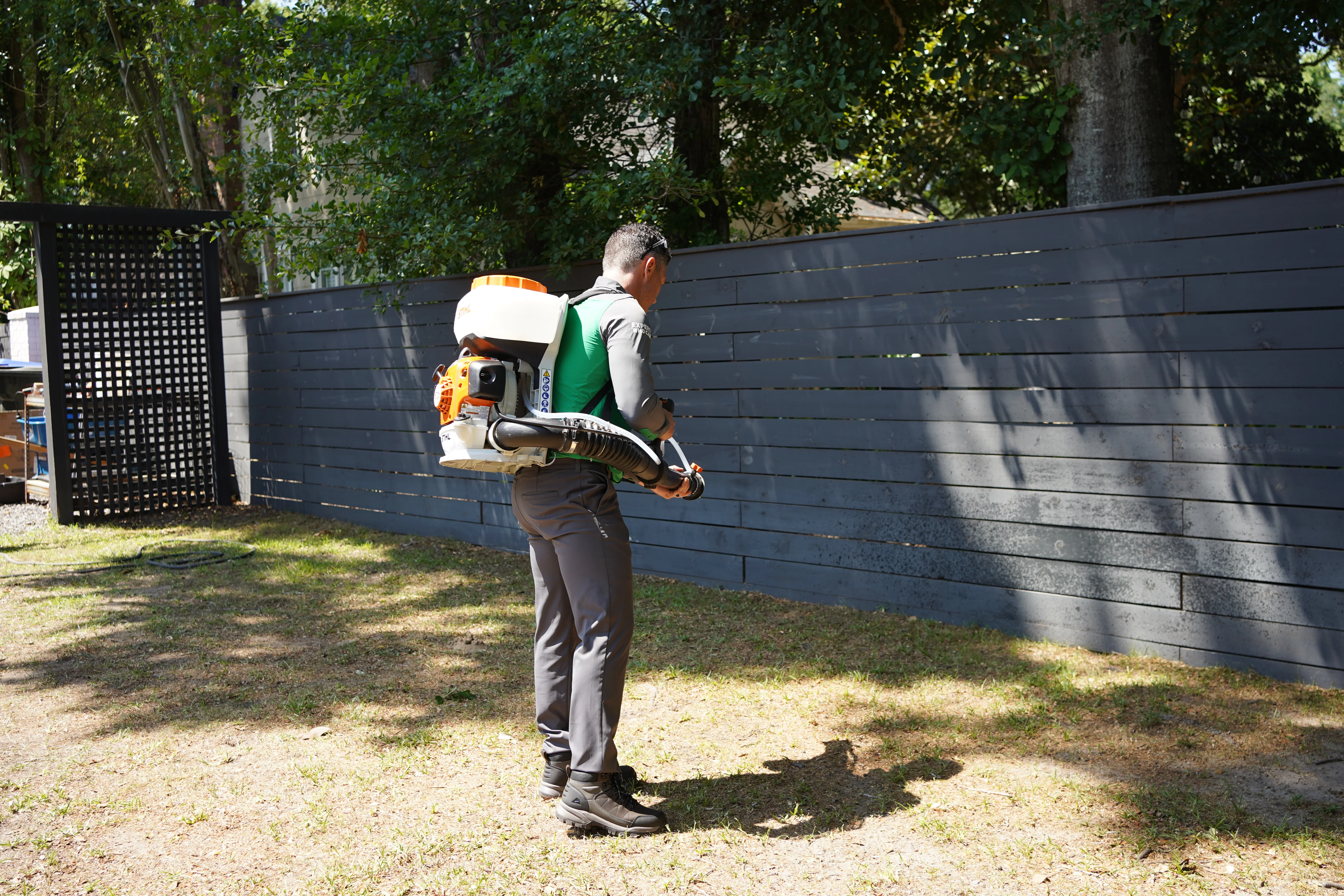
A residual pyrethroid barrier is applied to the undersides of leaves, shrubs, groundcover, lawn edges, and fence lines throughout the property. This is where mosquitoes rest between feedings, treating these surfaces kills resting adults on contact and continues killing mosquitoes that land on treated foliage for up to 21 days. Treatment targets the perimeter vegetation and mid-yard plantings, not flowers or blooms, to minimize impact on pollinators. The barrier is reapplied monthly from March through November, maintaining continuous protection through the full mosquito season.
Larvicide Treatment for Standing Water
Standing water is the single most important mosquito breeding site. A single female mosquito can lay 100–300 eggs at a time in as little as a teaspoon of standing water. Vinx applies EPA-registered larvicide (Bacillus thuringiensis israelensis, or Bti) to birdbaths, decorative ponds, drainage swales, downspout splash zones, and any other standing water source that cannot be eliminated. Bti kills mosquito larvae before they can develop into adults, eliminating the next generation of mosquitoes from the treated water source. Where elimination is possible (overturned containers, clogged gutters), we advise on removal.
Monthly Re-Treatment & Satisfaction Guarantee
Barrier treatments provide approximately 21 days of protection under average weather conditions, rainfall and UV exposure gradually break down the residual. Monthly re-treatment maintains continuous protection throughout the season. If you experience unacceptable mosquito activity between scheduled visits, Vinx returns and re-treats the property at no additional charge under the satisfaction guarantee. Mosquito season in Spartanburg runs from late March through early November: Vinx covers the full window with 8 monthly visits included in the Platinum plan.
100% Satisfaction Guarantee
If mosquito activity returns between scheduled monthly visits, Vinx returns and re-treats at no additional charge. We stand behind every barrier treatment with a guarantee that covers the full interval between visits.
Customer Reviews
What Spartanburg Customers Are Saying
These guys are exceptional! They always take great care of us and our animals! Truly a fabulous company of good humans
Alex was very nice, explained the mosquito control process very well ( learned a couple of new things!), and did a great job wrapping up what he worked on specifically on the property.
Mike has been great when servicing my house for bugs and mosquitos. great guy!
Jonathan was polite and thorough. He was knowledgeable and ensured he used only organic products.for my health and veggie gardens. Sweet Daddy of 3 young ones!
Jonathan provided excellent pest control service. He was thorough and took the time needed to walk around my property after he administered the pest control liquid. Sending a video of what was done is a nice touch.
Mosquito Pressure in Spartanburg
Why Mosquitoes Are a Major Problem in Spartanburg
Spartanburg’s combination of warm temperatures, high humidity, and abundant water features creates some of the most favorable mosquito conditions in the Southeast. The Pacolet River watershed, numerous tributary creeks, detention ponds in newer developments, and the general topography of the Upstate creates large areas of standing and slow-moving water that support mosquito breeding throughout the summer months. Properties adjacent to wooded lots, wetlands, or drainage infrastructure face significantly elevated mosquito pressure.
Two mosquito species dominate in Spartanburg: the Asian Tiger Mosquito (Aedes albopictus) and the Southern House Mosquito (Culex quinquefasciatus). The Asian Tiger Mosquito is particularly problematic, it is a daytime biter, highly aggressive, and breeds in tiny containers throughout residential yards. The southern house mosquito, Culex quinquefasciatus, is most active at dusk and dawn and is the primary West Nile Virus vector in the Carolinas. Both species complete their life cycle from egg to biting adult in as few as 7–10 days during peak summer temperatures.
Mosquito-borne disease risk in Spartanburg County is real. West Nile Virus is reported in South Carolina annually, with the mosquito season aligning directly with summer outdoor activity. Eastern Equine Encephalitis (EEE), while rare, has been documented in the Southeast. Consistent monthly barrier treatment reduces the adult mosquito population on your property by up to 90%, dramatically lowering disease exposure risk for your family and guests.
Mosquito Species
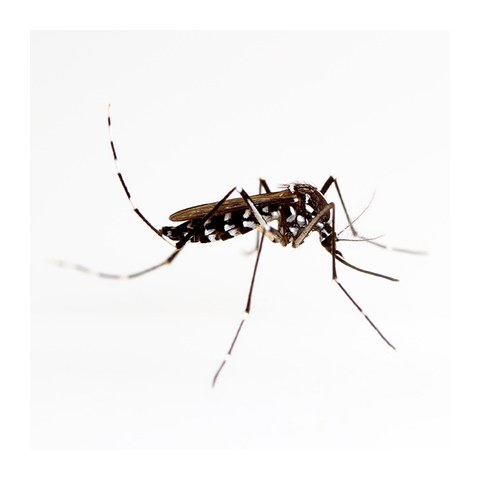
Asian Tiger Mosquito (Aedes albopictus)
The Asian Tiger Mosquito is the most common and most aggressive mosquito in Spartanburg. Easily identified by its black and white striped legs and body, it is a daytime biter, most active in the morning and late afternoon. Unlike many mosquito species, the Asian Tiger Mosquito breeds in very small water containers: bottle caps, clogged gutters, plant saucers, old tires, and children’s toys. A population can establish and explode within days. This species is a known vector for dengue, chikungunya, and Zika virus, though those diseases are not currently endemic to South Carolina.
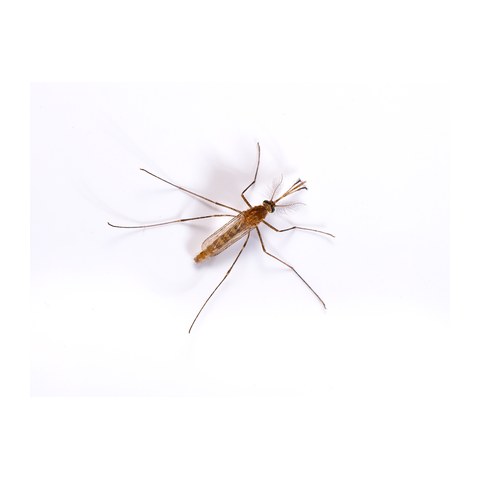
Southern House Mosquito (Culex quinquefasciatus)
Culex mosquitoes are the primary West Nile Virus vector in North America, and the member of the group you have here is Culex quinquefasciatus, the southern house mosquito. The distinction is geographic rather than pedantic: Cx. pipiens occupies the country north of about 39° latitude and Cx. quinquefasciatus the country south of about 36°, with a hybrid zone between. Spartanburg sits near 34.9°, well inside the southern species' range. It is most active at dusk and dawn and rests in shaded vegetation during the day, the primary target of Vinx’s barrier treatment. Culex mosquitoes breed in stagnant, organic-rich water: storm drains, ditches, neglected birdbaths, and ponded water in low areas of the yard. Properties near drainage infrastructure and detention ponds face elevated Culex pressure. Larvicide treatment of standing water sources is especially important for controlling this species.
Yellow Fever Mosquito (Aedes aegypti)
Worth being straight about this one: across the southeastern United States Aedes aegypti has been largely displaced by the Asian tiger mosquito since the 1980s, and it is not established in the Upstate. It is the primary vector for yellow fever, dengue and Zika globally, which is why the name carries weight, but none of those diseases are locally transmitted in South Carolina. It looks much like the tiger mosquito, with a lyre-shaped pattern on the thorax rather than a single stripe, and what gets called a yellow fever mosquito here is almost always Ae. albopictus. The practical point is that it makes no difference to the work: both are daytime biters that breed in small containers, so emptying and treating those containers is what pays either way.
Mosquito Risk by Neighborhood
Mosquito Pressure Across Spartanburg Neighborhoods
Downtown & Northside: MODERATE MOSQUITO RISK
Downtown Spartanburg sees moderate mosquito pressure relative to wooded suburban and rural areas. Smaller lot sizes mean less standing water and vegetation harborage. However, older storm drain infrastructure, neglected landscaping, and container breeding in dense residential areas still supports Asian Tiger Mosquito populations. Properties with mature trees and dense shrub cover near creek drainages see higher pressure. Downtown residents who want to use outdoor spaces comfortably through summer should consider monthly barrier treatment on any property with significant vegetation and shaded areas.
Eastside: ELEVATED MOSQUITO RISK
Eastside Spartanburg properties adjacent to Lawson’s Fork Creek and its tributaries experience elevated mosquito pressure throughout the summer. Creek corridors and their adjacent wooded areas provide ideal breeding habitat for Culex and Asian Tiger Mosquito populations. Properties with wooded lot buffers, detention ponds, or low-lying areas that hold water after rain are particularly affected. Monthly barrier treatment is strongly recommended for Eastside homeowners with outdoor living spaces. Larvicide treatment of any standing water near the property line is especially important given creek and drainage adjacency.
Reidville Road Corridor: MODERATE-ELEVATED MOSQUITO RISK
Reidville Road’s newer residential developments are often built adjacent to detention ponds required by stormwater management code, these ponds are significant standing water sources that support Culex mosquito populations throughout the summer. Properties within 300 feet of a detention pond face substantially higher mosquito pressure than properties without water features nearby. Asian Tiger Mosquitoes also breed in residential containers throughout the corridor. Monthly barrier treatment is especially valuable for Reidville Road properties with pond adjacency or backing to drainage infrastructure.
Boiling Springs: MODERATE-ELEVATED MOSQUITO RISK
Boiling Springs properties near the Pacolet River watershed and its tributaries experience moderate-to-elevated mosquito pressure. The area’s combination of wooded lots, detention ponds in newer subdivisions, and the natural creek network of the watershed creates extensive breeding and resting habitat for both Asian Tiger and Culex mosquitoes. Summer evenings can be essentially unusable outdoors for properties adjacent to wooded areas without mosquito treatment. Monthly barrier treatment reduces populations significantly and makes outdoor living spaces functional throughout the season.
Inman & Lyman: MODERATE MOSQUITO RISK
Inman and Lyman’s rural character and open land create moderate mosquito pressure, with variability based on property proximity to water. Properties adjacent to Tyger River drainages, farm ponds, and wooded wetland areas face higher pressure than open agricultural lots. Asian Tiger Mosquitoes are prevalent throughout residential areas in both communities during summer. Container breeding in residential yards (bird baths, potted plant saucers, overturned equipment) is the primary controllable source. Monthly barrier treatment combined with elimination of container breeding sites provides effective management for Inman and Lyman homeowners.
Chesnee & Cowpens: MODERATE MOSQUITO RISK
Chesnee and Cowpens have moderate mosquito pressure driven primarily by agricultural water features, farm ponds, and wooded wetland areas common in this part of Spartanburg County. Properties near Cherokee County and its extensive water feature network may see elevated pressure from mosquitoes migrating from adjacent breeding areas. Rural properties with livestock water troughs, irrigation holding areas, or natural ponds face ongoing Culex mosquito pressure. Larvicide treatment of on-property standing water sources is the most impactful single step for Chesnee and Cowpens homeowners, combined with monthly barrier treatment of residential yard vegetation.
Kid & Pet Safe
Our Mosquito Treatments Are Safe for Your Family
Vinx mosquito barrier treatments use EPA-registered pyrethroids applied to vegetation, not to play areas, furniture, or surfaces where children and pets have direct contact. People and pets can re-enter treated areas once the product has fully dried, typically within 30 minutes.

Applied to Vegetation Only: Not Play Areas
Barrier treatment is applied to shaded foliage, shrubs, and fence lines, not to grass play areas, patio furniture, outdoor dining surfaces, or children’s equipment. We avoid treating areas where direct contact with children or pets is likely during normal outdoor activity.
30-Minute Re-Entry After Treatment
Allow 30 minutes for the treated vegetation to dry before allowing children and pets back into the yard. Once dry, the product is bound to plant surfaces and poses minimal exposure risk under normal outdoor activity conditions. Your technician will confirm dry time on the day of treatment.
EPA-Registered Pyrethroids
All products used in Vinx mosquito treatments are EPA-registered and applied at labeled rates by licensed technicians. Pyrethroids used for mosquito barrier treatment have low mammalian toxicity and break down rapidly in the environment. We select formulations appropriate for residential yard environments.
Pollinator & Aquatic Considerations
Barrier treatment avoids direct application to flowering plants to protect pollinators. Larvicide products (Bti) used for standing water treatment are specifically targeted to mosquito larvae and are non-toxic to fish, birds, mammals, and beneficial insects at application rates. Decorative pond treatments use Bti-only products safe for ornamental fish.
Questions about product safety or re-entry timing? Call (855) 800-8469 and we’ll walk you through the full mosquito protocol before booking your first treatment.
Explore More
More Pest Control Services in Spartanburg

Pest Control Spartanburg
Year-round protection plan
Ant Control Spartanburg
4 species treated

Bed Bug Control Spartanburg
Steam + power dusting
Termite Control Spartanburg
Bait systems & liquid treatment
Cockroach Control Spartanburg
Gel bait & growth regulators

Rodent Control Spartanburg
Trapping & exclusion

Spider Control Spartanburg
Black & brown widows, wolf spiders

Wasp Control Spartanburg
Nest removal & prevention

Tick & Flea Control Spartanburg
Yard & pet protection
Exterminator Spartanburg
Same-day local exterminators
Frequently Asked Questions
Mosquito Control in Spartanburg: Your Questions Answered
Because the two do different jobs, and one of them misses the mosquito that is most likely biting you. Clemson puts it directly: “night time applications of insecticide fogs by mosquito control agencies often do not effectively control Asian tiger mosquitos because they are active mainly during daylight hours.” The tiger mosquito is a day-biting container breeder that rests in shaded vegetation on your own lot, so an after-dark fog largely passes over it. Area fogging does knock down the dusk-and-dark Culex flight, which matters for West Nile. Yard treatment works the other half: the resting vegetation adults shelter in, plus larviciding the standing water they came from. You want both halves covered, not one twice.
Slightly, and not enough to relax. The northern part of the county runs roughly eleven fewer frost-free days than Spartanburg’s 206, and Inman sits about 200 feet higher than the city at 977 feet against 774. That trims the shoulders of the season rather than the season itself: the Spartanburg station records a last spring freeze around 8 April and a first fall freeze around 1 November, with about 50 days a year at or above 90°F in between. What you gain in a marginally shorter calendar you give back in habitat, since Lake Bowen’s shallow vegetated margins are permanent Culex breeding water in a way that no subdivision retention pond is.
Vinx applies mosquito barrier treatments monthly from March through November: 8 treatments covering the full active mosquito season in Spartanburg. Barrier treatment lasts approximately 21 days under average weather conditions. Monthly re-treatment maintains continuous protection. If activity returns between visits, we come back at no additional charge under the satisfaction guarantee.
Allow 30 minutes for treated vegetation to dry before re-entering the yard. Once dry, the product is bound to plant surfaces and the yard is safe for children and pets under normal outdoor activity conditions. Your technician will confirm exact re-entry timing on the day of treatment based on weather and product used.
Light rain after the product has dried (30+ minutes post-application) has minimal impact on efficacy. Heavy rain shortly after application may reduce residual time. If a significant rain event occurs within a few hours of treatment, contact Vinx and we will re-treat. Products applied during dry periods typically remain effective for 18–21 days.
Yes. Larvicide used in decorative ponds is Bti (Bacillus thuringiensis israelensis), a naturally occurring bacteria that targets mosquito larvae specifically. At application rates used for residential ponds, Bti is non-toxic to fish, amphibians, aquatic insects, and beneficial organisms. Tell your technician about any fish ponds before treatment begins so the correct product is selected.
Barrier treatment reduces mosquito populations by up to 90%, it does not create a 100% mosquito-free zone. Mosquitoes can migrate from adjacent untreated properties, wooded areas, and public spaces. Some activity is normal, especially near property boundaries. If activity is excessive (significantly more than before treatment), contact Vinx for a re-treatment visit at no charge under the satisfaction guarantee.
No. Mosquito barrier treatment is an outdoor-only service. As long as gate access to the backyard is available, you do not need to be present. Your technician will notify you when treatment is complete. Just ensure pets and children are out of the yard during treatment and for 30 minutes afterward.
The single most impactful action is eliminating standing water: empty and refresh birdbaths twice weekly, clear clogged gutters, turn over containers, and fill low areas that collect water after rain. Even a teaspoon of stagnant water can support a mosquito breeding site. Cutting tall grass and trimming dense vegetation also reduces daytime resting habitat and improves barrier treatment efficacy.
Yes, the Platinum plan ($109/mo) includes 8 monthly mosquito treatments from March through November at no additional charge. HomeGuard and Plus plan members can add mosquito treatments as an add-on service. Call (855) 800-8469 to add mosquito treatment to an existing plan.
Service Coverage
Spartanburg County Service Area
Serving Spartanburg and surrounding Spartanburg County communities for mosquito control and general pest management.
Serving the Greater Spartanburg Area