Spider Control in Spartanburg, SC
Black Widow • Brown Widow • Wolf Spider • Perimeter Treatment • Web Removal
Spartanburg’s wooded lots, crawlspaces and outbuildings give spiders year-round harborage. Vinx treats those harborage points inside and out, clears webs and egg sacs, and applies a long-lasting perimeter barrier — with the medically significant species, the black and brown widow, treated as the actual priority.
Get Started in 60 Seconds
Choose what’s easiest for you
Request a Quote
We usually respond in 2 minutes
Call 855-800-8469
Get a Live Person (no AI agents here!)
Sign Up Online
Get pricing and schedule now





Welcome to Vinx Pest Control
A Company That Actually Backs What It Says
Vinx spider treatments go beyond surface spraying, we treat harborage points inside and out, remove existing webs, and apply a residual barrier to the full perimeter of your home. For the species that genuinely matter here — the black widow and the brown widow — we work the dark, sheltered spots they actually occupy: meter boxes, deck framing, crawlspace piers, mailbox posts and the underside of patio furniture.
“I’m not passionate about killing bugs. I’m passionate about customer service. At Vinx, you get experts who show up, do the job right, and stand behind every visit. No runaround, no fine print.”

Founder & Owner, Vinx Pest Control
PROTECTION PLANS
Spider Control Plans for Spartanburg Homes

Standard Residential Protection
- 4 Seasonal Treatments Per Year
- 50+ Covered Pests Including Spiders
- Interior, Exterior & Perimeter Treatment
- Unlimited Free Re-Services
- 100% Money-Back Guarantee

Upgraded Home Protection
- 6 Home & Yard Treatments Per Year
- 50+ Covered Pests Including Spiders
- Yard Ant Elimination Guarantee
- Flea & Tick Elimination Guarantee
- 100% Money-Back Guarantee

Most Comprehensive Protection
- 9 Treatments Per Year
- 50+ Covered Pests Including Spiders
- 8 Mosquito Treatments (Mar–Nov)
- Flea, Tick & Ant Coverage
- Free Bed Bug Treatments if Needed*
- 100% Money-Back Guarantee
Spider control is included in all Vinx plans. Call (855) 800-8469 to schedule your first treatment or sign up online above.
Request Spider Control in Spartanburg
Fill out the form and a Vinx specialist will contact you same day to schedule your first treatment.
Our Approach
How Vinx Eliminates Spiders in Your Spartanburg Home

Inspection & Species Identification
Your Vinx technician inspects the interior and exterior for spider activity, harborage points, and conducive conditions. Black widows gravitate toward exterior corners, under deck boards, in meter boxes, and along foundation walls; brown widows use the same structures but sit more exposed — under railings, inside mailboxes, in the lip of a planter. Egg sacs are logged and removed, not just sprayed around. Wolf spiders move indoors through gaps in the foundation and doors, especially in fall. Identifying the species determines exactly where and how we treat. The inspection also evaluates contributing factors: prey insect populations, clutter, vegetation contact with the structure, and moisture that attract spiders inside.
Web Removal & Exterior Perimeter Treatment
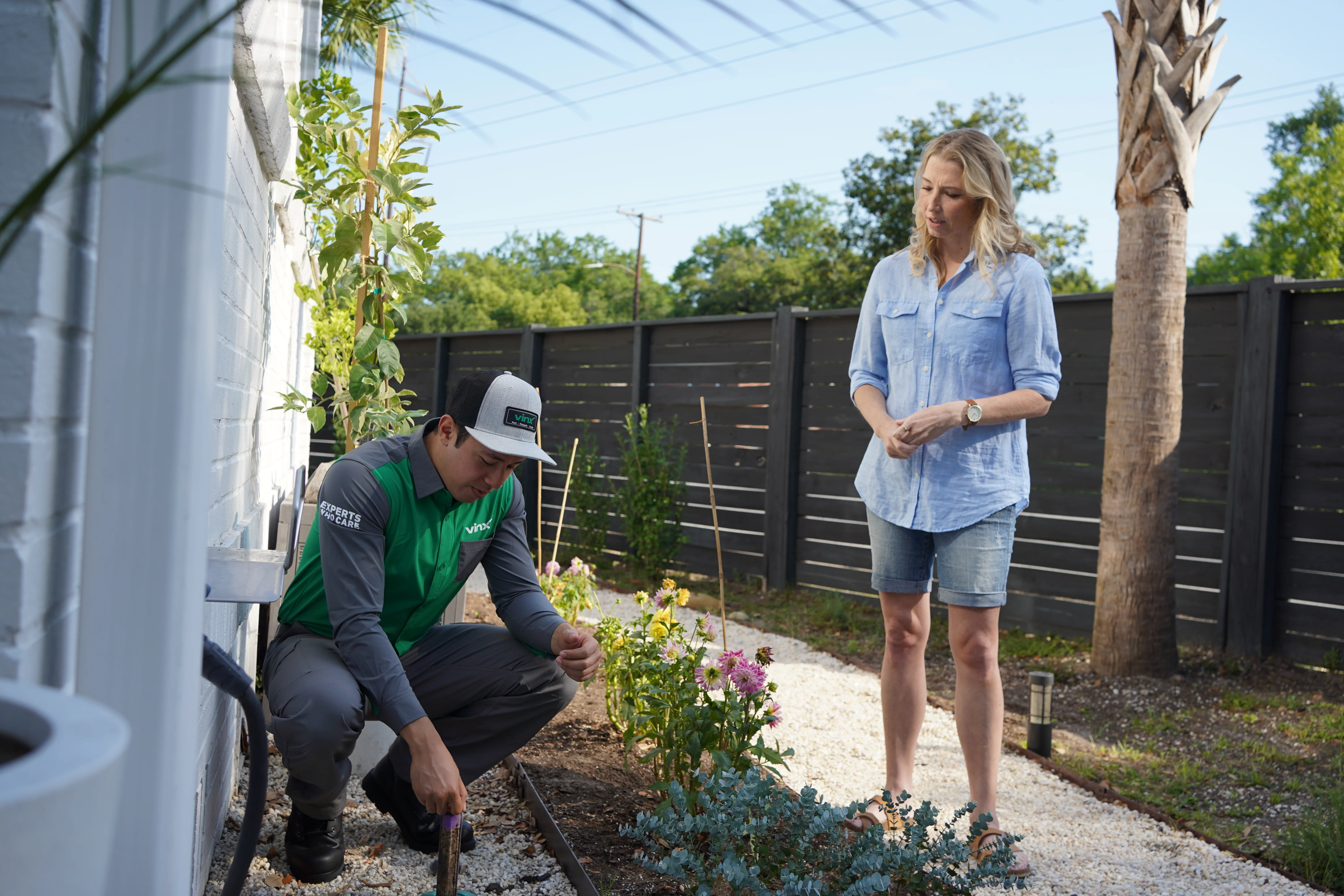
Every service begins with physical web removal from all exterior eaves, overhangs, door frames, window frames, corners, and exterior light fixtures. Removing webs eliminates egg sacs and active harborage and forces spiders to contact treated surfaces when they rebuild. A residual pyrethroid barrier is then applied to the full exterior perimeter, foundation band, door thresholds, window perimeters, garage door surrounds, and any cracks or gaps where spiders enter. The barrier continues to kill spiders and crawling insects for 60–90 days under average conditions. Vegetation touching the structure is treated to eliminate the most common entry bridge.
Targeted Interior Treatment
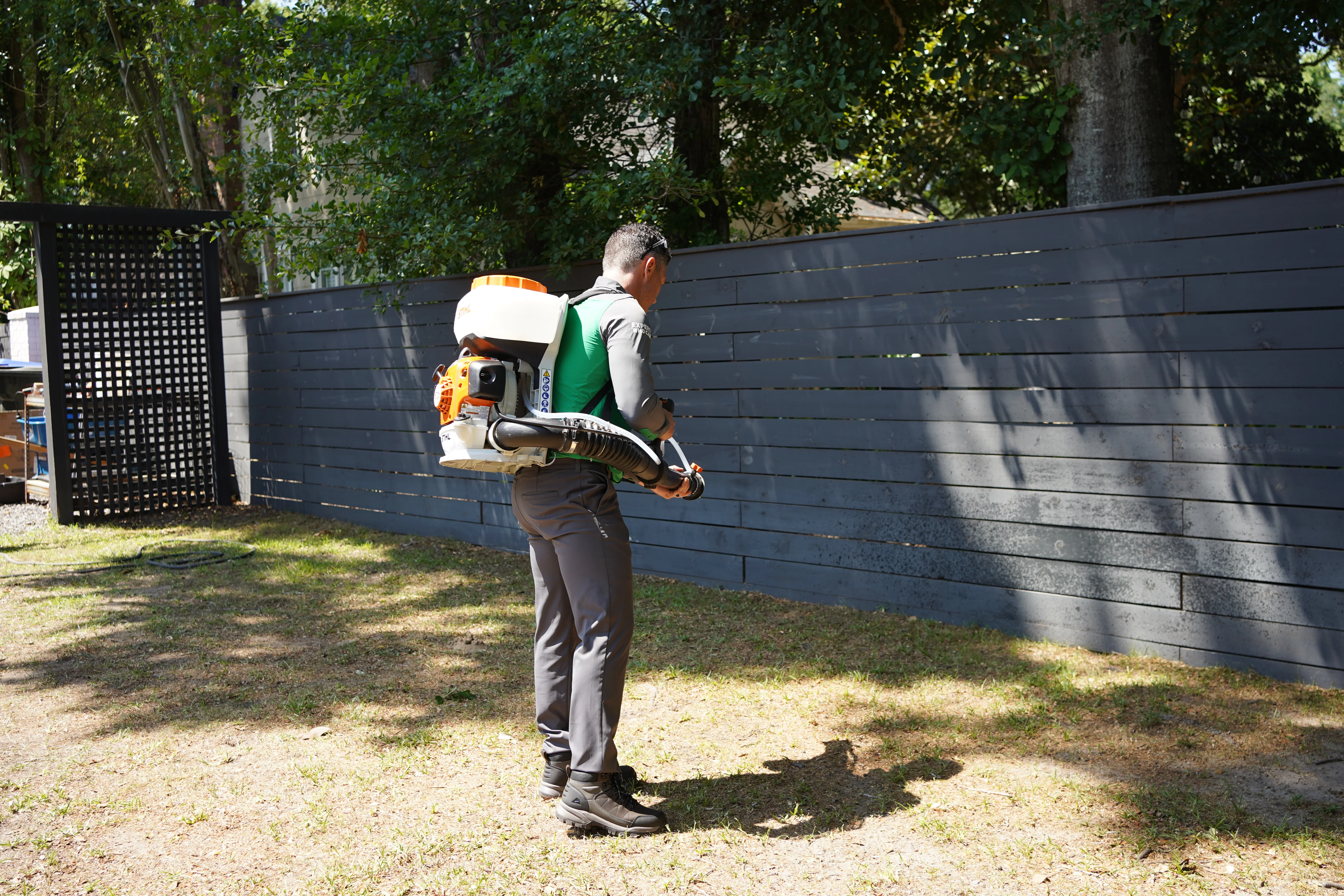
Interior treatment focuses on the specific harborage areas identified during inspection. Treatment targets baseboards, closet floors, attic access points, garage perimeters, and undisturbed storage areas where hunting spiders shelter. Glue boards are placed in harborage areas to monitor population levels and catch active spiders between treatments. Crack-and-crevice application delivers residual product to wall voids, under appliances, and interior foundation areas. Interior treatment is performed with low-odor, dry-application products to minimize disruption to the household. You do not need to vacate for interior spider treatment under standard conditions.
Follow-Up & Satisfaction Guarantee
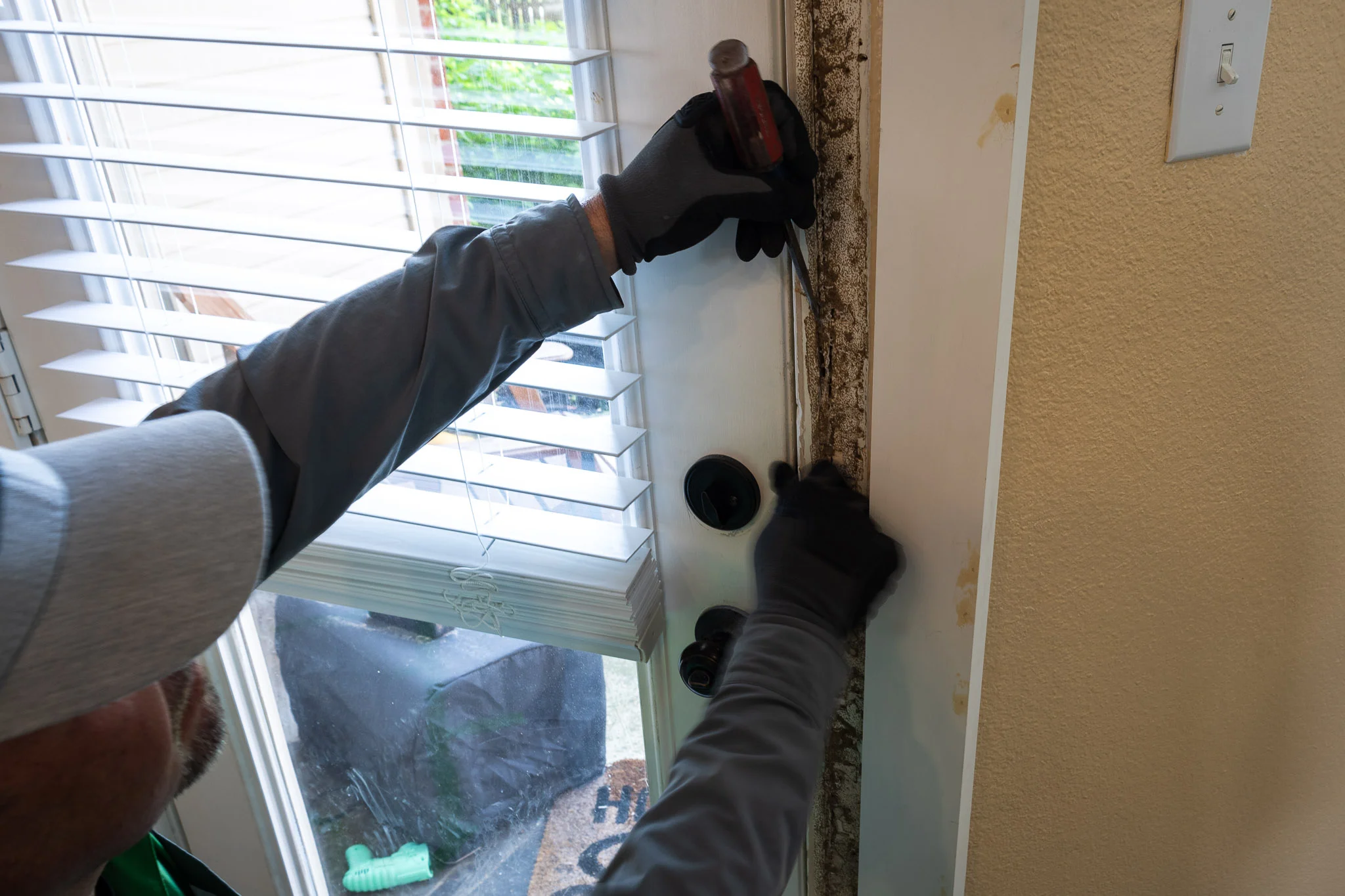
Spider populations can take multiple treatment cycles to fully suppress in homes with crawlspaces, outbuildings or heavy exterior storage. Vinx returns for scheduled quarterly treatments as part of your plan, and will re-treat at no additional charge between visits if you see unacceptable activity. The satisfaction guarantee covers the full interval between scheduled visits. Where a property has a detached garage, workshop or barn feeding the main house, Vinx may recommend more frequent initial visits that treat those structures too, before transitioning to a quarterly maintenance schedule. Your technician will walk you through expectations at the first visit based on what they observe during inspection.
100% Satisfaction Guarantee
If spider activity returns between scheduled treatments, Vinx returns and re-treats at no additional charge. We stand behind every spider treatment with a guarantee that covers the full interval between visits.
Customer Reviews
What Spartanburg Customers Are Saying
I am really pleased with my service! If I have any Issues, they are super responsive and everyone they send out has been very friendly, professional, and thorough.
Excellent service! Hopefully l will have the same technician for every service! Zach was awesome 💯
Alfredo was very cordial, self motivated and thorough, a real pleasure.
Hey I’m sorry I missed you! But thank so so much for stepping and looking over the mess Thanks again you guys are the best
Gave a very detailed review of his work, he clearly was attentive to what was needed.
Spider Pressure in Spartanburg
Why Spiders Are a Persistent Problem in Spartanburg Homes
Spartanburg’s mix of wooded residential lots, older housing stock, and humid climate creates ideal conditions for spider populations. The region’s warm summers followed by cooling fall temperatures drive spiders indoors in search of warmth and prey. Homes with crawlspaces, basements, and older construction provide extensive harborage. Spartanburg County adds to it from the outside: the Unified Land Management Ordinance requires that “only evergreen plants” be used in the bufferyards screening industrial, multi-family and manufactured-home uses from single-family lots, so many properties here carry a dense, permanently shaded strip along a property line — exactly the structure spiders and the insects they hunt settle into.
The species that actually warrant treatment here are the two widows. Clemson lists three widow species in South Carolina — the southern black widow, the northern black widow and the brown widow. Widow venom is a neurotoxin that can cause severe muscle pain and cramping, and it matters most for children and older adults. Neither is aggressive; bites happen when one is pressed against skin inside a glove or boot, or while reaching under a deck rail or into a meter box. A confirmed widow in a garage, crawlspace or woodpile is worth treating. The brown recluse, despite its reputation, is not established in South Carolina — see below.
Wolf spiders are the most common large spider encountered indoors in Spartanburg homes. While not dangerous to healthy adults, their size, up to 1.5 inches, makes them alarming to encounter. They do not build webs, so perimeter treatment and harborage reduction are the primary control strategies. Fall invasion of wolf spiders is a consistent pattern in Upstate SC homes as temperatures drop.
4 Spider Species in Spartanburg
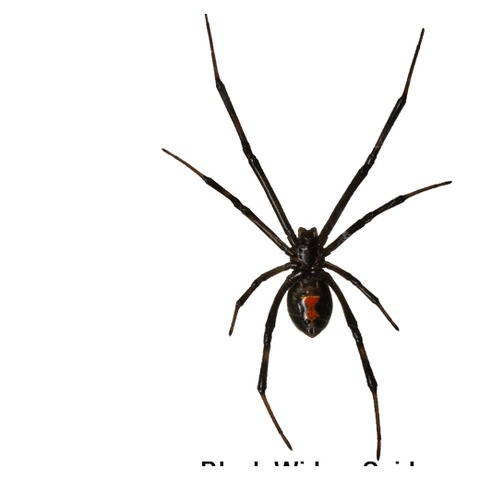
Black Widow (Latrodectus mactans)
The Southern Black Widow is common throughout Spartanburg County. The female is glossy black with a red hourglass marking on the underside of the abdomen and is the only medically significant sex, males are much smaller and rarely bite. Black widows build tangled, irregular webs in dark, sheltered exterior locations: under deck boards, in meter boxes, along foundation walls, under patio furniture, in wood piles, and in garage corners. Black widow venom is a neurotoxin causing pain, muscle cramps, and systemic symptoms requiring medical attention in sensitive individuals. Perimeter treatment targeting foundation and exterior harborage points is the primary control strategy.
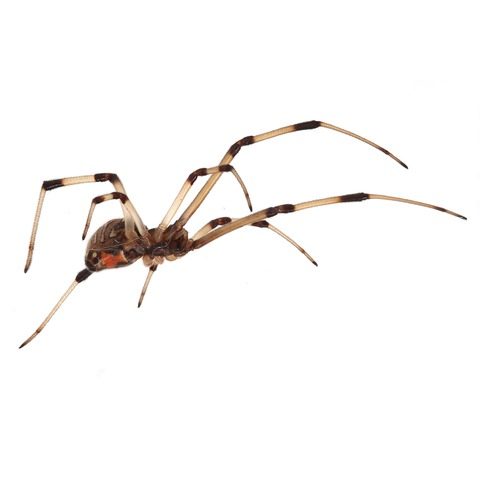
Brown Widow (Latrodectus geometricus)
Tan to gray-brown with a mottled, geometric pattern and an orange-to-yellow hourglass underneath. The giveaway is the egg sac: spiky and tufted, unmistakable once you have seen one. It is the third of South Carolina’s widow species, first reported around Charleston and Beaufort in the late 1990s and recorded in numerous areas of the state since. It uses the same structures as the black widow but sits more exposed — under patio furniture, inside mailboxes, under deck railings, in the lip of a planter, under a grill rim. Venom is neurotoxic like the black widow’s, but bites are generally milder and stay more localized. Egg sac removal on every visit.
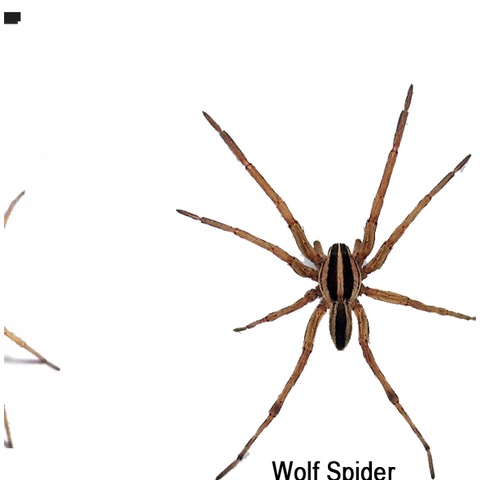
Wolf Spider (Hogna spp.)
Wolf spiders are the large, fast-moving brown spiders most commonly encountered on floors and in garages throughout Spartanburg homes. They do not build webs, they actively hunt prey on the ground and can run quickly. Wolf spiders enter homes through gaps in doors, foundations, and utility penetrations, especially in fall as temperatures drop. They are not medically significant for healthy adults, though their size (up to 1.5 inches across including legs) makes encounters alarming. Control focuses on perimeter barrier treatment, sealing entry points, and reducing exterior lighting that attracts the insects wolf spiders prey on.
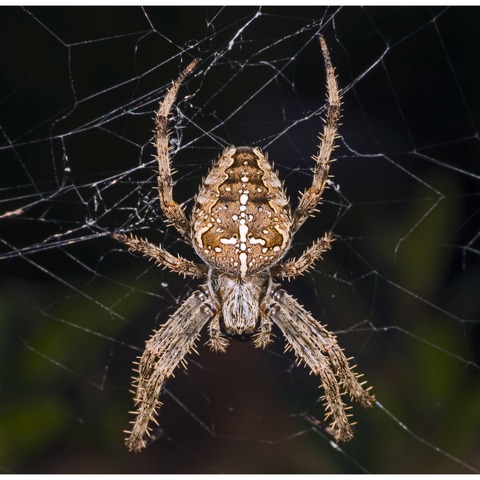
Orb Weaver (Family Araneidae)
Large, often brightly marked spiders that build the classic circular spiral webs across eaves, porch corners, and between shrubs. Orb weavers are harmless and genuinely useful — they eat a large volume of flying insects — but a web strung across a garage door or a front step is the single most common spider complaint we get. Quarterly de-webbing clears established webs and the egg sacs with them. Cutting back exterior lighting draws fewer flying insects, which removes the food supply the webs are built around.
Spider Pressure by Neighborhood
Spider Activity Across Spartanburg Neighborhoods
Downtown & Northside: ELEVATED WIDOW & WEB PRESSURE
Downtown Spartanburg’s older housing stock gives spiders more of everything they need: open wall voids, unscreened crawlspace vents, porch and stair framing, and detached garages. Hampton Heights, the city’s oldest neighborhood, was primarily developed between 1890 and 1930 and was listed on the National Register in 1983 — and that listing carries a practical catch for pest work. In the historic district a Certificate of Appropriateness is required before a building permit is issued, and the City counts gutter replacement, siding replacement, window and door replacement, porch enclosures, fencing and landscaping as reviewable work. So the standard exclusion advice — re-hang the gutters, replace that rotted siding, screen the crawlspace — runs through design review here. Treatment and harborage reduction have to carry more of the load. Black widows are consistently found in exterior foundation corners, meter boxes and under porch steps on these homes.
Eastside: MODERATE SPIDER ACTIVITY
Eastside Spartanburg homes back up to wooded areas and creek corridors that provide year-round spider habitat adjacent to residential properties. Wolf spider invasion in fall is common for homes with wooded lot buffers, as spiders move from leaf litter into the home interior through foundation gaps and crawlspace access. Orb weavers string webs across eaves and garage openings from late summer through first frost. Black widow activity is consistent along exterior foundation walls, especially in homes with wood piles, landscape timbers, or attached garages. Regular perimeter treatment significantly reduces fall spider invasion.
Reidville Road Corridor: MODERATE SPIDER ACTIVITY
Newer construction along the Reidville Road corridor tends to be better sealed than older homes, which cuts interior spider pressure. The offset is what happens outside: rapid development next to previously wooded land pushes displaced spider populations into new residential landscaping, and where a new commercial or multi-family use abuts existing single-family homes, the County’s bufferyard table can require a screen 25 to 50 feet deep planted in evergreens only. That is a permanent shaded corridor along the property line. Wolf spiders are common in newer homes with sod lawns and fresh mulch beds. Black widows establish in new-construction garages, under deck boards, and in landscape timbers within the first few years of occupancy. Quarterly perimeter treatment keeps populations down as the landscaping fills in.
Boiling Springs: MODERATE-ELEVATED SPIDER ACTIVITY
Boiling Springs homes on larger lots with wooded buffers, outbuildings, and mature landscaping see elevated spider activity compared to more urban neighborhoods. Detached garages, workshop sheds and crawlspace storage are where widows and hunting spiders actually build up. Boiling Springs has no municipal government, so it falls under Spartanburg County’s ordinance — which requires manufactured homes to be fully skirted around the entire home in brick, masonry or vinyl, with no ventilation spec attached. Done well that is a sealed barrier; done poorly it is a dark, undisturbed void running the full perimeter, and it is the first place we check on a skirted home. Wolf spider pressure in fall is consistent for properties adjacent to woods or fields. Treat the outbuildings as part of the program: they are usually the source population for what turns up indoors.
Inman & Lyman: MODERATE SPIDER ACTIVITY
Inman and Lyman’s mix of newer construction and older rural homes creates varied spider pressure. Wolf spiders are prevalent year-round given the more rural character and abundant ground-level prey. Black widow activity is common in outbuildings, wood piles, and exterior storage areas, and brown widows turn up on the more exposed surfaces — mailbox posts, railings, the underside of patio furniture. Both towns are incorporated, so County land-development rules do not apply inside them; property maintenance falls to the municipality. Homes with crawlspaces or raised foundations and those adjacent to wooded properties are at highest risk for sustained interior spider problems as temperatures drop.
Chesnee & Cowpens: MODERATE SPIDER ACTIVITY
Chesnee and Cowpens’ rural character with agricultural land, wood lines, and outbuildings supports substantial spider populations adjacent to residential properties. Wolf spiders are extremely common in agricultural areas and move into homes freely throughout the year. Black widow activity in outbuildings, equipment storage, and under debris is widespread in more rural settings — Spartanburg County Council formally found in its own ordinance that junkyards “are a breeding ground for mosquitoes or other insects, snakes, rats and other pests,” and the same logic applies to any accumulation of scrap, tires or stacked equipment on a rural lot. Residents with barns, equipment sheds or significant outdoor storage should include those structures in any spider treatment program; they frequently serve as the reservoir for interior activity in the main dwelling.
Kid & Pet Safe
Our Spider Treatments Are Safe for Your Family
Vinx spider treatments use EPA-registered products applied as targeted crack-and-crevice and perimeter treatments. Products dry quickly and have low mammalian toxicity at application rates. People and pets can re-enter treated areas once surfaces have dried.
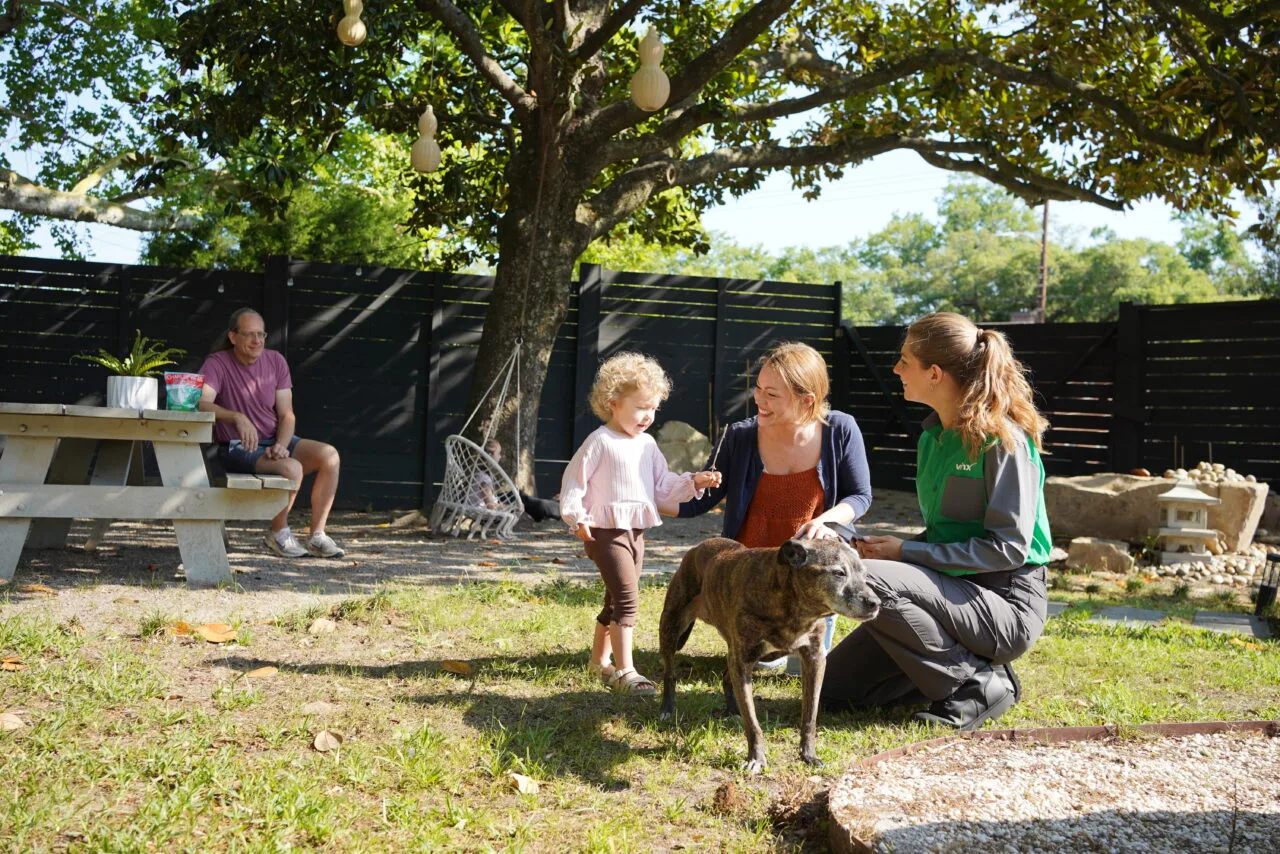
Targeted Crack-and-Crevice Application
Interior products are applied directly into harborage areas (baseboards, wall voids, closet floors, and storage areas) not broadcast-sprayed across open living surfaces. This minimizes exposure to household members while delivering product exactly where spiders live and travel.
Safe When Dry: Typically 30–60 Minutes
Allow treated surfaces to dry before resuming normal household activity in treated areas. Drying time depends on product, ventilation, and humidity, typically 30–60 minutes under normal conditions. Your technician will confirm re-entry guidance before leaving.
EPA-Registered, Low Mammalian Toxicity
All products used in Vinx spider treatments are EPA-registered and applied by licensed technicians at labeled rates. Pyrethroids used for spider control have low mammalian toxicity. Glue boards placed for monitoring present no chemical exposure risk to pets or children.
Pet-Aware Placement
Glue boards are placed in areas inaccessible to pets (inside closets, under appliances, along interior wall edges) to prevent accidental contact. Tell your technician about pets, especially cats and small dogs, before interior treatment so product placement and monitor locations can be adjusted accordingly.
Questions about product safety or re-entry timing? Call (855) 800-8469 and we’ll walk you through the full spider treatment protocol before booking your first service.
Explore More
More Pest Control Services in Spartanburg

Pest Control Spartanburg
Year-round protection plan

Ant Control Spartanburg
4 species treated

Bed Bug Control Spartanburg
Steam + power dusting

Termite Control Spartanburg
Bait systems & liquid treatment

Cockroach Control Spartanburg
Gel bait & growth regulators

Rodent Control Spartanburg
Trapping & exclusion

Mosquito Control Spartanburg
Monthly barrier treatments

Wasp Control Spartanburg
Nest removal & prevention

Tick & Flea Control Spartanburg
Yard & pet protection
Exterminator Spartanburg
Same-day local exterminators
Straight Answer
What About the Brown Recluse?
Almost every “brown recluse” we get called out for in Spartanburg turns out to be something else. The spider’s range runs from Nebraska and Texas east to southern Ohio and stops around north-central Georgia. Its very edge brushes South Carolina’s far north-western corner, which makes the Upstate the closest part of the state to it — and still leaves Spartanburg County outside any established population.
This has been studied here specifically. Physicians at MUSC, working with a Clemson entomologist and the leading recluse researcher in the country, went through every museum and state-agency record for South Carolina and found 44 verified specimens in the entire recorded history of the state, across six counties, every one collected inside a building rather than in natural habitat. That is the signature of spiders arriving in shipped furniture and boxes, not of a resident population. In the same state, physicians reported 738 brown recluse bite diagnoses in 2004 alone.
The usual mistaken identities here are the wolf spider and the southern house spider, whose males Clemson notes are routinely taken for recluses. The reliable tell is the eyes: a recluse has six in three pairs, nearly every look-alike has eight. The violin marking is not diagnostic on its own.
Why this matters more than a spider ID. A skin lesion blamed on a recluse is more often a bacterial infection, most commonly MRSA; one study found 29% of MRSA patients arrived reporting a spider bite. And even where recluses are common, most bites self-heal without the dramatic tissue loss the internet promises. If you have a painful, spreading wound, ask your doctor about infection rather than assuming a spider caused it.
Frequently Asked Questions
Spider Control in Spartanburg: Your Questions Answered
Almost certainly you do not, and that is the honest answer. The brown recluse is not established in South Carolina. Physicians at MUSC, working with a Clemson entomologist, reviewed every museum and state-agency record for the state and found 44 verified specimens in the entire recorded history of South Carolina, across six counties, every one collected inside a building rather than in natural habitat — the signature of spiders arriving in shipped furniture and boxes, not of a resident population. In the same state, physicians reported 738 recluse bite diagnoses in 2004 alone. If you want to check anyway, the reliable tell is the eyes: a recluse has six, in three pairs; nearly every look-alike has eight. The violin marking on its own is not diagnostic. The usual mistaken identities in the Upstate are the wolf spider and the male southern house spider.
Most homes see a clear drop within the first two weeks of a treatment, but a lasting result is a cycle rather than a single visit. Egg sacs already in place hatch after treatment, and spiders sheltering in wall voids, under skirting or inside an outbuilding may not contact treated surfaces straight away. Most properties settle out over 2–4 quarterly treatment cycles with web and egg sac removal at each visit. Homes with a detached garage, workshop or barn feeding the main structure take longer unless those buildings are treated too. Your technician will set realiztic expectations based on what they find at the initial inspection.
Wolf spiders can bite if handled but are not medically significant for healthy adults. A wolf spider bite typically produces localized pain, redness, and swelling that resolves within a few days, with none of the systemic effects of a widow bite. They are large and fast-moving, which makes encounters alarming, but they are not aggressive and will flee when disturbed. They are also the spider most often brought to us as a “brown recluse” — count the eyes before you worry. Children and those with venom sensitivities should exercise more caution. Control focuses on exclusion and perimeter barrier treatment rather than any medical urgency.
Spider activity indoors typically increases in fall for two reasons: cooling outdoor temperatures drive spiders into structures seeking warmth, and male spiders of many species become more active in fall during mating season, which brings them out of their usual harborage areas and into visible locations. Wolf spiders are particularly known for fall invasions in Spartanburg homes. Scheduling a perimeter treatment in August or September, before the fall migration begins, is the most effective way to prevent it.
Yes. Web removal is included with every Vinx spider service. Your technician removes webs from all accessible exterior eaves, overhangs, door frames, window frames, exterior light fixtures, and porch ceilings before applying treatment. Removing webs eliminates egg sacs and forces spiders to contact treated surfaces when they rebuild. Interior web removal is performed in accessible areas as part of targeted interior treatment.
No. Spider treatment is a low-disruption service. Interior treatment uses targeted crack-and-crevice application and does not require vacating the home under standard conditions. You do not need to bag food, empty cabinets, or take other preparation steps for standard spider treatment. If a more intensive application is warranted based on inspection findings, your technician will advise on any preparation needed before the visit.
Yes. Spider control is included in all Vinx HomeGuard, Plus, and Platinum plans. All plans include perimeter treatment and web removal at every scheduled visit. Interior treatment for spiders is performed as needed based on activity observed during the service. Unlimited re-service visits are included if spider activity returns between scheduled treatments.
The most impactful steps: clear clutter and cardboard out of garages, crawlspaces and storage areas and switch to plastic bins with tight lids; seal gaps around doors, windows, utility penetrations and the foundation; move firewood and stacked materials off the house and up off the ground; check under deck railings, inside meter boxes and under patio furniture for widow egg sacs; reduce exterior lighting that draws the insects spiders feed on; and keep a vegetation-free zone of at least 12 inches around the foundation. If your home sits behind a required evergreen bufferyard, keep the planting trimmed clear of the wall — the county requires the screen, not contact with your siding. These steps combined with regular professional treatment give the best long-term results.
Service Coverage
Spartanburg County Service Area
Serving Spartanburg and surrounding Spartanburg County communities for spider control and general pest management.
Serving the Greater Spartanburg Area