Wasp & Hornet Control in Virginia Beach, VA
Yellow Jacket, Paper Wasp, Bald-Faced Hornet, Cicada Killer & Mud Dauber Removal for Hampton Roads Homeowners
Yellow jackets in the sandy-soil yard, paper wasps on every eave line, bald-faced hornets in the mature canopy of Great Neck and Alanton, and cicada killers in July that look alarming and need no treatment. Eight months of stinging insect pressure across Virginia Beach. Same-day service available. Call (757) 900-8469.
Get Started in 60 Seconds
Choose what’s easiest for you
Request a Quote
We usually respond in 2 minutes
Call 855-800-8469
Get a Live Person (no AI agents here!)
Sign Up Online
Get pricing and schedule now





Welcome to Vinx Pest Control
A Company That Actually Backs What It Says
At Vinx, we combine professional-grade treatments with a level of service most pest control companies don't offer. Local technicians, fast response times, and a guarantee that actually means something.
Get a Free Quote"I'm not passionate about killing bugs. I'm passionate about customer service. At Vinx, you get experts who show up, do the job right, and stand behind every visit. No runaround, no fine print."
WELCOME TO VINX PEST CONTROL
Protection Plans for Virginia Beach Homeowners

Standard Residential Protection
- 4 Seasonal Treatments Per Year
- 50+ Covered Pests
- Interior, Exterior & Yard Treatment
- Unlimited Free Re-Services
- 100% Money-Back Guarantee

Upgraded Yard Protection
- 6 Home & Yard Treatments Per Year
- 50+ Covered Pests
- Stinging Insect Elimination Guarantee
- Flea & Tick Elimination Guarantee
- 100% Money-Back Guarantee

Most Comprehensive Protection
- 9 Treatments Per Year
- 50+ Covered Pests
- 8 Mosquito Treatments (Mar–Nov)
- Flea, Tick & Ant Coverage
- Free Bed Bug Treatments if Needed*
*Starting rates vary by home size and area. All plans billed monthly.
Request Your Free Wasp & Hornet Quote
Fill out the form below and a Vinx team member will reach out within 2 minutes during business hours.
Prefer to talk? Call (757) 900-8469 for a live person, no AI agents.
Our Approach
Wasp & Hornet Removal in Virginia Beach, VA

Full Property Inspection
Full property inspection, eave lines, outdoor structures, ground-level activity zones, and yard areas with burrowing activity. Species identification before any treatment recommendation. Cicada killer vs yellow jacket determination is the most important ID call in Virginia Beach yards during July and August, particularly in sandy-soil coastal residential areas.
Species-Specific Treatment
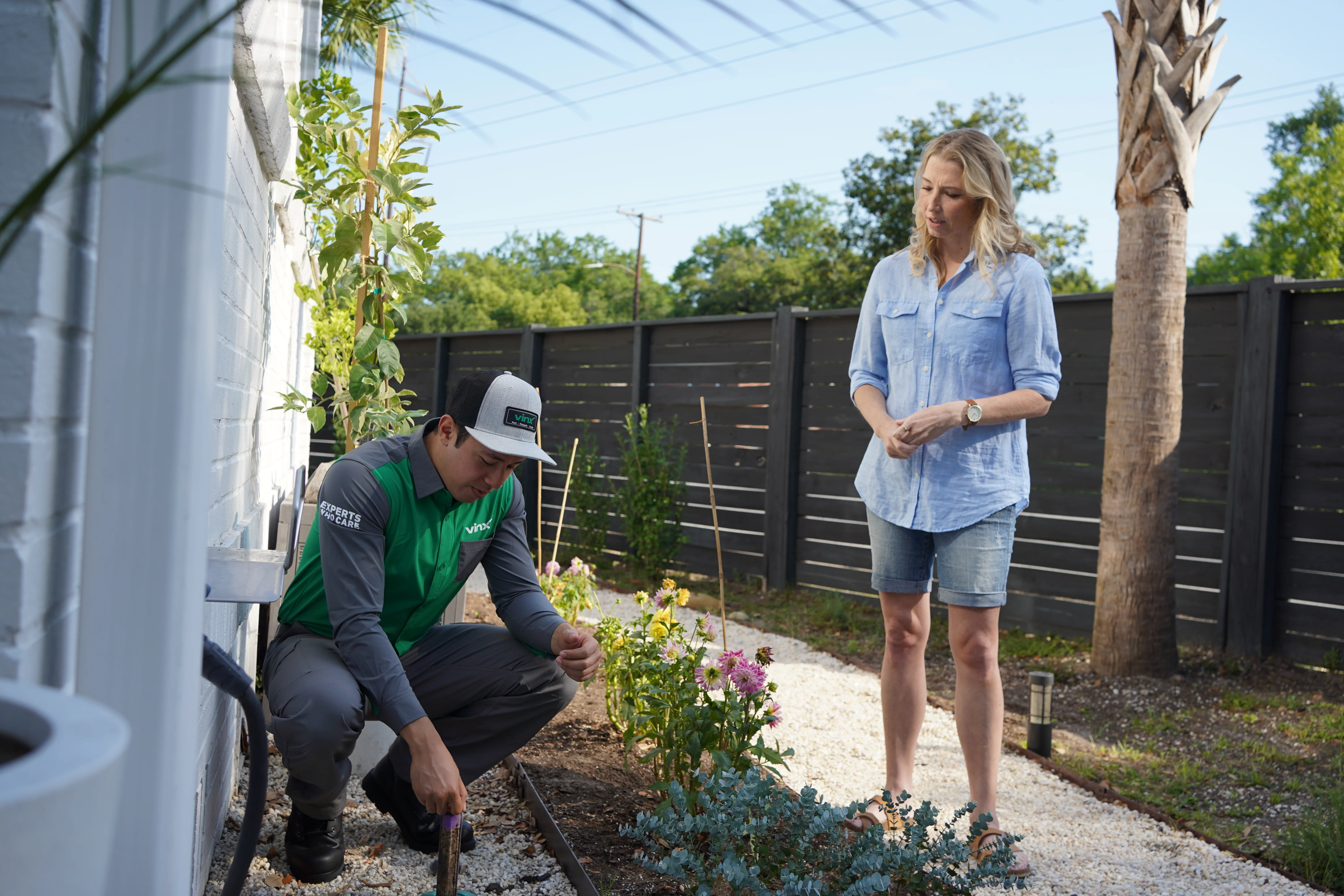
Yellow jacket ground nests treated at dusk. Paper wasp nest removal and treatment. Bald-faced hornet nests treated professionally and physically removed. Cicada killer treatment only when location and density warrant. Mud dauber tubes removed mechanically. All applications documented.
Eave & Structure Removal: Plus & Platinum Plans
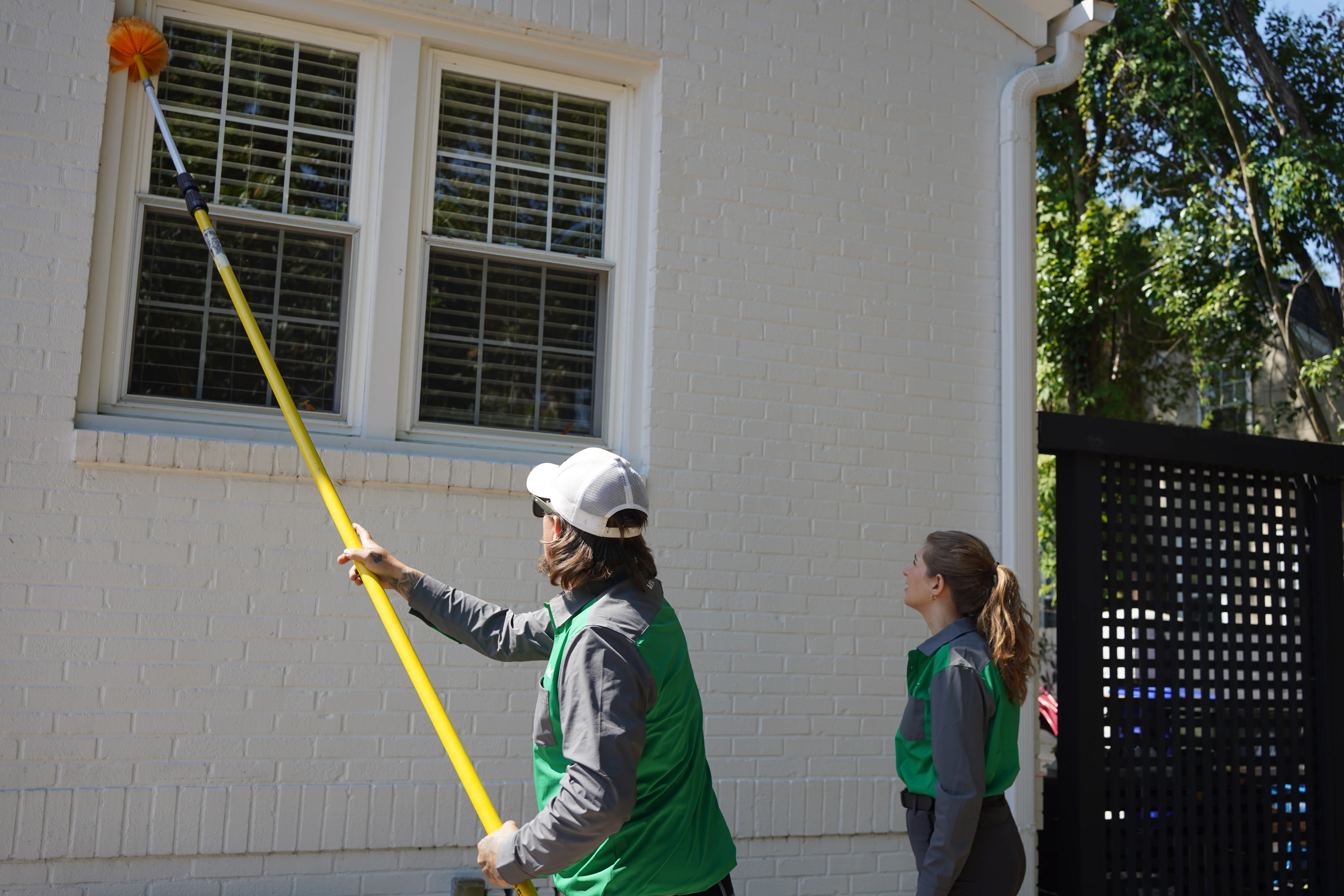
Wasp nest removal from eave lines and structure surfaces included on every Plus and Platinum service visit through Virginia Beach’s active season (April through October). Recurring removal prevents small April founding nests from becoming August established colonies.
Free Return If Needed
Free return visit if yellow jacket activity continues 72 hours after treatment. If wasps return between scheduled service visits at any point during the season, call (757) 900-8469, we return at no charge.
What Customers Say
What Customers Say About Vinx: 4.8 Stars on Google
Our tech, William, was awesome. He explained everything he was going to do. Then got right to work. He even found a wasp nest that we weren’t aware of. He was very knowledgeable and did a great job. Hope he comes back every time.
Had Vinx since last summer. Great customer service, friendly techs, totally effective and the price can't be beat. They even send you a short video when they are done to recap what they did. 100 percent recommend
Bradley came out and did our service. Super friendly. Knowledgable and kind. Would recommend Vinx for sure!
Tristan is great! Arrived promptly on time, extremely professional, went above and beyond to explain exactly what he did and voiced his concerns. Thank you!
I’ve been using Vinx for over a year and I couldn’t be happier. The mosquitos are all gone which was my main concern because they seem to love me, lol. Daniel is the tech who’s sprayed my house a few times and he’s always polite and professional, so I wanted to give a compliment here.
Kennard did a phenomenal job! Immediate response to my call. Fast, professional, budget friendly. Highly recommend!
By Neighborhood
Wasp & Hornet Pressure Across Virginia Beach & Hampton Roads
Oceanfront & Resort Corridor
Highest Sting Risk: Late Summer Late-summer yellow jacket foraging pressure in outdoor dining and entertainment areas is highest in the Oceanfront corridor where food sources are densely concentrated. Vacation rental properties throughout the near-oceanfront zone accumulate paper wasp nests through the season without consistent removal, creating established nests that surprise guests during peak rental season in August. Recurring eave and structure nest removal on a consistent service schedule is the most practical management approach for vacation rental properties in this zone.
Great Neck & Alanton
Elevated: Lynnhaven Corridor The mature residential landscape plantings throughout Great Neck and Alanton provide consistent bald-faced hornet aerial nest habitat and ground yellow jacket nesting conditions. Properties backing onto the Lynnhaven River corridor experience elevated wasp colony support from the abundant riparian vegetation and wildlife movement through these tidal creek corridors. Paper wasp pressure on the extensive outdoor living structures throughout these established neighborhoods runs from April through October.
Town Center, Pembroke & Chesapeake
Moderate: Standard Season The outdoor retail and dining activity throughout Town Center creates yellow jacket foraging attractants during late summer. Residential properties in the Pembroke corridor experience the standard Virginia Beach paper wasp and yellow jacket season. Chesapeake properties with larger lot sizes and wooded margins experience elevated ground yellow jacket pressure from undisturbed soil conditions, and bald-faced hornet nests in the mature tree canopy of established Chesapeake neighborhoods through the active season.
Suffolk & Rural Southern Hampton Roads
Elevated: Agricultural & Wooded Margins The larger lot sizes, wooded margins, and agricultural adjacency in Suffolk create elevated ground yellow jacket pressure from undisturbed soil conditions. Cicada killer activity in the sandy-soil areas of newer Suffolk and Chesapeake developments in July and August. Bald-faced hornet nests in the mature tree canopy of established rural neighborhoods. Properties adjacent to the Great Dismal Swamp corridor carry the highest wasp colony density in the rural southern Hampton Roads market.
8-Month Season. 5 Species.
Wasp & Hornet Pressure Across Virginia Beach & Hampton Roads. One Number to Call.
Virginia Beach faces stinging insect pressure from five species simultaneously, including cicada killers that are routinely mistaken for dangerous wasps and are particularly common in the city’s sandy coastal soil. Species identification before treatment determines the correct response. Misidentifying cicada killers as yellow jackets leads to unnecessary treatments; misidentifying yellow jackets as cicada killers leads to ignored nests that grow through peak season.
Most hardware store wasp products are contact killers. They kill exposed workers but don’t reach the colony in the ground or wall void. Survivors relocate, sometimes into the home interior. Professional treatment resolves the colony, not just the visible workers.
Two things worth settling before you worry about them. Neither the northern giant hornet (the one the press called the murder hornet) nor the yellow-legged hornet occurs in Virginia. VDACS is clear on the giant hornet, and confirmed yellow-legged hornet detections are in Georgia, South Carolina and North Carolina, not here. VDACS runs a Plant Pest Survey that actively looks for both, so if that changes it will be announced rather than discovered by a pest control company. What people in Hampton Roads actually see and mistake for them is the bald-faced hornet, which is a large black-and-white yellowjacket, or the European hornet.
The season is long here. With a 248-day freeze-free stretch, median last spring freeze March 20 and first fall freeze November 25, colonies have most of the year to build. A yellowjacket nest that is a golf ball in May is a football by August, which is why the calls cluster in late summer when the colony is at peak size and at its most defensive.
Professional wasp and hornet control targets the nest structure and colony directly, using treatments that eliminate the colony, remove the nest, and prevent re-establishment. Call (757) 900-8469 for same-day service.
Virginia Beach Stinging Insect Species
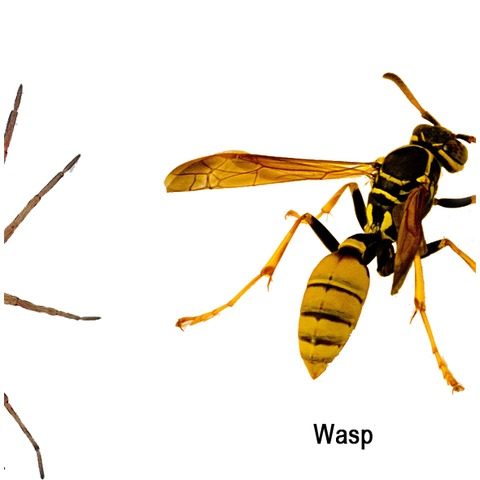
Yellow Jackets (Vespula & Dolichovespula spp.)
Virginia Beach specifics: Ground nesters throughout Virginia Beach’s residential neighborhoods, in the sandy soil of coastal zone properties with particular abundance compared to clay-soil inland markets. Late-summer foraging behavior brings yellow jackets into outdoor dining and entertainment areas throughout the Oceanfront corridor, Town Center outdoor spaces, and backyard entertaining zones across all Virginia Beach neighborhoods. Colonies reach peak population in August–September and are most aggressive during this window.
Sandy soil nest risk: Virginia Beach’s sandy coastal soil is among the easiest ground material for yellow jacket queens to excavate, producing higher ground nest density in coastal zone residential areas than is typical in clay-soil inland markets. Ground nests in sandy-soil beachside yards are often larger-diameter openings and more easily disturbed by foot traffic. If you find a ground-level hole with yellow jacket traffic in a sandy-soil area of your yard, do not approach or spray. Call (757) 900-8469 for same-day treatment.
- Ground nesters in sandy soil, higher density than inland markets
- Peak aggression: August–September foraging window
- Oceanfront corridor outdoor dining: highest late-summer sting risk zone

Paper Wasps (Polistes spp.)
Virginia Beach specifics: Paper wasps are present on eave lines throughout all Virginia Beach neighborhoods from April through October. The high density of outdoor living structures (decks, pergolas, screen porches, and outdoor kitchens) throughout Virginia Beach’s residential communities provides extensive nesting surface. The oceanfront and near-oceanfront communities with high concentrations of vacation rental properties see paper wasp nests accumulate through the season on structures that may not receive weekly inspection, a nest that grows unnoticed through the summer on a rental property produces a sting incident for guests late in the season.
- Every eave line and outdoor structure from April–October
- Vacation rental properties: nests accumulate without regular removal
- Recurring eave removal on every Plus and Platinum visit

Bald-Faced Hornets (Dolichovespula maculata)
Virginia Beach specifics: Aerial nests in ornamental trees, shrubs, and under eaves throughout Virginia Beach’s established residential neighborhoods. The mature landscape plantings in the Great Neck, Alanton, and Lake Shores areas of the city provide consistent bald-faced hornet aerial nest habitat. Nests are most visible after October when surrounding deciduous vegetation drops, at that point the colony has naturally collapsed and the nest is safe to observe, though it should not be touched as dead larvae inside can attract other pests. Active season nests require professional removal only.
- Aerial nests in ornamental trees and shrubs, do not approach
- Great Neck, Alanton, Lake Shores: consistent nest habitat
- Professional removal required, colony extremely defensive

Cicada Killers (Sphecius speciosus)
Virginia Beach specifics: Common throughout Virginia Beach’s sandy-soil residential areas from July through August, the same sandy coastal soil that creates favorable yellow jacket ground nest conditions also provides ideal cicada killer burrowing substrate. Cicada killers are solitary, non-aggressive, and essentially harmless to humans. The large size and dramatic burrowing activity make them appear threatening but they will not sting unless physically grabbed. Males patrol territories aggressively but are stinger-free. Species identification before any treatment recommendation is standard Vinx procedure for all burrowing insect calls in Virginia Beach during July and August.
- Solitary, will not sting unless physically grabbed
- Sandy coastal soil: favorable burrowing habitat, higher density than inland markets
- ID confirmation before any treatment is recommended
Mud Daubers (Sceliphron & Chalybion spp.)
Virginia Beach specifics: Porch ceilings, outdoor shower structures, boat sheds, and any sheltered surface throughout Virginia Beach’s residential and waterfront communities. Virginia Beach’s coastal climate means mud daubers begin activity in March and remain active through October, one of the longer mud dauber seasons in Virginia. Completely non-aggressive and solitary. Clay tube removal on every Vinx service visit addresses the seasonal buildup without chemical treatment.
- Solitary, non-aggressive, no colony defense behavior
- Porch ceilings, boat sheds, outdoor showers: primary nesting surfaces
- Tube removal on every Plus and Platinum service visit
What to Look For
Signs of a Wasp or Hornet Problem at Your Virginia Beach, VA Property
Nest Under Eaves
Paper or comb-style nests on eave undersides, porch ceilings, and awning frames, paper wasp activity
Ground Entry Holes
Dome-shaped mounds in lawn or garden areas, can reach 18 inches in height
Large Gray Aerial Nest
Football-sized enclosed gray papery nest in tree canopy or shrubs, bald-faced hornet colony, do not approach
Wall Void Activity
Wasps entering and exiting through siding gaps or mortar joints, yellow jacket wall void nesting common in older Virginia Beach housing
Mud Tubes on Surfaces
Clay cylinder tubes on porch ceilings or outbuilding walls, mud dauber activity, nuisance but low sting risk
Increased Aggression
Stinging incidents near outdoor dining or yard work, yellow jacket forager activity peaks in August and September
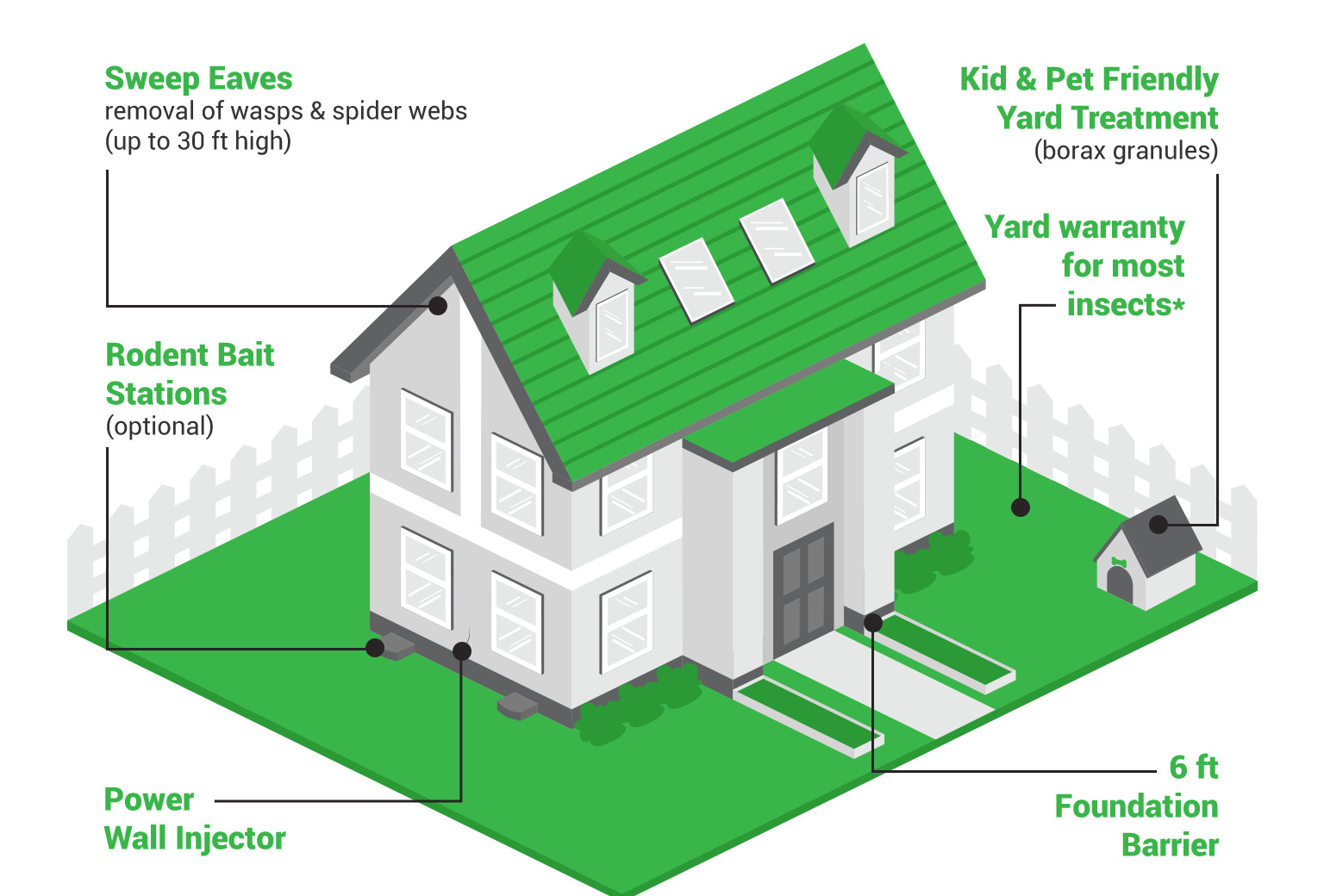
Vinx HomeGuard Plan
What Happens at Every Visit
Our technicians don’t just spray and leave. Every quarterly service covers your full exterior and interior, done right, backed by a written guarantee.
- Sweep Eaves: Wasp nests & spider webs removed up to 30 ft
- Power Wall Injector: Treats wall voids where pests hide
- 6 ft Foundation Barrier: Full perimeter treatment every visit
- Yard Warranty: Free retreatment for most insects
- Kid & Pet Safe Yard Treatment: Borax granules, safe after dry
Homeowner Tips
6 Ways to Reduce Wasp & Hornet Pressure Around Your Virginia Beach, VA Property
Kid & Pet Safe
Our Treatments Are Safe for Your Whole Family: Including the Furry Members
Every product we use is EPA-registered and applied strictly at labeled rates by licensed technicians. We take the guesswork out of safety so you can feel confident letting kids and pets back into treated areas quickly.

EPA-Registered Products Only
All products we apply are EPA-registered and used strictly per label requirements. Our licensed technicians are trained to apply the right product in the right place at the right rate, every time.
Dry Time Before Re-Entry
Exterior spray treatments dry in 30–60 minutes. Once dry, treated surfaces are safe for children and pets to contact. Your technician will confirm the all-clear before leaving your property.
Interior Treatment On Request
We treat only what’s needed, where it’s needed. Gel baits in cabinets and crack-and-crevice applications keep products away from areas pets and children frequent most.
Botanical Options Available
Have specific sensitivities? Ask your technician about our plant-derived treatment options. We offer botanical alternatives for households that prefer a more natural approach.
Have a concern about products used near your pets or children? Call (757) 900-8469 and we’ll walk you through exactly what we use and why it’s safe.
Explore More
More Pest Control Services in Virginia Beach

Pest Control Virginia Beach
Year-round protection plan

Mosquito Control Virginia Beach
Monthly barrier treatments
Termite Control Virginia Beach
Bait systems & liquid treatment

Rodent Control Virginia Beach
All rodents covered
Cockroach Control Virginia Beach
American & German roaches

Bed Bug Control Virginia Beach
Heat & liquid treatments
Spider Control Virginia Beach
All spider species covered

Tick & Flea Control Virginia Beach
Yard & pet protection
Exterminator Virginia Beach
Same-day local exterminators
Ant Control Virginia Beach
Household ants & others
Frequently Asked Questions
Wasp & Hornet Control FAQ for Virginia Beach Homeowners
Almost certainly cicada killers, and almost certainly not dangerous. Cicada killers are large, yellow-and-black, and dig impressive burrows in sunny areas of lawns throughout Hampton Roads from July through August. They look alarming. They are solitary wasps provisioning individual burrows, not defending a colony. Females will not sting unless physically grabbed. Males patrol aggressively but have no stinger. Treatment is usually unnecessary unless the burrow location is a high-traffic area. Your Vinx technician will confirm species on inspection, if it’s cicada killers, we’ll tell you honestly that treatment may not be warranted. If it turns out to be yellow jackets, we’ll treat it appropriately.
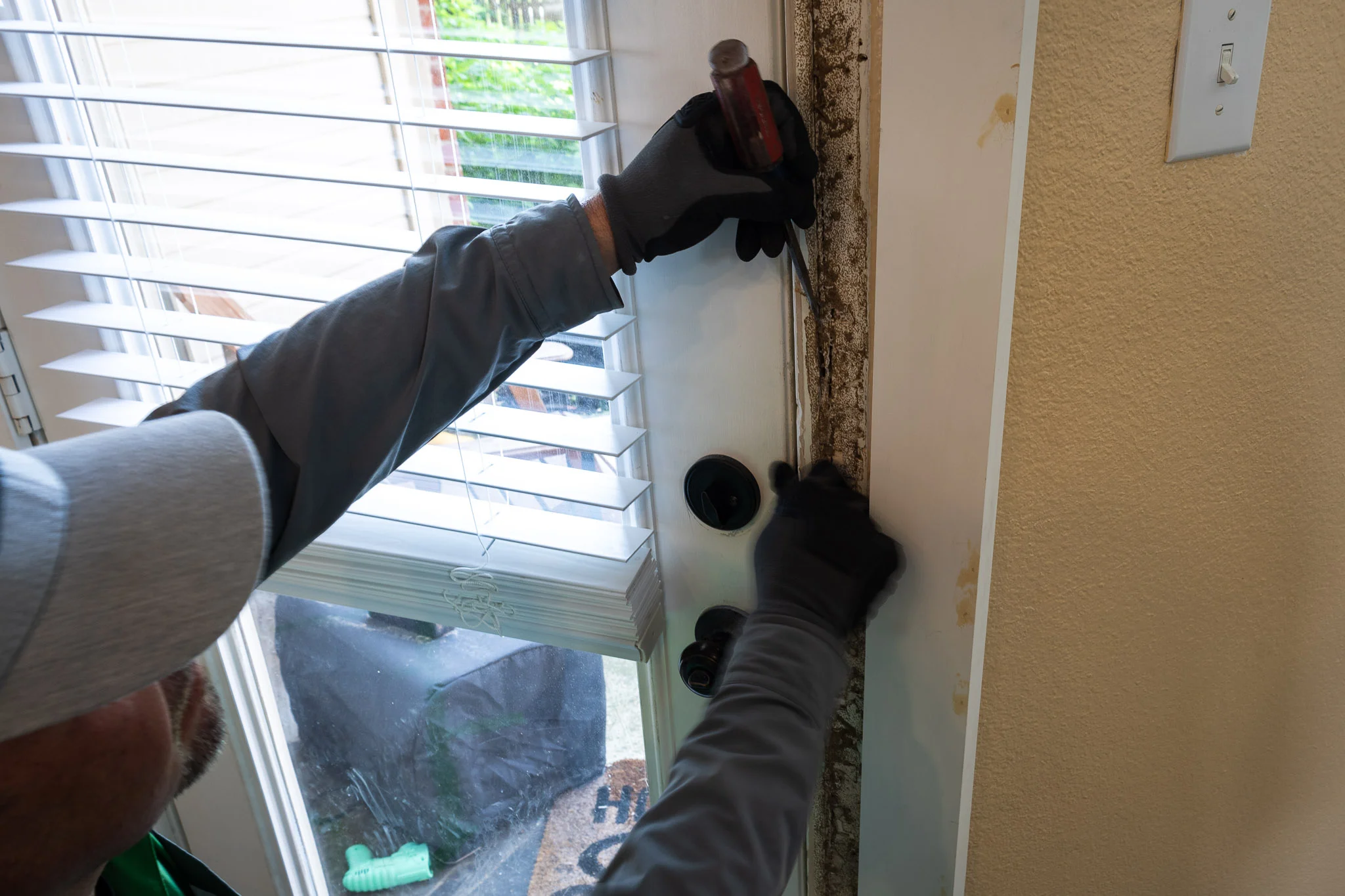
Yes, wall void nests require a different approach than ground nests. Treatment requires injecting insecticide directly into the void through the entry gap, at dusk when workers have returned, and then monitoring for secondary exit attempts into the home interior. Do not seal the entry gap before treatment. Surviving workers that can’t exit through the original entry point will attempt to chew through interior drywall to find another exit. Call (757) 900-8469 for wall void yellow jacket treatment.
Worker populations decline with the first sustained cold nights of fall, typically mid to late October in Virginia Beach, later than inland Virginia gets thanks to the coast holding its warmth: the median first fall freeze here is November 25. Mated queens locate winter harborage in protected locations. Abandoned nests are not reused the following year, bald-faced hornet nests visible after November are safe to observe from a distance as they’re inactive. By November, stinging insect pressure in Hampton Roads has largely subsided for the season.
No to both, and we would rather tell you that than sell against a fear. VDACS states the northern giant hornet, the insect the press nicknamed the murder hornet, is not known to occur in Virginia. The yellow-legged hornet has been confirmed in Georgia, South Carolina and North Carolina, but not in Virginia. VDACS runs a Plant Pest Survey and Detection program that actively surveys for both, so a genuine arrival would be announced by the state rather than spotted by a pest control company. What people here almost always have is a bald-faced hornet, which is a large black-and-white yellowjacket, or a European hornet. If you have a photo, send it and we will identify it for free.
Practically, it comes down to where the nest is and how the colony behaves. Yellowjackets typically nest in the ground or in wall and soffit voids, and they are the ones responsible for most stings because a lawnmower or a footstep over the entrance triggers a mass defensive response. Bald-faced hornets build the gray papery football nests hanging in trees and under eaves, and despite the name they are a yellowjacket rather than a true hornet. Paper wasps build the small open umbrella-shaped combs under railings, eaves and grill covers, and are the least aggressive of the three. The treatment differs for each, which is why identification comes before any spraying.
Vinx serves all of Virginia Beach and Hampton Roads: the Oceanfront, Great Neck, Lynnhaven, Kempsville, Bayside, Town Center, Princess Anne, Sandbridge, Pungo, and surrounding communities. Call (757) 900-8469 to confirm scheduling for your address.
Block the area and keep the children away. Stay away and do not spray or seal the nest entrance. For yellow jacket ground nests particularly, any disturbance (vibration, shadow, or proximity) can trigger a coordinated defensive response from hundreds of workers within seconds. Call for same-day service. Once the nest is dealt with and cleared, the play area is safe to use the next day.
Consumer aerosol wasp sprays can be effective on small, accessible, early-season paper wasp nests with fewer than 15–20 workers, sprayed at night when workers are clustered on the nest. They are inappropriate for yellow jacket ground nests, bald-faced hornet nests, or any nest sited in a structural void or wall gap. Failed DIY treatment on a large colony can bring severe consequences. When in doubt, call. Same-day service is available.
Paper wasp: a founding queen builds to a golf ball-sized nest with a dozen workers by May, then 50–80 workers by July and up to 200 by peak August. Yellow jacket: invisible and minimal risk in spring; by late August the same colony runs 2,000–4,000 workers at maximum aggression. Eave removal on every Plus and Platinum visit takes small founding nests out in spring, before summer populations become dangerous. Removing a nest in April takes minutes; in August it takes full protective equipment and professional treatment.
Yes, and there is a reason for it. Through spring and early summer the colony is raising brood and workers are foraging for protein, so they largely ignore you. By late summer the queen has stopped laying, the brood is gone, and the workers switch to sugar, which is when they start appearing around bins, fallen fruit and your drink. The colony is also at maximum size at exactly that point. So the same nest that was unremarkable in June becomes a genuine problem in August and September, and that is when most stings happen here.
No. Paper wasps, yellowjackets and bald-faced hornets all abandon the nest at the end of the season, and only mated queens survive winter, tucked into protected harborage such as loose bark, wall voids and attics. A nest still visible in December is empty, so a bald-faced hornet nest in a bare tree in winter is safe to look at from a distance. It is still worth removing an accessible old nest, not because it will be reoccupied but because it makes it much harder to spot a new nest built nearby the following spring.
Because a gap led somewhere sheltered. Yellowjackets in particular exploit soffit joints, weep holes, utility penetrations and gaps around vents, then build in the void behind. This is the situation where DIY spray does the most harm: killing the workers you can see at the entrance leaves the colony intact behind the wall, and survivors frequently push further inward and end up inside living space. Void nests need to be treated at the colony and the entrance sealed afterwards, in that order. Sealing first traps them and pushes them into the house.
Service Coverage
Wasp & Hornet Control Across Virginia Beach & Hampton Roads
Serving all of Virginia Beach and the Hampton Roads area