Wasp & Hornet Control in Charleston, SC
Yellow Jacket, Paper Wasp, Bald-Faced Hornet & Mud Dauber Removal: Charleston's Nine-Month Coastal Stinging Insect Season
Charleston's stinging insect season is among the longest in South Carolina, nine months of activity from March through November. Paper wasp queens establish founding nests on historic piazzas and eave lines in late February, weeks ahead of any Upstate SC market. Yellow jacket colonies reach peak population in August, exactly when outdoor entertaining is at its peak.
Get Started in 60 Seconds
Choose what’s easiest for you
Request a Quote
We usually respond in 2 minutes
Call 855-800-8469
Get a Live Person (no AI agents here!)
Sign Up Online
Get pricing and schedule now





Welcome to Vinx Pest Control
A Company That Actually Backs What It Says
At Vinx, we combine professional-grade treatments with a level of service most pest control companies don't offer. Local technicians, fast response times, and a guarantee that actually means something.
Get a Free Quote"I'm not passionate about killing bugs. I'm passionate about customer service. At Vinx, you get experts who show up, do the job right, and stand behind every visit. No runaround, no fine print."
WELCOME TO VINX PEST CONTROL
Wasp & Hornet Control Plans for Charleston Homeowners

Standard Residential Protection
- 4 Seasonal Treatments Per Year
- 50+ Covered Pests
- Interior, Exterior & Yard Treatment
- Unlimited Free Re-Services
- 100% Money-Back Guarantee

Upgraded Yard Protection
- 6 Home & Yard Treatments Per Year
- 50+ Covered Pests
- Yard Ant Elimination Guarantee
- Flea & Tick Elimination Guarantee
- 100% Money-Back Guarantee

Most Comprehensive Protection
- 9 Treatments Per Year
- 50+ Covered Pests
- 8 Mosquito Treatments (Mar–Nov)
- Flea, Tick & Ant Coverage
- Free Bed Bug Treatments if Needed*
*Starting rates vary by home size and area. All plans billed monthly.
Request Your Free Pest Control Quote
Fill out the form below and a Vinx team member will reach out within 2 minutes during business hours.
Prefer to talk? Call 855-800-8469 for a live person, no AI agents.
Our Approach
How Vinx Removes Wasps & Hornets in Charleston

Full Property Inspection
All eave lines and piazza ceilings including upper stories, window casings and cornice moldings on historic construction, walled garden areas and outbuilding interiors, under-deck and beneath-piazza spaces, tidal vegetation margins for ground yellow jacket activity, and all reported active nest locations. Historic Peninsula properties receive specific attention to piazza joist spaces and architectural features that create nesting opportunities not present in modern construction.
Species-Specific Treatment
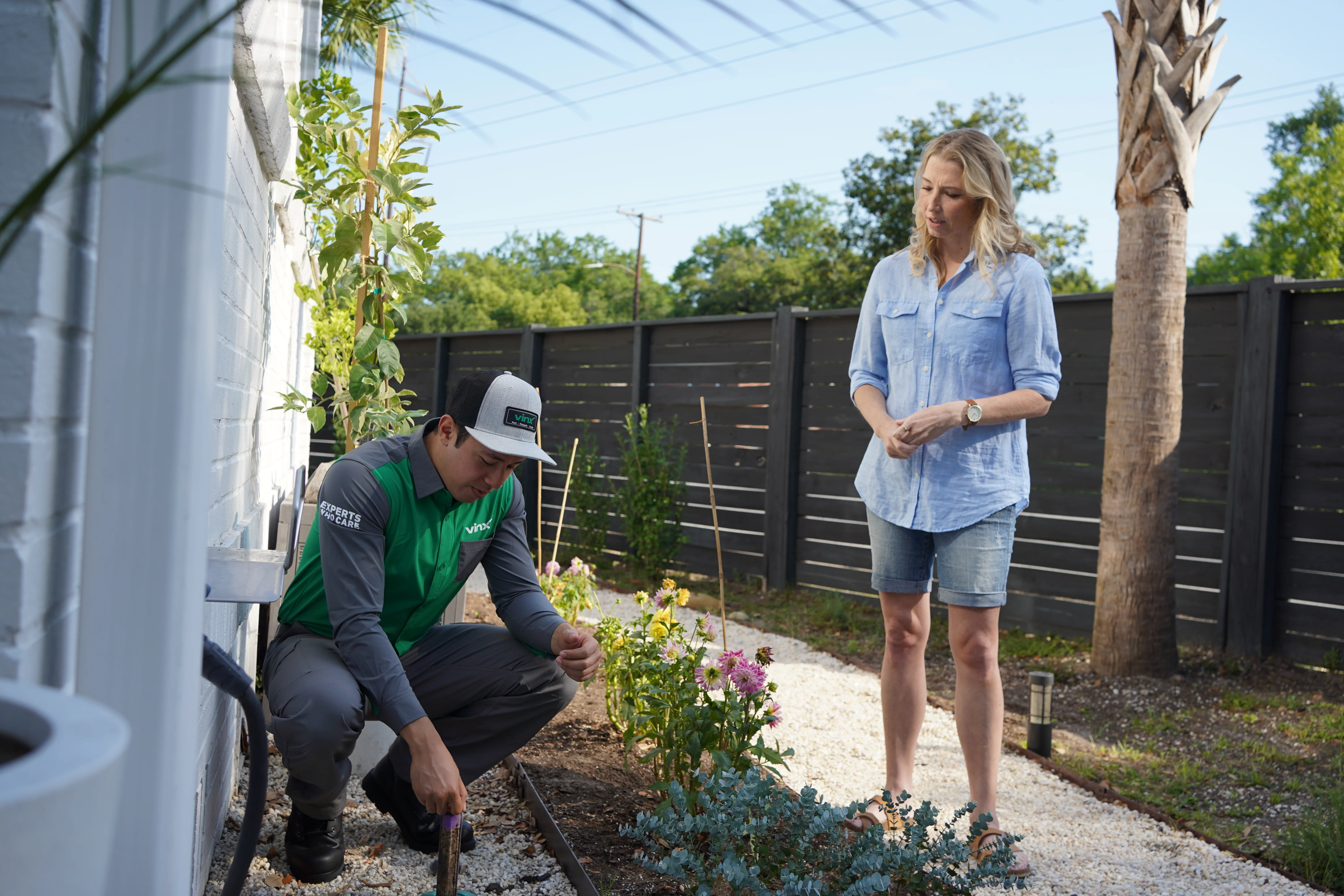
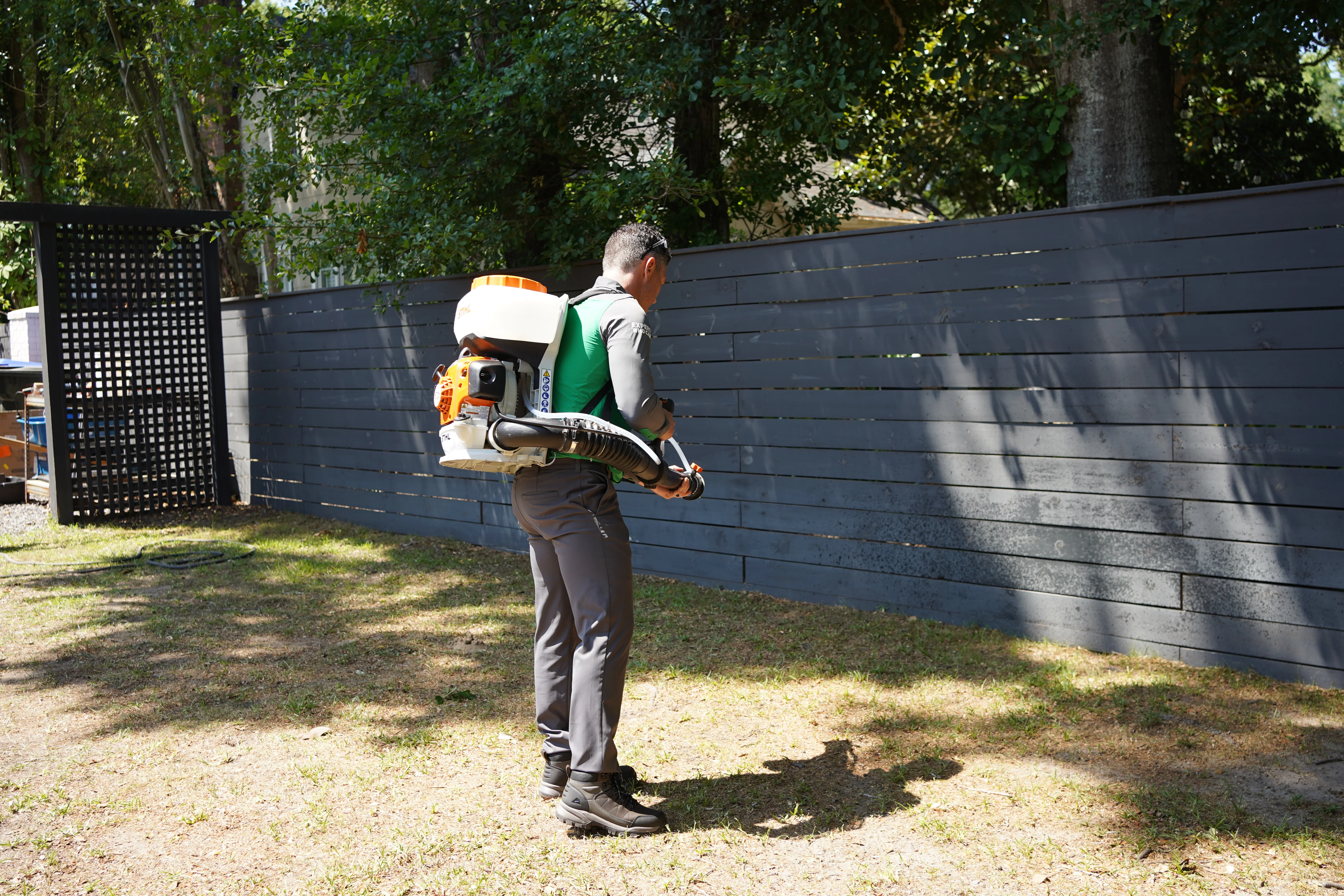
Yellow jacket ground nests treated at dusk, direct entrance application when all workers have returned. Wall void yellow jacket nests treated by void injection, mortar joint and siding gap entries on historic construction documented and treated without damaging historic fabric. Paper wasp nests are removed and treated. Bald-faced hornet nests treated professionally with physical removal. Mud dauber tubes removed mechanically.
Piazza & Eave Removal: Plus & Platinum Plans
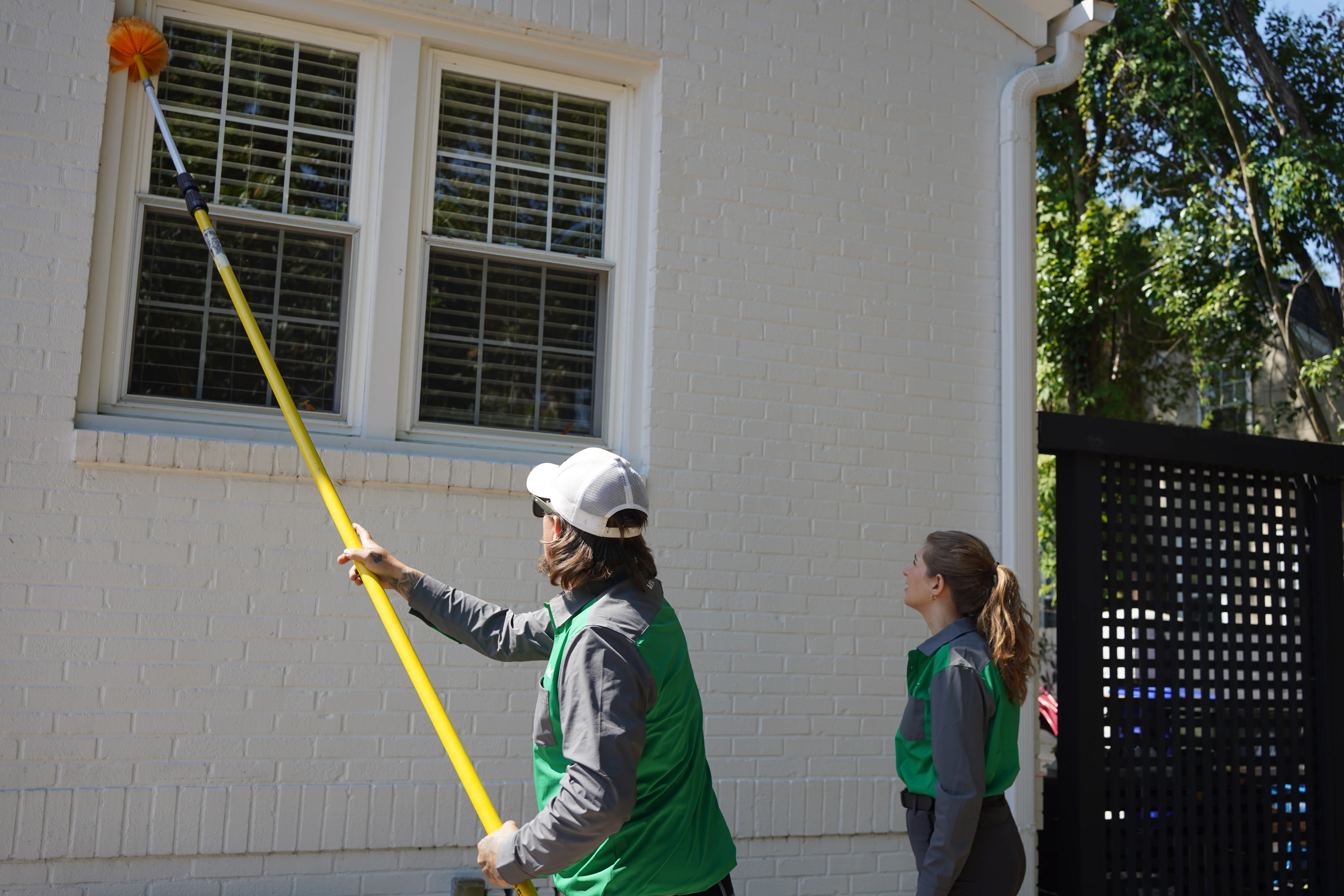
Wasp nest removal from all accessible eave lines, piazza ceilings and railings, window frames, and structure surfaces on every Plus and Platinum service visit through the full Charleston season. The February founding nest caught before workers emerge is never the August colony with 30 workers over the piazza entrance. Cobweb removal included simultaneously.
Free Return If Activity Persists
Free return visit if yellow jacket activity continues after treatment. Free return if wasps reappear between scheduled visits. Call (843) 920-8469 any time throughout the season. No service fees, no arguing about coverage, that's the Vinx guarantee.
Charleston's Nine-Month Stinging Insect Season: Covered
Nine months of wasp and yellow jacket activity in one of South Carolina's most architecturally complex cities. If wasps return between visits, we come back at no charge. No service fees, no waiting, no fine print.
What Customers Say
Real Reviews from Charleston Homeowners
The tec, Johnathan, knows how to do his job. It was comforting to observe someone that knows how to get things well done. He is a good service technician and a great worker bee.good job, well done.
Jack was polite, attentive and handled the issues we had.
Austin was great, Punctual and very detail oriented with service!
Vinx Pest Control is an awesome and dependable company with respectful and knowledgable employees. Leon is a very personable young man and knows his job well. He answered all of my questions and left me feeling secure that the services rendered will take care of my concerns.
Vinx has always gone above and beyond to keep our house protected against pest. They are highly professional and offer services from termite to mosquitos, rodents even bees. They not only work at getting rid of these issues but also have the ability for preventative measures. I strongly recommend
Zavon from Vinx Pest Control did a great job! He communicated very clearly the service that he was providing as well as the results of inspection. Vinx is a great company with great technicians.
9-Month Season. 4 Species.
Why Wasp & Hornet Control in Charleston Is More Complex Than Most Cities
Charleston's coastal climate produces an unusually long stinging insect season, running from late winter into autumn. Paper wasp founding queens begin nest construction in late February. Yellow jacket ground nests hit peak population by late August, just as outdoor entertaining peaks. Bald-faced hornet aerial nests grow to full size in live oak canopy throughout established neighborhoods.
Charleston's historic architecture creates nesting challenges that don't exist elsewhere. Multi-story piazzas, walled gardens, carriage house eaves, and elaborate molding detail on the Peninsula provide surface area for hundreds of founding nests per block. Yellow jacket wall void nesting through mortar gaps in historic brick is a pattern exclusive to the Historic District.
Professional treatment requires species identification before application. Each of the four primary Charleston stinging insect species responds to a different product and delivery method. Treating all wasps the same is the primary reason DIY attempts fail.
Charleston Stinging Insect Species
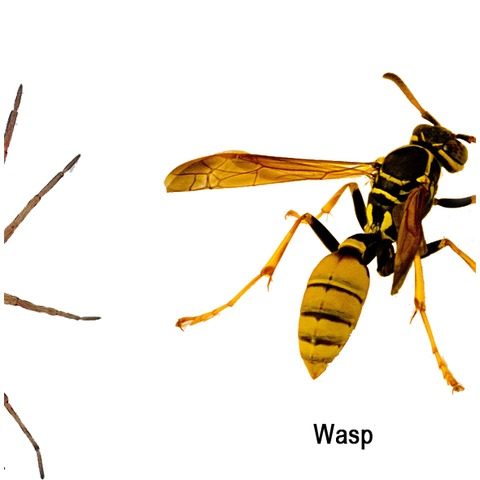
Yellow Jacket
Ground nesting throughout Charleston County in turf, beneath deck structures, and in tidal vegetation margins on James Island and Johns Island. Wall void nesting through mortar joint gaps in historic brick construction on the Peninsula. Colonies reach 4,000–5,000 workers by late August, peak population coincides with peak outdoor entertaining season.
Paper Wasp
Most universally present stinging insect across all Charleston neighborhoods. Founding nests begin in late February, earlier than any other SC city. Historic Peninsula architecture creates unusually large nesting surface area per building. Eave and piazza removal included on every Plus and Platinum service visit through the full season.

Bald-Faced Hornet
Large aerial nests in live oak canopy and ornamental plantings throughout established Charleston neighborhoods. Never approach a large enclosed gray papery nest. Particularly dangerous in walled garden spaces where escape paths are limited. Call (843) 920-8469 for same-day professional removal.

Mud Dauber
Solitary and non-aggressive. Clay tube nests on porch ceilings, piazza understructures, and outbuildings throughout Charleston. Removed mechanically on every Vinx service visit. No sting risk during removal.
What to Look For
Signs of a Wasp or Hornet Problem at Your Charleston Property
Nest Under Eaves
Paper or comb-style nests on eave undersides, porch ceilings, and piazza joists, paper wasp activity
Ground Entry Holes
Wasps flying in and out of a hole in the turf or beneath deck structures, yellow jacket ground nest
Large Gray Aerial Nest
Football-sized enclosed gray papery nest in tree canopy or shrubs, bald-faced hornet colony
Wall Void Activity
Wasps entering and exiting through mortar gaps in brick, yellow jacket wall void nesting common in historic construction
Mud Tubes on Surfaces
Clay cylinder tubes on porch ceilings or outbuilding walls, mud dauber activity, nuisance but low sting risk
Increased Aggression
Stinging incidents near outdoor dining or entertaining areas, yellow jacket forager activity peaks in August and September
By Neighborhood
Wasp & Hornet Pressure Across Charleston & Charleston County
Charleston's most historic neighborhoods present the most complex stinging insect management environment. Multi-story piazzas, walled gardens, carriage houses, and elaborate moldings create nesting opportunities unlike any other SC neighborhood. Paper wasp founding nests in late February on piazza joists become established colonies by August. Yellow jacket wall void nesting through mortar gaps in historic brick is a recurring pattern.
Charleston's largest suburban area carries the standard Lowcountry stinging insect pattern, yellow jacket ground nesting throughout residential yards, paper wasps on eave lines of established and newer construction. The tidal creek corridors throughout West Ashley create ground yellow jacket nest habitat in naturalized vegetation along water edges.
Tidal marsh and creek edge vegetation throughout James Island provides ground yellow jacket nesting habitat adjacent to residential properties. Encounters during garden maintenance near naturalized tidal margins are a consistent seasonal pattern. Peak encounter conditions occur during August and September when colonies reach maximum population.
Daniel Island's combination of established landscaping, community green spaces, and naturalized areas creates consistent yellow jacket ground nesting in undisturbed vegetation margins. Paper wasp nests on extensive eave and community structure surfaces. The Volvo Car Stadium outdoor venue attracts late-summer yellow jacket foragers during peak event season.
The extensive naturalized and agricultural land on Johns Island, combined with tidal creek and marshland adjacency, creates among the highest yellow jacket ground nest density in the Charleston metro. Properties with rural lot margins, wooded edges, or marsh-adjacent vegetation carry elevated ground yellow jacket risk throughout the full season.
The established residential neighborhoods of the upper Peninsula carry the same historic architecture challenges as South of Broad with greater tree canopy. Mature live oaks and established ornamentals provide bald-faced hornet nesting habitat. Paper wasp nests consistent on eave lines and porch structures from late February through October.
Current Local Situation
The Hornet Charleston Actually Needs to Know About
Not the one that was in the news. The yellow-legged hornet is a genuine, current, documented presence in Charleston County, and Clemson wants residents reporting it rather than treating it.
It Is Here, Now
The yellow-legged hornet was first detected in the US near Savannah in August 2023 and reached South Carolina in spring 2024. As of Clemson’s July 2026 update, thirteen SC counties are under active trapping and Charleston is one of them. The Lowcountry accounts for essentially every SC nest removed so far: 199 embryo nests, 199 primary nests, and 11 secondary nests, against three total in the Upcountry.
Report It, Do Not Treat It
This is Clemson’s instruction and we are not going to contradict it to win a job: do not attempt to remove a yellow-legged hornet nest yourself. Report it through Clemson’s Department of Plant Industry reporting tool with a photo, which is mandatory for confirmation. Nest removal in South Carolina is a regulatory operation. If you are unsure what you are looking at, send the photo rather than the wasp.
Bigger Colonies, Not Worse Venom
Worth being accurate rather than alarming. Clemson’s position is that yellow-legged hornet venom potency is comparable to our native stinging insects. What differs is scale: colonies can reach around 2,000 workers against a few hundred for a native yellowjacket, and nests start low on structures and vegetation in spring before moving high into the tree canopy by midsummer. The primary documented threat is to honey bees and pollination.
And No, Not “Murder Hornets”
The northern giant hornet, the one every headline in 2020 called a murder hornet, was only ever found in the United States in one corner of Washington State. Four nests were destroyed, three consecutive survey years came back clean, and the USDA and Washington State declared it eradicated from the country on 18 December 2024. It has never been found in South Carolina or anywhere in the Southeast. If a company mentions murder hornets to you, that tells you something.
Stings, Honestly
Which Ones Can Actually Hurt You, and Which Ones Just Look Like They Can
Stinging insects are the one pest category where a real medical risk exists, so the numbers deserve to be right rather than inflated. Several of the most alarming-looking wasps in Charleston are the least dangerous.
The Allergy Numbers, With the Denominator
You will see “2% of people are allergic” quoted a lot, including by us on another page until recently. The allergy practice parameter puts potentially life-threatening systemic reactions at roughly 0.4 to 0.8% of children and up to about 3% of adults, and the underlying research range is wide. CDC vital statistics record 788 deaths from hornet, wasp and bee stings across 2011 to 2021, an average of 72 a year, 84% of them male. Not the hundred a year that gets repeated.
Cicada Killers Cannot Hurt You
These are the enormous wasps that patrol bare soil in July and buzz aggressively at anyone walking past, and they generate more panicked phone calls than anything else we deal with. The males doing the buzzing have no sting at all, they are territorial and bluffing. Females can sting but effectively never do unless handled or stepped on. Clemson classes them as beneficial and says management is usually unnecessary. They are also one of the species most often misreported as giant hornets.
Nest Size Tells You Nothing
The huge gray football hanging in a camellia looks like the worst thing in the garden. It is a baldfaced hornet nest, around 400 workers, and it is not even a true hornet, it is a yellowjacket. Meanwhile the most dangerous nest on a Charleston property is usually invisible: a ground yellowjacket colony showing nothing but a hole in the lawn, often with several entrances, which is why most stings happen behind a mower. Species and location predict risk. Size does not.
If It Is Honey Bees, We Refer You Out
Honey bees are fuzzy and amber-brown and build wax comb; wasps are smooth and narrow-waisted and build gray paper or mud. If what you have is a honey bee swarm or colony, it should be relocated rather than killed, and the South Carolina State Beekeepers Association maintains a Contact a Beekeeper directory for exactly this. Killing a colony inside a wall is also the worst outcome practically: the comb is no longer ventilated, and honey leaks through ceilings and draws ants, moths and rodents.
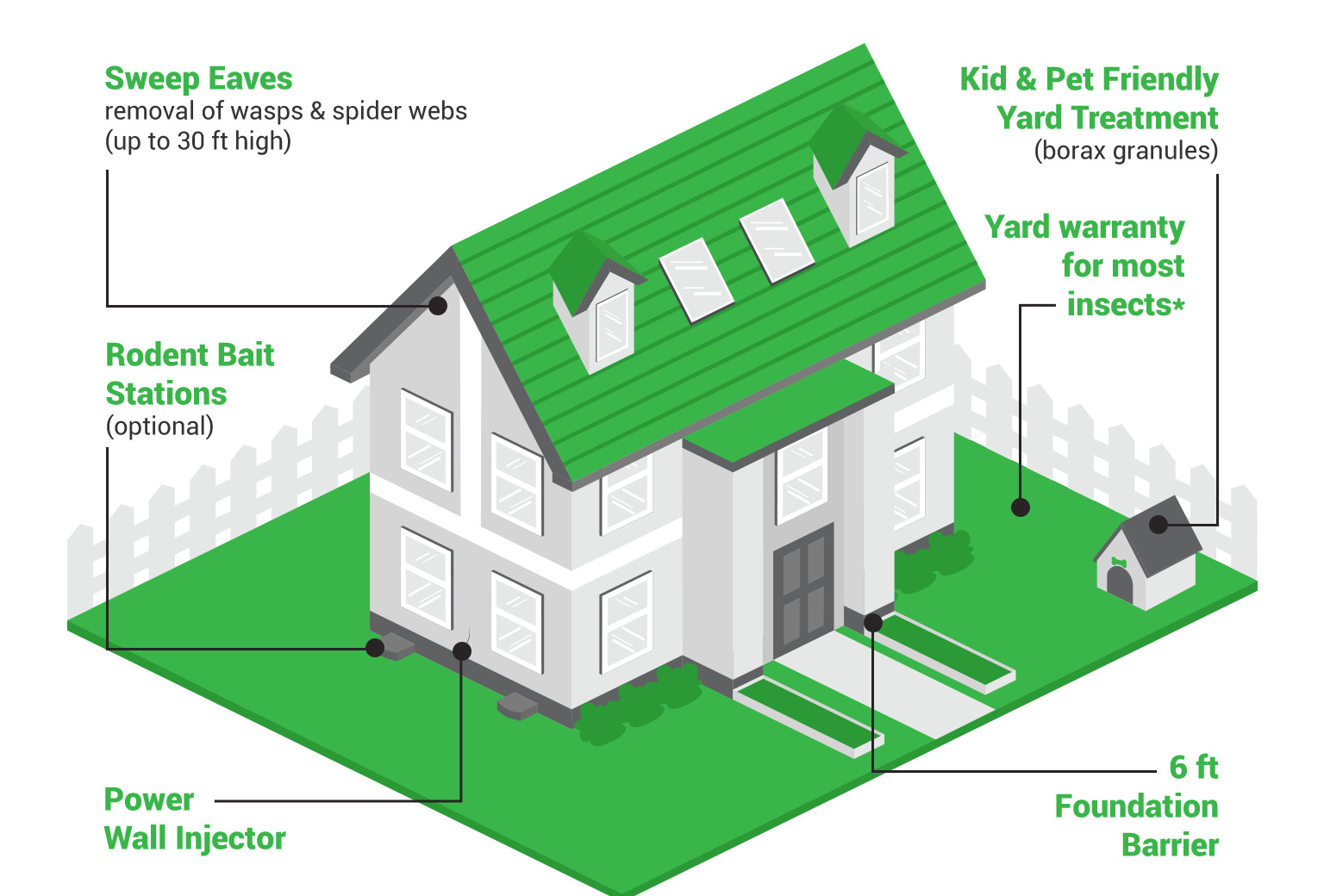
Vinx HomeGuard Plan
What Happens at Every Visit
Our technicians don't just spray and leave. Every quarterly service covers your full exterior and interior, done right, backed by a written guarantee.
- Sweep Eaves: Wasp nests & spider webs removed up to 30 ft
- Power Wall Injector: Treats wall voids where pests hide
- 6 ft Foundation Barrier: Full perimeter treatment every visit
- Yard Warranty: Free retreatment for most insects
- Kid & Pet Safe Yard Treatment: Borax granules, safe after dry
Homeowner Tips
6 Ways to Reduce Wasp Pressure Around Your Charleston Property
Kid & Pet Safe
Our Treatments Are Safe for Your Whole Family: Including the Furry Members
Every product we use is EPA-registered and applied strictly at labeled rates by licensed technicians. We take the guesswork out of safety so you can feel confident letting kids and pets back into treated areas quickly.

EPA-Registered Products Only
All products we apply are EPA-registered and used strictly per label requirements. Our licensed technicians are trained to apply the right product in the right place at the right rate, every time.
Dry Time Before Re-Entry
Exterior spray treatments dry in 30–60 minutes. Once dry, treated surfaces are safe for children and pets to contact. Your technician will confirm the all-clear before leaving your property.
Interior Treatment On Request
We treat only what’s needed, where it’s needed. Gel baits in cabinets and crack-and-crevice applications keep products away from areas pets and children frequent most.
Botanical Options Available
Have specific sensitivities? Ask your technician about our plant-derived treatment options. We offer botanical alternatives for households that prefer a more natural approach.
Have a concern about products used near your pets or children? Call (843) 920-8469 and we’ll walk you through exactly what we use and why it’s safe.
Explore More
More Pest Control Services in Charleston

Pest Control Charleston
General pest protection
Bed Bug Control Charleston
Heat & liquid treatments
Cockroach Control Charleston
Palmetto bug & roach removal
Mosquito Control Charleston
Monthly barrier treatments

Rodent Control Charleston
All rodents covered
Spider Control Charleston
All spider species covered
Termite Control Charleston
Bait systems & liquid treatment

Tick & Flea Control Charleston
Yard & pet protection
Exterminator Charleston
Same-day local exterminators
Ant Control Charleston
Household ants & others
FAQ
Wasp & Hornet Control in Charleston, Your Questions Answered
Yes, paper wasp removal from piazza ceiling plaster uses mechanical removal appropriate for the specific surface. Yellow jacket wall void treatment in brick mortar joint construction uses void injection, not drilling or structural modification. Your technician will assess each nest location before beginning work on any historic surface. Call (843) 920-8469.
Charleston's coastal climate gives milder winters and earlier springs than the SC interior, so the stinging insect season here runs long: paper wasp queens can begin nest construction as early as late February, and yellow jacket colonies are still at full strength well into autumn. We would rather describe that as a long season than put a precise week count on it, because no published phenology data compares South Carolina cities that way.
Yes, same-day emergency service is available. Call (843) 920-8469 immediately. Treatment must be scheduled when the space is not in use, typically early morning before service. We coordinate with your schedule.
Eave and structure wasp nest removal is included on every Vinx Plus and Platinum service visit. For a standalone active nest (ground yellow jacket, bald-faced hornet, or wall void) call (843) 920-8469 for same-day service and pricing.
Vinx serves all of Charleston and Charleston County, the Historic Peninsula, South of Broad, West Ashley, James Island, Johns Island, Kiawah corridor, Daniel Island, North Charleston, and surrounding communities. Call (843) 920-8469.
Yes. All products are EPA-registered and applied at labeled rates by licensed South Carolina technicians. Exterior treatments are dry and safe within 30–60 minutes of application.
Service Coverage
Wasp & Hornet Control Across Charleston & the Lowcountry
Serving every neighborhood in the Charleston metro area
Serving the Greater Charleston Area