Wasp & Hornet Control in Spartanburg, SC
Yellow Jacket, Paper Wasp, Bald-Faced Hornet & Mud Dauber Removal for Spartanburg County Homeowners
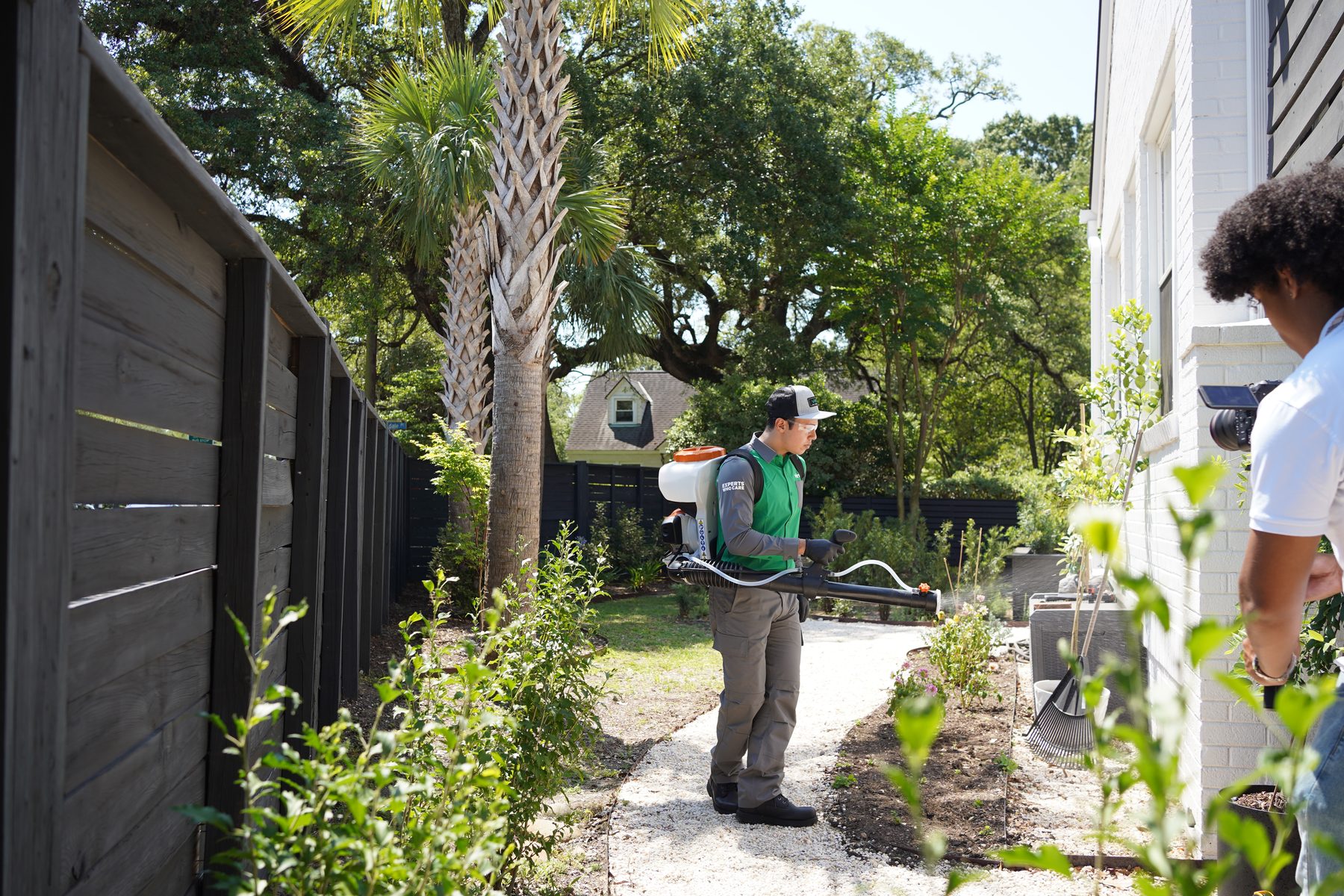
Spartanburg’s mix of historic downtown neighborhoods with mature tree canopy and active suburban development in Boiling Springs and Duncan creates both established aerial nest habitat, bald-faced hornets in mature oaks near Morgan Square, and new construction yellow jacket ground nest pressure in the undisturbed turf of newer developments. The BMW Manufacturing corridor and associated industrial and residential growth in the surrounding communities has produced significant landscape disturbance that displaces ground-nesting yellow jacket colonies into adjacent developed properties. Vinx removes active wasp and hornet nests, treats for returning workers, and includes wasp nest removal from eaves and structure surfaces on every Plus and Platinum plan service visit throughout the active season. If stinging insects return between scheduled visits, we come back at no charge.
Get Started in 60 Seconds
Choose what’s easiest for you
Request a Quote
We usually respond in 2 minutes
Call 855-800-8469
Get a Live Person (no AI agents here!)
Sign Up Online
Get pricing and schedule now





Welcome to Vinx Pest Control
A Company That Actually Backs What It Says
At Vinx, we combine professional-grade treatments with a level of service most pest control companies don't offer. Local technicians, fast response times, and a guarantee that actually means something.
Get a Free Quote"I'm not passionate about killing bugs. I'm passionate about customer service. At Vinx, you get experts who show up, do the job right, and stand behind every visit. No runaround, no fine print."
WELCOME TO VINX PEST CONTROL
Protection Plans for Spartanburg Homeowners

Standard Residential Protection
- 4 Seasonal Treatments Per Year
- 50+ Covered Pests
- Interior, Exterior & Yard Treatment
- Unlimited Free Re-Services
- 100% Money-Back Guarantee

Upgraded Yard Protection
- 6 Home & Yard Treatments Per Year
- 50+ Covered Pests
- Stinging Insect Elimination Guarantee
- Flea & Tick Elimination Guarantee
- 100% Money-Back Guarantee

Most Comprehensive Protection
- 9 Treatments Per Year
- 50+ Covered Pests
- 8 Mosquito Treatments (Mar–Nov)
- Flea, Tick & Ant Coverage
- Free Bed Bug Treatments if Needed*
*Starting rates vary by home size and area. All plans billed monthly.
Request Your Free Wasp & Hornet Quote
Fill out the form below and a Vinx team member will reach out within 2 minutes during business hours.
Prefer to talk? Call 864-754-7155 for a live person, no AI agents.
Our Approach
How Vinx Eliminates Wasps & Hornets in Your Spartanburg Home: Step by Step

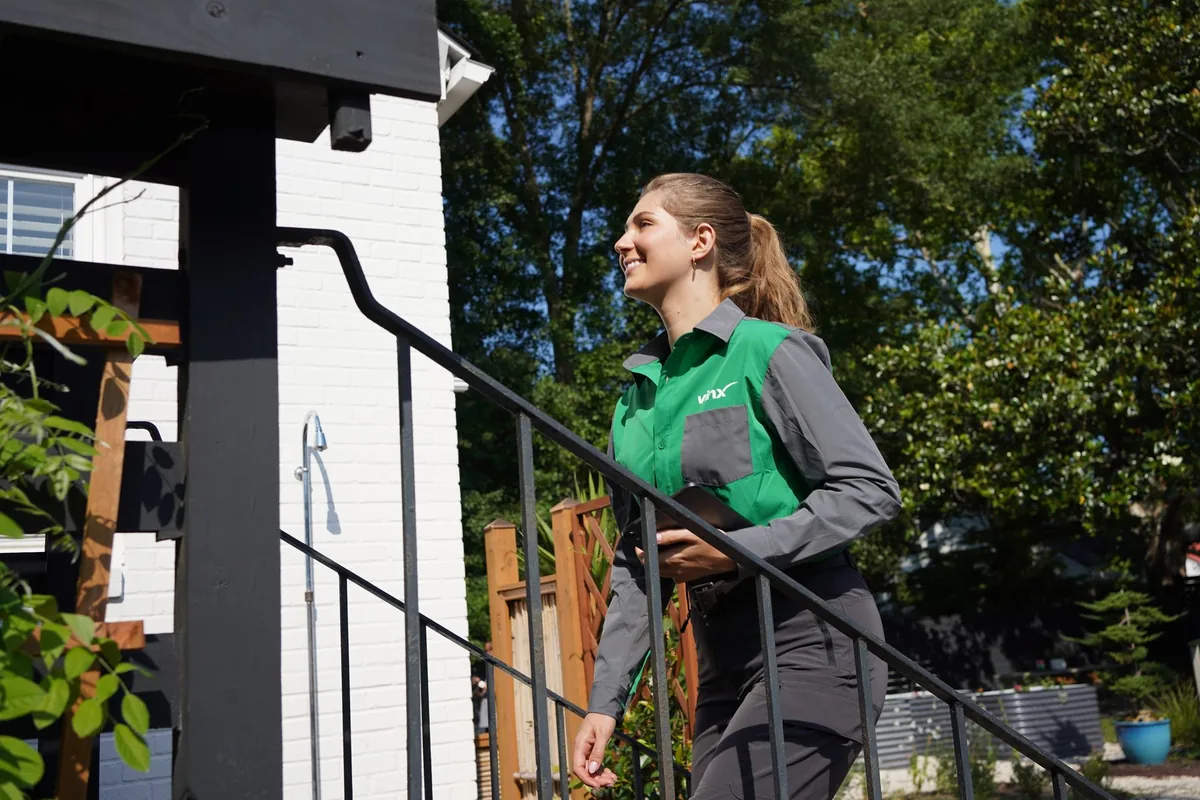
Full Property Inspection & Species ID
All eave lines, outdoor structures, yard margins with reported ground activity, under-deck areas, and any areas adjacent to naturalized vegetation or wooded lot edges are inspected. Species confirmed before any treatment approach is determined, yellow jacket ground vs. paper wasp vs. bald-faced hornet each require a different protocol. Results documented before treatment begins.
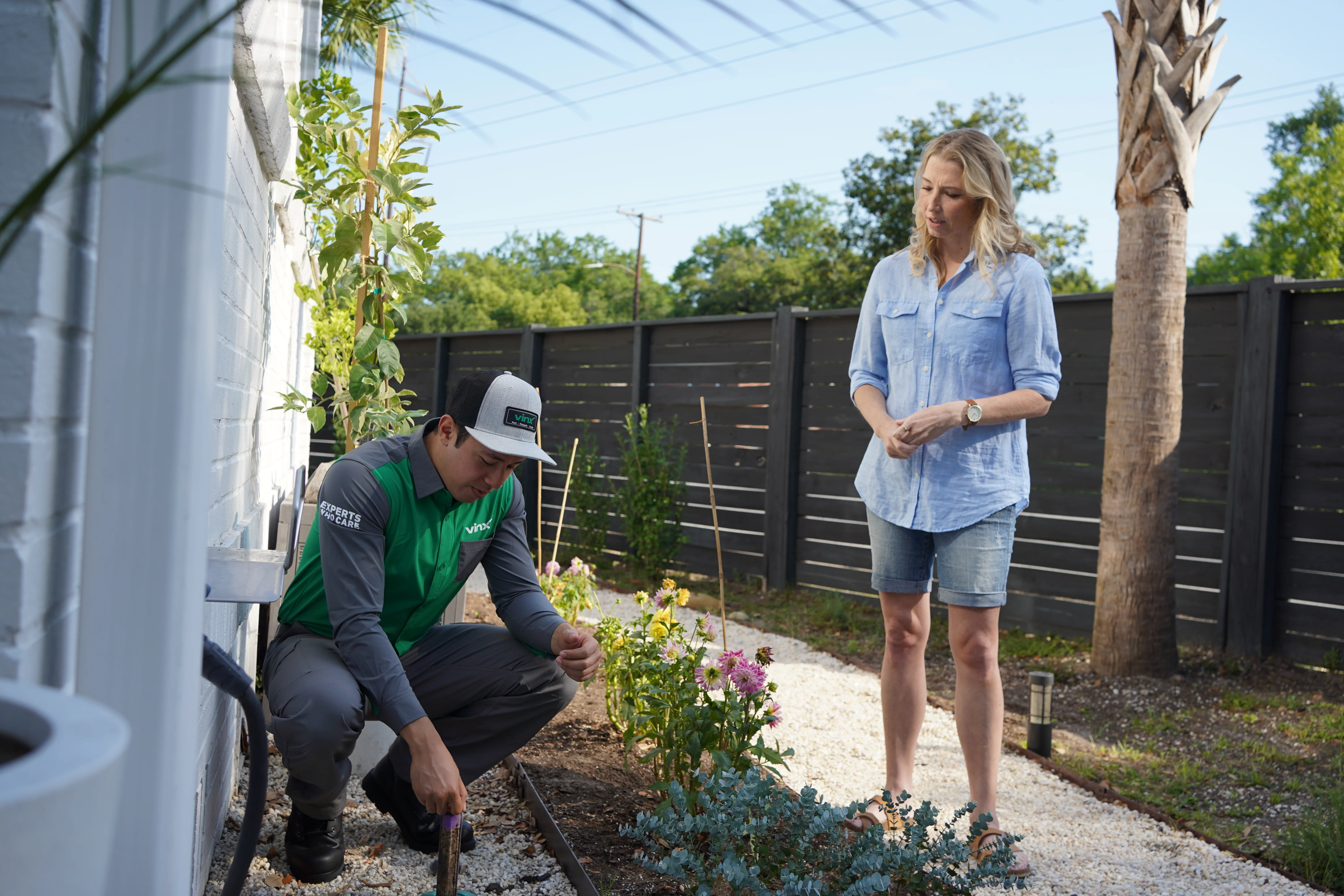
Species-Specific Treatment
Yellow jacket ground nests treated at dusk, direct entrance application when all workers have returned. Paper wasp nests removed and treated with residual. Bald-faced hornet nests treated with professional protective equipment at dusk and physically removed. Mud dauber tubes removed mechanically. All applications documented.
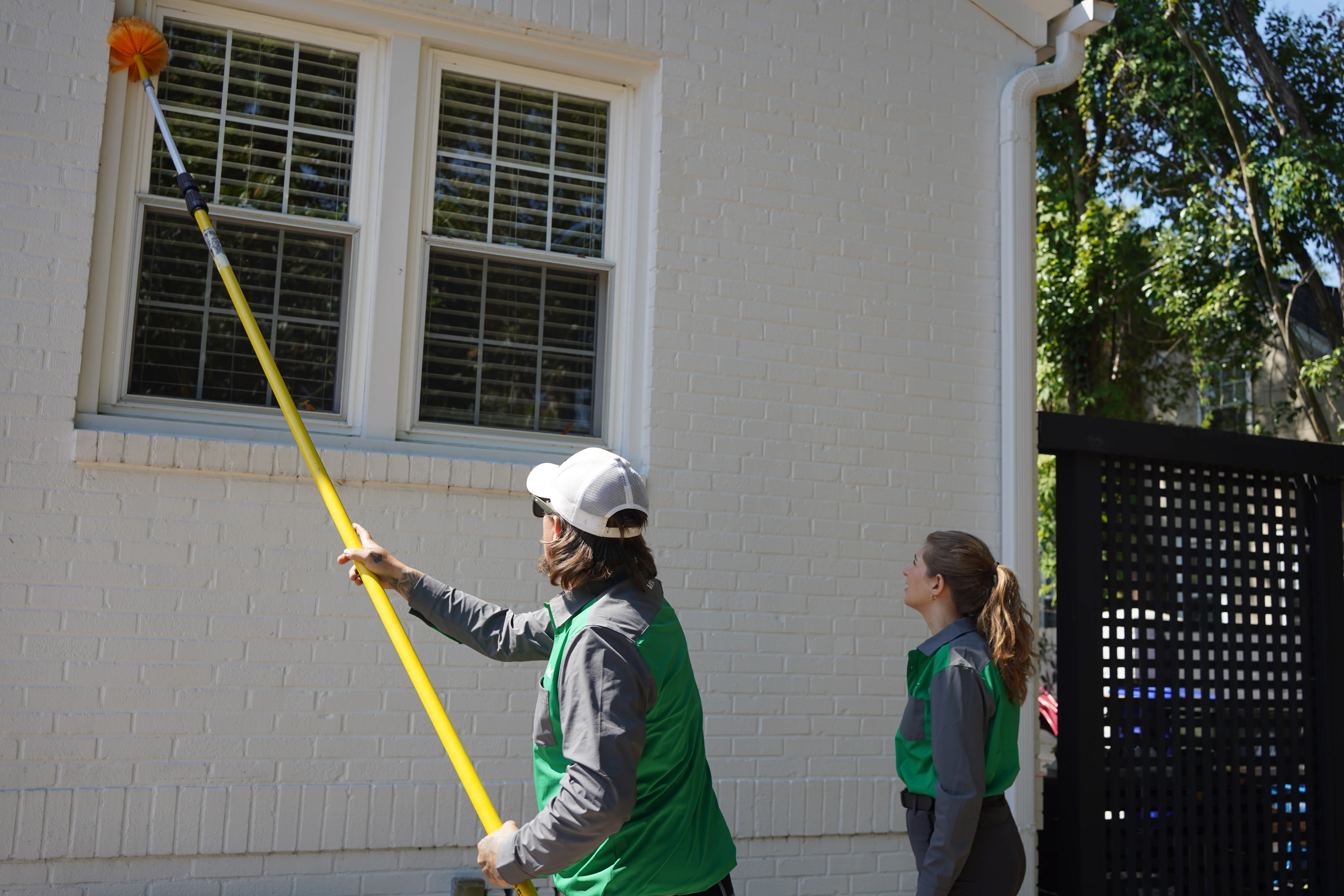
Recurring Eave Removal: Plus & Platinum Plans
Wasp nest removal from accessible eave lines and structure surfaces on every Plus and Platinum visit through Spartanburg's seven-to-eight month active season. The April founding nest removed before workers emerge is never the September established colony with 30 workers. Cobweb removal included at every visit simultaneously.
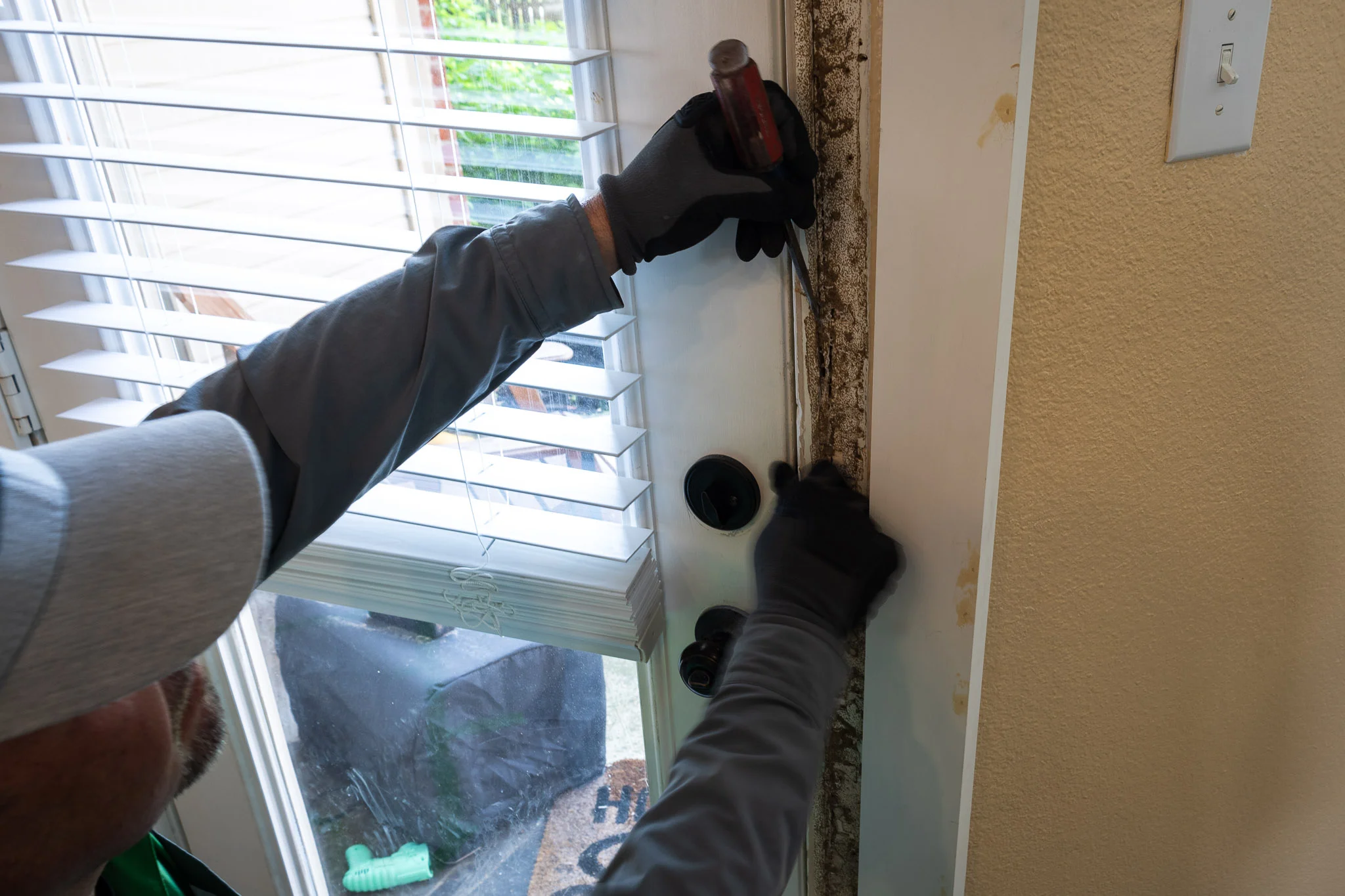
Free Return If Needed
Free return visit if yellow jacket activity continues after treatment. Free return if stinging insects return between scheduled service visits. Same-day service always available, call (864) 754-7155 any time throughout Spartanburg's seven-month active season.
What Customers Say
What Spartanburg Customers Say About Vinx: 4.8 Stars on Google
Always on time and get a thorough spray. Alex took care of the ants I mentioned and also got rid of a yellow jacket nest. Vinx does a really good job!
Alex is polite and courteous. He takes care with my animals, when treating my home and property. Provides detailed information regarding other problem areas. Is available to answer questions. Good job.
Jonathan provided excellent pest control service. He was thorough and took the time needed to walk around my property after he administered the pest control liquid. Sending a video of what was done is a nice touch.
Alfredo is the best tech. He really cares about your home as if it was his own. He's very professional. Thanks Vinx!
Vinx Pest Control always sends us technicians who are very quick, professional, and polite. They work hard to make sure your home stays bug free and we love that. Thank you Vinx, and Rebecca is amazing.
Kyngstyn Did an amazing job, love the video he send us to let us know what he did
Wasp & Hornet Pressure Across Spartanburg. One Number to Call.
Free inspection. Same-day appointments available. Species identified before any treatment begins.
Call 855-800-8469By Neighborhood
Wasp & Hornet Pressure Across Spartanburg & Spartanburg County
Downtown Spartanburg & Morgan Square Area
Elevated: Mature Canopy The mature tree canopy through downtown Spartanburg and the established oaks around Morgan Square give bald-faced hornets consistent aerial nest habitat, and the historic eave lines carry paper wasp nests from April through October. The complication here is Hampton Heights, the city’s oldest neighborhood, primarily developed between 1890 and 1930 and listed on the National Register in 1983. Deep soffit returns, open porch ceilings and original trim give wasps far more nesting surface than a modern eave — and because a Certificate of Appropriateness is required before a building permit, the sealing and trim repair that would keep them out is reviewable work. Treat and remove now, schedule the exclusion around the review. Yellow jackets nest in undisturbed landscape margins throughout these blocks.
Boiling Springs & Duncan
Elevated: Suburban Growth Active residential development across Boiling Springs and Duncan keeps turning ground over, and freshly disturbed turf margins are where yellow jacket queens found new colonies. Paper wasp pressure runs on eave lines April through October; bald-faced hornets take the ornamental trees along wooded lot edges. Boiling Springs has no municipal government of its own, so it sits under Spartanburg County’s ordinance — which requires manufactured homes to be fully skirted around the entire home in brick, masonry or vinyl and sets no ventilation specification for that skirting. Clemson lists “attics, porches, eaves, or sheds” among standard yellow jacket nest sites, and a sealed perimeter void with a single gap in it is exactly the kind of structural cavity a colony will take. If wasps are going into your skirting rather than a hole in the lawn, say so when you call — it is a different treatment.
BMW / I-85 Corridor & Development Zone
Elevated: Construction Displacement The BMW Manufacturing corridor sits in unincorporated Spartanburg County, and the industrial and residential growth around it has produced sustained landscape disturbance that pushes ground-nesting yellow jacket colonies into whatever developed property is next door. New neighborhoods backing onto cleared industrial land carry elevated ground nest pressure right through the active season. Where heavy or light industry adjoins existing single-family homes, the County’s bufferyard table can require its deepest screens — up to 50 feet planted in evergreens only, with a fence and dozens of trees and shrubs. That screen is doing its job visually and creating an unmanaged, permanently shaded nesting corridor at the same time. Inspect the property side of it in April, before nests are worth worrying about.
Westside & Established Spartanburg Neighborhoods
Elevated: Mature Canopy Established Westside neighborhoods carry standard Upstate paper wasp and yellow jacket pressure across a seven to eight month active season, with consistent bald-faced hornet habitat in the mature canopy. The useful thing to know out here is what not to pay for: Clemson notes that newly fertilized queens are the only members of a colony that overwinter, and that old nests “are rarely used again the next spring.” The gray nest still in your tree in February is empty. Spend the money in April instead, when a founding paper wasp nest comes off an eave in minutes. Rural and edge lots should also keep scrap and stacked material cleared — Spartanburg County Council’s own ordinance finds that junkyards “are a breeding ground for mosquitoes or other insects, snakes, rats and other pests,” and the same principle scales down to a pile of pallets behind the shed.
7-Month Season. 4 Species. 1 Invasive to Watch.
Why Wasp & Hornet Control in Spartanburg Is More Complex Than It Looks
Spartanburg faces stinging insect pressure from four species simultaneously, not one. Each nests differently, responds to different treatments, and needs a different approach. DIY attempts founder on misidentifying the species.
One fact changes how you should think about all of them: Clemson notes that “newly fertilized queens are the only members of the colony that overwinter” — the old queen and every worker die when cold arrives, and last year’s nests “are rarely used again the next spring.” So the gray football still hanging in your oak in January is an empty shell, not a colony, and nobody should be charging you to treat it. What matters is catching the new nest in April and May, when a paper wasp nest is the size of a golf ball and a yellow jacket colony is a queen and a handful of workers.
Wasp sprays from the hardware store are generally contact killers. They kill what you spray but do nothing for the colony or nest. The next morning new foragers are dispatched and the problem continues. Timing is the other half: Clemson is specific that “insecticides should be applied late evening or at night when all foragers are inside the nest,” which is exactly the opposite of when most homeowners reach for the can.
Spartanburg Stinging Insect Species
Yellow Jacket
Ground nesting throughout yards and landscape areas. A colony starts from a single overwintered queen and, in Clemson’s words, “may reach several hundred workers by August.” The August–September aggression has a specific cause worth knowing: “in late summer and fall, normal food materials are in short supply” and the colony starts scavenging, which is why the same yard that was quiet in June suddenly has yellow jackets at the grill and the trash can. The most common cause of serious sting incidents in Spartanburg County yards during the season. The BMW Manufacturing corridor and associated residential growth creates landscape disturbance that displaces ground-nesting yellow jacket colonies into adjacent developed properties.
Identification: Smooth, shiny black and yellow banding, about half an inch. Enter and exit from ground holes, wall gaps, or structural voids, not from open hanging nests.
- Ground nests invisible until disturbed, do not approach or spray
- Peak aggression: August–September
- Treatment at dusk when all workers have returned

Paper Wasp
The most universally present stinging insect, paper wasp nests appear on eave lines, porch ceilings, outdoor furniture, grill covers, and shed interiors throughout all Spartanburg neighborhoods. Not aggressive away from the nest but will sting readily if the nest is bumped or shaken. Nests in high-traffic areas (over doorways, under deck railings, near outdoor dining areas) produce the most frequent inadvertent sting encounters throughout Boiling Springs, Duncan, and established Spartanburg neighborhoods.
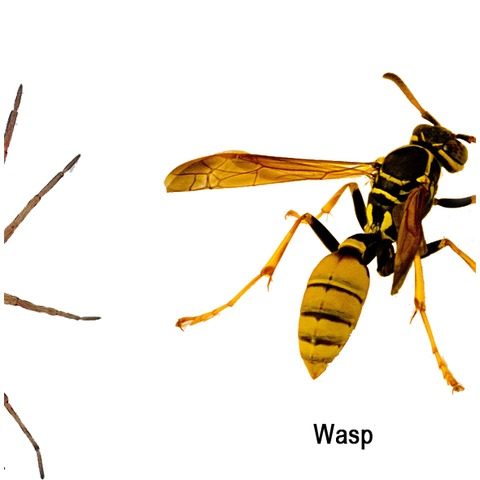
Identification: Slender, reddish-brown with yellow markings, long dangling legs in flight. Build open-celled umbrella-shaped nests attached to eaves, door frames, and outdoor structures.
- Every eave line and outdoor structure from April–October
- Eave removal included on every Plus and Platinum service visit
- High-traffic nest locations: doorways, deck railings, dining areas

Bald-Faced Hornet
Aerial nests in ornamental trees and shrubs throughout Spartanburg neighborhoods. The large visible gray nests are most obvious from July onward as colonies reach full size. The mature tree canopy in Spartanburg’s historic downtown neighborhoods and the established oaks near Morgan Square provide consistent bald-faced hornet aerial nest habitat. Bald-faced hornets are the most aggressively defensive stinging insect, they post guards at the nest perimeter and attack anyone within several feet without direct provocation.
Identification: Large black insect with white facial markings. Builds large gray papery enclosed nests, football to basketball sized by late summer, in shrubs, trees, and under eaves.
- Aerial nests in trees and shrubs, do not approach
- Mature canopy in downtown and established neighborhoods: consistent nest habitat
- Professional removal required, call (864) 754-7155

Mud Dauber
Solitary and non-aggressive, will not sting unless physically handled. The clay tubes are a nuisance and aesthetic concern but present no meaningful sting risk. Active mud dauber populations indicate a local spider population worth noting. Tube removal on every Vinx service visit eliminates the seasonal buildup throughout the active season.
Identification: Slender black wasp with a long thin waist. Builds rough clay tubes on sheltered surfaces, porch ceilings, garage walls, shed interiors, window sills.
- Solitary, non-aggressive, no colony defense behavior
- Porch ceilings, garage walls, shed interiors: primary nesting surfaces
- Tube removal on every Plus and Platinum service visit
Spartanburg property lines make this harder than it needs to be. Where an industrial, multi-family or manufactured-home use abuts single-family homes, the County’s Unified Land Management Ordinance requires a bufferyard planted in “only evergreen plants… to achieve an opaque screen,” from 5 feet deep up to 50. That is a permanent, dense, year-round screen along the boundary — ideal paper wasp and hornet nesting cover, and hard to inspect from either side. The county puts the upkeep on the owner too: “dead trees shall be removed and promptly replaced… debris and litter shall be cleaned.” Wall voids are the other blind spot. County rules require manufactured homes to be fully skirted around the entire home in brick, masonry or vinyl, with no ventilation specification attached, and Clemson lists “attics, porches, eaves, or sheds” among standard yellow jacket nest sites — a sealed perimeter void is exactly that kind of site.
If your home is in the Hampton Heights historic district, add one more step. The City requires a Certificate of Appropriateness before a building permit is issued, and counts gutter work, siding replacement, porch enclosures and fencing as reviewable. Sealing the soffit gap or replacing the rotted trim a colony is nesting behind is therefore a permitted repair on a review timeline — so treat and remove first, then queue the exclusion work.
Professional wasp and hornet control targets the nest structure and colony directly, using treatments that eliminate the colony, remove the nest, and prevent re-establishment. Call (864) 754-7155 for same-day service.
What to Look For
Signs of a Wasp or Hornet Problem at Your Spartanburg Property
Nest Under Eaves
Paper or comb-style nests on eave undersides, porch ceilings, and awning frames, paper wasp activity
Ground Entry Holes
Dome-shaped mounds in lawn or garden areas, can reach 18 inches in height
Large Gray Aerial Nest
Football-sized enclosed gray papery nest in tree canopy or shrubs, bald-faced hornet colony, do not approach
Wall Void Activity
Wasps entering and exiting through siding gaps or mortar joints, yellow jacket wall void nesting common in older Spartanburg housing
Mud Tubes on Surfaces
Clay cylinder tubes on porch ceilings or outbuilding walls, mud dauber activity, nuisance but low sting risk
Increased Aggression
Stinging incidents near outdoor dining or yard work, yellow jacket forager activity peaks in August and September
Vinx HomeGuard Plan
What Happens at Every Visit
Our technicians don’t just spray and leave. Every quarterly service covers your full exterior and interior, done right, backed by a written guarantee.
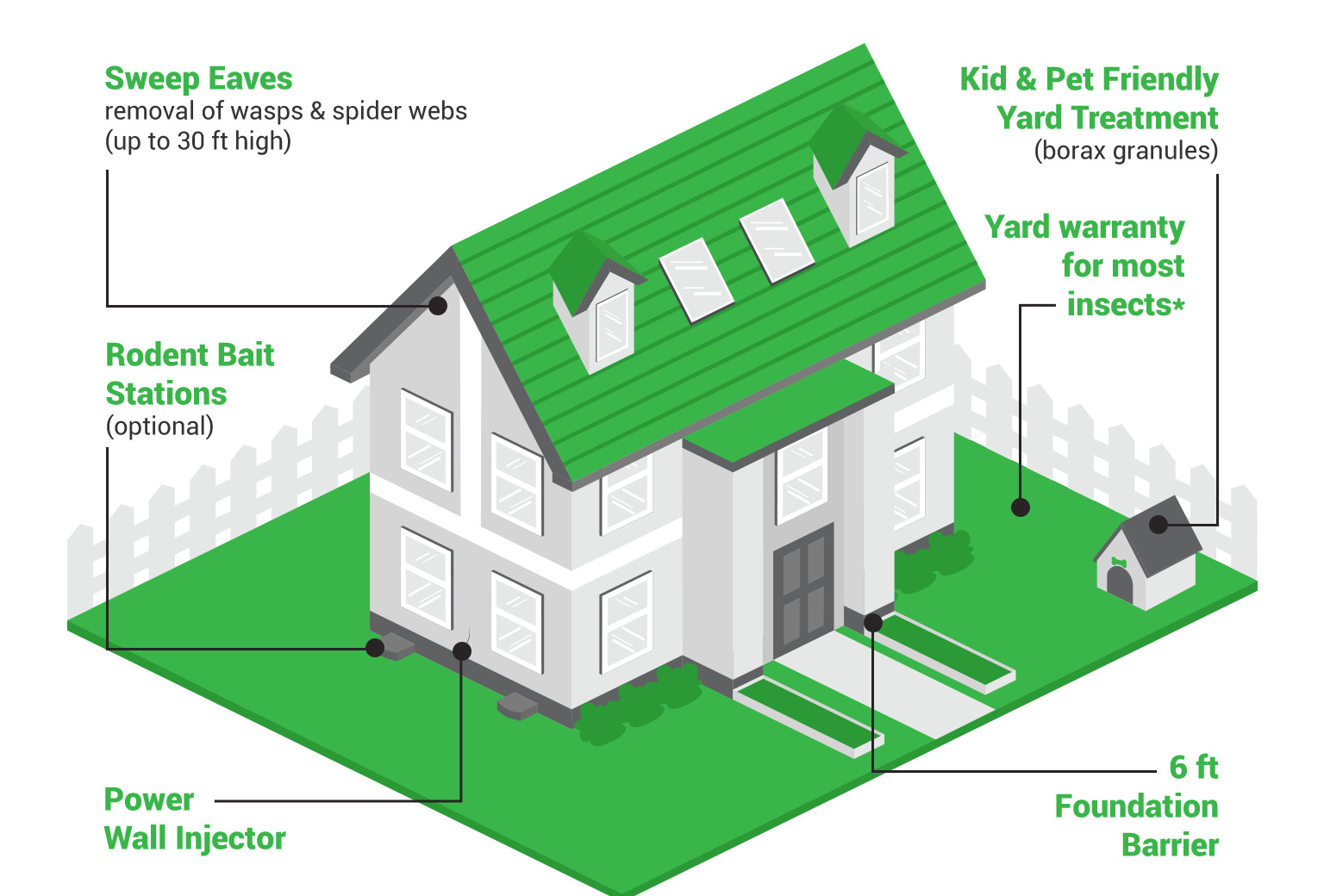
- Sweep Eaves: Wasp nests & spider webs removed up to 30 ft
- Power Wall Injector: Treats wall voids where pests hide
- 6 ft Foundation Barrier: Full perimeter treatment every visit
- Yard Warranty: Free retreatment for most insects
- Kid & Pet Safe Yard Treatment: Borax granules, safe after dry
Homeowner Tips
6 Ways to Reduce Wasp & Hornet Pressure Around Your Spartanburg Property
Kid & Pet Safe
Our Treatments Are Safe for Your Whole Family: Including the Furry Members
Every product we use is EPA-registered and applied strictly at labeled rates by licensed technicians. We take the guesswork out of safety so you can feel confident letting kids and pets back into treated areas quickly.

EPA-Registered Products Only
All products we apply are EPA-registered and used strictly per label requirements. Our licensed technicians are trained to apply the right product in the right place at the right rate, every time.
Dry Time Before Re-Entry
Exterior spray treatments dry in 30–60 minutes. Once dry, treated surfaces are safe for children and pets to contact. Your technician will confirm the all-clear before leaving your property.
Interior Treatment On Request
We treat only what’s needed, where it’s needed. Gel baits in cabinets and crack-and-crevice applications keep products away from areas pets and children frequent most.
Botanical Options Available
Have specific sensitivities? Ask your technician about our plant-derived treatment options. We offer botanical alternatives for households that prefer a more natural approach.
Have a concern about products used near your pets or children? Call 855-800-8469 and we’ll walk you through exactly what we use and why it’s safe.
Explore More
More Pest Control Services in Spartanburg

Pest Control Spartanburg
Year-round protection plan

Mosquito Control Spartanburg
Monthly barrier treatments
Termite Control Spartanburg
Bait systems & liquid treatment

Rodent Control Spartanburg
All rodents covered
Cockroach Control Spartanburg
American & German roaches

Bed Bug Control Spartanburg
Heat & liquid treatments

Spider Control Spartanburg
All spider species covered

Tick & Flea Control Spartanburg
Yard & pet protection
Exterminator Spartanburg
Same-day local exterminators
Ant Control Spartanburg
Household ants & others
Watch List
An Invasive Hornet Reached the Upstate in December 2025
The yellow-legged hornet (Vespa velutina) turned up in Georgia near Savannah in the summer of 2023 and spent two years confined to the South Carolina Lowcountry. On December 8, 2025, Clemson confirmed a nest in York County — the first found outside the Lowcountry, and more than 150 miles north of the closest previous sighting. A beekeeper spotted it first, because the hornets were “hawking” his hives: hovering at the entrance and picking off foraging honey bees as they came and went.
York County is two counties east of Spartanburg, and the jump there was not the insect spreading on its own — that distance in one step points to human-assisted transport, which means the next one could land anywhere. It is not established in Spartanburg County, and we are not going to tell you otherwise. But it is worth knowing what you are looking at. As of April 16, 2026, Clemson had placed 1,408 traps in the York County area, and the statewide effort has removed 172 embryo nests in the Lowcountry and two in the Upstate, with more than 3,500 queens trapped in the Lowcountry and 18 in the Upstate.
How to tell it from what you already have. Clemson describes it as 0.7 to 1.0 inches long, with a mostly black head carrying a distinct yellow or orange face, a dark thorax, and an abdomen banded in alternating dark and yellow-orange. The giveaway is in the name: the legs are dark near the body and turn yellow at the tips. Nothing native here has that. Our bald-faced hornet is black with a white face; our yellow jackets are half an inch and smooth black-and-yellow. Nest habit differs too — yellow-legged hornets build a small primary nest on a structure or low vegetation in May and June, then move to a much larger terminal nest high in the tree canopy from midsummer, which can hold as many as two thousand workers against the few hundred in a native colony.
If you think you have seen one, report it. Clemson runs a public reporting tool at its Yellow-legged Hornet Reporting Tool, and officials have been explicit that early reporting is what matters most in areas where the hornet has not established. That is a Clemson job, not a pest control sale — but if you want a second pair of eyes on a nest before you report it, call us at (864) 754-7155 and we will come look.
Frequently Asked Questions
Wasp & Hornet Control FAQ for Spartanburg Homeowners
Active yellow jacket ground nests show consistent wasp traffic, workers entering and exiting the hole repeatedly, especially in the morning when foraging begins. A hole with no insect traffic is just a hole. If you see wasps entering and exiting a ground-level hole, treat it as a yellow jacket nest until proven otherwise. Do not approach it or insert anything into the entrance. Call (864) 754-7155, your Vinx technician can advise on whether same-day service is warranted.
Paper wasp queens begin establishing nests in early spring: March or April depending on temperatures. Yellow jacket colonies build from spring through late summer and reach peak population in August and September. Bald-faced hornet nests become fully visible and fully staffed by midsummer. The highest-risk sting period in Spartanburg is August through October. Upstate SC, seven to eight month active season; shorter than Lowcountry.
Almost never, and it is worth knowing before you pay someone to do it. Clemson is clear that “newly fertilized queens are the only members of the colony that overwinter” — the founding queen and every worker die off when cold arrives — and that old nests “are rarely used again the next spring.” A gray bald-faced hornet nest hanging in a Spartanburg oak in January is an empty paper shell. Take it down if it bothers you or if it is over a doorway, but do it as housekeeping, not as pest control. The treatment that actually matters is in April and May, when new queens are founding nests and a paper wasp nest is still the size of a golf ball. One caveat: a nest inside a wall void or attic is different, because the cavity itself stays attractive year after year — that one is worth sealing once the season ends.
Eave and structure wasp nest removal is included with every Plus and Platinum visit. For a standalone one-time nest removal, call (864) 754-7155 for same-day service and pricing. Emergency nest removal is available regardless of plan status.
Vinx serves all of Spartanburg and Spartanburg County, downtown Spartanburg, Morgan Square area, Westside, Boiling Springs, Duncan, Cowpens and surrounding areas. Call (864) 754-7155 to confirm scheduling for your specific address.
Keep it blocked off and children clear of it. Do not approach, do not spray, and do not attempt to seal the nest entrance. For yellow jacket ground nests particularly, any disturbance (vibration, shadow, or proximity) can trigger a coordinated defensive response from hundreds of workers within seconds. Call for same-day service. When the nest has been treated and cleared, the play area is safe the following day.
Consumer aerosol wasp sprays can be effective on small, accessible, early-season paper wasp nests with fewer than 15–20 workers, sprayed at night when workers are clustered on the nest. They are not the answer for yellow jacket ground nests, bald-faced hornet nests, or any nest in a structural void or wall gap. Where a DIY treatment fails on a large colony, consequences can be severe. If unsure, call us — same-day service is available.
Paper wasp: a founding queen's nest reaches golf ball size with a dozen workers by May, 50–80 workers by July, and up to 200 at peak August. Yellow jacket: the spring colony is invisible and minimal risk; by August Clemson puts the same colony at several hundred workers, scavenging hard because natural food has run short, which is when almost every serious sting call comes in. Eave removal each Plus and Platinum service visit eliminates the small founding nests of spring before they reach dangerous summer size. A nest removed in April takes only minutes, while the same nest in August requires full protective equipment and professional treatment.
Not yet, but it is worth being able to recognize. The yellow-legged hornet is an invasive species that arrived near Savannah in 2023 and stayed in the South Carolina Lowcountry until December 8, 2025, when Clemson confirmed a nest in York County — the first outside the Lowcountry and more than 150 miles north of the nearest previous sighting. York County is two counties east of Spartanburg, and it is not established here. Clemson describes it as 0.7 to 1.0 inches long with a mostly black head, a distinct yellow or orange face, and legs that are dark near the body and turn yellow at the tips — nothing native to Spartanburg looks like that. Beekeepers usually see it first, because it hovers at hive entrances picking off returning foragers. If you think you have seen one, report it through Clemson’s Yellow-legged Hornet Reporting Tool; early reports are what keeps it from establishing.
Service Coverage
Wasp & Hornet Control Across Spartanburg & Spartanburg County
Serving every neighborhood in the Spartanburg metro area