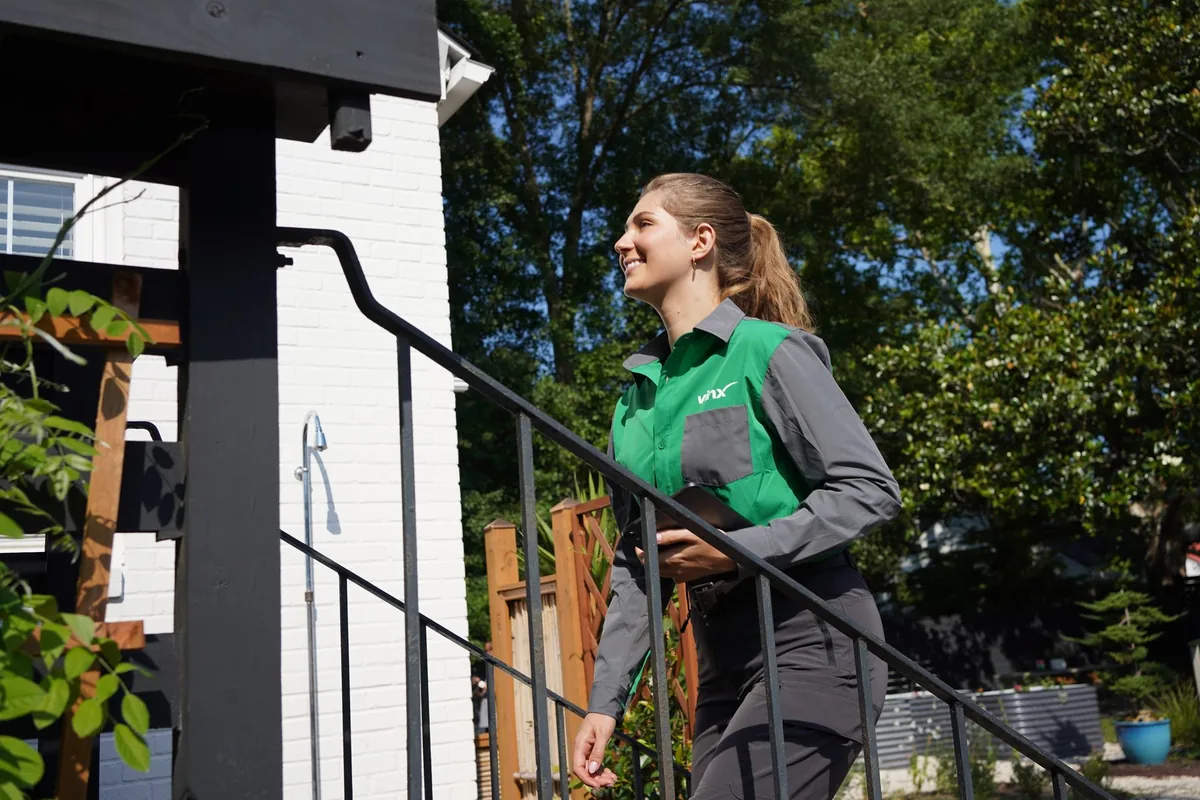
Termite Control in Simpsonville, SC
Free Inspection • Bait Systems • Liquid Treatment • Annual Monitoring
Vinx protects Simpsonville homes from Eastern subterranean termites — the species that is actually here — with targeted bait systems, liquid soil treatment and annual monitoring, stopping damage before it starts and eliminating active colonies fast.
Get Started in 60 Seconds
Choose what’s easiest for you
Request a Quote
We usually respond in 2 minutes
Call 855-800-8469
Get a Live Person (no AI agents here!)
Sign Up Online
Get pricing and schedule now





Welcome to Vinx Pest Control
A Company That Actually Backs What It Says
At Vinx, we combine professional-grade termite treatments with a level of service most pest control companies don’t offer. Local technicians, fast response times, and a guarantee that actually means something.
“I’m not passionate about killing bugs. I’m passionate about customer service. At Vinx, you get experts who show up, do the job right, and stand behind every visit. No runaround, no fine print.”

Founder & Owner, Vinx Pest Control
PROTECTION PLANS
Termite Protection Plans for Simpsonville Homes

Annual Monitoring Plan
- Annual Termite Inspection
- Bait Station Installation & Monitoring
- Digital Report After Every Visit
- Early Detection of New Activity
- 100% Satisfaction Guarantee

Active Treatment + Monitoring
- Full Termite Inspection & Assessment
- Bait System Installation & Active Treatment
- Liquid Soil Barrier Where Needed
- Semi-Annual Monitoring Visits
- Re-Treatment Included if Activity Found
- Digital Inspection Report
- 100% Money-Back Guarantee

Full-Coverage Premium Protection
- Comprehensive Inspection & Mapping
- Bait System + Full Perimeter Liquid Barrier
- Quarterly Monitoring Visits
- Unlimited Re-Treatments if Activity Found
- Crawlspace & Attic Inspection Included
- Priority Scheduling & Response
- 100% Money-Back Guarantee
Termite treatment pricing is based on linear footage of the structure and severity of infestation. All plans include a free inspection. Call for a same-day quote.
Request Termite Control Service in Simpsonville
Fill out the form below and a Vinx specialist will contact you same day to schedule your free termite inspection.
Our Approach
How Vinx Eliminates Termites in Your Simpsonville Home

Termite Inspection & Damage Assessment
Your licensed technician inspects the full structure, foundation perimeter, crawlspace, attic, garage, and all wood-to-soil contact points. We identify active mud tubes, exit holes, swarm evidence, damaged wood, and moisture conditions that attract subterranean termites. A written inspection report documents all findings, including photographs and a diagram of activity locations and recommended treatment zones.
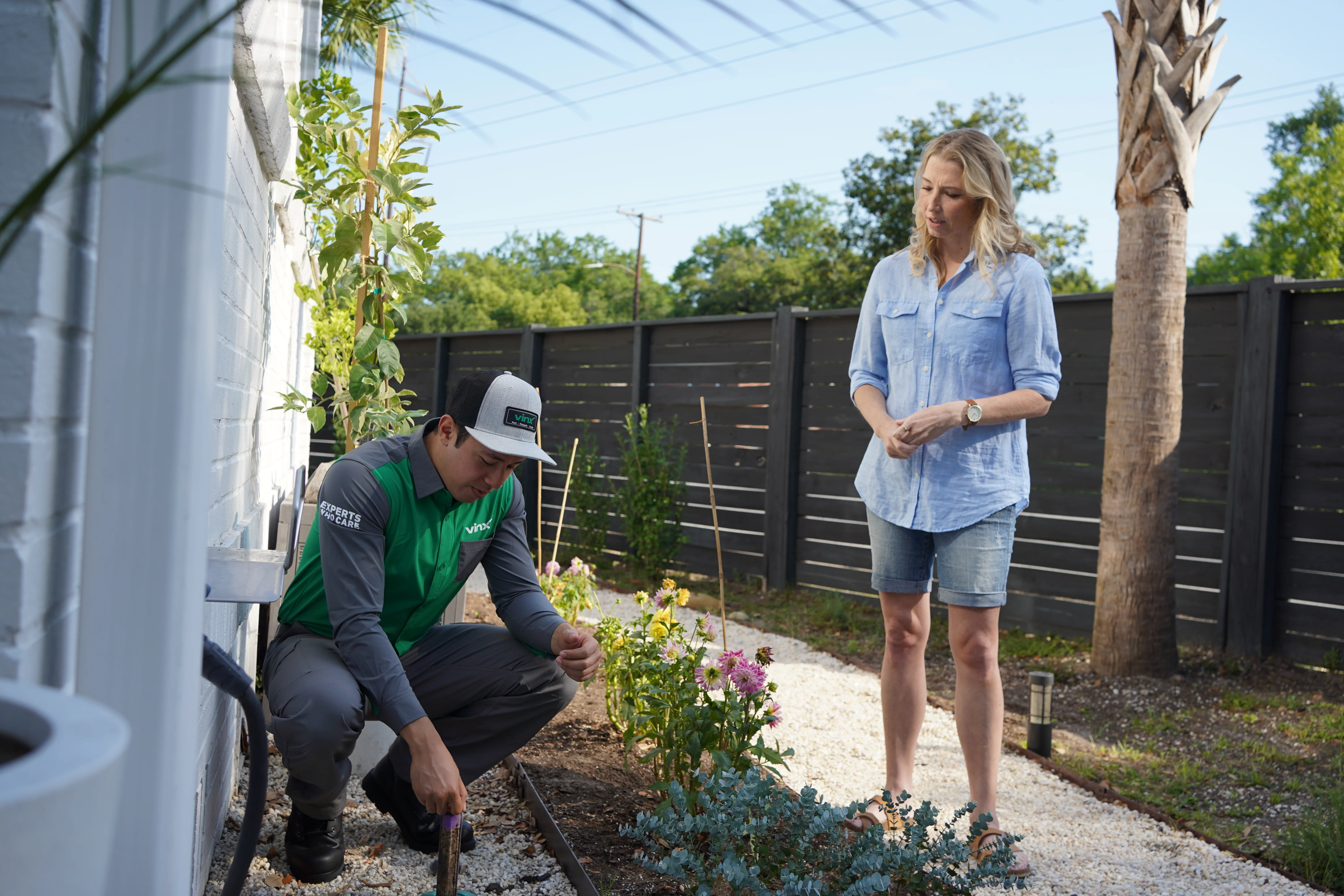
Bait Station Installation
In-ground bait stations are installed around the full perimeter of the structure at intervals specified by the manufacturer. Stations contain cellulose bait that foraging termite workers carry back to the colony, eliminating the queen and collapsing the colony from within. Bait stations are checked and serviced on every monitoring visit and replaced when bait is depleted or activity is detected.
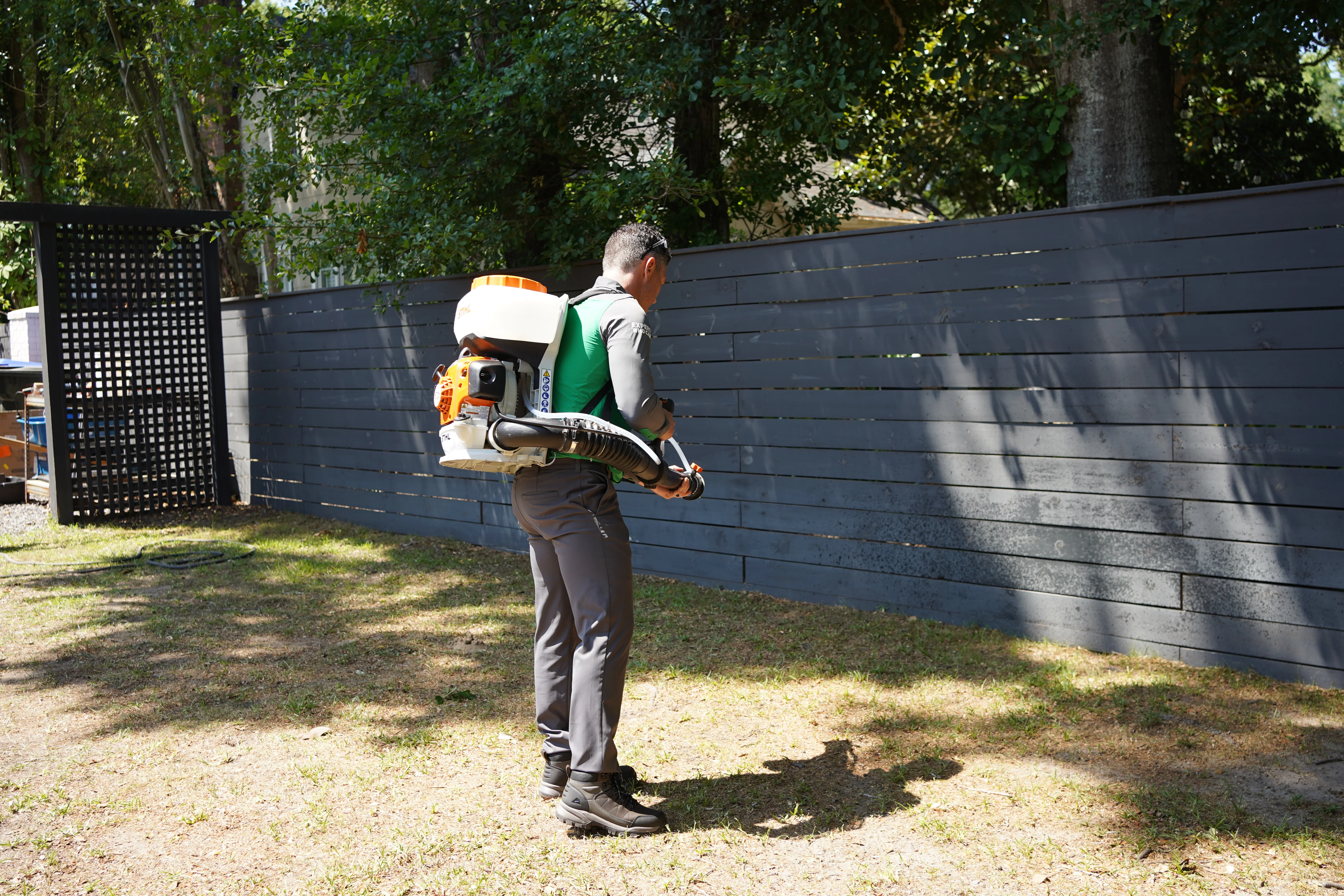
Liquid Soil Barrier Treatment
For active infestations or high-risk properties, a liquid termiticide is applied to the soil around and under the foundation, creating a continuous treated zone that kills termites on contact and transfers the termiticide to nestmates through social grooming. Liquid barrier treatment provides immediate knockdown of active colonies and long-term residual protection for 5–10 years depending on soil conditions and product used.
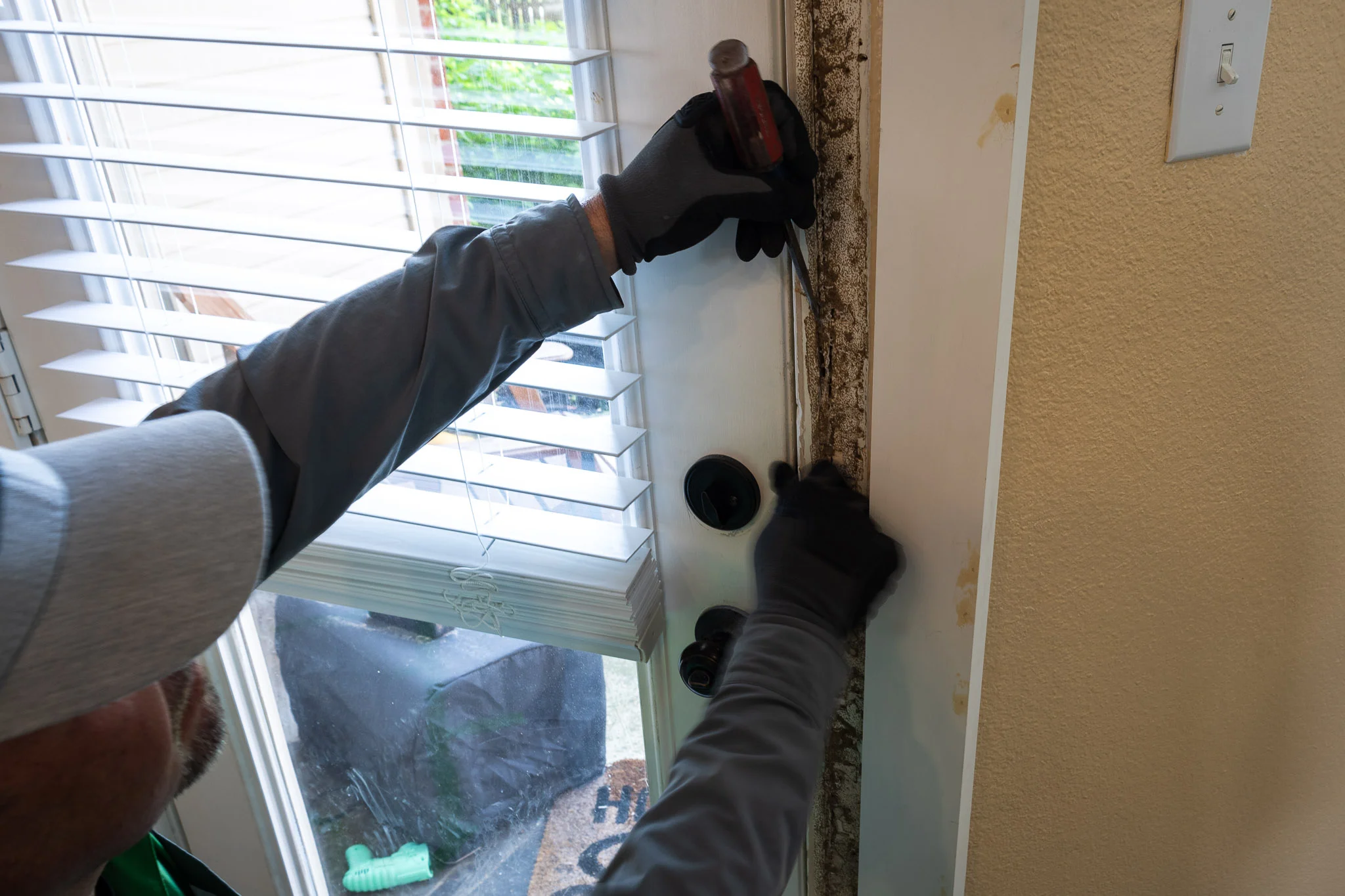
Annual Monitoring & Re-Treatment
Termite protection is not a one-time event. Annual monitoring visits inspect every bait station and re-examine the structure for new activity. If termites are detected at any station or anywhere on the property during a monitoring visit, re-treatment is performed at no additional charge under Plus and Platinum plans. Your technician provides a written report after every visit.
Termite-Free Guarantee
If termite activity is found during any monitoring visit, we re-treat at no additional charge under Plus and Platinum plans. We stand behind every service, no fine print, no runaround. Your home is protected for as long as you maintain your annual monitoring plan.
Customer Reviews
What Simpsonville Customers Are Saying
Zachari did a great job explaining our new service, the installation he did, the coverage, and what to expect going forward.
Have had Vinx for several years and they've been great. I love that they will come back out for a free retreatment if we see any issues.
Shoutout to Kingston! He arrived on time and treated our home with respect, I highly recommend Kingston!
Jon did an amazing job and was very thorough.
Alfredo is ALWAYS Professional and takes the time to explain what he's doing!
Termite Pressure in Simpsonville
Why Termites Are the Costliest Pest in Simpsonville
South Carolina is one of the highest-risk termite states in the country. Greenville County’s combination of warm temperatures, clay-heavy soils that retain moisture, and abundant wood-to-soil contact in residential construction creates near-ideal conditions for subterranean termite colonies. A mature colony of 500,000 workers can consume a linear foot of 2x4 in approximately five months, damage that accumulates silently behind walls and under floors before any visible sign appears.
Termites cause more structural damage annually than fires, floods, and windstorms combined. Homeowners insurance does not cover termite damage in the vast majority of policies, it is considered a preventable pest infestation, not a sudden loss. The average termite repair cost in the Southeast is $3,000–$8,000, and severe infestations involving floor joists, sill plates, or structural beams can run significantly higher.
Swarming season in Simpsonville runs from March through May. If you see winged insects emerging from your foundation, window frames, or crawlspace vents in spring, those are reproductive termites launching new colonies. Swarming is the most visible sign of an established infestation, by the time you see swarmers, the colony has been active for at least three years. Do not delay, contact a licensed termite professional immediately.
2 Termite Species in Simpsonville
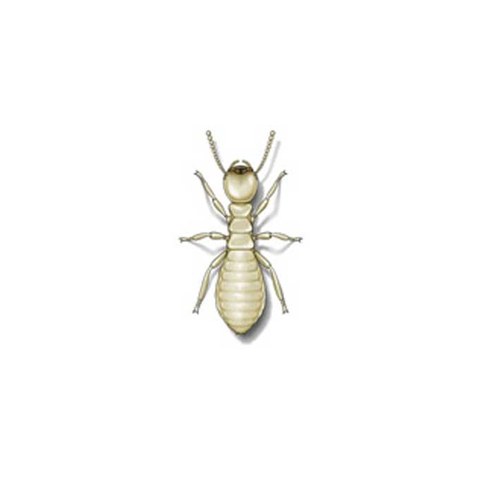
Eastern Subterranean Termite (Reticulitermes flavipes)
The most destructive and widely distributed termite species in North America, and the primary termite threat in Simpsonville. Colonies live underground and travel through mud tubes to reach wood above the soil line. A single colony can contain 100,000 to 1,000,000 workers. Eastern subterranean termites swarm in early spring: March through April in Simpsonville. They are found in every neighborhood and on virtually every property in Greenville County. Annual monitoring and bait station installation are the most effective long-term control strategy.
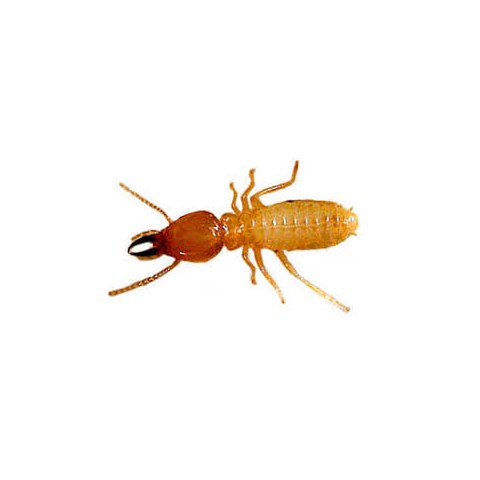
Formosan Termite (Coptotermes formosanus)
The most destructive termite species in the United States, with colonies running to millions of workers and the ability to build above-ground carton nests inside wall voids. It is also not established where you live, and we would rather say so than sell you a treatment for it. Clemson documents Formosan termites as established in 16 South Carolina counties — Aiken, Bamberg, Beaufort, Berkeley, Charleston, Colleton, Dorchester, Georgetown, Horry, Jasper, Lexington, Orangeburg, Pickens, Richland, Sumter and York. Greenville County is not among them. The nearest listed county is Pickens, next door, and Clemson is specific about what happened there: the infestations in Pickens and York "appeared to have been isolated events brought into the counties in old, infested railroad ties used for retaining walls," the termites were treated, and follow-up surveys have not found Formosans in either county since. What is eating Simpsonville homes is the Eastern subterranean termite, and that is what an inspection here should be looking for.
Termite Risk by Neighborhood
Termite Risk Across Simpsonville Neighborhoods
Five Forks: MODERATE TO ELEVATED TERMITE RISK
Five Forks newer construction follows current building codes that require termite pre-treatment of soil before slab pour and treated lumber in ground-contact applications. However, pre-treatment barriers break down over time, typically 5–10 years, and are not permanent protection. Five Forks homes that were built more than 5 years ago and have never had a termite inspection or bait station installation are at elevated risk. Properties with irrigation systems, crawlspace moisture issues, wood mulch against the foundation, or wood-to-soil contact at deck posts and fence lines face higher pressure than the average new construction home.
Rocky Creek, West of the Tracks: HIGH TERMITE RISK
Rocky Creek collects water from most of Simpsonville, and the buffer the City requires along it keeps all trees and ground cover in place, including fallen limbs and dead wood. Permanent soil moisture near the creek plus that retained wood is the combination eastern subterranean termite colonies thrive on, and the colony next door to your fence line is not going anywhere. Homes backing onto the creek or its feeder branches should be treated as high-risk and monitored annually regardless of construction age.
Durbin & Horsepen Creeks, East of the Tracks: ELEVATED TERMITE RISK
Simpsonville has added 2,486 single-family homes since 2000, and the subdivisions built against the woodland along Durbin and Horsepen Creeks are part of that wave. Their slab pre-treatment was real but not permanent, and on a home built in the 2000s it has had well over a decade to degrade. Wood fences, deck posts and landscape timbers that run toward the wooded edge give termites a bridge over what is left of it. If your home was built in the 2000s and has never had an inspection or bait station installation, treat it as unprotected.
Woodruff Road Corridor: MODERATE TERMITE RISK
The Woodruff Road commercial corridor’s mix of slab-on-grade commercial construction and adjacent residential lots creates moderate termite risk for homeowners in this area. Irrigation-heavy commercial landscaping maintains soil moisture that supports subterranean termite populations along the commercial-residential boundary. Homeowners with properties adjacent to commercial landscaping or large ornamental plantings should include wood mulch management as part of their termite prevention strategy, mulch beds against the foundation are one of the most common conditions associated with termite entry. Annual monitoring provides early detection before damage accumulates.
Heritage Park & Fairview Road: ELEVATED TERMITE RISK
In the established residential neighborhoods along the Fairview Road corridor, any home from Simpsonville’s 1970s–90s growth boom is now 35 to 55 years old, and its pre-construction soil treatment expired long ago. Decades of added decks and patios, trenching and rebuilt beds have bridged what remained, and the City’s plan warns that poorly compacted fill “may settle over time,” cracking slabs and opening new entry points. Homes without an active monitoring program should schedule an inspection.
Downtown & Main Street: ELEVATED TERMITE RISK
Near the town’s original crossroads around Main Street sits a small pocket of pre-war housing: light wood frame on brick piers over an open, ventilated crawl space, altered continually for a century. The recurring findings are settled grading, blocked vents and wood set straight onto soil at a replaced porch or step. None of that is visible from the yard, so the inspection belongs under the floor, and any structure here with wood touching soil should be considered for bait station protection.
Kid & Pet Safe
Our Treatments Are Safe for Your Whole Family: Including the Furry Members
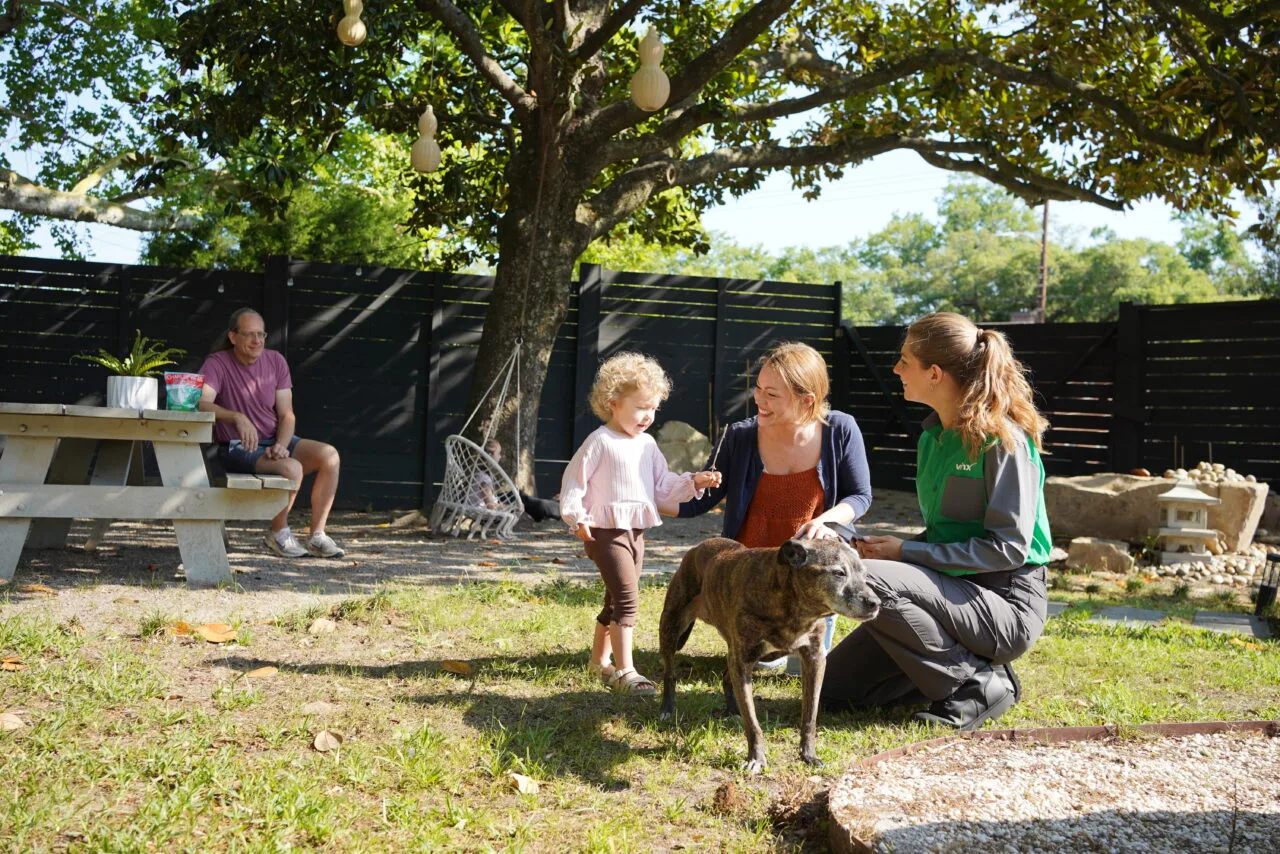
Every product we use is EPA-registered and applied strictly at labeled rates by licensed technicians. Termite bait stations are installed in the ground around the perimeter and are not accessible to children or pets in normal use.
EPA-Registered Products Only
All termiticides and bait products we use are EPA-registered and applied at labeled rates. Liquid soil barrier treatment is applied to soil beneath the slab or around the foundation, not broadcast to interior living surfaces.
In-Ground Bait Stations
Termite bait stations are installed several inches below grade around the foundation perimeter. The bait is enclosed in a locked station that requires a special key to open, inaccessible to children, pets, and wildlife during normal use.
No Interior Disruption
Most termite treatments are performed entirely outside the living space, soil treatment around the foundation and bait station installation in the yard. Interior treatment, when needed, targets structural void spaces and sub-floor areas not accessible to family members or pets.
Low-Impact Bait Technology
Modern termite bait systems use chitin synthesis inhibitors that specifically target termite development, they have extremely low toxicity to mammals, birds, and beneficial insects. Bait technology is the lowest-impact termite treatment method available and is safe in households with children and pets.
Have a question about products used near your pets or children? Call (855) 800-8469 and we’ll walk you through exactly what we use and why it’s safe.
Explore More
More Pest Control Services in Simpsonville

Pest Control Simpsonville
Year-round protection plan

Ant Control Simpsonville
6 species treated

Bed Bug Control Simpsonville
Chemical + follow-up protocol

Mosquito Control Simpsonville
Monthly barrier treatment
Cockroach Control Simpsonville
American & German roaches

Rodent Control Simpsonville
Trapping & exclusion

Spider Control Simpsonville
Black & brown widows, wolf spiders

Wasp Control Simpsonville
Nest removal & prevention

Tick & Flea Control Simpsonville
Yard & pet protection
Exterminator Simpsonville
Same-day local exterminators
Frequently Asked Questions
Termite Control in Simpsonville: Your Questions Answered
In practice, almost certainly. The CL-100 is South Carolina’s Official Wood Infestation Report (form SC 1099), and it appears in most residential transactions because most lenders ask for one. It can only be issued by an inspector licensed in the wood-destroying organism category, Category 7A, under Clemson University’s Department of Pesticide Regulation, so ask whoever you hire whether the person doing your inspection holds 7A rather than just whether the company does pest control. It covers wood-destroying insects and wood-destroying fungi, but the fungi portion applies only below the first main living-area floor, which puts your crawlspace and substructure in scope while siding and fascia are not.
No, and this is the most common misunderstanding about it. The regulation states the report “is not a warranty against future infestation, nor does it place any obligation for the correction of reported damage or infestation upon the applicator or business issuing the report.” Any duty to repair comes from your purchase contract or your lender’s conditions, not from the state. You will also hear that a CL-100 is valid for 30 days; no validity period appears anywhere in the regulation, so treat that as lender or contract practice and confirm the window with your lender rather than assuming a legal deadline. One thing to expect on an older Simpsonville crawlspace: excessive moisture has a numeric definition, wood at or above 20% or standing water in the crawlspace or around the foundation, and that finding often traces back to drainage rather than to any insect.
Almost certainly not, and in Simpsonville that describes a very large share of the housing stock. The city grew 254% between 1970 and 1990, briefly the fastest-growing city in the state, so its dominant residential layer is subdivision construction from that boom. Soil pre-treatment applied at the slab pour is not permanent; the barrier degrades over years, and forty-odd years is well past it. Add the Piedmont’s “thin, stony clay soils” and the City’s own warning that slope and poorly compacted fill leave foundations shifting and settling, and you get gaps in a barrier that was never designed to last this long. A home of that era with no bait system and no recent inspection is the profile we most often find active subterranean termites in.
Termite treatment pricing is based on the linear footage of the structure, the severity of any active infestation, and the treatment method selected. Call (855) 800-8469 or fill out the quote form for a free inspection and same-day estimate.
The most common signs of subterranean termites are mud tubes (pencil-width tunnels of dried soil) along foundation walls, crawlspace piers, or basement walls; swarming winged insects in spring near windows or foundation vents; hollow-sounding wood when tapped; and small piles of wings near window sills after a swarm. However, most termite damage is found during a professional inspection, not by visible signs. Annual inspections are the most reliable detection method.
Bait systems use cellulose bait in in-ground stations to attract foraging termites, which carry the bait back to the colony and eliminate it from within over 60–90 days. Liquid treatment creates a continuous treated soil zone that kills termites on contact and provides long-term residual protection. Bait systems are lower impact and preferred for monitoring; liquid treatment provides faster knockdown of active infestations. Most active infestations benefit from both methods used in combination.
Yes. Annual monitoring with bait stations is prevention, it detects new termite activity before colonies establish and damage accumulates. South Carolina’s climate means virtually every property in Greenville County has subterranean termite colonies living nearby in the soil. An unmonitored home is not protected. The cost of annual monitoring is a fraction of the average termite repair bill.
Eastern subterranean termites in Simpsonville typically swarm from late March through May, most commonly on warm days following rain. If you see swarmers, that indicates an established colony nearby. Do not wait, colonies that produce swarmers have been active for at least three years and likely have significant worker populations already foraging near your structure.
A full termite inspection takes 1–2 hours depending on property size. Bait station installation around an average home takes 2–3 hours. Liquid soil barrier treatment for a crawlspace home takes 3–6 hours and may require drilling through concrete at entry points. Your technician will give you a time estimate before beginning work. There is no need to vacate the home during exterior treatments.
In most cases, no. Standard homeowner’s insurance policies exclude termite damage because it is considered a preventable pest infestation rather than a sudden accidental loss. Some policies will cover resultant damage (such as a collapsed floor) but not the repair of the wood itself. This makes annual termite monitoring and professional treatment one of the most cost-effective investments a Simpsonville homeowner can make.
DIY termite products (store-bought bait stakes, foam treatments, orange oil) are not effective against established subterranean termite colonies. These species live in underground colonies that can extend 20+ feet from the structure and contain hundreds of thousands of workers. Effective treatment requires professional-grade termiticides, precise soil injection or bait station placement at correct intervals, and ongoing monitoring to confirm colony elimination. DIY attempts typically delay professional treatment and allow damage to continue.
Service Coverage
Simpsonville & Greenville County Service Area
Serving Simpsonville and surrounding Greenville County communities for termite control and monitoring.