Termite Control in Spartanburg, SC
Inspection • Bait Stations • Liquid Barrier • Annual Monitoring • Damage Guarantee
About 78% of the City of Spartanburg’s housing was built before 1980, which for termites means one thing above all: whatever soil treatment protected these houses originally has long since lapsed. The pre-construction chemical barrier was not designed to last fifty years, and in the decades since, porches have been rebuilt, grade has crept up foundations and utility trenches have cut through treated soil. Spartanburg County is not among the sixteen on Clemson’s Formosan list, so the native Eastern subterranean termite is what we inspect for. Vinx looks at the barrier that is actually there now.
Get Started in 60 Seconds
Choose what’s easiest for you
Request a Quote
We usually respond in 2 minutes
Call 855-800-8469
Get a Live Person (no AI agents here!)
Sign Up Online
Get pricing and schedule now





Welcome to Vinx Pest Control
A Company That Actually Backs What It Says
Vinx termite treatment combines bait station technology that targets and collapses the entire colony with liquid barrier treatment that protects your structure directly. Annual inspection and monitoring keep your home covered year after year, not just during the initial treatment window.
“I’m not passionate about killing bugs. I’m passionate about customer service. At Vinx, you get experts who show up, do the job right, and stand behind every visit. No runaround, no fine print.”

Founder & Owner, Vinx Pest Control
PROTECTION PLANS
Termite Control Plans for Spartanburg Homes

Standard Residential Protection
- 4 Seasonal Treatments Per Year
- 50+ Covered Pests
- Interior, Exterior & Perimeter Treatment
- Unlimited Free Re-Services
- 100% Money-Back Guarantee

Upgraded Home Protection
- 6 Home & Yard Treatments Per Year
- 50+ Covered Pests
- Yard Ant Elimination Guarantee
- Flea & Tick Elimination Guarantee
- 100% Money-Back Guarantee

Most Comprehensive Protection
- 9 Treatments Per Year
- 50+ Covered Pests
- 8 Mosquito Treatments (Mar–Nov)
- Flea, Tick & Ant Coverage
- Free Bed Bug Treatments if Needed*
- 100% Money-Back Guarantee
Termite treatment is a standalone service separate from the general pest plans above. Call (855) 800-8469 for a termite inspection and custom treatment quote.
Request Termite Control in Spartanburg
Fill out the form and a Vinx termite specialist will contact you same day to schedule your inspection.
Our Approach
How Vinx Eliminates Termites in Your Spartanburg Home

Full Termite Inspection
Your Vinx termite inspector performs a thorough inspection of the interior and exterior of the structure, including the crawlspace or basement, attic access, all wood-to-soil contact points, plumbing penetrations, and the full perimeter foundation. The inspector looks for mud tubes, damaged or hollow-sounding wood, termite frass, discarded wings from swarmers, and conducive conditions (wood-to-soil contact, moisture, debris against the foundation). Findings are documented and used to design a treatment plan specific to your property, the inspection identifies both active infestation areas and the most vulnerable entry points for the treatment to address.
Bait Station Installation & Colony Elimination
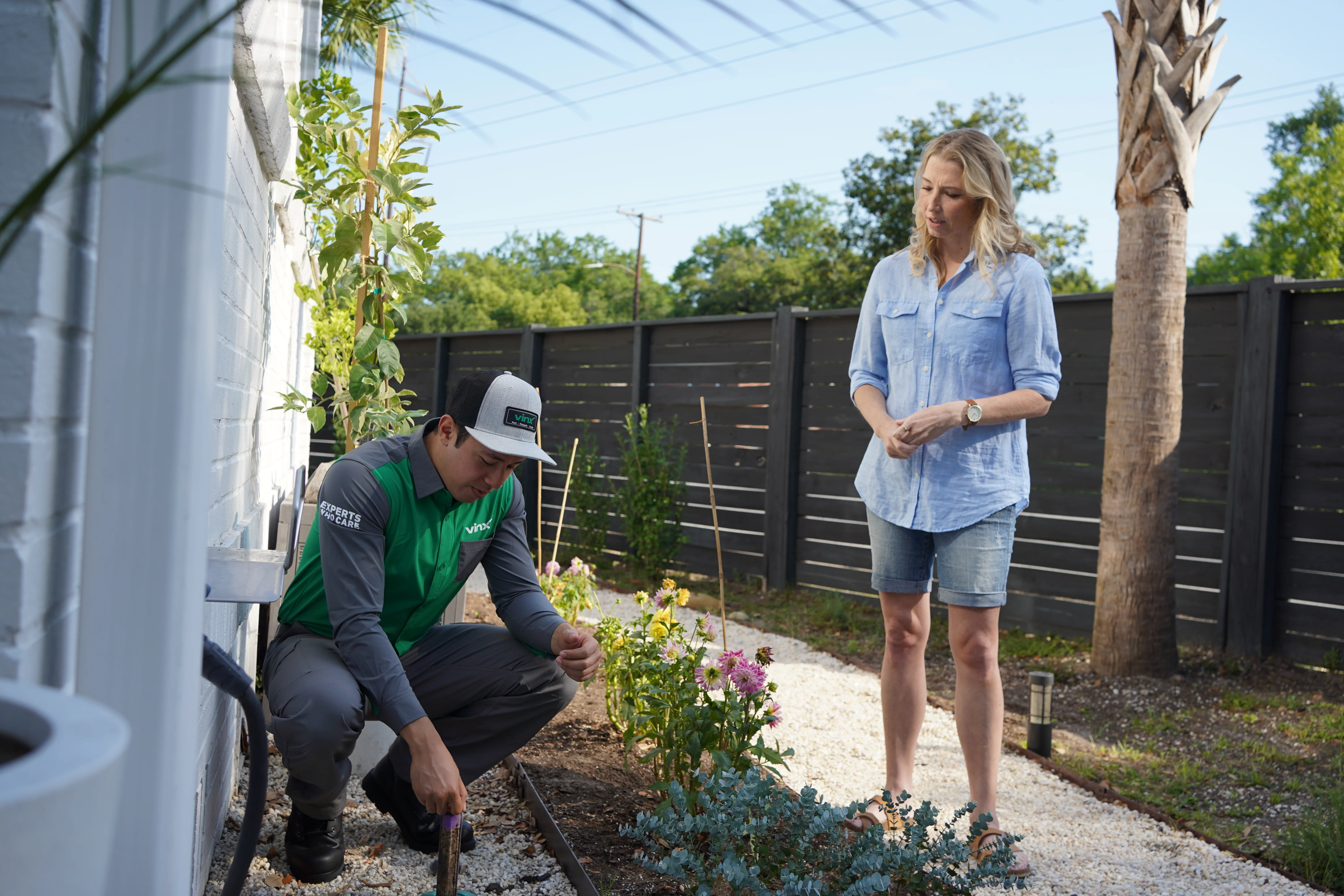
Termite bait stations are installed in the soil around the perimeter of the structure at regular intervals. Foraging termites discover the stations, feed on the bait, and carry the slow-acting active ingredient back to the colony. The toxicant is spread through trophallaxis, the feeding and grooming behaviors termites use to share food, and gradually eliminates the worker caste, which the colony cannot survive without. Colony elimination typically takes 60–120 days after initial feeding activity begins. Stations are inspected and recharged during annual monitoring visits. Bait technology eliminates the entire colony rather than just the termites present at the structure.
Liquid Barrier Treatment
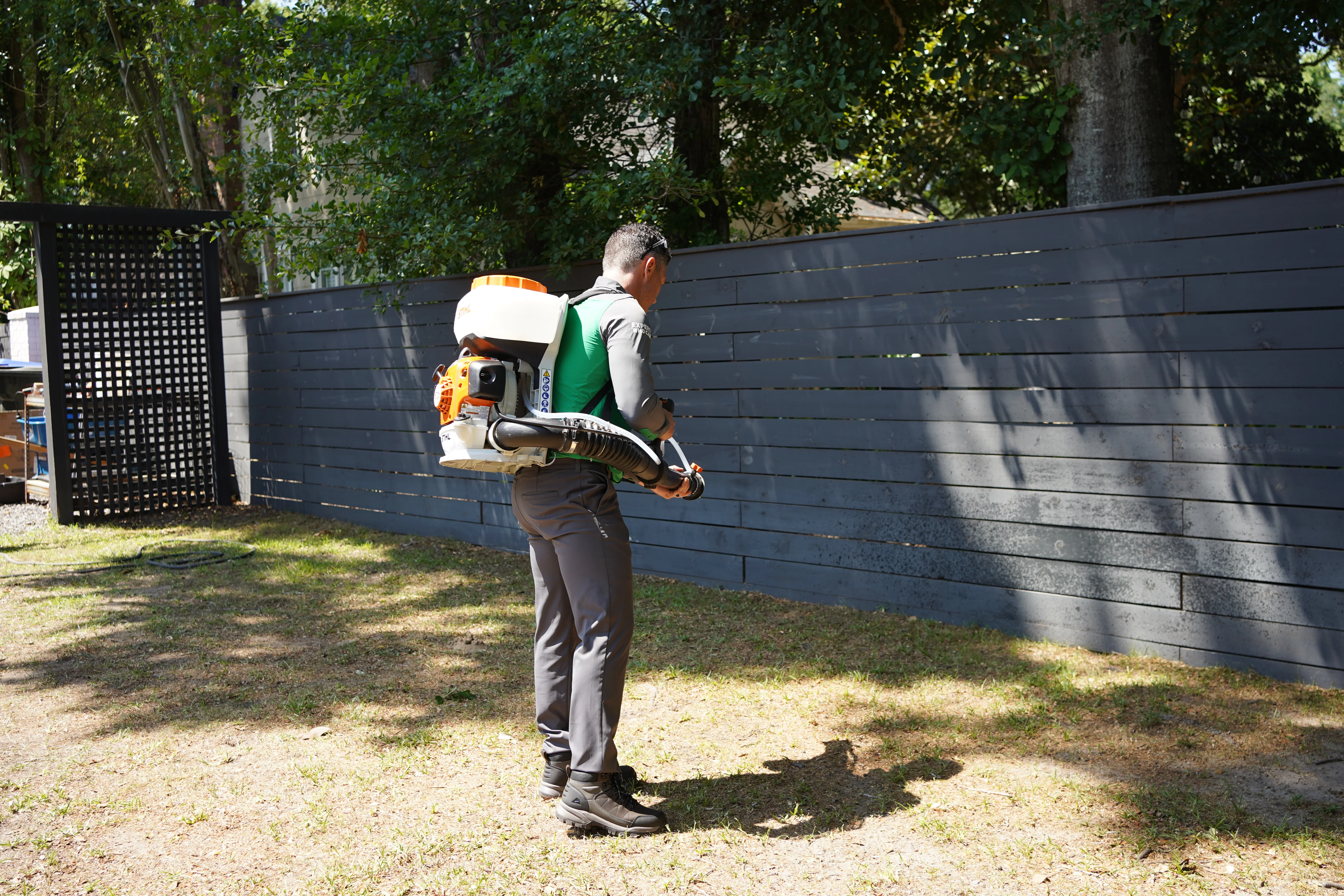
For active infestations or high-risk structures, liquid termiticide is applied to the soil around and under the foundation to create a continuous treated zone. The treatment involves trenching along the foundation, treating the soil, and rodding through concrete expansion joints, plumbing penetrations, and other entry points to ensure complete coverage. Termites that pass through the treated zone are killed on contact, and the residual effect protects the structure for several years. Liquid barrier treatment is the most direct protection against Eastern Subterranean Termites, which must pass through the soil to reach the structure. It is often used in combination with bait stations for comprehensive protection.
Annual Inspection & Monitoring
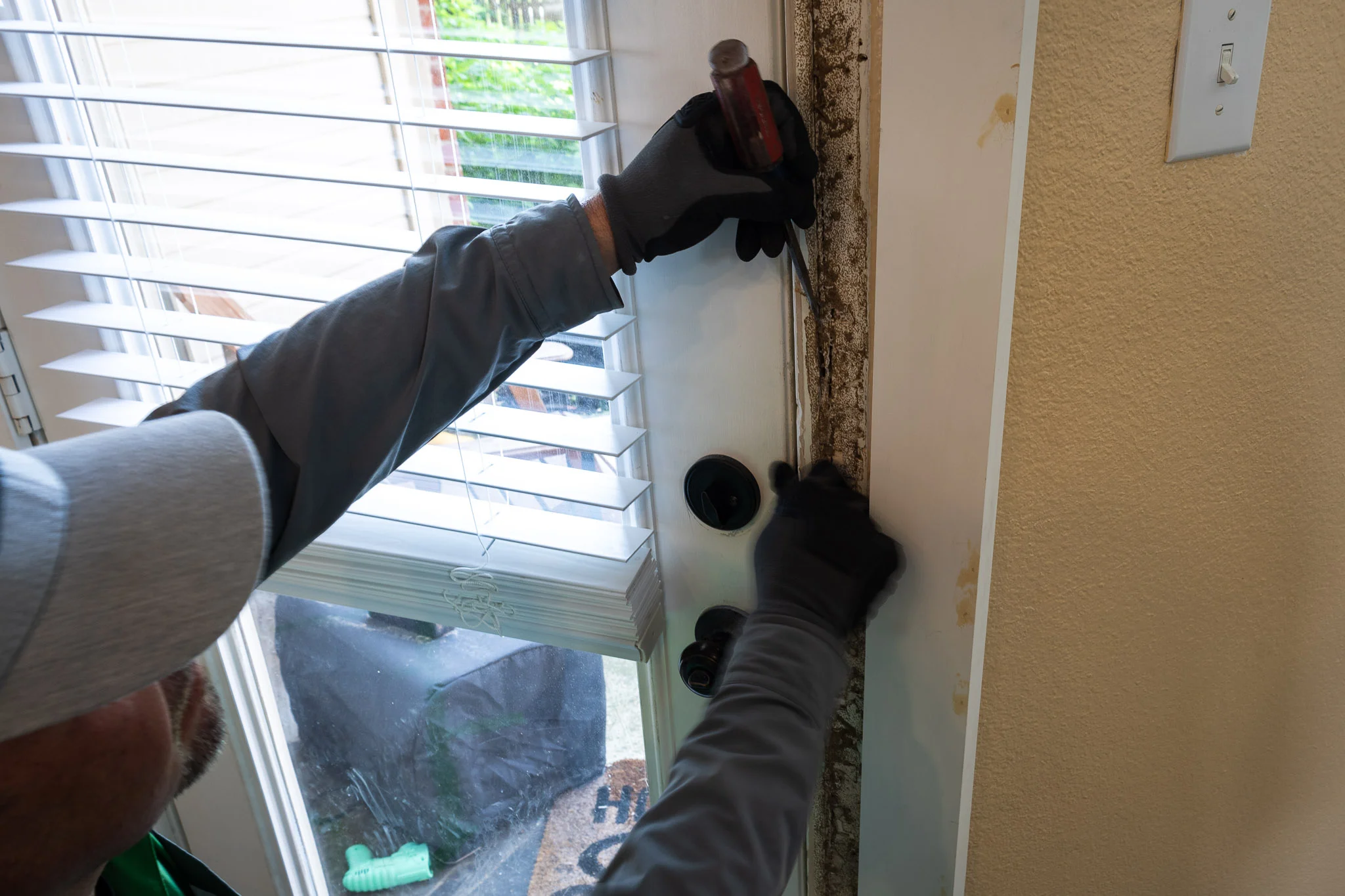
Termite protection is not a one-time event, it requires ongoing monitoring to confirm treatment effectiveness and catch any new activity early. Vinx returns annually to inspect the structure, check and recharge bait stations, confirm the liquid barrier integrity where applicable, and identify any new conducive conditions (plumbing leaks, new wood-to-soil contact, debris accumulation) that could compromise protection. The annual inspection is included in the termite protection program and keeps your damage guarantee active. Early detection of any new termite activity allows Vinx to respond before structural damage can develop.
Termite Damage Guarantee
Vinx termite protection includes a damage guarantee for structures under active monitoring. If termite damage occurs to a protected structure while under a current Vinx termite plan, we will treat the infestation and repair the damage at no additional cost. Call (855) 800-8469 for full guarantee terms.
Customer Reviews
What Spartanburg Customers Are Saying
Had my home pest inspection done today by a knowledgeable professional tech. I signed up for pest control services for my newly purchased home
These guys are exceptional! They always take great care of us and our animals! Truly a fabulous company of good humans
Zachari is very professional and was flexible to meet our needs with termite bait station placement
Zachari was very polite and did a great job.
I am really pleased with my service! If I have any Issues, they are super responsive and everyone they send out has been very friendly, professional, and thorough.
Termite Risk in Spartanburg
Why Termites Are a Serious Threat to Spartanburg Homes
South Carolina consistently ranks among the highest-risk states for termite activity in the country. Spartanburg County’s warm summers, moderate winters, high humidity, and abundant wood construction create near-ideal conditions for Eastern Subterranean Termites to thrive year-round. The Upstate’s clay-heavy soils are the part worth understanding: Piedmont subsoil runs around 5% porosity against more than 10% in the sandy coastal subsoils, so water that reaches it drains slowly and sits. Spartanburg County’s rainfall is also unusually even — from 47.71 inches at Woodruff to 51.71 at Chesnee, a four-inch spread across the whole county, with no dry season to speak of. Steady rain onto slow-draining clay is a recipe for the persistently damp crawlspace and foundation soil that termite colonies need year-round.
The pest control industry puts US termite damage and treatment at roughly $5 billion a year, and almost none of it is covered by standard homeowners insurance, which treats termite damage as a preventable maintenance issue rather than a sudden loss. There is a useful number to anchor on instead of a damage estimate: South Carolina’s own wood infestation regulation defines “excessive moisture” as wood moisture at or above 20%, or standing water in the crawlspace or around the foundation. That threshold is the line an inspector actually measures against, and on Piedmont clay it is easier to cross than most homeowners expect. Structural damage severe enough to need repair usually takes years to develop and is almost always invisible until it is done.
Swarm season is early spring. Clemson notes that native subterranean termites swarm in the spring, often in the afternoon, and that great numbers of swarmers can leave a single colony at once; warm days following rain are the usual trigger. Winged reproductives (alates) emerge to pair off and start new colonies. Swarms are often the first visible sign homeowners notice of an active termite colony. If you see what appears to be flying ants near your foundation, windowsills, or inside the home in spring, treat it as a termite swarmer until proven otherwise and call for an inspection immediately.
Termite Species
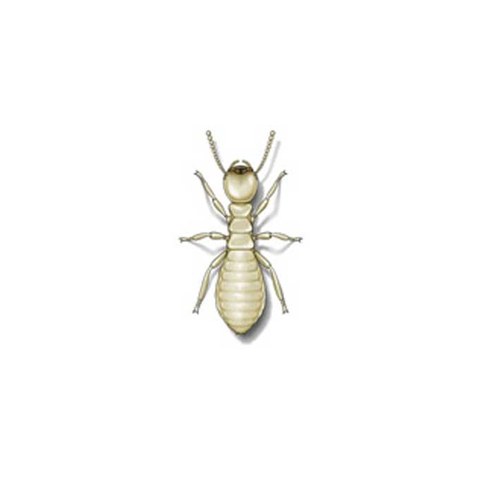
Eastern Subterranean Termite (Reticulitermes flavipes)
The Eastern Subterranean Termite is the most economically destructive pest in North America and the primary termite species in Spartanburg. Colonies live in the soil and build mud tubes to travel between the ground and wood food sources. Workers are pale, soft-bodied, and roughly 1/8 inch long, rarely seen unless a mud tube or piece of damaged wood is disturbed. Clemson puts a mature native colony at several hundred thousand workers, foraging in numerous directions, so a colony centerd in a neighbor’s yard or an untreated fencerow can be feeding on your structure from well outside your own property line. Colonies swarm in spring, typically on warm afternoons.
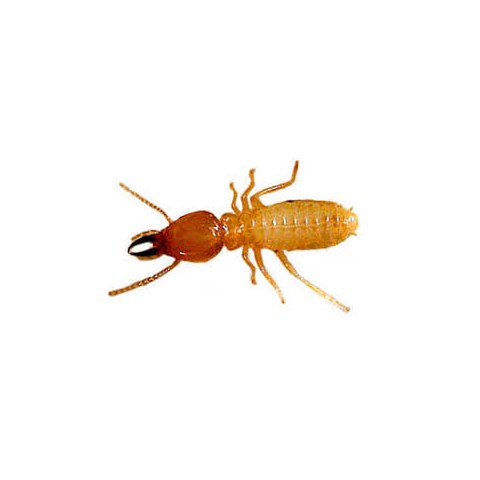
Formosan Subterranean Termite (Coptotermes formosanus)
The most destructive termite in the United States: colonies running to millions of workers rather than the several hundred thousand of a native colony, and the ability to build above-ground carton nests inside wall voids that need no soil contact at all. It is also not established where you live, and we would rather say so than sell you a treatment for it. Clemson documents Formosan termites as established in 16 South Carolina counties — Aiken, Bamberg, Beaufort, Berkeley, Charleston, Colleton, Dorchester, Georgetown, Horry, Jasper, Lexington, Orangeburg, Pickens, Richland, Sumter and York. Spartanburg is not one of them, and neither is any adjoining Upstate county. Clemson adds that the Pickens and York records “appeared to have been isolated events brought into the counties in old, infested railroad ties used for retaining walls”; the termites were treated, and follow-up surveys have not found Formosans in either county since. What is eating Spartanburg homes is the Eastern subterranean termite, and that is what an inspection here should be looking for.
Termite Risk by Neighborhood
Termite Pressure Across Spartanburg Neighborhoods
Downtown & Northside: HIGH TERMITE RISK
Downtown Spartanburg and the Northside hold some of the highest-risk termite environments in the county: pre-1970 homes with original framing, crawlspace foundations with wood-to-soil contact, decades of accumulated wood debris, and landscaping timbers or railroad-tie borders that hand termites a direct path from soil to structure. Hampton Heights, the city’s oldest neighborhood, was primarily developed between 1890 and 1930 and was listed on the National Register in 1983 — and that changes how termite work has to be sequenced there. In the historic district a Certificate of Appropriateness is required before a building permit is issued, and the City counts siding replacement, window and door replacement, porch enclosures, fencing and retaining walls as reviewable work. Repairing termite-damaged sills, porch framing or siding is therefore a two-track job: treat immediately, then take the repair through design review. That lag is precisely why monitoring matters more here than anywhere else in the county — you want to find the colony before it becomes a permit application. Buyers of historic homes in these blocks should always commission a wood infestation inspection before closing.
Eastside: ELEVATED TERMITE RISK
Eastside Spartanburg homes adjacent to creek corridors and wooded buffers face elevated termite pressure from the moisture and organic matter those environments provide. Wet soil conditions common near Lawson’s Fork Creek and its tributaries support active colonies at shallow depths year-round. Properties with wood landscape timbers, mulch banked against the foundation, wood-to-soil contact on decking or framing, or attached wood storage structures are at highest risk — Clemson is blunt about the mulch specifically: it “is made up of cellulose and holds water, which can attract termites,” and “heavy vegetation traps moisture, which creates a better habitat.” New construction on previously wooded lots may have buried wood debris left in the backfill, which serves as an initial food source that establishes a colony close to the structure before anyone has moved in.
Reidville Road Corridor: MODERATE TERMITE RISK
Newer construction along the Reidville Road corridor benefits from modern building practice — treated lumber, slab foundations, pressure-treated framing at soil contact — and from a requirement most buyers never hear about: under South Carolina’s wood infestation regulation, soil to be covered by a slab must be treated with a liquid termiticide or other approved technology before the slab is poured. That is statewide law, not a builder upgrade, and it means a newer slab home here started life with a treated soil zone underneath it. It does not last forever, and it does not cover what gets built afterwards. Mulch against the foundation, wood decking without termite protection, and wood trim at grade are the common entry points once landscaping matures. Where a new commercial or multi-family use abuts existing homes, the County’s bufferyard table can require a screen 25 to 50 feet deep planted in evergreens only — permanent shade and permanent leaf litter along a property line, holding soil moisture where you would rather it drained. Annual inspection with bait station monitoring is the right level of protection for most homes in this corridor.
Boiling Springs: MODERATE-ELEVATED TERMITE RISK
Boiling Springs mixes construction ages and lot types, so termite pressure varies house to house. Older homes on wooded lots with crawlspace foundations carry risk similar to the historic city neighborhoods; newer slab construction is lower risk but not immune, since expansion joints, plumbing penetrations and brick weep holes are all documented entry routes through a slab. Boiling Springs has no municipal government, so it falls under Spartanburg County’s ordinance — which requires manufactured homes to be fully skirted around the entire home in brick, masonry or vinyl, and attaches no ventilation specification to that skirting at all. A sealed, unvented perimeter void over Piedmont clay is a moisture trap, and it is the first thing we open on a skirted home. The same ordinance requires manufactured home parks to be graded to “avoid undue accumulations of water.” Properties in the Pacolet River watershed with consistently moist soil should keep active monitoring; outbuildings, ground-contact wood fencing and mulch against the foundation are the usual conducive conditions here.
Inman & Lyman: MODERATE TERMITE RISK
Inman and Lyman properties carry moderate termite pressure consistent with the broader Upstate. Rural properties with older construction, crawlspace foundations and wood outbuildings face the highest risk. Eastern subterranean termites are present throughout both communities and become active in early spring during swarm season. Properties near the Tyger River drainages with consistently moist soil see elevated pressure. Both towns are incorporated, so the County’s land-development rules stop at their limits — but the state slab pre-treatment requirement does not, and it applies to new construction anywhere in South Carolina. On previously wooded land, pre-construction soil treatment plus post-construction bait stations is the standard pairing against the established colonies already in the surrounding landscape.
Chesnee & Cowpens: MODERATE TERMITE RISK
Chesnee and Cowpens carry moderate risk overall, with elevated pressure on properties holding significant wood structures, agricultural outbuildings and older construction next to woodlots or farmland. Eastern subterranean termites forage widely across this landscape given the abundant decaying wood in fencerows. Rural properties storing wood debris, old lumber or firewood near the main structure face the highest risk: those materials feed a colony and pull active foraging within range of the dwelling. Worth knowing if you are on a conservation subdivision lot — the County’s only tree rule caps felling at “no more than 25 percent of all trees over 12 inches DBH,” and it expressly excludes pine, so a cleared pine stand can leave a great deal of stump and root wood in the ground. Getting ground-contact wood debris off the property and keeping a bait station program active are the primary protective measures out here.
Warning Signs
Signs You May Have Termites in Your Spartanburg Home
Termites are rarely seen directly. Most infestations are identified through secondary signs, many of which are easy to miss or misidentify. If you observe any of the following, schedule an inspection immediately.
Mud Tubes on Foundation Walls
Eastern Subterranean Termites build pencil-width mud tubes along foundation walls, piers, floor joists, and plumbing pipes to travel between the soil and wood food sources while maintaining the humidity they require. Finding a mud tube (even an old, dry one) is confirmation of termite activity and warrants an immediate inspection.
Swarming Insects in Spring
Winged reproductive termites (alates) emerge in large numbers on warm days in late winter through spring. Swarmers found indoors near windows, windowsills, or around light fixtures are a strong indicator of an active colony nearby. Discarded wings, termites shed their wings immediately after landing, are often the only evidence of a swarm event if it wasn’t witnessed directly.
Tight-Fitting Doors & Windows
Termite damage to wood framing causes doors and windows to warp and stick, similar to the effect of moisture damage. If doors or windows that previously operated normally become difficult to open or close without an obvious moisture event, termite damage to the surrounding framing should be investigated.
Hollow-Sounding or Damaged Wood
Termites consume wood from the inside out, leaving a thin shell of painted or varnished surface intact while hollowing out the structural wood beneath. Knocking on wood trim, baseboards, or structural members that sounds hollow, or finding wood that crumbles when probed with a screwdriver, indicates active or past termite feeding. Paint that bubbles or appears blistered on wood surfaces can also indicate termite activity beneath.
See any of these signs? Call (855) 800-8469 for a same-day termite inspection, or fill out the form above and we’ll contact you within minutes.
Explore More
More Pest Control Services in Spartanburg

Pest Control Spartanburg
Year-round protection plan

Ant Control Spartanburg
4 species treated

Bed Bug Control Spartanburg
Steam + power dusting

Cockroach Control Spartanburg
Gel bait & growth regulators

Rodent Control Spartanburg
Trapping & exclusion

Spider Control Spartanburg
Black widow & brown widow

Mosquito Control Spartanburg
Monthly barrier treatments

Wasp Control Spartanburg
Nest removal & prevention

Tick & Flea Control Spartanburg
Yard & pet protection
Exterminator Spartanburg
Same-day local exterminators
Frequently Asked Questions
Termite Control in Spartanburg: Your Questions Answered
The most reliable signs are mud tubes on foundation walls or piers, swarming insects near windows and doors in late winter or spring, discarded wings on windowsills, hollow-sounding wood when knocked, and wood that crumbles or feels soft when probed. Many infestations are discovered during renovations or inspections, not by homeowners noticing activity. If you haven’t had a professional termite inspection in the past 12 months and your home does not have active monitoring, scheduling one is the only reliable way to know.
Bait station installation for a typical residential structure takes 2–4 hours. Liquid barrier treatment for a standard slab home takes 4–6 hours; crawlspace homes may take longer depending on access and linear footage. Colony elimination after bait station installation typically takes 60–120 days once termites begin feeding on the bait. Liquid barrier treatment provides immediate structural protection. You can remain in the home during and after treatment under standard conditions.
Yes. Bait station installation involves no chemical application inside or around the home exterior, the bait is contained inside sealed in-ground stations. Liquid termiticide is applied to the soil around and under the foundation, not to living surfaces. Products used are EPA-registered and applied at labeled rates by licensed technicians. You do not need to vacate your home for termite treatment. Pets should be kept off treated soil areas during application; once the soil has been treated and the area has dried, normal outdoor activity can resume.
Minimal preparation is required for most termite treatments. For crawlspace inspection and treatment, ensure the crawlspace access hatch is unobstructed. For liquid barrier treatment, move any items stored directly against the exterior foundation wall and ensure exterior vegetation is trimmed back from the foundation. Your technician will provide any specific preparation instructions before the appointment based on your property’s characteristics.
It is not a state requirement to sell, but in practice most lenders and most contracts ask for one, so plan on it. The CL-100 — formally the Wood Infestation Report, governed by S.C. Code Regs. 27-1085 — must be issued by someone licensed in Category 7A. Two details catch sellers out. First, it covers wood-destroying insects and wood-destroying fungi, but fungi only below the level of the first main living-area floor: decay in your siding, fascia or eaves is outside its scope, so a clean CL-100 is not a clean bill of health for the whole house. Second, “excessive moisture” has a hard number attached — wood moisture at or above 20%, or standing water in the crawlspace or around the foundation. On Spartanburg’s slow-draining clay that is a line a lot of crawlspaces sit close to. Note too that no expiration date for the report appears anywhere in the regulation; the “30 days” you may hear quoted is lender and contract practice, not law.
Bait stations are in-ground devices installed around the perimeter that use a slow-acting toxicant to eliminate the entire termite colony over 60–120 days. They require no trenching and no chemical application near the foundation. Liquid barrier treatment involves applying termiticide to the soil around and under the foundation to create a chemical treated zone that kills termites on contact and protects the structure directly, it does not eliminate the colony. Many high-risk situations benefit from both: bait stations to collapse the colony and liquid barrier to protect the structure during the elimination process.
Annual termite inspections are standard for all homes in Spartanburg County. Homes with crawlspace foundations, older construction, or prior termite history should not go more than 12 months between inspections. New construction with a clean inspection record and modern treated framing can extend to annual inspections as well. Under a Vinx termite monitoring program, the annual inspection is included and keeps your damage guarantee active.
No. Standard homeowners insurance policies in South Carolina explicitly exclude termite damage as a preventable pest issue. This is a critical reason why ongoing termite protection with a damage guarantee matters, without a termite program in place, all costs of termite damage repair fall to the homeowner. The Vinx damage guarantee provides the coverage that insurance will not, specifically for structures under active monitoring and current with annual inspection visits.
The Vinx termite damage guarantee covers structures under active monitoring that are current with their annual inspection visits. If termite damage occurs to a covered structure while under a current Vinx termite plan, Vinx will treat the infestation and repair the structural damage at no additional cost to the homeowner. Call (855) 800-8469 for complete terms, coverage conditions, and guarantee details specific to your property.
Not because of the report. This is the most common misunderstanding about the CL-100, and the regulation is explicit: the Wood Infestation Report “is not a warranty against future infestation, nor does it place any obligation for the correction of reported damage or infestation upon the applicator or business issuing the report.” Any duty to repair comes from your purchase contract or your lender’s conditions, not from state regulation — which means it is negotiable, and worth reading closely before you agree to it. What the report does is put the findings on the record so both sides are pricing the same house. If findings come back on a Spartanburg property, get the treatment scoped and quoted before you negotiate the repair, not after.
Service Coverage
Spartanburg County Service Area
Serving Spartanburg and surrounding Spartanburg County communities for termite control, inspection, and monitoring.
Serving the Greater Spartanburg Area