Pest Control for Warehouses & Distribution Centers
Protecting your inventory, your workforce, and your customer relationships



Large-Facility Pest Control Built for Warehouses and Logistics Operations
Warehouses and distribution centers face pest pressure that most commercial pest control providers are not equipped to address at scale. High bay racking systems, open loading docks, large flat roofs, and continuous inbound and outbound product flow create pest entry vectors and harborage zones that cannot be managed with a standard quarterly service visit and a perimeter spray.
Vinx Pest Control builds warehouse pest programs around the specific entry points, harborage zones, and product risk factors of large logistics facilities, with rodent exclusion at loading docks, interior monitoring networks calibrated to the facility footprint, and service frequency based on actual pest pressure data rather than a fixed calendar.
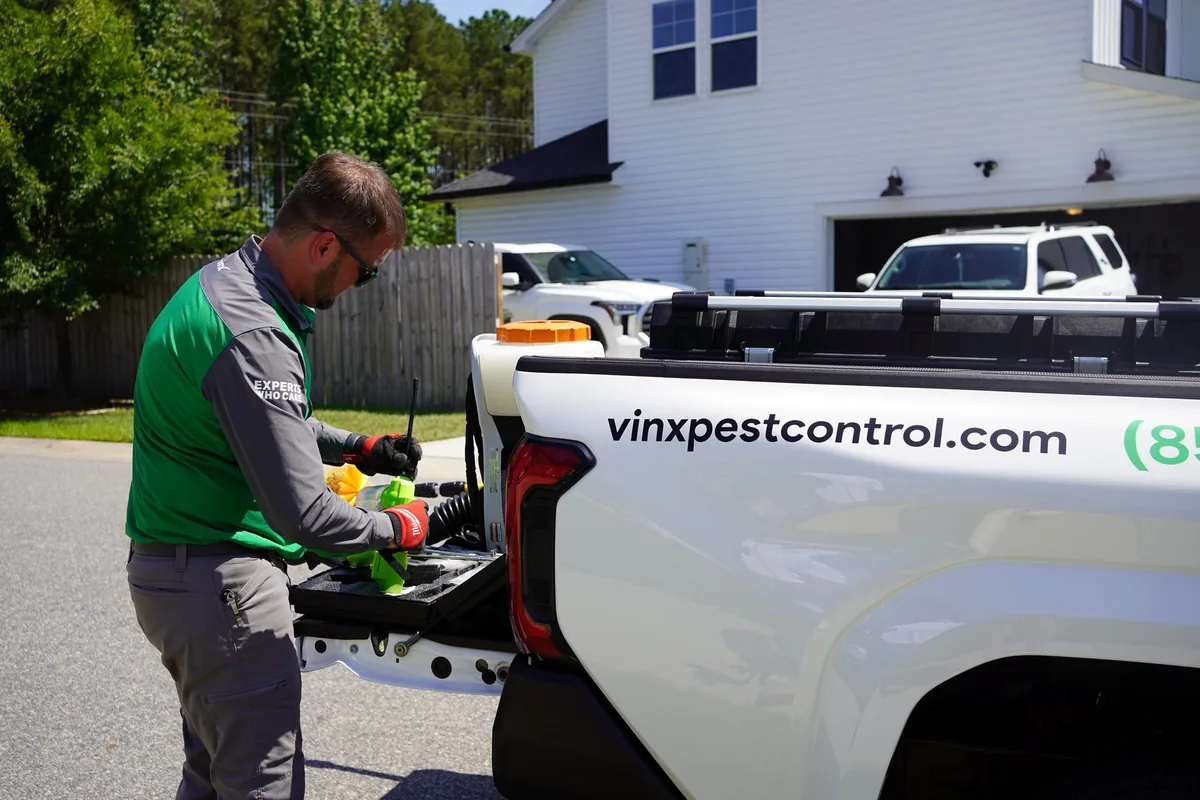
The Unique Pest Challenges of Warehouse Operations
- Rodent Entry at Loading Docks: Loading dock doors, dock levelers, and overhead door gaps are the primary rodent entry point in most warehouses. Each dock position that is open overnight or unoccupied after hours is an active entry vector.
- Stored Product Insects: Warehouses storing food, paper, textiles, or cardboard are susceptible to stored product insects that enter in incoming shipments and establish populations in undisturbed pallet locations.
- Birds and Nesting: Sparrows, starlings, and pigeons nest in roof penetrations, dock canopies, and high-bay racking systems. Bird droppings on product and equipment create contamination risk and slip hazards.
- Inventory Damage from Rodents: Rodents gnaw through packaging, contaminate product with urine and droppings, and can compromise entire pallet positions. The damage cost typically far exceeds the cost of the pest control program that would have prevented it.
- Large Perimeter Gaps: The sheer perimeter of a large distribution center creates more linear footage of potential entry points than most providers can assess and treat thoroughly.
Our Warehouse Pest Management Program
Facility Assessment
Full walkthrough of loading dock area, receiving, high-bay storage, break rooms, exterior perimeter, and roof access points.
Dock Exclusion Audit
Every dock position assessed for gap size, leveler condition, dock seal integrity, and door sweep fit. Written report for your facilities team on corrective actions needed.
Interior Monitoring Network
Rodent stations, insect glue boards, and pheromone traps placed in a density calibrated to the facility square footage and product mix, not default spacing.
Exterior Perimeter Program
Rodent bait stations at the full facility perimeter with station density based on dock count and surrounding environment (wooded, open field, adjacent food handling).
Scheduled Service Visits
Service frequency driven by trap count data, increased during rodent pressure seasons, reduced during low-activity periods based on monitoring findings.
Trend Reporting
Trap count trends, entry point activity, and corrective action status reported to your facilities and operations teams each visit.
Why Warehouse Operators Choose Vinx
Loading Dock Focus
Dock exclusion assessment and perimeter rodent management targeted at the #1 warehouse entry point.
Data-Driven Service
Trap count trends drive service decisions, you get more service when pressure is high and don't pay for visits when conditions are low.
Dedicated Account Manager
One contact who knows your facility, your shift schedule, and your operations team's preferences.
100% Guarantee
If pests return between scheduled services, we come back at no charge.
Warehouse Pest Pressure in Our Service Area
The Hampton Roads logistics market (driven by the Port of Virginia, the Newport News shipyards, and the dense distribution center footprint along the I-64 corridor) sees Norway rat pressure at a level that inland facilities rarely experience. Port activity introduces rats from vessel arrivals, and the riprap, bulkheads, and stormwater infrastructure adjacent to these facilities provides permanent harborage that cannot be eliminated. Our warehouse rodent programs in the Hampton Roads area treat this as a chronic management challenge, not a one-time fix, with perimeter station density and service frequency set accordingly.
The Midlands and Upstate SC warehouse markets around I-26 and I-85 primarily deal with deer mouse and Norway rat pressure from the agricultural land adjacent to distribution centers. Facilities surrounded by farmland see rodent population surges after harvest when field populations migrate toward structures. Pre-harvest perimeter reinforcement and elevated service frequency in October and November significantly reduces the severity of these annual influxes.
Frequently Asked Questions
Dock exclusion assessment is done during an initial visit and produces a written report for your facilities team on gap sizes and corrective actions (dock seal replacement, leveler adjustment, door sweep installation). We do not perform the exclusion work ourselves, that is typically facilities team or contractor work, but we specify exactly what needs to be done and in what priority order based on observed rodent entry activity. The pest control program addresses active rodent pressure while those corrections are in progress.
Yes. Food-grade warehouse pest management follows the same documentation and IPM principles as our food manufacturing program, no interior rodenticide bait near product, monitoring network calibrated to HACCP analysis, and documentation formatted for FDA, SQF, or AIB review. If your facility is subject to third-party food safety audits, ask about our food manufacturing program which includes audit-specific documentation support.
Yes. Large-facility accounts receive a monitoring network and service program sized to the actual footprint, dock count, and product type rather than a standard template. Service visits for large facilities are structured so the entire perimeter and all dock positions are inspected every visit, with interior monitoring devices checked and serviced on the same schedule.

Protect Your Inventory from the Loading Dock In
Large-facility rodent programs with data-driven service frequency.
Request a ConsultationCustomer Reviews
What Our Customers Are Saying
"Tony's inspection highlighted several issues. With a good explanation of solutions, he's getting my house back on track."
Verified Google Review"I called at 1pm on a Friday and they squeezed me in the same day, amazing. Mike and Jonathan did a fantastic job explaining the treatment plan."
Verified Google Review"Jonathan is very thorough, friendly and professional. He kept me informed about finding the termites, showing pictures and video."
Verified Google Review