Ant Control in Spartanburg, SC
Inspection • Interior & Exterior Treatment • Colony Elimination • Follow-Up Service
Vinx eliminates ant infestations in Spartanburg homes with targeted baiting, residual perimeter treatment, and colony-killing products that stop ants at the source, not just the ones you can see.
Get Started in 60 Seconds
Choose what’s easiest for you
Request a Quote
We usually respond in 2 minutes
Call 855-800-8469
Get a Live Person (no AI agents here!)
Sign Up Online
Get pricing and schedule now





Welcome to Vinx Pest Control
A Company That Actually Backs What It Says
At Vinx, we combine professional-grade ant treatments with a level of service most pest control companies don’t offer. Local technicians, fast response times, and a guarantee that actually means something.
“I’m not passionate about killing bugs. I’m passionate about customer service. At Vinx, you get experts who show up, do the job right, and stand behind every visit. No runaround, no fine print.”

Founder & Owner, Vinx Pest Control
PROTECTION PLANS
Ant Control Plans for Spartanburg Homes

Standard Residential Protection
- 4 Seasonal Treatments Per Year
- 50+ Covered Pests
- Interior, Exterior & Yard Treatment
- Unlimited Free Re-Services
- 100% Money-Back Guarantee

Upgraded Yard Protection
- 6 Home & Yard Treatments Per Year
- 50+ Covered Pests
- Yard Ant Elimination Guarantee
- Flea & Tick Elimination Guarantee
- 100% Money-Back Guarantee

Most Comprehensive Protection
- 9 Treatments Per Year
- 50+ Covered Pests
- 8 Mosquito Treatments (Mar–Nov)
- Flea, Tick & Ant Coverage
- Free Bed Bug Treatments if Needed*
- 100% Money-Back Guarantee
Pricing varies by home size. All plans include a full inspection and unlimited free re-services. Call (855) 800-8469 for a same-day quote.
Request Ant Control Service in Spartanburg
Fill out the form below and a Vinx specialist will contact you same day to schedule your service.
Our Approach
How Vinx Eliminates Ants in Your Spartanburg Home

Inspection & Species Identification
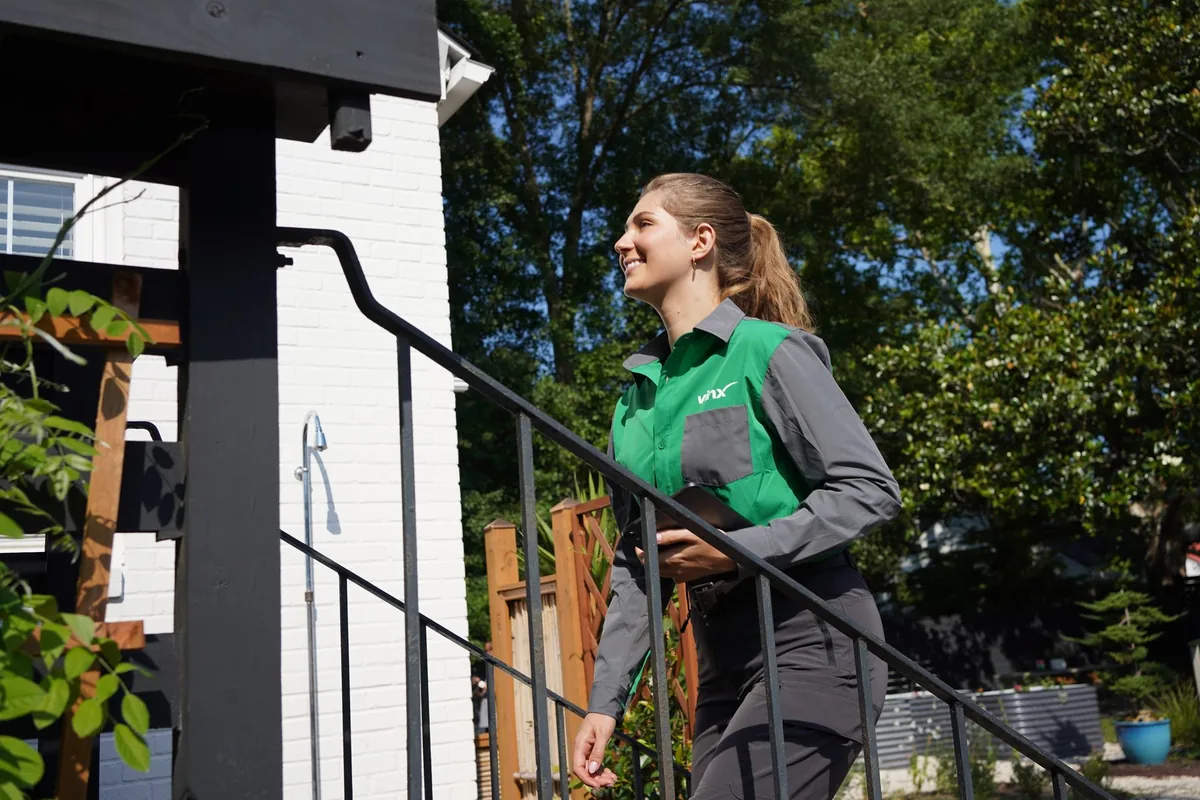
Your licensed Vinx technician inspects the full interior and exterior, tracking ant trails, locating entry points, identifying nesting sites, and confirming the species. Species identification matters because different ants require different products and approaches. Odorous house ants respond best to slow-acting baits; carpenter ants require wood treatment; fire ants need granular mound drench. We never apply a one-size-fits-all spray and call it done.
Perimeter & Entry Point Treatment
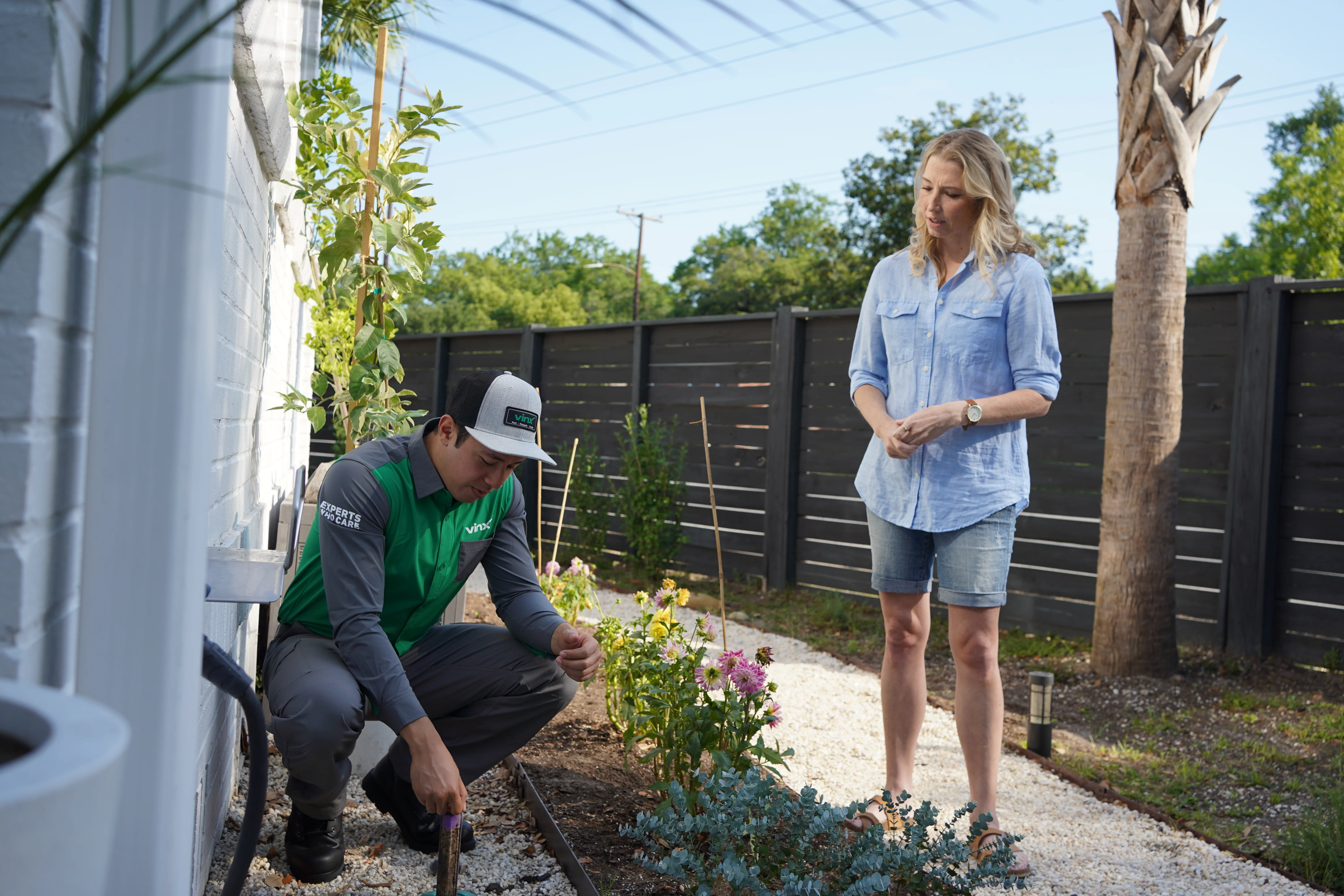
We apply a residual insecticide to the full exterior perimeter, foundation, doorways, window frames, utility penetrations, and any gaps or cracks where ants enter. The residual barrier remains active for weeks, killing foraging workers on contact and repelling new scouts from establishing trails. Entry points are treated directly to break existing pheromone trails and prevent re-entry.
Colony-Killing Bait Placement
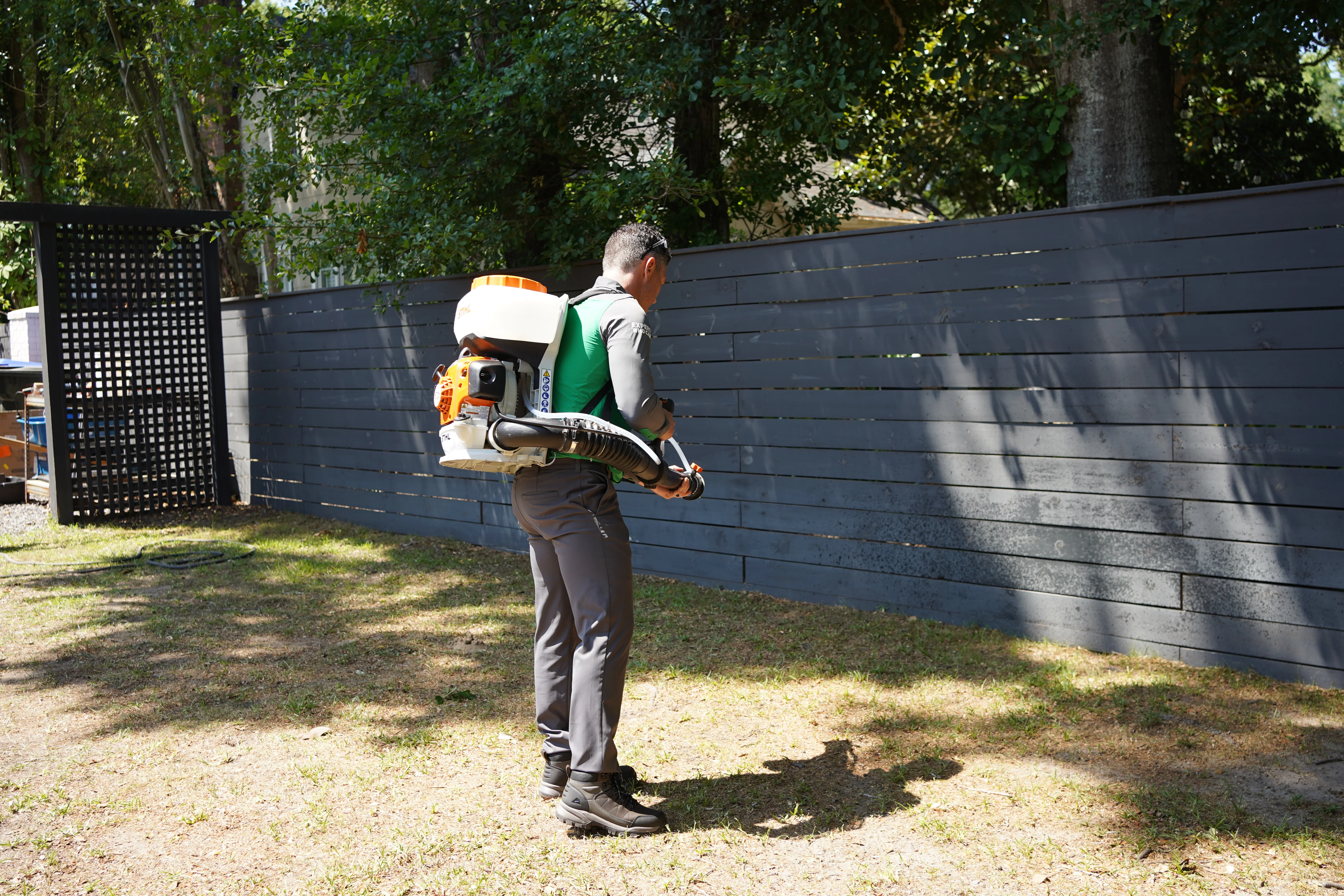
Targeted ant bait stations are placed along active trails and near suspected colony sites. Worker ants carry bait back to the colony and feed it to the queen and larvae, eliminating the population at the source over 3–14 days. Bait is selected specifically for the species present, protein-based baits for fire ants and carpenter ants, sugar-based baits for odorous house ants and Argentine ants. This targeted approach prevents colony splitting that can result from aggressive spray-only treatments.
Interior Treatment & Follow-Up
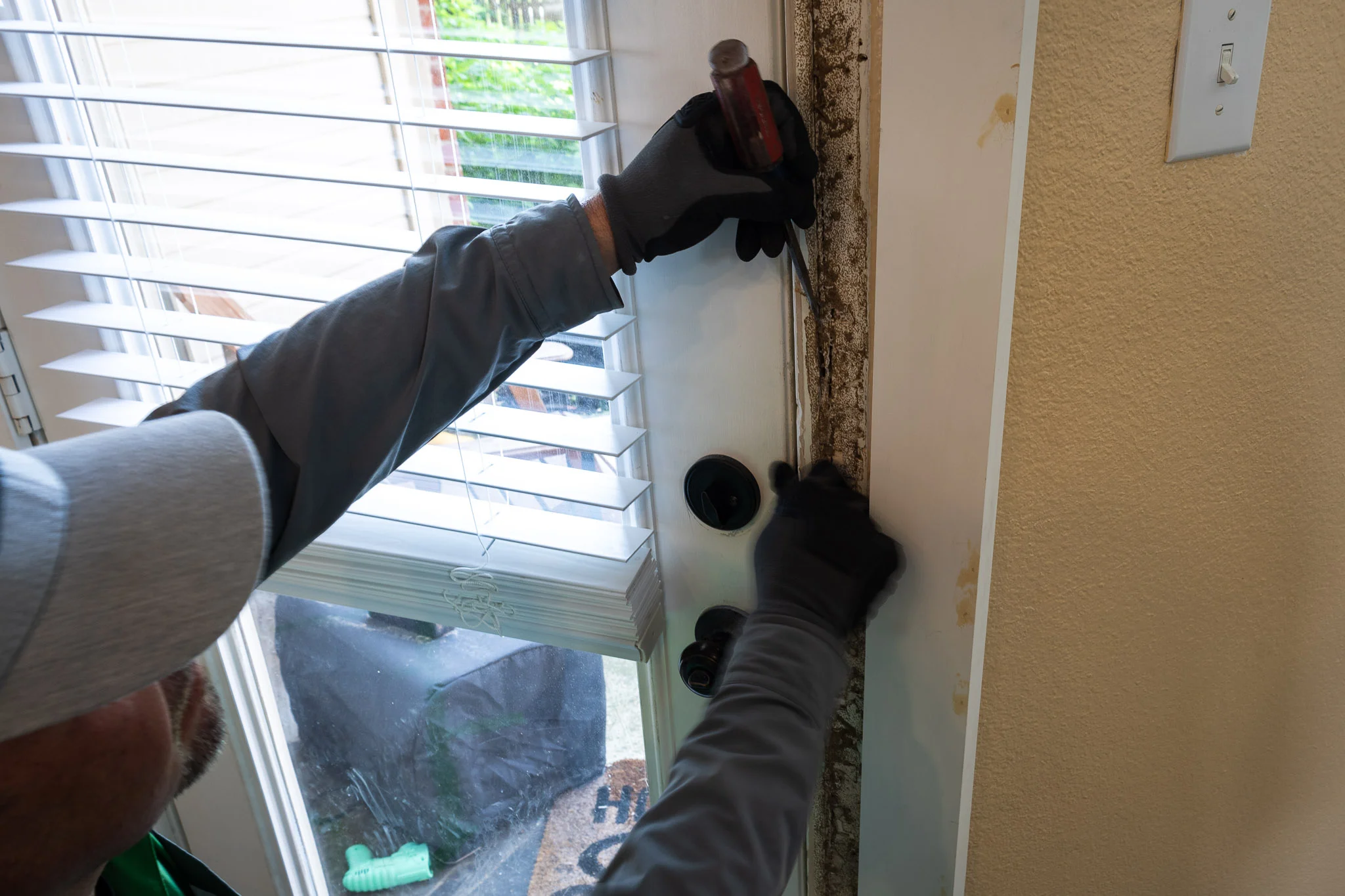
Interior treatment targets active ant trails, nesting sites in wall voids, and problem areas like kitchens, bathrooms, and utility spaces. Products used indoors are low-odor, residual formulations applied precisely, not broadcast-sprayed. If activity returns before your next scheduled service, Vinx returns at no additional charge under our quarterly and platinum plans. We document every visit and report findings digitally so you always know what was done.
Ant-Free Guarantee
If ants come back between scheduled service visits, we come back too, at no additional charge. We stand behind every service with a 100% satisfaction guarantee. No fine print, no runaround. If you’re not satisfied, we make it right.
Customer Reviews
What Spartanburg Customers Are Saying
Alfredo was very cordial, self motivated and thorough, a real pleasure.
Hey I’m sorry I missed you! But thank so so much for stepping and looking over the mess Thanks again you guys are the best
Gave a very detailed review of his work, he clearly was attentive to what was needed.
Vinx quickly worked us into their technician rotation since we had an ant infestation!
Alfredo has been to my property several times and has reduced the ant population which other pest control service did not do so well. Friendly to talk to, easy to understand, leaves a video summary after the application, and knowledgeable at what he does! Thanks, Alfredo!
Ant Pressure in Spartanburg
Why Ants Are a Year-Round Problem in Spartanburg
Spartanburg’s climate creates favorable conditions for ant activity across most of the year. Warm, humid summers drive ants indoors in search of water and food during dry periods; mild winters mean colonies don’t fully die back the way they do in northern states. Spartanburg homeowners often deal with ant activity from early spring through late fall, and some species like odorous house ants and Argentine ants remain active even in winter inside heated structures.
The most common mistake Spartanburg homeowners make is treating ants with store-bought sprays. Repellent sprays kill foraging workers on contact but don’t reach the colony. When workers stop returning, the colony perceives a threat and splits, a process called budding, creating multiple new colonies that are even harder to eliminate. Professional ant control uses non-repellent or slow-acting products that workers carry back to the colony before dying, collapsing the infestation at the source.
Carpenter ants are the species most likely to cause structural damage in Spartanburg homes. Unlike termites, they don’t eat wood, they excavate it to build galleries, which can compromise structural members over time. Large, black or bi-colored ants (3/8–1/2 inch) seen near bathrooms, windowsills, or exterior wood should be investigated immediately. Early treatment prevents minor carpenter ant activity from becoming a costly repair.
4 Common Ant Species in Spartanburg
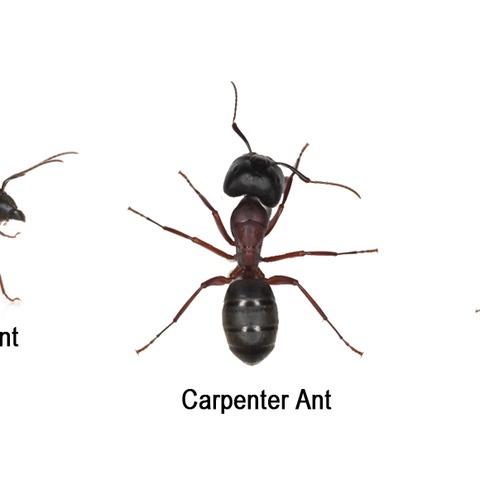
Carpenter Ant (Camponotus spp.)
The largest ant species in Spartanburg, workers measure 3/8 to 1/2 inch and are black or bi-colored (black and red). Carpenter ants excavate galleries in moist or damaged wood, including structural framing, windowsills, and deck lumber. They do not eat wood but remove it, leaving sawdust-like frass. Active infestations in wall voids are indicated by faint rustling sounds and frass deposits. Treatment targets colony sites in wood with residual insecticide and outdoor perimeter baiting.
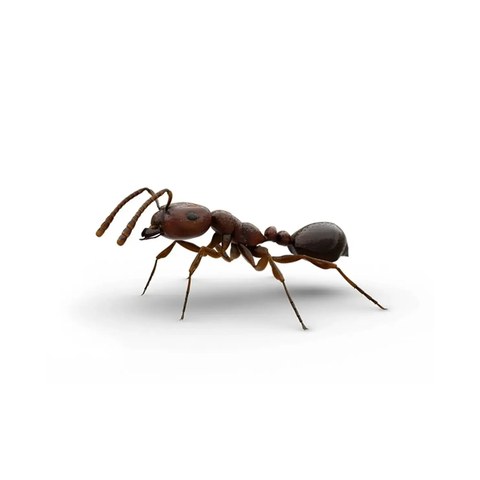
Red Imported Fire Ant (Solenopsis invicta)
Fire ants are ubiquitous in Spartanburg yards, parks, and fields. Their distinctive dome-shaped mounds become obvious after rain and can hold 100,000–500,000 workers. The mounds are not new and the colony has not grown: rain collapses the tunnels and the ants push the soil back out while rebuilding, so what changes is visibility, not population. When disturbed, fire ants swarm and sting repeatedly, producing an intense burning sensation. Treatment uses a two-step approach: broadcast granular bait applied across the yard reduces colony populations over 1–2 weeks; individual mound treatments provide faster knockdown of active mounds in high-use areas.
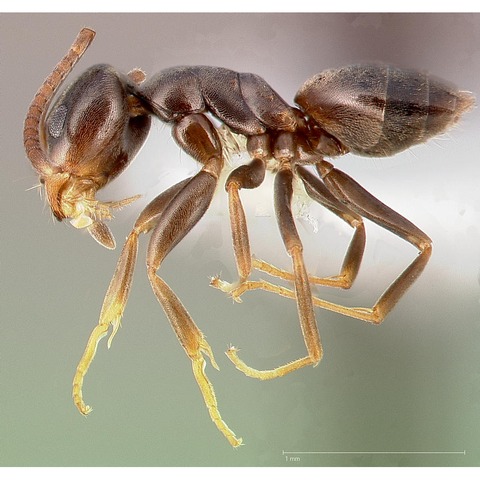
Odorous House Ant (Tapinoma sessile)
The most frequently encountered ant inside Spartanburg homes. Workers are small (1/16–1/8 inch), dark brown to black, and emit a distinct rotten-coconut odor when crushed, a reliable identification clue. Odorous house ants trail along baseboards, counters, and plumbing to reach food and water. Colonies are large (10,000–100,000 workers) and can have multiple queens, making repellent spray treatments ineffective and likely to cause budding. Slow-acting sugar bait is the most effective treatment approach.
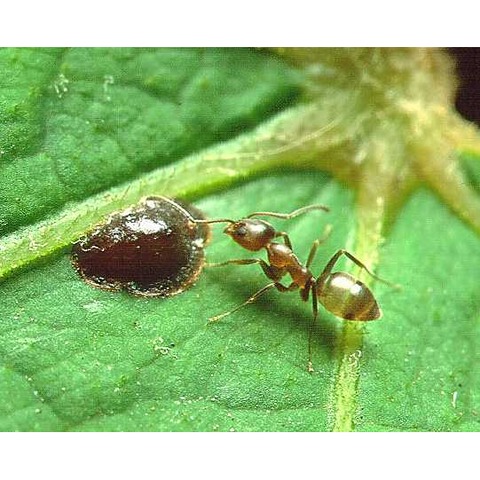
Argentine Ant (Linepithema humile)
Argentine ants form multi-queen colony networks, with satellite nests that cooperate rather than compete, so a single Spartanburg property often has several linked nests and the network can reach across a few adjoining lots. Worth scoping that correctly: the enormous “supercolonies” you read about are a California and southern-Europe phenomenon. Research sampling this species in the Carolinas and Georgia found colonies under about 0.6 acre with strong aggression between separate colonies, so this is a neighbor-to-neighbor problem rather than a city-wide one. It still makes perimeter spray alone insufficient. Effective control uses slow-acting bait that workers carry back through the network, plus a residual perimeter application. Irrigation is the driver to watch: three months of dry-season watering has been shown to raise nest counts by 54%.
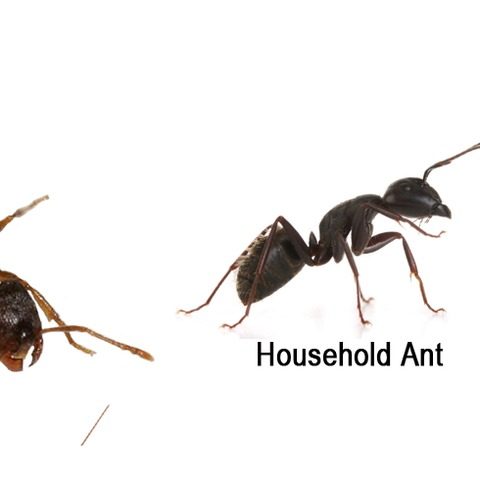
Asian Needle Ant (Brachyponera chinensis)
The one most Upstate homeowners have never heard of, and Clemson is blunt about it: “Although it is very common in the upstate of South Carolina, it is rarely identified.” Dark brown to black and slow-moving, it builds no visible mound, which is exactly why it gets missed. It nests under stones, logs, mulch, railroad ties, ornamental stone and concrete pavers — ordinary Spartanburg landscaping — and commonly enters homes. Workers are active March into late October, with swarmers from late May through September peaking in July and August. It is not nest-defensive like a fire ant; it stings when trapped against skin or trodden on barefoot. Two anaphylaxis cases were recorded in South Carolina in 2006, and stings from it are routinely blamed on fire ants instead. If you were stung with no mound anywhere in sight, start here.
Ant Pressure by Neighborhood
Ant Activity Across Spartanburg Neighborhoods
Downtown & Northside: ELEVATED ANT ACTIVITY
Downtown Spartanburg and the Northside’s older housing stock presents higher ant pressure than newer construction areas. Aging foundations with settling cracks, older plumbing with moisture issues, and mature tree canopy close to structures all create favorable conditions for carpenter ants and odorous house ants. Historic homes with original wood framing, soffit gaps, and utility penetrations that predate modern pest-exclusion standards are especially vulnerable. Downtown residents frequently report ant trails in kitchens and bathrooms, almost always odorous house ants traveling from exterior nests to interior food and water sources.
Eastside: MODERATE TO ELEVATED ANT ACTIVITY
Spartanburg’s Eastside neighborhoods see consistent fire ant and odorous house ant pressure throughout the spring, summer, and fall. Established residential areas with mature landscaping, mulched beds, and irrigation systems maintain the moisture conditions that ant colonies require for overwintering and spring establishment. Fire ant mounds along lawn edges and utility corridors are a common Eastside complaint from March through October. Homes adjacent to wooded lots or drainage easements face additional carpenter ant pressure as foraging workers travel from exterior colony sites into structures seeking moisture.
Reidville Road Corridor: MODERATE ANT ACTIVITY
The Reidville Road corridor’s mix of commercial and residential development creates moderate ant pressure for area homeowners. Commercial landscaping along the corridor (mulch beds, ornamental plantings, and irrigated turf) maintains year-round ant colony habitat adjacent to residential areas. Argentine ants are frequently reported along this corridor, traveling from commercial property landscaping into adjacent homes during dry periods when food and water become scarce outdoors. Perimeter treatments combined with bait are the most effective approach for homes bordering commercial landscaping.
Boiling Springs: ELEVATED FIRE ANT PRESSURE
Boiling Springs’ rapid residential development on former agricultural and pasture land creates some of the highest fire ant pressure in the Spartanburg service area. Fire ants thrive in disturbed soils typical of newer development areas, the lack of established competing ant species and the abundance of open turf creates ideal conditions for large fire ant colony establishment. New construction homes and recently landscaped yards in Boiling Springs routinely see fire ant mounds appear within the first growing season. Broadcast granular bait treatments across the full lawn are more effective than individual mound treatments in high-density infestation areas.
Inman & Lyman: MODERATE ANT ACTIVITY
Inman and Lyman’s mix of older residential neighborhoods and rural-edge properties creates variable ant pressure. Older homes in central Inman face carpenter ant risk from aging exterior wood and mature trees with close canopy contact. Rural-edge properties in Lyman deal with fire ant pressure from surrounding agricultural land and field borders. Both communities see odorous house ant activity in warmer months, particularly in homes with irrigation systems or moisture issues. Annual perimeter treatments significantly reduce ant pressure across both communities.
Chesnee & Cowpens: MODERATE ANT ACTIVITY
Chesnee and Cowpens homeowners deal primarily with fire ants in yards and odorous house ants indoors during summer. The rural agricultural character of both communities means fire ant populations are abundant and re-colonize treated areas from surrounding farmland. Broadcast granular treatments are more cost-effective than individual mound treatments for rural properties, reducing the overall fire ant population rather than targeting individual mounds one at a time. Interior ant issues in Chesnee and Cowpens homes are predominantly odorous house ants and Argentine ants entering through exterior cracks and gaps.
Kid & Pet Safe
Our Treatments Are Safe for Your Whole Family: Including the Furry Members
Every ant control product we use is EPA-registered and applied at labeled rates by licensed technicians. We select low-odor, targeted formulations that are effective against ants and safe for households with children and pets.

EPA-Registered Products Only
All products are EPA-registered and applied at labeled rates. We never use more product than necessary, targeted application is more effective against ants and safer for your family.
Short Re-Entry Interval
Most exterior perimeter treatments have a 30–60 minute re-entry interval after application. Interior treatments use dry-formulation or bait products with no re-entry interval. Your technician will tell you exactly when it’s safe to return to treated areas.
Targeted Bait Stations
Ant bait stations are placed in areas accessible to foraging ants but out of reach of children and pets, behind appliances, under cabinets, along baseboards. Bait is enclosed in a tamper-resistant station and contains very low concentrations of active ingredient.
Botanical Options Available
For households with specific product sensitivities, we offer botanical-based treatment options using essential oil formulations effective against common ant species. Ask your technician about botanical alternatives when booking.
Questions about product safety for your family? Call (855) 800-8469 and we’ll walk you through what we use and why it’s safe for your household.
Explore More
More Pest Control Services in Spartanburg

Pest Control Spartanburg
Year-round protection plan

Mosquito Control Spartanburg
Monthly barrier treatment

Bed Bug Control Spartanburg
Chemical + follow-up protocol

Termite Control Spartanburg
Bait systems & liquid treatment

Cockroach Control Spartanburg
American & German roaches

Rodent Control Spartanburg
Trapping & exclusion

Spider Control Spartanburg
Black & brown widows, wolf spiders

Wasp Control Spartanburg
Nest removal & prevention

Tick & Flea Control Spartanburg
Yard & pet protection

Exterminator Spartanburg
Same-day local exterminators
Frequently Asked Questions
Ant Control in Spartanburg: Your Questions Answered
Very likely an Asian needle ant, the most under-recognized stinging ant in the Upstate. Clemson says it plainly: “Although it is very common in the upstate of South Carolina, it is rarely identified.” It builds no visible mound. It nests under stones, logs, mulch, railroad ties, ornamental stone and concrete pavers, and commonly enters homes. It is not aggressive the way a fire ant is; it stings when it gets trapped against skin or trodden on barefoot. Two anaphylaxis cases were recorded in South Carolina in 2006, and its stings are routinely blamed on fire ants. Workers are out March into late October. If you are being stung with no mound in sight, tell your technician, because the treatment differs.
Check first, because in the unincorporated county that screen may be a required bufferyard rather than a landscaping choice. Spartanburg County’s land management ordinance sets buffer classes from 5 up to 50 feet deep depending on what sits either side, specifies that “only evergreen plants… shall be used, to achieve an opaque screen as required,” and puts maintenance on the property owner. The same ordinance asks that existing vegetation be retained, with “special attention given to existing trees 18 inches in diameter or larger at DBH.” Note the scope: this applies in the unincorporated county, which includes Boiling Springs since it has no municipal government, and not inside the City of Spartanburg or towns like Duncan, Lyman or Inman. The practical answer is to treat the structure and the first strip of yard, and to move the harborage you genuinely control — firewood, stored pavers, ornamental stone and bagged mulch against the foundation, which is also precisely where Asian needle ants nest.
One-time ant treatments start at $99 depending on home size and ant species. Quarterly protection plans start at $49/month and include free re-treatments between visits. Call (855) 800-8469 or fill out the quote form for a same-day estimate specific to your home and ant problem.
Store-bought repellent sprays kill foraging workers on contact but don’t reach the colony. When scouts stop returning, the colony senses a threat and splits (budding), creating two or more new colonies. Professional ant control uses non-repellent or slow-acting products that workers carry back to the colony, eliminating it at the source rather than just the ants you can see.
Perimeter residual spray treatments reduce exterior foraging within 24–48 hours. Bait treatments take longer, typically 3–14 days depending on the species and colony size, because workers need time to carry bait back and feed the colony. Fire ant mound treatments with contact insecticide kill visible ants within hours, but queen elimination via bait takes 1–2 weeks for full colony elimination.
Large black or bi-colored ants (3/8–1/2 inch) in wall voids, bathrooms, or near windows are almost certainly carpenter ants. They don’t bite unless threatened, but they excavate galleries in wood, including structural lumber. If left untreated for years, carpenter ant activity can cause meaningful structural damage. Schedule an inspection promptly if you’re seeing large ants consistently inside the home.
The four most common ant species in Spartanburg are: odorous house ants (small, dark, rotten-coconut smell when crushed, the most common indoor ant), red imported fire ants (yard mounds, painful sting), carpenter ants (large, black, found near wood), and Argentine ants (tiny, light brown, form massive colonies). Each species requires a different treatment approach, which is why inspection and species identification are the first step of every Vinx service.
For exterior perimeter treatments, you don’t need to leave, just stay indoors during application and allow 30–60 minutes for treated surfaces to dry. For interior bait treatments, no evacuation is required. Your technician will specify any re-entry instructions for the specific products used in your home.
The most effective prevention steps are: seal cracks and gaps around foundation, utility penetrations, and window frames; keep mulch and wood materials at least 6 inches from the foundation; trim tree branches that touch the roofline or siding; fix moisture issues like leaky pipes or condensation; store food in sealed containers; and maintain a professional quarterly perimeter treatment program. A treated perimeter creates a residual barrier that kills foraging ants before they establish trails into your home.
Yes. Red imported fire ants sting repeatedly and inject venom that causes intense burning and raised white pustules at the sting site. For most people this is painful but not dangerous. Roughly 0.5% to 2% of people who are stung develop a systemic allergic reaction needing emergency treatment; stated as a share of the whole population the risk is far smaller than the figure usually quoted. Children, elderly individuals, and anyone with known insect venom allergies are at elevated risk. Fire ant mounds in yards frequented by children or pets should be treated promptly.
Service Coverage
Spartanburg County Service Area
Serving Spartanburg and surrounding Spartanburg County communities for ant control and general pest management.
Serving the Greater Spartanburg Area