Flea & Tick Control in Simpsonville, SC
Lone Star Tick, American Dog Tick, Deer Tick & Flea Treatment for Simpsonville Homeowners & Pets
The railroad through Simpsonville sits on a watershed divide: west of the tracks, yards drain to Rocky Creek and the Reedy River; east of the tracks, to Durbin and Horsepen Creeks and the Enoree. Those wooded creek corridors are where ticks quest and where wildlife rests, and the City’s zoning requires the vegetation inside stream buffers to stay. With 2,486 single-family homes added since 2000, more Simpsonville back fences than ever sit against brush that cannot simply be cleared.
Get Started in 60 Seconds
Choose what’s easiest for you
Request a Quote
We usually respond in 2 minutes
Call 855-800-8469
Get a Live Person (no AI agents here!)
Sign Up Online
Get pricing and schedule now





Welcome to Vinx Pest Control
A Company That Actually Backs What It Says
At Vinx, we combine professional-grade treatments with a level of service most pest control companies don't offer. Local technicians, fast response times, and a guarantee that actually means something.
Get a Free Quote"I'm not passionate about killing bugs. I'm passionate about customer service. At Vinx, you get experts who show up, do the job right, and stand behind every visit. No runaround, no fine print."
WELCOME TO VINX PEST CONTROL
Protection Plans for Simpsonville Homeowners

Standard Residential Protection
- 4 Seasonal Treatments Per Year
- 50+ Covered Pests
- Interior, Exterior & Yard Treatment
- Unlimited Free Re-Services
- 100% Money-Back Guarantee

Upgraded Yard Protection
- 6 Home & Yard Treatments Per Year
- 50+ Covered Pests
- Stinging Insect Elimination Guarantee
- Flea & Tick Elimination Guarantee
- 100% Money-Back Guarantee

Most Comprehensive Protection
- 9 Treatments Per Year
- 50+ Covered Pests
- 8 Mosquito Treatments (Mar–Nov)
- Flea, Tick & Ant Coverage
- Free Bed Bug Treatments if Needed*
*Starting rates vary by home size and area. All plans billed monthly.
Request Your Free Flea & Tick Quote
Fill out the form below and a Vinx team member will reach out within 2 minutes during business hours.
Prefer to talk? Call (864) 894-2419 for a live person, no AI agents.
Our Approach
How Vinx Treats Fleas & Ticks in Your Simpsonville Home: Step by Step
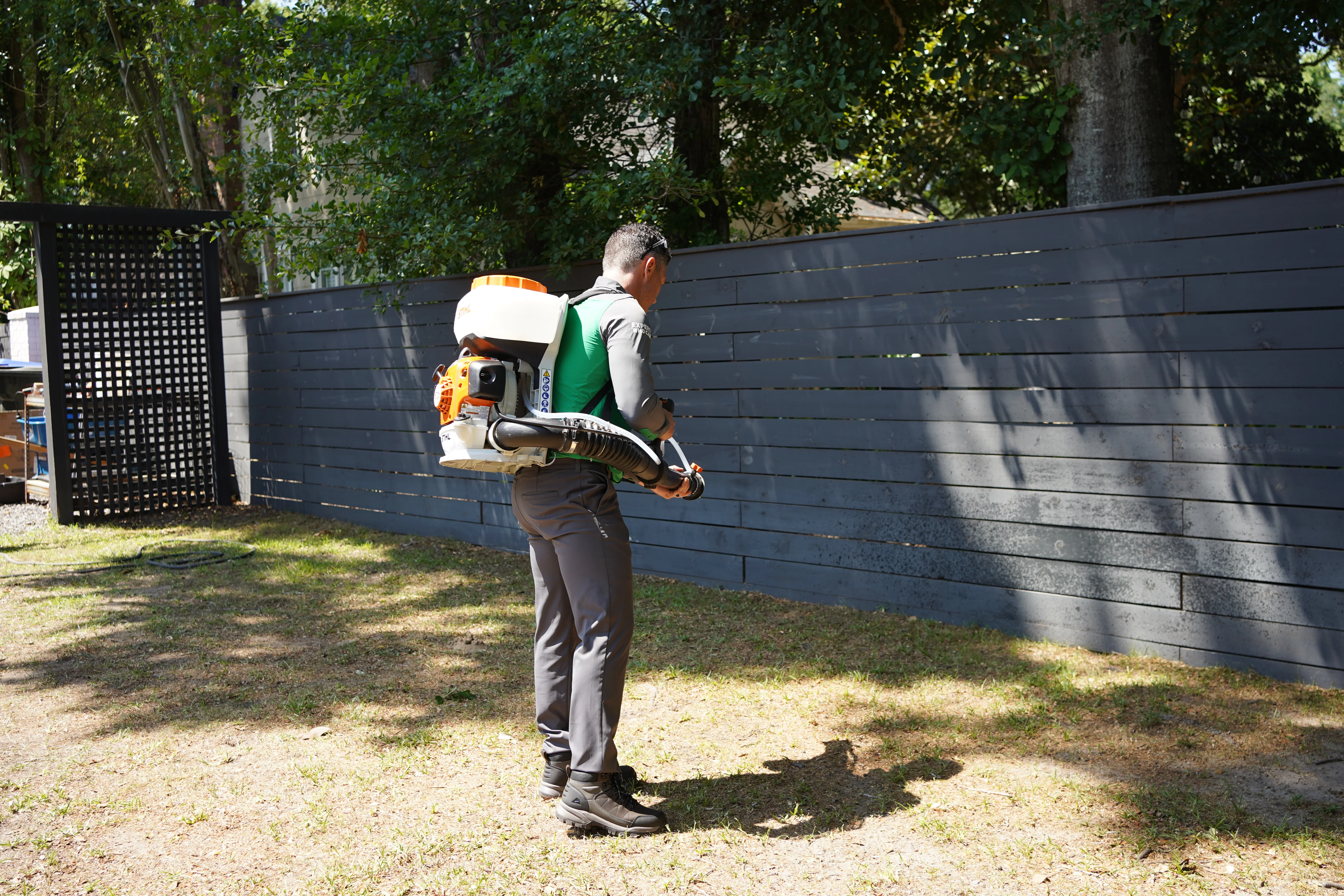
Yard & Ground Cover Treatment
Flea and tick treatment covers all ground cover, mulch beds, and vegetated areas on every Plus and Platinum visit. On a Simpsonville lot the shaded, moist ground under decking, along fence lines that back onto a creek buffer, and in the dense ground cover of a wooded lot edge is where fleas develop and ticks wait for a host. Those zones get treated on every visit; open, mowed lawn rarely holds either.
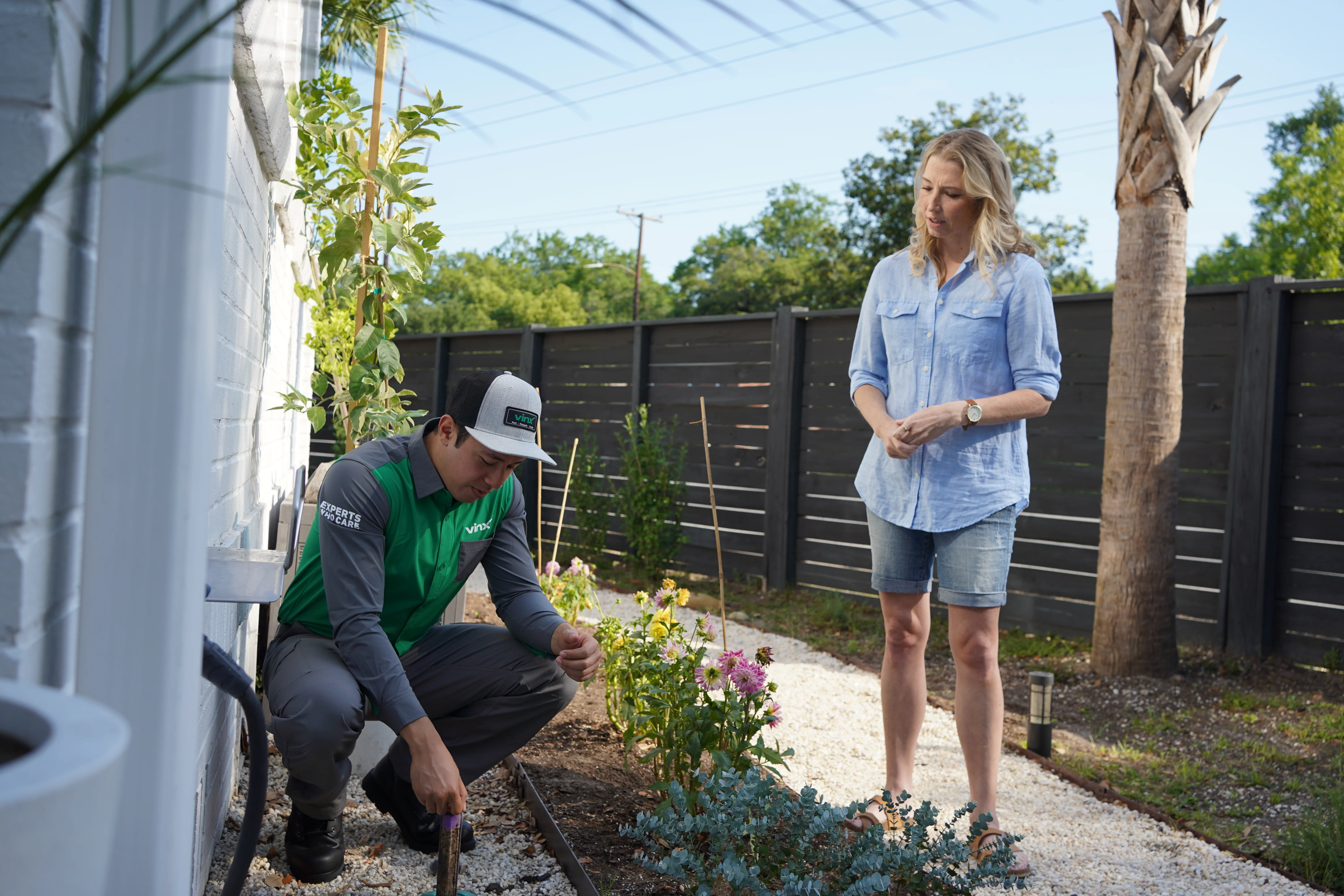
Creek Buffer & Wooded Edge Treatment
Rocky Creek collects runoff from most of Simpsonville, and Durbin and Horsepen Creeks drain the east side of town. The City’s riparian buffer rule keeps all vegetation in place for 15 to 50 feet on either side of those waterways, so the brush behind a creek-side fence is not going anywhere. We treat the line where that protected vegetation meets your maintained lawn, which is exactly where deer and small mammals drop ticks onto the yard.
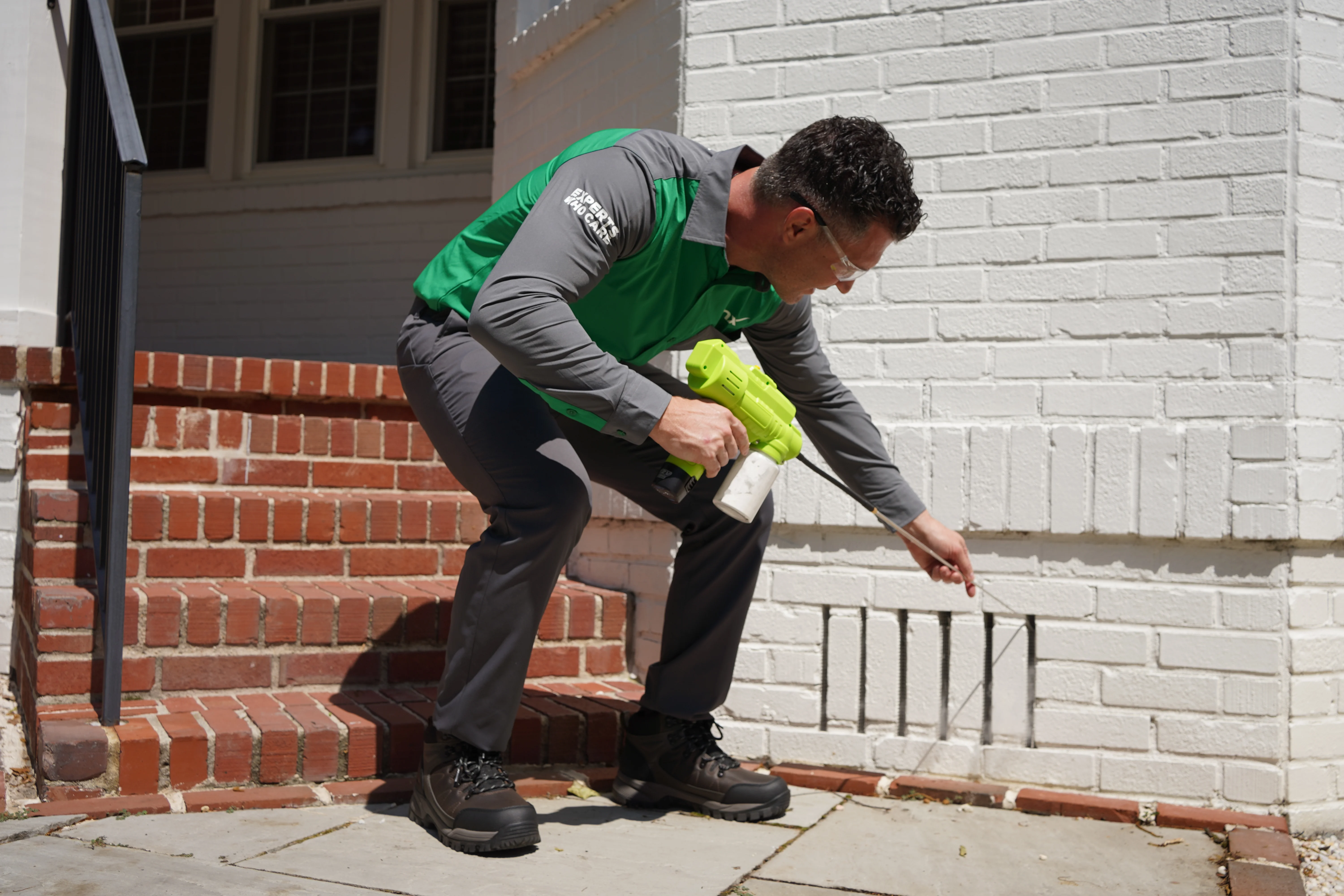
Wildlife Rest Area Treatment
Raccoons and opossums working the creek corridors bed down under decks, sheds and dense shrubs on the lots beside them. Those rest spots are where flea eggs concentrate outdoors and where a dog picks up the fleas that end up in the carpet. Identifying and treating these specific harborage locations addresses the outdoor reservoir that veterinary prevention alone doesn’t eliminate.
Interior Flea Treatment with IGR: Platinum Plan
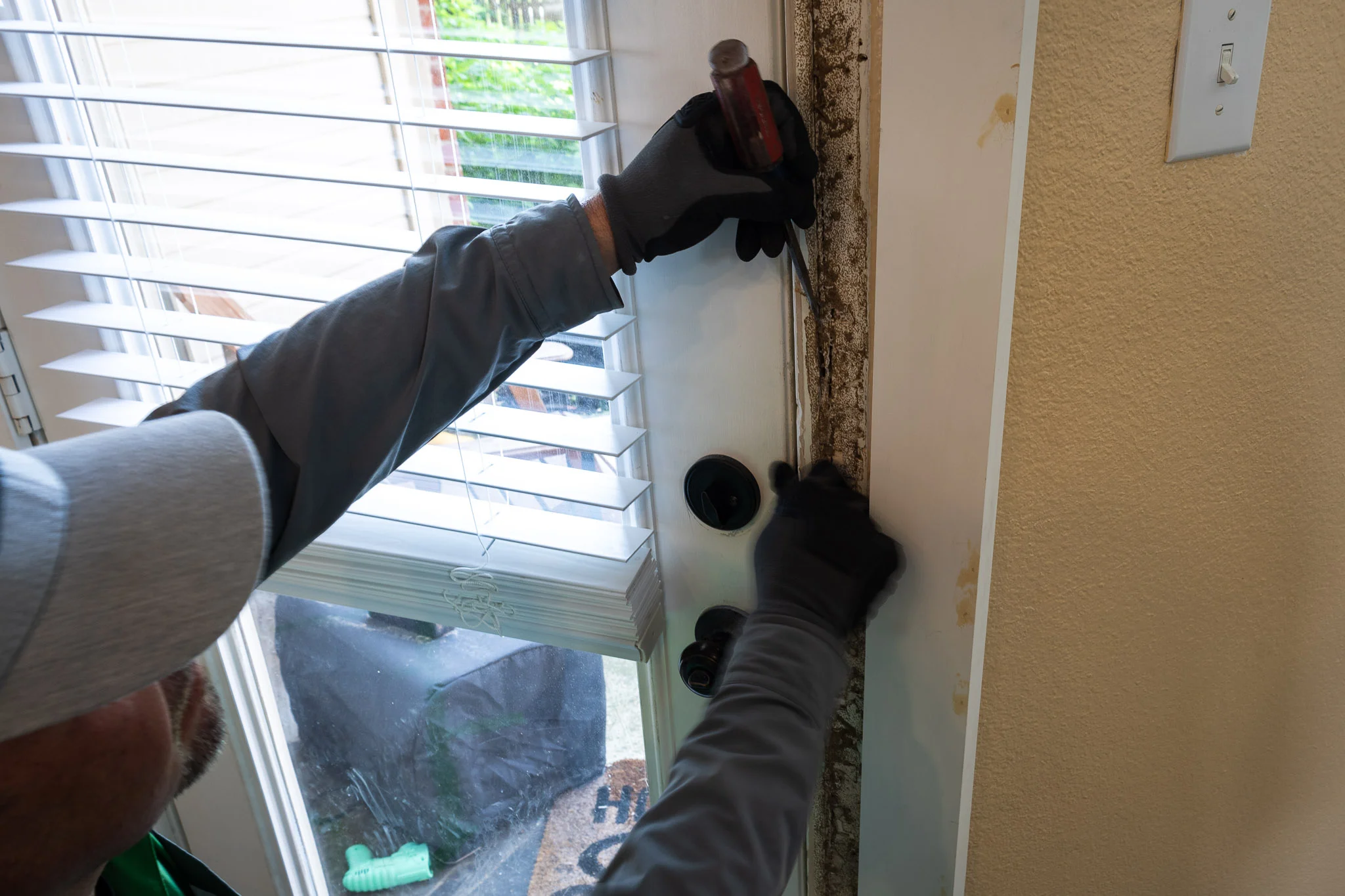
When fleas have been introduced indoors, interior treatment with insect growth regulator (IGR) addresses the developing flea population in carpet fibers, pet bedding, and upholstered furniture, the 95% of the total flea population not on the pet. IGR prevents larvae from reaching the biting adult stage. Included in the Platinum plan. Veterinary flea prevention on all pets must be current simultaneously.

Conducive Condition Documentation
After every visit your technician documents the outdoor conditions sustaining flea and tick pressure on your lot: deer paths through a wooded edge, woodpiles or debris sheltering wildlife, ground cover left tall against the house, and any low, shaded spot that stays damp in Piedmont clay. You get a written report after every service visit.
What Customers Say
What Simpsonville Customers Say About Vinx: 4.8 Stars on Google
Always a fantastic experience. Vinx is thorough ana professional always. Every tech that comes out is incredible. Shout-outs to Jacob and Alex.
Vinx did a great job on our appointment and even left us a video of all things covered. Very professional
Zachari did a great job. He listens, he's knowledgeable about his job and the surrounding area and the bugs around, Like the many writing spiders we have. He stayed away to keep them safe and their webs intact and he's very customer service oriented. Thank you so much.
Johnathan was friendly and listened to my concerns took care of the issues promptly and professionally. Great work
Very nice and efficient. Highly recommend. This was my quarterly service , sprayed outside.
Alfredo has been servicing our home through Vinx, and he’s always been professional, friendly, and thorough. He takes the time to do the job right and is always courteous. We really appreciate his hard work and highly recommend him to anyone looking for reliable service!
By Neighborhood
Flea & Tick Pressure Across Simpsonville & Greenville County
Rocky Creek Corridor, West of the Railroad
Highest Tick Pressure: Creek Buffers Rocky Creek collects water from the majority of Simpsonville, and every lot that backs onto it or one of its feeder branches backs onto a protected riparian buffer where the City requires all trees, shrubs and ground cover to be retained. That strip of undisturbed brush is ideal questing habitat for lone star and black-legged ticks and a travel lane for the deer that carry them. The treatment emphasis on these properties is the edge where the buffer meets the mowed lawn, on every visit.
Durbin & Horsepen Creek Corridors, East of the Railroad
Elevated: Wooded Lot Margins East of the tracks Simpsonville drains to the Enoree basin through Durbin and Horsepen Creeks, which the City’s comprehensive plan describes as less impacted than Rocky Creek. Less impacted means more intact woodland along the banks, and the subdivisions built against it since 2000 inherit deer, raccoon and opossum traffic along their back fences. Lone star ticks, the most collected species in South Carolina, are the usual find on dogs here from May through September.
Heritage Park & the Fairview Road Corridor
Elevated: Open Grass & Park Edges Homes around Heritage Park and along Fairview Road get two exposures at once. The park’s wooded edges hold lone star ticks, while the open, sunny grass margins and unmowed roadside strips along Fairview Road are American dog tick habitat, the species most often found on dogs after time in open fields. Dogs that visit the park bring both home, so the yard treatment here is timed to the April through September window when both species are active.
Five Forks & the Woodruff Road Corridor
Elevated: Development Displacement The comprehensive plan describes Simpsonville’s growth as sprawl that is now turning toward infill, and the Five Forks and Woodruff Road side of town is where that clearing has been heaviest. Each cleared parcel pushes deer and small mammals into the nearest standing woodland, which is usually the wooded edge of an adjacent subdivision. New builds beside remaining woods carry elevated tick pressure during and for several seasons after construction.
Downtown & the Older Neighborhoods Around Main Street
Moderate Pressure The older streets around the Clock Tower and Main Street have mature canopy, smaller lots and, as the City’s own plan notes, some blocks without curbs or sidewalks, so grass and brush run straight to the road edge. Pressure here is the ambient Upstate baseline from raccoons and opossums moving between yards rather than a creek corridor, and Plus plan service through the active season manages it for most properties. The exception is a kennel or garage where a brown dog tick population has established indoors, which needs an interior treatment.
7-Month Season. 4 Species.
Why Flea & Tick Control in Simpsonville Requires Professional Yard Treatment
Simpsonville’s tick pressure follows its creeks. The railroad through town sits on the divide between the Reedy River watershed to the west, drained by Rocky Creek, and the Enoree watershed to the east, drained by Durbin and Horsepen Creeks. The City’s zoning ordinance protects a buffer of 15 to 50 feet along every one of those waterways and requires all vegetation inside it to be retained, so the shaded brush where ticks quest and wildlife rests is permanent. Since 2000 the city has added 2,486 single-family homes, most of them on lots that now end at one of those buffers, and this is a bedroom community where the dog goes out into that yard every morning.
Your vet’s prevention kills what lands on the dog. It does nothing about the ticks waiting in the ground cover along the back fence or the flea eggs under the deck, and the dog walks back through both every day. Yard treatment is the half of the job that works on the source.
On a Simpsonville lot that means the mulch beds, the shaded ground cover, the wildlife rest spots under decks and sheds, and above all the line where your mowed grass meets a creek buffer or wooded edge you are not allowed to clear. Call (864) 894-2419 for a free quote.
Simpsonville Flea & Tick Species
Black-Legged Tick / Deer Tick (Ixodes scapularis)
In Simpsonville: Present, but not the tick you are most likely to find. Clemson’s Livestock Poultry Health program describes the black-legged tick as found across South Carolina in low volume, and in Simpsonville that means the wooded riparian buffers along Rocky, Durbin and Horsepen Creeks where deer move. Nymphs, the stage that transmits Lyme disease, are poppy-seed sized and most active March through May, which is before most homeowners are thinking about ticks.
Disease risk: Lyme disease, anaplasmosis and tick-borne relapsing fever. Early antibiotic treatment of Lyme disease is highly effective when started promptly. A tick check after any time in the creek-side brush is the single most useful habit for a Simpsonville household.
- Disease vector: Lyme disease
- Most active: March – May (nymphs)
- Highest pressure: Rocky Creek wooded buffers
Lone Star Tick (Amblyomma americanum)
In Simpsonville: The most collected tick species in South Carolina, and the one a Simpsonville dog owner will actually pull off the dog. It lives in the brushy edges of the creek corridors east and west of the railroad and along any wooded lot line, and it actively walks toward a host rather than waiting, which is why it reaches people mowing a back fence line as readily as it reaches pets.
Disease risk: Ehrlichiosis, Southern tick-associated rash illness and alpha-gal syndrome, the red-meat allergy triggered by lone star bites. South Carolina added alpha-gal syndrome to its list of reportable conditions in 2026, so cases are now counted by the state. Seek prompt medical care for any fever after a tick bite.
- Disease vector: Ehrlichiosis & Alpha-Gal
- Peak activity: May – September
- Highest pressure: Durbin & Horsepen Creek brush
Cat Flea (Ctenocephalides felis)
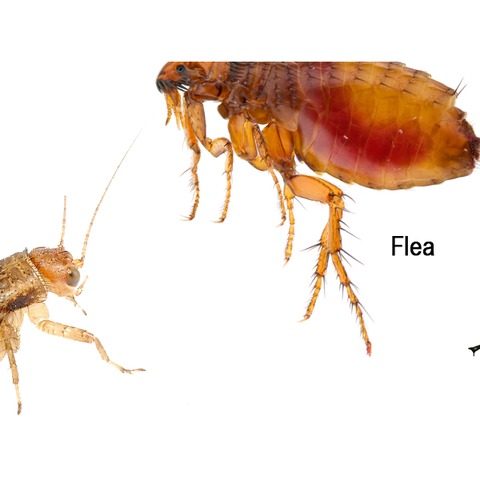
In Simpsonville: The flea on nearly every dog and cat in town. Raccoons and opossums working the creek corridors keep an outdoor population going in the shaded rest spots under decks and shrubs beside them, and the pet carries it indoors. Only about 5% of a flea population, the biting adults, is on the animal at any moment; the other 95% is eggs, larvae and pupae in carpet, bedding and shaded yard soil.
- Included: Plus & Platinum plans
- Active season: March – October
- Interior IGR treatment: Platinum plan
American Dog Tick (Dermacentor variabilis)
In Simpsonville: The open-ground tick. It turns up on dogs after time in sunny grass rather than woods: the mowed-to-unmowed transition around Heritage Park, roadside strips along Fairview Road, and the field edges on the rural fringe south of town. Most active April through August. Its cousin the brown dog tick is the one species that can complete its whole life cycle indoors, which is how a kennel or garage ends up with a tick problem of its own.
Disease risk: Both the American dog tick and the brown dog tick transmit Rocky Mountain spotted fever. Seek prompt medical care for any fever following a tick bite.
- Disease vector: Rocky Mountain Spotted Fever
- Most active: April – August
- Habitat: open grass, park & road edges
What to Look For
Signs of Flea & Tick Pressure at Your Simpsonville Property
Ticks on Pets After Yard Time
Finding ticks on dogs or cats after routine yard or trail activity, the primary indicator of active tick pressure in your yard vegetation
Ticks in the Garage or Kennel
Ticks found indoors away from any pet, on walls or in bedding, point to the brown dog tick, the one species that completes its life cycle inside a building
Deer Trails Through Yard Margins
Worn deer paths through the wooded buffer behind a creek-side lot, the corridors along Rocky, Durbin and Horsepen Creeks that carry ticks into Simpsonville yards
Excessive Scratching in Pets
Pets scratching, biting, or restless despite current veterinary prevention, may indicate an established outdoor environmental flea population reintroducing fleas on every yard outing
Wildlife Rest Areas in Yard
Shaded, sheltered vegetation areas under decking, along fence lines, or in dense ground cover, raccoon and opossum rest areas are primary outdoor flea egg concentration zones
Seed Tick Clusters on Children
Clusters of tiny tan dots on ankles and legs after playing at a wooded yard edge or park margin, lone star tick larvae, a late-summer find across Simpsonville
Vinx HomeGuard Plan
What Happens at Every Visit
Our technicians don’t just spray and leave. Every quarterly service covers your full exterior and interior, done right, backed by a written guarantee.
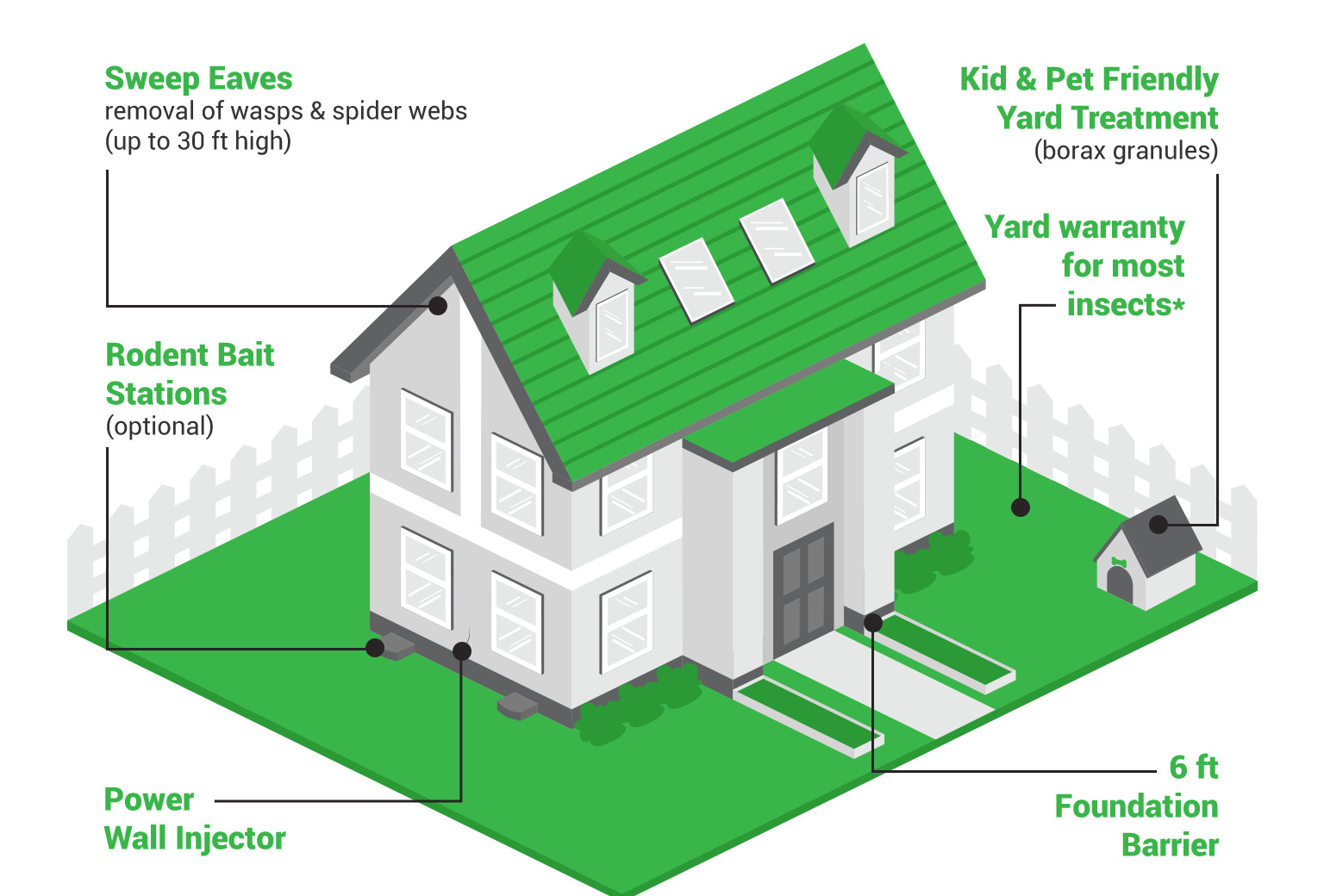
- Yard & Margin Treatment: Ground cover, mulch beds, and vegetation borders treated every visit
- Power Wall Injector: Treats wall voids where pests hide
- 6 ft Foundation Barrier: Full perimeter treatment every visit
- Yard Warranty: Free retreatment for most insects
- Kid & Pet Safe Yard Treatment: Borax granules, safe after dry
Homeowner Tips
6 Ways to Reduce Flea & Tick Pressure Around Your Simpsonville Property
Kid & Pet Safe
Our Treatments Are Safe for Your Whole Family: Including the Furry Members
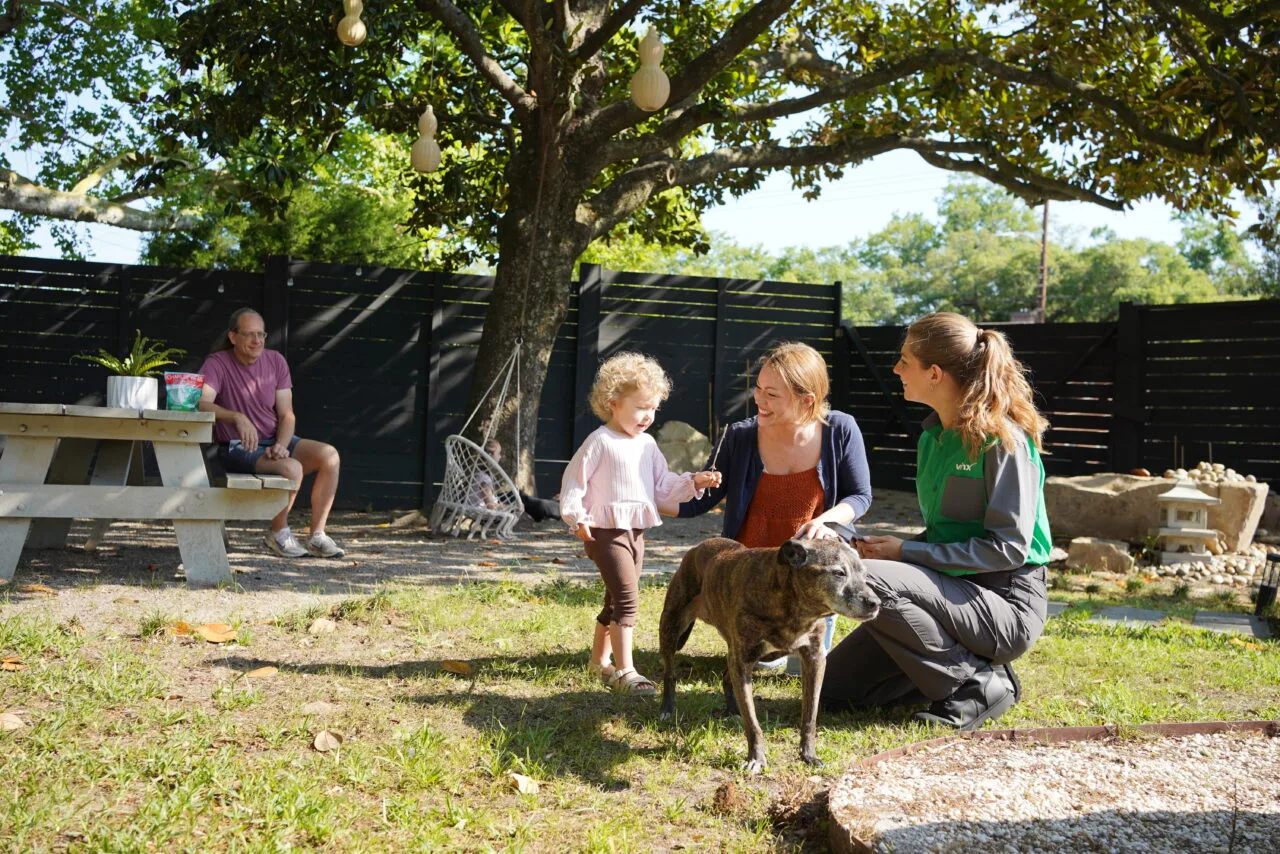
Every product we use is EPA-registered and applied strictly at labeled rates by licensed technicians. We take the guesswork out of safety so you can feel confident letting kids and pets back into treated areas quickly.
EPA-Registered Products Only
All products we apply are EPA-registered and used strictly per label requirements. Our licensed technicians are trained to apply the right product in the right place at the right rate, every time.
Dry Time Before Re-Entry
Exterior spray treatments dry in 30–60 minutes. Once dry, treated surfaces are safe for children and pets to contact. Your technician will confirm the all-clear before leaving your property.
Interior Treatment On Request
We treat only what’s needed, where it’s needed. Gel baits in cabinets and crack-and-crevice applications keep products away from areas pets and children frequent most.
Botanical Options Available
Have specific sensitivities? Ask your technician about our plant-derived treatment options. We offer botanical alternatives for households that prefer a more natural approach.
Have a concern about products used near your pets or children? Call 855-800-8469 and we’ll walk you through exactly what we use and why it’s safe.
Explore More
More Pest Control Services in Simpsonville

Pest Control Simpsonville
Year-round protection plan
Mosquito Control Simpsonville
Monthly barrier treatments
Termite Control Simpsonville
Bait systems & liquid treatment

Rodent Control Simpsonville
All rodents covered
Cockroach Control Simpsonville
American & German roaches
Bed Bug Control Simpsonville
Heat & liquid treatments
Spider Control Simpsonville
All spider species covered
Exterminator Simpsonville
Same-day local exterminators
Ant Control Simpsonville
Household ants & others
Wasp Control Simpsonville
Nest removal & prevention
Frequently Asked Questions
Flea & Tick Control FAQ for Simpsonville Homeowners
Yes, but in low numbers. Clemson’s Livestock Poultry Health program describes the black-legged tick, the Lyme carrier, as found across South Carolina in low volume, and in Simpsonville it lives in the wooded riparian buffers along Rocky, Durbin and Horsepen Creeks where deer move. The tick you are far more likely to find on a dog here is the lone star tick, which does not carry Lyme disease but does carry ehrlichiosis and alpha-gal syndrome. The spring nymph window, March through May, is the highest-risk period for Lyme because nymphs are poppy-seed sized and easily missed.
Usually not. Simpsonville’s zoning ordinance sets a riparian buffer along every waterway, 15 feet on a normally dry channel up to 50 feet on a perennial water body, and states that all vegetation, ground cover, trees and shrubs shall be retained throughout the buffer, with no soil disturbance permitted. Removing a tree of 12 inches or more may also need a permit, so call the Planning Department before cutting anything. The practical answer is to keep a mowed strip on your side of the line and have the buffer edge treated on every visit, which is what our service does.
Exterior flea and tick yard treatment is included in the Plus plan at $75 per month and the Platinum plan at $109 per month for homes up to 3,000 sq ft. Interior flea treatment with IGR is available in the Platinum plan. Both plans also include full pest control and fire ant treatment. Call (864) 894-2419 for a free quote.
Two things, and they cover different ticks. The park’s open grass margins are American dog tick habitat and its wooded edges hold lone star ticks, so keep your dog on veterinary prevention to kill what attaches during the visit. Then have your own yard treated, because the dog drops some of those ticks into your fence-line vegetation on the way in the door, and an untreated yard becomes a second source that reaches children and other pets. Call (864) 894-2419 for a free quote.
March through October, roughly seven to eight months. Black-legged tick nymphs are most active in the spring window, March through May. Lone star ticks, the species most often collected in South Carolina, quest most actively May through September, with larval seed-tick clusters showing up in late summer. American dog ticks run April through August in open grass. Flea populations build through May and June and hold at peak through September. The first consistent cold nights of late October start the decline, though fleas persist indoors all winter once a population is established in carpet.
Vinx serves all of Simpsonville and the surrounding Golden Strip: downtown around the Clock Tower and Main Street, the Fairview Road and Heritage Park corridor, Harrison Bridge Road, Neely Farm, Five Forks, the Woodruff Road corridor, Fountain Inn, Mauldin and all surrounding areas. Call (864) 894-2419 to confirm scheduling for your specific address.
Both, because they work on different parts of the life cycle. Yard treatment lowers the tick and flea population in the ground cover and shaded soil your pet walks through every day. Veterinary prevention kills the ones that reach the animal anyway, at the park or on a walk. Yard-only leaves the pet unprotected on contact; vet-only leaves the source population along your fence line untouched, so the pet is re-exposed every time it goes out.
The clearest indicators: your pet scratching more than usual; small dark specks (“flea dirt”) on pet bedding or light-colored carpet near pet rest areas (flea dirt turns red when wet because it is digested blood); small bites on human ankles near carpet edges or on lower legs in the morning. Flea populations in carpet are almost entirely in the egg, larva, and pupa stages, the 95% not on the pet. If you see these signs, call for interior IGR treatment included in the Platinum plan.
It has been found in South Carolina but not, so far, reported from Greenville County. Clemson announced the state’s first detection in Pickens County in 2020 and confirmed it on pastured cattle in York County in June 2022, and Greenville County sits between those two. The species reproduces without mating, so a single female can seed an infestation quickly, which is why the state wants unfamiliar ticks sent to its free identification program. If you find a heavy tick load on livestock or a dog, bag a specimen rather than throwing it away.
No, treatment is not necessary or effective during the low-activity winter months. The active season covered by Plus plan bi-monthly treatment runs approximately March through October for Upstate SC markets and March through November for Lowcountry and coastal markets. Vinx visits are scheduled within the active season window. There is no benefit to treating in January or February when tick populations are dormant and flea outdoor reproduction has stopped.
Service Coverage
Flea & Tick Control Across Simpsonville & Greenville County
Serving every neighborhood in the Simpsonville metro area