Cockroach Control in Columbia, SC
Cockroach Specialists, German & American Cockroach Experts, Same-Day Service
Cockroach control in Columbia targets the species most common here: German cockroaches, American cockroaches (the local palmetto bug), and Oriental cockroaches. Gel bait, IGR and an exterior barrier spray are what Vinx uses. Free re-treatment guarantee.
Get Started in 60 Seconds
Choose what’s easiest for you
Request a Quote
We usually respond in 2 minutes
Call 803-925-8469
Get a Live Person (no AI agents here!)
Sign Up Online
Get pricing and schedule now





Welcome to Vinx Pest Control
A Company That Actually Backs What It Says
At Vinx, we combine professional-grade treatments with a level of service most pest control companies don't offer. Local technicians, fast response times, and a guarantee that actually means something.
Get a Free Quote"I'm not passionate about killing bugs. I'm passionate about customer service. At Vinx, you get experts who show up, do the job right, and stand behind every visit. No runaround, no fine print."
WELCOME TO VINX PEST CONTROL
Cockroach Control Plans for Columbia Homeowners

Standard Residential Protection
- 4 Seasonal Treatments Per Year
- 50+ Covered Pests
- Interior, Exterior & Yard Treatment
- Unlimited Free Re-Services
- 100% Money-Back Guarantee

Upgraded Yard Protection
- 6 Home & Yard Treatments Per Year
- 50+ Covered Pests
- Yard Ant Elimination Guarantee
- Flea & Tick Elimination Guarantee
- 100% Money-Back Guarantee

Most Comprehensive Protection
- 9 Treatments Per Year
- 50+ Covered Pests
- 8 Mosquito Treatments (Mar–Nov)
- Flea, Tick & Ant Coverage
- Free Bed Bug Treatments if Needed*
*Starting rates vary by home size and area. All plans billed monthly.
Request Your Free Cockroach Control Quote
Fill out the form below and a Vinx team member will reach out within 2 minutes during business hours.
Prefer to talk? Call 855-800-8469 for a live person, no AI agents.
Our Approach
How Vinx Eliminates Cockroaches in Your Columbia Home

Inspection & Species Identification
The inspection covers kitchen, bathrooms, utility areas and exterior entry points, establishing the species and locating the harborage. A German cockroach calls for a different approach than an American or smoky-brown one, which is why identification decides the treatment plan.
Gel Bait Placement
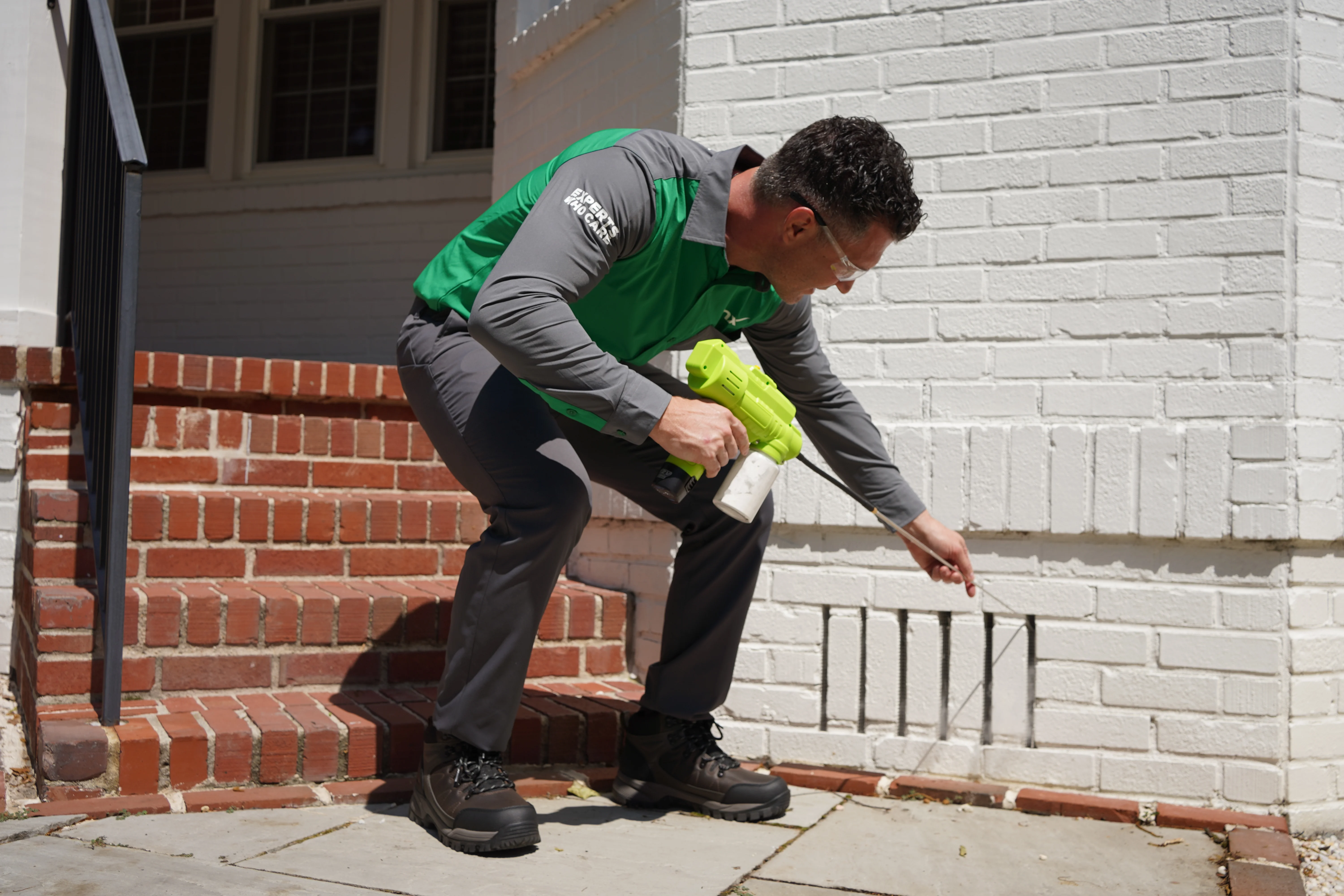
Gel bait of professional grade is set into cracks, appliance backs, under-sink spaces and cabinet voids along the routes roaches use. They feed, carry the bait home to the harborage, and the colony is eliminated from within. Small, precisely targeted amounts of bait give the best results.
Residual Perimeter Treatment
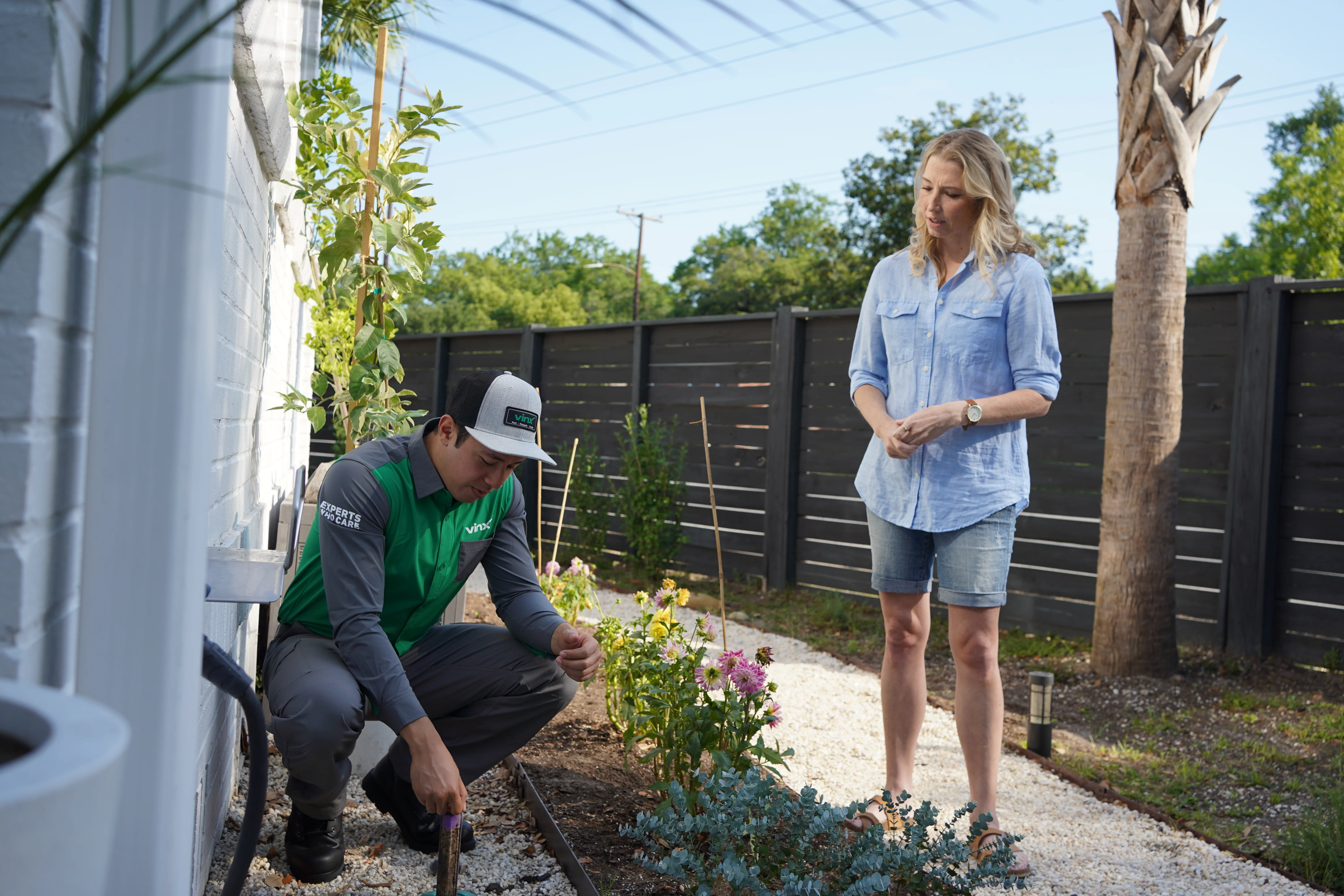
A residual insecticide covers the exterior foundation, garage perimeter and entry points, keeping roaches from moving in from outside. Baseboards and interior hiding places get treated to eliminate roaches already settled in the structure.
Follow-Up & Ongoing Prevention
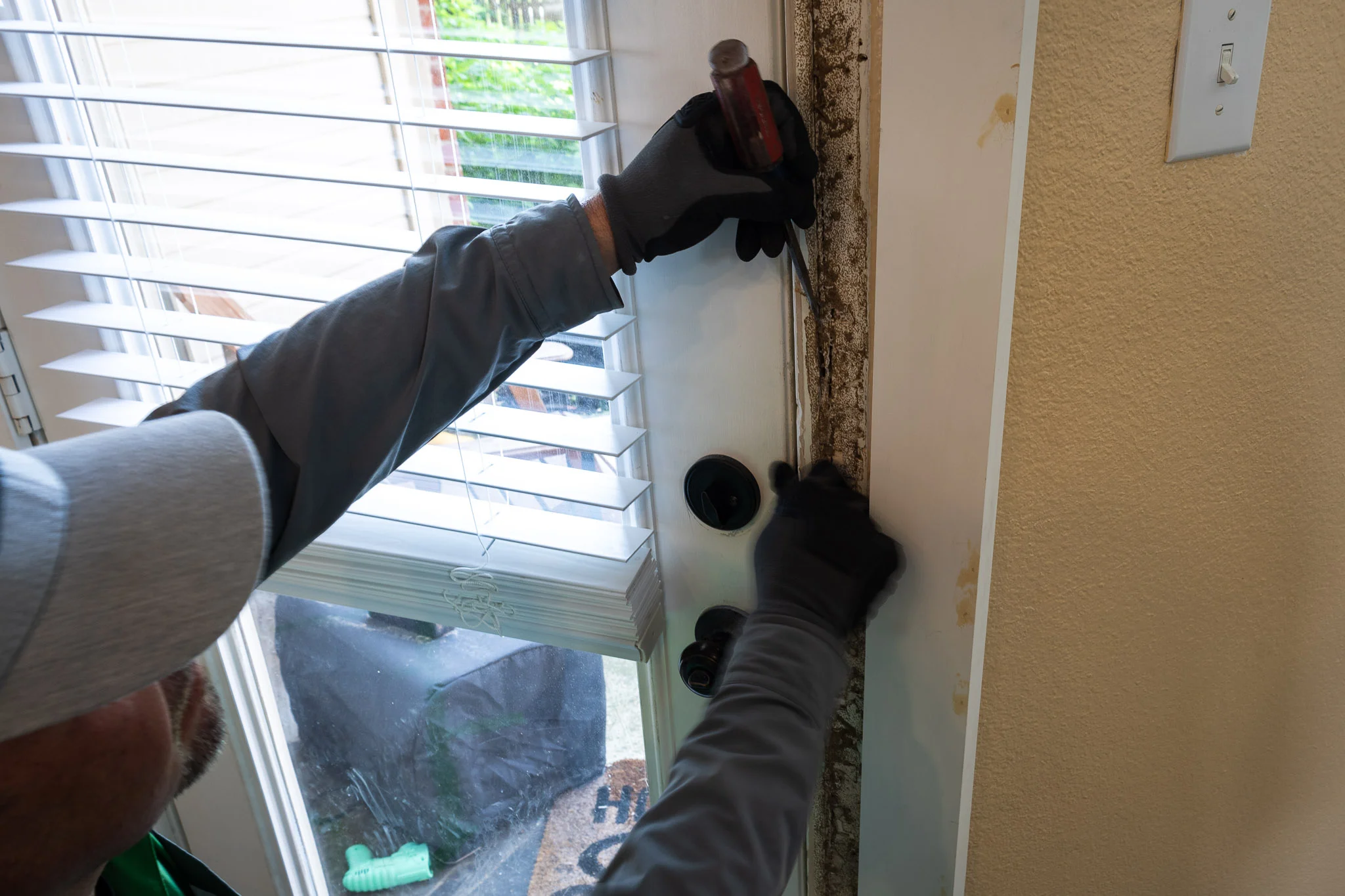
The follow-up verifies the colony is eliminated and renews bait and residual where required. If they come back between scheduled services, the re-treatment is free. The technician talks you through sanitation practices, moisture control and exclusion measures against re-infestation.
What Customers Say
Real Reviews from Columbia Homeowners
Came in and took care of everything that we talked about quickly and efficiently.
Kenneth was very professional in his approach, and very knowledgeable in his craft.
Maurice did an outstanding job with detail spraying. Thank you.
Leon my service tech was very professional. I think he did a great job on spraying my entire interior. The outside will be rescheduled due to rain. I can’t comment just yet on the infestation control until more time passes.
The technician was knowledgeable, respectful and polite. So far thee treatment appears to bee working.
6 Species. One City.
Why Columbia Has a Cockroach Problem Unlike Any Other City
Columbia’s combination of humidity, heavy summer rainfall, warm temperatures, and aging drainage infrastructure creates cockroach pressure that is fundamentally different from inland cities. The treatment follows from understanding which species is present and where it originates.
Six cockroach species cause problems in Columbia homes. They all behave differently, shelter in different places and need different treatment methods.
Columbia Cockroach Species
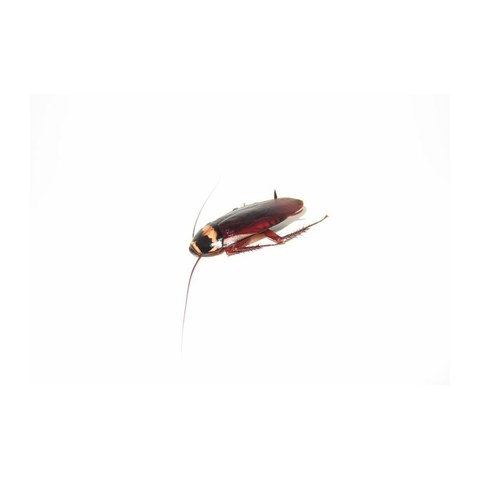
American Cockroach (Palmetto Bug)
Locally, palmetto bug covers the big outdoor roaches generally rather than a single species, most often this one and the smoky-brown. Columbia simply prefers the less alarming name. Adults measure 1.5 to 2 inches in length and are reddish-brown with a tan or light yellow band around the shield behind the head. Despite having wings they rarely fly indoors.
Drain lines, sewer connections and utility penetrations are their routes. If a large brown roach turns up in the bathroom or kitchen, the drain is almost certainly how. Heavy rain surcharges the sewer system and pushes these roaches upward into homes across every neighborhood, which is why the calls spike after a storm rather than in a dry spell.
Clemson places them around sewers, storage rooms and garbage areas, and notes that the large roaches normally live outdoors but can live inside. That is the whole treatment logic: they are an exclusion and perimeter problem, not a kitchen-sanitation one.
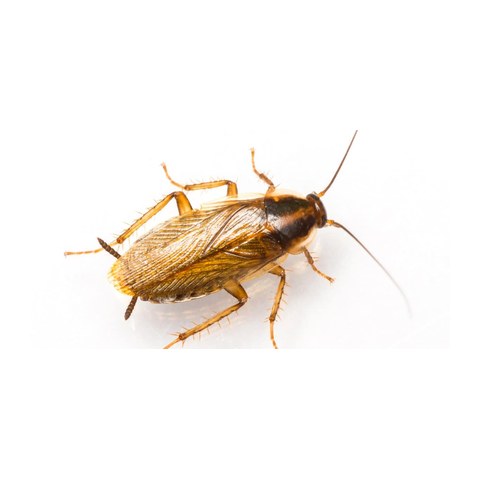
German Cockroach
The German cockroach is smaller, under half an inch, and is identified by two dark horizontal stripes behind its head. Despite its name it is the most common indoor cockroach species in the United States and a far bigger problem indoors than the palmetto bugs people find more alarming.
Clemson puts each egg case at thirty to forty eggs, hatching in about two weeks, and says a cockroach may reach adulthood in as little as six weeks. Clemson also calls German cockroaches the most persistent cockroach pests, which is the practical point: a small introduction can become severe within a couple of months. Drains are not how German cockroaches travel. Grocery bags, cardboard boxes, secondhand appliances and luggage carry them indoors. Having got in, they establish in kitchen cabinets, beneath appliances and inside electronics, wherever warmth and residue gather.
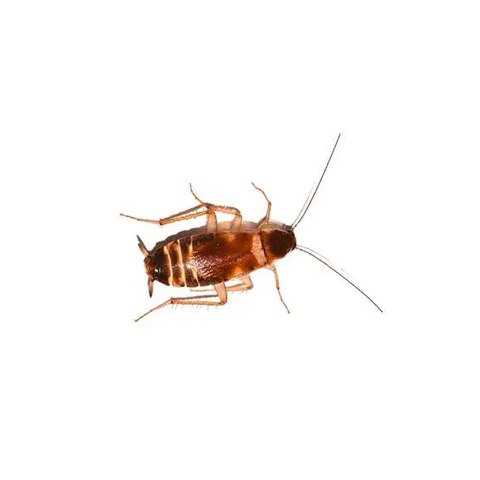
Smoky-Brown Cockroach
The smoky-brown cockroach is the species Columbia homeowners most commonly see flying toward porch lights at night. They are slightly smaller than the American cockroach and distinctly dark mahogany brown. They live primarily outdoors in tree holes, woodpiles, and dense vegetation, common in wooded areas of Forest Acres, Blythewood, and West Columbia.
Entry comes via gaps in the roofline, attic vents and window surrounds. Light and moisture pull smoky-brown cockroaches in hard.
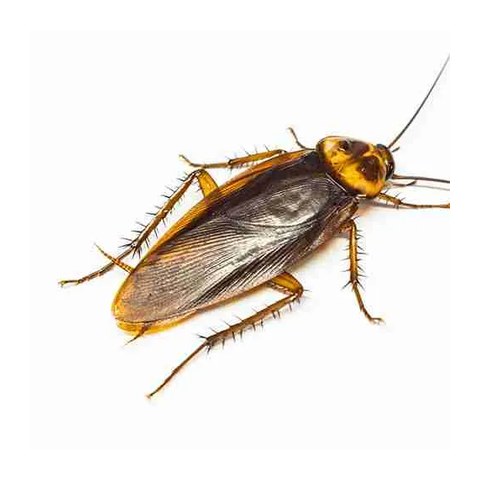
Asian Cockroach
Visually the Asian cockroach is nearly indistinguishable from the German, yet its behavior is very different. Strong fliers drawn to light, Asian cockroaches make for lit windows and bright interiors at dusk.
They live outdoors in leaf litter, compost, and mulch beds and enter through window screens, door gaps, and any lit entry point, so they turn up most in properties with dense garden beds close to the house.
One honest caveat, because it changes what you should do about it: the Asian cockroach is not named on Clemson’s list of South Carolina cockroaches, which covers the German, brownbanded, American, smoky-brown, Oriental, Surinam and wood cockroaches. It is established elsewhere in the Southeast, so we are not going to tell you it cannot be here, but we are not going to claim it is confirmed in the Midlands either. The practical takeaway is the useful bit: if something that looks like a German cockroach is flying toward your porch light, get it identified before treating, because an outdoor light-seeking roach and a kitchen-breeding German cockroach need opposite treatments.
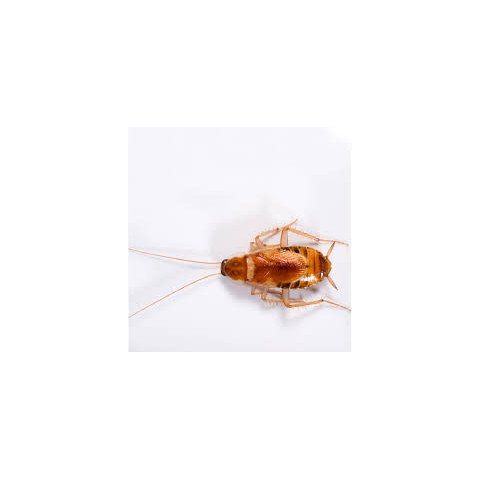
Brown-Banded Cockroach
Of all the species, the brown-banded is most often inside electronics, behind picture frames and in upper cabinet areas rather than low down. Adults grow to about half an inch and are identified by two broad brown bands crossing their bodies.
Brown-banded cockroaches break the pattern, favoring warm dry spots near the ceiling. A single female can produce up to 600 offspring in her lifetime. Its preference for elevated dry harborage means the treatment goes in different places from other species.
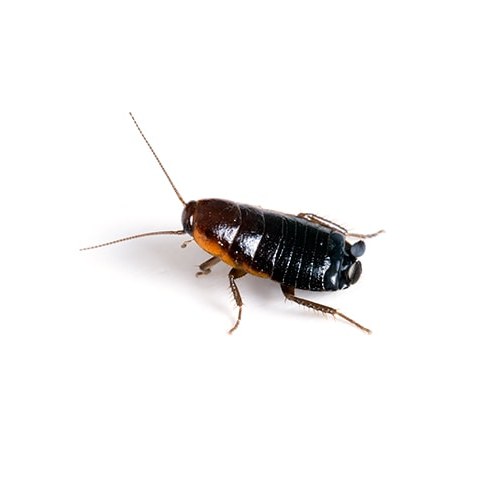
Oriental Cockroach
The oriental cockroach is dark brown to shiny black and approximately one inch long. Unlike every other species, oriental cockroaches cannot climb smooth surfaces. It keeps them low, which is why basements, crawl spaces, mulch beds and sewer systems are where they are found.
Spring and summer are when they appear, and decaying organic material is what they want. Outdoor compost, mulch beds and debris piles close to the foundation are strongly associated with them.
Pest Pressure by Neighborhood
Know Your Columbia Neighborhood’s Cockroach Risk
Five Points & Downtown: German & American Cockroaches
Older commercial and residential buildings around the USC campus, the Vista and Five Points give Columbia’s two most common cockroach problems everything they need. German cockroaches arrive in grocery bags, cardboard boxes and secondhand appliances, and dense student housing that turns over frequently keeps bringing new introductions in. In a shared building, party walls and plumbing chases let one unit’s problem become the whole building’s. American cockroaches take the other route: aging stormwater infrastructure under Five Points drives them upward into structures during heavy rain, which is why the calls here spike after a storm rather than in a dry spell.
Forest Acres: Smoky-Brown & American Cockroaches
Forest Acres has the oldest housing stock in the metro, with 73.8% built before 1980, and the mature tree canopy to match. That canopy is smoky-brown cockroach habitat: tree holes, woodpiles and dense vegetation, with entry through roofline gaps, attic vents and window surrounds, and porch lights pulling them toward the house at night. Older construction adds the other half of the problem, because original foundation gaps, crawl space openings and utility penetrations were never built to modern pest-exclusion standards, and those are the routes American cockroaches use. Treatment here is mostly an exterior job: perimeter, roofline and drain access points rather than kitchen baiting.
Irmo & Dutch Fork: American, Smoky-Brown & German Cockroaches
Three different pressures sit side by side here. Along the Lake Murray shoreline, boat docks, marinas and lakefront drainage keep ground moisture higher than elsewhere, the dark, moist sewer and storm drain conditions American cockroaches favor before they enter structures. The wooded, historically rural land along Dutch Fork Road gives smoky-brown cockroaches leaf litter and outdoor harborage close to homes. And the dense hotel and restaurant kitchens of the Harbison and St. Andrews corridor off I-26 carry the highest commercial German cockroach risk in the area, which is where recurring treatment schedules matter most.
NE Columbia & Blythewood: German & Smoky-Brown Cockroaches
Blythewood has the newest housing in the metro, a median build year of 2010 with 72.5% put up since 2000, and subdivisions along I-77 run straight up against wooded and formerly agricultural land. New construction does not keep cockroaches out on its own. German cockroaches arrive in moving boxes and delivery packaging, and with thirty to forty eggs per case hatching in about two weeks, one carton is enough to start an infestation in a brand-new kitchen. Along the treeline, smoky-brown cockroaches move from leaf litter and woodpiles toward the nearest lit structure, entering through attic vents and gaps around utilities rather than through drains.
Lexington: German, American & Smoky-Brown Cockroaches
Lexington is newer than Columbia proper, a median build year of 2002 with 57.5% built since 2000, but the historic core still has the drainage problem. Municipal drainage lines around Old Mill and downtown Main Street, built around the historic mill pond, give American cockroaches the dark, moist access they favor. The hotel, retail and restaurant kitchens along Sunset Boulevard give German cockroaches steady food and easy delivery-box entry, and in a strip building shared walls and plumbing chases let one tenant’s problem spread down the block. Wooded, leaf-littered ground along Fourteenmile Creek and Gibson Pond holds smoky-brown cockroaches close to homes on the north side of town.
Cayce & West Columbia: American & German Cockroaches
These two towns sit where the Broad and Saluda meet to form the Congaree, and river moisture drives the pressure. Properties along the Cayce Riverwalk and the Saluda riverfront regularly see large roaches come up drain lines after heavy rain or Congaree flooding, and crawl space and foundation moisture keeps American cockroach pressure high in riverfront homes. The housing is older too, 60.1% built before 1980 in Cayce and 55.1% in West Columbia, which means more gaps and more accessible drain lines. Commercial corridors such as Knox Abbott Drive add German cockroach pressure from office break rooms, retail kitchens and constant deliveries.
What to Look For
Signs of a Cockroach Infestation
Coffee-Ground Droppings
At baseboards, beneath sinks or within cabinets
Egg Cases (Ootheca)
Capsule-shaped brown casings found behind appliances or in cabinets
Musty Oily Odor
Chemical pheromones from cockroaches create a distinctive odor where they infest
Smear Marks
On walls and baseboards where cockroaches run the same damp routes
Daytime Sightings
Being nocturnal, cockroaches seen by day indicate a significant population
Dead Roaches Near Water
Under sinks, by dishwashers and around water heaters
Health Impact
Why Cockroaches Are a Health Risk
Food Contamination
Cockroaches carry Salmonella and E. coli on their bodies and in their droppings, contaminating food prep surfaces without any visible sign of contact.
Asthma & Allergens
Cockroach droppings, cast skins and saliva carry allergens that set off asthma symptoms in sensitized people, especially children. Allergen is detectable in roughly 63% of US homes, and bait-based treatment has been shown to cut kitchen allergen by about 96%, so controlling the infestation is itself the remediation.
Year-Round Exposure
In Columbia’s year-round humid climate, cockroach allergen exposure is a persistent concern rather than a seasonal one.
Local Conditions
What Actually Drives Cockroach Pressure in Columbia
Four things change how a Columbia property should be treated, and the first one is the reason most DIY attempts fail before they start.
The Two Kinds Here Need Opposite Treatments
Clemson groups the American, smoky-brown and Oriental as the large roaches that normally live outdoors but can live inside, and places the American around sewers, storage rooms and garbage areas. The German cockroach is the opposite: it lives and breeds indoors, mainly in kitchens and bathrooms around sinks and drains, behind refrigerators and stoves, and in cabinets, and Clemson calls it the most persistent cockroach pest. So one group is a perimeter, drain and exclusion problem and the other is a bait and sanitation problem. Treating a German cockroach infestation with an outdoor perimeter spray is the single most common reason a first round of treatment fails here.
Old Housing, and a July That Is Hot and Wet at Once
Census figures put the median Columbia home at 1980 against 1993 for South Carolina, with 49.5% built before 1980 and 18.3% before 1950, more than three times the state share. Older buildings mean more gaps, more accessible drain lines and more harborage. The weather compounds it: under current National Weather Service normals July is simultaneously Columbia’s hottest month and its wettest, averaging 5.35 inches of rain against a monthly mean of 82.4F, out of 45.24 inches across the year. Heavy rain surcharges the sewer system, which is when the large outdoor roaches come up the drains.
In Unincorporated Richland County It Is a Legal Duty
Worth knowing, because almost nobody does. Richland County’s vector control ordinance, Chapter 8 of the county code, requires that all premises, structures and exterior property be kept free from insect and rodent harborage and infestation, and that structures in which insects or rodents are found be promptly exterminated. Failing to abate after notice is a misdemeanor carrying up to a $500 fine or 30 days, with each day treated as a separate offense. Note the scope: it applies to the unincorporated county, so it does not reach addresses inside the City of Columbia, Forest Acres or Blythewood.
Why the Shop-Bought Route Loses
Two findings do most of the explaining. Field populations of German cockroach have been documented at up to 202-fold resistance to pyrethroids, with the knockdown-resistance mutation present in about 96% of individuals tested, and pyrethroids are the active ingredient in most of what a hardware store sells. And a 2019 study in BMC Public Health tested four commercially available total-release foggers against real infestations in occupied homes: roach numbers were statistically unchanged, allergen levels did not drop, and the insecticide landed on surfaces where people prepare food rather than in the harborages where the roaches actually live. Bait applied properly drove populations down.
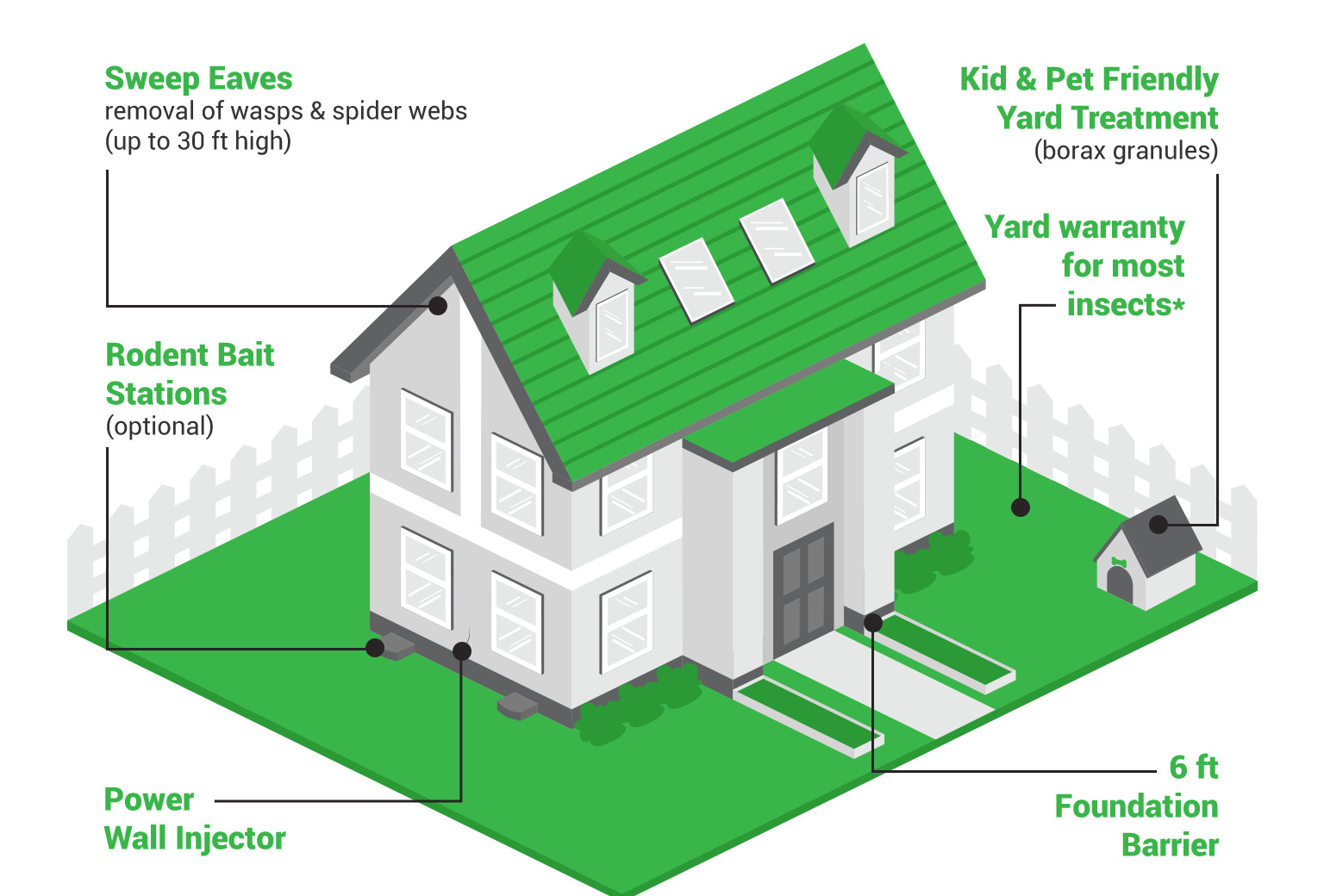
Vinx HomeGuard Plan
What Happens at Every Visit
Our technicians don't just spray and leave. Every quarterly service covers your full exterior and interior, done right, backed by a written guarantee.
- Sweep Eaves: Wasp nests & spider webs removed up to 30 ft
- Power Wall Injector: Treats wall voids where pests hide
- 6 ft Foundation Barrier: Full perimeter treatment every visit
- Yard Warranty: Free retreatment for most insects
- Kid & Pet Safe Yard Treatment: Borax granules, safe after dry
Homeowner Tips
6 Ways to Reduce Cockroach Pressure Right Now
Kid & Pet Safe
Our Treatments Are Safe for Your Whole Family: Including the Furry Members
Every product we use is EPA-registered and applied strictly at labeled rates by licensed technicians. We take the guesswork out of safety so you can feel confident letting kids and pets back into treated areas quickly.

EPA-Registered Products Only
All products we apply are EPA-registered and used strictly per label requirements. Our licensed technicians are trained to apply the right product in the right place at the right rate, every time.
Dry Time Before Re-Entry
Exterior spray treatments dry in 30–60 minutes. Once dry, treated surfaces are safe for children and pets to contact. Your technician will confirm the all-clear before leaving your property.
Gel Bait Applied Safely Indoors
Cockroach gel bait is applied in hidden harborage areas (inside cabinet hinges, behind appliances, in wall voids) completely out of reach of pets and children. No sprays broadcast in living areas.
Botanical Options Available
Have specific sensitivities? Ask your technician about our plant-derived treatment options. We offer botanical alternatives for households that prefer a more natural approach to pest control.
Have a concern about products used near your pets or children? Call 855-800-8469 and we’ll walk you through exactly what we use and why it’s safe.
Explore More
More Pest Control Services in Columbia

Pest Control Columbia
Year-round protection plan

Ant Control Columbia
Household ants & others

Bed Bug Control Columbia
Heat & liquid treatments

Mosquito Control Columbia
Monthly barrier treatments

Rodent Control Columbia
All rodents covered

Spider Control Columbia
All spider species covered

Termite Control Columbia
Bait systems & liquid treatment

Tick & Flea Control Columbia
Yard & pet protection
Exterminator Columbia
Same-day local exterminators

Wasp Control Columbia
Nest removal & prevention
Frequently Asked Questions
Cockroach Control FAQ for Columbia Homeowners
The Vinx HomeGuard plan at $49 per month includes quarterly control for American cockroach and palmetto bug pressure. German cockroach work is excluded from the recurring plans and priced separately once the free inspection is done. Call 803-925-8469 for a same-day assessment.
Mostly, but it is not a single species. Palmetto bug is a local catch-all for the big outdoor roaches, most often the American cockroach and the smoky-brown, and Clemson does not use the term at all. The one people usually mean is Periplaneta americana. Adults are reddish-brown and measure 1.5 to 2 inches. Sewers and drains are their home, and they come in through drain lines and utility penetrations. They do not mean the home is unclean.
No, and it is worth saying plainly because the shame attached to this keeps people from calling while an infestation grows. Cockroaches need three things: warmth, moisture and something organic to eat. Columbia supplies the first two for most of the year regardless of how anyone keeps house. The large outdoor species — the ones people here call palmetto bugs — live in sewers, storm drains, mulch and tree holes and come indoors on their own; a spotless kitchen does nothing to stop one coming up a floor drain or under a door on a warm evening. German cockroaches are different in that they do establish indoors and food access sustains them, but they usually arrive by being carried in: in grocery packaging, a secondhand appliance, a delivery box, moving cartons, or from an adjoining apartment through a shared wall. None of that is a verdict on you. Housekeeping affects how fast a population grows once it is present, so reducing clutter, fixing leaks and sealing food genuinely help — but they are not what determines whether roaches turn up in the first place, and cleaning alone will not clear an established infestation.
When Columbia gets heavy rain, outdoor drains and sewer lines surcharge and fill. Living in the drainage system, American cockroaches move up the drain lines into kitchen and bathroom plumbing as the water rises. The most effective prevention is drain covers with drain treatment as part of quarterly service.
Large and reddish-brown, American cockroaches come in chiefly by drains and outdoor gaps. Small and tan with two dark stripes behind the head, German cockroaches arrive inside grocery bags and boxes. German cockroaches breed far faster, with Clemson putting each egg case at thirty to forty eggs hatching in about two weeks and adulthood reached in as little as six weeks, and they require different treatment methods including gel bait and IGR rather than perimeter spray.
American cockroaches get immediate knockdown from same-day exterior perimeter and drain treatment. German cockroaches take professional gel bait and IGR, which acts within 24 to 48 hours and eliminates the colony in two to three weeks. Shop-bought sprays push roaches further into wall voids and leave the colony intact. Call 803-925-8469 for a same-day inspection.
Yes. Gel bait products are placed in cabinet hinges and concealed harborage pets and children cannot access. The IGR is applied in non-living spaces. Once dry, normally within one to two hours, the exterior perimeter spray is safe. Spray treatments are never applied to food preparation surfaces.
Inspection and the initial treatment take roughly 60 to 90 minutes. A German cockroach infestation normally needs two or three follow-ups at two to three week intervals before elimination is confirmed. Quarterly perimeter treatment is what manages American cockroach pressure.
An occasional American cockroach entering through a drain during heavy rain is normal in Columbia. You have an infestation when cockroaches appear regularly, are seen in daylight, leave droppings in cabinet corners, hide ootheca egg cases, or produce a musty oily odor. Roaches seen by day mean a population well beyond what you can see.
Yes, though the strongest evidence is about allergens rather than food poisoning. Cockroaches carry Salmonella and E. coli on their bodies and in their droppings and contaminate food preparation surfaces without any visible sign. Cockroach allergens trigger asthma particularly in children. In Columbia’s year-round humid climate, cockroach allergen exposure is a persistent concern rather than a seasonal one.
Yes. Most Columbia cockroach control appointments are available same-day or next-day. Call 803-925-8469. Should we fail to service your home by the next business day, the initial visit costs nothing.
Shop sprays repel cockroaches instead of killing them, pushing the population further into wall voids while colony and egg cases survive. Breaking the breeding cycle in a German cockroach infestation takes gel bait and IGR treatment. Call 803-925-8469 for a professional inspection.
Because in a multi-unit building the infestation is usually not confined to your unit, and this matters more in Columbia than in most Midlands towns — Census figures put about half of the city’s housing in buildings of two or more units, with roughly 9,100 units in buildings of fifty or more. German cockroaches travel between apartments through the spaces buildings are made of: shared wall voids, plumbing chases where pipes pass between units, gaps around electrical penetrations, and cabinet backs on a shared wall. Treat one kitchen thoroughly and the population simply re-enters from next door once the residual fades. That is also why the allergen picture is different in apartments: the national survey that found detectable cockroach allergen in about 63% of US homes found it in 84.3% of high-rise apartment living rooms. What actually works is treating the affected units together, along with the shared voids and risers between them, which is a building-level job rather than a unit-level one. If you rent, that means reporting it to your landlord or property manager in writing and asking for the adjoining units to be inspected too — not just yours. We work directly with Columbia property managers and landlords on exactly that kind of coordinated treatment, and we are glad to talk to yours.
Service Coverage
Cockroach Control Across Columbia and the Midlands
Serving every neighborhood in the Columbia metro, from historic Downtown to the surrounding Midlands communities.
Serving the Greater Columbia Area