Termite Control in Raleigh, NC
The Research Triangle’s Most Trusted Termite Protection
Local, Reliable, and 100% Guaranteed. Termites do not announce themselves. By the time most Raleigh homeowners notice the signs (mud tubes on the foundation wall, hollow-sounding wood, paint bubbling for no obvious reason) significant structural damage has already accumulated silently behind the walls. Termite damage is not covered by homeowners insurance. Continuous protection is the only reliable answer.
Get Started in 60 Seconds
Choose what’s easiest for you
Request a Quote
We usually respond in 2 minutes
Call (984) 600-8469
Get a live person (no AI agents here!)
Sign Up Online
Get pricing and schedule now




Welcome to Vinx Pest Control
A Company That Actually Backs What It Says
At Vinx, we combine professional-grade treatments with a level of service most pest control companies don't offer. Local technicians, fast response times, and a guarantee that actually means something.
Get a Free Quote"I'm not passionate about killing bugs. I'm passionate about customer service. At Vinx, you get experts who show up, do the job right, and stand behind every visit. No runaround, no fine print."
Protection Plans
Compare Packages & Get Protected Today
Standard Residential Protection
- 4 Comprehensive Seasonal Treatments Per Year
- Coverage for ants, spiders, cockroaches, wasps, silverfish, earwigs, centipedes, crickets, pillbugs and hornets
- Unlimited Free Re-Services
- 100% Money-Back Guarantee
- Termite protection not included, add Termite TotalDefense

Upgraded Residential Protection
- 6 Home & Yard Treatments Per Year
- Yard Ant Elimination Guarantee
- Exterior Flea & Tick Treatment
- Unlimited Free Re-Services
- 100% Money-Back Guarantee
- Termite protection not included, add Termite TotalDefense

Most Comprehensive Protection
- 9 Treatments Per Year + Monthly Mosquito (March–November)
- Interior Flea & Tick Coverage
- Free Bed Bug Treatment after 12 Continuous Months of Platinum*
- 100% Money-Back Guarantee
- Termite protection not included, add Termite TotalDefense
Termite protection is not included in HomeGuard, Plus, or Platinum. Termite TotalDefense is a standalone service using the Sentricon bait station system, starting at $35/mo+, quoted based on your home’s specific perimeter. Call (984) 600-8469 for your custom quote.
Request Your Free Termite Control Quote
Fill out the form below and a Vinx team member will reach out within 2 minutes.
Prefer to talk? Call (984) 600-8469, no AI agents.
Our Approach
How Vinx Protects Your Raleigh Home from Termites

Thorough Termite Inspection
Your technician inspects the full structure, foundation, crawlspace, attic, interior walls, window and door frames, and all wood-to-soil contact points. We identify mud tubes, frass, hollow-sounding wood, swarm evidence, and conducive conditions like moisture intrusion or improper drainage. The inspection report documents all findings and informs your treatment plan.
Foundation & Perimeter Treatment
A liquid termiticide barrier is applied around the full foundation perimeter, including beneath slabs and around utility penetrations. This creates a continuous treated zone that eliminates termites on contact and prevents new colonies from entering. Treatment is applied to both interior and exterior foundation walls for complete protection.
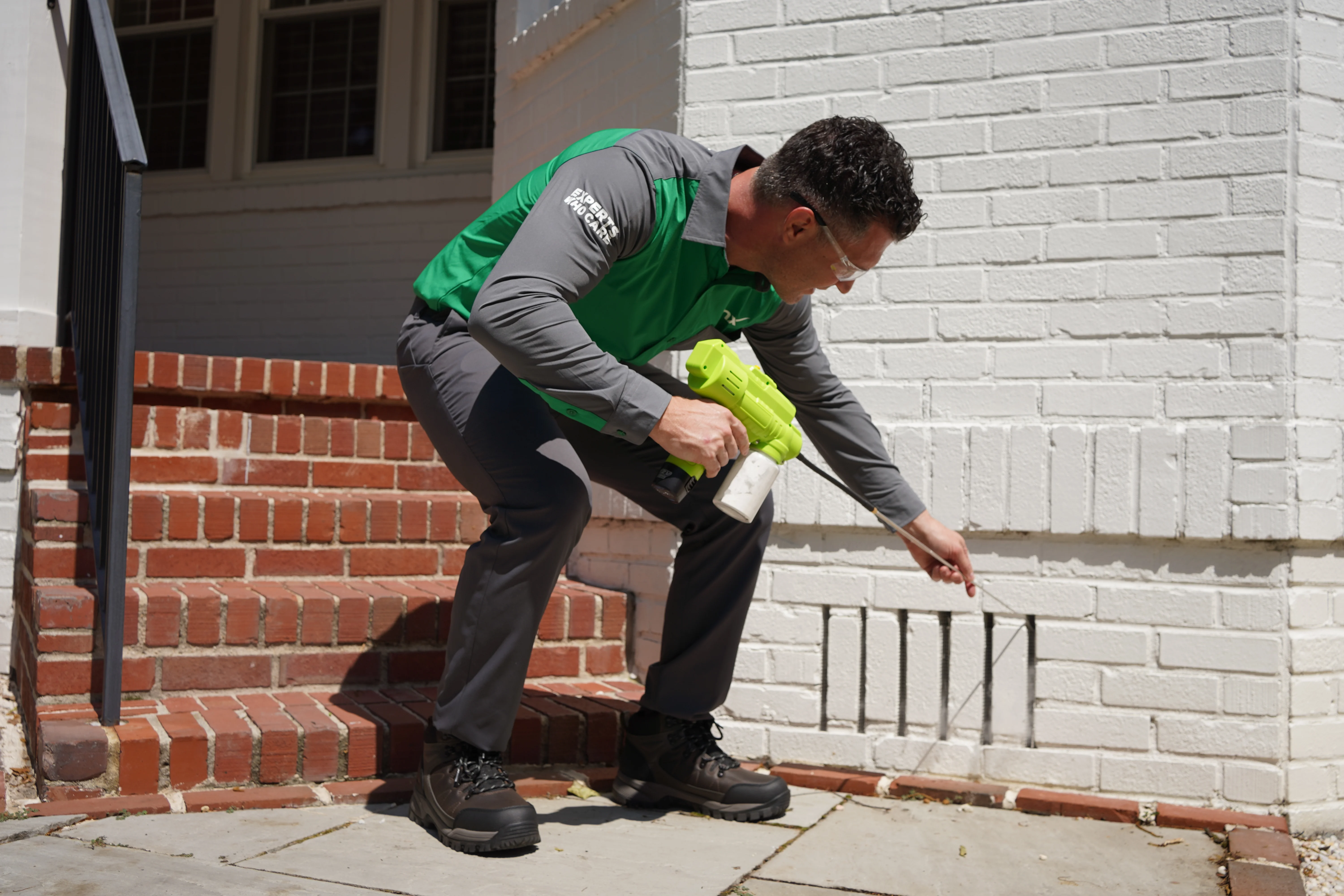
Direct Colony Treatment
Active termite galleries and mud tubes are treated directly with termiticide foam or dust, reaching deep into the colony tunneling network. This targeted approach eliminates the existing colony quickly while the perimeter barrier prevents re-infestation. Affected wood members are documented and repair recommendations are provided.
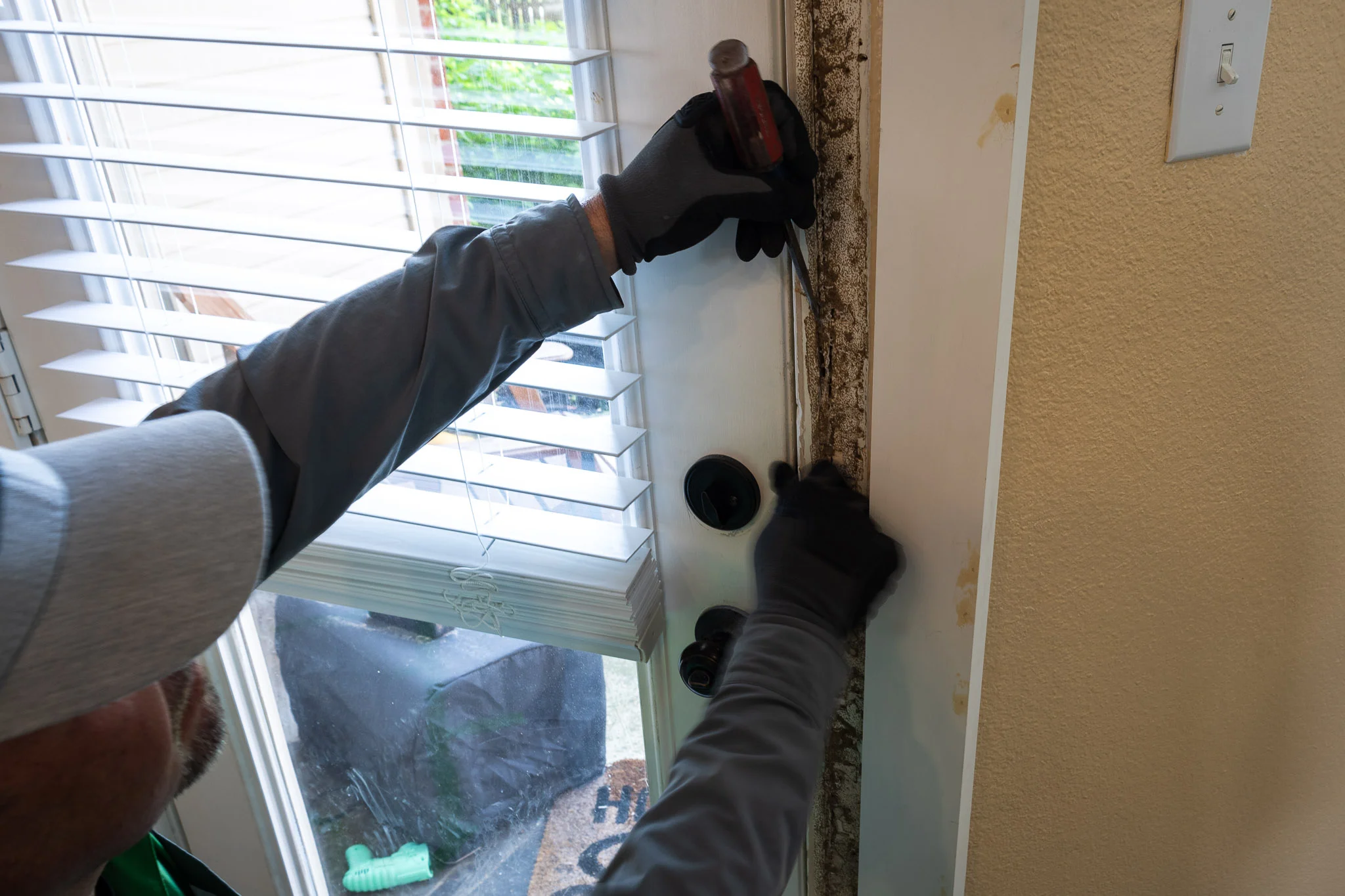
Annual Inspection & Re-Treatment Guarantee
Annual termite inspections keep your protection current and catch any new activity early. If termites return between scheduled visits, we re-treat at no additional charge, that is our guarantee. Your technician also advises on moisture control, wood contact elimination, and landscaping adjustments that reduce long-term termite pressure.
Customer Reviews
Real Reviews from Raleigh Homeowners
They sprayed for mosquitoes and my garage for spiders and such. Quick service and nice workers!
Verified Google ReviewMatt was a great sales guy and Abbas did an amazing job with the initial service! A rare time that the door-to-door sales pitch was appreciated and well executed! Glad to have them as a pest control provider!
Verified Google ReviewLinked up with Vinx and the service and communication is top tier. Scott was awesome
Verified Google ReviewJordan Did a wonderful job is exterminating my property. He cover the mailbox area. I hope he will be our technician again. I loved his video of work completely.
Verified Google ReviewThe technician, Derek, did a good job and was very friendly.
Verified Google ReviewThe owner is completely committed to offering affordable pest control, customer service and satisfaction. Thanks for all your help with my pest control needs
Verified Google ReviewScott was very informative in giving me details of my termite inspection. He also was able to treat for my fly problem in the house while he was here. This frees up the tech who was supposed to come tomorrow to do it. Very professional
Verified Google Reviewwhenever you get work done from a smaller company, there’s always a concern and a worry about quality, efficiency, and cost effectiveness. However, this company has exceeded my expectations. They do great quality work. They’re always on time and efficient, and for the cost, I couldn’t imagine choosing anybody else to handle the pest control of my home
Verified Google ReviewI had a great experience with VINX! Their service was excellent, and they were able to fix several issues I was having. The team was friendly, professional, and reliable throughout the process. I really appreciate their attention to detail and commitment to making sure everything was taken care of. I would definitely recommend VINX PEST to anyone looking for great service and dependable work!
Verified Google ReviewDerek from Vinx Pest Control did a fantastic job with our preventative maintenance treatment today! He was professional, thorough, and took the time to ensure everything was properly handled. I really appreciate his great service and highly recommend him!
Verified Google ReviewAwesome young man! Very engaging. He’s going to be very successful in life!
Verified Google ReviewWhy Raleigh Has High Termite Risk
Why Termite Pressure Is So High in Raleigh, NC
Wake County’s clay-heavy soil is the most important and least-discussed termite risk factor in the Raleigh market. Unlike sandy or loamy soil that drains quickly after rainfall and dries out during summer dry spells, clay soil retains moisture exceptionally well, creating persistently damp underground conditions that subterranean termites require to survive and forage year-round. Even during Raleigh’s hottest and driest summer weeks, the moisture retained in Wake County’s clay soil at depth remains sufficient to sustain active termite foraging beneath residential foundations. Termite activity here does not have the seasonal off-period that homeowners in sandier-soil markets experience, it is a four-season problem.
Why Termites Thrive in Raleigh Year-Round
Wake County Clay Soil: The Hidden Termite Driver
Wake County’s clay-heavy soil is the most important and least-discussed termite risk factor in the Raleigh market. Clay soil retains moisture exceptionally well, even during Raleigh’s dry summer periods, creating persistently damp underground conditions subterranean termites require to survive and thrive year-round. Termite activity here does not have the seasonal off-period that homeowners in sandier-soil markets experience, it is a four-season problem.
Neuse River and Crabtree Creek Moisture Corridors
The Neuse River floodplain in southeastern Wake County and the Crabtree Creek corridor running through the heart of Raleigh add additional soil moisture to the already-damp clay soil throughout their surrounding residential communities. Homes in Garner, Clayton, and Knightdale along the Neuse River corridor and the residential communities along the Crabtree Creek greenway in North Hills and North Raleigh consistently see the highest termite inspection finding rates in the metro.
New Construction Is Not Termite-Proof
Pre-construction soil treatment applied during building loses effectiveness typically within five to ten years of application. Homes built in Apex, Holly Springs, Fuquay-Varina, and western Cary between 2010 and 2015 are now at or approaching the point where their pre-construction protection has expired, leaving them fully exposed to the termite colonies that were always present in the Wake County clay soil beneath them.
Older Homes: Decades of Accumulated Exposure
Raleigh has a substantial stock of older homes throughout Downtown, Cameron Village, North Raleigh, Cary, and Wake Forest that have accumulated decades of termite exposure risk without continuous monitoring in place. Homes built before modern pest-resistant construction practices frequently have wood-to-soil contact points, aging crawlspace timbers, and structural wood that has experienced moisture damage over years of inadequate crawlspace ventilation.
A common and dangerous misconception among homeowners in newer Apex, Holly Springs, Cary, and Morrisville subdivisions is that newer construction is protected from termites. It is not. Pre-construction soil treatment applied during building loses effectiveness typically within five to ten years of application. Homes built in Apex, Holly Springs, Fuquay-Varina, and western Cary between 2010 and 2015 are now at or approaching the point where their pre-construction protection has expired, leaving them fully exposed to the termite colonies that were always present in the Wake County clay soil beneath them.
NC State records at least three native species of subterranean termite in North Carolina, swarming from late winter through into September or October, so Wake County’s combination of clay soil, humid climate and abundant woodland keeps colonies foraging across most of the year. We are not going to put a state ranking on it, because no agency publishes one. The Neuse River and Crabtree Creek corridors add additional soil moisture across the metro area.
Termite Risk by Neighborhood
Know Your Raleigh Neighborhood’s Termite Risk
Downtown Raleigh & Glenwood South: Highest Risk from Age
Downtown Raleigh and Glenwood South carry some of the highest termite risk in the metro simply because of age and accumulated exposure. Homes built in the 1940s through 1970s (common throughout Cameron Village, Boylan Heights, and the residential streets adjacent to Glenwood Avenue) have had decades of exposure to Wake County’s active termite soil. Aging crawlspaces with inadequate moisture barriers, wood-to-soil contact at original foundation construction points, and structural wood that has experienced years of moisture cycling are the three conditions our technicians most consistently find during Downtown Raleigh inspections.
North Raleigh & Wake Forest: Aging Protection
North Raleigh and Wake Forest present a different termite profile from the urban core, newer construction in large numbers, combined with wooded lot environments that sustain large termite colonies in decaying organic material adjacent to home foundations. Many North Raleigh homes built in the 1990s and early 2000s are now in the window where original pre-construction or liquid treatment protection is aging out, making Sentricon monitoring an increasingly important investment for this community.
Cary & Morrisville: Pre-Construction Protection Expiring
Cary and Morrisville homeowners, particularly those in subdivisions built between 2000 and 2015, are approaching or have passed the point where pre-construction soil treatment is no longer providing meaningful protection. This is one of the most consistent findings our technicians make during Cary and Morrisville inspections. Sentricon monitoring starting at $35/mo is one of the most cost-effective structural protection investments available for these homeowners.
Apex & Holly Springs: Critical Window
Apex and Holly Springs sit on some of the most expansive areas of formerly agricultural land being converted to residential use in Wake County, and that conversion disturbs existing termite colonies across acres of Wake County clay soil. Homes in Apex and Holly Springs built between 2008 and 2016 are now in the critical window where pre-construction protection has expired or is expiring. Combined with Wake County’s clay soil moisture retention and the area’s proximity to Jordan Lake watershed drainage, Apex and Holly Springs represent some of the most important areas for proactive Sentricon monitoring in the Research Triangle.
Garner & Clayton: Neuse River Floodplain
Garner and Clayton sit along the Neuse River floodplain, and the consistently elevated soil moisture in these communities creates termite foraging conditions that exceed even the standard Wake County clay soil baseline. The Neuse River floodplain soils retain moisture from seasonal flooding events for extended periods, sustaining termite activity in residential foundations at levels that homeowners often do not expect.
Durham & Chapel Hill: Piedmont Red Clay
Durham and Chapel Hill bring a different termite dynamic, the Piedmont red clay soils throughout Orange and Durham Counties share the moisture-retention characteristics of Wake County clay, sustaining termite activity at high levels year-round. Durham’s older historic neighborhoods have housing stock dating to the early twentieth century with accumulated decades of termite exposure. Duke University’s extensive wooded campus creates a large reservoir of termite-sustaining organic material adjacent to surrounding residential communities.
Know the Signs
Signs You Have Termites in Your Raleigh Home
Mud Tubes on Foundation Walls
Pencil-width tubes of soil on your foundation wall, crawlspace piers, or exterior concrete are the most reliable sign of active subterranean termite foraging. Do not break them open yourself, call us first.
Termite Swarmers or Discarded Wings
Winged reproductive termites are most visible in spring, though NC State puts North Carolina swarming as beginning in late winter and continuing into September or October, usually in daylight on a warm day after rain. Finding large numbers of winged insects near windows and light sources, or piles of discarded wings on windowsills, indicates a mature colony already nearby.
Wood That Sounds Hollow When Tapped
Termites eat wood from the inside out. Tapping structural wood, baseboards, and door frames and hearing a hollow sound where solid wood is expected is a strong indicator of internal termite damage.
Bubbling or Uneven Paint
Termite activity in wall voids generates moisture that causes paint to bubble, blister, or peel without an obvious water source.
Tight-Fitting Doors and Windows
Termite damage in door and window frames generates moisture and structural warping that causes previously smooth-operating doors and windows to stick or bind suddenly.
Frass Near Wood Surfaces
Fine, flour-like frass below small round holes points to powderpost beetles, which NCDA&CS names among the insects reported on a North Carolina WDIR alongside subterranean termites, old house borers, carpenter ants and sometimes carpenter bees. Drywood termites are not a documented North Carolina concern.
Call (984) 600-8469: 24/7 emergency service available
Termite Season
Raleigh NC Termite Activity: What to Expect Every Season
| Season | Activity in Raleigh, NC |
|---|---|
| Spring (March–May) | Peak swarm season, winged reproductives emerge to establish new colonies; most visible termite activity of the year; mud tube construction accelerates as soil warms; highest homeowner discovery rate |
| Summer (June–August) | Active feeding season; worker termites forage aggressively; Wake County clay soil retains moisture even during dry periods keeping colonies active; new colonies established in spring reach worker stage |
| Fall (September–November) | Continued feeding as colonies prepare for winter; temperatures remain above activity threshold in Raleigh’s warm falls; crawlspace feeding in heated structures continues uninterrupted |
| Winter (December–February) | Colonies move deeper in soil but do NOT become inactive in Wake County’s clay environment; feeding continues in heated crawlspaces and foundations; Sentricon stations continue monitoring 24/7 |
The Regulation
What a North Carolina Termite Report Actually Is, From the Agency That Governs It
Most of what gets written about termite letters in this market is either borrowed from another state or simply wrong. These four points come from NCDA&CS, the agency that regulates structural pest control in North Carolina.
It Is the WDIR-100, and It Is the Only Legal Form
North Carolina does not use the NPMA-33 that other states rely on. NCDA&CS states that the Official North Carolina Wood-Destroying Insect Information Report, Form WDIR-100, is “the only form which is legal for this purpose,” and that it must be issued by someone licensed by the Structural Pest Control Division. If a company hands you an NPMA-33 for a Wake County closing, that is the wrong document. Worth checking, because it is one of the most common errors in this market.
There Is No Thirty-Day Rule in the Regulation
Almost every page in this market says a report is valid for thirty days or must be dated within thirty days of closing. The North Carolina regulation contains no validity period at all. Any deadline you have been given comes from your lender or your purchase contract, not from the state, so the useful question is which of those set it. NCDA&CS is equally clear that the report obliges nobody to make repairs: it says it is up to the seller or buyer to contract for a treatment if necessary, and that a so-called clear report is not mandatory for a transaction to complete.
Insects Only, Which Surprises Most Buyers
This is where North Carolina differs sharply from South Carolina, whose CL-100 covers fungi and moisture. NCDA&CS states that the WDIR “will not reveal the presence of or damage by wood-decay fungi (wood rot) or wildlife,” and adds that it is not a warranty, not a clearance letter, not a termite letter, and not a structural damage report. What it does cover on the moisture side is narrower but useful: conditions conducive to subterranean termites must be reported, and the threshold NCDA&CS sets is wood at a moisture content of 20% or greater.
A Clear Report Is Not What You Should Be Hoping For
The most reassuring sentence NCDA&CS publishes, and the one nobody quotes: “Most homes in North Carolina in excess of 10-15 years old will have some evidence of wood-destroying insects... Lending institutions and buyers need to realize that a clear report is not to be sought.” Evidence of past activity on a report is normal for a house of any age here. What matters is whether the activity is current, whether it was treated, and what conducive conditions were noted, not whether the paperwork came back blank.
Kid & Pet Safe
Our Treatments Are Safe for Your Whole Family: Including the Furry Members
Every product we use is EPA-registered and applied strictly at labeled rates by licensed technicians. We take the guesswork out of safety so you can feel confident letting kids and pets back into treated areas quickly.

EPA-Registered Products Only
All products are EPA-registered and applied per strict label requirements by our licensed technicians on every visit.
Safe Re-Entry After Drying
Exterior spray treatments dry in 30–60 minutes. Your technician confirms the all-clear before leaving your property.
Interior Treatment On Request
We treat only what’s needed, where it’s needed. Products placed away from areas pets and children frequent most.
Botanical Options Available
Ask your technician about plant-derived treatment options for households that prefer a more natural approach.
Questions about product safety? Call 984-600-8469 and we’ll walk you through exactly what we use and why it’s safe.
Explore More
More Pest Control Services in Raleigh

Ant Control Raleigh
Household ants & others

Mosquito Control Raleigh
Monthly barrier treatments

Cockroach Control Raleigh
American & German roaches

Bed Bug Treatment Raleigh
Heat & liquid treatments

Tick & Flea Control Raleigh
Yard & pet protection
Exterminator Raleigh
Same-day local exterminators

Pest Control Raleigh
General pest protection

Rodent Control Raleigh
All rodents covered

Spider Control Raleigh
All spider species covered

Wasp Control Raleigh
Nest removal & prevention
Frequently Asked Questions
Termite Control Raleigh NC: FAQs
Wake County’s clay-heavy soil retains moisture exceptionally well, even during dry summer periods, creating persistently damp underground conditions that subterranean termites require year-round. Unlike sandier soil markets where termite activity slows during summer dry spells, Wake County’s clay means termite foraging is active in all four seasons here. Combined with the Neuse River and Crabtree Creek moisture corridors and Raleigh’s humid subtropical climate, Wake County stays active for far more of the year than a northern market does. NC State records that North Carolina has at least three native species of subterranean termite and that they begin swarming in late winter and continue into September or October.
Vinx Termite TotalDefense starts at $35/mo+ and is quoted based on your home’s specific perimeter measurement. Call (984) 600-8469 for a custom quote. Termite protection is a standalone program separate from HomeGuard, Plus, and Platinum plans, though it can be combined with any plan for complete whole-home coverage.
No, termite protection is not included in Vinx HomeGuard, Vinx Plus, or Vinx Platinum. Termite TotalDefense is a standalone service using the Sentricon bait station system, quoted separately for each property.
Sentricon is the most widely used termite bait station system in the United States, used to protect iconic structures including the White House. Stations are installed every 10 feet around your home’s perimeter, where termites find and feed on the bait and carry it back to the colony, eliminating the entire population including the queen. Unlike liquid barrier treatments that break down over time, Sentricon provides continuous 24/7 monitoring and targets the colony at its biological source.
In North Carolina it has a specific name and a specific form. NCDA&CS states that the Official North Carolina Wood-Destroying Insect Information Report, Form WDIR-100, is the only form which is legal for this purpose, and it must be issued by someone licensed by the Structural Pest Control Division. Three things worth knowing that are widely misreported: the regulation sets no validity period, so any thirty-day deadline comes from your lender or your purchase contract rather than the state; it obliges nobody to make repairs, since NCDA&CS says it is up to the seller or buyer to contract for a treatment if necessary; and it covers wood-destroying insects only, with NCDA&CS stating plainly that it will not reveal the presence of or damage by wood-decay fungi or wildlife. Vinx provides WDIR-100 inspections across the Raleigh area with fast turnaround for closings. Call (984) 600-8469 to schedule.
No, absolutely not. If live termites are ever found on a home that already has our Sentricon stations installed, we treat it completely free. No deductible. No discounted rate. 100% covered.
No. Pre-construction soil treatment applied during building loses effectiveness typically within five to ten years, leaving newer homes fully exposed to termite colonies always present in Wake County clay soil. Homes built in Apex, Holly Springs, Cary, and Fuquay-Varina between 2010 and 2015 are now at or approaching this critical window.
Key warning signs include mud tubes on foundation walls or crawlspace piers, swarming winged termites or discarded wings near windows (most noticeable in spring, though NC State puts NC swarming from late winter into September or October), hollow-sounding wood when tapped, bubbling or blistering paint without a water source, tight-fitting doors and windows, and small piles of wood-colored frass near wood surfaces. Call (984) 600-8469 immediately if you notice any of these signs.
If live termites are found on a protected home, we treat completely free. If you suspect activity between scheduled annual inspections, call (984) 600-8469 and we will schedule an inspection as quickly as possible including same-day if needed. 24/7 emergency service available.
Yes. Fully licensed and registered under the NC Department of Agriculture’s Structural Pest Control program and fully insured. 4.8 stars across 3,600+ Google reviews.
Yes, full Research Triangle termite coverage including Downtown Raleigh, Cameron Village, North Raleigh, Cary, Morrisville, Apex, Holly Springs, Fuquay-Varina, Garner, Clayton, Wake Forest, Knightdale, Wendell, Zebulon, Durham, Chapel Hill, and Carrboro.
Absolutely, and we recommend it for most Raleigh homeowners given Wake County’s clay soil and sustained termite pressure. Termite TotalDefense starting at $35/mo+ can be combined with HomeGuard ($49/mo), Plus ($75/mo), or Platinum ($109/mo) for complete whole-home coverage. Call (984) 600-8469 for a combined quote.
Service Coverage
Serving All of Raleigh and the Research Triangle for Termite Control
From Downtown Raleigh’s accumulated exposure to Cary’s expiring pre-construction treatment and Apex’s disturbed clay soil: Vinx delivers Sentricon-certified termite protection with a free treatment guarantee across Wake County.
Serving the Greater Raleigh Area