Spider Control in Raleigh, NC
Black Widow & Brown Recluse Specialists: Web Removal + Barrier Spray
Spider control in Raleigh centers on the black widow — the one genuinely dangerous spider commonly encountered here — plus the common house spiders most homeowners want gone. The brown recluse is far rarer than its reputation suggests, and most reported sightings turn out to be harmless look-alikes, so accurate identification matters more than blanket treatment. Vinx removes webs, applies residual barrier spray, and treats entry points. Free re-treatment guarantee.
Get Started in 60 Seconds
Choose what’s easiest for you
Request a Quote
We usually respond in 2 minutes
Call 984-600-8469
Get a live person (no AI agents here!)
Sign Up Online
Get pricing and schedule now



WELCOME TO VINX PEST CONTROL
A Company That Actually Backs What It Says
At Vinx, we combine professional-grade treatments with a level of service most pest control companies don't offer. Local technicians, fast response times, and a guarantee that actually means something.
Get a Free Quote"I'm not passionate about killing bugs. I'm passionate about customer service. At Vinx, you get experts who show up, do the job right, and stand behind every visit. No runaround, no fine print."
Protection Plans
Protection Plans for Raleigh Homeowners
Standard Residential Protection
- 4 Seasonal Treatments Per Year
- 50+ Covered Pests
- Interior, Exterior & Yard Treatment
- Unlimited Free Re-Services
- 100% Money-Back Guarantee

Upgraded Yard Protection
- 6 Home & Yard Treatments Per Year
- 50+ Covered Pests
- Yard Ant Elimination Guarantee
- Flea & Tick Elimination Guarantee
- 100% Money-Back Guarantee

Most Comprehensive Protection
- 9 Treatments Per Year
- 50+ Covered Pests
- 8 Mosquito Treatments (Mar–Nov)
- Flea, Tick & Ant Coverage
- Free Bed Bug Treatments if Needed*
*Starting rates vary by home size and area. All plans billed monthly.
Request Your Free Spider Control Quote
Fill out the form below and a Vinx team member will reach out within 2 minutes during business hours.
Prefer to talk? Call 984-600-8469 for a live person, no AI agents.
Our Approach
How Vinx Eliminates Spiders in Your Raleigh Home
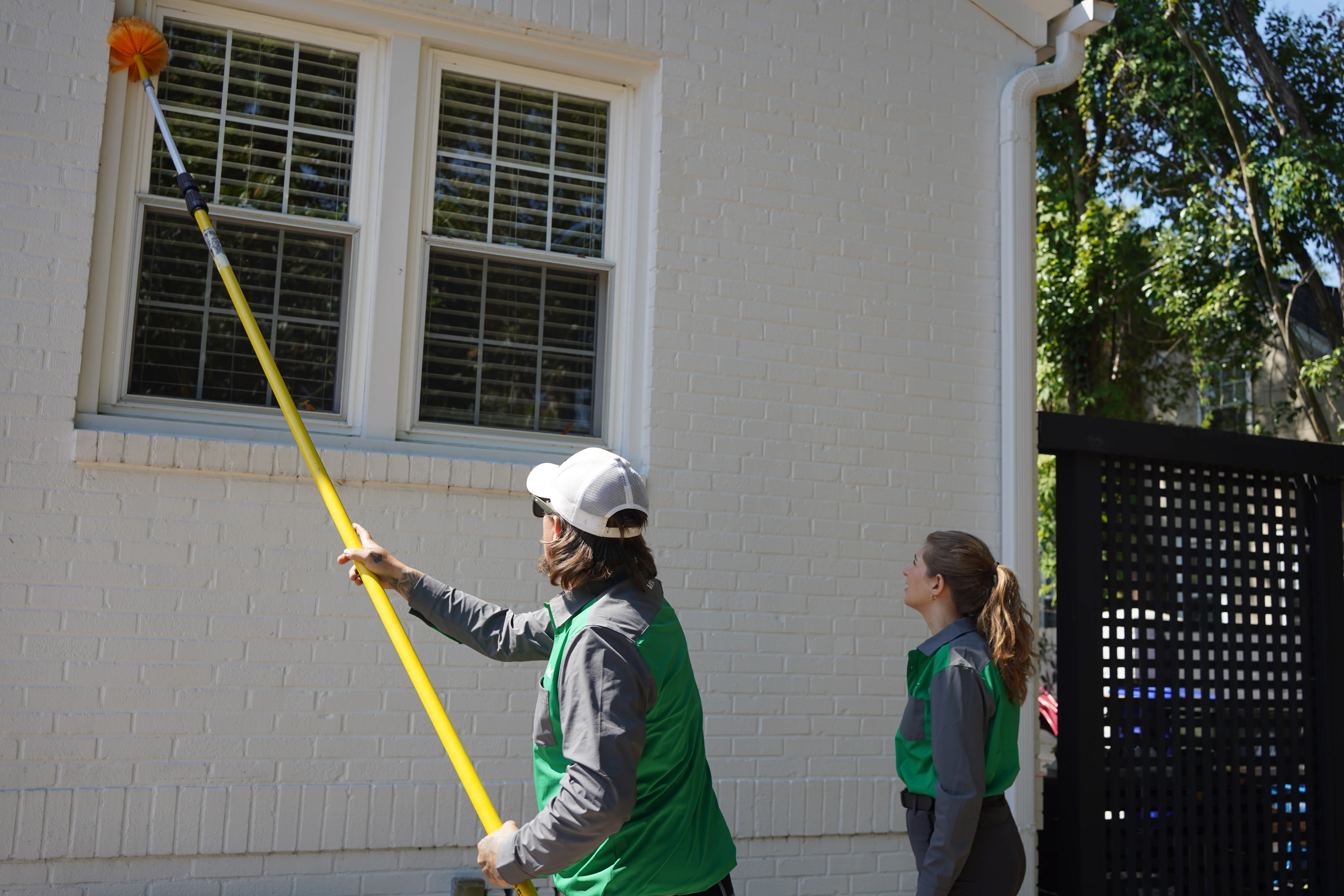
De-Webbing
Complete exterior de-webbing of eaves, window frames, corners, light fixtures, and foundation areas on every service visit. Removing active webs and egg sacs eliminates harborage sites and takes out the next generation before it hatches, a single egg sac can contain hundreds of spiderlings. Consistent quarterly de-webbing prevents the buildup between visits.
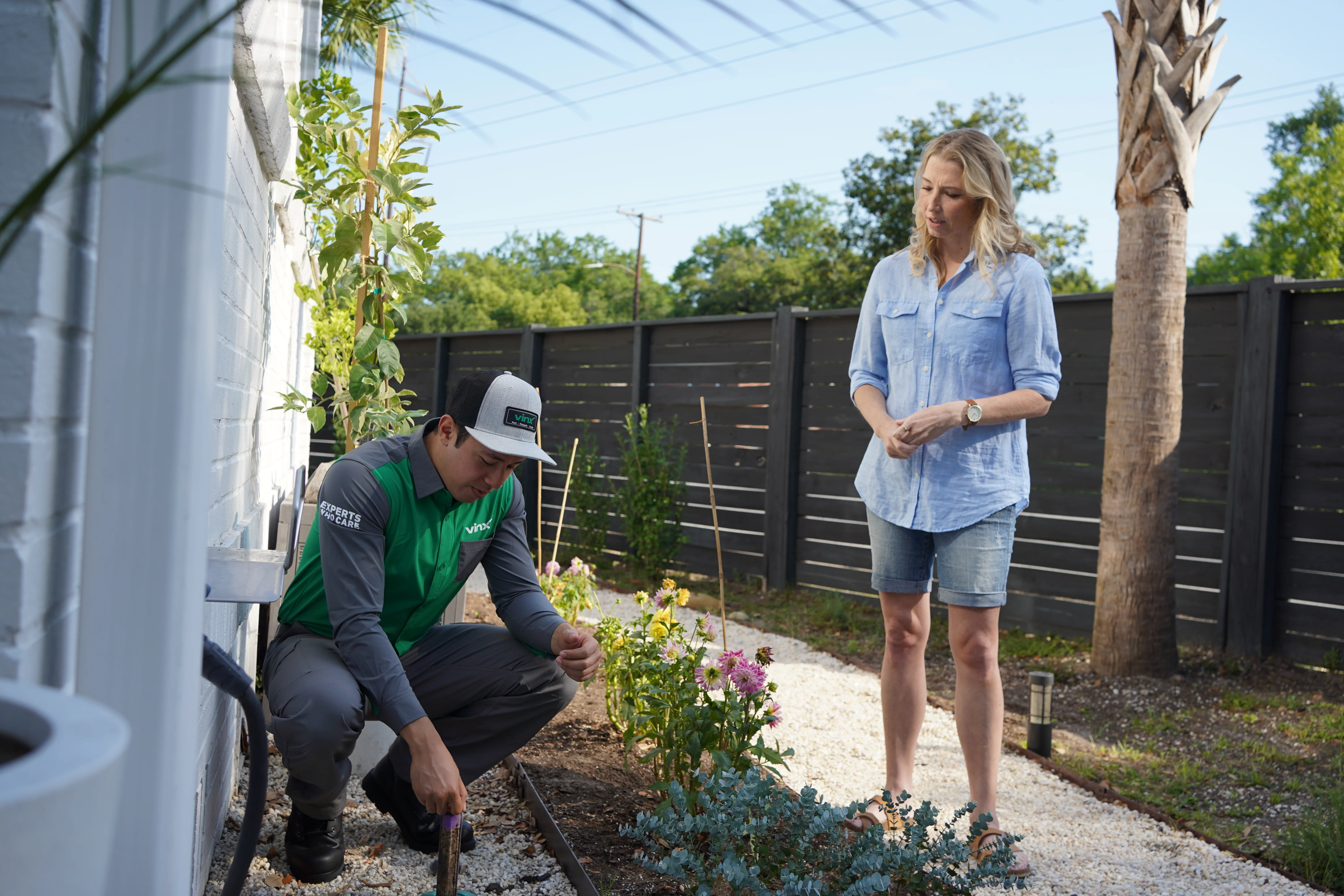
Residual Perimeter Spray
Micro-encapsulated residual insecticide is applied around the full foundation band, window and door frames, garage perimeter, and crawlspace openings. Spiders crossing the treated zone are eliminated on contact. The time-release formulation continues working between quarterly visits, maintaining a barrier against spider populations moving in from wooded lot edges.
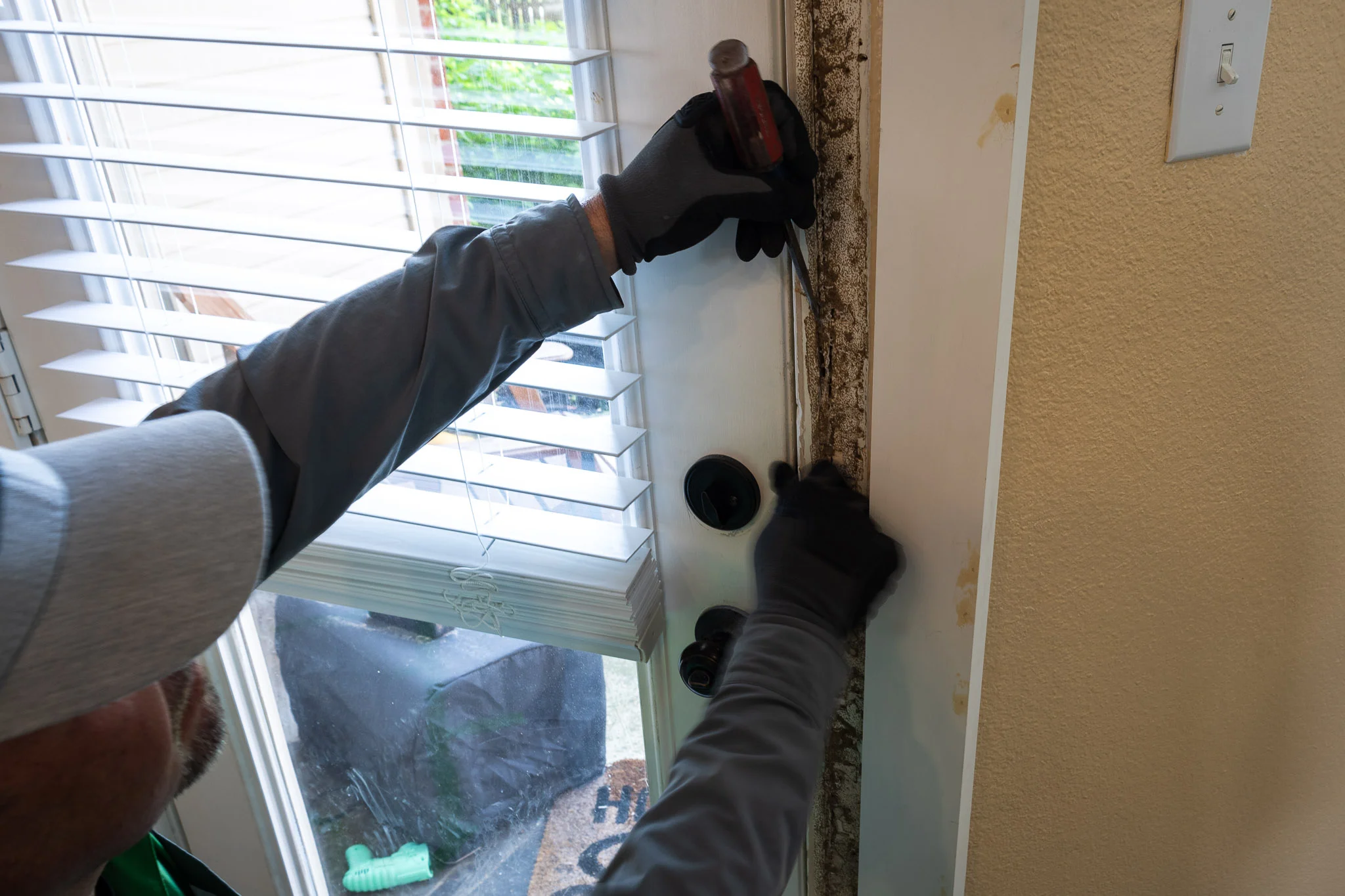
Interior Treatment
For confirmed interior infestations (black widows in the garage, brown recluse in closets or storage areas, or established house spider populations in basements and crawlspaces) targeted residual dust or liquid is applied to void spaces, wall junctions, and harborage areas. Interior treatment is available on every service visit at no additional charge.

Harborage Reduction Assessment
At the end of every visit your technician identifies and documents conditions increasing spider pressure, woodpile locations near the structure, excessive mulch depth against the foundation, debris piles, dense ground cover adjacent to entry points, and exterior lighting that attracts the insects spiders feed on. Recommendations are provided in writing after every inspection.
Customer Reviews
Real Reviews from Raleigh Homeowners
Matt and Miguel were very professional and knowledgeable about the service provided. They went above and beyond what I expected. I highly recommend Vinx to anyone that is having trouble with any and all bug infestations.
Verified Google ReviewI had the pleasure of speaking with Matt regarding the company he represents and the services he offered. He took time to understand my needs and work with me so that all issues were addressed. Professional and respectful
Verified Google ReviewScott did a wonderful job informing me about the company the services and chemicals being used. I highly recommend the service.
Verified Google ReviewMatt was very upfront and good at communicating. Miguel did a great job in getting around the house and the yard sprayed.
Verified Google ReviewWe became new Vinx Pest Control customers today, and the experience was excellent from the very start. Matt provided clear, helpful, and accurate guidance, which made everything easy to understand. Abbas delivered the service the same day, very cordial, efficient, and thorough in his work. Overall, the service was professional and reassuring, and we truly appreciate the quality of their support.
Verified Google ReviewScott was very polite and knowledgeable. I showed him a particular issue I was concerned about , he explained what it was and how he was going to handle it. I very pleased!
Verified Google ReviewScott and Keaton were excellent to work with and Scott was very thorough! Happy to recommend their services if you live in the area!
Verified Google ReviewJordan and his team were professional and respectful. They explained what they were going to do - including interior garage and outside the townhome. I appreciated their efficiency. Thanks.
Verified Google ReviewDrew responded quickly to our concerns. Jordan came out and did a quick re-service for us due to ants and spiders. Both have good communication and service. Thank you!
Verified Google ReviewGreat experience with Derek! The technician arrived right on time and was very friendly. He was thorough, professional, and took care of all the specific areas I asked him to treat. Highly recommend
Verified Google ReviewVinx pest control is excellent. They are timely in their service. They brushed for wasps and spiders and sprayed a repellent all around the house. They treated the outside and the inside getting in all the mold and crannies. We really appreciate them and their prices are on par with other companies.
Verified Google ReviewYear-Round Spider Pressure
Why Spiders Are a Growing Problem in Raleigh, NC
Raleigh’s humid subtropical climate, mature tree canopy, and rapid suburban growth create ideal conditions for spider populations year-round. Wooded lots, dense landscaping, and the area’s rich insect population give spiders everything they need to thrive, right up against your home’s foundation.
Egg sacs hatch and spiderlings disperse. This is when populations expand most rapidly, early season de-webbing breaks the cycle before it starts.
Peak activity season. Orb weavers build large webs overnight. Black widows thrive in garages, sheds, and under decks. Outdoor lighting attracts prey insects, spiders follow.
Spiders move indoors as temperatures drop. Wolf spiders and yellow sac spiders enter through gaps in door frames, utility penetrations and foundation cracks seeking warmth, and this is the season when a large brown wolf spider on a hallway floor gets mistaken for something far worse.
Established indoor populations remain active. Cellar spiders and brown recluse continue reproducing in climate-controlled spaces throughout winter.
6 Spider Species in Raleigh
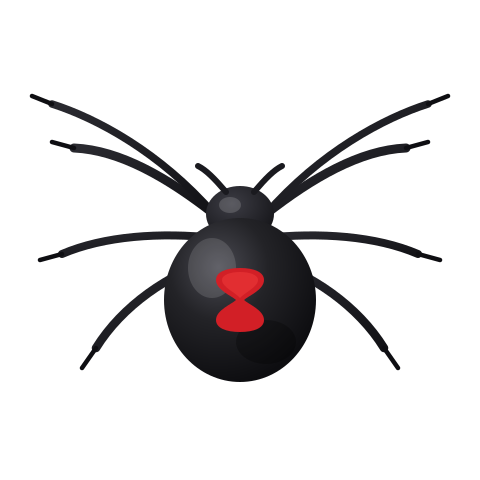
Black Widow
The most dangerous spider found in Raleigh homes. Identified by the red hourglass marking on the abdomen. Found in dark, undisturbed areas: garage corners, under outdoor furniture, woodpiles, and meter boxes. NC State describes the venom as neurotoxic, with pain in the lymph nodes, nausea, elevated blood pressure, sweating and tremors in more severe bites. Seek medical attention promptly. Note the mechanism: widow venom is neurotoxic, not flesh-destroying, so necrosis is not the widow presentation.
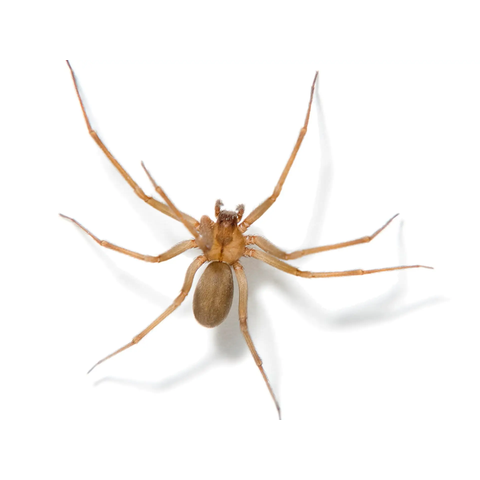
Brown Recluse
Identified by the violin-shaped marking on the cephalothorax and by having six eyes rather than the usual eight. The honest position for a Raleigh page: NC State says recluses are not native to most of North Carolina, that distribution maps often include only the westernmost tip of the state, and that a survey of 50 Raleigh homes failed to turn up a single recluse or any evidence of one. NC State has documented only the first two reported cases of systemic loxoscelism in the state, both in children. Bites elsewhere in the species range can cause necrotic lesions, which is why the name carries the weight it does, but in Wake County the far likelier explanation for a large brown spider in a storage box is a wolf spider.
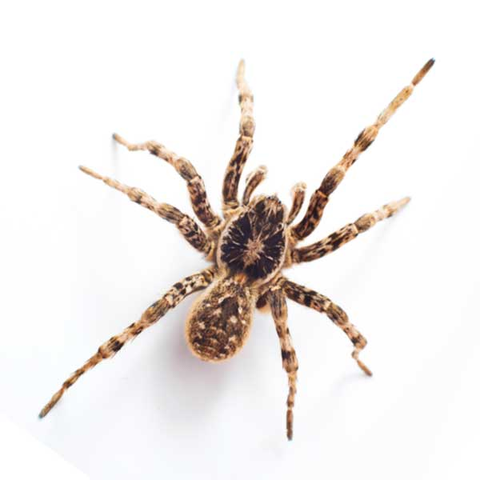
Wolf Spider
Large, fast-moving ground hunters that don’t build webs. Enter homes through gaps in doors and foundation. Often mistaken for brown recluse due to size. Not dangerous but alarming to encounter. Active year-round across Wake County.
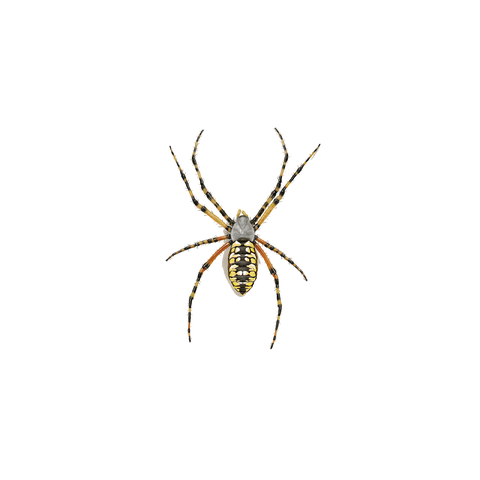
Orb Weaver
Build large, round webs across entryways, porches, and eaves overnight. Extremely common in Raleigh from late summer through fall. Not dangerous, but webs are large and unsightly. Regular de-webbing is the most effective control method.
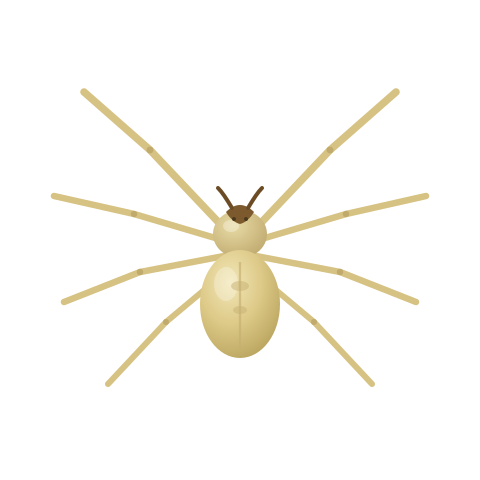
Yellow Sac Spider
Small, pale yellow spiders that build silken sacs in corners and along ceiling-wall junctions. One of the most common indoor spiders in Raleigh. Bites can cause localized pain and swelling. Active at night; hides in sac during day.
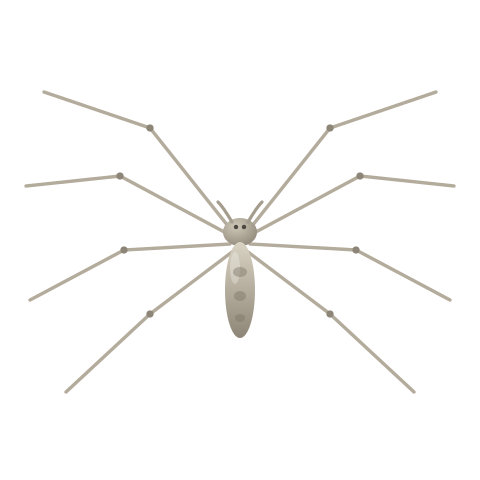
Cellar Spider
Long-legged spiders (often called “daddy long legs”) found in basements, crawl spaces, and garages. Build irregular, messy webs. Not harmful to humans, but populations can grow large quickly. A high cellar spider count often indicates a broader insect pest problem.
Spider Pressure by Neighborhood
Know Your Neighborhood’s Spider Risk
Downtown Raleigh: Black Widows & Brown Recluse
Older mixed-use buildings, century-old foundations, and brick construction create ideal harborage for black widows and brown recluse. Meter boxes, crawl spaces, and undisturbed utility areas in downtown Raleigh are prime black widow habitat. High insect activity from outdoor dining and commercial trash supports large spider populations near residential areas.
North Hills & Midtown: Orb Weavers & Wolf Spiders
Mature tree canopy and established landscaping in North Hills and Midtown Raleigh support large orb weaver populations from July through October. Wolf spiders are common in the transition zones between wooded lots and residential lawns. Homeowners frequently report web-covered entryways and eaves through the fall months.
Cary & Morrisville: House Spiders & Cellar Spiders
Newer construction in Cary and Morrisville still has spider pressure from surrounding undeveloped woodland parcels. Yellow sac spiders and cellar spiders dominate indoors. Exterior lighting near entry doors attracts insects and, in turn, orb weavers and wolf spiders. Regular barrier spray breaks the prey-predator cycle effectively.
Wake Forest & North Raleigh: Wolf Spiders & Orb Weavers
Rapid new development in Wake Forest and North Raleigh displaces ground-dwelling spiders, especially wolf spiders, into adjacent established neighborhoods. Larger lot sizes with wooded borders mean constant reinfestation pressure from the yard edge. Orb weavers are extremely active across all of North Raleigh during late summer.
Garner & Clayton: Brown Recluse & Black Widows
Older ranch-style homes and detached garages in Garner and Clayton create significant harborage for black widows in particular. Firewood stored against structures, cluttered storage buildings and undisturbed crawl spaces are the most common sites. Black widow is the one genuinely medically significant spider our technicians treat here; despite the reputation, brown recluse is not established in this part of North Carolina.
Apex & Holly Springs: Orb Weavers & Wolf Spiders
Suburban growth in Apex and Holly Springs continues to push spider populations into residential areas. Orb weavers are particularly visible from August through November, building webs across front porches and garage entries overnight. Wolf spiders enter homes frequently through gaps in weatherstripping. Consistent quarterly treatment keeps populations manageable.
Warning Signs
Signs You Have a Spider Problem in Your Raleigh Home
Don’t wait until you find a black widow, these are the signs to watch for
Webs in Eaves & Corners
Large or irregular webs in eave overhangs, porch ceilings, window frames, and garage corners are the most visible sign of spider activity.
Egg Sacs
Small, silken egg sacs attached to webs or hidden in cracks. A single sac can contain hundreds of eggs, removing them is critical before they hatch.
Frequent Sightings
Seeing one or two spiders is normal. Seeing multiple spiders daily, especially indoors, indicates an established population that needs professional treatment.
Spiders in Storage Areas
Finding spiders in closets, attic boxes, or garage shelving, especially brown or reclusive species, suggests a harborage population in undisturbed spaces.
Webs Around Lights
Exterior lights attract insects at night, which in turn attract hunting spiders. Webs clustering around porch lights and flood lights are a reliable activity indicator.
Spiders at Entry Points
Wolf spiders and cellar spiders found repeatedly near door thresholds, garage doors, or utility penetrations signal that spiders are actively entering the structure.
High Insect Activity
A large insect population inside or around your home creates a food source that sustains large spider populations. Reducing insects is key to long-term spider control.
Unexplained Bites
Red, swollen marks on waking can point to yellow sac spiders, but NC State cautions that supposed spider bites almost always prove to be bed bugs, fleas or a skin infection instead.
Local Conditions
The Spider You Have Been Told to Fear Is Not in Raleigh
Spider content is where the pest industry does most of its exaggerating, and North Carolina has unusually good local research to check it against. Here is what NC State actually found.
Fifty Raleigh Homes, Zero Brown Recluses
This is about as local as evidence gets. NC State reports that a survey of 50 Raleigh homes “failed to turn up a single recluse or evidence thereof.” More broadly, it states recluses are not native to most of North Carolina and that distribution maps often include only the westernmost tip of the state. NC State has documented only the first two reported cases of systemic loxoscelism in North Carolina, both in children. None of that means a recluse can never be found here. It does mean that selling recluse treatment to a Raleigh household is selling a fear the evidence does not support, and we are not going to do it.
Black Widow Is the One That Matters, and It Is Neurotoxic
NC State calls the black widow probably the most widely recognized of the dangerously poisonous spiders in North Carolina, and its venom is neurotoxic: pain in the lymph nodes, nausea, elevated blood pressure, sweating and tremors in more severe bites. That mechanism matters because it is routinely confused with the other one. Widow venom attacks the nervous system; it does not destroy tissue. Necrosis is the recluse presentation, and recluses are not established here. So if a page tells you a black widow bite will rot your skin, it has muddled the two species.
Most "Spider Bites" Are Not Spider Bites
NC State puts it plainly: “Spider bites almost always turn out to be some other affliction,” and notes that states outside the recluse's natural range report far more supposed spider bites than actual specimens have ever been found. In practice the marks people wake up with are far more often bed bugs, fleas, an allergic reaction or a skin infection. That is worth knowing before anyone treats a house for a spider on the strength of a mark on an arm. If you have a specimen, keep it. Identification takes a minute and settles it properly.
What Wake County Actually Has
Wolf spiders are the big one, literally: large, fast, ground-hunting, no web, and the species most often mistaken for a recluse because of its size. Orb weavers turn up on exterior lighting from late summer into autumn, which is why the webs seem to appear overnight in September. Yellow sac spiders account for most genuine indoor bites, and cellar spiders live in crawl spaces and garages. On the joro spider, which gets a lot of coverage: NC State first recorded it in western North Carolina in autumn 2021, has not confirmed it for Wake County, and says plainly that joro spiders “are harmless to humans and create little if any cause for concern at this time. These spiders do not bite people or pets.”
Kid & Pet Safe
Our Treatments Are Safe for Your Whole Family: Including the Furry Members
Every product we use is EPA-registered and applied strictly at labeled rates by licensed technicians. We take the guesswork out of safety so you can feel confident letting kids and pets back into treated areas quickly.
EPA-Registered Products Only
All products are EPA-registered and applied per strict label requirements by our licensed technicians on every visit.
Safe Re-Entry After Drying
Exterior spray treatments dry in 30–60 minutes. Your technician confirms the all-clear before leaving your property.
Interior Treatment On Request
We treat only what’s needed, where it’s needed. Products placed away from areas pets and children frequent most.
Botanical Options Available
Ask your technician about plant-derived treatment options for households that prefer a more natural approach.
Questions about product safety? Call 984-600-8469 and we’ll walk you through exactly what we use and why it’s safe.
Explore More
More Pest Control Services in Raleigh
Pest Control Raleigh
General pest & perimeter
Termite Control Raleigh
Bait systems & liquid treatment
Mosquito Control Raleigh
Monthly barrier treatments
Bed Bug Control Raleigh
Heat & liquid treatments
Ant Control Raleigh
Ants & house ants
Cockroach Control Raleigh
German & American roaches
Rodent Control Raleigh
Mice & rat removal

Tick & Flea Control Raleigh
Yard & pet protection

Exterminator Raleigh
Same-day local exterminators

Wasp Control Raleigh
Nest removal & prevention
Frequently Asked Questions
Spider Control Raleigh NC: Frequently Asked Questions
Realistically, one: the black widow. NC State describes widow venom as neurotoxic, producing pain in the lymph nodes, nausea, elevated blood pressure, sweating and tremors, and a bite warrants prompt medical attention. The brown recluse is the one worth being honest about. NC State states recluses are not native to most of North Carolina, that distribution maps often include only the westernmost tip of the state, and, most tellingly, a survey of 50 Raleigh homes failed to turn up a single recluse or any evidence of one. NC State also cautions that supposed spider bites almost always turn out to be some other affliction. So if you have been told you have recluses in Raleigh, ask what the identification was based on.
The identification features are the violin-shaped marking on the cephalothorax, six eyes rather than the usual eight, and a body about the size of a quarter including legs. Before you go looking, though, know the base rate: NC State says recluses are not native to most of North Carolina, and a survey of 50 Raleigh homes turned up not a single one. The overwhelming majority of so-called brown recluses found in Wake County are wolf spiders, which are larger and faster, or another harmless brown spider. If you genuinely believe you have found one, keep the specimen and we will identify it rather than treat on assumption.
Yes. Spider control is included in all Vinx recurring plans starting at $49/mo. Every service visit includes complete exterior de-webbing, residual perimeter barrier spray, and interior treatment for confirmed infestations at no extra charge.
Quarterly treatment is the standard recommendation for Raleigh homes. This schedule keeps residual product active year-round and ensures de-webbing happens before egg sacs hatch in spring. Homes with wooded lots, heavy exterior lighting, or a history of black widow or brown recluse activity may benefit from bi-monthly service.
DIY sprays are largely ineffective on spiders because spiders don’t groom themselves the way insects do, they rarely pick up enough pesticide from a treated surface to be affected. Professional micro-encapsulated residual products stay active far longer and penetrate harborage areas that consumer products can’t reach.
Vinx offers same-day appointments throughout Wake County. For black widow or suspected brown recluse situations, call 984-600-8469 and we’ll prioritize your service. Existing plan customers receive free re-service between scheduled visits, usually the next day.
Yes. All Vinx products are EPA-registered and applied at labeled rates by NC-licensed technicians. Exterior treatments dry in 30–60 minutes, after which it’s safe for children and pets to return to treated areas. Tell your technician about any sensitivities before service starts.
We serve all of Wake County including Raleigh, Cary, Apex, Holly Springs, Garner, Clayton, Morrisville, Wake Forest, Fuquay-Varina, and Knightdale. Call 984-600-8469 or fill out our quote form to confirm service availability at your address.
A sudden increase in spider activity usually means one of three things: egg sacs have hatched and spiderlings are dispersing, fall temperatures are driving spiders indoors, or a high insect population inside your home is providing a food source. All three situations are resolved effectively with professional treatment.
Yes, complete exterior de-webbing is included on every Vinx service visit at no additional charge. This includes eaves, window frames, porch ceilings, garage entries, and foundation areas. Web and egg sac removal is one of the most effective physical controls for reducing spider populations quickly.
Service Coverage
Serving All of Wake County
Spider control available throughout Wake County and surrounding communities
Serving the Greater Raleigh Area