
Flea & Tick Control in Spartanburg, SC
Deer Tick, Lone Star Tick & Flea Treatment for Spartanburg County Homeowners & Pets
Flea and tick pressure is not uniform across Spartanburg County. Properties adjacent to wooded lot borders, riparian corridors, and the naturalized vegetation margins common in Spartanburg’s established residential character face ongoing wildlife-driven tick and flea introduction throughout the March through October active season. The Lawson’s Fork Creek corridor and the Tyger River tributaries running through Spartanburg County’s residential areas create wildlife travel routes that bring deer, raccoons, and wildlife through established neighborhoods on predictable routes, depositing tick and flea populations in the transition vegetation zone between the waterway corridor and adjacent residential yards.
Get Started in 60 Seconds
Choose what’s easiest for you
Request a Quote
We usually respond in 2 minutes
Call 855-800-8469
Get a Live Person (no AI agents here!)
Sign Up Online
Get pricing and schedule now





Welcome to Vinx Pest Control
A Company That Actually Backs What It Says
At Vinx, we combine professional-grade treatments with a level of service most pest control companies don't offer. Local technicians, fast response times, and a guarantee that actually means something.
Get a Free Quote"I'm not passionate about killing bugs. I'm passionate about customer service. At Vinx, you get experts who show up, do the job right, and stand behind every visit. No runaround, no fine print."
WELCOME TO VINX PEST CONTROL
Protection Plans for Spartanburg Homeowners

Standard Residential Protection
- 4 Seasonal Treatments Per Year
- 50+ Covered Pests
- Interior, Exterior & Yard Treatment
- Unlimited Free Re-Services
- 100% Money-Back Guarantee

Upgraded Yard Protection
- 6 Home & Yard Treatments Per Year
- 50+ Covered Pests
- Stinging Insect Elimination Guarantee
- Flea & Tick Elimination Guarantee
- 100% Money-Back Guarantee

Most Comprehensive Protection
- 9 Treatments Per Year
- 50+ Covered Pests
- 8 Mosquito Treatments (Mar–Nov)
- Flea, Tick & Ant Coverage
- Free Bed Bug Treatments if Needed*
*Starting rates vary by home size and area. All plans billed monthly.
Request Your Free Flea & Tick Quote
Fill out the form below and a Vinx team member will reach out within 2 minutes during business hours.
Prefer to talk? Call 864-754-7155 for a live person, no AI agents.
Our Approach
How Vinx Treats Fleas & Ticks in Your Spartanburg Home: Step by Step
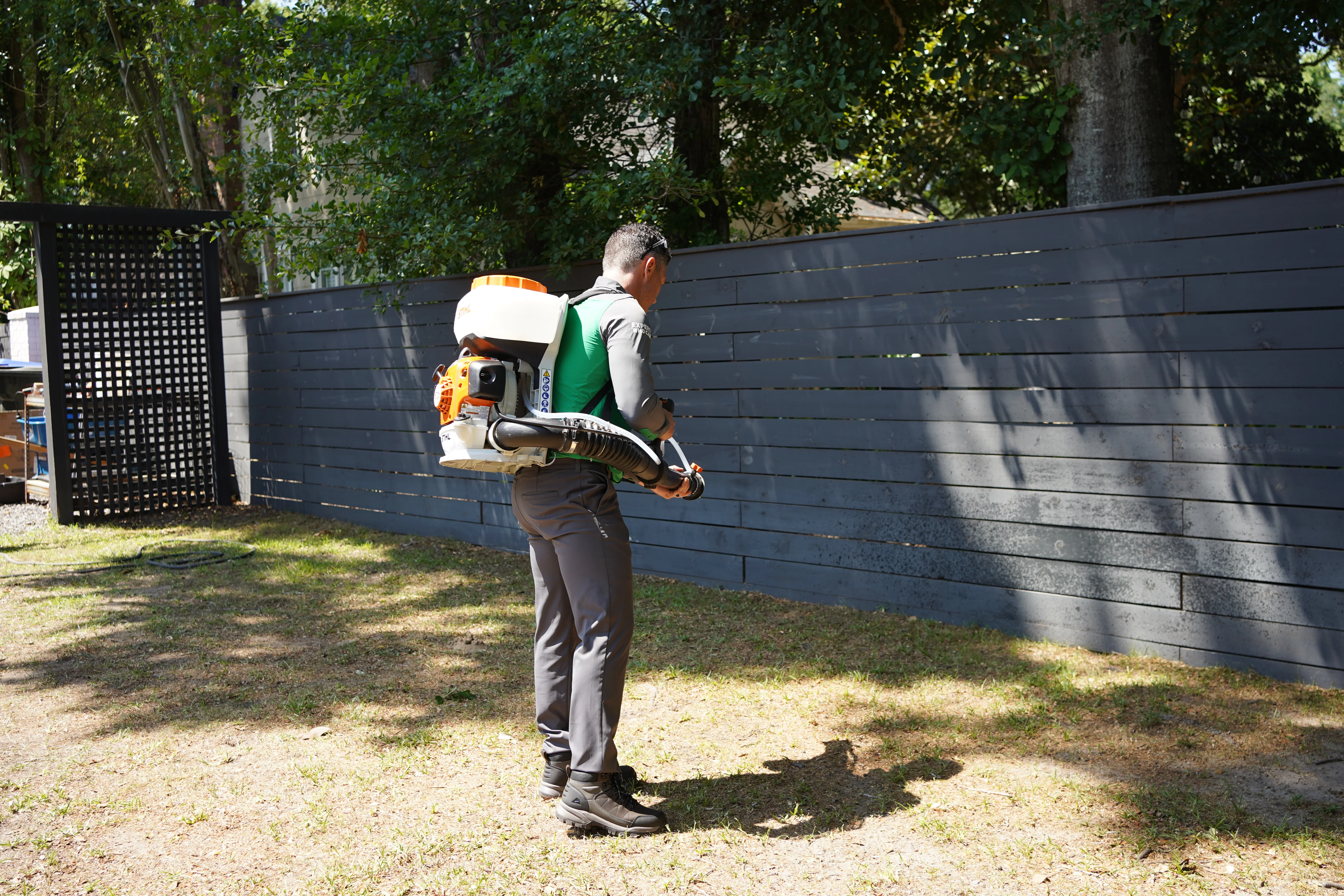
Yard & Ground Cover Treatment
Flea and tick treatment covers all ground cover, mulch beds, and vegetated areas on every Plus and Platinum visit. The shaded, moist microhabitats under decking, along fence lines bordering wooded margins or the Lawson’s Fork and Tyger River corridors, and in dense naturalized vegetation adjacent to structures are the primary outdoor flea and tick population zones for Spartanburg County properties.
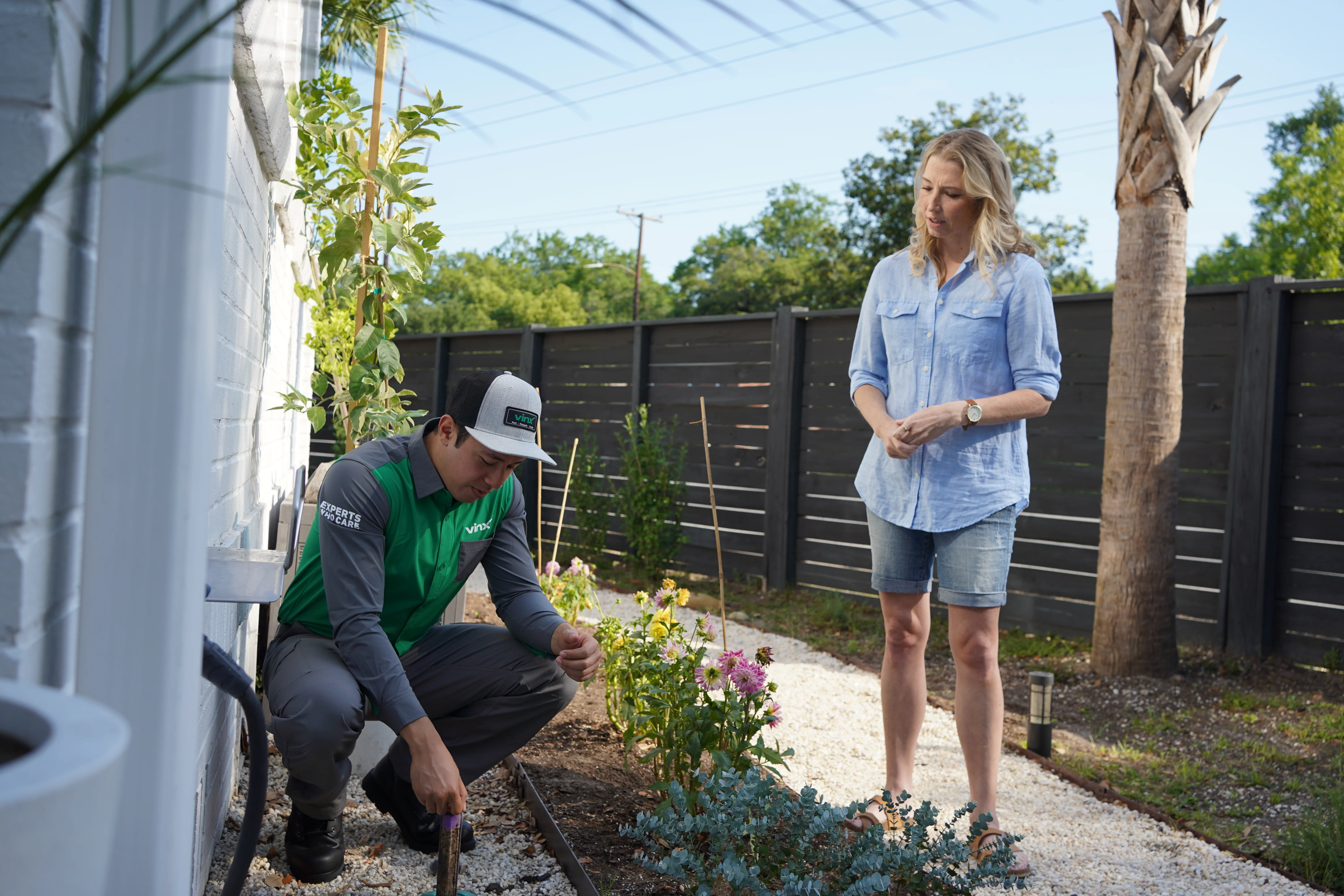
Forest & Trail Margin Treatment
For Spartanburg properties adjacent to Croft State Park, the Lawson’s Fork Creek corridor, or the Tyger and Pacolet River bottomlands, the vegetation transition zone between natural areas and maintained lawn is the primary tick introduction corridor from deer and wildlife travel routes. Treatment of this specific margin zone is the highest-priority step for any Spartanburg property with direct access to natural area or trail corridor vegetation.
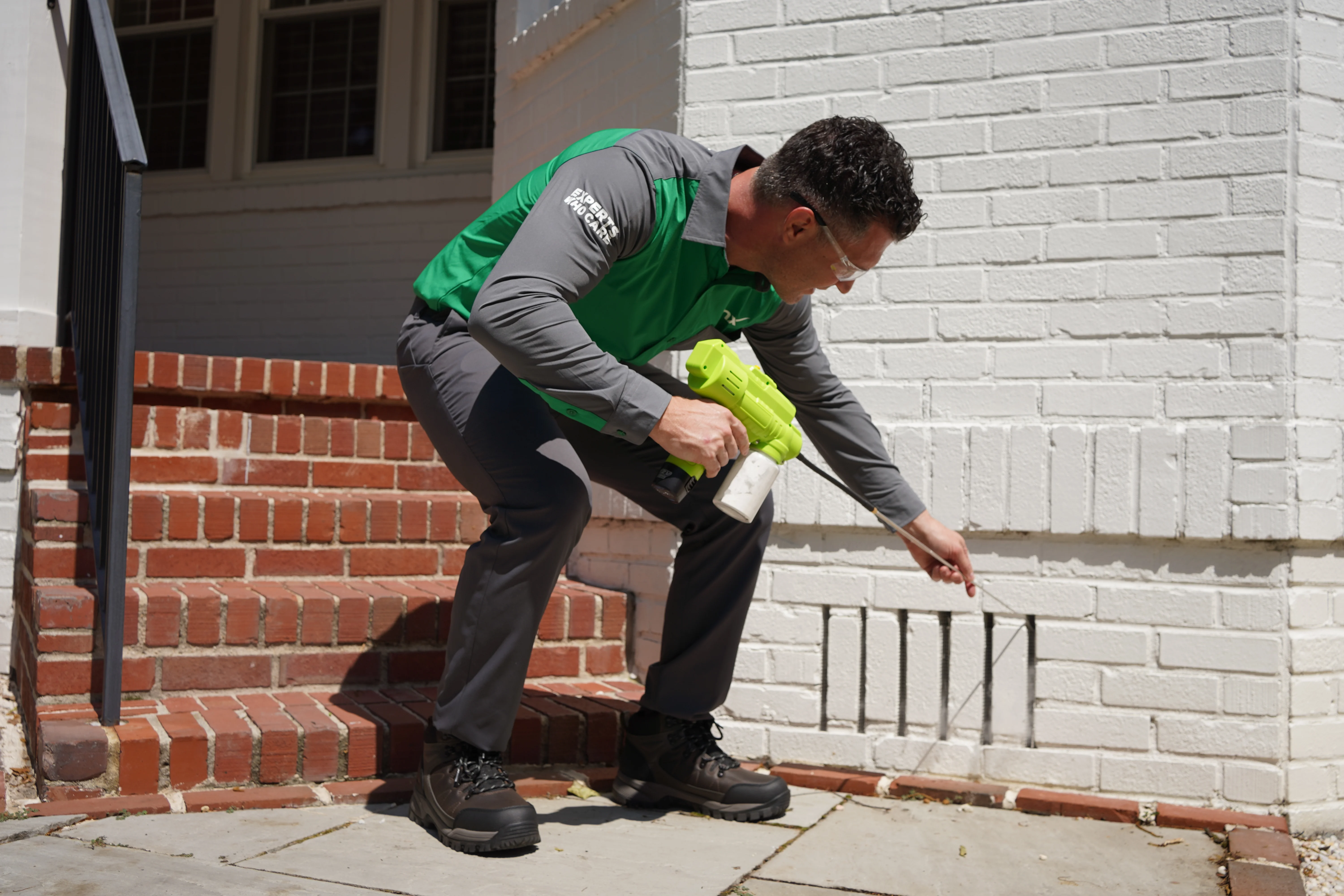
Wildlife Rest Area Treatment
Raccoons, opossums, and wildlife establish rest areas in shaded vegetation throughout Spartanburg County residential properties, particularly along the Lawson’s Fork and Tyger River corridors. These wildlife rest areas are the outdoor flea egg concentration zones that continuously re-seed indoor infestations through pets. Identifying and treating these specific harborage locations addresses the outdoor reservoir that veterinary prevention alone doesn’t eliminate.
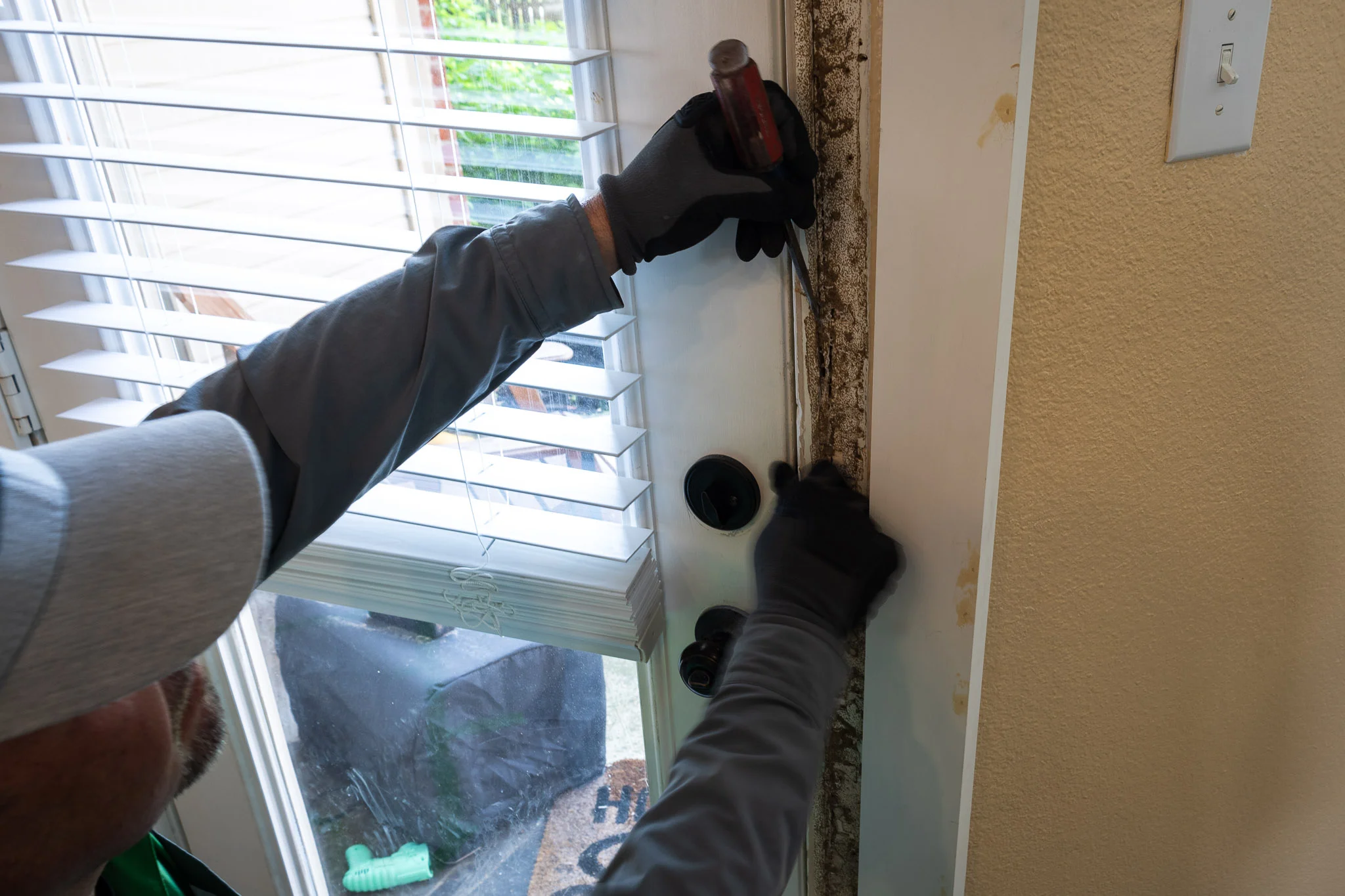
Interior Flea Treatment with IGR: Platinum Plan
When fleas have been introduced indoors, interior treatment with insect growth regulator (IGR) addresses the developing flea population in carpet fibers, pet bedding, and upholstered furniture — the eggs, larvae and pupae that make up the bulk of the infestation and never sit on the pet where a spot-on treatment can reach them. IGR prevents larvae from reaching the biting adult stage. Included in the Platinum plan. Veterinary flea prevention on all pets must be current simultaneously.

Conducive Condition Documentation
After every visit your technician identifies and documents outdoor conditions sustaining flea and tick pressure, dense ground cover along deer travel routes out of Croft State Park, wood debris accumulation providing wildlife harborage, unmaintained vegetation adjacent to creek and river corridorl, and any conditions creating outdoor flea breeding habitat. Written report provided after every service visit.
What Customers Say
What Spartanburg Customers Say About Vinx: 4.8 Stars on Google
Alfredo has been to my property several times and has reduced the ant population which other pest control service did not do so well. Friendly to talk to, easy to understand, leaves a video summary after the application, and knowledgeable at what he does! Thanks, Alfredo!
Technician was very professional, friendly and Courteous. Thought he was a manager at first, very professional and handle all services patiently and thoroughly. Would highly recommend this technician .
Alex is polite and courteous. He takes care with my animals, when treating my home and property. Provides detailed information regarding other problem areas. Is available to answer questions. Good job.
Prompt, courteous. And efficient! Thank you!!
Kyngstyn was super professional. He did a great job with taking care of our pest control needs! Thanks Kyngstyn!!
Zachari was very polite and did a great job.
By Neighborhood
Flea & Tick Pressure Across Spartanburg & Spartanburg County
Lawson’s Fork & Tyger River Corridor Properties
Highest Tick Pressure: Riparian Corridors Properties adjacent to Lawson’s Fork Creek and the Tyger River tributaries running through Spartanburg County carry the highest lone star and black-legged tick pressure in the market. Wildlife movement along these riparian corridors, deer browsing the waterway vegetation at dawn and dusk, deposits tick populations in the transition zone between the creek corridor and adjacent residential yards throughout the active season.
BMW / Michelin Corridor & I-85 Development Zone
Elevated: Construction Displacement The active residential and commercial development along Spartanburg’s I-85 corridor associated with BMW and Michelin manufacturing growth creates construction displacement pressure for wildlife populations adjacent to cleared land. New residential developments adjacent to undeveloped wooded land carry wildlife-displacement tick and flea pressure during and following construction phases. There is a second, permanent effect worth knowing: where industry or multi-family development abuts single-family homes, Spartanburg County’s Unified Land Management Ordinance can require a bufferyard 25 to 50 feet deep planted in evergreens only, “to achieve an opaque screen.” That is a dense, shaded, permanently undisturbed strip running along the property line — the exact structure ticks quest from and wildlife travel through. It is required, it is not going away, and it should be the first thing treated on properties that have one.
Downtown Spartanburg, Westside & Established Residential
Elevated: Established Neighborhoods Established Spartanburg neighborhoods with mature tree canopy and naturalized wooded lot margins (throughout the Westside, Morgan Square corridor, and older residential sections of the city) carry tick pressure from wildlife using the mature landscape and wooded corridor network. Biting pressure is highest from May through September when lone star ticks are most actively questing in brushy vegetation adjacent to these properties.
Boiling Springs, Duncan & Rural Spartanburg County
Elevated: Rural Margins Rural and semi-rural communities throughout Spartanburg County carry elevated flea and tick pressure from agricultural adjacency, larger wooded lot margins, and the undisturbed vegetation borders common to these landscapes. Deer populations in rural Spartanburg County are higher than in more developed urban residential zones, and the larger lot sizes mean more naturalized vegetation margin per property where wildlife deposits ticks through the active season. Rural properties are also where the Asian longhorned tick matters most: Clemson first identified it in South Carolina on shelter dogs in Pickens and Lancaster Counties in 2020, then on pastured cattle in York County in June 2022 — counties either side of Spartanburg. If you keep livestock or horses, raise it with your vet. Standing water is the other rural variable the county puts a number on: its ordinance defines wetlands as areas of a quarter acre or more “where standing water is retained for a portion of the year,” and those margins hold the humidity flea larvae need.
7-Month Season. 5 Species.
Why Flea & Tick Control in Spartanburg Requires Professional Yard Treatment
One fact reframes this whole page. Clemson reports that the lone star tick is the most collected tick species in South Carolina, not the blacklegged tick most people picture. That matters because the two carry different things. Clemson associates the lone star tick with alpha-gal syndrome, the delayed red meat allergy that can follow a bite, along with ehrlichiosis and STARI. The blacklegged tick is the Lyme vector. Rocky Mountain spotted fever belongs to the American dog tick and the brown dog tick, not the lone star, which is worth stating because plenty of pages get it wrong.
Spartanburg Flea & Tick Species
Lone Star Tick (Amblyomma americanum)
In Spartanburg: Clemson calls the lone star “the most collected species in SC,” and it is the tick you are most likely to actually meet in Spartanburg County’s brushy and open woodland habitat. Active questers, extending front legs toward passing hosts rather than waiting passively, making them the most likely tick to contact humans and pets in brushy yard margins and along trail edges throughout Spartanburg’s residential greenbelts. Seed tick larval clusters are a summer encounter risk for children and dogs in naturalized yard borders.
Disease risk: Clemson associates the lone star tick with alpha-gal syndrome — the delayed red meat allergy that can follow a bite — along with ehrlichiosis and Southern Tick-Associated Rash Illness (STARI). It is not the Rocky Mountain spotted fever tick; that is the American dog tick and the brown dog tick. Plenty of pages get this backwards. Seek prompt medical care for any fever after a tick bite.
- Disease vector: Alpha-Gal, Ehrlichiosis, STARI
- Peak activity: May – September
- Highest pressure: creek & river corridors
Black-Legged Tick / Deer Tick (Ixodes scapularis)
In Spartanburg: Present, but not the tick you are most likely to pick up. Clemson’s own summary is that the black-legged tick is “found across SC, but in low volume.” It turns up in wooded lot margins, riparian corridor vegetation and naturalized borders, and the Lawson’s Fork Creek and Tyger River corridors carry the deer movement that moves it around. Adults are active through the cool months, which is when most Upstate encounters with this species happen — not in the middle of summer.
Disease risk: Clemson lists Lyme disease, tick-borne relapsing fever and anaplasmosis for this species. Lyme is real in South Carolina but genuinely uncommon, and there is a well-studied reason. Work published in PLOS Biology in 2021 found that southern black-legged nymphs “remain down in the leaf litter” rather than climbing up to quest on leaf tops and twigs the way northern nymphs do, and that they attach heavily to lizards, particularly skinks, which are poor reservoirs for the Lyme bacterium. Fewer nymphs reach people here, and fewer of those carry the pathogen. That is a reason to keep perspective, not a reason to skip a tick check — early antibiotic treatment is highly effective when started promptly.
- Disease vector: Lyme, anaplasmosis
- Clemson: found across SC “in low volume”
- Highest pressure: Croft & river bottomland
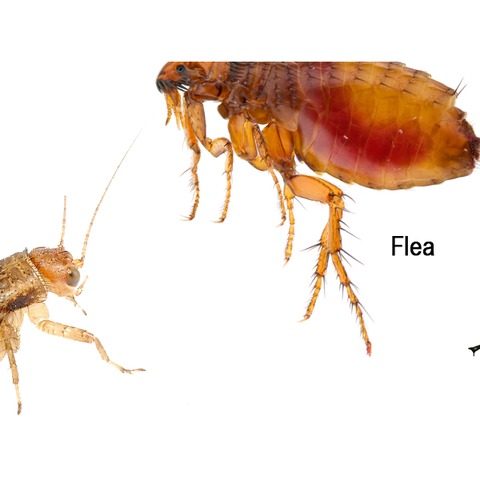
Cat Flea (Ctenocephalides felis)
In Spartanburg: The primary flea species on dogs and cats throughout Spartanburg County. Wildlife moving through Spartanburg’s established residential neighborhoods along the Lawson’s Fork and Tyger River corridors sustain outdoor flea populations in shaded vegetation throughout the active season. Pets pick up fleas from these wildlife rest areas during yard time regardless of veterinary prevention status, addressing the yard environment alongside pet treatment is the only complete control approach.
- Included: Plus & Platinum plans
- Active season: March – October
- Interior IGR treatment: Platinum plan
American Dog Tick (Dermacentor variabilis)
In Spartanburg: Found on dogs after walks through open grassy areas and field margins throughout Spartanburg County, particularly along road margins, golf course rough edges, and unmowed field borders in rural Spartanburg. Most active April through August. A Rocky Mountain spotted fever vector, seek medical care promptly for any fever after a tick bite.
Disease risk: A vector for Rocky Mountain spotted fever. Seek prompt medical care for any fever following a tick bite.
- Disease vector: Rocky Mountain Spotted Fever
- Most active: April – August
- Habitat: open fields, trail margins
Asian Longhorned Tick (Haemaphysalis longicornis)
In Spartanburg: An invasive species, and the Upstate is where South Carolina first saw it. Clemson records that it was “first identified in South Carolina in Pickens and Lancaster Counties on dogs in an animal shelter in 2020,” and that “in June 2022, it was found on pastured cattle in York County.” Pickens and York sit either side of Spartanburg County. It is not something we are finding on Spartanburg lawns today, and we are not going to pretend otherwise — but if you keep livestock, horses or a large rural property, it is the one worth asking your vet about.
Why it is different: females “can replicate quickly without males, a process called parthenogenesis” — a single female can found an infestation with no mate, which is how this tick reaches the densities that matter for cattle and pets. Clemson lists a long roster of pathogens associated with the species, including Theileria orientalis, Anaplasma, Ehrlichia, Babesia, Borrelia, Rickettsia, Heartland virus and Powassan virus.
- Invasive: reproduces without males
- First SC find: Pickens & Lancaster, 2020
- Highest concern: livestock & rural property
Spartanburg County’s flea and tick pressure is shaped by three overlapping features: Croft State Park, 7,054 acres of woodland and its 165-acre Lake Craig anchoring a substantial deer population on the county’s southeastern edge; the Lawson’s Fork Creek and Tyger River corridors threading wooded bottomland through the residential areas; and the active development pressure along the I-85 and BMW corridor through Duncan, Lyman and Wellford that displaces wildlife into new residential areas. White-tailed deer move between Croft’s undisturbed hardwood forest and the wooded lot margins of the neighborhoods east and south of the city, depositing tick populations in transition vegetation zones throughout the seven to eight month active season.
Veterinary tick and flea prevention protects your pet during outdoor exposure. It does not eliminate the outdoor tick and flea population in your yard vegetation that your pet continuously deposits ticks and fleas from on every return home. Yard treatment addresses the environmental source.
Professional yard treatment covers the ground cover, mulch beds, wildlife rest areas, and vegetation margins where flea eggs accumulate and ticks wait for hosts, the outdoor reservoir that veterinary prevention alone cannot reach. Call (864) 754-7155 for a free quote.
What to Look For
Signs of Flea & Tick Pressure at Your Spartanburg Property
Ticks on Pets After Yard Time
Finding ticks on dogs or cats after routine yard or trail activity, the primary indicator of active tick pressure in your yard vegetation
Ground Entry Holes
Dome-shaped mounds in lawn or garden areas, can reach 18 inches in height
Deer Trails Through Yard Margins
Visible deer travel routes through wooded lot edges or naturalized borders, primary tick deposition corridors on properties adjacent to Croft State Park and the creek bottomlands
Excessive Scratching in Pets
Pets scratching, biting, or restless despite current veterinary prevention, may indicate an established outdoor environmental flea population reintroducing fleas on every yard outing
Wildlife Rest Areas in Yard
Shaded, sheltered vegetation areas under decking, along fence lines, or in dense ground cover, raccoon and opossum rest areas are primary outdoor flea egg concentration zones
Seed Tick Clusters on Children
Clusters of tiny tan dots on ankles and legs after playing in brush-adjacent areas, lone star tick larvae, common along creek-corridor and forest-margin brush edges in summer
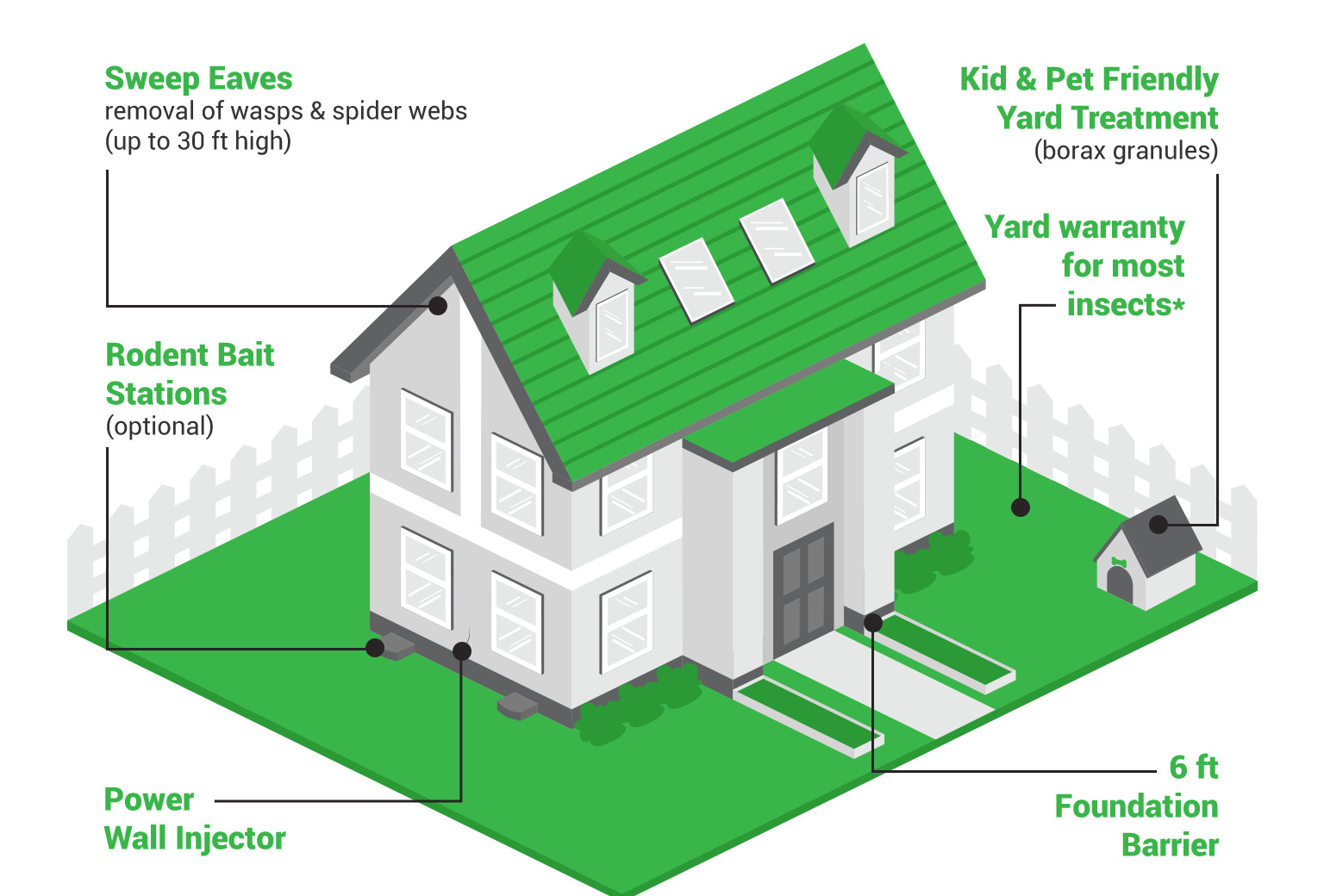
Vinx HomeGuard Plan
What Happens at Every Visit
Our technicians don’t just spray and leave. Every quarterly service covers your full exterior and interior, done right, backed by a written guarantee.
- Yard & Margin Treatment: Ground cover, mulch beds, and vegetation borders treated every visit
- Power Wall Injector: Treats wall voids where pests hide
- 6 ft Foundation Barrier: Full perimeter treatment every visit
- Yard Warranty: Free retreatment for most insects
- Kid & Pet Safe Yard Treatment: Borax granules, safe after dry
Homeowner Tips
6 Ways to Reduce Flea & Tick Pressure Around Your Spartanburg Property
Kid & Pet Safe
Our Treatments Are Safe for Your Whole Family: Including the Furry Members
Every product we use is EPA-registered and applied strictly at labeled rates by licensed technicians. We take the guesswork out of safety so you can feel confident letting kids and pets back into treated areas quickly.

EPA-Registered Products Only
All products we apply are EPA-registered and used strictly per label requirements. Our licensed technicians are trained to apply the right product in the right place at the right rate, every time.
Dry Time Before Re-Entry
Exterior spray treatments dry in 30–60 minutes. Once dry, treated surfaces are safe for children and pets to contact. Your technician will confirm the all-clear before leaving your property.
Interior Treatment On Request
We treat only what’s needed, where it’s needed. Gel baits in cabinets and crack-and-crevice applications keep products away from areas pets and children frequent most.
Botanical Options Available
Have specific sensitivities? Ask your technician about our plant-derived treatment options. We offer botanical alternatives for households that prefer a more natural approach.
Have a concern about products used near your pets or children? Call 855-800-8469 and we’ll walk you through exactly what we use and why it’s safe.
Explore More
More Pest Control Services in Spartanburg

Pest Control Spartanburg
Year-round protection plan

Mosquito Control Spartanburg
Monthly barrier treatments
Termite Control Spartanburg
Bait systems & liquid treatment

Rodent Control Spartanburg
All rodents covered
Cockroach Control Spartanburg
American & German roaches

Bed Bug Control Spartanburg
Heat & liquid treatments
Spider Control Spartanburg
All spider species covered
Exterminator Spartanburg
Same-day local exterminators
Ant Control Spartanburg
Household ants & others

Wasp Control Spartanburg
Nest removal & prevention
Frequently Asked Questions
Flea & Tick Control FAQ for Spartanburg Homeowners
Approximately March through October in Upstate SC, seven to eight months, with peak pressure May through September. Lone star ticks — the species Clemson collects most in South Carolina — drive most of that pressure, and black-legged adults stay active through the cool months either side of it, so the risk does not switch off in November. Plus plan bi-monthly treatment covers the full active season without gap months for Spartanburg County properties.
Exterior flea and tick yard treatment is included in the Plus plan at $75 per month and the Platinum plan at $109 per month. Interior flea treatment with IGR is available in the Platinum plan. Call (864) 754-7155 for a free quote and to confirm service scheduling for your specific Spartanburg County address.
Yes, the riparian corridors through Spartanburg County carry the highest deer tick density in the market because white-tailed deer use these waterway corridors as travel routes throughout the active season, depositing black-legged tick populations in the vegetation adjacent to these corridors. If your property backs onto or is adjacent to one of these waterway corridors, the fence line or vegetation border along the waterway margin should be the primary treatment emphasis on every service visit.
Yes, but it deserves an honest answer rather than a scary one. The black-legged tick is the Lyme vector and it is here — Clemson describes it as “found across SC, but in low volume,” while the lone star tick is “the most collected species in SC.” Lyme cases are documented in South Carolina, but the disease is far less common here than in the Northeast, and researchers know why: a 2021 PLOS Biology study found southern black-legged nymphs stay down in the leaf litter instead of climbing up to quest where people brush past, and they feed heavily on skinks and other lizards, which are poor reservoirs for the bacterium. The practical upshot for a Spartanburg County homeowner is unchanged: do daily tick checks after time in wooded or brushy areas, and treat the vegetation transition zones where ticks are actually deposited. Just know that the bite you are statistically most likely to get here is a lone star, and the condition worth knowing about from that one is alpha-gal syndrome, not Lyme.
Vinx serves all of Spartanburg and Spartanburg County, downtown Spartanburg, Westside, Boiling Springs, Duncan, Cowpens, and all surrounding communities. Call (864) 754-7155 to confirm scheduling for your specific address.
Both are necessary, they address different parts of the flea and tick lifecycle. Yard treatment reduces the flea and tick population in the outdoor environment your pet is exposed to. Veterinary prevention kills parasites that reach your pet despite outdoor treatment. Neither fully substitutes for the other: yard-only without vet prevention leaves your pet unprotected on contact; vet-only without yard treatment leaves the outdoor source population untreated and your pet continuously re-exposed through every visit to the treated areas.
The clearest indicators: your pet scratching more than usual; small dark specks (“flea dirt”) on pet bedding or light-colored carpet near pet rest areas (flea dirt turns red when wet because it is digested blood); small bites on human ankles near carpet edges or on lower legs in the morning. The adult fleas you can see on your pet are the small visible end of the population. Flea eggs are not glued to the coat — they drop off wherever the animal goes — and the larvae and pupae that hatch from them develop in pet bedding, carpet pile and upholstery, not on the animal. Pupae can sit dormant in a carpet for months. If you see these signs, call for interior IGR treatment included in the Platinum plan.
No, treatment is not necessary or effective during the low-activity winter months. The active season covered by Plus plan bi-monthly treatment runs approximately March through October here in the Upstate, where winters are cooler than the coastal markets and the season closes earlier. Vinx visits are scheduled within the active season window. There is no benefit to treating in January or February when tick populations are dormant and flea outdoor reproduction has stopped.
Service Coverage
Flea & Tick Control Across Spartanburg & Spartanburg County
Serving every neighborhood in the Spartanburg metro area