




Fire ants are the one yard pest almost everyone in the Carolinas and Virginia has met the hard way. The good news is that they're one of the best-researched pests in the country, and the method that works is simple: bait the whole yard, then treat the few mounds that are left. This guide explains how to tell you have fire ants, what actually kills them, which products work fastest, which popular remedies don't, why mounds keep coming back, and what to do about stings, kids and pets. It draws on research and guidance from Clemson, Texas A&M, the University of Florida and the National Pesticide Information Center, plus what homeowners report from their own yards.
The most effective way to get rid of fire ants in your yard is the Two-Step Method. First, spread a fire ant bait over the whole yard with a hand spreader, in dry weather when the ants are foraging. About a week later, treat any mounds that are still active, especially near walkways and play areas.
Treating mounds one at a time is what makes fire ants seem to "move." It kills the mounds you treat and misses the colonies you haven't found yet. Baiting once or twice a year, with fall the best time, keeps a yard close to fire-ant-free.

How to Tell You Have Fire Ants
Lots of ants build small dirt piles. Fire ant mounds have a few features that set them apart:
- No hole on top. Texas A&M notes that fire ant mounds have no central opening. The ants come and go through tunnels under the mound. Many native ants have a visible entrance hole.
- Loose, crumbly soil in a dome, usually in open, sunny spots: lawns, pastures, the edges of sidewalks and driveways, and landscape beds. Mounds can reach about 18 inches tall.
- Ants of mixed sizes, from about 1/16 to almost 1/4 inch, reddish brown with a darker rear end.
- An instant, aggressive response. Disturb the mound and ants pour out and run up anything touching it. Texas A&M explains why they seem to sting "all at once": they react to movement, so when you jerk your leg, they all sting together.

Mounds often seem to explode after a storm. That's mostly colonies that were already there building back up. See why fire ant mounds appear after rain.
Fire Ants in South Carolina, North Carolina and Virginia
Red imported fire ants arrived from South America through the port of Mobile, Alabama, in the 1930s, probably in soil used as ship ballast, according to Texas A&M. They have since spread across the South, and our three states are firmly inside their range:
- South Carolina: all 46 counties are inside the USDA imported fire ant quarantine. Clemson reports fire ants statewide, the Upstate included.
- North Carolina: the state quarantine covers 81 counties, including Wake and Johnston. Davie, Forsyth and Iredell were added on January 1, 2026.
- Virginia: the state quarantine, updated in May 2025, includes Virginia Beach, Norfolk, Chesapeake, Portsmouth, Suffolk, Hampton, Newport News and York County.
The quarantine limits moving soil, sod, nursery plants and baled hay out of the zone. Buying sod locally within the zone involves no paperwork for homeowners.
There's also a natural ally in some yards. Researchers released fire-ant-killing phorid flies from South America near Clemson in 1999, and later elsewhere in South Carolina and North Carolina. The flies lay an egg in a fire ant, and the larva kills it. They're now established across much of the Southeast, but studies show their effect on fire ant numbers has been modest. They help, but they won't clear a yard.
How new colonies start
Clemson Extension explains that mating flights happen in warm, humid, calm weather, usually within 24 hours of rain, mostly in spring and fall. A mated queen can fly 2 to 3 miles before landing, tearing off her wings and starting a new colony. Nearly 99.9% of new queens die before they succeed, but there are so many that new mounds keep appearing. A healthy colony can grow to 100,000 to 500,000 workers, and its queen can live 7 years or more, Texas A&M says.

The Two-Step Method: What Works
Texas A&M calls the Two-Step Method "the currently best proven approach" to managing fire ants. Clemson recommends the same plan. Clemson says fire ant baits cut populations by 85% to 95% in most research trials, regardless of brand or active ingredient, so when bait fails it's almost always how it was used.
Step 1: Broadcast bait over the whole yard
Fire ant bait is corn grit coated in soybean oil that carries a slow-acting insecticide. Workers carry it home and feed it to the colony, including the queen, which dies or stops laying eggs. Fire ants can't eat solid food, so the grit is passed to the larvae, which digest it into liquid that's shared through the colony. That's why bait reaches the queen when spraying the mound doesn't.
- Use fresh bait. Clemson notes that the oil goes rancid with age, and ants won't pick up stale bait. Texas A&M recommends bait from an unopened container. Store it away from gasoline, insecticides and cigarette smoke.
- Check the weather. Apply when the grass and ground are dry and no rain is expected for 24 to 48 hours.
- Bait when ants are foraging. Fire ants forage when the soil surface is about 70°F to 95°F, Clemson says, and mostly at night in summer. Late afternoon or evening is usually best. Do a quick test: put a small pile of bait next to a mound. If ants find it within 30 minutes, they're foraging.
- Spread it thin. Use a hand-held seed spreader. Texas A&M entomologist Robert Puckett says the typical rate is 1 to 1.5 pounds per acre, and "using more is wasteful." Clemson puts it at about 30 granules per square foot. Don't mix bait with fertilizer or seed.
- Put it around mounds, not on them. Puckett advises sprinkling bait around a mound's edge, because disturbed ants go into defense mode and won't collect it.

Step 2: Treat the mounds that are left
About 7 to 10 days later, Clemson says, treat individual mounds that are still a problem: by the patio, along a walkway, in a play area. Texas A&M notes that liquid drenches generally eliminate a mound within a few hours, dusts work fast without water but leave residue on the surface, and granular mound products usually need 1 to 2 gallons of water sprinkled over them. Follow the label, and don't kick or dig the mound first.
When to treat, and how often
Texas A&M recommends broadcasting bait between late August and mid-October. Ants are still foraging, the weather is easier to predict, and the bait works over the winter. Plan on baiting once or twice a year. Puckett estimates his recommended yearly program costs about $25 to $35 per acre.
Only a few mounds? Texas A&M says the Two-Step Method is best where there are five or more mounds per quarter-acre. With fewer, treat the mounds individually. The University of Florida points out that broadcast bait can also reduce native ants, which compete with fire ants and slow their spread.
What Is the Best Fire Ant Killer?
There's no single best product. It depends on whether you want the whole yard treated or one mound gone today. Puckett says cheaper baits may take six to eight weeks to eliminate a colony, while more expensive ones usually work in less than a week.
| Type | How fast | Best for |
|---|---|---|
| Fast-acting bait (such as indoxacarb) | About 3 to 10 days | Whole yard, quick results |
| Standard bait (such as hydramethylnon) | About 2 to 3 weeks | Whole yard, low cost |
| Growth-regulator bait (such as fenoxycarb, methoprene, pyriproxyfen) | Slowest, often 1 to 2 months. It stops egg production, so the colony dies off as workers age | Long-lasting control, often mixed with a faster bait |
| Broadcast granular insecticide (not a bait) | Works where applied and lasts longer | Small areas needing high control. Clemson says it cuts fire ants 95% or more |
| Mound drench, dust or granules | Hours | A single mound by a walkway or play area |
| Organic: spinosad bait or citrus (d-limonene) drench | Varies by product. A drench works on contact | Vegetable gardens and organic yards |
Clemson notes that combining a broadcast granular product with bait is often the most productive strategy: the granular gives longer control, and the bait reaches the areas you missed. Whatever you buy, check that it's labeled for fire ants and for where you're using it. Most baits, for example, aren't labeled for use inside vegetable gardens, so Texas A&M suggests baiting around the garden's edge instead.
Home Remedies That Don't Work
The most-liked comment under one popular fire ant video, with over 300 likes, swears by grits: "The ant eats the grit, swells up and dies." Another, with 115 likes, says the same about cornmeal. Texas A&M lists grits, molasses, aspartame and club soda among the remedies that don't work. The University of Florida notes that adult fire ants can only ingest liquids, so the "swells up" explanation doesn't hold. Here's how the common ones stack up:
- Grits, cornmeal, club soda, molasses: don't work, according to Texas A&M.
- Gasoline, ammonia, bleach: dangerous to you and the soil, and Texas A&M notes they mostly make the colony relocate. Never use them.
- Boiling water: partly works. Texas A&M says 2 to 3 gallons of very hot water kills the colony about 60% of the time, and "otherwise, the ants will probably just move to another location." The University of Florida puts the success rate at 20% to 60%. It also kills the grass, and it's a real burn risk.
- Diatomaceous earth and boric acid: the University of Florida says they can kill ants, but their ability to kill whole colonies "has not been consistently demonstrated."
- Vinegar, cinnamon and other smells: at best they push a colony to move. That's relocation, not control.
Why Fire Ants Keep Coming Back
A Reddit r/HomeImprovement user (via Google search excerpts) described the usual experience with a store bait: it "works for a couple months then they're back again." That's expected, and it's usually one of these:
- Colonies you never treated. Clemson says mound treatments kill nearly all the mounds treated but miss the ones you didn't find, and "these missed colonies often lead to the misconception that they are just moving around." Hot, dry weather hides colonies deep in the soil until the next soaking rain.
- Disturbed colonies do move. Texas A&M notes colonies can set up a new mound hundreds of feet away almost overnight. One YouTube commenter said a treated "mound appears dead because the fire ants have moved to another location." Another watched ants pile bait back outside the mound the next day and relocate.
- New queens fly in. Mating flights after spring and fall rains start new colonies, even in a yard you cleared.
- Stale or wet bait. A Reddit r/pestcontrol commenter noted ants "often won't take it if it's stale / old / spoiled," and Clemson says bait needs about 12 dry hours.
- The neighbors' yard. Untreated land next door keeps sending new colonies. One homeowner whose house backs onto a ravine said their pest company sprayed every three weeks and the family still got stung.
For ants that return indoors and out, see why ants keep coming back and how to stop them.
Fire Ants in the House
Texas A&M says fire ants from colonies near the house sometimes forage indoors for food and moisture, "particularly during the hot, dry, summer months," and whole colonies occasionally nest in wall voids or move in during floods. They're a real danger to babies, anyone bedridden, and pets. One YouTube commenter followed a trail out of their bathroom after being stung under their clothes.
- Treat the mounds near the house first, using the Two-Step Method or mound treatments.
- Indoors, use a bait labeled for indoor use and for fire ants, and caulk the cracks where they're coming in.
- Wipe trails with detergent to remove the scent trail.
- Fire ants also nest in air conditioner units, electrical boxes and utility housings, where they can short out equipment. Texas A&M advises calling an electrician or a licensed pest control professional for those.
Fire Ant Stings: What to Do
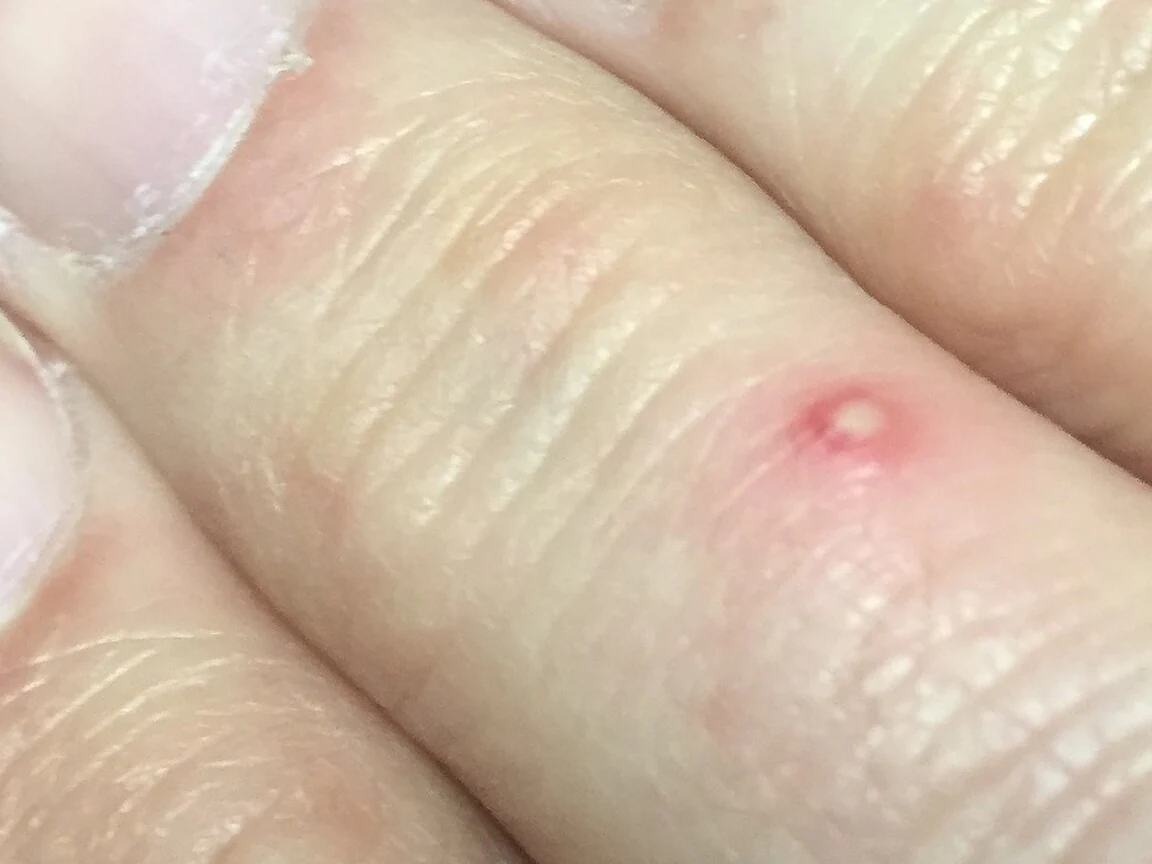
Texas A&M describes the usual reaction: burning, itching, and a white pustule that forms in a day or two. Mississippi State Extension notes that despite how it looks, the pustule isn't infected. Texas A&M adds that stings are easily infected and may leave permanent scars, so treat them gently.
- Get away from the mound and brush the ants off. Don't just slap at them, since movement makes them sting.
- Wash the area and use an insect bite remedy. Texas A&M suggests one with benzocaine or another ingredient that deadens pain and protects against infection.
- Don't pop or scratch the pustules.
- Get emergency care right away for chest pain, nausea, severe sweating, trouble breathing, serious swelling or slurred speech, the warning signs Texas A&M lists.
Most people never have a serious reaction. Among people who are stung, roughly 0.5% to 2% develop a reaction beyond the sting site. Anyone who has reacted before should talk to an allergist. One YouTube commenter said that at age 6, they fell backward into a mound and were "hospitalized for 3 days."
Fire Ant Control Around Kids, Pets and Ponds
Fire ant baits use very little insecticide. A pound or so covers an acre. The National Pesticide Information Center says hydramethylnon, a common bait ingredient, is low in toxicity to mammals, and that when products are used according to label directions, the amount people and pets are exposed to is low. Still:
- Follow the label on when people and pets can go back on the lawn.
- Store bait where dogs can't get into the bag.
- Treat the areas people and pets use most first, as Texas A&M recommends.
- Keep products away from water. Hydramethylnon is toxic to fish. Clemson suggests keeping broadcast bait about 30 feet back from a pond's edge and letting the ants carry it to mounds closer to the water.
When to Call a Professional
A homeowner can handle most fire ant problems with the Two-Step Method. Call a professional if the property is large, if mounds keep returning after a full season of baiting, if fire ants are inside walls or electrical equipment, or if someone in the home is allergic. Clemson's advice on choosing one is worth repeating: professionals have products homeowners can't buy, but "what they know is more important than the products they choose."
Our ant control service treats fire ants with baits and targeted mound treatments, timed to the season, across South Carolina, North Carolina and Virginia. For more on professional products, see what exterminators use for ants.
Key Takeaways
- Use the Two-Step Method: broadcast bait over the whole yard, then treat remaining mounds about a week later.
- Bait right: fresh bait, dry weather, ants foraging, a light rate, around mounds, not on them.
- Fall is the best time, and baiting once or twice a year keeps fire ants down.
- Grits, cornmeal and club soda don't work. Gasoline and bleach are dangerous, and boiling water works only some of the time.
- "They moved" usually means colonies you missed, or a mound disturbed by treatment.
- Leave sting pustules alone, and get emergency care for breathing trouble, chest pain or major swelling.
Frequently Asked Questions
Use the Two-Step Method recommended by Texas A&M and Clemson. Broadcast a fire ant bait over the whole yard with a hand spreader in dry weather while the ants are foraging, then treat any mounds still active about 7 to 10 days later. Repeat once or twice a year, with fall the best time.
It depends on the job. For a whole yard, a broadcast fire ant bait works best; fast-acting baits work in days, cheaper ones in several weeks. For one mound by a walkway, a mound drench works within hours. Clemson notes that combining a broadcast granular insecticide with bait is often the most productive approach.
Texas A&M entomologist Robert Puckett says cheaper baits can take six to eight weeks to eliminate a colony, while more expensive ones usually work in less than a week. Growth-regulator baits are the slowest, because they stop the queen laying eggs and the colony dies off as workers age.
Usually because of colonies that were never treated. Clemson says mound treatments miss undetected colonies, which leads people to think the ants just moved. Disturbed colonies can also relocate, new queens fly in after rain, and untreated land nearby keeps supplying new colonies. Baiting the whole yard solves most of this.
Sometimes. Texas A&M says 2 to 3 gallons of very hot water kills a colony about 60% of the time, and otherwise the ants will probably move. The University of Florida puts success at 20% to 60%. Boiling water also kills grass and can cause serious burns.
No. Texas A&M lists grits, molasses, aspartame and club soda among remedies that don't work. The popular idea that ants eat the grits and swell up doesn't hold, because adult fire ants can only ingest liquids.
Texas A&M recommends broadcasting bait between late August and mid-October, when ants are still foraging and the bait can work over the winter. Treat on a dry day, with no rain expected for 24 to 48 hours, when the soil is roughly 70°F to 95°F and ants find a test pile of bait within 30 minutes.
Baits use very little insecticide, and the National Pesticide Information Center says hydramethylnon, a common bait ingredient, is low in toxicity to mammals when products are used as labeled. Follow the label on re-entry, store bait where pets can't reach it, and keep it about 30 feet from ponds, since it is toxic to fish.
Brush the ants off, wash the area and use an insect bite remedy. A white pustule usually forms in a day or two; leave it alone and don't pop it. Get emergency care right away for chest pain, nausea, severe sweating, trouble breathing, serious swelling or slurred speech.
Yes. All 46 South Carolina counties are inside the USDA imported fire ant quarantine, and Clemson reports fire ants statewide, including the Upstate. North Carolina's quarantine covers 81 counties including Wake, and Virginia's includes Virginia Beach, Norfolk, Chesapeake and much of Hampton Roads.
Sources: Clemson Cooperative Extension HGIC, T. Davis & C. S. Gorsuch, "Fire Ant Management in the Home Lawn" (HGIC 2501); Texas A&M AgriLife Extension, Texas Imported Fire Ant Research and Management Project: Two-Step Method, Biology, FAQ, Medical Information and Managing Fire Ants for Specific Sites; "Fire Ant Control: The Two-Step Method and Other Approaches" (ENTO-034); A. Russell, "How to get rid of fire ants: Expert tips that work," AgriLife Today (March 10, 2026), interviewing entomologist Robert Puckett; University of Florida IFAS Extension, "Sustainable Fire Ant Control" (2025); National Pesticide Information Center, "Hydramethylnon General Fact Sheet"; Mississippi State University Extension, "The Fire Ant Sting" and "Fire Ant Biology"; A. M. A. Callcott et al., "Fire Ant Decapitating Fly Cooperative Release Programs (1994-2008)", Journal of Insect Science 11 (2011); USDA APHIS Imported Fire Ant Quarantine; NC Department of Agriculture & Consumer Services imported fire ant quarantine; Virginia Department of Agriculture and Consumer Services, Imported Fire Ant Quarantine map (effective May 27, 2025); Reddit r/HomeImprovement and r/pestcontrol (via Google search excerpts); YouTube comments under fire ant control videos.
Photo credits: Alex Wild, University of Texas Insects Unlocked, CC0; Alex Wild, University of Texas Insects Unlocked, CC0; Scott Morris, CC BY 4.0; USDA APHIS PPQ, CC BY 3.0 US; Ed Uthman, CC BY 2.0; via Wikimedia Commons.