




The house goes quiet, you turn off the light, and then it starts: a scratch inside the wall, a quick run across the ceiling, a gnawing sound that stops when you sit up. It is natural to assume rats. Sometimes that's right. But in the Carolinas and Virginia, the animal making noise in your walls at night is often something else, and treating for the wrong one wastes weeks.
Scratching, scurrying and gnawing in the walls or ceiling at night usually means a rodent, but not always a rat. Rats and mice are active at night. So is the southern flying squirrel, which Virginia's wildlife agency says is the most common squirrel in attics there. Of 10 homeowners we found who identified their night noise, only 2 turned out to be rats.
The way to know: look for droppings (rice-size means mice, raisin-size means rats), gnaw marks, grease rubs, and nests of shredded insulation, and notice when and where the noise happens. Sounds high in the walls and ceiling point to roof rats, mice or flying squirrels. Ground-level noise and burrows point to Norway rats.

What's Making the Noise? Sound and Timing
Start with when you hear it and what it sounds like. Most noisemakers in walls and attics keep a regular schedule.
| Animal | When | What it sounds like | Where |
|---|---|---|---|
| Roof rat | Night | Running and scurrying, scratching, gnawing. Heavier than a mouse, often described as something "running from one end of the ceiling to the other" | Attic, upper walls, ceiling voids, cabinets |
| Norway rat | Night | Scratching and gnawing low in walls, rustling in the crawl space | Crawl space, basement, ground floor, lower walls |
| House mouse | Night | Light, quick scratching and pattering, faint squeaks | Anywhere in the walls, ceilings and cabinets |
| Southern flying squirrel | Night | Quick, light running, thumps as they land, chattering | Attic, upper walls |
| Gray squirrel | Daytime, especially early morning and late afternoon | Heavier running, scratching, rolling or gnawing | Attic, soffits, roofline |
| Raccoon | Night | Heavy thumping and walking, loud enough to sound like a dog or a person | Attic, chimney |
| Bats | Dusk and dawn | Fluttering, squeaking as they leave and return | Attic, walls near the roofline |
The flying squirrel is the one most people don't know about. NC Wildlife calls the southern flying squirrel "probably the most common mammal never seen by humans in North Carolina." It weighs only 2 to 3 ounces, is strongly nocturnal, and is known to live in the attics of suburban and rural homes, where it "can make quite a racket." The Virginia Department of Wildlife Resources says the most common squirrels in attics there are flying squirrels.
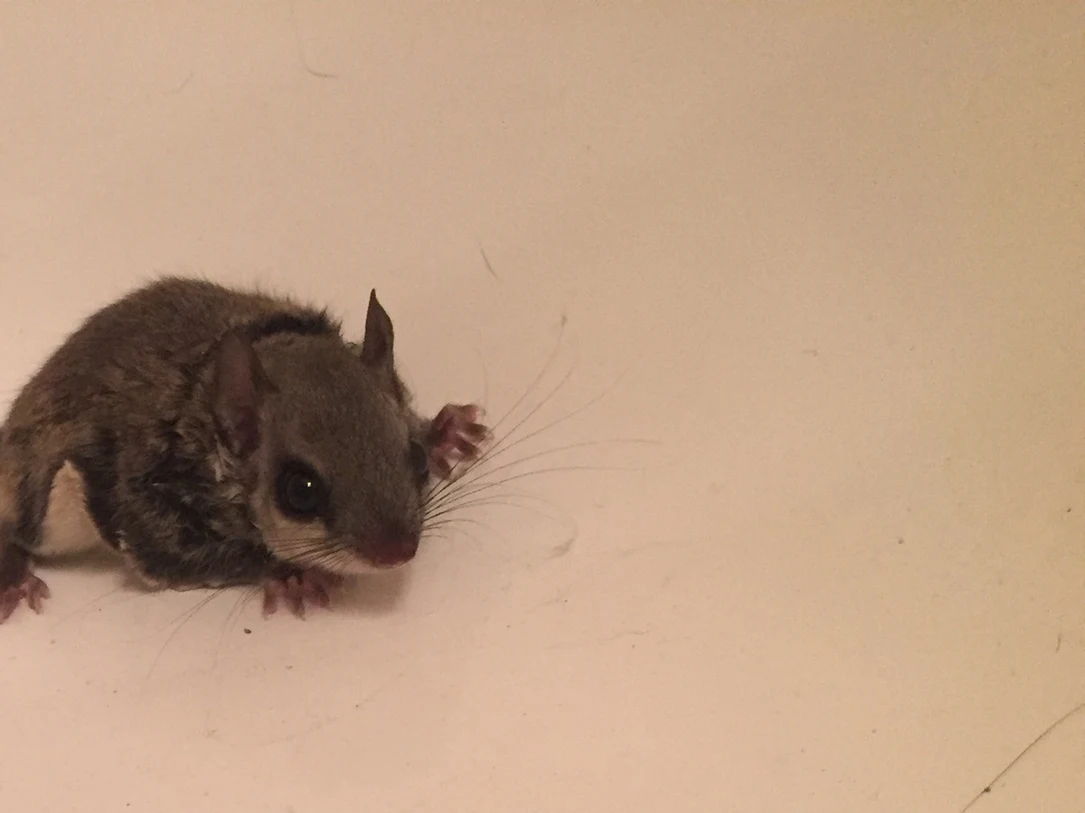
What homeowners found
We collected first-hand accounts from homeowners who heard noises at night and later found out what it was: Reddit threads (read through Google's excerpts, since Reddit blocks automated reading) and comments on a widely watched pest-control video about wall and attic noises.
| What it turned out to be | Reports | What they said |
|---|---|---|
| Rats | 2 | One found a rat "the size of a small cat" after cutting into the wall. Another found a large rat in the attic |
| Mice | 2 | Living between the attic floor and the ceiling below |
| Flying squirrels | 2 | "We thought for weeks it was mice but the traps were not doing anything." Another family had flying squirrels and mice climbing the inside of their walls up and down three floors |
| Bats | 1 | Scratching at night that turned out to be bats |
| A cat and kittens | 1 | Sounded like someone walking in the attic |
| Crows on the roof | 1 | Walking sounds in the early morning, from crows hopping on the roof in the sun |
| A vole | 1 | Squeaking that the homeowner thought was a bat |
Small sample, but the pattern is clear: the noise alone often points you in the wrong direction. The family who spent weeks setting mouse traps for flying squirrels is the lesson. Confirm what you have before you treat.
The Signs That Confirm Rats
Noises tell you something is there. These signs tell you what. Check the attic, the crawl space, the garage, under sinks, behind appliances and along baseboards with a flashlight.
- Droppings. The University of Georgia's rule of thumb: mouse droppings look like grains of rice, rat droppings look like raisins. Fresh droppings are dark and soft. Old ones are gray and crumbly.
- Gnaw marks. Both chew wood, wiring and packaging. The University of California notes rat tooth marks are about 1/6 inch (4 mm) wide, while mice leave scratchy marks about 1/12 inch (2 mm) wide.
- Nests. Rats shred insulation and other soft materials in walls and ceilings for nests. Look for flattened, shredded insulation in the attic.
- Runways and grease marks. Rats travel the same routes, leaving dark smudges where their fur rubs along beams, pipes and baseboards.
- Tracks. UGA suggests a light dusting of flour or powder where you suspect activity. Check for footprints and tail drag marks in the morning.
- Odor. UGA notes a musty, urine-like odor more often points to mice than rats.
- Burrows outside. Holes along the foundation, under woodpiles or beneath trash cans point to Norway rats.
Roof Rat or Norway Rat?

| Roof rat | Norway rat | |
|---|---|---|
| Build | Slender, 5 to 10 ounces (UGA) | Heavy, over a pound (UGA) |
| Ears and tail | Ears reach past the eyes. Tail longer than head and body | Ears don't reach the eyes. Tail shorter than the body |
| Lives | Up high: attics, wall voids, ceiling voids, cabinets, trees and dense shrubs | Down low: burrows along foundations, under woodpiles, crawl spaces, basements |
| Travels | Climbs. Often seen at night on power lines and fence tops. Can travel 300 feet or more for food | Stays near its burrow |
| Where to trap | Off the ground: shelves, ledges, pipes, beams | Along walls, behind objects, in dark corners |
If you are hearing rats overhead in the attic or ceiling, think roof rat. The University of California describes roof rats as nesting in enclosed, elevated spaces and favoring warm, coastal areas. That makes them a likely attic rat in the warm Lowcountry. In North Carolina and Virginia, though, state wildlife agencies report Norway rats have displaced roof rats in many areas, so confirm before you treat (see roof rats vs. Norway rats). Norway rats are the rats of crawl spaces and ground floors.
Rats in the Walls but Not in the House?
It's common to hear rats but never see one. Rats can live in the walls, attic and crawl space and only come into the open rooms to look for food at night. The UC guide notes that roof rats often carry food away to eat somewhere hidden. That is why the signs (droppings in the attic, gnawed packages in the pantry, shredded insulation) matter more than sightings. If you hear them every night and find droppings, assume they are inside the structure even if they never show up in the kitchen.
Why It Matters
- Wiring and gas lines. The University of California notes rats gnaw electrical wires and can even chew natural gas lines, creating fire and explosion hazards. They also chew car wiring.
- Insulation. Nesting shreds and soils insulation in walls and ceilings.
- Health. The CDC lists several diseases spread by rodents, through contact with urine, droppings or saliva, by breathing contaminated dust, or through bites. Norway rats carry Seoul virus, a type of hantavirus. Clean droppings wet, never by sweeping dry.
- They multiply. A female Norway rat averages 4 to 6 litters a year and can raise 20 or more young.
What to Do
- Confirm what it is. Find droppings, gnaw marks or nests, and match the timing to the table above. If it's daytime noise, think gray squirrel. If it's dusk and dawn fluttering, think bats. Both call for different handling than rats.
- Trap where they travel. UGA recommends about a dozen traps for a house, set perpendicular to walls. For roof rats, put them up high on beams, ledges and pipes in the attic. Peanut butter, bacon and cooked chicken all work as bait.
- Skip poison indoors. UGA warns that poisoned rodents don't die right away. They crawl into a wall or behind appliances, die there and smell awful. That is how you end up searching for a dead rat smell in the wall.
- Seal the entry points. The UC guide recommends sealing openings larger than 1/4 inch with steel wool, wire screen or sheet metal. Young rats can squeeze under a door with a 1/2-inch gap. Check soffits, roof returns, vents, pipe openings and the garage door.
- Cut off the climbing routes. Prune tree limbs within 3 feet of the roof, and keep shrubs about 2 feet apart and away from the house, as UC advises for roof rats.
- Don't bother with ultrasonic devices. The UC guide says rats quickly get used to repeated sounds, so frightening devices, including ultrasonic ones, don't work in homes.
- For flying squirrels, Virginia DWR advises sealing the entry with wire mesh or metal sheeting once they're out, and making sure no young are left inside first.
For more, see roof rats vs. Norway rats, how exterminators get rid of rats and do rats come back after extermination?
When to Call a Professional
- You hear activity every night, in more than one wall or room
- You find droppings in the attic and the kitchen, or chewed wiring
- A week or two of trapping hasn't slowed it down
- You can't find how they're getting in, or the entry is on the roof
- You're not sure if it's rats, mice or squirrels
Our rodent control service starts with an inspection from the crawl space to the roofline to identify the animal and find the entry points, then seals the structure, traps what's inside and checks back until the activity stops.
Key Takeaways
- Night noises in walls usually mean a rodent, but not always rats. Mice and flying squirrels are night-active too.
- Flying squirrels are common in Carolina and Virginia attics. Virginia's wildlife agency calls them the most common attic squirrels there.
- Confirm with signs: raisin-size droppings mean rats, rice-size mean mice. Also look for 1/6-inch gnaw marks, shredded insulation and grease rubs.
- Up high means roof rats; down low means Norway rats.
- Trap and seal. Don't poison indoors, or you may end up with a dead rat in the wall.
- Ultrasonic devices don't work, according to the University of California.
Sources: N. M. Quinn, "Pest Notes: Rats" (Publication 74106), University of California Statewide IPM Program; M. Kohl and M. T. Mengak, "Rats and mice: get them out of your house and yard", University of Georgia, 2025; North Carolina Wildlife Resources Commission, "Southern Flying Squirrel"; Virginia Department of Wildlife Resources, "Problems with Squirrels"; Centers for Disease Control and Prevention, rodent-borne disease and hantavirus guidance; owner accounts from Reddit (via Google search excerpts) and YouTube viewer comments on "Hearing Sounds in Your Walls or Attic?".
Frequently Asked Questions
Scratching, scurrying, running and gnawing sounds after dark, plus physical signs: raisin-size droppings, gnaw marks about 1/6 inch wide, shredded insulation, grease smudges along beams and pipes, and gnawed food packages. Mice leave rice-size droppings and smaller, scratchy gnaw marks.
Rats make scurrying and running sounds, scratching, and gnawing, mostly at night. Roof rats are often heard overhead, sounding like something running from one end of the ceiling to the other. Mice sound lighter and quicker. Heavy thumping is more likely a raccoon.
Timing is the best clue. Gray squirrels are active in the daytime, especially early morning and late afternoon, while rats are active at night. But southern flying squirrels are nocturnal and common in Carolina and Virginia attics, so check droppings and entry holes before you decide.
Yes. Roof rats in particular nest in enclosed, elevated spaces such as attics, wall voids and ceiling voids, according to the University of California. Norway rats tend to stay in crawl spaces, basements and ground-floor walls.
Rarely. If they have food, water and a nest, they stay and breed. A female Norway rat can raise 20 or more young a year. Find and seal the entry points and trap the rats inside.
You can't count them from the noise, but the amount of fresh droppings, how many places you find signs, and how fast traps catch tell you a lot. Activity in several rooms or levels, or rats seen during the day, usually means a larger population.
Not indoors. The University of Georgia warns that poisoned rodents don't die right away. They crawl into a wall or behind an appliance, die there and leave a strong smell. Trapping and sealing entry points is the better approach.
Through gaps larger than a quarter inch around pipes, wires, vents, soffits and roof returns, and under doors. Young rats can squeeze under a door with a half-inch gap. Roof rats climb trees, wires and siding to reach the roofline.
No. The University of California notes rats quickly get used to repeated sounds, so frightening devices, including ultrasonic ones, are ineffective in homes. Sealing entry points and trapping work.
Mice, southern flying squirrels, bats around dusk and dawn, raccoons in attics, and sometimes birds on the roof early in the morning. In homeowner reports we found, only 2 of 10 night noises turned out to be rats.
Photo credits: Ryan Hodnett, CC BY-SA 4.0, via Wikimedia Commons; NCBioTeacher, CC0, via Wikimedia Commons; Zeynel Cebeci, CC BY-SA 4.0, via Wikimedia Commons.