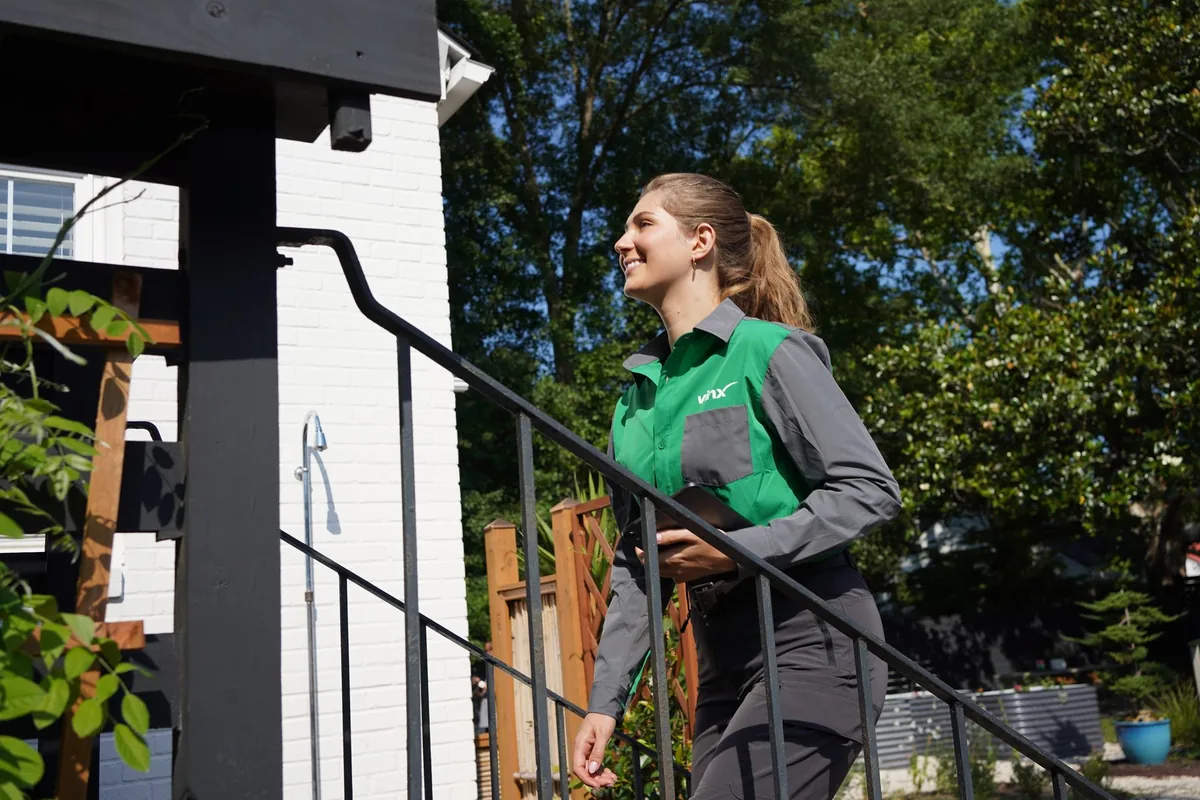
Exterminator in Summerville, SC
Summerville earned its nickname, “Flowertown in the Pines”, when its founders passed a law protecting the town’s pine trees back in 1847. But the same sandy, well-drained soil that made this a health retreat is exactly the ground fire ants prefer, and the humid climate keeps termites, roaches, and ants active nearly year-round. Split across Dorchester, Berkeley, and Charleston Counties, from the historic homes near the Flowertown core to new construction in Nexton and Cane Bay Plantation, no single generic plan fits every property. Vinx builds a plan around your home, your neighborhood, and the pests actually active in it. 100% satisfaction guarantee.
Get Started in 60 Seconds
Choose what’s easiest for you
Request a Quote
We usually respond in 2 minutes
Call (855) 800-8469
Get a Live Person (no AI agents here!)
Sign Up Online
Get pricing and schedule now





Welcome to Vinx Pest Control
A Company That Actually Backs What It Says
At Vinx, we combine professional-grade treatments with a level of service most pest control companies don’t offer. Local technicians, fast response times, and a guarantee that actually means something.
“I’m not passionate about killing bugs. I’m passionate about customer service. At Vinx, you get experts who show up, do the job right, and stand behind every visit. No runaround, no fine print.”

Founder & Owner, Vinx Pest Control
PROTECTION PLANS
Summerville Exterminator Pricing
100% money-back guarantee on every plan.

Standard Residential Protection
- 4 Seasonal Treatments Per Year
- 50+ Covered Pests
- Interior, Exterior & Yard Treatment
- Unlimited Free Re-Services
- 100% Money-Back Guarantee
- Fire Ant Yard Guarantee
- Flea & Tick Coverage
- Mosquito Treatments

Upgraded Yard Protection
- 6 Home & Yard Treatments Per Year
- 50+ Covered Pests
- Interior, Exterior & Yard Treatment
- Unlimited Free Re-Services
- 100% Money-Back Guarantee
- Fire Ant Yard Elimination Guarantee
- Flea & Tick Elimination Guarantee
- Mosquito Treatments

Most Comprehensive Protection
- 9 Treatments Per Year
- 50+ Covered Pests
- Interior, Exterior & Yard Treatment
- Unlimited Free Re-Services
- 100% Money-Back Guarantee
- Fire Ant Yard Elimination Guarantee
- Interior Flea & Tick Coverage
- 8 Mosquito Treatments (Mar–Nov)
- Free Bed Bug Treatments if Needed*
*Starting rates vary by home size and area. All plans billed monthly.
Request Your Free Pest Control Quote
Fill out the form below and a Vinx team member will reach out within 2 minutes during business hours.
Prefer to talk? Call (855) 800-8469 for a live person, no AI agents.
Our Process
How Vinx Exterminators Work a Summerville Property: Step by Step

Inspection & Reporting
An extermination visit in Summerville starts at the soil line, since ninety-four percent of infested buildings in a Charleston study were entered from ground-based colonies rather than aerial ones. Mature trees within striking distance of the house get noted and measured at this stage, because tree work here has its own rules. You get a firm price before any work begins.
Exterior Foundation Treatment
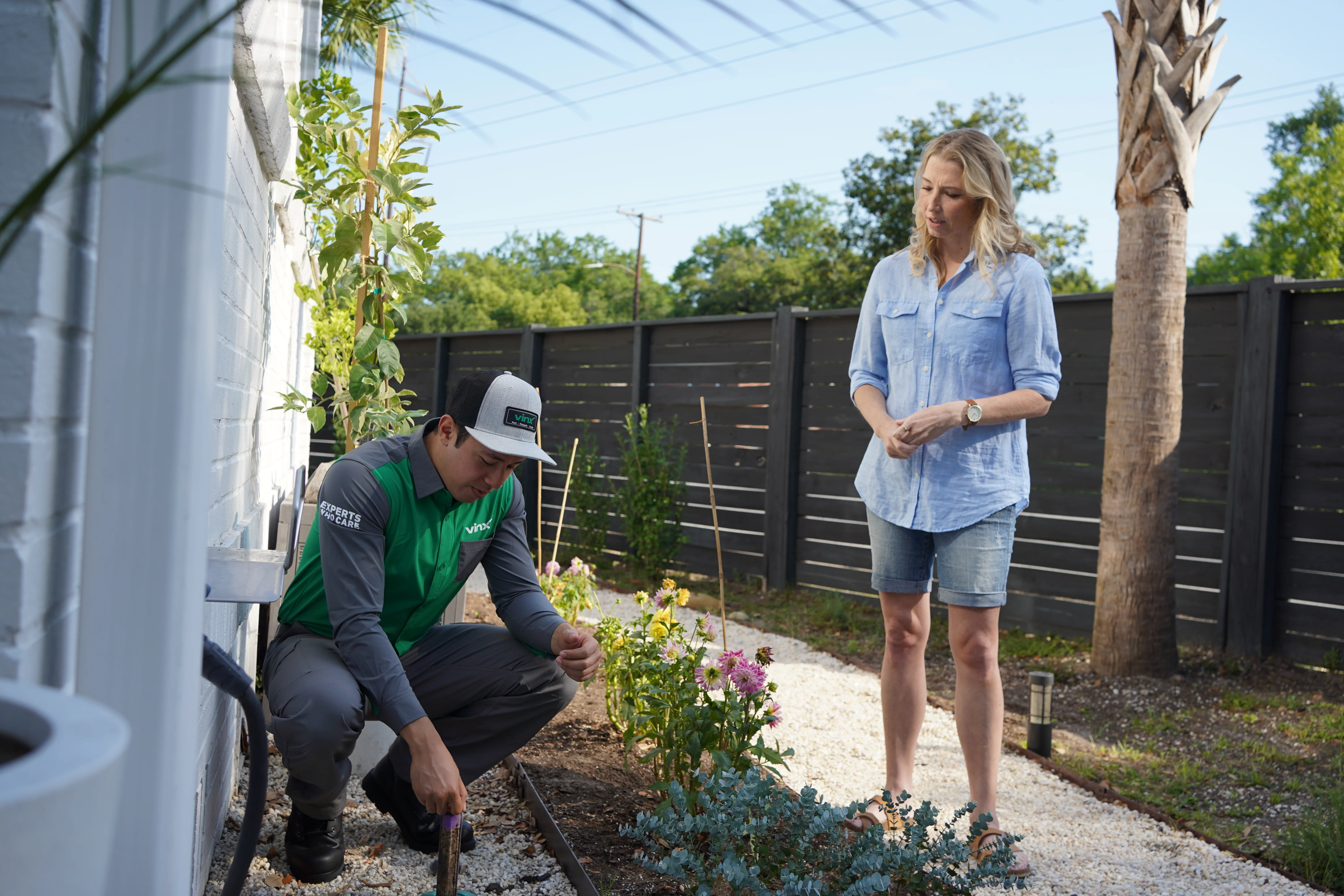
The exterior gets a micro-encapsulated barrier three feet up and three feet out, intercepting insects at the slab gaps and thresholds they actually use to get in. All three counties Summerville spans are on Clemson's Formosan list, so this line is treated as termite defense first on every property.
Yard Treatment
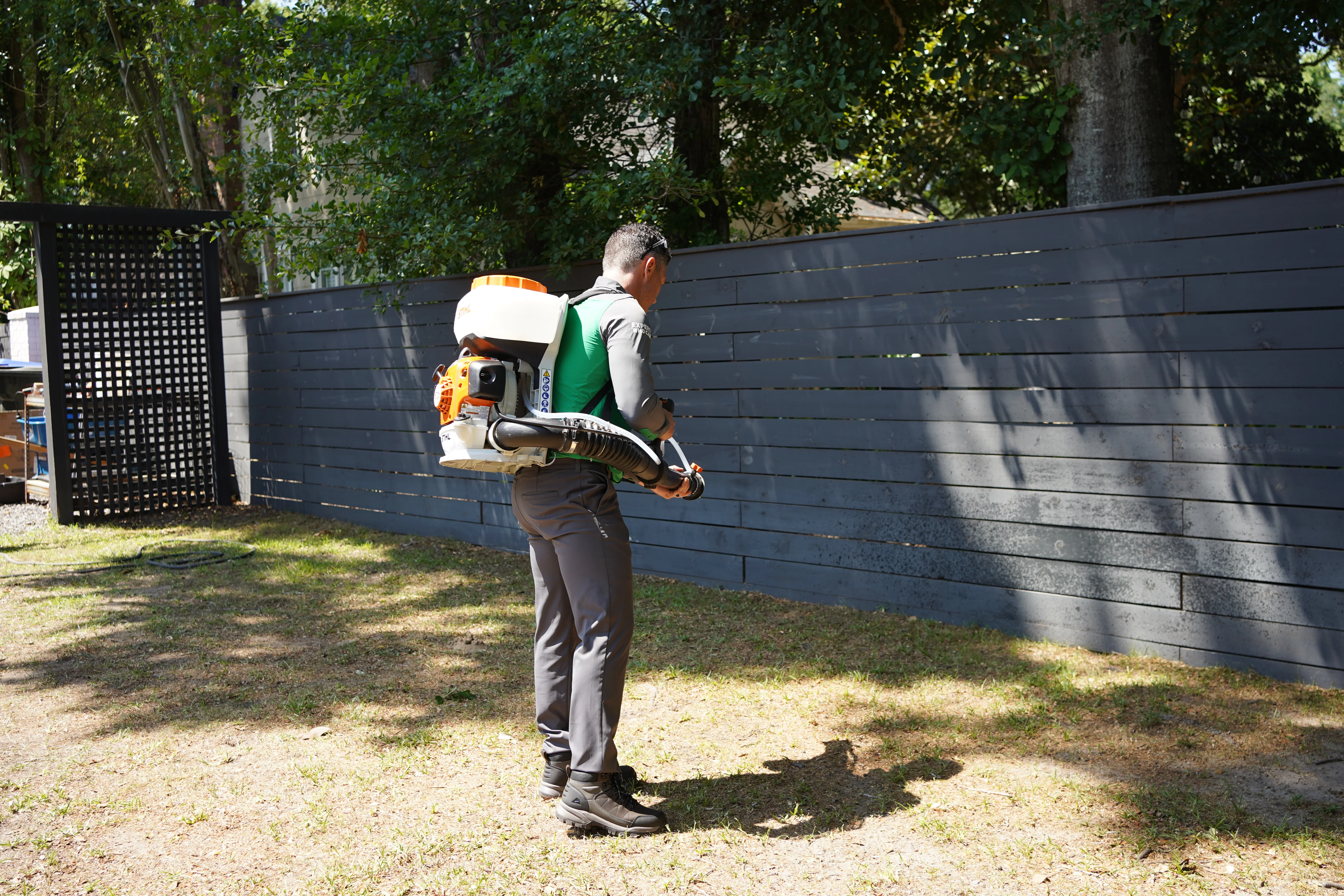
We treat the yard up to 30 feet out, clearing standing water that Clemson HGIC says will breed mosquitoes in as little as five days, some species in a tablespoon, and correcting wood-to-soil contact created by later landscaping around the town's mature lots.
Sweep & Treat Eaves
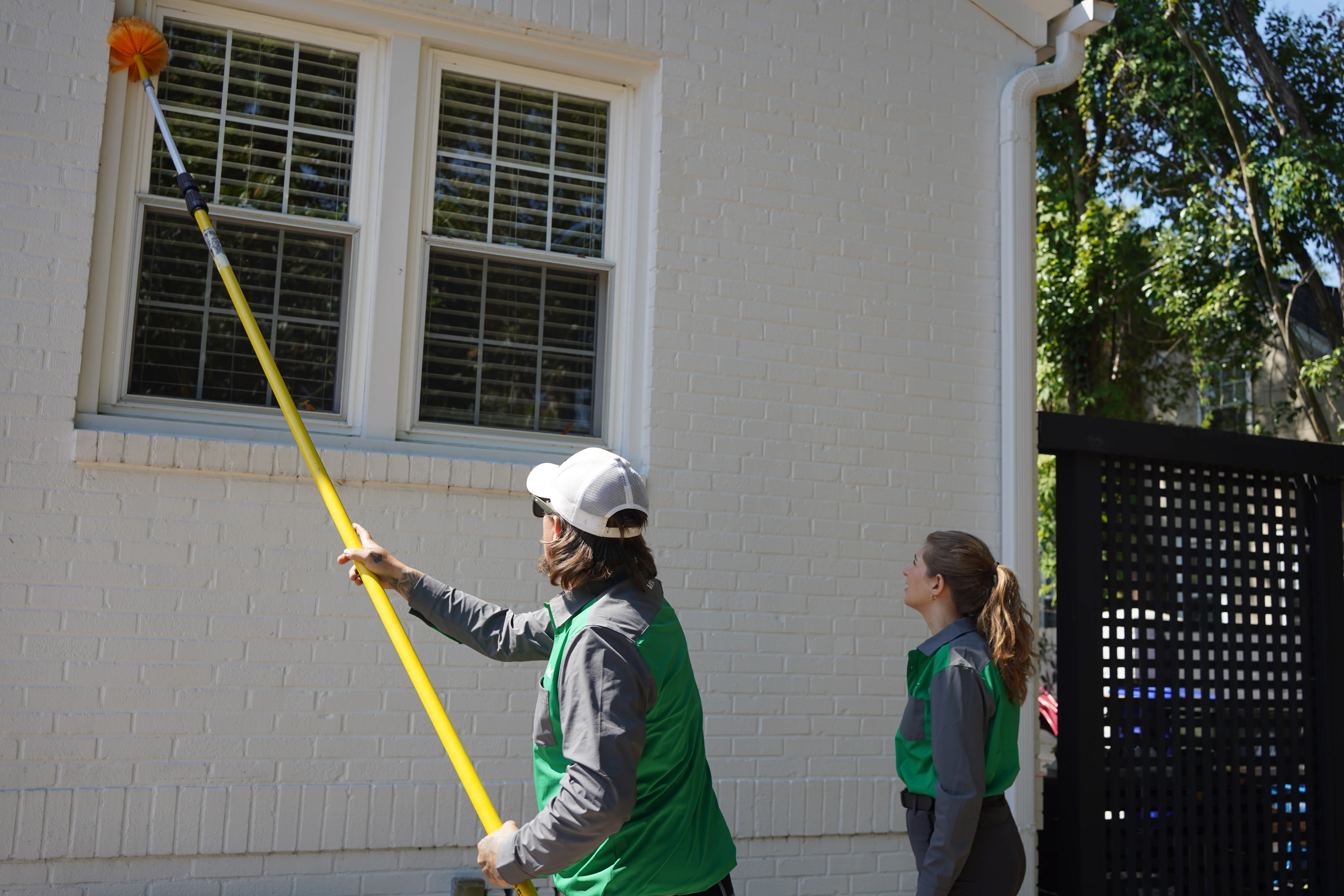
Rooflines are swept clear of webs and early wasp nests on every visit, then spot-treated with a residual product. Under Summerville's protected tree canopy, this pass also checks for carpenter ant activity in limbs bridging onto older roof structures.
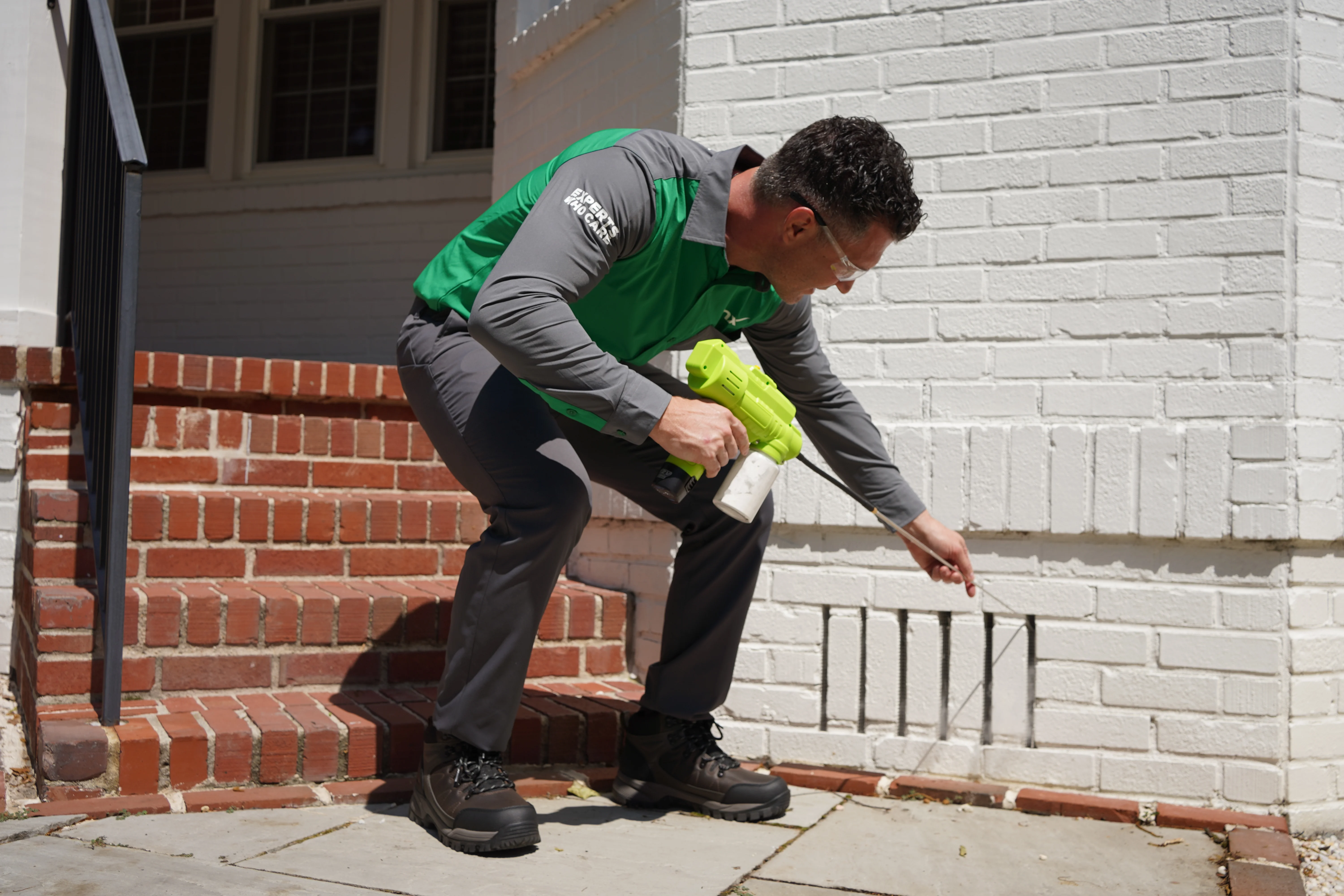
Power Dust Injection
Cracks, weep holes and expansion joints get a dust product driven in with a compressor tip, reaching wall voids a surface spray never touches. On pre-1900 housing near the 1886 earthquake zone, this treatment protects timber that may still be doing structural work through earthquake-bolt reinforcement.
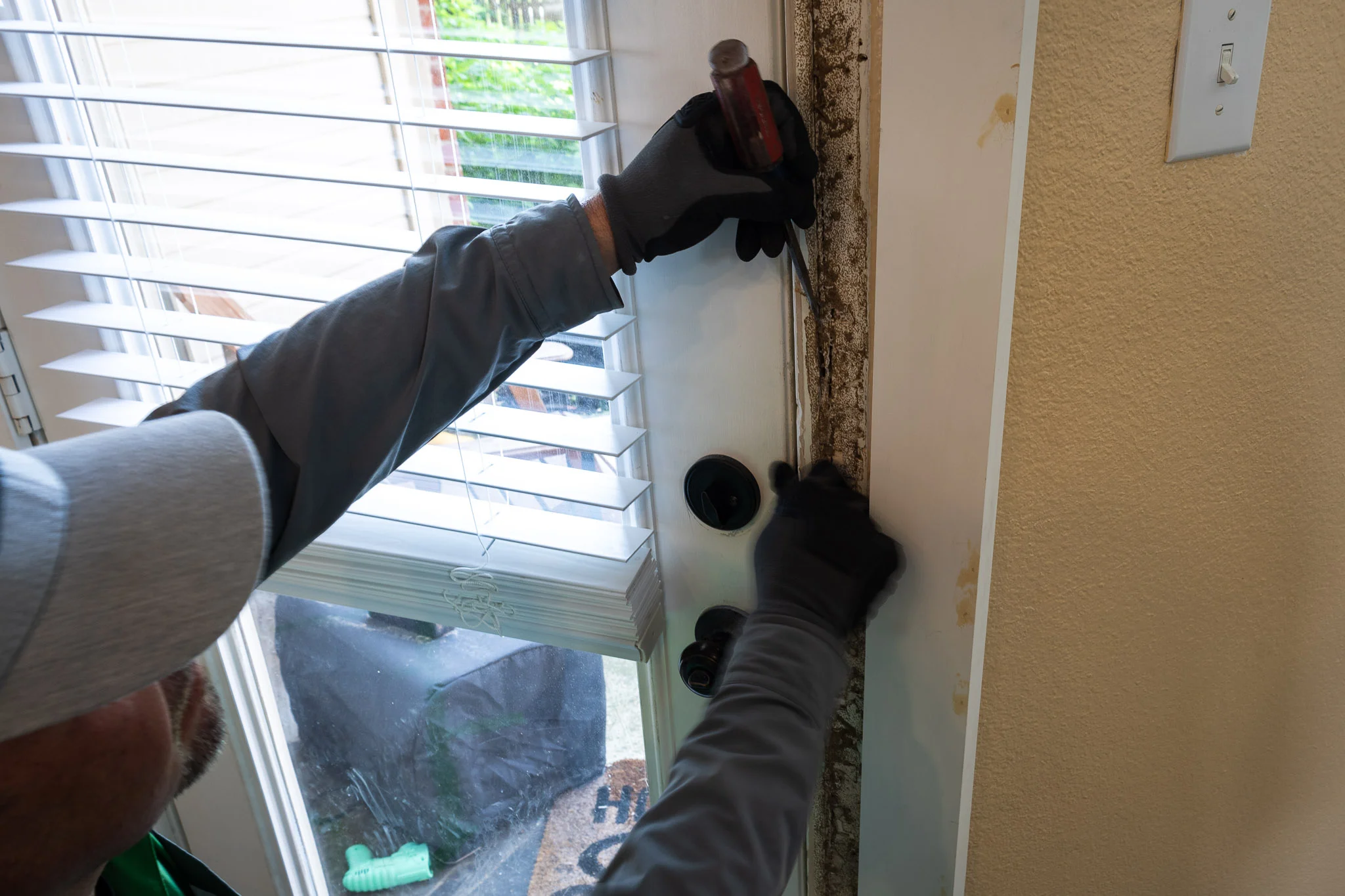
Interior Treatment (If Needed)
Where a termite colony is found in a tree the town's ordinance protects, we treat the colony first and support any removal permit application with documented findings — the sequence matters here. Interior work and unlimited free re-services between visits are covered on every plan.
Conducive Condition Report
At the end of every visit, your technician documents any conditions increasing pest pressure, moisture entry points, foundation gaps, vegetation contact, clogged gutters, standing water near the foundation. Summerville's coastal environment creates specific conducive conditions that most companies never flag. We do, every single time.
Customer Reviews
Trusted by Summerville Families: 4.8 Stars on Google
Chris and De Rico were amazing! They made the whole experience fast and easy. They were super nice and set my expectations for the future. I would recommend Vinx Pest control you anyone! Thank you for everything!
The attitude and politeness was nice. Professional and dedicated. They said if I see any pest they will Come back. I didn’t have any concerns about the two nice guys that came in my home. Very easy to talk to and I watched all they did and I am pleased. So much so that I am having them go to my parents home and my sons home. Thanks vinx.
My technician Chris was extremely polite and knowledgeable. He gave me a full run down of the process and after each step told me he was going forward with the next and check to see if I had and questions. This was top notch service.
Anthony is great! He's always super customer centric, friendly and positive! Thanks again for the service and we’ll look forward to next time!
The Vinx Technician, Chris, was professional and courteous. He explained exactly what he was going to do and what he did afterwards. He answered all of our questions thoroughly too. Very personable gentlemen, and I highly recommend him.
Vinx has always done a great job treating my house and yard. Austin has always been on time that he gives as well and is greatly appreciated.
Sacra Pinus Esto
Why Pest Control in Summerville Is a Year-Round Commitment
Last updated: September 5, 2026
When Summerville incorporated in 1847, it took as its motto Sacra Pinus Esto — the pine is sacred — after residents watched trees come down for the railroad. The ordinance the council passed in early 1848 fined offenders twenty-five dollars for felling a protected tree, one of the oldest laws of its kind in the United States, and it is still on the books. Under the Town of Summerville’s own tree-removal rules, every tree of every species at eight inches diameter at breast height requires a removal permit, dead trees included; at sixteen inches or more the decision goes to the Tree Protection Board. Most tree ordinances in South Carolina quietly exempt pines — Summerville’s does not. The result is a town with far more mature standing timber, living and dead, than a place of comparable size and age.
6 Reasons Summerville Calls an Exterminator
Palmetto Bugs
American cockroaches — palmetto bugs — and carpenter ants work Summerville's older wood-frame housing stock, where a century-plus of standing timber under protected canopy keeps conditions favorable. Wall-void dust injection and nest tracing outperform surface spraying on this construction.
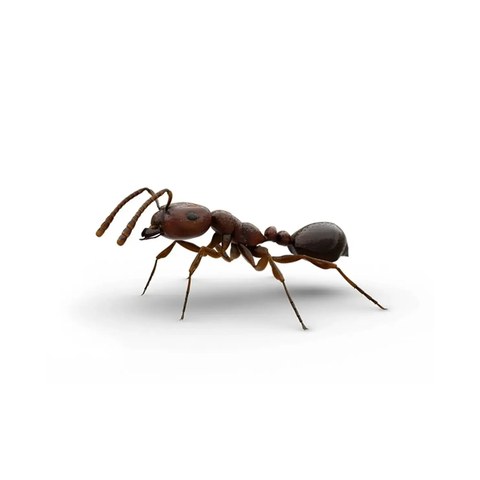
Fire & Argentine Ants
Fire ants establish on disturbed, irrigated turf across Summerville's newer subdivisions, and treating a single mound rarely holds since the colony scatters. A yard-wide bait program manages the population as a system rather than chasing individual mounds.

Termites
All three counties Summerville spans — Dorchester, Charleston and Berkeley — are on Clemson's documented Formosan list, and the town's unusually dense tree ordinance means more standing timber, living and dead, than comparable towns. A hollowing oak is both a possible colony site and a protected tree, so we treat before any removal is considered.

Mosquitoes
Roughly half of Summerville's annual rain falls between June and September, and Clemson HGIC notes standing water lasting five days or more will breed mosquitoes. We target gutters, tarps and low corners on the town's mature, well-shaded lots rather than fogging on a fixed schedule.

Rodents
Rodent pressure in Summerville concentrates where mature canopy and older construction give easy harborage, plus the commercial density around Hutchinson Square and Nexton Parkway. Exclusion comes first, then trapping and secured bait rather than bait alone in an open structure.

Spiders
Spiders here follow the insect activity that thrives under Summerville's heavy tree canopy and near older wood-frame construction. We treat the insect population and clear webbing at the eaves on every visit rather than escalating chemical treatment indoors.
Formosan subterranean termites do not only eat structural lumber. a USDA Forest Service co-authored survey of forest patches around Charleston looked at seventy-one patches across nine locales and found twenty-six of them, thirty-seven percent, infested; infested patches held thirty-two percent more trees with hollows, and oaks and maples were the most damaged genera. Formosans attack living trees, hollowing the trunk outward from the dead heartwood at the center, so a tree can look healthy from the driveway and be substantially empty. A hollowing oak in a Summerville back garden is both a possible colony site and a protected tree — you cannot simply take it down this weekend, and disturbing a colony without treating it first is a good way to move it toward the house. Treat, then apply, then remove.
Summerville’s boundaries fall across Dorchester, Charleston and Berkeley counties, and Clemson’s county tracking lists all three among the sixteen South Carolina counties with documented Formosan colonies — there is no side of town outside the documented range. On 31 August 1886, the Lowcountry was hit by one of the largest earthquakes ever recorded on the East Coast; USGS places the epicenter near Middleton Place, with Summerville sitting inside the zone of maximum damage. Damaged masonry was stabilized with iron rods run through the building and secured outside by washer plates — the earthquake bolts still visible on older walls — and those rods anchor into the interior timber frame, which is doing seismic work as well as carrying the roof.
This town has treated drainage as public health for well over a century. An 1890 account of Summerville records that the local government had by then successfully completed what it called a very perfect system of drainage, placed lamps upon the streets, and enforced sanitary laws, all in preparation for the influx the town was expecting. Nobody yet knew that mosquitoes carried disease — that connection was still years away — but the response was the right one for the wrong reason. The same principle still governs pest work here: on this ground, what happens to the water decides most of what happens to the insects.
Pest Pressure by Neighborhood
Where Summerville Exterminator Calls Come From
Under the Ordinance: Trees as Termite Reservoirs
Any tree at eight inches diameter or more, dead or alive, needs a town removal permit — which is why Summerville carries far more standing timber than a comparable town. A hollowing oak is both a possible Formosan colony and a protected tree, so we treat the colony before any removal is planned.
Historic Downtown: Documented Commercial Schedules
The restaurants and shops around Hutchinson Square run on a documented commercial schedule with service records, which is what a health inspection asks for. Older construction in this district also carries the town's steadiest carpenter ant and palmetto bug calls.
Newer Retail: Fresh Construction, Different Pressure
Newer retail along Nexton Parkway sits on more recently graded ground with a documented pre-construction soil treatment. Ants and mosquitoes on irrigated landscaping matter more here in the early years than termite pressure.
Inside the 1886 Fault Zone: Timber Doing Double Duty
Pre-1900 houses inside the historic earthquake zone were repaired with iron rods anchored into the interior timber frame — the earthquake bolts still visible on older walls. That timber carries structural load as well as the roof, which raises the stakes on any subterranean termite activity in the substructure.
Complete Coverage
What Our Summerville Exterminators Treat
Every common Lowcountry pest covered under one recurring service plan
Palmetto Bugs
Year-round pressure. Drain lines, crawlspace vents, plumbing penetrations.
All Plans
Fire & Argentine Ants
Sandy coastal soil & new construction displacement. Requires Plus or Platinum.
Plus & PlatinumSpiders
Black widow, wolf spider. Cobweb removal included every visit.
All Plans
Wasps & Hornets
Nest removal from soffits and eaves. Persistent in warm coastal climate.
All Plans
Fleas & Ticks
Exterior flea/tick treatment. Interior flea covered in Platinum.
Plus & PlatinumMosquitoes
Monthly treatment Mar–Oct. The long humid season demands this level.
Platinum OnlyRodents
Roof rats, fence lines, power lines, roofline gaps. Exterior bait stations.
All PlansTermites
Formosan termite core range. Sentricon TotalDefense from $35/mo+.
Add-On
Bed Bugs
Covered after 12 months of Platinum service.
Platinum 12moKid & Pet Safe
Our Treatments Are Safe for Your Whole Family: Including the Furry Members
Every product we use is EPA-registered and applied strictly at labeled rates by licensed South Carolina technicians. We take the guesswork out of safety so you can feel confident letting kids and pets back into treated areas quickly.

EPA-Registered Products Only
All products we apply are EPA-registered and used strictly per label requirements. Our licensed technicians are trained to apply the right product in the right place at the right rate, every time.
Dry Time Before Re-Entry
Exterior spray treatments dry in 30–60 minutes. Once dry, treated surfaces are safe for children and pets to contact. Your technician will confirm the all-clear before leaving your property.
Interior Treatment On Request
We treat only what’s needed, where it’s needed. Gel baits and crack-and-crevice applications keep products away from areas pets and children frequent most.
Botanical Options Available
Have specific sensitivities? Ask your technician about our plant-derived treatment options. We offer botanical alternatives for households that prefer a more natural approach.
Have a concern about products used near your pets or children? Call (855) 800-8469 and we’ll walk you through exactly what we use and why it’s safe.
Explore More
More Pest Control Services in Summerville
Termite Control Summerville
Sentricon bait system
Mosquito Control Summerville
Monthly barrier treatments
Ant Control Summerville
Household ants & others
Spider Control Summerville
All spider species covered
Cockroach Control Summerville
Palmetto bugs & German roaches
Rodent Control Summerville
All rodents covered
Bed Bug Treatment Summerville
Heat & liquid treatments

Tick & Flea Control Summerville
Yard & pet protection

Pest Control Summerville
Year-round protection plans
Frequently Asked Questions
Exterminator Summerville SC: Frequently Asked Questions
Recurring plans start at $49 a month and a one-off treatment is priced by pest and property, so a single-pest callout on a small house and a whole-home plan on an acre lot are not the same number. The inspection is free and you get a firm price before anything is treated, so you are never guessing. Call 855-800-8469.
In the Town of Summerville, yes — and this catches people out. Under the Town of Summerville’s own tree-removal rules, every tree of any species at eight inches diameter at breast height needs a removal permit, and that includes dead trees. At sixteen inches or more it goes to the Tree Protection Board. Removal is normally approved when a tree is dead, dying or a hazard, but the paperwork is not optional, so treat the colony first and plan the removal second.
Quarterly suits most properties here. Roughly half of Summerville’s rain falls in the four months from June to September, and that wet stretch is when ant, mosquito and roach pressure all peak at once, so the treatment calendar is built around it rather than spread evenly across the year.
Yes, and unusually so. Summerville sits across Dorchester, Charleston and Berkeley counties, and Clemson’s county tracking lists all three among the sixteen South Carolina counties with documented Formosan colonies. Clemson dates the species’ introduction to Charleston to the mid-1950s, which makes this one of the oldest footholds in the country. Clemson also notes a listed county “does not mean they are found uniformly throughout a county,” so an inspection beats an assumption in either direction.
Timing and wings. Clemson HGIC puts Formosan swarms from mid-May into July, in the evening, heading for lights — native subterranean termites swarm in daylight earlier in spring. Termite swarmers have four wings of equal length and a straight waist; ants have a pinched waist and a longer front pair. If you have a pile of shed wings on a windowsill after a warm May evening, that is worth a call the same week.
For nuisance ants and the odd spider, a clean kitchen and a good exterior seal go a long way. The case for a professional here is specific: subterranean termites, and any tree work, because Summerville’s permit rules mean the wrong sequence costs you twice. Retail products also do not reach a subterranean colony — you can kill foragers for weeks while the nest keeps producing.
Yes. Residential and commercial both, including the restaurants and shops around Hutchinson Square and the newer retail along Nexton Parkway. Commercial work runs on a documented schedule with service records, which is what a health inspection asks for.
We cover the whole town across all three counties, plus Ladson, Knightsville and Lincolnville next door. Most calls get a next-day appointment and an active infestation gets moved up. Call 855-800-8469 for a free inspection.
It is South Carolina’s official wood-infestation report, and most lenders want one before closing. Read what it actually covers before you rely on it — the table above sets out the limits, including the fact that S.C. Code Regs. 27-1085 says the report is not a warranty and places no obligation on anyone to fix what it finds.
Over fifty, covering ants, cockroaches, spiders, silverfish, millipedes, wasps and rodents, with interior, exterior and yard treatment and unlimited free re-services. Termites, mosquitoes and flea-and-tick sit outside the standard plan because they need different products and a different visit schedule.
Service Coverage
Pest Control Across Summerville & the Lowcountry
Serving every neighborhood in and around Summerville