
Exterminator in Greer, SC
Greer’s pest pressure shifts across an Upstate city that mixes a walkable historic downtown, one of the largest auto manufacturing plants in North America, three recreational lakes, and a busy international airport. The brick-paved streets of Greer Station and the historic downtown carry decades-old construction, the BMW manufacturing campus and South Carolina Inland Port along I-85 create their own industrial pressure, Lake Robinson and the South Tyger River bring genuine water-driven conditions, and the rural Spartanburg County outskirts near the old mill villages see a very different mix of pests than downtown. Vinx treats each part of Greer according to what it actually needs.
Get Started in 60 Seconds
Choose what’s easiest for you
Request a Quote
We usually respond in 2 minutes
Call (855) 800-8469
Get a live person (no AI agents here!)
Sign Up Online
Get pricing and schedule now





Welcome to Vinx Pest Control
A Company That Actually Backs What It Says
At Vinx, we pair professional-grade treatment with a level of follow-through most pest control companies skip. Local technicians, fast response, and a guarantee that holds up after the invoice is paid.
Get a Free Quote"I'm not passionate about killing bugs. I'm passionate about customer service. At Vinx, you get experts who show up, do the job right, and stand behind every visit. No runaround, no fine print."
PROTECTION PLANS
Greer Exterminator Pricing
100% money-back guarantee on every plan.

Standard Residential Protection
- 4 Seasonal Treatments Per Year
- 50+ Covered Pests
- Interior, Exterior & Yard Treatment
- Unlimited Free Re-Services
- 100% Money-Back Guarantee
- Fire Ant Yard Guarantee
- Flea & Tick Coverage
- Mosquito Treatments

Upgraded Yard Protection
- 6 Home & Yard Treatments Per Year
- 50+ Covered Pests
- Interior, Exterior & Yard Treatment
- Unlimited Free Re-Services
- 100% Money-Back Guarantee
- Fire Ant Yard Elimination Guarantee
- Flea & Tick Elimination Guarantee
- Mosquito Treatments

Most Comprehensive Protection
- 9 Treatments Per Year
- 50+ Covered Pests
- Interior, Exterior & Yard Treatment
- Unlimited Free Re-Services
- 100% Money-Back Guarantee
- Fire Ant Yard Elimination Guarantee
- Interior Flea & Tick Coverage
- 8 Mosquito Treatments (Mar–Nov)
- Free Bed Bug Treatments if Needed*
All plans include a $329 initial treatment and a 12-month agreement. Termite protection (Termite TotalDefense, starting at $35/mo standalone) is quoted separately after a free inspection. *Starting rates vary by home size and area. All plans billed monthly.
Get Your Free Greer Pest Inspection
Fill out the form below and a Vinx team member will reach out within 2 minutes during business hours.
Prefer to talk? Call (855) 800-8469 for a live person, no AI agents.
Our Process
How Vinx Exterminators Work a Greer Property: Step by Step

Inspection & Reporting
Extermination in Greer starts with identification, and in a town where a third of the houses postdate 2010 the first question is whether a pest arrived or lives here — a population displaced by clearing next door is handled differently from a colony that has been on the lot for years. Identification runs to species: a sting near stone or mulch gets checked for the Asian needle ant, which Clemson calls very common in the Upstate yet rarely identified, rather than blamed on fire ants by default. You get plain findings and a firm price before anything is applied.
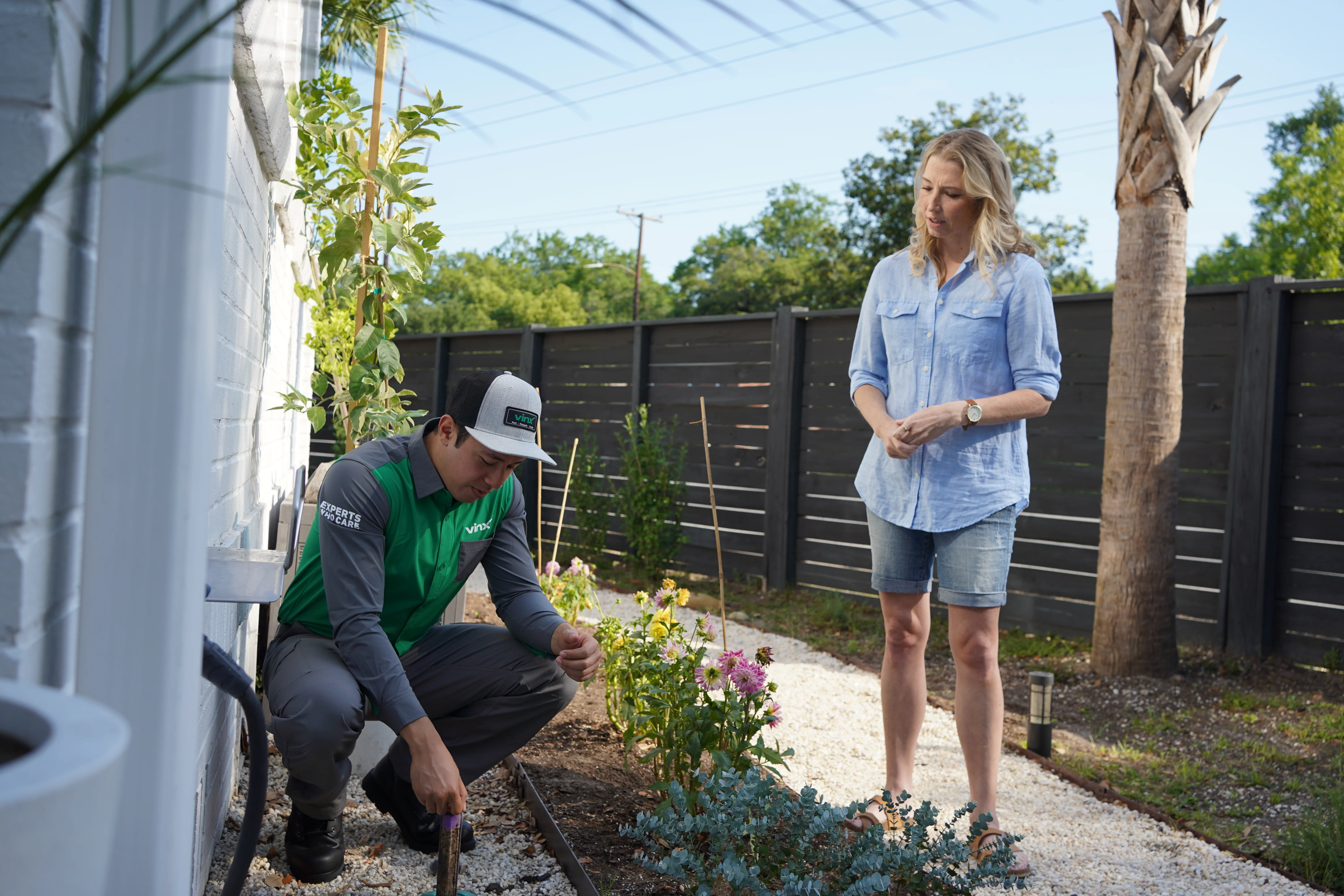
Exterior Foundation Treatment
With the problem named, the exterior gets its defensive line. We apply a micro-encapsulated barrier around the foundation, three feet up and three feet out, intercepting insects at the slab gaps, weep holes and thresholds they actually use. On a recent build the pre-slab termiticide required under S.C. Code Regs. 27-1085 is usually still young, so we verify its continuity and check whether landscaping has since breached the slab edge rather than assume failure; on the century-old stock around Greer Station, the full perimeter gets assessed.
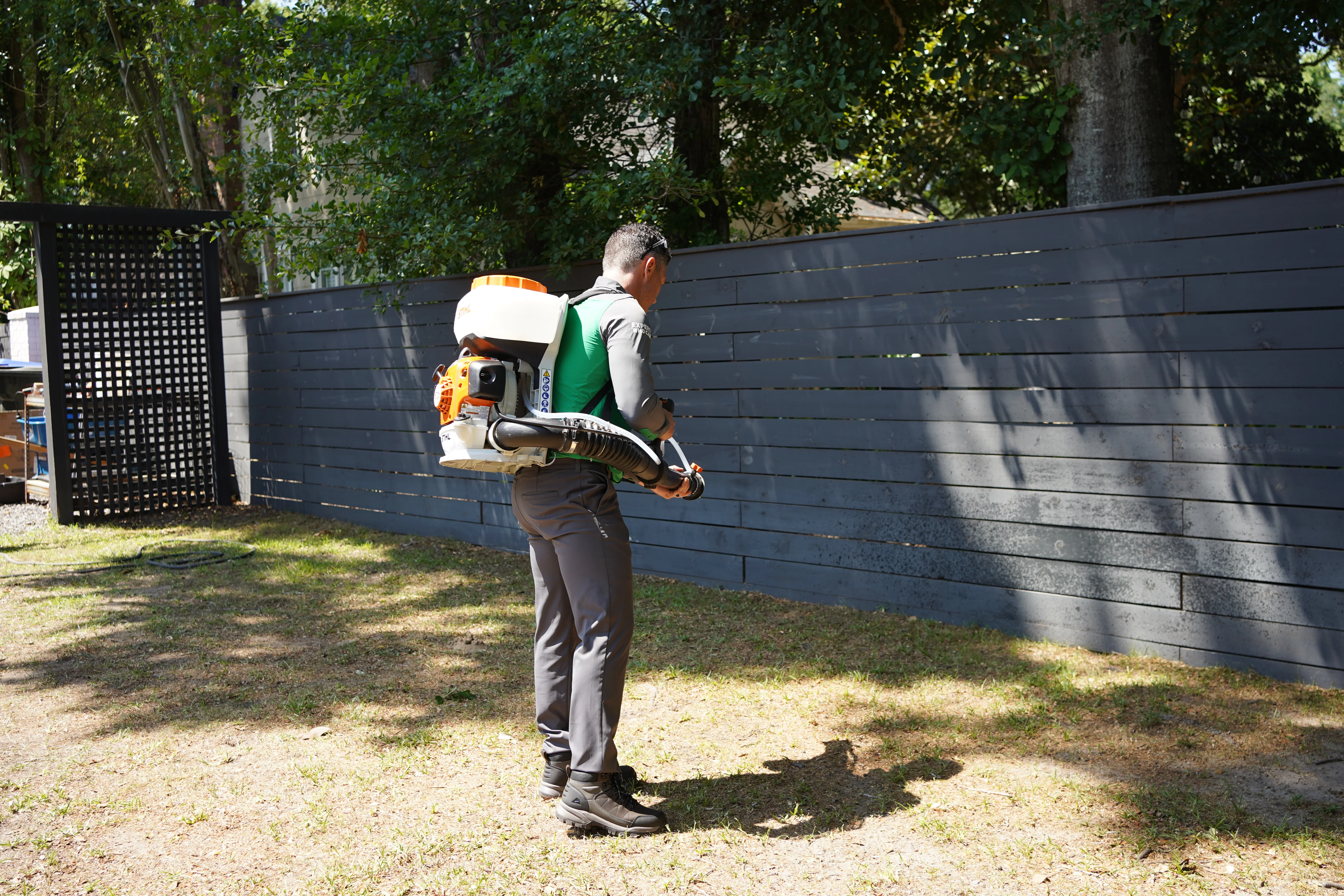
Yard Treatment
The yard gets treated up to 30 feet out, because most of what ends up indoors staged in the lawn first. In Greer that means fire ants, which colonize exactly the open, graded, sunny ground a new subdivision provides — broadcast bait goes down on Clemson’s timing, late May to early June and again late September to early October, because foraging reaches up to a hundred yards from a mound you may never have found.
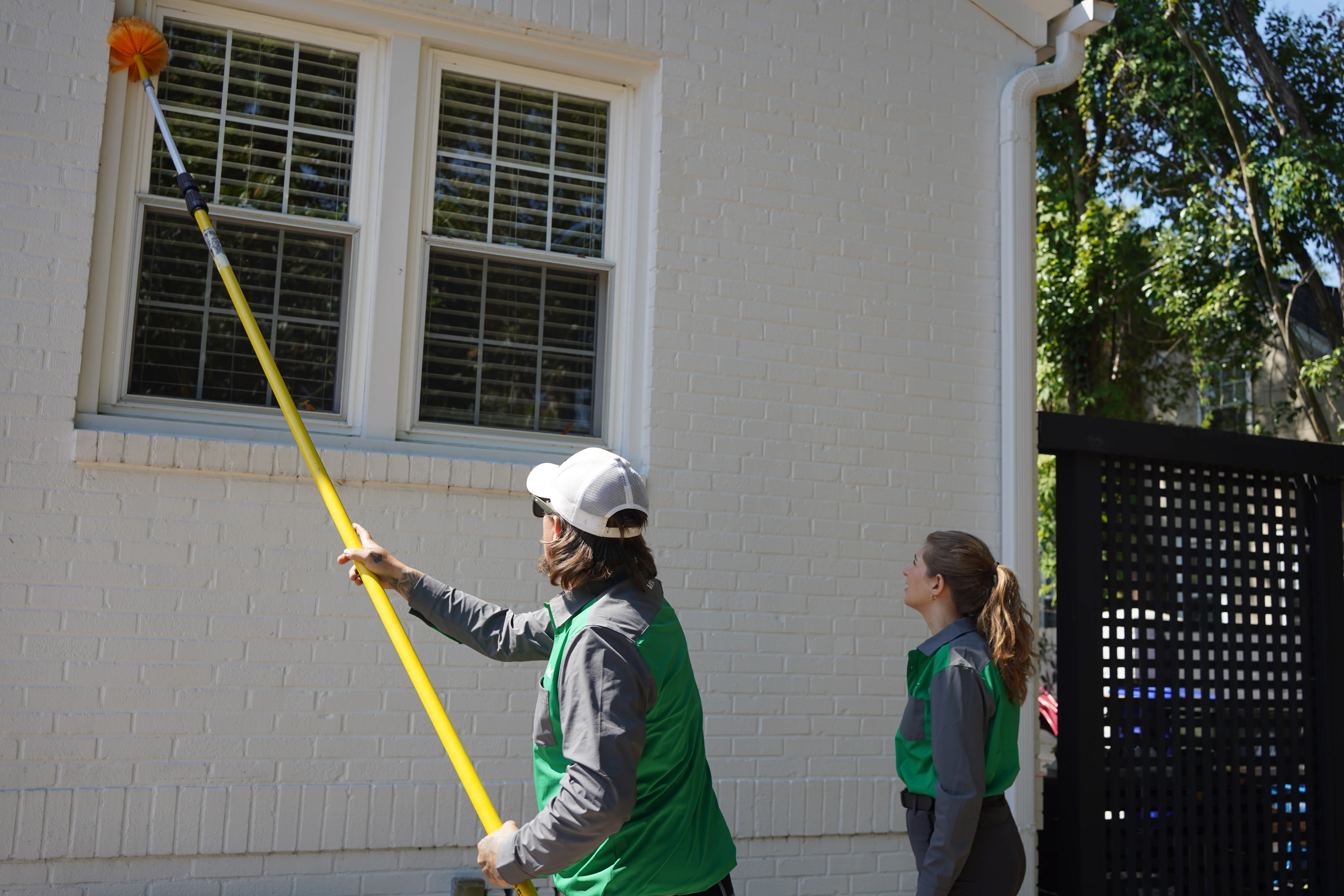
Sweep & Treat Eaves
Rooflines are swept clear of webs and early wasp nests on every visit, then spot-treated with a residual product so returning insects contact treatment instead of rebuilding. On Greer’s light-colored newer houses the eaves pass also covers the window trim, doorframes and gutters where kudzu bugs gather each fall — Clemson notes they prefer pale surfaces, and they stain what they touch, so exclusion beats crushing.
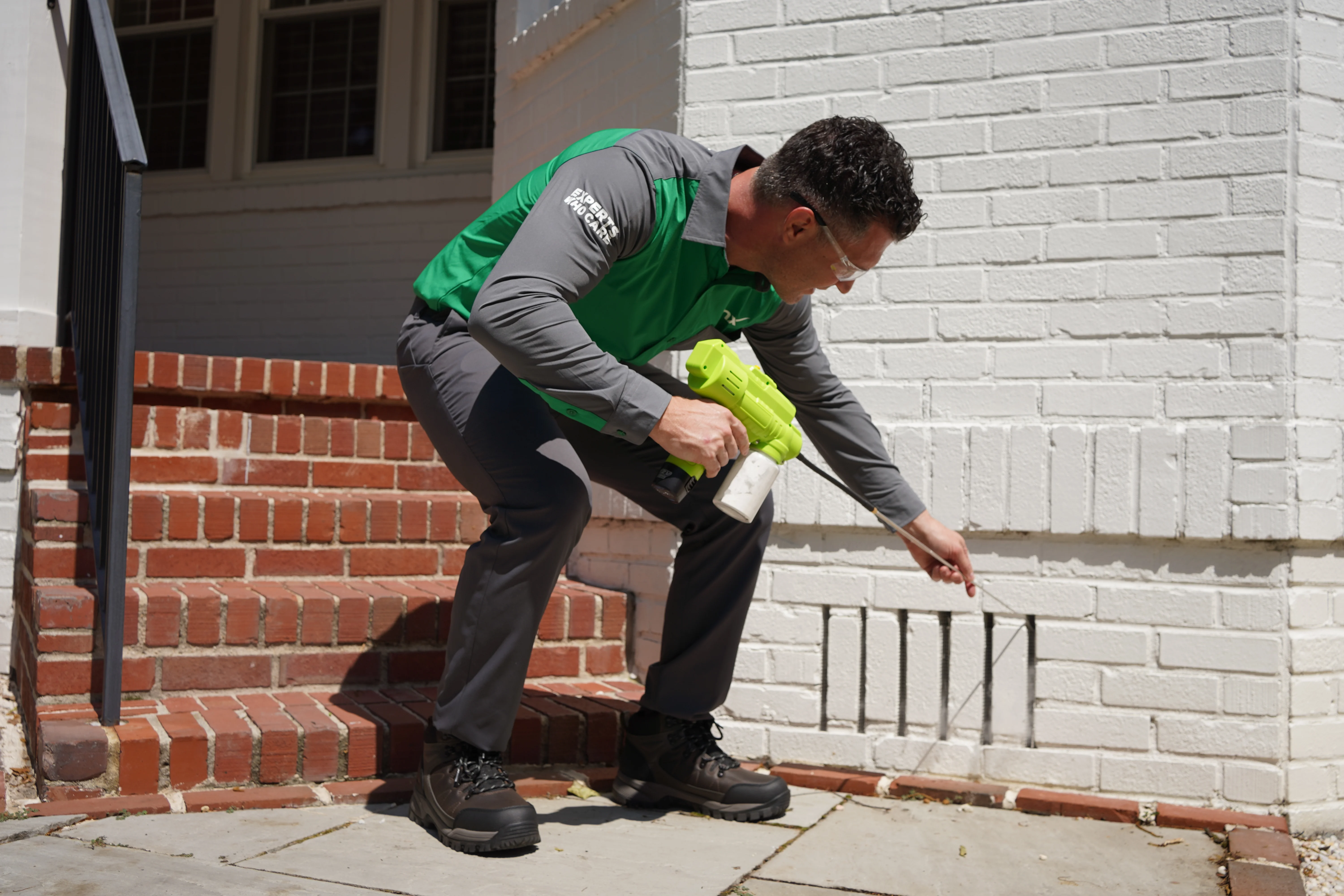
Power Dust Injection
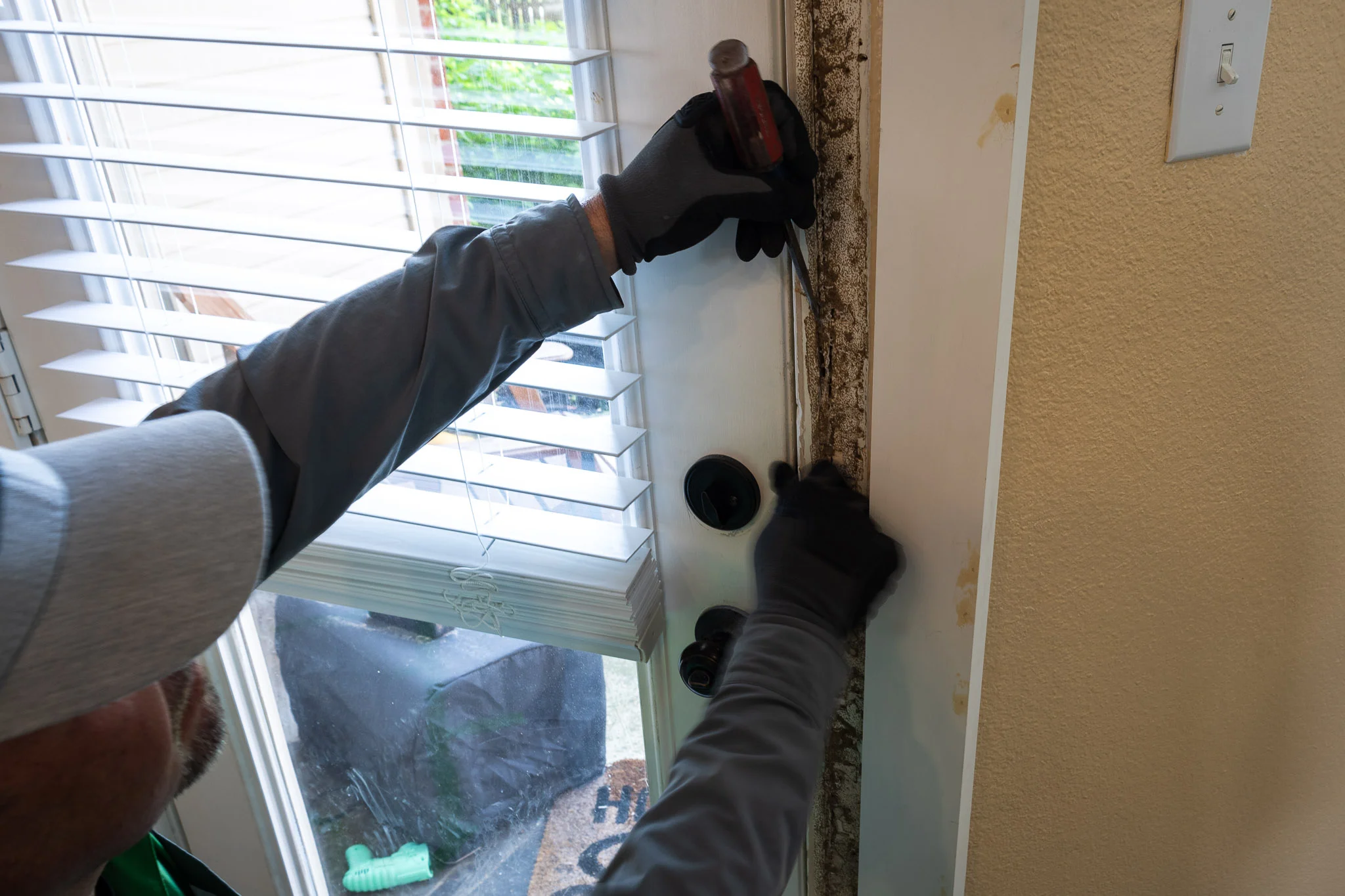
Cracks, weep holes, pipe penetrations and expansion joints get a dust product driven deep with a compressor tip. This is the treatment that reaches wall voids, which matters in the small pre-1940 core around the downtown historic district and the aging mill-village housing of communities like Victor, Franklin and Apalache. Because the dust sits protected from rain and heat, it keeps working long between visits.
Interior Treatment (If Needed)
Where an infestation is already established indoors, we treat the harborage directly — gel bait and a growth regulator for roaches, and for rodents exclusion first, sealing utility penetrations, garage thresholds and weep holes before trapping, because baiting an open perimeter simply feeds the next arrival pushed in by site work. Interior treatments and re-services between visits are covered at no extra charge on every plan, on both the Greenville and Spartanburg County sides of the city.
What Customers Say
Real Reviews from Greer Homeowners
Kyngstyn was the technician that came out today for our service. He went out of his way to ensure we aren’t having any issues with pest inside. He went through what he was doing and why.
Alex was extremely professional, and did a wonderful job of answering all of my questions regarding the treatment. He worked quickly and efficiently to cover the property, and kept me well informed on the process. It was a pleasure to have him as our technician, and we look forward to working with Vinx in the future!
Alex was a pleasure to work with. Hes very knowledgeable about our problem and the species of our insects we have around our neighborhood ! He was respectful and truly professional ! My husband and I are very happy we called Vinx Pest Control . Thank you so much !!!
Such a wonderful experience with Mike today. So friendly, knowledgeable, helpful and thoughtful about our needs.
Mike was absolutely amazing! We were having some issues with bugs and he made sure to find out what it to ensure it would be taken care of. We had just gotten home and he gave us time to let the dogs out. Would highly recommend
Great customer service our tech Shavon was very through and did great job we going to be rid of fire ants yeah and we have a pit bull he was very good with her.. Mike came today our second visit very through love this company im allergic to wasps he got them all gone great.
Local Knowledge
Why Greer’s New Construction Is Its Own Pest Problem
Last updated: September 4, 2026
Greer went from 25,515 people in 2010 to 35,308 in 2020, with a 2024 estimate of 46,316. A third of the housing stock postdates 2010 and the median year built is 2003 — the youngest town of its size in the metro by a clear margin. If your house is part of that, the good news is that S.C. Code Regs. 27-1085 required the soil under your slab to be treated with a liquid termiticide before the concrete was poured, and on a recent build that barrier is still young and probably still continuous. The problem is not your slab. It is the lot next door.
Clearing and grading displaces whatever was living in the ground, and it does not vanish — it moves to the nearest undisturbed cover, usually an established garden a few hundred feet away. Cleared, graded, sunny ground is also exactly what fire ants colonize: Clemson recommends baiting in late May or early June and again in late September or early October, with mounds rarely more than eighteen inches across and foraging ranges up to a hundred yards. And because new construction here skews pale, fall brings kudzu bugs to white window trim, doorframes and gutters, staining whatever they touch.
The county line brings one piece of good news: unlike Piedmont, Greer is named directly on Greenville County’s mosquito program, so you can request spraying whichever side of the line you live on. On termites, be direct: Clemson lists established Formosan colonies in sixteen counties, concentrated on the coast, and neither Greenville nor Spartanburg is among them — the native subterranean termite is the genuine risk. Vinx works both sides of Greer on next-day appointments, with a free inspection, a firm price first and a guarantee behind the work.
6 Reasons Greer Calls an Exterminator
Ants
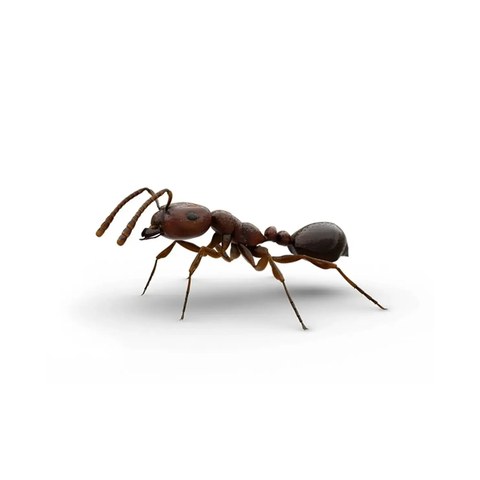
Fire ants are Greer’s signature ant call, colonizing the open, graded, sunny ground of new subdivisions and the open fields of the rural Spartanburg County outskirts; we broadcast bait on Clemson’s timing instead of chasing mounds, since foraging reaches a hundred yards. Stings near stone, mulch or old railroad ties get checked for the routinely misidentified Asian needle ant. In the century-old buildings around Greer Station, carpenter ants and odorous house ants are the standing call.
Termites
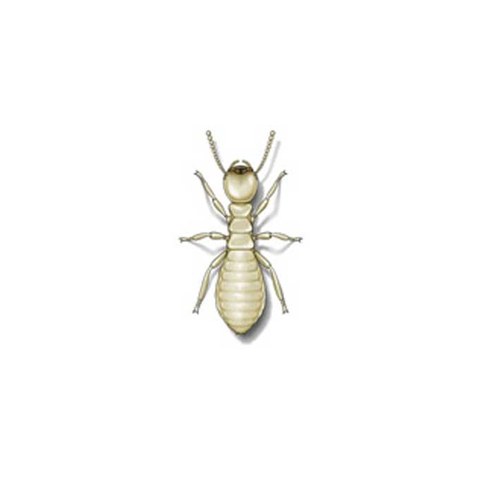
Termite work in Greer splits by era. On a recent build we verify the pre-slab termiticide barrier required by state regulation is still continuous and that landscaping has not breached the slab edge, then keep the house under bond. On the pre-1940 core downtown and the aging mill-village housing in Victor, Franklin and Apalache, colonies get established structural wood to exploit. Neither Greenville nor Spartanburg County is on Clemson’s Formosan list — the native eastern subterranean termite is the real, treatable risk.
Mosquitoes
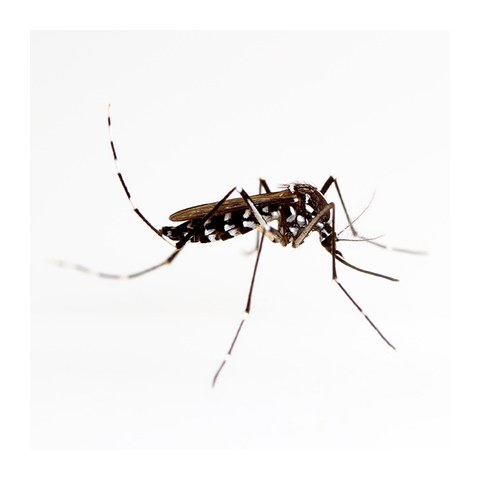
Mosquito calls cluster near Greer’s water — Lake Robinson, Lake Cunningham, Apalache Lake and the South Tyger on the north side, the Enoree to the south — but the rivers themselves are poor habitat. The breeders are the still pockets and containers on your own lot, so we larvicide standing water and run monthly barrier treatment through the warm season. Greer is also named on Greenville County’s spraying program, whichever side of the line your address falls.

Rodents
Rodent calls in Greer come from the warehouse and industrial buildings along the BMW and I-85 corridor, from aging mill-village housing on the rural outskirts, and — predictably — from established homes near active clearing, where site work pushes displaced rodents toward the nearest cover. The response is exclusion first: sealing utility penetrations, garage thresholds and weep holes, then trapping. Baiting an open perimeter without sealing it simply feeds the next arrival.
Spiders
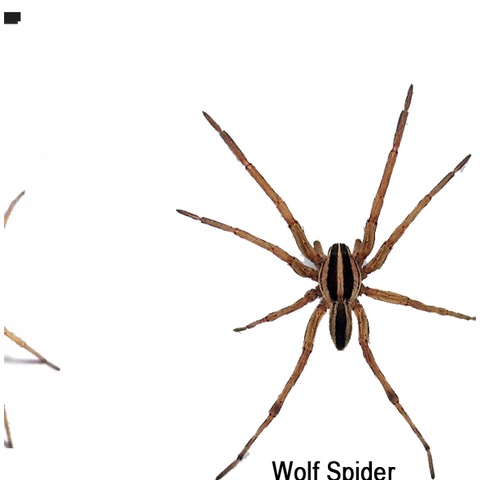
Black widows are found throughout Greer in garages, sheds and industrial storage areas, and wolf spiders are common along the wooded shorelines of Lake Robinson and across the open rural ground of the Spartanburg County outskirts. A spider call is usually a prey problem — the spiders follow the insects — so we treat the insect population and harborage together and clear webbing at the eaves on every visit.
Cockroaches
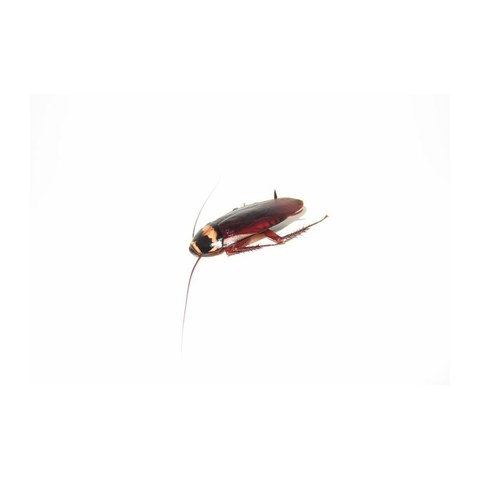
American cockroaches — palmetto bugs — work the older buildings and utility areas around Greer Station and the downtown historic district, where more than a century of wood-frame and brick construction leaves plenty of routes. German cockroaches are the persistent call from restaurants and commercial kitchens near the GSP Airport corridor, and those need a real protocol: gel bait and a growth regulator in the harborage, dust in the wall voids, not a surface spray the population walks around.
Pest Pressure by Neighborhood
Where Greer Exterminator Calls Come From
Greer Station: Old-Core Termites & Carpenter Ants
Only four percent of Greer’s housing predates 1940, and most of it sits in the historic district around the brick-paved streets of Greer Station — 46 National Register properties built between about 1900 and 1940. That small, distinct old core drives the town’s carpenter ant, termite and palmetto bug calls, and it gets wall-void and perimeter work, not a subdivision template.
BMW & I-85: Industrial Rodents & Roaches
The BMW campus, the South Carolina Inland Port and the newer commercial development along I-85 bring warehouse-scale rodent and roach pressure that is nothing like in-town residential work. Commercial jobs here run on exclusion, monitoring and documented service records — and note the plant itself sits in unincorporated Spartanburg County despite the Greer address.
Lake Robinson to the South Tyger: Mosquitoes & Spiders
Lake Robinson, Lake Cunningham, Apalache Lake and the South Tyger River give northern Greer water-driven moisture pressure the built-up parts of town don’t see. Mosquito work targets the still, shaded pockets near shorelines rather than the moving water, and wolf spiders wander in from the wooded lake edges.
GSP Corridor: Commercial Kitchens & Turnover Pests
The area around Greenville-Spartanburg International Airport runs on constant travel, cargo and commercial turnover, and its restaurants and commercial kitchens produce Greer’s steadiest German cockroach work. Food-service accounts here get documented schedules with the records a health inspection expects to see.
Rural Outskirts & Mill Villages: Fire Ants & Rodents
The former mill villages of Victor, Franklin and Apalache and the surrounding orchard and field land carry their own pressure: fire ants across the open ground, and rodents finding entry points in aging mill-village housing as temperatures drop each fall. These lots get the widest yard treatment and exclusion-first rodent work.
Prevention Tips
6 Ways to Reduce Pest Pressure Around Your Greer Home
Complete Coverage
What Our Greer Exterminators Treat
Every common Greer pest covered under one quarterly service plan

Ants
Ants, Argentine ants, carpenter ants, and odorous house ants. Perimeter bait, mound treatment, crack and crevice application.
All Plans
Cockroaches & Palmetto Bugs
American, Asian, and German cockroaches. Gel bait in harborage areas, exterior perimeter spray, drain treatment.
All Plans
Spiders
Web removal from eaves, exterior perimeter targeting harborage. Black widow identification and targeted treatment.
All Plans
Wasps & Hornets
Nest removal from eaves, soffits, structural voids. Preventative treatment of common nesting sites on each quarterly visit.
All Plans
Fleas & Ticks
Yard treatment targeting grassy and shaded areas. Interior treatment of active infestation areas.
Plus & Platinum
Bed Bugs
Inspection, heat treatment assessment, and targeted chemical treatment. Constant travel turnover around the GSP Airport corridor creates consistent exposure risk.
Platinum (12mo)
Rodents
Exterior bait station monitoring included in Plus and Platinum. Active infestation and full exclusion quoted separately after inspection.
Plus & Platinum
Mosquitoes
Monthly barrier spray and larvicide. Year-round service adjusted seasonally. Up to 90% population reduction per visit.
Platinum Only
Occasional Invaders
Silverfish, earwigs, centipedes, stink bugs, ladybugs, pillbugs. Crack and crevice treatment, perimeter spray, entry point ID.
All PlansWhat to Expect
Greer Pest Activity by Season
Most pest companies in Greer treat when you call. Vinx’s recurring plans keep your home protected through every seasonal shift, before the pressure peaks.
| Season | Active Pests | What to Watch For |
|---|---|---|
| Spring (Mar–May) | Termite swarmers, ants, mosquitoes, spiders | Termite swarmer wings on windowsills; ant mounds appearing after rain |
| Summer (Jun–Aug) | Mosquitoes, cockroaches, ants, stinging insects | Palmetto bug activity through drains; mosquito pressure near standing water |
| Fall (Sep–Nov) | Rodents, spiders, cockroaches, stink bugs | Brown recluse spiders moving indoors; mice entering through foundation gaps |
| Winter (Dec–Feb) | Rodents, German cockroaches, cockroaches | Rodent droppings in attics; roaches active near HVAC and water heaters |
Kid & Pet Safe
Our Treatments Are Safe for Your Whole Family: Including the Furry Members
Every product we use is EPA-registered and applied strictly at labeled rates by licensed SC technicians. We take the guesswork out of safety so you can feel confident letting kids and pets back into treated areas quickly.

EPA-Registered Products Only
All products are EPA-registered and applied per strict label requirements by our licensed South Carolina technicians on every visit.
Safe Re-Entry After Drying
Exterior spray treatments dry in 30–60 minutes. Once dry, treated surfaces are safe for children and pets. Your technician confirms before leaving.
Interior Treatment On Request
We treat only what’s needed, where it’s needed. Gel baits placed in areas inaccessible to pets and children for maximum safety.
Botanical Options Available
Ask your technician about our plant-derived treatment options for households that prefer a more natural approach to pest control.
Have a concern about products near your pets or children? Call (855) 800-8469 and we’ll walk you through exactly what we use and why it’s safe.
Explore More
More Pest Control Services in Greer

Termite Control Greer
Bait systems & liquid treatment
Ant Control Greer
Fire ants & all ant species
Mosquito Control Greer
Monthly barrier treatments
Tick & Flea Control Greer
Yard & interior treatments
Rodent Control Greer
All rodents covered
Cockroach Control Greer
American & German roaches
Bed Bug Control Greer
Heat & liquid treatments
Spider Control Greer
All spider species covered

Pest Control Greer
Year-round protection plans
Frequently Asked Questions
Exterminator Greer SC: Frequently Asked Questions
Most calls get a next-day appointment and an active infestation gets moved up. Call 855-800-8469 for a free inspection and a firm price.
The house is not usually the source in a new subdivision — the site work is. Clearing and grading displaces what was living in the ground and it relocates to the nearest cover. Fire ants in particular colonize open, graded, sunny ground, and forage up to a hundred yards.
Not here, which is unusual. Greer is named directly on Greenville County's program along with Greenville, Simpsonville and Travelers Rest, so you can request spraying whichever side of the line you are on. In nearby Piedmont the split does decide it.
It has a Greer mailing address but sits in unincorporated Spartanburg County. Same with the airport. Greer straddles the county line, so a Greer address does not tell you the county — which occasionally matters for whose services apply.
Both and neither, in a sense. The Enoree runs through the southern part of the city and the South and Middle Tyger rivers lie to the north, so Greer sits on the divide between two river systems. Neither river breeds the mosquitoes biting you though — flowing water is poor habitat. The still pockets and your own containers do.
No. Clemson lists established Formosan colonies in sixteen counties, concentrated along the coast, and neither Greenville nor Spartanburg County is one of them. Native subterranean termites are the genuine risk, treated with the same products.
Almost certainly kudzu bugs. Clemson notes they prefer light colors, particularly white, and gather on window trim, doorframes and gutters. They stain fabric and wall coverings, so they are worth excluding rather than crushing.
Yes — both sides of Greer, plus Taylors, Greenville, Mauldin, Simpsonville, Fountain Inn, Travelers Rest, Piedmont, and across into Duncan, Lyman and Spartanburg itself.
Residential plans begin at $49 a month and one-off treatments are priced by pest and property. Fire ant work on a newly graded lot is usually a broadcast bait application rather than a per-mound charge, which works out cheaper on a large open yard. Free inspection on 855-800-8469.
Quarterly to begin with, and often that is genuinely more useful in the first few years than later. While surrounding lots are still being cleared you are receiving displaced pests, so the pressure is external and repeated rather than a single infestation to solve once.
Usually yes, though not for the reason people expect. The house itself is well sealed and its termite barrier is recent. What justifies the plan is everything happening around it — grading, clearing and fire ant colonization of open ground within foraging distance.
Fire ant mounds are dome-shaped, in open sun, rarely more than eighteen inches across, and the colony pours out when disturbed. If you were stung without disturbing a mound, or the sting came while kneeling or barefoot near stone or mulch, ask us to check for Asian needle ants instead — they are common here and routinely misidentified.
Service Coverage
Pest Control Across Greer & the Greater Upstate Area
Serving every neighborhood in and around Greer.