Exterminator in Duncan, SC
Duncan’s pest pressure shifts across a small Spartanburg County railroad town that grew up around the crossroads of South Carolina Highway 290 and Highway 292. The historic Main Street crossroads carries the town’s oldest, most established construction, the I-85 corridor along Duncan’s southern boundary brings the industrial and warehouse pressure of the international manufacturers headquartered there, the Middle Tyger River corridor along the northern edge and the Lyman town line bring water-adjacent moisture conditions the rest of Duncan doesn’t see, the US-29 growth corridor to the north carries newer residential development, and the rural Spartanburg County fringe surrounding this small town carries a more agricultural set of pressures the denser parts of Duncan don’t see. Vinx treats each part of Duncan according to what it actually needs.
Get Started in 60 Seconds
Choose what’s easiest for you
Request a Quote
We usually respond in 2 minutes
Call (855) 800-8469
Get a live person (no AI agents here!)
Sign Up Online
Get pricing and schedule now





Welcome to Vinx Pest Control
A Company That Actually Backs What It Says
At Vinx, we pair professional-grade treatment with a level of follow-through most pest control companies skip. Local technicians, fast response, and a guarantee that holds up after the invoice is paid.
Get a Free Quote"I'm not passionate about killing bugs. I'm passionate about customer service. At Vinx, you get experts who show up, do the job right, and stand behind every visit. No runaround, no fine print."
PROTECTION PLANS
Duncan Exterminator Pricing
100% money-back guarantee on every plan.
Standard Residential Protection
- 4 Seasonal Treatments Per Year
- 50+ Covered Pests
- Interior, Exterior & Yard Treatment
- Unlimited Free Re-Services
- 100% Money-Back Guarantee
- Fire Ant Yard Guarantee
- Flea & Tick Coverage
- Mosquito Treatments

Upgraded Yard Protection
- 6 Home & Yard Treatments Per Year
- 50+ Covered Pests
- Interior, Exterior & Yard Treatment
- Unlimited Free Re-Services
- 100% Money-Back Guarantee
- Fire Ant Yard Elimination Guarantee
- Flea & Tick Elimination Guarantee
- Mosquito Treatments

Most Comprehensive Protection
- 9 Treatments Per Year
- 50+ Covered Pests
- Interior, Exterior & Yard Treatment
- Unlimited Free Re-Services
- 100% Money-Back Guarantee
- Fire Ant Yard Elimination Guarantee
- Interior Flea & Tick Coverage
- 8 Mosquito Treatments (Mar–Nov)
- Free Bed Bug Treatments if Needed*
All plans include a $329 initial treatment and a 12-month agreement. Termite protection (Termite TotalDefense, starting at $35/mo standalone) is quoted separately after a free inspection. *Starting rates vary by home size and area. All plans billed monthly.
Get Your Free Duncan Pest Inspection
Fill out the form below and a Vinx team member will reach out within 2 minutes during business hours.
Prefer to talk? Call (855) 800-8469 for a live person, no AI agents.
Our Process
How Vinx Exterminators Work a Duncan Property: Step by Step

Inspection & Reporting
An extermination job in Duncan starts with the house, because this town has all three housing generations — old frame along the original corridors, mid-century infill, and recent subdivision builds — and each needs a different first move. Nothing is applied until a technician has identified the pest to species, traced it to its harborage, and established which direction pressure is arriving from, since in this corridor a boundary walk is often the real diagnosis. You hear what we found in plain terms, with a firm price, before any work begins.
Exterior Foundation Treatment
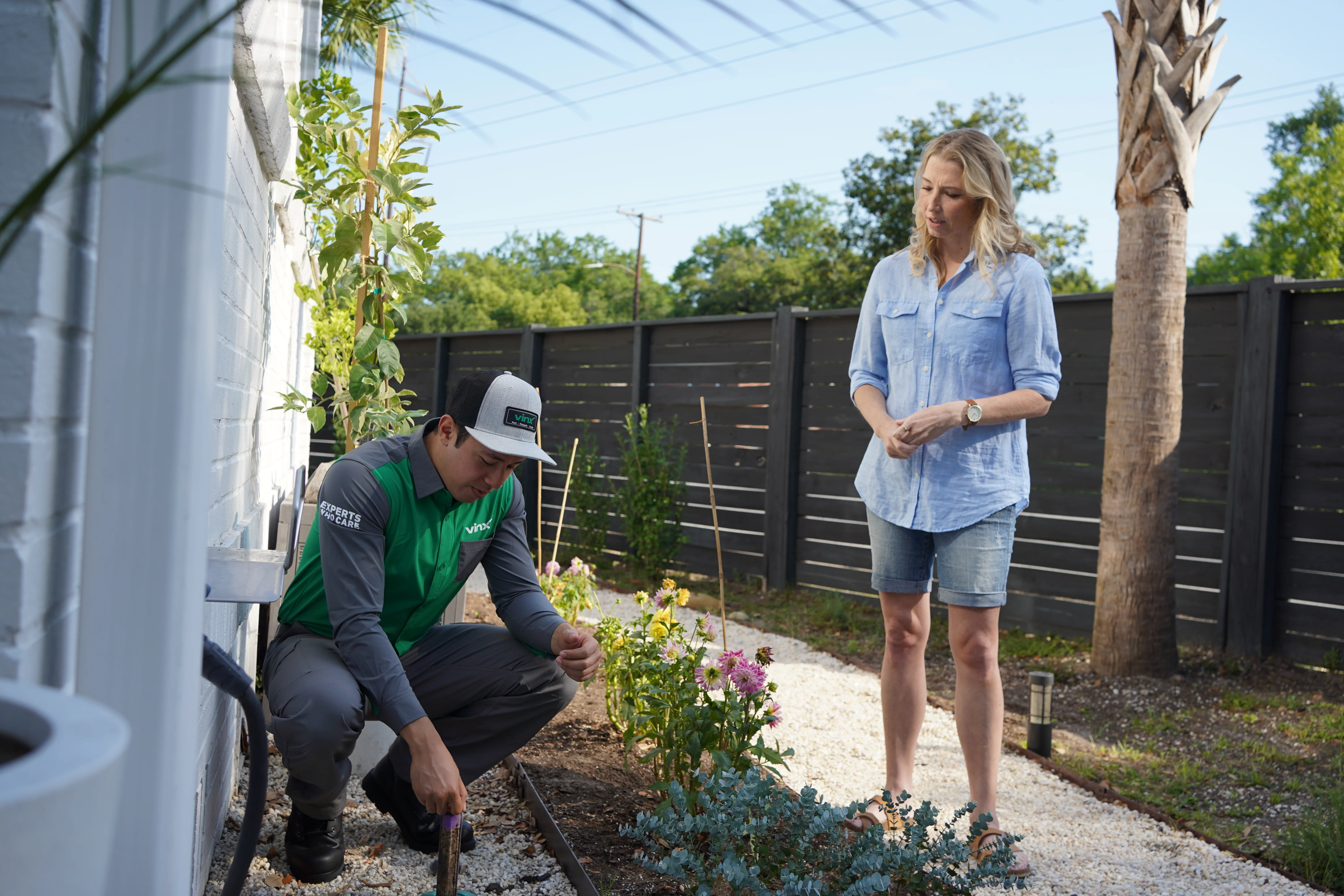
With the problem identified, the exterior gets its defensive line: a micro-encapsulated barrier around the foundation, three feet up and three feet out, intercepting insects at the slab gaps, weep holes and thresholds they actually use to enter. On a lot backing onto industrial or cleared land, we weight the product toward the side the pressure comes from rather than spreading it evenly around a perimeter nothing is arriving at.
Yard Treatment
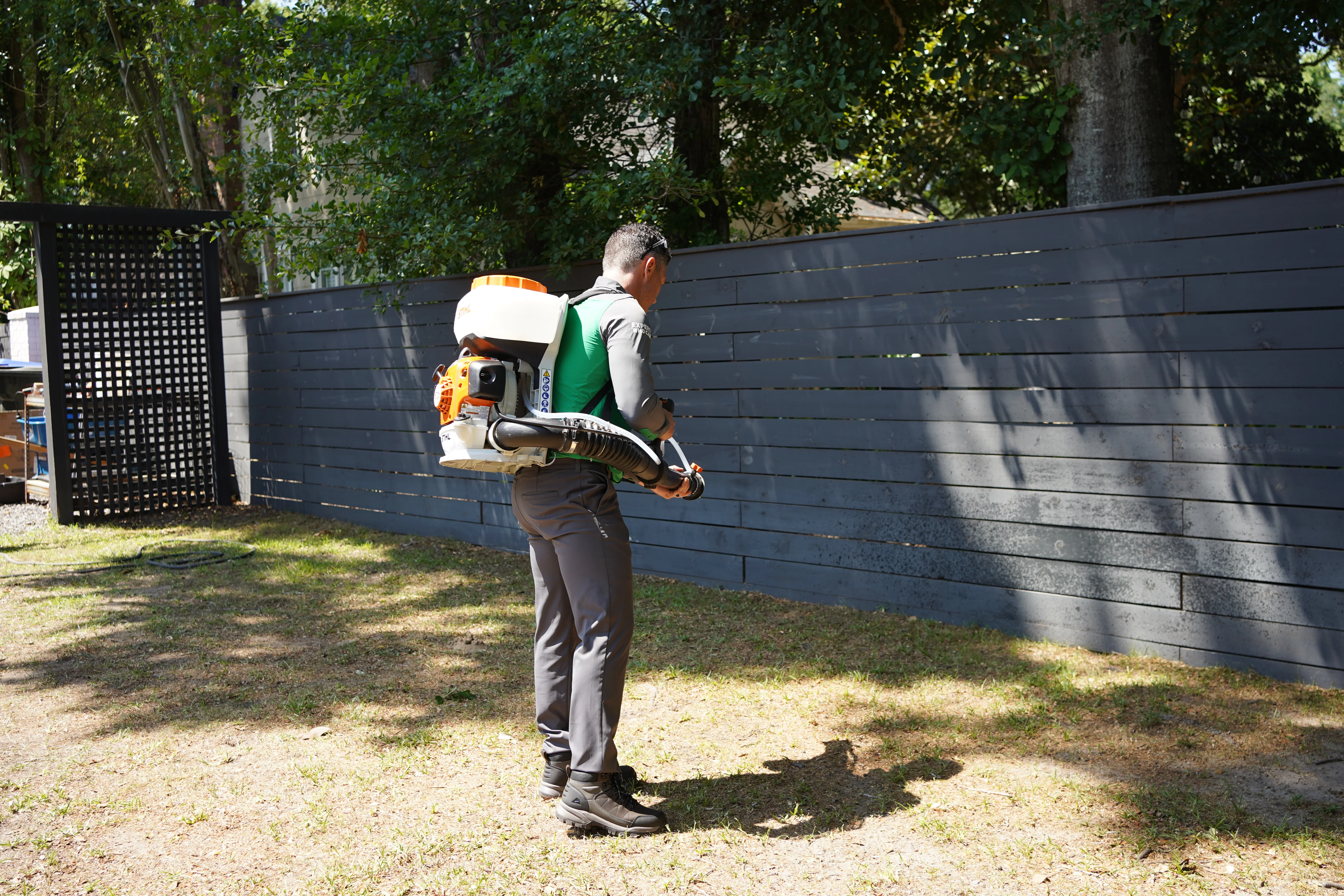
The yard gets treated up to 30 feet out, because most of what ends up indoors staged in the lawn first. In Duncan that means fire ant mounds on the open farmland of the rural fringe, ants displaced into adjacent streets when nearby ground gets cleared, and mosquito habitat along the Middle Tyger River corridor on the town’s northern edge, where water-adjacent breeding runs beyond what the rest of town sees.
Sweep & Treat Eaves
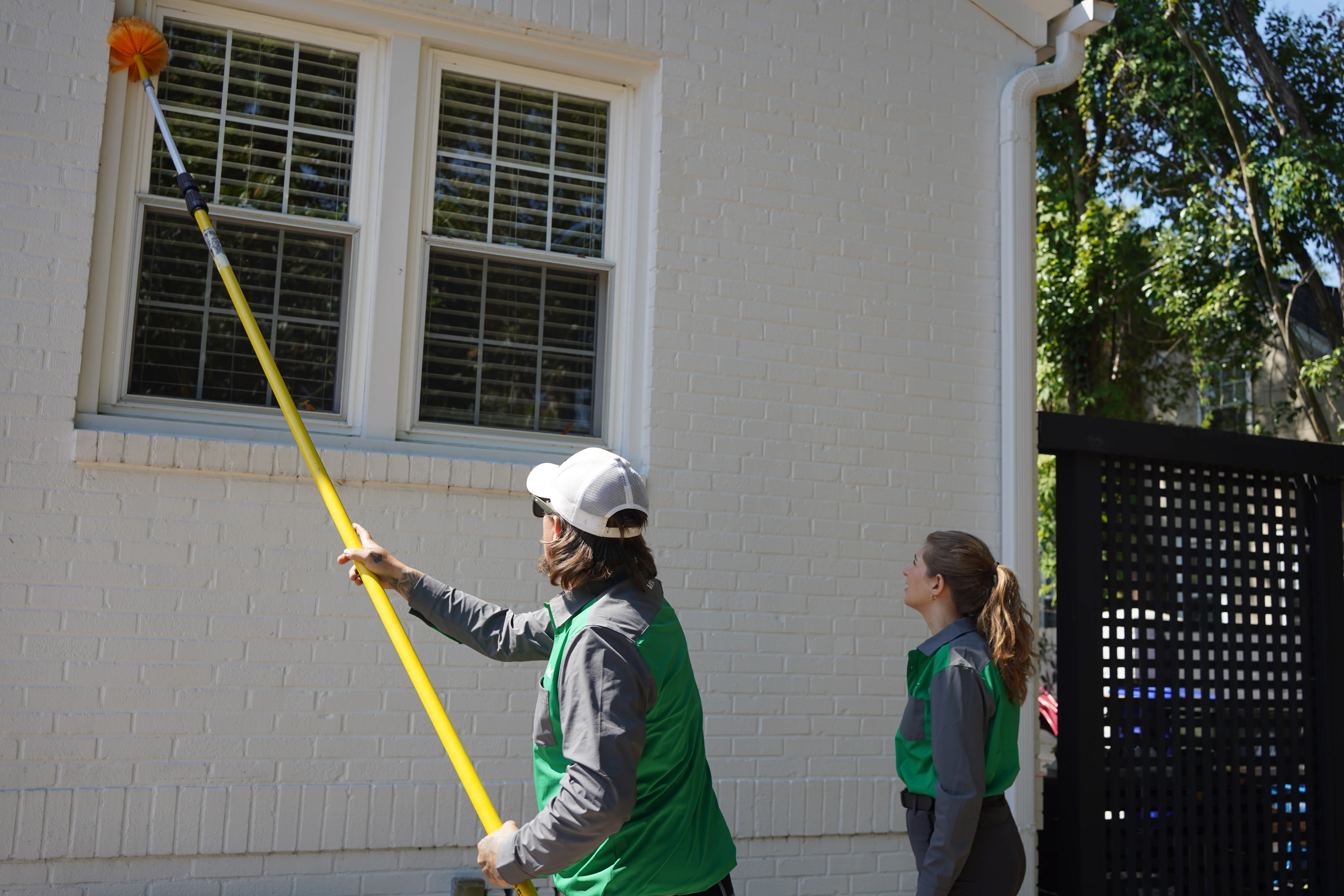
Rooflines are swept clear of webs and early wasp nests on every visit, then spot-treated with a residual so returning insects contact the treatment instead of rebuilding. The eaves pass doubles as an overhead inspection — on the older frame houses around the historic SC-290 and SC-292 crossroads, that is often where the first carpenter ant signs show.
Power Dust Injection
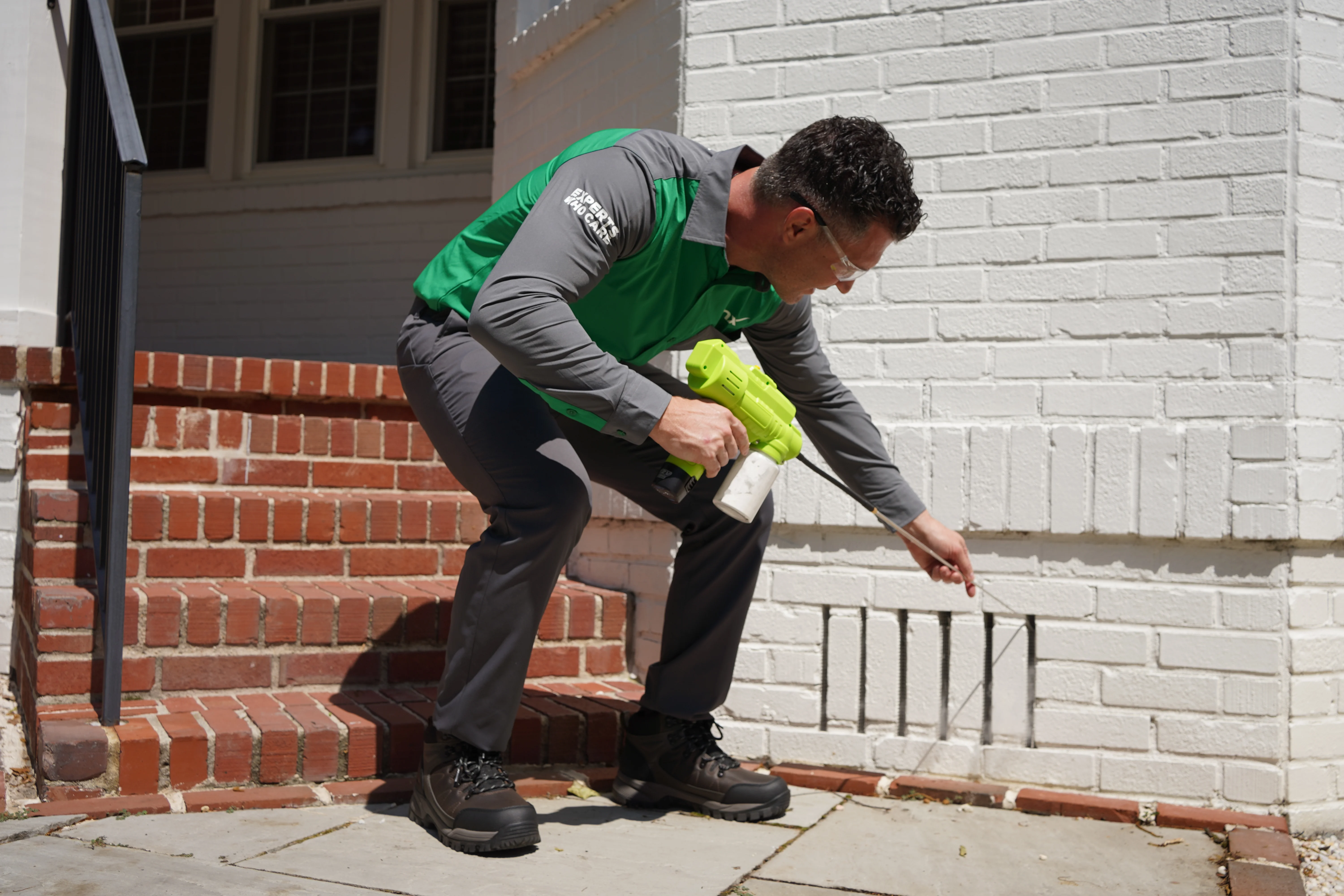
Cracks, weep holes, pipe penetrations and expansion joints get a dust product driven deep with a compressor tip. That is what reaches wall voids, and it matters twice in Duncan: in the old frame stock near the crossroads, where decades of alteration have opened routes no surface spray covers, and in multi-unit rentals, where populations move through shared walls and service runs. The dust sits protected from rain and heat, so it keeps working long between visits.
Interior Treatment (If Needed)
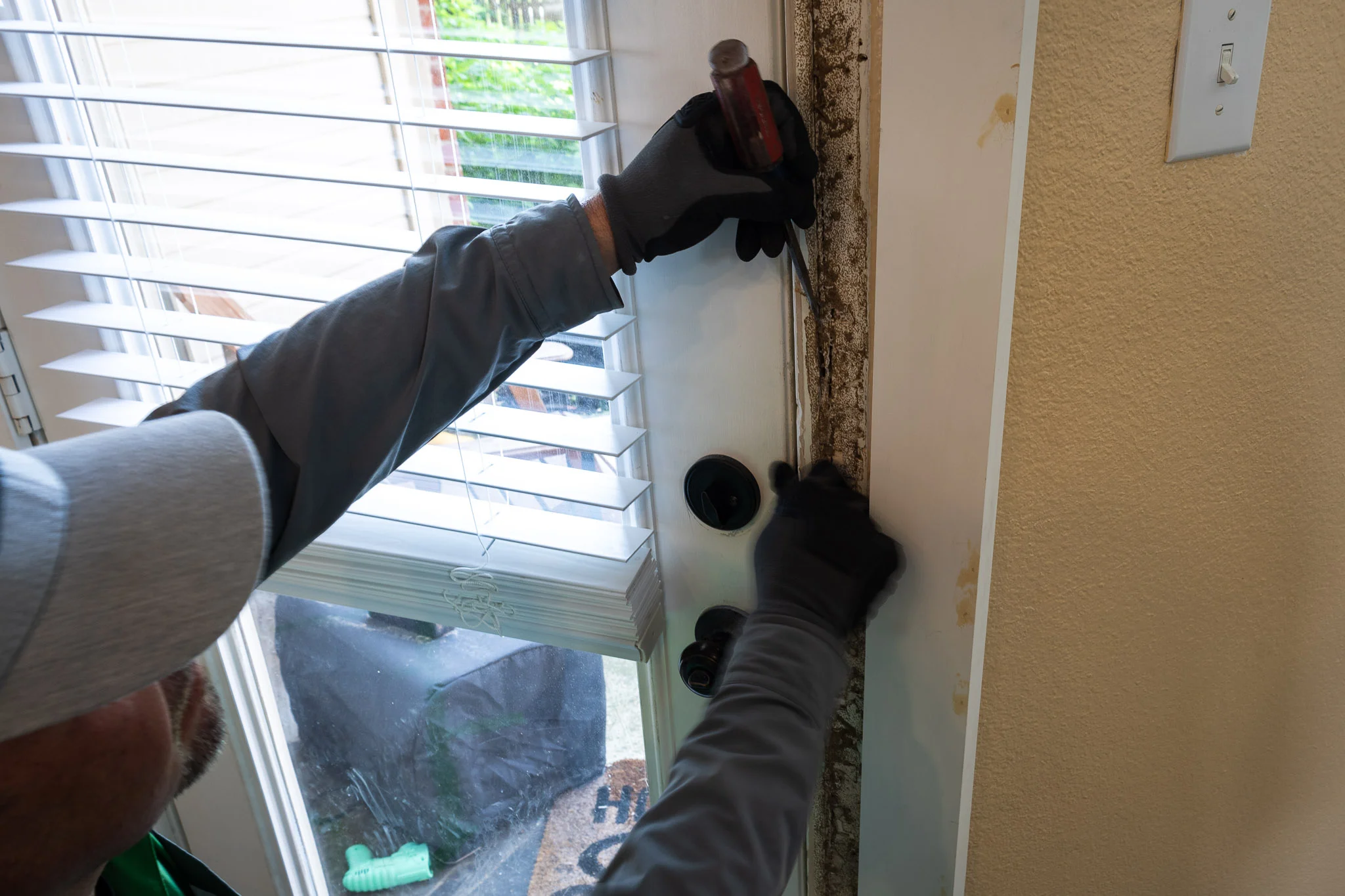
Where an infestation is already established indoors, we treat the harborage directly — gel bait and a growth regulator for roaches, exclusion first and then trapping for rodents — rather than misting a room and hoping. In a multi-unit building we treat adjacent units together, because a population surviving on the other side of a shared wall simply comes back. Interior work and re-services between visits are covered at no extra charge on every plan.
What Customers Say
Real Reviews from Duncan Homeowners
These guys are exceptional! They always take great care of us and our animals! Truly a fabulous company of good humans
Mike arrived as scheduled and completed the work thoroughly. Pleasant and friendly
Alex was great! Contacted me before coming out, explained the plan when he arrived, and executed it quickly. I signed up on a Friday, and Vinx was there Monday. Definitely recommended
Zachari was very professional, I thought his explanations of what he was doing were great! He was also able to help me understand the sources of the ants
Alex was very nice, explained the mosquito control process very well ( learned a couple of new things!), and did a great job wrapping up what he worked on specifically on the property.
Local Knowledge
A Railroad Town With No Mill Village — and Why Your Quote Should Reflect It
Last updated: September 4, 2026
Almost every small town along this stretch of the Upstate was built by a cotton mill. Duncan was not. The history the Town of Duncan published on its own website sets out a sequence with no textile mill in it anywhere: a post office in 1811 serving a community called New Hope, a renaming to Vernonville in the 1850s, the Atlanta and Richmond Airline Railroad arriving in 1873, and the present name in 1881 after landowner Leroy Duncan, who promised land for streets if the town took his name. If you have read about a “Duncan mill,” you have met a research trap — that is Dunean, a mill village in Greenville County.
The pest-control consequence is structural. Instead of a few hundred near-identical 1920s pier-and-crawl mill houses, Duncan has a scattered mix: genuinely old frame houses along the original corridors, mid-century infill, and a great deal of recent subdivision and rental construction driven by the industrial employment around it. Each needs a different inspection, so the useful first question here is what your house is rather than what your town is. And Duncan sits in the middle of one of South Carolina’s most heavily industrialized corridors — the BMW plant complex at Greer, the Tyger River industrial parks, and the warehousing that follows Interstate 85.
6 Reasons Duncan Calls an Exterminator
Ants
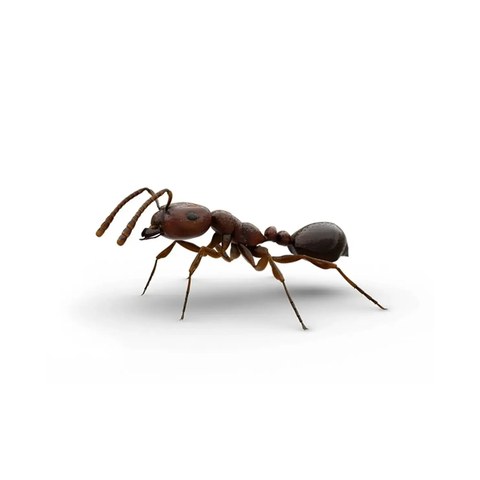
Fire ants hold the open farmland of the rural Spartanburg County fringe, and clearing or grading nearby land displaces established colonies into adjacent occupied streets — a directional problem that gets a treated boundary on the construction side for a season or two, not endless mound-by-mound spraying. Carpenter ants and odorous house ants are the steadier indoor call, concentrated in the older frame homes around the historic SC-290 and SC-292 crossroads, where we trace trails back to the nest before treating.
Termites
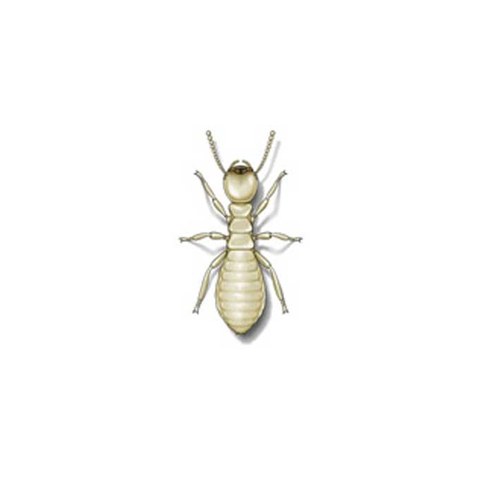
The species question comes first, and in Duncan it should save you money: Spartanburg County is not among the sixteen on Clemson’s Formosan tracking list, so the native eastern subterranean termite is what we inspect for. On the newer builds that dominate the town, the issue is the age of the pre-construction soil treatment and whether a deck footing, raised bed or trenched utility line has bridged it since. On old frame houses along the original corridors, it is the crawl space and sill line.
Mosquitoes
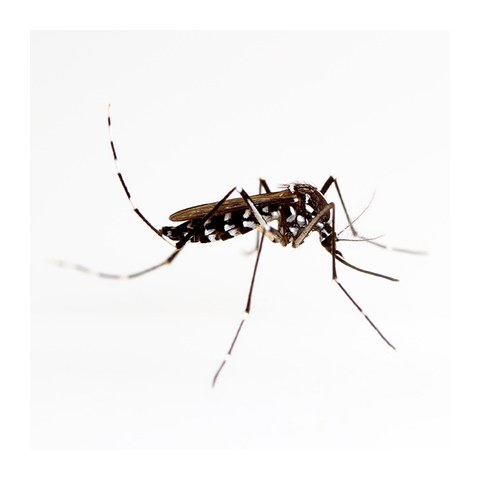
Mosquito pressure concentrates along the Middle Tyger River corridor at Duncan’s northern edge, where water-adjacent breeding conditions outrun the rest of town, plus wherever irrigation and drainage leave standing water — including low spots created when new impervious surface upstream changes where runoff goes. We treat larval habitat directly and run monthly barrier treatment from March through October, because a one-time spray does not survive the season.

Rodents
Rodents are the call Duncan’s industrial corridor generates. The manufacturing and warehouse facilities along I-85 — loading docks, bulk storage, intermittent overnight occupancy — support populations continuously, and they spill along fence lines into adjoining streets and move rather than die when a neighboring site is treated. The fix is hard exclusion on your own structure plus a treated boundary on the side the pressure arrives from; bait in the kitchen alone will not change it.
Spiders
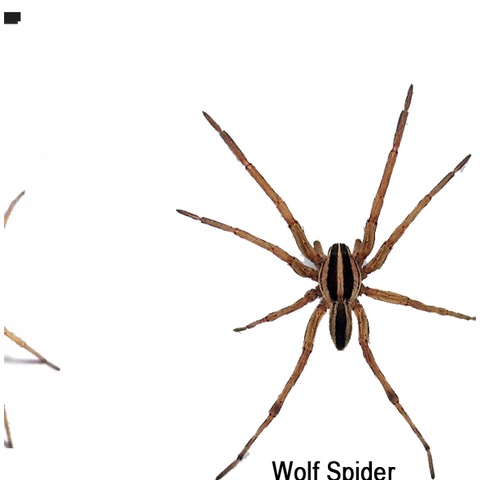
Black widows turn up in Duncan garages, sheds and storage areas, and wolf spiders wander in from the open farmland of the rural fringe and the wooded ground along the Middle Tyger River. A spider call is usually a prey problem — they are there because the insects are — so we treat the insect population and the harborage together and clear webbing at the eaves on every visit.
Cockroaches
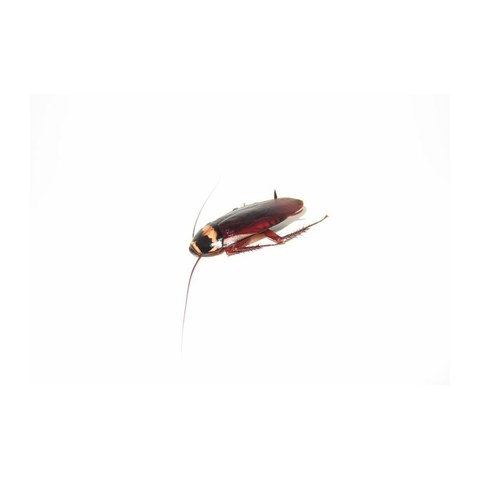
American cockroaches — palmetto bugs — work the utility areas of the older buildings around Duncan’s historic crossroads, while German cockroaches persist in the break rooms and food-service areas of the businesses along the I-85 corridor and in multi-unit rentals, where they travel through shared walls and service penetrations. The German roach gets a real protocol — gel bait and a growth regulator in the harborage, dust in the voids — and in apartments, adjacent units treated together.
The Census now puts numbers on that mix. Duncan’s median home dates from 2001, but 6% of the stock predates 1940 and nearly a third predates 1980, while 37% has gone up since 2010 — a genuine barbell rather than a single housing type. And 43.3% of occupied homes here are rented, the highest share in this part of the county, which is why so much of the work is multi-unit: German cockroaches through shared walls, bed bugs arriving with belongings, and exclusion that falls between a tenant and a landlord unless someone specifies who does it.
That industry is the single biggest driver of the rodent calls we take here. Large industrial and distribution buildings support rodent populations continuously, those populations spill along fence lines and drainage into adjoining residential streets, and they move rather than die when a neighboring site gets treated. If your rodent problem is seasonal and always arrives from the same direction, that is almost certainly why — and exclusion on your own structure plus a treated boundary on that side is what fixes it. Vinx works Duncan as a licensed exterminator, with free inspections, firm prices and next-day appointments.
Pest Pressure by Neighborhood
Where Duncan Exterminator Calls Come From
Historic Crossroads: Carpenter Ants & Old-Frame Pests
Duncan’s oldest, most established construction sits around its original crossroads, and aging frame houses with decades of alteration give carpenter ants, termites and rodents the entry points that stock tends to create. Calls here start at the crawl space, sill line and grading rather than with a surface spray.
I-85 Corridor: Warehouse-Driven Rodents
The international manufacturers headquartered along Duncan’s southern boundary — Stäubli, the Röchling Group, the Dräxlmaier Group — and the warehousing around them bring loading-dock and large-footprint pest pressure. Rodent populations supported there spill into adjoining streets, so nearby homes get exclusion plus a treated boundary on that side.
Middle Tyger Corridor: Mosquitoes & Moisture
The river running along Duncan’s northern edge keeps adjacent properties damper than the rest of town, with water-adjacent mosquito breeding and the soil moisture that keeps subterranean termites working. River-side calls get larvicide on standing water, a monthly barrier through the warm months, and a drainage look in the same visit.
US-29 Corridor: New-Build Pressure
Newer residential development north of US-29 brings construction-driven calls — ants displaced by grading, water standing where it did not before, and the question of whether anything has bridged the pre-construction soil treatment. On recent builds we start at the slab edge and penetrations, then check the treatment date.
Rural Fringe: Fire Ants & Outbuilding Pests
The agricultural side of Duncan runs on wells, septic systems and open farmland, which means fire ant mounds, wolf spiders and rodents using sheds and equipment storage as harborage. Out here the outbuildings get inspected alongside the house, and yard-wide baiting beats spot-treating mounds one at a time.
Prevention Tips
6 Ways to Reduce Pest Pressure Around Your Duncan Home
Complete Coverage
What Our Duncan Exterminators Treat
Every common Duncan pest covered under one quarterly service plan

Ants
Ants, Argentine ants, carpenter ants, and odorous house ants. Perimeter bait, mound treatment, crack and crevice application.
All Plans
Cockroaches & Palmetto Bugs
American, Asian, and German cockroaches. Gel bait in harborage areas, exterior perimeter spray, drain treatment.
All Plans
Spiders
Web removal from eaves, exterior perimeter targeting harborage. Black widow identification and targeted treatment.
All Plans
Wasps & Hornets
Nest removal from eaves, soffits, structural voids. Preventative treatment of common nesting sites on each quarterly visit.
All Plans
Fleas & Ticks
Yard treatment targeting grassy and shaded areas. Interior treatment of active infestation areas.
Plus & Platinum
Bed Bugs
Inspection, heat treatment assessment, and targeted chemical treatment. Steady delivery and workforce traffic along the I-85 industrial corridor creates consistent exposure risk.
Platinum (12mo)
Rodents
Exterior bait station monitoring included in Plus and Platinum. Active infestation and full exclusion quoted separately after inspection.
Plus & Platinum
Mosquitoes
Monthly barrier spray and larvicide. Year-round service adjusted seasonally. Up to 90% population reduction per visit.
Platinum Only
Occasional Invaders
Silverfish, earwigs, centipedes, stink bugs, ladybugs, pillbugs. Crack and crevice treatment, perimeter spray, entry point ID.
All PlansWhat to Expect
Duncan Pest Activity by Season
Most pest companies in Duncan treat when you call. Vinx’s recurring plans keep your home protected through every seasonal shift, before the pressure peaks.
| Season | Active Pests | What to Watch For |
|---|---|---|
| Spring (Mar–May) | Termite swarmers, ants, mosquitoes, spiders | Termite swarmer wings on windowsills; ant mounds appearing after rain |
| Summer (Jun–Aug) | Mosquitoes, cockroaches, ants, stinging insects | Palmetto bug activity through drains; mosquito pressure near standing water |
| Fall (Sep–Nov) | Rodents, spiders, cockroaches, stink bugs | Brown recluse spiders moving indoors; mice entering through foundation gaps |
| Winter (Dec–Feb) | Rodents, German cockroaches, cockroaches | Rodent droppings in attics; roaches active near HVAC and water heaters |
Kid & Pet Safe
Our Treatments Are Safe for Your Whole Family: Including the Furry Members
Every product we use is EPA-registered and applied strictly at labeled rates by licensed SC technicians. We take the guesswork out of safety so you can feel confident letting kids and pets back into treated areas quickly.

EPA-Registered Products Only
All products are EPA-registered and applied per strict label requirements by our licensed South Carolina technicians on every visit.
Safe Re-Entry After Drying
Exterior spray treatments dry in 30–60 minutes. Once dry, treated surfaces are safe for children and pets. Your technician confirms before leaving.
Interior Treatment On Request
We treat only what’s needed, where it’s needed. Gel baits placed in areas inaccessible to pets and children for maximum safety.
Botanical Options Available
Ask your technician about our plant-derived treatment options for households that prefer a more natural approach to pest control.
Have a concern about products near your pets or children? Call (855) 800-8469 and we’ll walk you through exactly what we use and why it’s safe.
Explore More
More Pest Control Services in Duncan

Termite Control Duncan
Bait systems & liquid treatment
Ant Control Duncan
Fire ants & all ant species
Mosquito Control Duncan
Monthly barrier treatments
Tick & Flea Control Duncan
Yard & interior treatments
Rodent Control Duncan
All rodents covered
Cockroach Control Duncan
American & German roaches
Bed Bug Control Duncan
Heat & liquid treatments
Spider Control Duncan
All spider species covered

Pest Control Duncan
Year-round protection plans
Frequently Asked Questions
Exterminator Duncan SC: Frequently Asked Questions
Recurring plans start at $49 a month, with one-off treatment priced by pest and property. Because the housing here varies so much, the inspection genuinely sets the price rather than a square-footage table. It is free and the quote is firm. Call 855-800-8469.
No, and this is a common confusion. the Town of Duncan’s own history records a post office in 1811 as New Hope, a renaming to Vernonville in the 1850s, the railroad arriving in 1873, and the present name in 1881 after landowner Leroy Duncan — with no textile mill anywhere in the sequence. Articles about a “Duncan mill” are describing Dunean, a Greenville County mill village.
Almost certainly an industrial or warehouse neighbor. Those buildings support continuous populations through bulk storage and loading areas, and treatment on that site tends to relocate them rather than remove them. Exclusion plus a treated boundary on that side is what works.
No. Clemson’s county tracking lists sixteen counties with documented Formosan colonies and Spartanburg is not among them. The native eastern subterranean termite is the species that matters here, and Clemson HGIC explains why it is worth taking seriously on its own.
The age of the pre-construction soil treatment, and anything that has bridged it since — a deck footing, a raised flower bed, a trenched utility line, or lumber stored against a wall. Those are the findings we actually make on newer stock.
It changes them rather than simply worsening them. Rodent pressure goes up near warehousing, and clearing displaces ants into adjacent streets. Both are directional, which makes them cheaper to treat properly than to chase indoors.
Yes, residential and commercial both. Commercial work runs on a documented schedule with service records, which is what a health or quality audit expects to see.
We cover the whole town plus Lyman, Greer, Wellford and the Tyger River corridor. Most calls get a next-day appointment. Call 855-800-8469.
Service Coverage
Pest Control Across Duncan & the Greater Spartanburg County Area
Serving every neighborhood in and around Duncan.