




It happens almost every year. Sometime in late August or September, a big spider runs across the living room floor, another turns up in the bathtub, and the porch is suddenly covered in webs. It feels like the house has been invaded. Usually it hasn't. The spiders were already there. What changed is that they started moving.
You see more spiders in late summer and fall because they are grown up and looking for mates, not because they are coming in from the cold. Spider experts at the Burke Museum explain that a seasonal surge indoors is usually adult males wandering in search of females, and that fewer than 5% of the spiders you see inside have ever been outdoors.
Outside, the big orb-weavers (yellow garden spiders, golden silk spiders and, in the Upstate, Joro spiders) reach full size from late summer into fall, so their webs suddenly seem to be everywhere. A few outdoor species, mainly wolf spiders, do wander indoors in fall. Almost all of them are harmless.

Why You See More Spiders in Late Summer and Fall
Three things happen at once in the Carolinas and Virginia at the end of summer.
1. The males go looking for mates
Most of the spiders you see inside are true house spiders, species that live their whole lives indoors. Rod Crawford, curator of arachnids at the Burke Museum at the University of Washington, puts it plainly: generally fewer than 5% of the spiders you see indoors have ever been outdoors. When a lot of them show up at one time of year, he explains, it is usually late summer, it coincides with that species' mating season, and what you are seeing is sexually mature males wandering in search of mates.
That is why the late-summer spider is so often a big, long-legged one running across an open floor in the evening. A spider that spent months hidden in a web behind the water heater has left it to find a female, and that puts it right in your path.
2. The outdoor spiders finished growing
Many of the spiders you notice outside hatched in spring and spent the summer growing. By late summer the big orb-weavers are adults with their largest webs. Clemson Extension says yellow garden spiders and banded garden spiders, both found throughout South Carolina, are typically seen between July and October. Female golden silk orbweavers (often called banana spiders) average 1.5 to 2 inches long.
The Burke Museum also makes a point that surprises most people: late summer doesn't actually have the most spiders. People judge all spiders by the few large, eye-catching species that mature at that time. The spiders were there all summer. They just got big enough to notice.
3. A few outdoor spiders do come inside
The Burke Museum's rule is that true outdoor spiders that end up indoors usually die or at least don't reproduce. But in the Southeast, one group is a real fall visitor: wolf spiders. Clemson Extension notes that before winter, wolf spiders may wander into homes and stay for the cold months, hiding behind doors, in windows, in house plants, in closets and behind furniture. They are hunters, not web builders, and they cause no harm to people or homes.
How Many Spiders in a House Is Normal?
More than you'd think, and that is normal. NC State University entomologists inventoried every arthropod they could find in 50 houses within 30 miles of Raleigh between May and October. Cobweb spiders, the family that includes the common house spider that builds messy webs in corners, turned up in 65% of all rooms sampled. Cobweb spiders and cellar spiders were among the most common residents. The researchers concluded that the vast majority of what they found were not pests, but "peaceful cohabitants" or accidental visitors.
So a few spiders in the corners, the basement or the garage is not an infestation. It is a normal house in the South.
Which Spider Is It? The Common Fall Spiders in the Carolinas and Virginia
| Spider | Where you'll see it | Why fall | Risk |
|---|---|---|---|
| Wolf spiders | Running on floors, along baseboards, in garages. No web | Wander indoors before winter (Clemson) | Harmless. The most common "brown recluse" mix-up |
| Southern house spider | Males: long legs, wandering on walls and floors. Females stay hidden in their webs in cracks and crevices | Males roam to find females | Harmless. Clemson notes the male is often mistaken for a brown recluse |
| Common house spider (cobweb spider) | Messy webs in corners, under furniture, in basements | Lives indoors year-round. More visible as webs build up | Harmless |
| Cellar spiders ("daddy longlegs") | Loose webs in basements, crawl spaces, garages, closets | Lives indoors year-round | Harmless |
| Yellow and banded garden spiders | Big webs with a zigzag in gardens and on fences | Adults July to October (Clemson) | Docile. Will run rather than bite |
| Golden silk orbweaver ("banana spider") | Huge golden webs in shady, humid woods and yards with dense vegetation | Females reach full size late summer | Not harmful to people |
| Joro spider | Big yellow spiders with blue-gray stripes, in webs on houses, fences and power lines, mostly in the Upstate, parts of the Midlands and North Carolina | Noticed in late summer as they mature | Venom not medically relevant (Clemson). Highly unlikely to come inside |
| Black and brown widows | Undisturbed spots: garages, woodpiles, outdoor furniture, mailboxes, grill rims | Present much of the year | Medically important bite. Use gloves and caution |

The new one: Joro spiders
If you live in the Upstate or North Carolina and the big striped spiders on your porch look unfamiliar, they are probably Joro spiders. Clemson Extension says they were first found near Athens, Georgia, in 2014, and Clemson researchers report they are now in the Upstate and parts of the Midlands of South Carolina and across North Carolina. Their range had grown to at least 120,000 square kilometers by October 2022, and Clemson's Dave Coyle expects it to keep expanding north.
They look alarming, but Clemson's 2025 studies found Joro spiders would much rather run away than bite. Bites that did happen rated about a 1 on a 10-point pain scale, similar to a mosquito bite. Clemson Extension says they are highly unlikely to come inside your home. To remove one, knock it down with a broom or move it with a stick. Clemson specifically advises against spraying bleach, vinegar or WD-40.
"Is It a Brown Recluse?" Almost Certainly Not
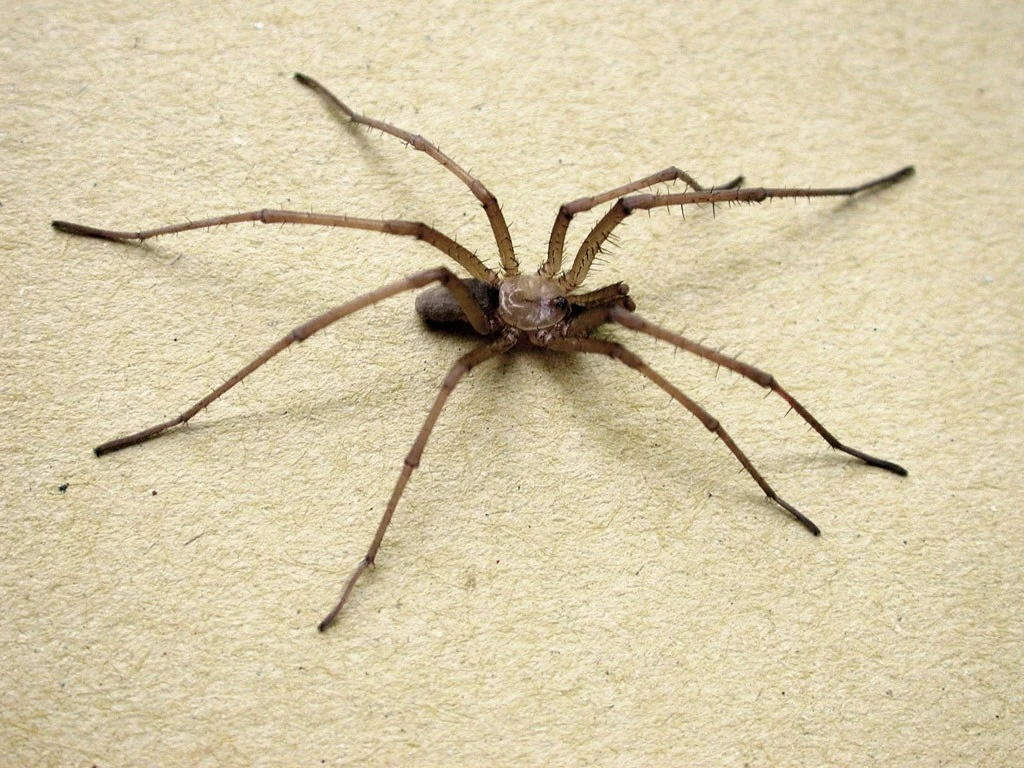
A big brown spider in the house sends a lot of people straight to "brown recluse." In most of the Carolinas, that is very unlikely to be the answer.
- A review of every museum and state record by researchers at MUSC, UC Riverside and Clemson found only 44 brown recluse specimens in South Carolina's entire recorded history, from 6 counties, all collected inside buildings. That pattern points to spiders arriving in shipped goods, not living wild.
- A 2018 study that collected suspected recluses from coastal South Carolina found none. Most of the submissions were wolf spiders.
- In Georgia, where recluses do live in the northern part of the state, only 19 of 1,061 spiders (1.8%) that people sent to University of Georgia entomologists as suspected recluses actually were recluses. In a random sample of the rest, the most common were southern house spiders (34%) and wolf spiders (25%).
The quickest check is the eyes: a brown recluse has 6 eyes in 3 pairs, while its look-alikes have 8. If you get a bite or wound that is spreading, see a doctor. Skin infections, including MRSA, are often blamed on spider bites.
What People Report
Homeowner posts on Reddit (read through Google's excerpts, since Reddit blocks automated reading) and Q&A sites tell the same story as the research. Raleigh residents describe spiders coming out "in huge numbers" some years, with everything covered in webs no matter how often they take them down. Those are outdoor orb-weavers at full size. A South Carolina homeowner working in a crawl space described the house as "infested" with house spiders, which matches the NC State finding that house spiders are normal residents. And the most common reply to "is it normal to find this many spiders inside?" is that it is normal this time of year, especially on the ground floor and in older homes.
The real-world identification data above is the best homeowner evidence there is. When people catch the spider that worried them and send it in, it is almost always a wolf spider, a southern house spider or an orb weaver.
What to Do About Fall Spiders
- Vacuum webs and wandering spiders. A vacuum removes the spider, its web and any egg sacs in one pass. Empty it outside.
- Seal the gaps. Clemson recommends exclusion as the best way to keep wolf spiders out: keep doors and windows screened and closed, and seal openings around frames with weather stripping. Replace worn door sweeps, especially on the garage door.
- Cut down the insects they hunt. Spiders follow food. Turn off porch lights you don't need, or switch to yellow-toned bulbs, which draw fewer of the night-flying insects spiders eat.
- Clear the foundation. Move firewood, leaf piles, stacked pots and debris away from the house. Wolf spiders hide there before wandering in.
- Catch and release the occasional one. Clemson's advice for a wolf spider indoors: use a container to catch it and release it outside.
- Use gloves in widow territory. Garages, woodpiles, outdoor furniture and grill rims are where black and brown widows live. Wear gloves when you clean those spots.
- Don't spray Joro webs with household chemicals. Knock the web down with a broom instead, as Clemson advises.
For more on where house spiders like to settle, see where spiders like to hide and why you keep seeing spiders in your house.
When to Call for Help
Most fall spider activity fades on its own as the season turns. It is worth getting help when:
- You are finding black widows or brown widows where children or pets play, such as play sets, patio furniture or garages
- Webs come back within a day or two of clearing them, all around the house
- Spiders are coming in along with lots of other insects, which points to a bigger moisture or insect problem in the crawl space or attic
- You want someone to identify a spider you are worried about
Our spider control service starts with identifying what you actually have, then treats the eaves, foundation and entry points where spiders and their prey gather, and points out the gaps to seal.
Key Takeaways
- Fall spiders are mostly males looking for mates, not spiders escaping the cold. Fewer than 5% of indoor spiders have ever been outside (Burke Museum).
- Outdoor orb-weavers just got big. Garden spiders peak July to October in South Carolina (Clemson).
- Wolf spiders do wander in before winter, and they are harmless.
- House spiders are normal. NC State found cobweb spiders in 65% of rooms in Raleigh-area homes.
- Joro spiders are spreading in the Upstate and NC, but they rarely bite and rarely come indoors.
- It's almost never a brown recluse in the Carolinas. Count the eyes: recluses have 6.
Sources: R. Crawford, Burke Museum of Natural History and Culture, "Myth: Spiders come into houses in the fall to get out of the cold" and "Myth: Late summer has the most spiders"; M. A. Bertone et al., "Arthropods of the great indoors: characterizing diversity inside urban and suburban homes", PeerJ 4:e1582, 2016, and NC State University news release; M. Vickers, P. A. Zungoli and E. P. Benson, "Wolf Spiders", Clemson Cooperative Extension; Clemson Cooperative Extension, "Big Yellow Spiders in South Carolina"; B. Biggs, A. Chuang and D. Coyle, "The Jorō Spider", Clemson Cooperative Extension, 2024; Clemson University News, "Study shows Joro spiders 'here to stay,' spreading fast", 2023, and "Studies show Joro spiders are easy to kill and virtually harmless", 2025; J. Frithsen, R. S. Vetter and I. C. Stocks, "Reports of envenomation by brown recluse spiders exceed verified specimens of Loxosceles spiders in South Carolina", Journal of the American Board of Family Medicine 20 (2007); Wolff, Journal of the South Carolina Academy of Science 16 (2018); R. S. Vetter, N. C. Hinkle and L. M. Ames, "Distribution of the Brown Recluse Spider in Georgia with Comparison to Poison Center Reports of Envenomations", Journal of Medical Entomology 46 (2009); Clemson Cooperative Extension, southern house spider and widow spider fact sheets; owner accounts from Reddit (via Google search excerpts) and Quora.
Frequently Asked Questions
Mostly because adult male spiders are wandering in search of mates, and the big outdoor orb-weavers have reached full size. The Burke Museum explains that seasonal indoor surges usually come in late summer and coincide with mating season. The spiders were there all summer; they just became more visible.
Mostly no. Spiders are cold-blooded and are not drawn to warmth, and the Burke Museum notes that fewer than 5% of the spiders you see indoors have ever been outside. The exception in the Southeast is wolf spiders, which Clemson Extension says may wander into homes before winter.
Usually because house spiders that were already living there have started moving around to find mates in late summer and fall. NC State researchers found cobweb spiders in 65% of rooms in Raleigh-area homes, so some spiders are normal. A sudden jump can also mean more insects for them to eat, so check lights and moisture.
Spiders are most noticeable from August through October, when many species are adults and males wander. The Burke Museum points out that this is about visibility, not numbers. In South Carolina, Clemson says yellow and banded garden spiders are typically seen from July to October.
Almost never. The big ones people notice in fall in the Carolinas are usually wolf spiders, southern house spiders and orb-weavers like garden spiders, golden silk spiders and Joro spiders, all of which are harmless to people. Black and brown widows are the ones to treat with caution.
In most of the Carolinas, very unlikely. Researchers found only 44 brown recluse specimens in South Carolina's recorded history, all inside buildings, and a 2018 study of suspected recluses from coastal South Carolina found none. The usual look-alikes are wolf spiders and male southern house spiders. A recluse has 6 eyes; look-alikes have 8.
Clemson Extension says Joro spiders are highly unlikely to come inside. They build webs on the outside of houses, fences and power lines. Their venom is not medically relevant, and Clemson research found they would rather run than bite.
Seal gaps around doors and windows with weather stripping and good door sweeps, keep screens in good repair, cut down outdoor lighting that draws insects, and move firewood and debris away from the foundation. Vacuum webs and egg sacs indoors. Clemson recommends exclusion as the best way to keep wolf spiders out.
You don't have to. Most house spiders are harmless and eat other insects. Vacuuming removes spiders and webs, and Clemson suggests catching a wolf spider in a container and releasing it outside. Take precautions with widow spiders, which have a medically important bite.
Wolf spiders become more visible in late summer and fall as adults wander and some move indoors before winter. Warm, wet years with lots of insects can also support more spiders around a house. They are harmless, and sealing gaps at doors and garages keeps most of them outside.
Photo credits: Cor2ran, CC0; KudzuVine, CC BY-SA 4.0, via Wikimedia Commons; Mike, CC BY-SA 3.0, via Wikimedia Commons.